Ishizuchi Kanamono Manufactory
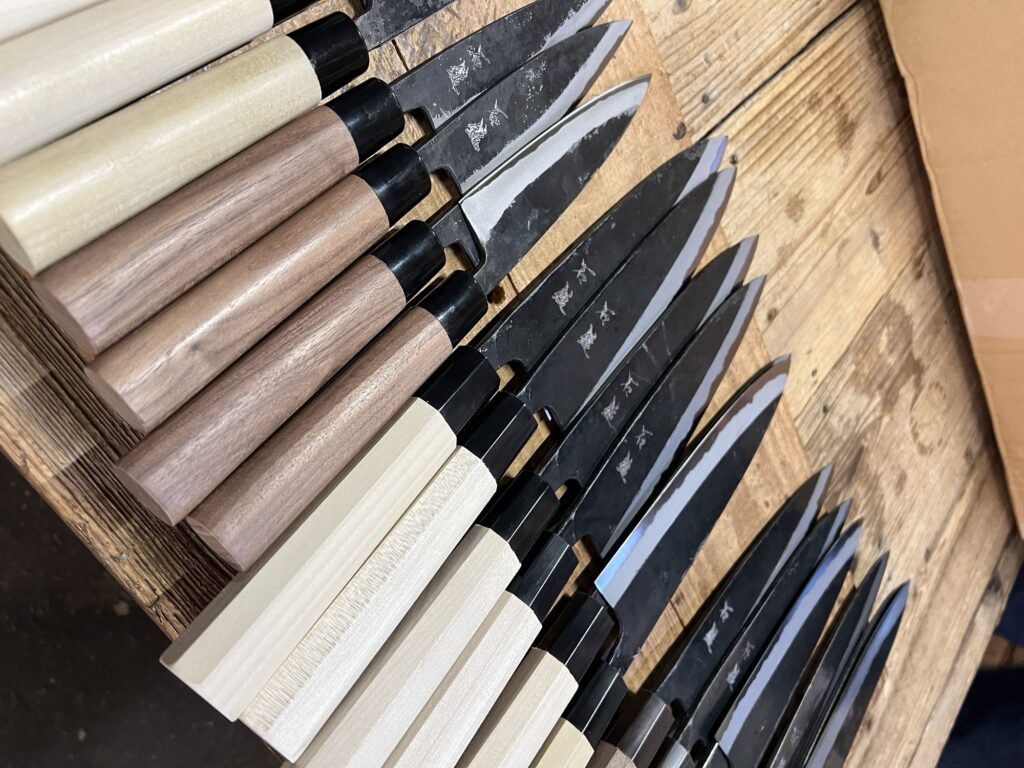
When I imported my first batch of handmade Japanese knives, I ordered two or three of the same model. I expected them to look almost identical. After all, they had the same blade length, the same steel, the same handle material, and were made by the same craftsman.
But when I placed them side by side, I noticed something unexpected.
No two knives were exactly the same.
At first, I wondered if something was wrong. Then I realized I wasn’t looking at imperfections—I was looking at the beauty of true craftsmanship. That moment changed the way I saw handmade Japanese knives, and it reminded me why so many people around the world value them so highly.
Handmade Japanese Knives Reflect the Hands That Made Them
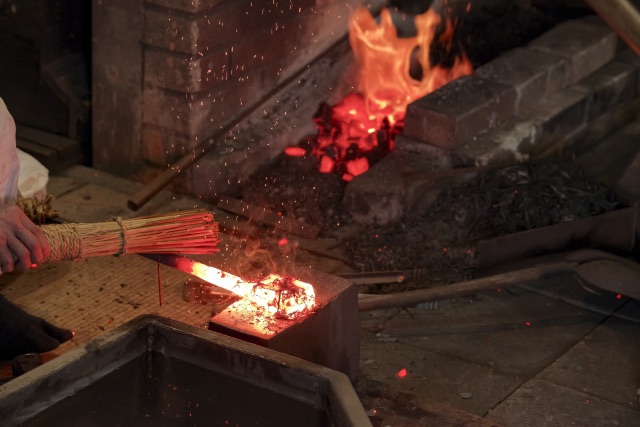
One of the biggest differences between handmade Japanese knives and factory-produced knives is that every step involves skilled human hands.
Even when a blacksmith follows the same design repeatedly, every hammer strike is unique. Every blade is shaped, ground, and finished by hand. Small differences naturally appear throughout the process, and those differences become part of each knife’s character.
Rather than being flaws, they are evidence that a real craftsman created the knife instead of a machine.
Handmade Japanese Knives Have Unique Kurouchi and Hammered Finishes
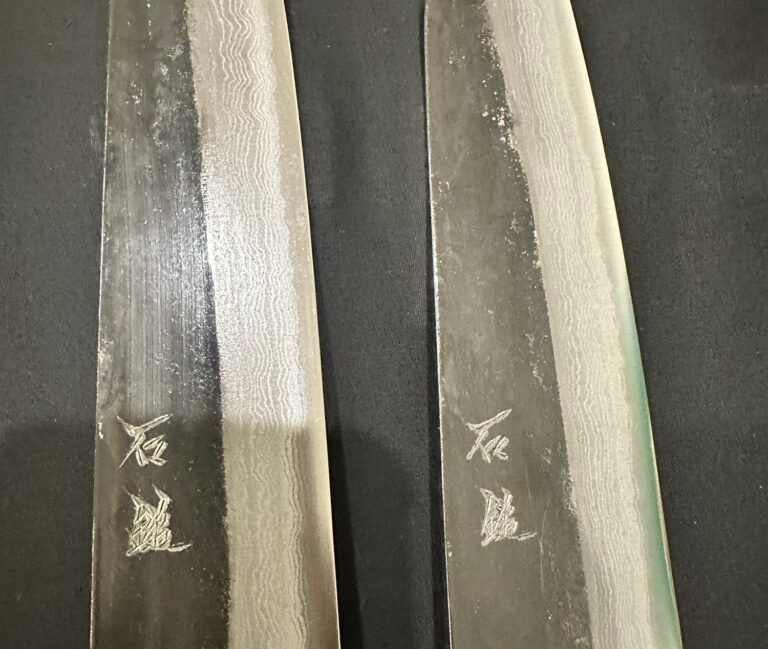
165mm Kiritsuke Aogami #2 Kurouchi Walnut Octagonal Handle
If you compare two handmade Japanese knives with a Kurouchi or Tsuchime finish, you’ll quickly notice subtle differences.
The dark Kurouchi surface may have a slightly different texture.
The hammered pattern may catch the light differently.
Even the polish near the edge can vary from one knife to another.
These details cannot be copied perfectly because they are created by hand, making every knife feel genuinely individual.
➡ Internal Link: Why I Still Use Carbon Steel for Sashimi After 25 Years
Every Wooden Handle Is Naturally Different
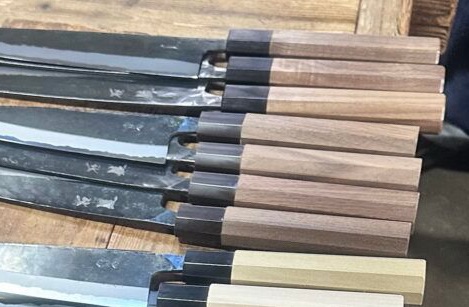
The blade isn’t the only part that tells a story.
Natural wood has its own grain, color, and texture. Even if two handles are made from the same species of wood, they will never look completely identical.
Some pieces have darker lines.
Others have lighter tones.
Some display dramatic grain patterns, while others appear clean and understated.
These natural variations make every handmade Japanese knife even more personal.
Small Differences Are Part of Traditional Craftsmanship
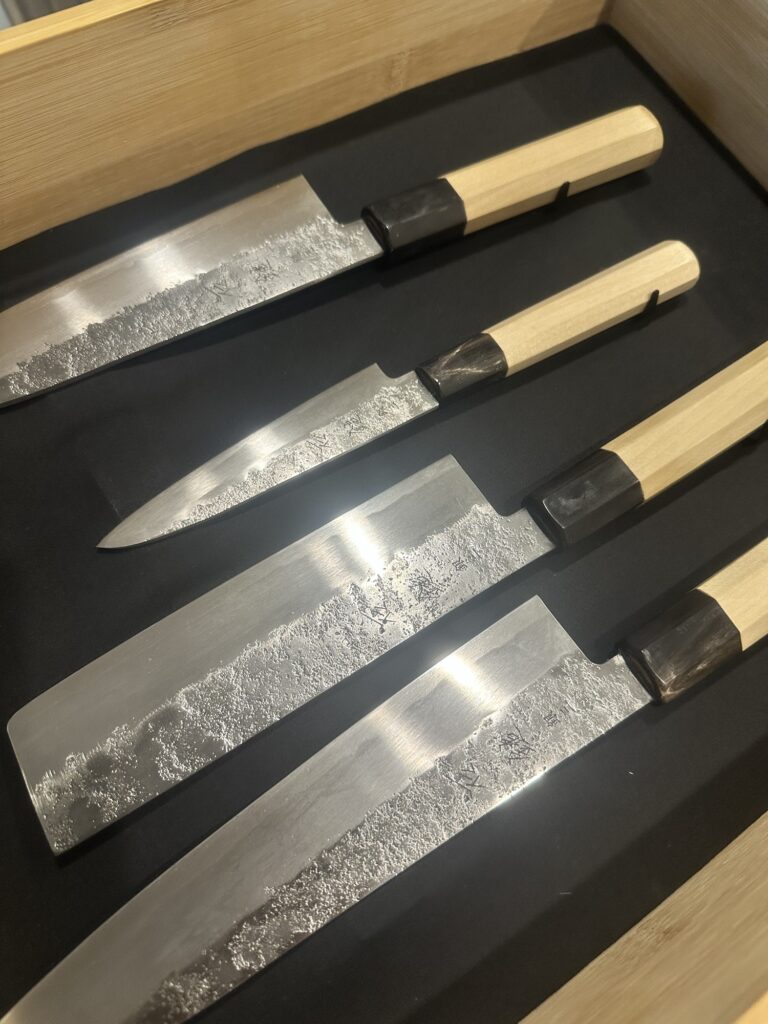
Ginsan Nashiji Forged Magnolia Octagonal Handle Buffalo Horn
Modern factories aim for perfect consistency.
Traditional Japanese workshops aim for exceptional quality.
That difference is important.
A craftsman focuses on creating the best possible knife rather than producing thousands of completely identical pieces. Slight variations in finish or appearance are simply part of the handmade process that has been passed down through generations.
This is one reason collectors, chefs, and cooking enthusiasts often appreciate handmade Japanese knives so much.
➡ Internal Link: Samurai Century | The Finest Expression of Tosa Knife Craftsmanship, Passed Down Since the Age of the Chōsokabe Clan
Handmade Japanese Knives Tell Their Own Story
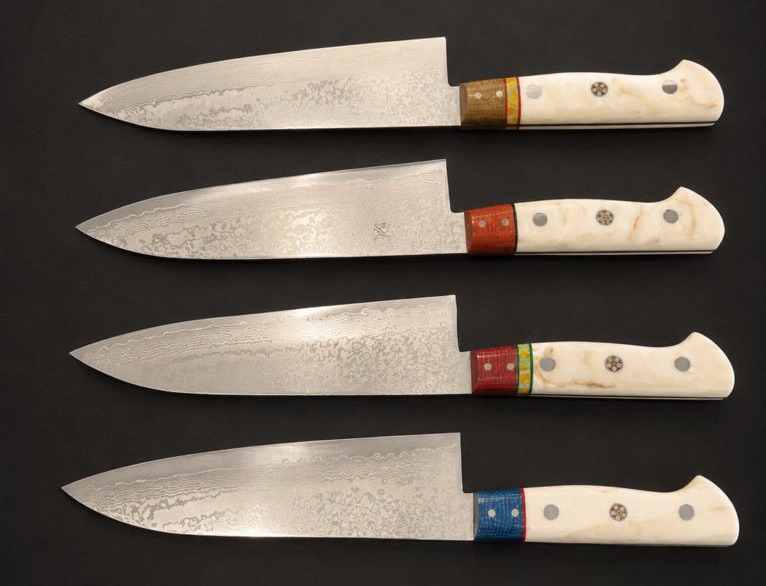
180mm Santoku VG10N 33 Layer Damascus Green Marble Handle Rainbow Spacer
When I first compared those identical models, I expected to choose the “best” one.
Instead, I found myself appreciating each knife for different reasons.
One had a stronger Kurouchi finish.
Another had a particularly beautiful wood grain.
A third had a hammered pattern that reflected light in a unique way.
None of them were better or worse.
They simply had different personalities.
That’s something I never expected before starting Asaoya Yaichi.
➡ Internal Link: Monozukuri | Where Japanese Craftsmanship Meets Quiet Beauty
Why Handmade Japanese Knives Feel More Meaningful
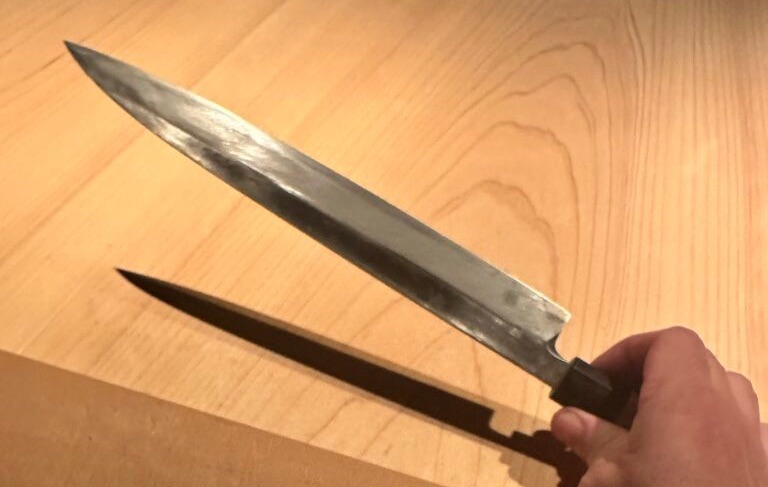
When you own something made by skilled hands, you begin to notice details that machines simply cannot reproduce.
Every tiny variation reminds you that someone heated the steel, shaped the blade, sharpened the edge, and carefully finished the knife.
That human touch creates an emotional connection that goes beyond cutting performance.
Over time, your knife develops its own story alongside yours.
Whether you’re preparing dinner at home or working in a professional kitchen, it becomes more than just a tool.
It becomes something you’ll remember every time you pick it up.
➡ Internal Link: The True Value of Japanese Knives | 7 Reasons They Are Worth the Investment
Why These Differences Should Be Appreciated
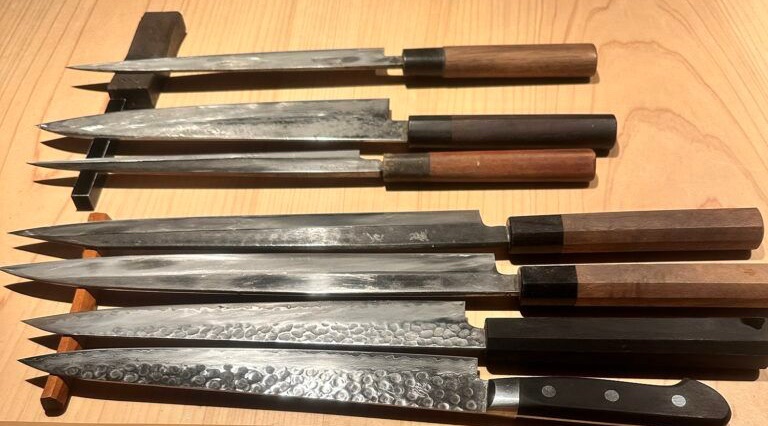
Many people assume that two knives with the same specifications should look exactly alike.
That’s true for mass-produced products.
It isn’t true for handmade Japanese knives.
The subtle differences in finish, texture, wood grain, and overall appearance aren’t defects—they’re signs that the knife was made through traditional craftsmanship rather than automated production.
Once I understood that, I stopped searching for perfect uniformity and started appreciating individuality instead.
That’s one of the reasons handmade Japanese knives continue to impress me every time I open a new shipment.
➡ Internal Link: Forged Legacy | The 165mm Kiritsuke Thick Deba That Carries 400 Years of Tosa Craftsmanship
If you’ve only ever owned factory-made knives, seeing several handmade Japanese knives side by side can be a surprising experience.
You may discover that the small differences are exactly what make each knife special.
Those details represent tradition, craftsmanship, and the human touch that machines simply cannot replicate.
If you’re looking for a knife with genuine character rather than perfect uniformity, handmade Japanese knives offer something truly unique.
👉 Explore more:
https://blog.asaoyayaichi.com.au
👉 Visit our online store:
https://asaoyayaichi.com.au
Thank you for reading, and I hope to see you again in the next story.