If you are travelling to Japan and love cooking, bringing home a Japanese kitchen knife can be much more meaningful than buying a typical souvenir. But with Gyuto, Santoku, Nakiri, Deba, Yanagiba and many other styles in front of you, which one should you choose?
When people ask about the best Japanese knife to buy in Japan, I think the Santoku deserves serious consideration.
I have worked as a professional chef for more than 25 years in Japan and Australia, and there is also something interesting I learned through the knife business. A sales representative from Ishizuchi Kanamono Seisakusho, the supplier I work with in Japan, once told me that many customers choose Santoku knives.
That is also one reason why I stock relatively more Santoku knives at Asaoya Yaichi.
Looking for an authentic Japanese knife in Australia?
Explore our collection of Japanese knives selected directly from Japan.
👉 Visit our online store:
https://asaoyayaichi.com.au
But why Santoku?
The more I think about it as both a chef and a knife seller, the more the answer makes sense.
Best Japanese Knife to Buy in Japan? Start With Versatility
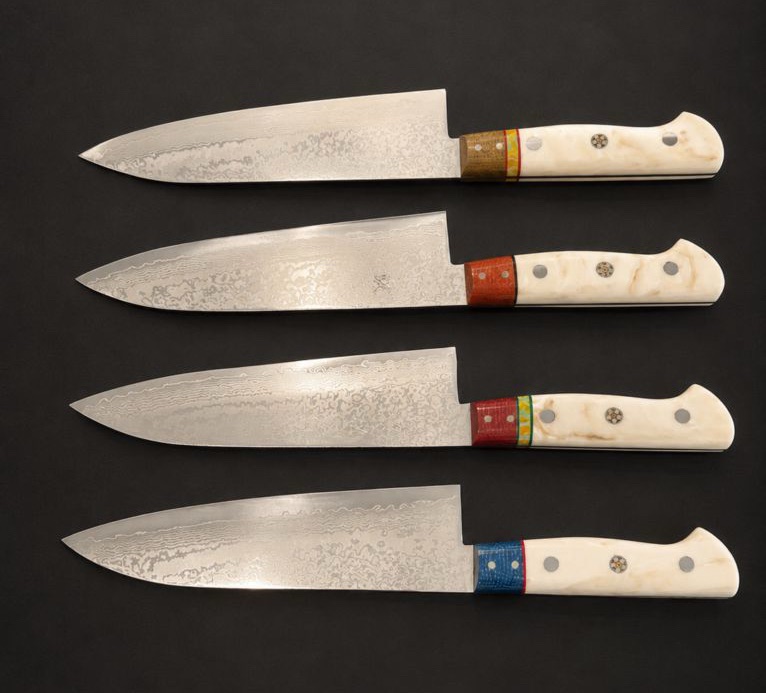
180mm Santoku VG10N 33 Layer Damascus Green Marble Handle Rainbow Spacer
The word “Santoku” is commonly associated with three virtues or three uses: meat, fish and vegetables.
That already explains much of its appeal.
A traditional Yanagiba is wonderful for slicing sashimi. A Deba is designed for working with fish. A Nakiri is excellent for vegetables. These knives have strong individual identities, but their specialised nature may not suit someone who simply wants one Japanese knife for everyday cooking.
A Santoku sits comfortably in the middle.
You can prepare vegetables, portion meat, slice boneless fish and handle most normal kitchen preparation with the same knife.
For someone buying only one knife in Japan, that versatility matters.
👉 INTERNAL LINK: Read “Japanese Knife Names” here.
The Size Makes Sense in a Home Kitchen
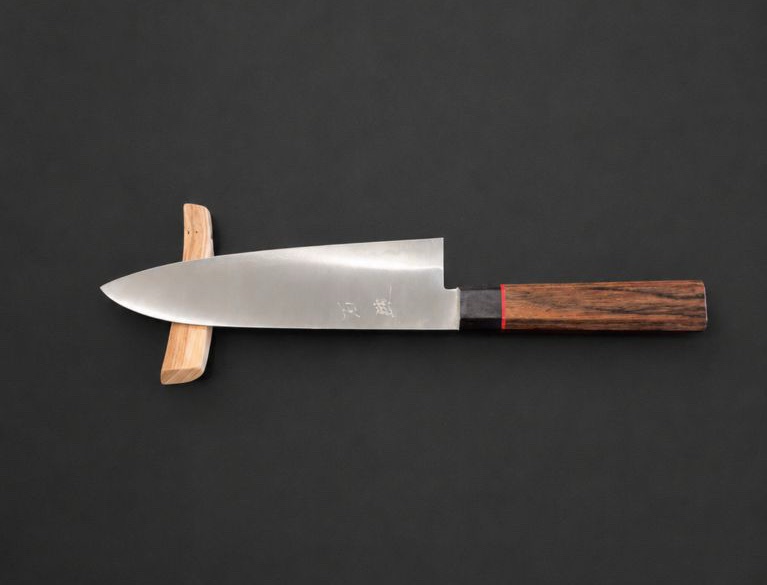
180mm Santoku SG2 Rosewood Octagonal Handle
Another important reason is blade length.
Santoku knives are commonly around 165–180mm. That makes them noticeably more compact than many Gyuto knives and much shorter than traditional Yanagiba.
For a professional chef working on a large cutting board, a 210mm or 240mm Gyuto may feel completely normal. At home, however, the extra length is not always necessary.
A Santoku gives you enough blade for most ingredients without dominating a smaller cutting board.
At Asaoya Yaichi, we stock a selection of 180mm Santoku knives because I believe this size offers a great balance — compact and comfortable enough for everyday home cooking, while still being practical and versatile enough for professional chefs.
This is one reason I believe the Santoku works particularly well as the best Japanese knife to buy in Japan for someone who plans to actually use their souvenir rather than simply display it.
Familiar Enough for Beginners
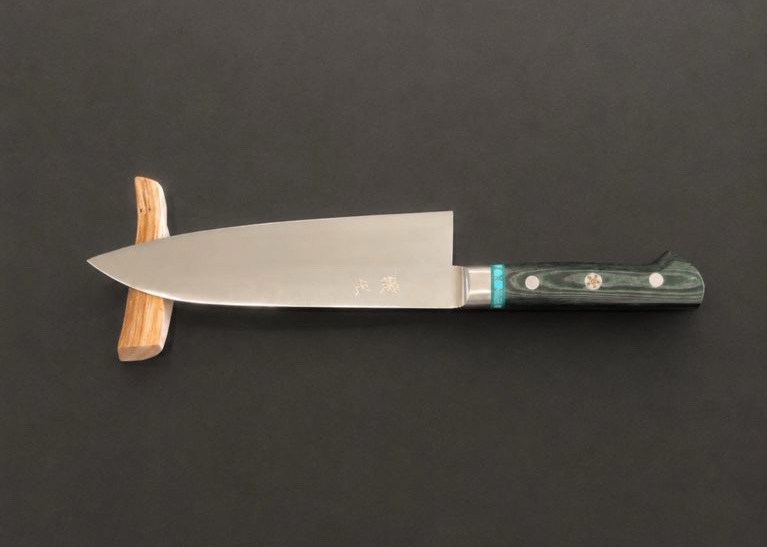
180mm Santoku Aogami #2 Green Micarta Handle with Turquoise Spacer
Many traditional Japanese knives are single bevel. They are fascinating tools, but they require a little more knowledge in both use and sharpening.
Most Santoku knives are double bevel, making the transition much easier for someone accustomed to ordinary Western kitchen knives.
That matters when buying a first Japanese knife.
A beautiful knife is not particularly useful if the owner is afraid to use or sharpen it.
👉 INTERNAL LINK: Read “Single vs Double Bevel Japanese Knives” here.
Why I Stock More Santoku Knives
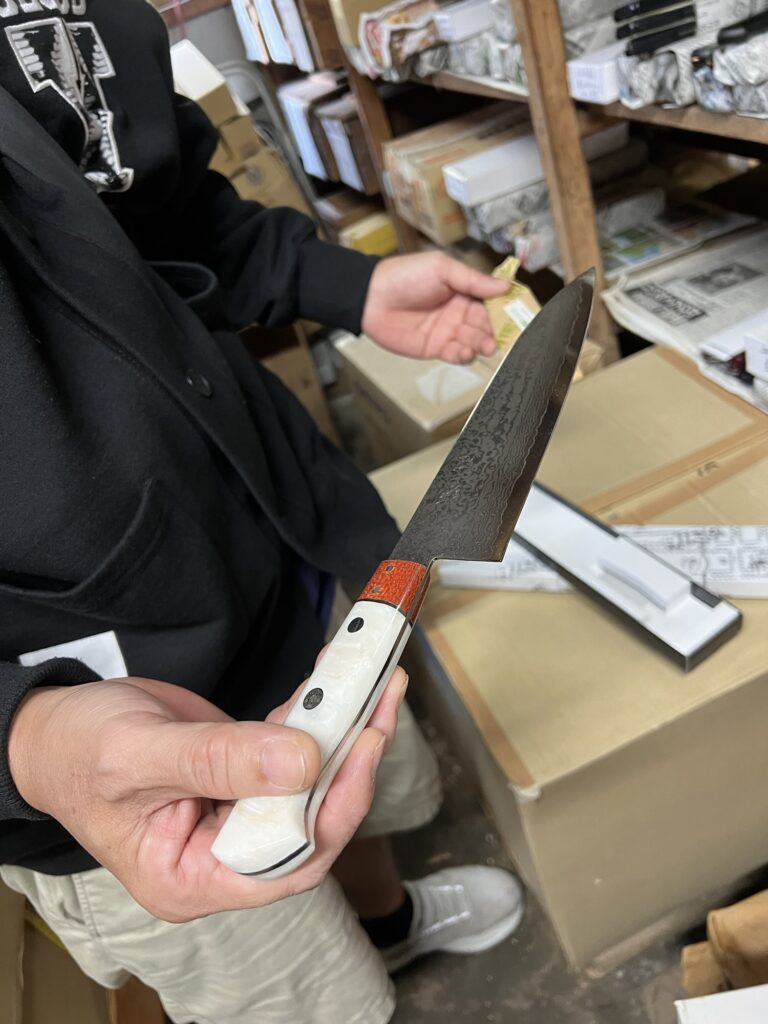
My decision to stock more Santoku knives at Asaoya Yaichi was not based purely on online trends.
As mentioned earlier, a sales representative at Ishizuchi Kanamono Seisakusho told me that many people buying knives choose Santoku.
That stayed in my mind.
After more than 25 years in professional kitchens, I could understand why. It is simply a very practical shape for everyday cooking.
So when selecting knives for Australia, I naturally included more Santoku options.
I am not saying everyone should buy a Santoku. Someone who regularly breaks down fish may prefer a Deba. Someone slicing sashimi may want a Yanagiba. A chef comfortable with longer blades may prefer a Gyuto.
The right knife always depends on the person using it and what they actually cook.
👉 INTERNAL LINK: Read “Hand-Forged vs Machine-Made Japanese Knives” here.
Best Japanese Knife to Buy in Japan Can Still Feel Japanese
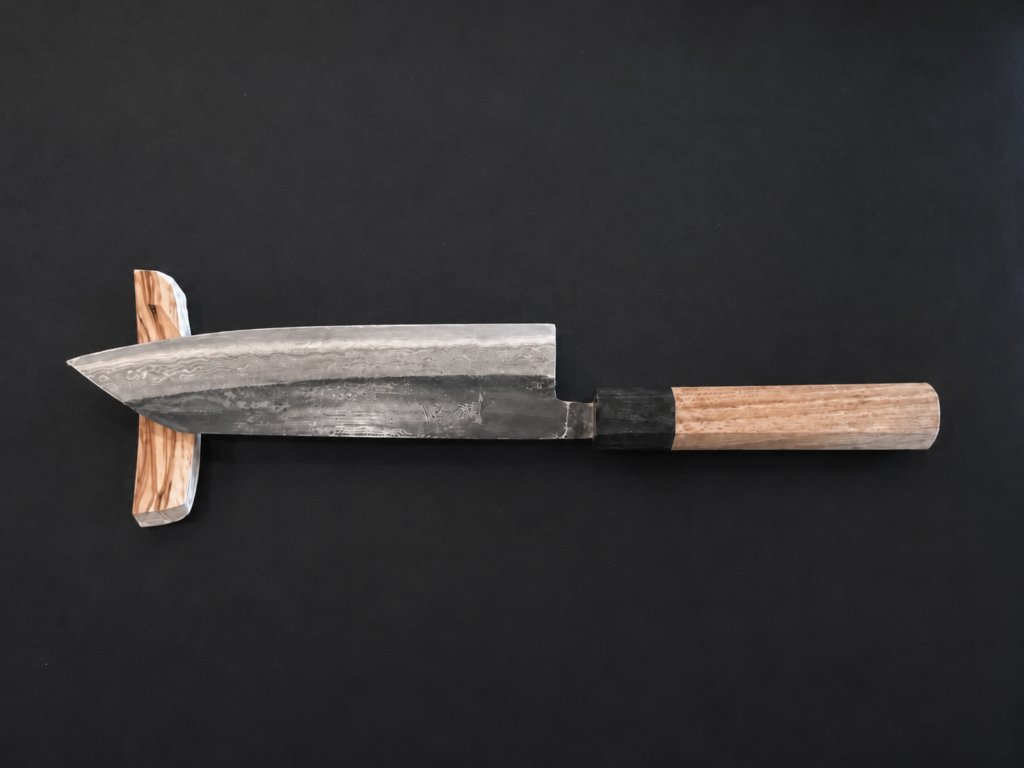
180mm Kiritsuke Aogami #2 Kurouchi Walnut Octagonal Handle
There is another side to this question: emotion.
When someone buys a knife while travelling through Japan, they may want more than functionality. They may want something that reminds them of Japan when they return home.
This is where finishes such as Kurouchi become interesting.
I recently showed Kurouchi knives to a café owner here in Australia. His reaction was that this was the kind of Japanese-looking knife he wanted to display.
That reminded me that overseas customers sometimes see Japanese knives differently from Japanese customers.
A Santoku with a traditional Japanese handle, hand-forged character or Kurouchi finish can combine two things beautifully: everyday practicality and a distinctly Japanese appearance.
👉 INTERNAL LINK: Read “Tosa Knives and Kurouchi — Why Is This Finish So Common?” here.
The Story Behind the Knife Matters Too

165mm Santoku A10 Damascus Black & Red Octagonal Handle
There are famous knife-producing regions throughout Japan, including Sakai, Seki, Echizen and Tosa. Each developed its own history and relationship with blade making.
For me, this is part of what makes buying a Japanese knife special.
You are not simply choosing steel and blade length. You can also discover where it came from, how it was made and why that particular style developed.
That story can turn a kitchen tool into something you keep and use for decades.
👉 INTERNAL LINK: Read “Knife Regions of Japan — Do Origins Really Matter?” here.
My Answer After 25 Years in Kitchens
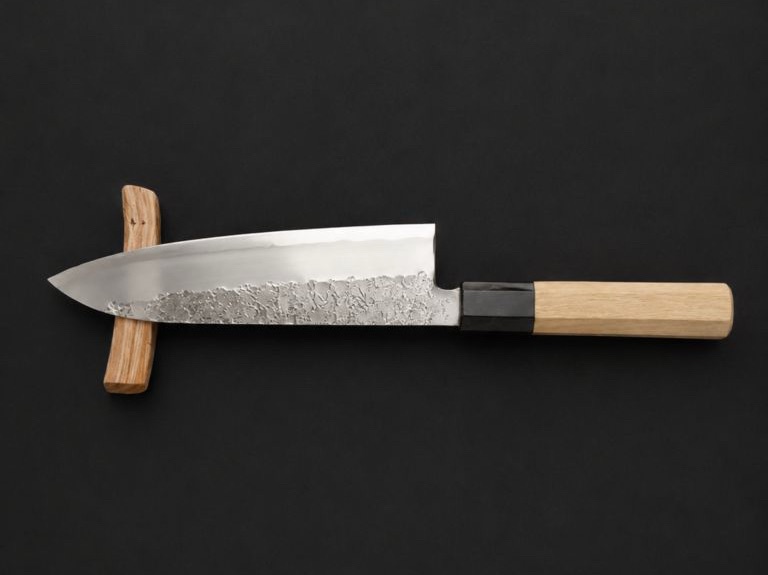
180mm Santoku Ginsan Nashiji Forged Magnolia Octagonal Handle Buffalo Horn
So, what is the best Japanese knife to buy in Japan?
There is no single knife that is perfect for everyone.
But if you are looking for one Japanese knife to take home, especially for everyday household cooking, I believe a Santoku is one of the safest and most practical choices.
It is compact without being too small, versatile without being boring, beginner-friendly while still being used by professionals, and unmistakably connected to Japanese kitchen culture.
Perhaps that is why so many people choose one.
Sometimes the best souvenir is not something you put on a shelf.
It is something you use every day — and every time you pick it up, it reminds you where it came from.
👉 Explore more:
https://blog.asaoyayaichi.com.au
👉 Visit our online store:
https://asaoyayaichi.com.au
Thank you for reading, and I hope to see you again in the next story.