There is a Japanese expression I have always liked: 一期一会 — Ichigo Ichie.
It means something like “one time, one meeting” — the idea that an encounter may happen only once, so we should value it while it is in front of us.
Recently, I have started to think that this expression fits handmade Japanese knives surprisingly well.
With mass-produced products, we often assume that if something sells out, another one will arrive soon. But handmade Japanese knives do not always work like that. The knife you see today may be gone tomorrow, and the same knife may not appear again for years.
Handmade Japanese Knives Are Not Always Continuously Produced
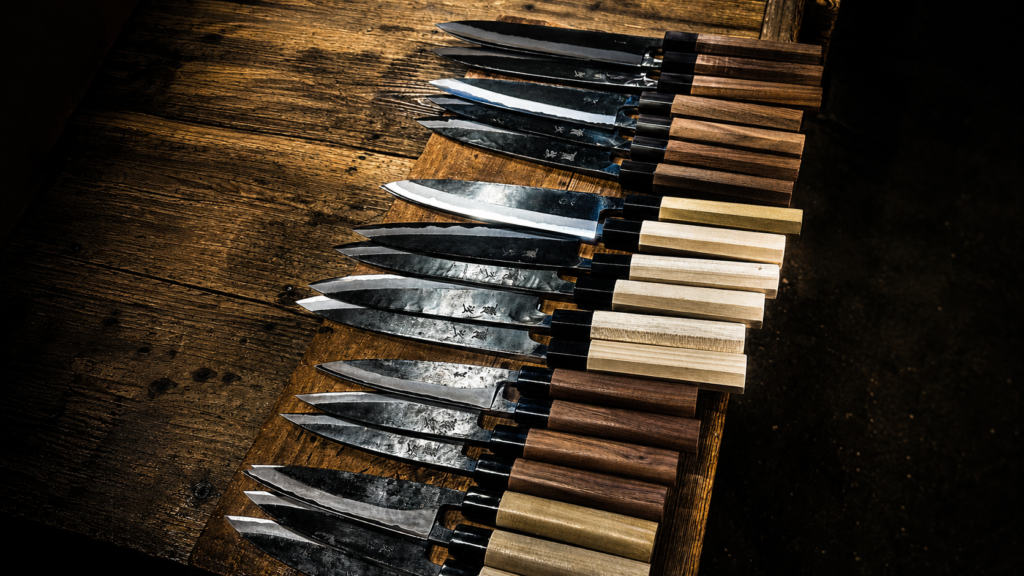
A salesperson from Ishizuchi Hardware Manufacturing once told me something interesting about the working habits of traditional Japanese blacksmiths.
A blacksmith may concentrate on making several particular types of knives for a period of time. Once enough stock has been produced, they move on to making something different.
They are not necessarily producing every model continuously throughout the year.
That means when the remaining stock of one particular knife is gone, another batch may not simply arrive next month. According to what I was told, sometimes it can take four or five years before the same type is produced again.
For me, this is one of the fascinating differences between handmade Japanese knives and ordinary factory-made products.
👉 INTERNAL LINK: Read the story of Tosa knife history and how this traditional industry developed.
The price may change too. Materials, production costs and the circumstances surrounding craftspeople change over time. Even if the same knife eventually returns, there is no guarantee it will return at the same price.
👉 INTERNAL LINK: Discover why Kurouchi finishes are so closely connected with traditional Tosa knives.
One Handmade Japanese Knife That Took Two Years
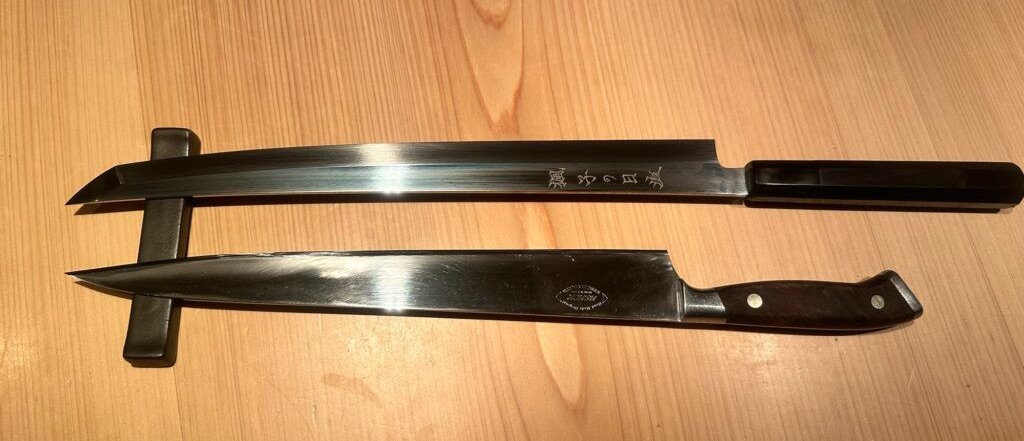
Above: My colleague’s $2,500 Takohiki knife.
In my previous article, I talked about an expensive Japanese knife owned by one of my colleagues.
There is another side to that story.
He ordered the knife while visiting Japan. From placing the order to the knife finally being completed took around a year and a half.
Because it was such an expensive knife, he did not want to risk sending it internationally. Instead, he waited until a friend was travelling from Japan to Australia and asked them to bring it over.
By the time he actually held his knife in Australia, almost two years had passed since he ordered it.
Two years for one knife may sound extraordinary, but handmade craftsmanship operates on a very different timeline from ordinary retail.
👉 INTERNAL LINK: Read my previous story about whether an expensive Japanese knife is really worth it.
Handmade Japanese Knives and My E-Scooter Mistake
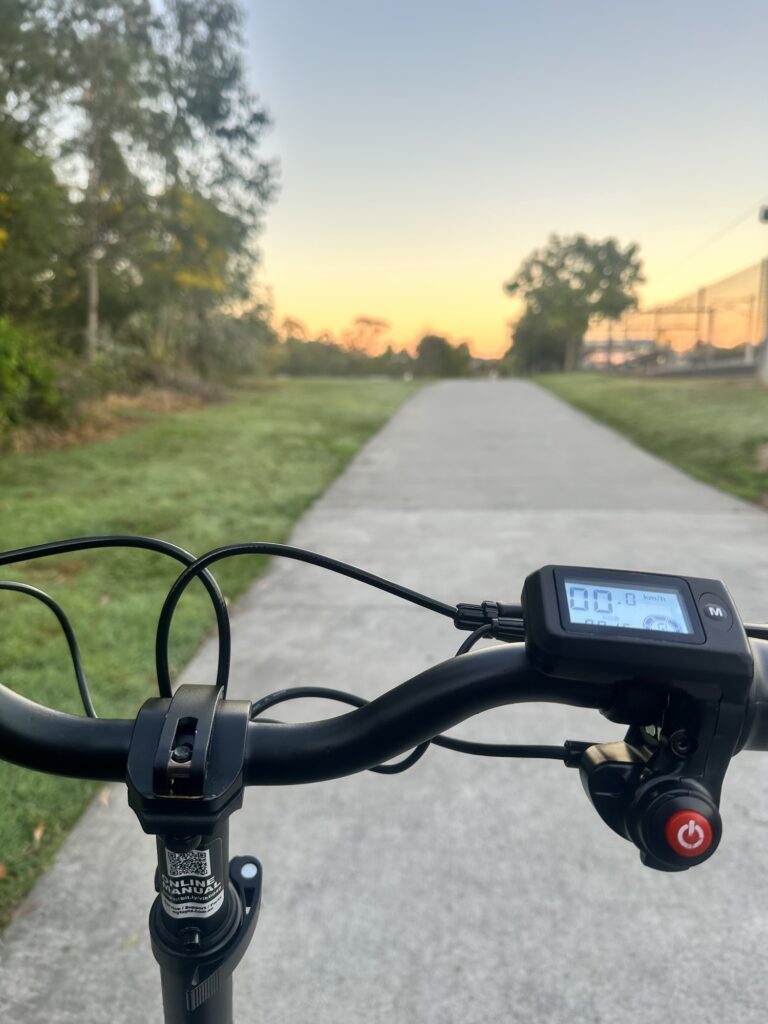
Strangely enough, I learned a similar lesson from something completely unrelated to knives.
My old E-scooter had broken, and I needed another one for commuting. While I was on holiday, I found one I really wanted. Better still, it was on sale.
But I hesitated.
“Maybe I’ll wait a little longer.”
Then it sold out.
Fuel prices were rising sharply at the time, and I wondered whether more people were considering electric transport to save money on petrol. Whatever the reason, the scooter I wanted was suddenly unavailable.
I was still on holiday, so I decided to wait for it to return.
Eventually, it did.
Except now it was about $200 more expensive.
Work was about to start again and I needed it for commuting, so I had little choice. I bought it.
Then, sometime later, I checked the price again.
It had dropped by around $100.
Somehow, I had managed to buy it at almost the worst possible time.
👉 INTERNAL LINK: 真価 Shinka | 7 Powerful Truths About a New Japanese Knife’s Real Potential
Handmade Japanese Knives and the Meaning of 一期一会
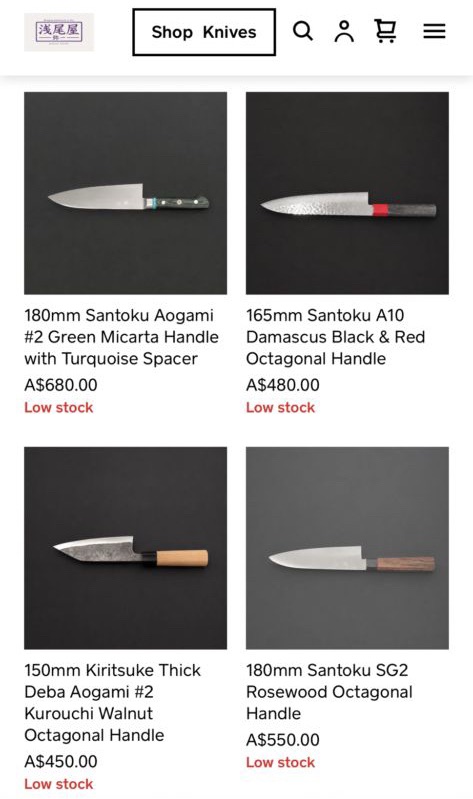
I am not saying you should panic and buy a knife simply because you are afraid it might disappear.
That is not the point.
But if you find one of those handmade Japanese knives that makes you stop and think, “This is the one,” and you genuinely feel comfortable with the price in front of you, personally, I would not wait too long hoping for something better.
Maybe it will still be there next month.
Maybe the price will drop.
But perhaps it will sell out, and the next production could be years away. When it finally returns, the price may be different too.
👉 INTERNAL LINK: 一目惚れ Hitomebore | 7 Powerful Reasons to Fall in Love With a Japanese Knife
That uncertainty is part of what makes handmade Japanese knives interesting to me. Behind each knife are blacksmiths, sharpeners, wholesalers and generations of regional craftsmanship. They are not simply identical objects flowing endlessly from a production line.
At Asaoya Yaichi, prices and availability may change over time, and from time to time there may be seasonal offers too.
So if a knife catches your eye, keep an eye on our website.
But if you find one that makes you think, “This is the one,” and you are happy with the price in front of you, I personally wouldn’t wait too long hoping for a better deal.
Because there is no guarantee that the same knife will still be there when you come back.
一期一会 — Ichigo Ichie.
Sometimes the right knife, at the right price, at the right moment really can be a once-in-a-lifetime encounter.
👉 Explore more:
https://blog.asaoyayaichi.com.au
👉 Visit our online store:
https://asaoyayaichi.com.au
Thank you for reading, and I hope to see you again in the next story.