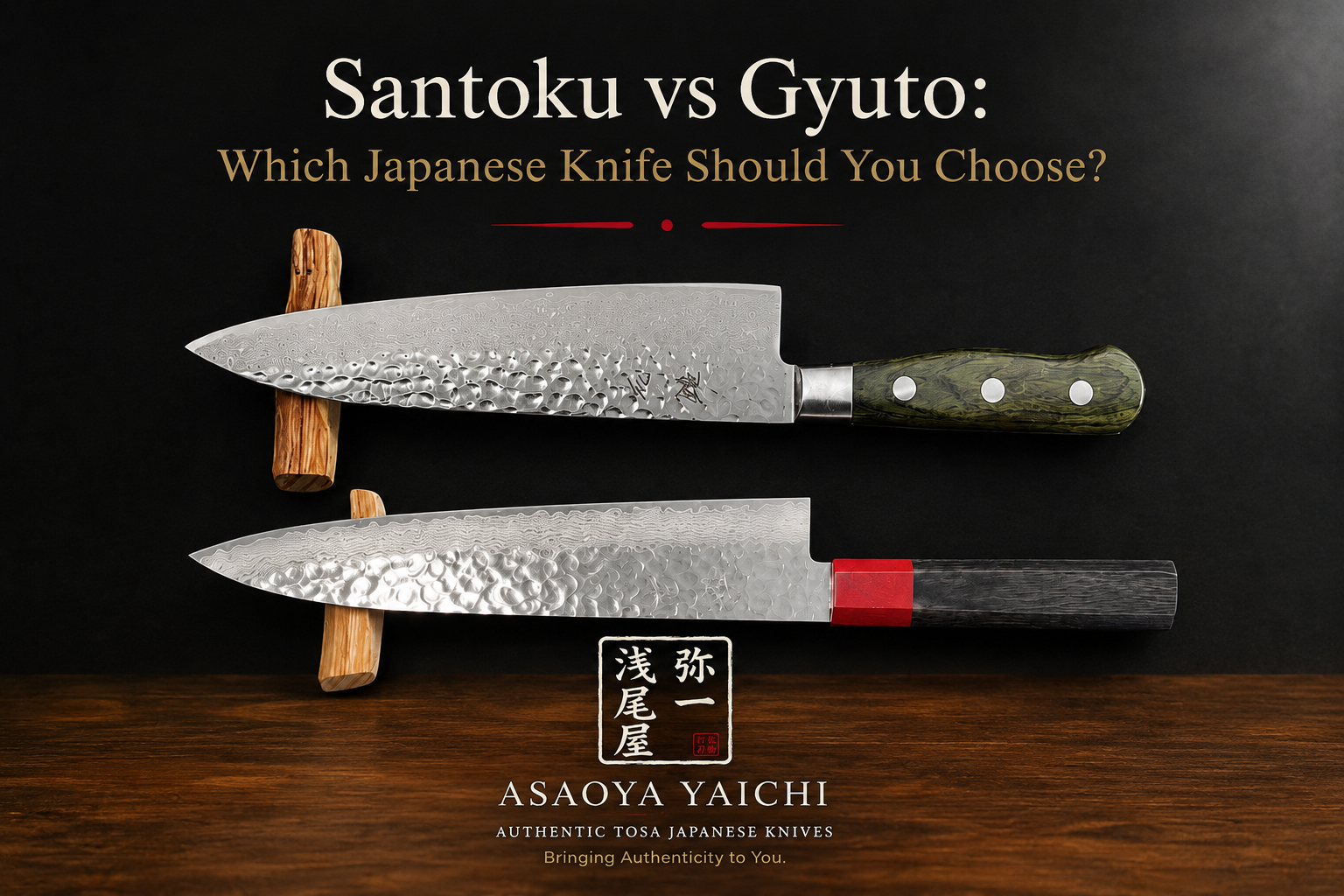
When buying your first Japanese knife, one of the biggest decisions is choosing between a Santoku and a Gyuto.
Both are excellent all-purpose knives, but they have different strengths depending on your cooking style.
Having worked as a chef in Japan and Australia for more than 25 years, I’ve used both extensively. While there is no single “best” choice, understanding the differences will help you select the knife that suits you best.
What Is a Santoku?
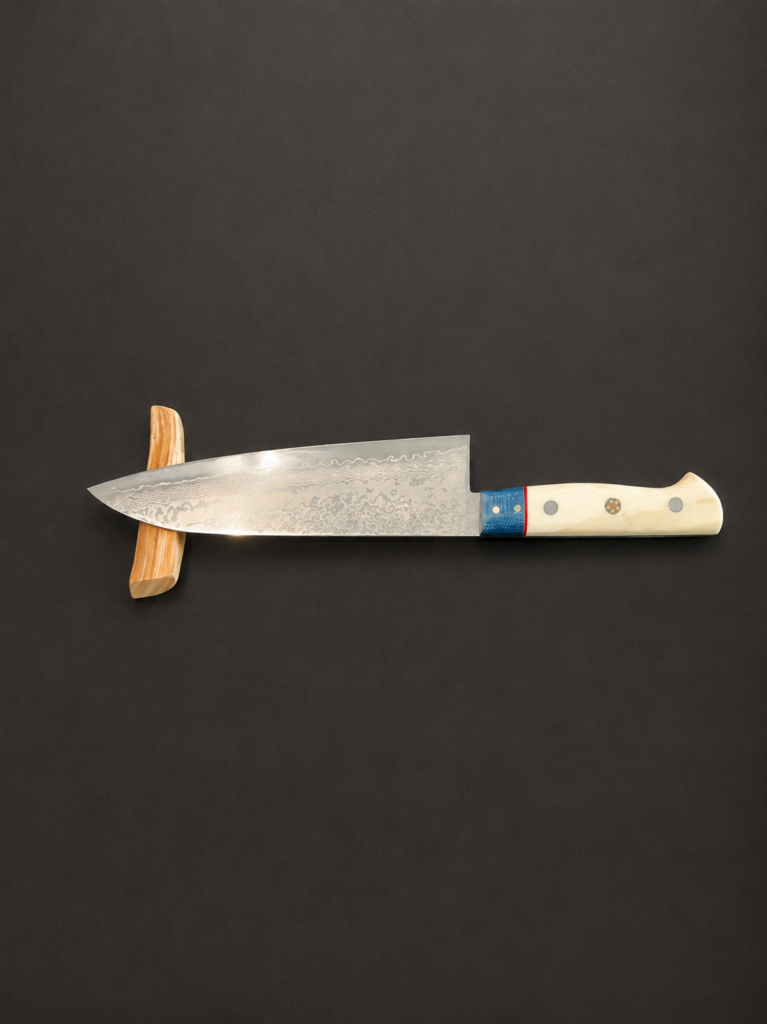
The word Santoku means “three virtues”, referring to its ability to handle:
- Meat
- Fish
- Vegetables
Typically measuring between 165mm and 180mm, the Santoku is compact, lightweight, and easy to control.
Its flatter blade makes it ideal for straight up-and-down chopping, making it a favourite among home cooks.
Best for:
- Home kitchens
- Vegetables
- Boneless meat
- Everyday cooking
- Smaller cutting boards
What Is a Gyuto?
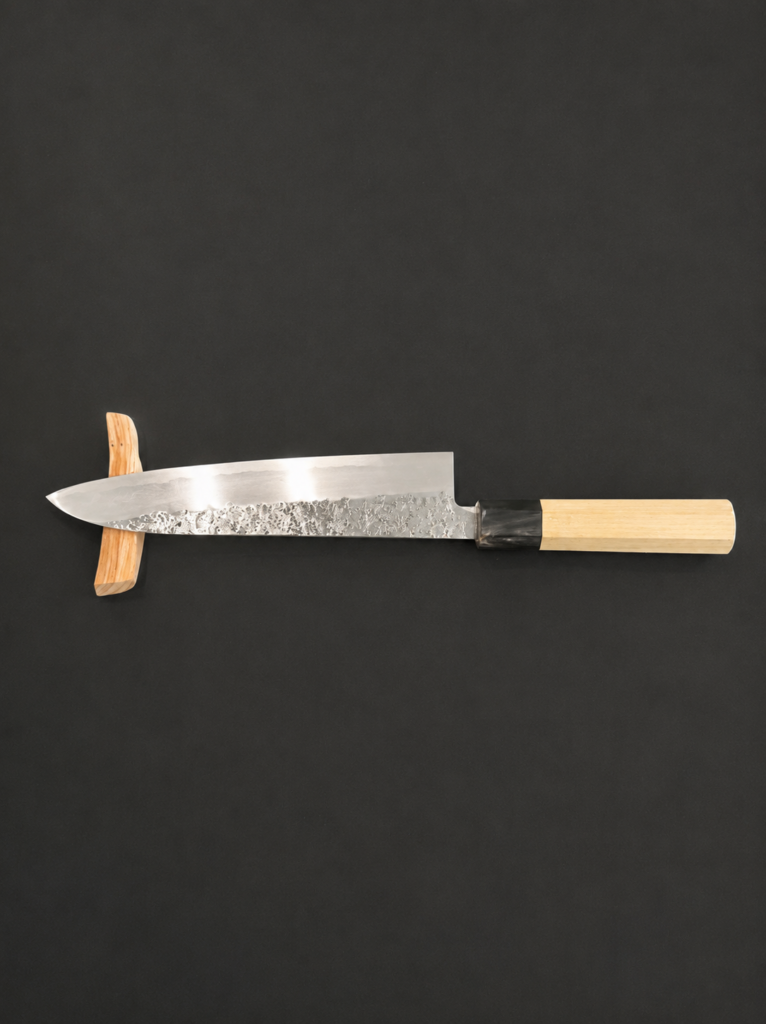
The Gyuto is Japan’s interpretation of the Western chef’s knife.
Usually available in 180mm, 210mm, and 240mm, it features a longer blade with a more pronounced curve.
This design allows for smooth rocking cuts while still performing beautifully with traditional Japanese slicing techniques.
Professional chefs often choose a 210mm Gyuto because of its versatility.
Best for:
- Larger ingredients
- Meat preparation
- Fine slicing
- Professional kitchens
- People who prefer one knife for almost everything
Which One Do I Recommend?
For most home cooks purchasing their first Japanese knife, I usually recommend a Santoku.
It feels less intimidating, is easier to control, and comfortably handles almost every everyday kitchen task.
If you cook frequently, prepare larger ingredients, or simply enjoy having more blade length, a 210mm Gyuto is an outstanding all-round choice.
Personally, after more than 25 years as a chef, I use a Gyuto more often because its versatility suits the fast pace of professional kitchens.
Is One Sharper Than the Other?
Not necessarily.
Sharpness depends on the quality of the steel, the craftsmanship of the blacksmith, and how well the knife is sharpened—not on whether it is a Santoku or a Gyuto.
A well-made Santoku and a well-made Gyuto can both deliver exceptional cutting performance.
Choosing the Right Knife
Rather than asking which knife is “better,” ask yourself:
- What do you cook most often?
- How much space do you have?
- Which knife feels more comfortable in your hand?
The right knife is the one that matches your cooking style.
Discover Authentic Tosa Knives
At Asaoya Yaichi, we carefully source handcrafted Japanese knives directly from skilled blacksmiths in Tosa, Japan.
Whether you choose a Santoku or a Gyuto, you’ll be investing in a knife built to provide decades of outstanding performance with proper care.
Explore our collection and discover the difference genuine Japanese craftsmanship can make.
Continue Learning About Japanese Knives
If you’re new to Japanese knives, you may also enjoy reading our other guides:
Discover Authentic Tosa Knives
At Asaoya Yaichi, we carefully source handcrafted Japanese knives directly from skilled blacksmiths in Tosa, Japan.
Whether you choose a Santoku or a Gyuto, you’ll be investing in a knife built to provide decades of outstanding performance with proper care.
If you’re ready to experience the difference that authentic Japanese craftsmanship can make, explore our collection of handcrafted Tosa knives today.
👉 Browse our collection:
https://www.asaoyayaichi.com.au
Whether you’re looking for your first Japanese knife or adding to your collection, we’re here to help you find the perfect knife for your cooking style.
Thank you for reading, and we hope this guide has helped you better understand the differences between Santoku and Gyuto knives.