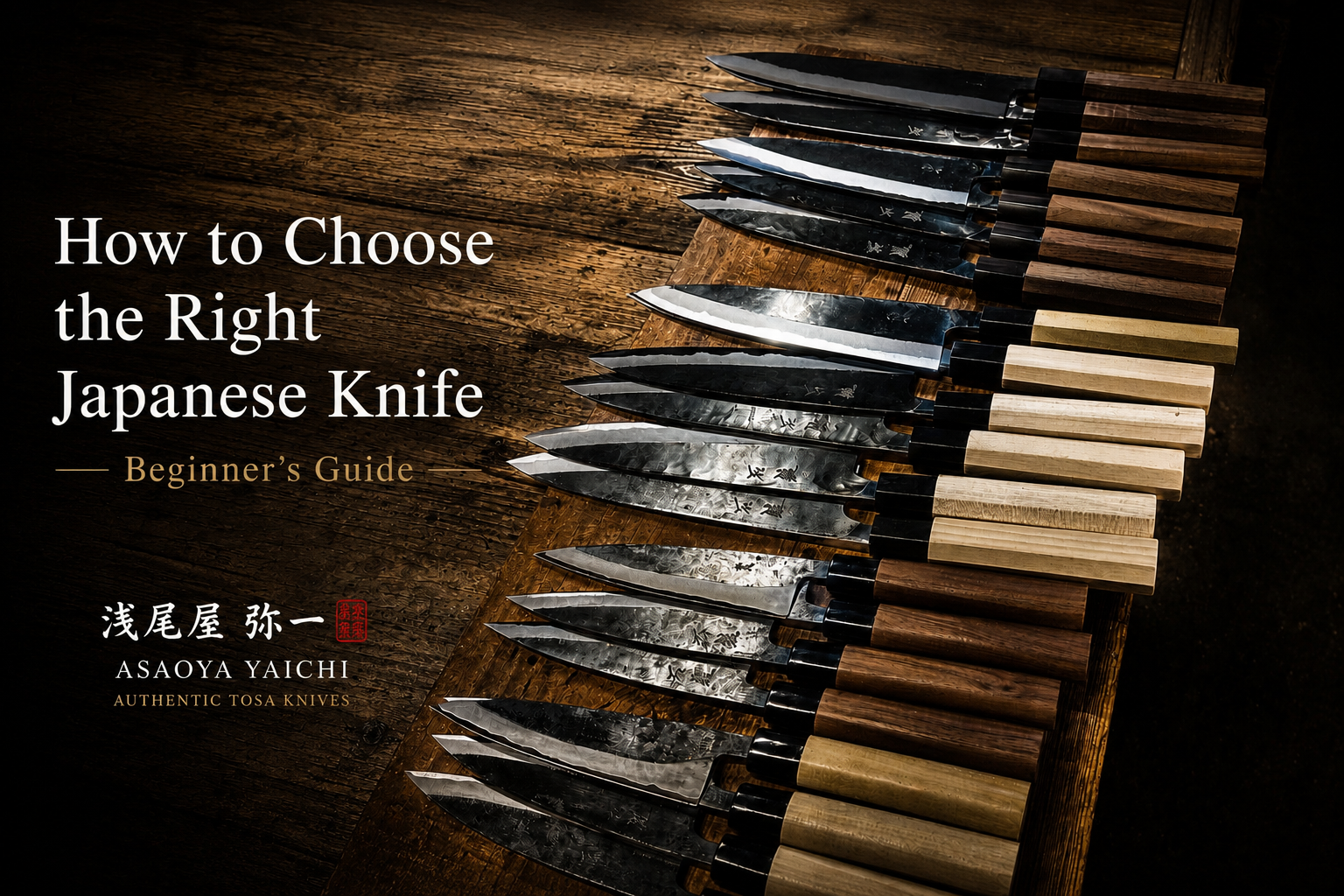
How to Choose the Right Japanese Knife for Beginners
How to Choose the Right Japanese Knife is one of the most common questions for beginners. Choosing your first Japanese knife can feel overwhelming.
With so many shapes, steels, and finishes available, it’s easy to wonder which knife is right for you.
The truth is, there is no single “best” Japanese knife. The right choice depends on how you cook, what ingredients you prepare most often, and your personal preferences.
In this guide, we’ll introduce the most common types of Japanese knives and help you choose the one that best suits your kitchen.
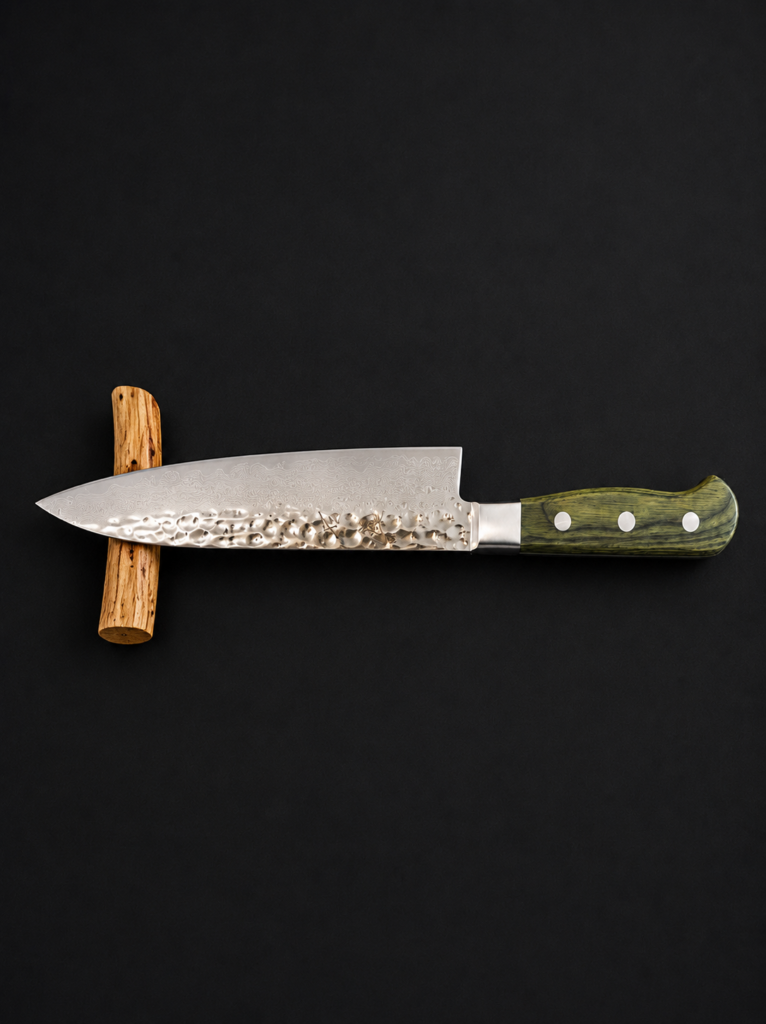
1. Gyuto – The Japanese Chef’s Knife
The Gyuto is the Japanese equivalent of the Western chef’s knife and is one of the most versatile knives available.
It is ideal for preparing:
- Meat
- Fish
- Vegetables
- Herbs
If you only plan to own one Japanese knife, a Gyuto is often the best choice.
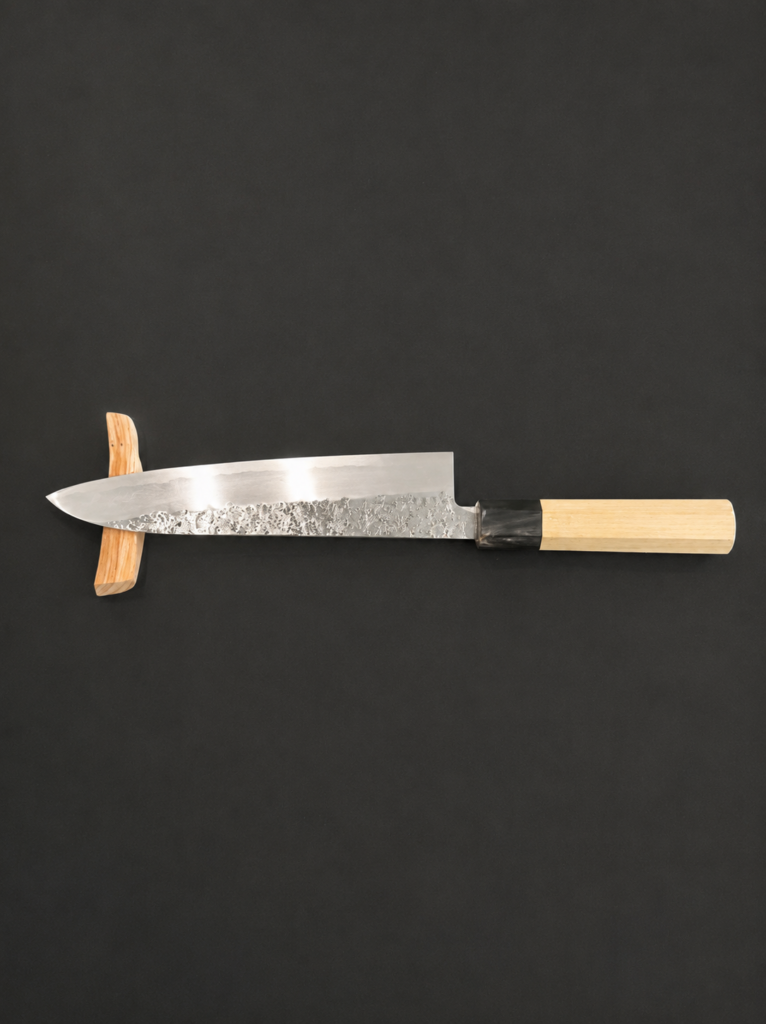
2. Santoku – The Everyday All-Rounder
Santoku means “three virtues,” referring to meat, fish, and vegetables.
Its shorter blade makes it easy to control, making it a favourite among home cooks.
If you prepare a wide variety of everyday meals, a Santoku is an excellent option.
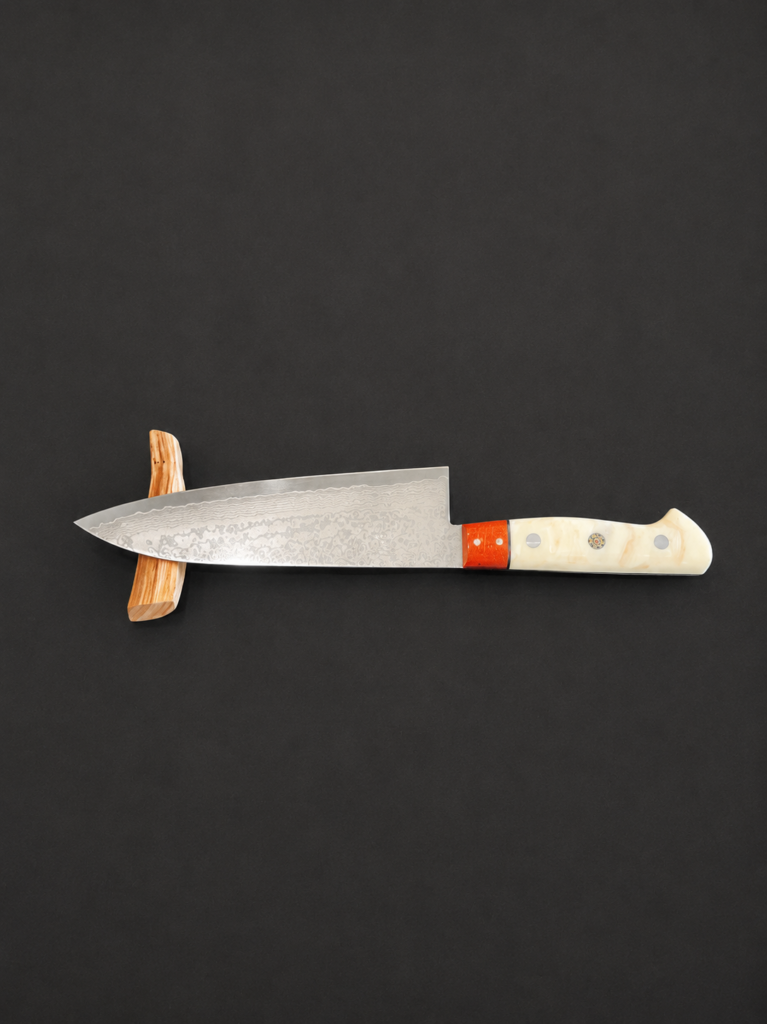
3. Nakiri – Made for Vegetables
The Nakiri is designed specifically for vegetables.
Its straight cutting edge allows the blade to make full contact with the cutting board, producing clean, precise cuts without leaving vegetables partially attached.
For those who prepare vegetables regularly, the Nakiri is an outstanding choice.
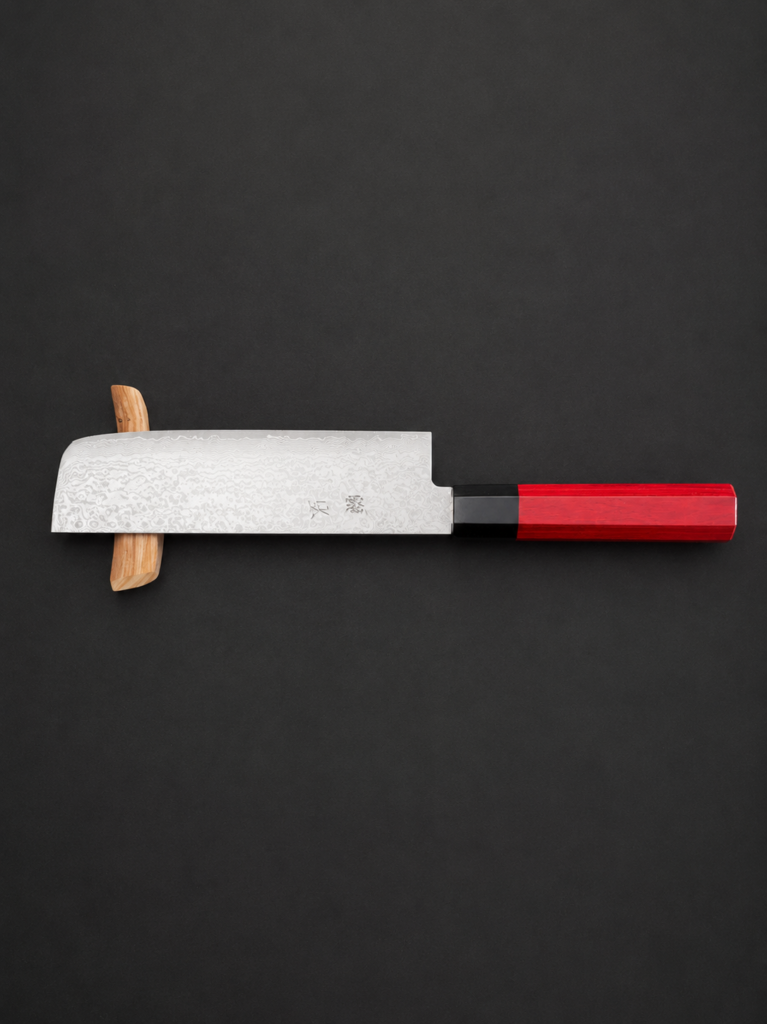
4. Petty Knife – Small but Essential
A Petty knife is perfect for smaller tasks such as:
- Peeling fruit
- Trimming meat
- Garnishing
- Precision work
Many professional chefs consider it the second most frequently used knife in their kitchen.
Which Knife Should You Choose?
If you’re unsure where to start, here’s a simple guide:
- One knife only: Gyuto
- Everyday family cooking: Santoku
- Vegetable lovers: Nakiri
- Small detailed tasks: Petty
A Chef’s Personal Recommendation
After working as a chef in both Japan and Australia for more than 25 years, one of the questions I’m asked most often is:
“Which Japanese knife do you use the most?”
My answer is simple.
For everyday preparation, I almost always reach for a Gyuto. Its versatility allows me to prepare meat, fish, and vegetables efficiently with a single knife, making it my most frequently used tool.
When it comes to slicing cooked meats, roasts, sashimi, or other delicate proteins, I switch to a Sujihiki. Its long, narrow blade creates smooth, clean slices in a single motion, helping preserve both the texture and presentation of the food.
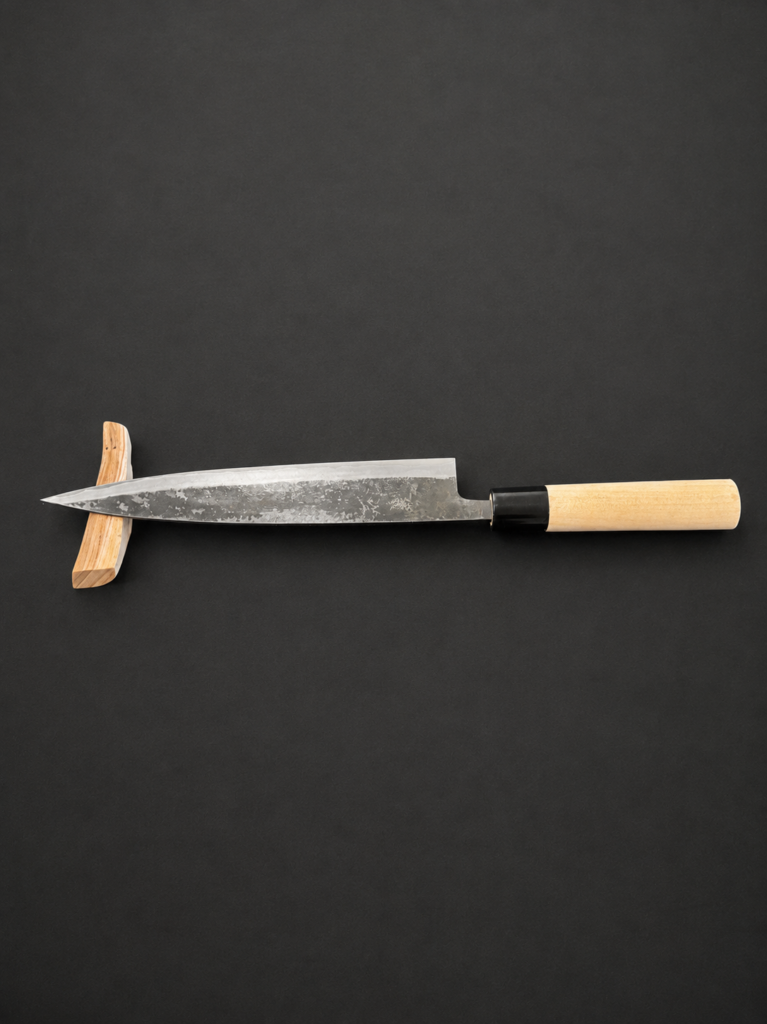
However, while a Sujihiki is an exceptional knife, it is designed for more specialised tasks. For most people purchasing their first Japanese knife, I recommend starting with a Gyuto or Santoku. As your skills and confidence grow, adding a Sujihiki to your collection is a natural next step.
Why Authenticity Matters
At Asaoya Yaichi, we source authentic handcrafted knives directly from Tosa, Japan.
Each knife is forged by skilled craftsmen who continue to preserve generations of traditional Japanese blacksmithing techniques.
Rather than simply selling knives, our goal is to introduce genuine Japanese craftsmanship, support the artisans who keep these traditions alive, and help ensure these skills continue for future generations.
Conclusion
The best Japanese knife isn’t necessarily the most expensive one—it’s the one that best suits the way you cook.
Whether you’re preparing family meals at home or working in a professional kitchen, choosing the right knife will make cooking more enjoyable, more efficient, and more rewarding.
Explore our collection of authentic handcrafted Tosa knives and experience the craftsmanship, performance, and heritage that have made Japanese knives respected around the world.
Explore our collection of authentic handcrafted Tosa knives