
A Chef’s Honest Perspective
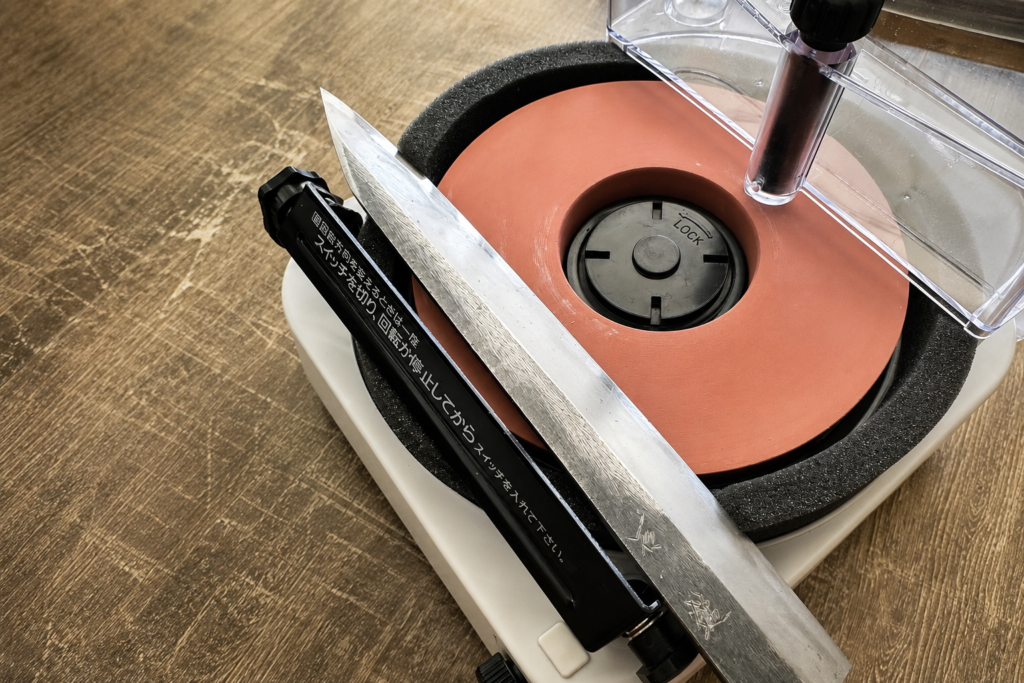
I use an electric sharpener at home.
One of the most common questions I hear is:
“How often should I sharpen my Japanese knife?”
The answer might surprise you.
After more than 25 years working as a chef in both Japan and Australia, I’ve learned that there isn’t a single correct answer.
Every chef develops their own routine based on the knives they use, the ingredients they prepare, and the standards they set for themselves.
My Routine May Surprise You
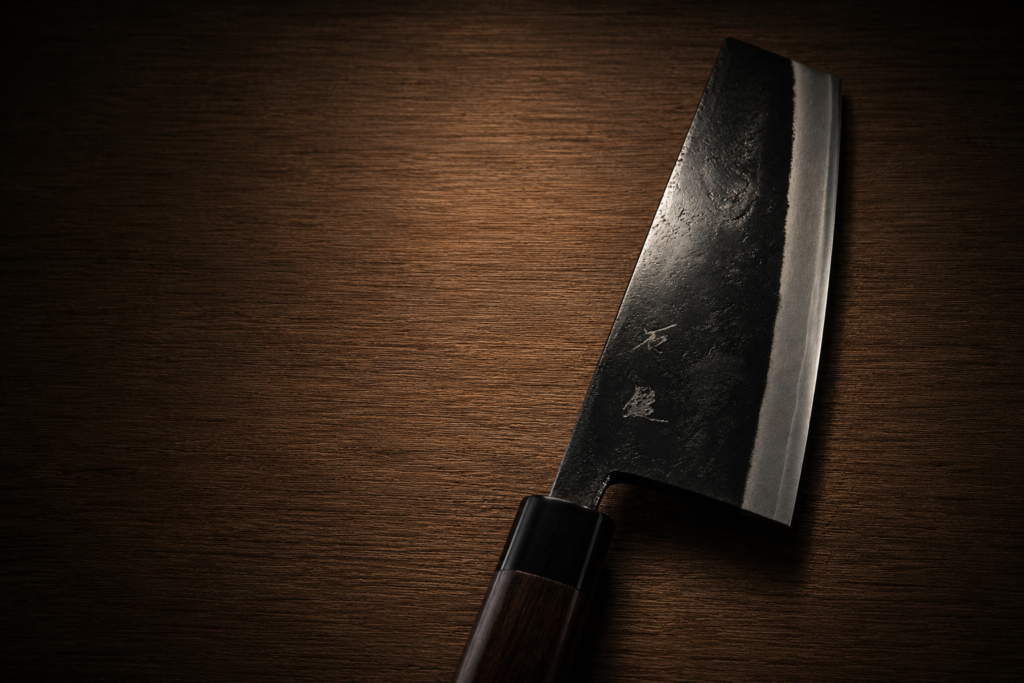
240mm Thick Deba Aogami #2 Kurouchi Walnut Handle
To be completely honest, I don’t fully sharpen my knives every day.
In my own routine, I usually do a proper sharpening on a 1000-grit whetstone about once a week.
During service, if I feel the edge beginning to lose its bite, I’ll often touch it up lightly on a 6000-grit finishing stone to keep the knife performing consistently until my next full sharpening.
That approach has worked well for me throughout many years in professional kitchens.
Every Chef Is Different
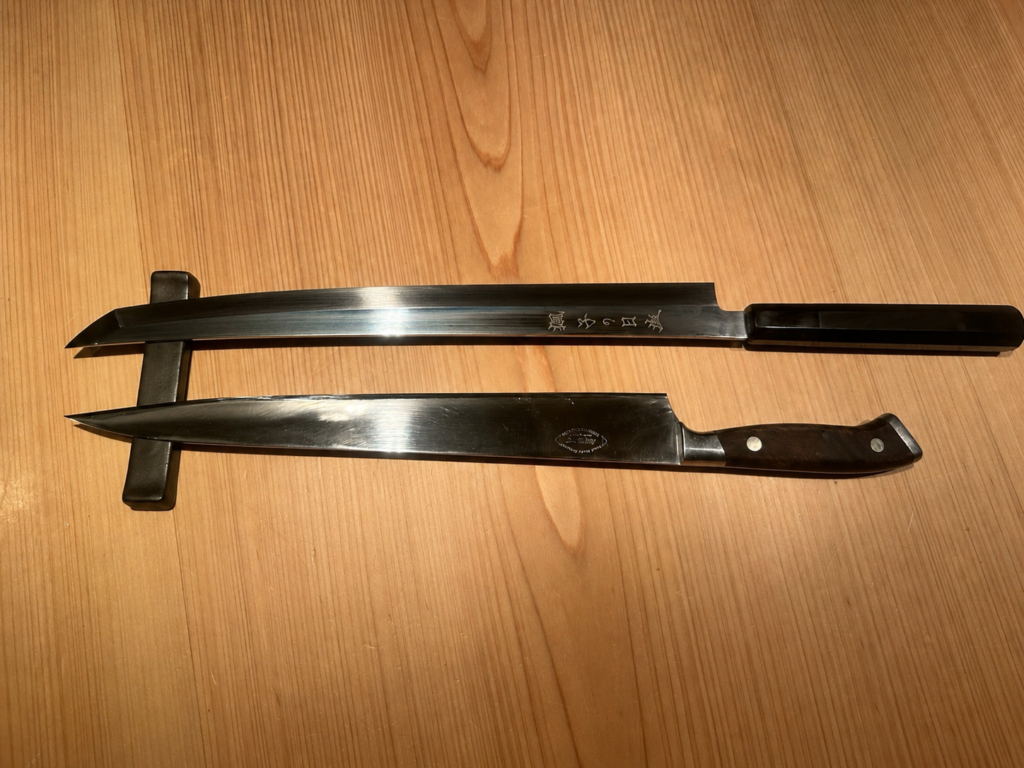
A Chef’s Daily-Cared-For Knife
At the same time, I’ve worked alongside chefs whose approach is completely different.
Some sharpen their knives every single day.
Some go even further, polishing their blades with mirror-polishing compounds until they achieve an incredibly refined finish.
When you use one of those knives, the difference can be astonishing.
I’ve borrowed colleagues’ knives before and genuinely thought,
“Wow… this thing is unbelievably sharp.”
Those moments remind me that there is always something new to learn.
I’m Still Learning Too
People sometimes assume that because I’ve been a chef for over 25 years, I must be a master sharpener.
The truth is, I don’t see myself that way.
There are many chefs whose sharpening skills are better than mine, and I’m perfectly happy to admit that.
Sharpening is a craft in itself.
Like cooking, it’s something you can continue improving for a lifetime.
I believe being honest about that is more valuable than pretending to know everything.
The Goal Isn’t Perfection
For professional chefs, the goal isn’t always creating the sharpest knife imaginable.
The real goal is having a knife that performs reliably, safely, and consistently throughout service.
For home cooks, the standard is even simpler.
You don’t need to sharpen your knife every week just because a professional chef does.
If your knife still cuts cleanly and feels comfortable to use, it’s probably doing exactly what you need.
Listen to Your Knife
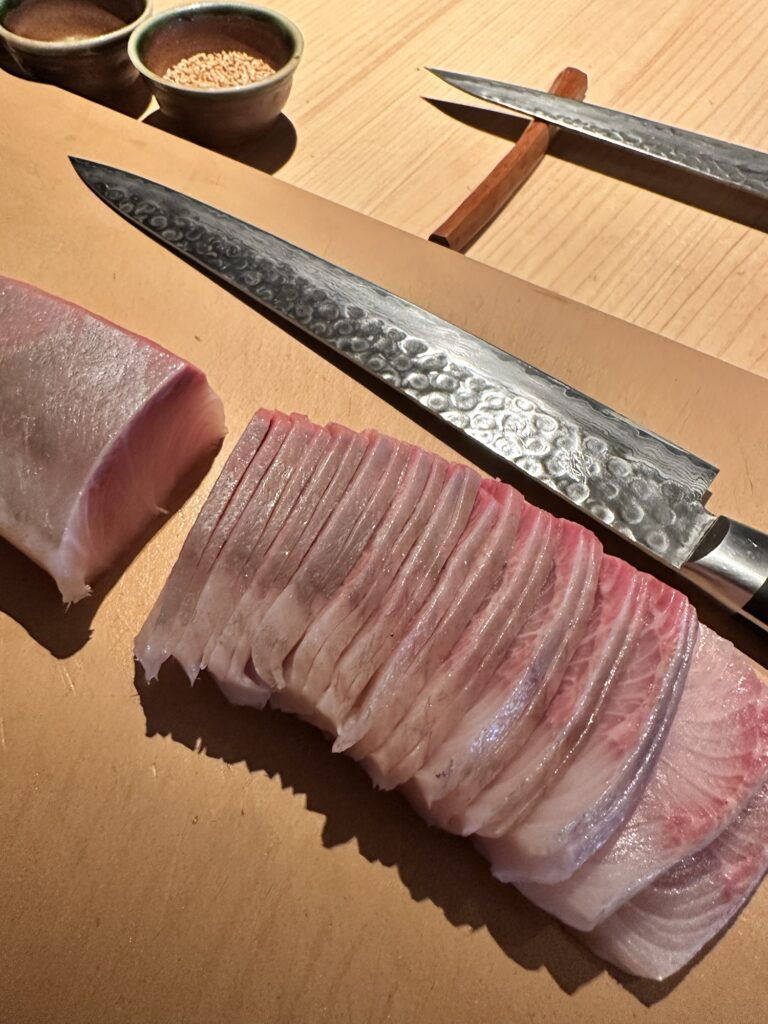
Instead of following someone else’s schedule, learn to pay attention to your knife.
Is it crushing tomatoes instead of slicing them?
Does it slip instead of biting into ingredients?
Does it require more pressure than it used to?
Those are much better indicators than the calendar.
Every knife tells you when it’s time.
You simply have to learn how to listen.
A Final Thought

When I’m not in the kitchen, I’m probably squid fishing.
One lesson I’ve learned throughout my career is that there is no single “correct” way to care for a Japanese knife.
Different chefs have different routines.
Different kitchens have different demands.
What matters most is finding a routine that keeps your knife performing well and encourages you to enjoy using it.
A well-maintained Japanese knife isn’t about chasing perfection.
It’s about building a relationship with a tool that can serve you for many years.
Looking for a Japanese knife worth caring for?
At Asaoya Yaichi, we carefully select authentic handcrafted Tosa knives made by skilled Japanese blacksmiths.
Whether you’re buying your first Japanese knife or adding to an existing collection, our goal is to help you find a knife you’ll enjoy using—and maintaining—for years to come.
Explore our collection here: