Part 2 – A Knife That Grows With You
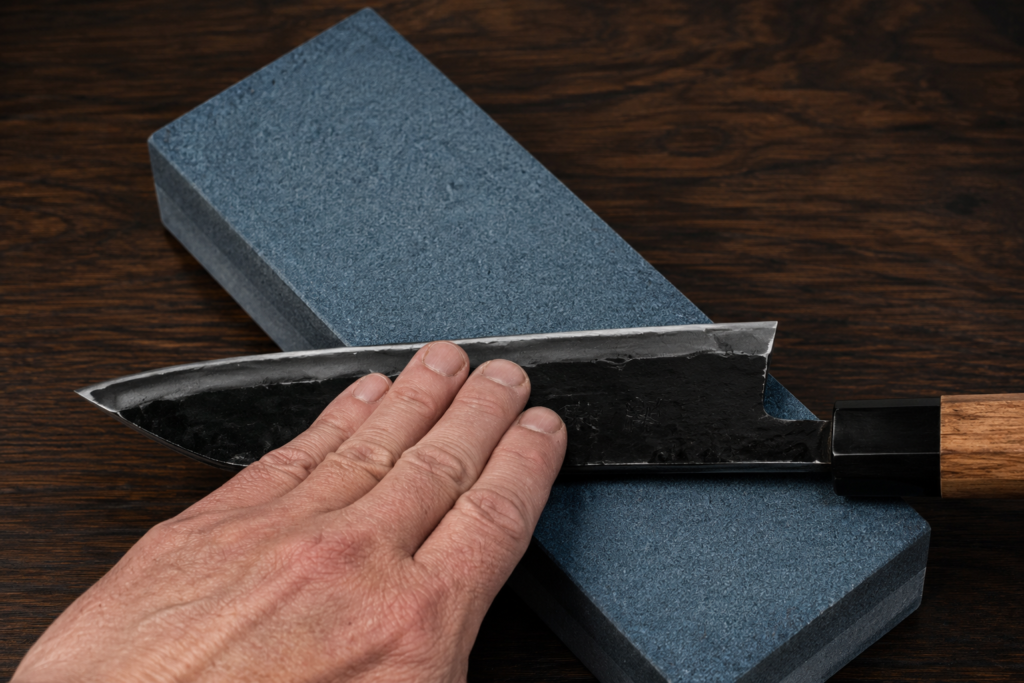
The more I used traditional Tosa knives, the more I realised something.
The blacksmith’s work doesn’t end when the knife leaves the forge.
In many ways, that’s where the next chapter begins.
A handcrafted knife is not meant to remain exactly as it was on the day it was made.
It is meant to grow alongside the person who uses it.
That may sound unusual at first.
But after spending more than twenty-five years working as a chef, I have come to believe it is true.
A Knife That Learns Your Hands
A Knife That Learns Your Hands
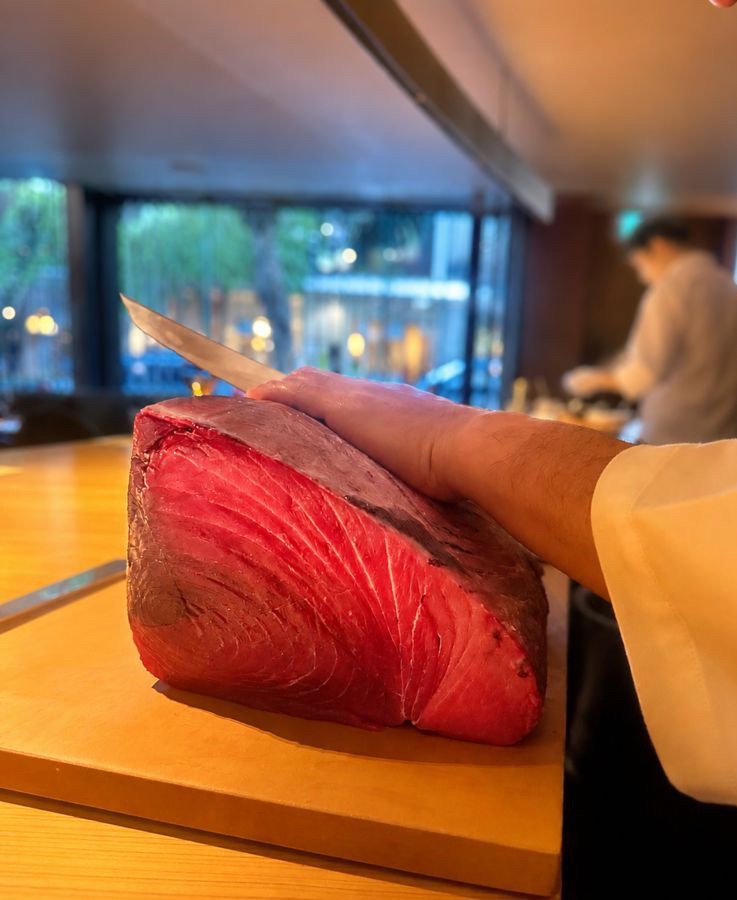
Every chef works differently.
Some prefer a finer edge for delicate slicing.
Others leave a little more strength behind the edge for heavier work.
Some sharpen frequently.
Others wait until the knife tells them it is time.
None of these approaches are necessarily right or wrong.
Over time, every sharpening subtly changes the knife.
Every service leaves another memory.
Every meal adds another chapter.
Eventually, something remarkable happens.
The knife no longer feels like a tool made by someone else.
It feels like your knife.
That is why I often say a great knife isn’t finished by the blacksmith alone.
The blacksmith begins the story.
The owner completes it.
Beauty Beyond Perfection
240mm Thick Deba Aogami #2 Kurouchi Walnut Handl
When many people imagine a premium Japanese knife, they picture a flawless mirror finish.
I used to think the same way.
Today, I see beauty differently.
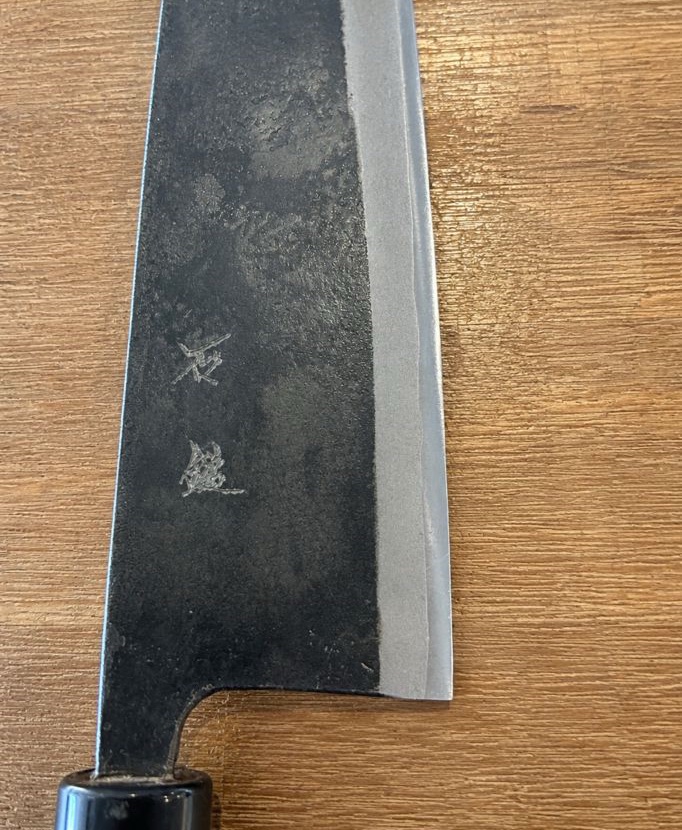
A softened Kurouchi finish.
A natural patina on carbon steel.
Small marks left behind after years of careful sharpening.
These are not imperfections.
They are evidence of a knife that has been trusted.
To me, that is a far more meaningful kind of beauty.
It reminds me of the Japanese philosophy often described as Wabi-Sabi—finding beauty in authenticity, simplicity and the passage of time.
The character of a handcrafted knife is not frozen on the day it is forged.
It continues to evolve with every meal it helps create.
Different Regions, Different Traditions
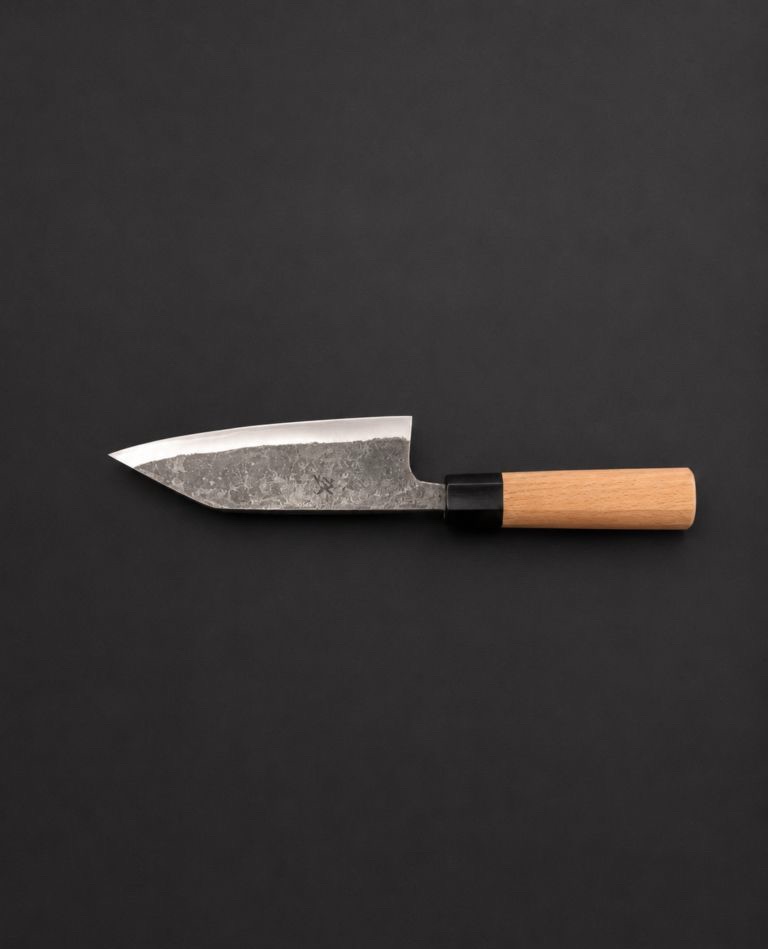
150mm Kiritsuke Thick Deba Aogami #2 Kurouchi Walnut Octagonal Handle
Japan is home to many extraordinary knife-making regions.
Sakai is renowned for its precision and refined finishing.
Kyoto is admired for its elegance and long tradition of craftsmanship.
I have enormous respect for both.
Tosa simply tells a different story.
Its blacksmiths were shaped by a region where tools were expected to work hard every single day.
Generations of craftsmen forged tools for farming, forestry and fishing long before they became known for kitchen knives.
That heritage is still visible today.
A Tosa knife doesn’t try to hide where it came from.
Its forged texture, Kurouchi finish and practical design proudly reflect its working roots.
That is exactly what many people come to appreciate.
Some collectors are captivated by the refined elegance of Sakai or Kyoto.
Others are drawn to the rugged honesty of Tosa.
Many enjoy collecting knives from different regions because each one tells a different story about Japan’s remarkable craft traditions.
It isn’t about deciding which is better.
It is about appreciating the unique character each tradition offers.
Why Asaoya Yaichi Exists
People sometimes ask why I decided to start Asaoya Yaichi.
The answer is simple.
I wanted to introduce Australians to authentic handcrafted Tosa knives.
Not because they are fashionable.
Not because they are the most expensive.
But because I believe they deserve to be recognised for what they truly are.
For too long, I have seen mass-produced knives marketed as “Japanese knives” without representing the traditions that made Japanese craftsmanship respected around the world.
That isn’t what I wanted to share.
I wanted to introduce knives with a genuine story.
Knives made by skilled blacksmiths whose techniques have been handed down through generations.
Knives that improve with care instead of losing their value.
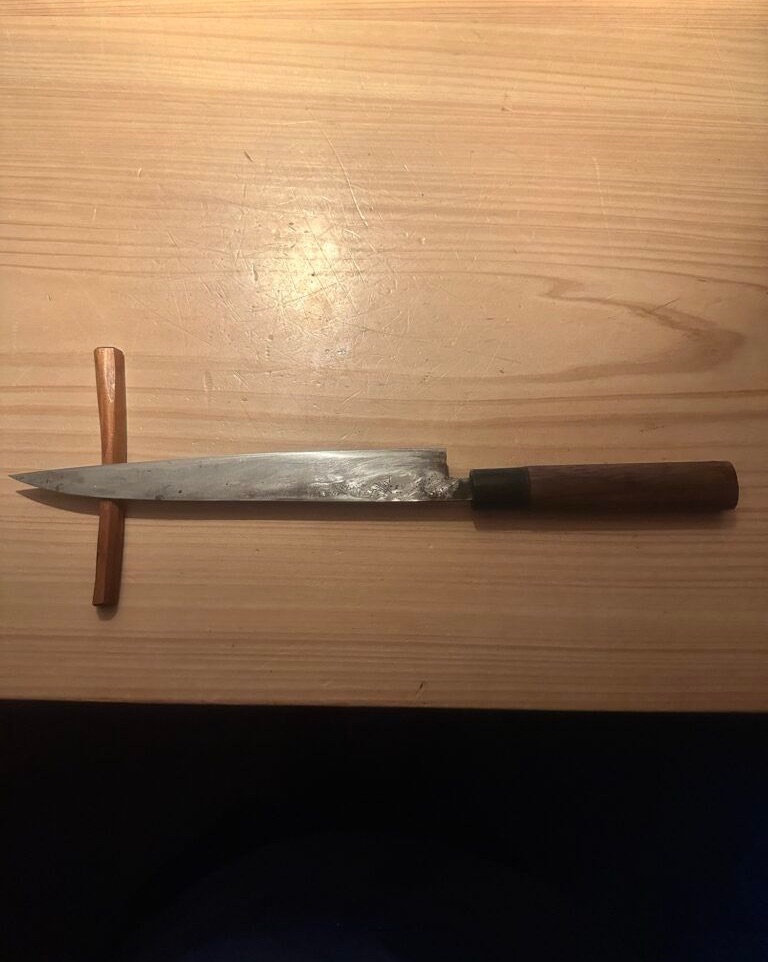
Knives that can still be used decades from now—just like the Yanagiba my mother used for around twenty years before passing it on to me, and that I’ve continued using for another twenty.
That knife reminds me that a truly great knife isn’t measured by how it looks on the first day.
It’s measured by how faithfully it serves over a lifetime.
More Than Selling Knives
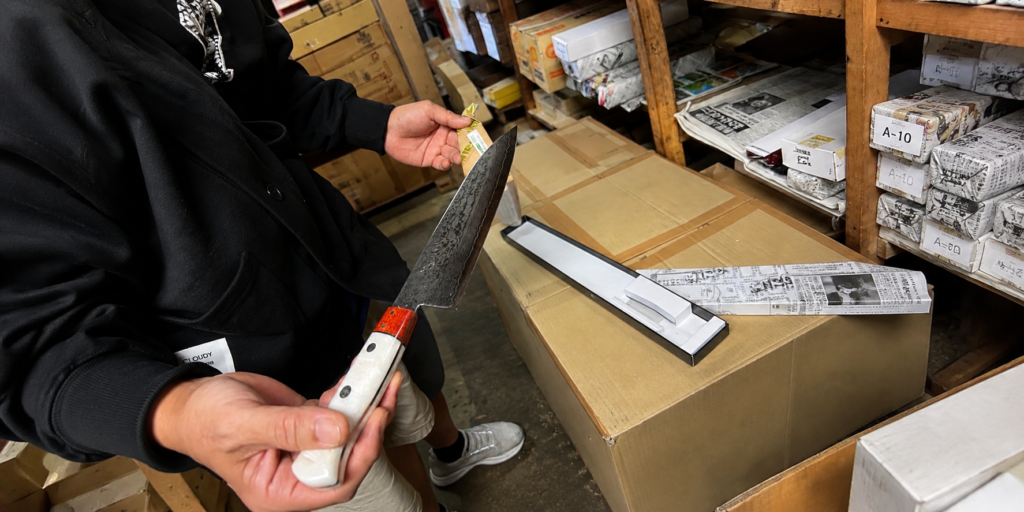
Working with Ishizuchi Kanamono Seisakusho has strengthened that belief.
For more than a century, they have remained committed to supporting authentic craftsmanship and the people behind it.
That philosophy reflects exactly what I hope Asaoya Yaichi can become.
Not simply a shop.
But a bridge.
A bridge between the traditional blacksmiths of Tosa and the people who will use their work every day here in Australia.
Every knife carries the skill of the craftsman who forged it.
But its future belongs to the person who chooses to use it.
That relationship is what makes handcrafted knives so special.
A Final Thought
If there is one lesson I have learned after more than twenty-five years as a chef, it is this:
The best knife is not always the one that impresses you on the first day.
Sometimes, the best knife is the one that quietly earns your respect over many years.
That is exactly what happened to me.
I didn’t fall in love with Tosa knives the moment I first picked one up.
I fell in love with them after cooking with them.
After sharpening them.
After trusting them.
That journey changed the way I looked at knives forever.
It is also the reason Asaoya Yaichi exists today.
If you’ve always believed traditional Japanese knives are difficult to maintain, you may be surprised.
With a little knowledge and regular care, a handcrafted knife can stay with you for decades.
In future articles, I’ll be sharing practical knife care, sharpening techniques, and maintenance tips to help you get the very best from your knife—whether you’re a professional chef or cooking at home.
If this article encourages even one person to look beyond appearances and discover the craftsmanship, history and spirit behind a traditional Tosa knife, then I believe I have achieved something meaningful.
Because we are not simply preserving knives.
We are helping preserve the people, the skills and the traditions that continue to shape them.
Explore Authentic Tosa Knives
If this story resonates with you, I’d be honoured to welcome you to Asaoya Yaichi.
Every knife in our collection is carefully sourced through Ishizuchi Kanamono Seisakusho and handcrafted by traditional blacksmiths in Tosa, Japan.
These are not simply knives to own.
They are knives to use.
To maintain.
To sharpen.
To grow with.
Explore our handcrafted Tosa knife collection:
👉 https://www.asaoyayaichi.com.au
Read more articles about Japanese knives and knife care:
👉 https://blog.asaoyayaichi.com.au
Thank you for taking the time to read my story.
The blacksmith begins the story.
Time shapes the knife.
The person who uses it gives it its soul.