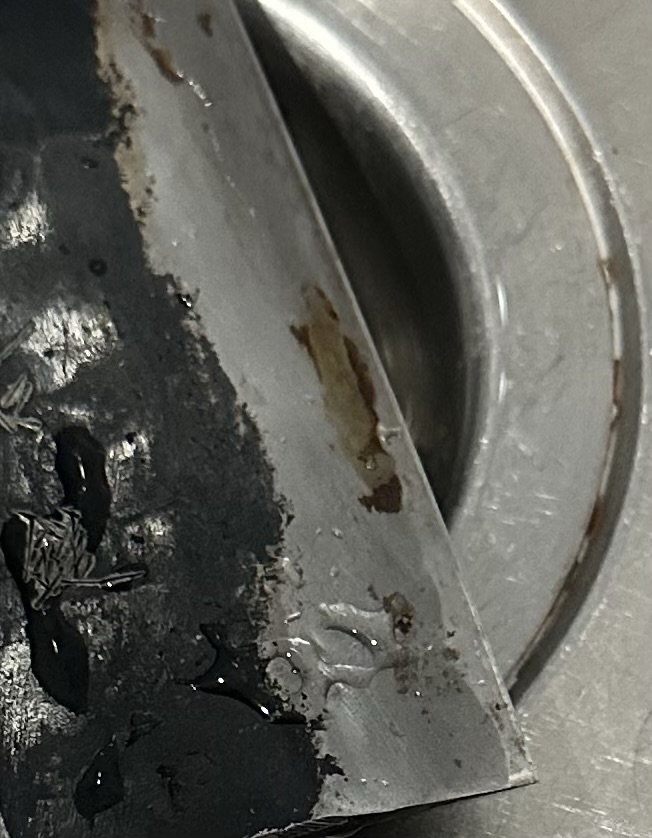
If you use carbon steel Japanese knives, rust is something you will eventually need to think about. Good Japanese knife rust removal is not only about removing large patches of corrosion. Sometimes the real challenge is dealing with a tiny rust spot in a place where a whetstone simply cannot reach.
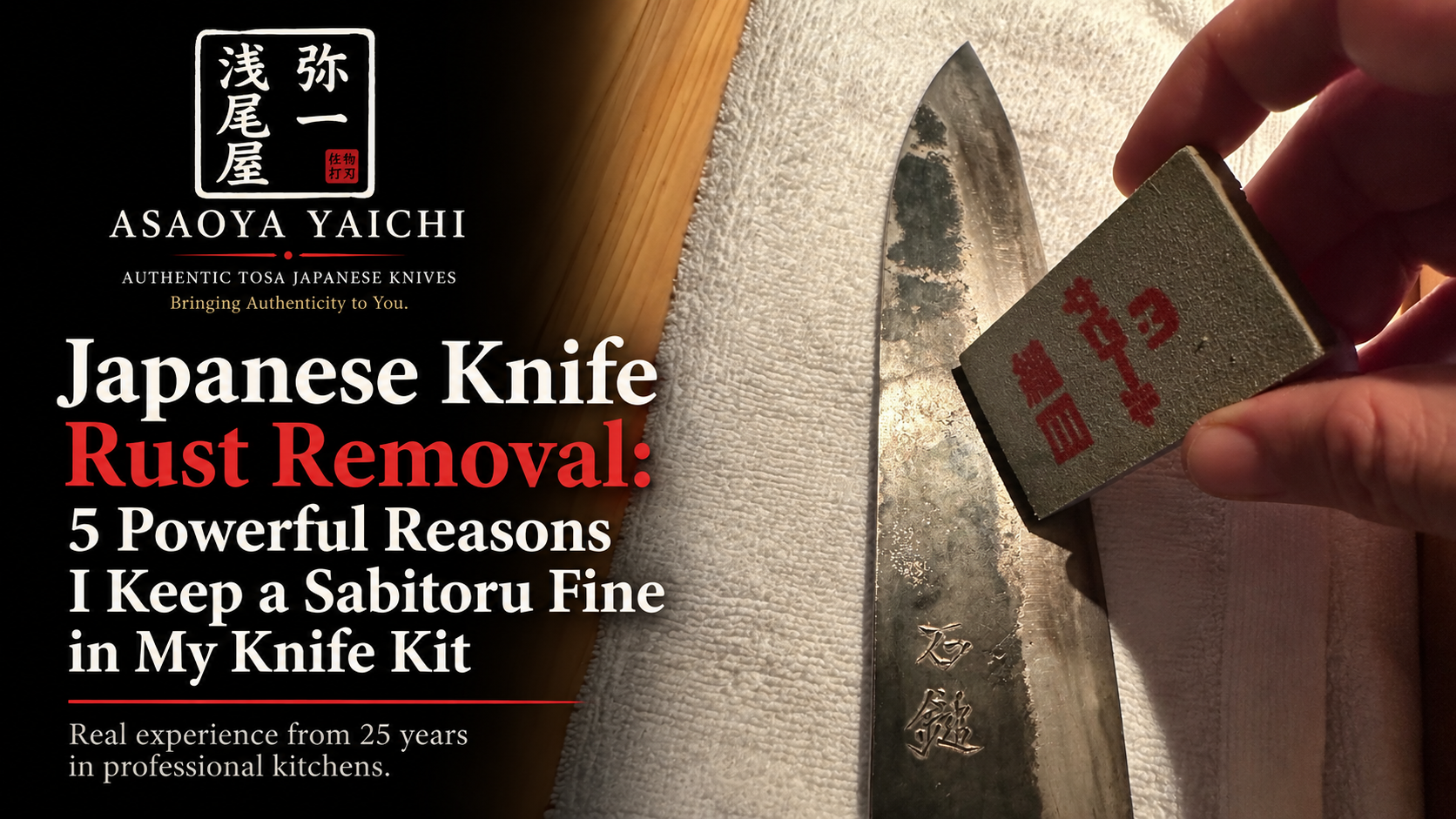
After more than 25 years working in professional kitchens, I have used different ways to maintain Japanese knives. Whetstones are essential for sharpening, and sandpaper can certainly be useful for restoration work. But for small, targeted rust removal, there is another simple Japanese tool that I find extremely practical: the Sabitoru Rust Eraser.
At Asaoya Yaichi, we are planning to introduce the Sabitoru Fine #320 to our knife-care range. It is small, simple and inexpensive, but there are several reasons why I think it deserves a place in a chef’s knife kit.
👉 INTERNAL LINK: Tosa Knives and Kurouchi — Why the Black Finish Became So Common
Japanese Knife Rust Removal in Places a Whetstone Cannot Reach

A whetstone is one of the most important tools for maintaining a Japanese knife, but it has a limitation: it is flat.
That becomes particularly obvious with traditional single-bevel Japanese knives such as yanagiba and deba.
The back of a traditional single-bevel knife normally has a slightly hollow-ground area known as urasuki. Because this area is recessed, a flat whetstone cannot simply contact every part of the surface.
This is where a small rust eraser becomes very useful.
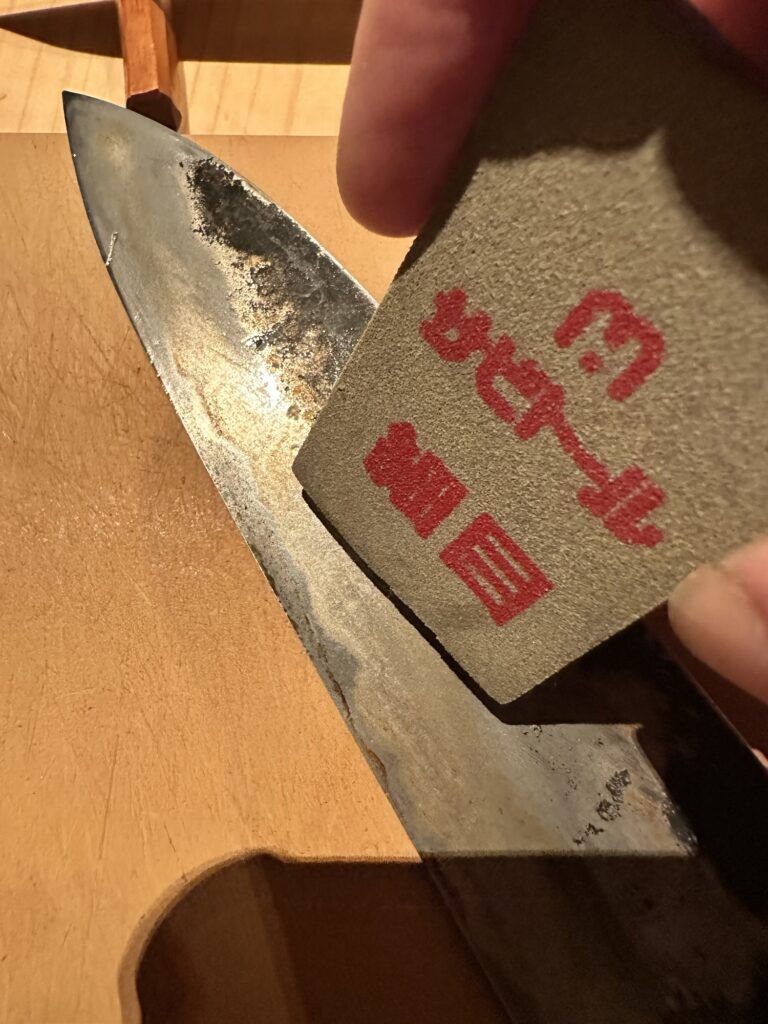
Rather than trying to grind an entire surface, Sabitoru can be positioned directly over a small area that needs attention. Its compact, slightly flexible form makes Japanese knife rust removal much more targeted in areas that are difficult to reach with a stone.
For me, this is one of its biggest advantages.
👉 INTERNAL LINK: 刃 Japanese Knife Bevels | Single Bevel vs Double Bevel Explained.
Why Sabitoru Fine Works Well for Japanese Knife Rust Removal

Sabitoru works almost like an eraser. The Fine version is approximately 65 × 40 × 9–10 mm and uses a #320 abrasive. It is intended for smaller areas of rust and situations where you want to minimise scratching compared with a more aggressive grade.
That does not mean it cannot scratch a knife.
Any abrasive removes material, and even the Fine version can leave fine marks depending on the condition of the blade, its original finish and how aggressively it is used. This is especially important with polished, Damascus or decorative finishes.
The idea is not to attack the blade. Use only the amount of abrasion necessary to deal with the affected area.
👉 INTERNAL LINK: Add a link here to your article about patina versus rust on carbon steel Japanese knives.
Japanese Knife Rust Removal Does Not Always Require a Full Sharpening
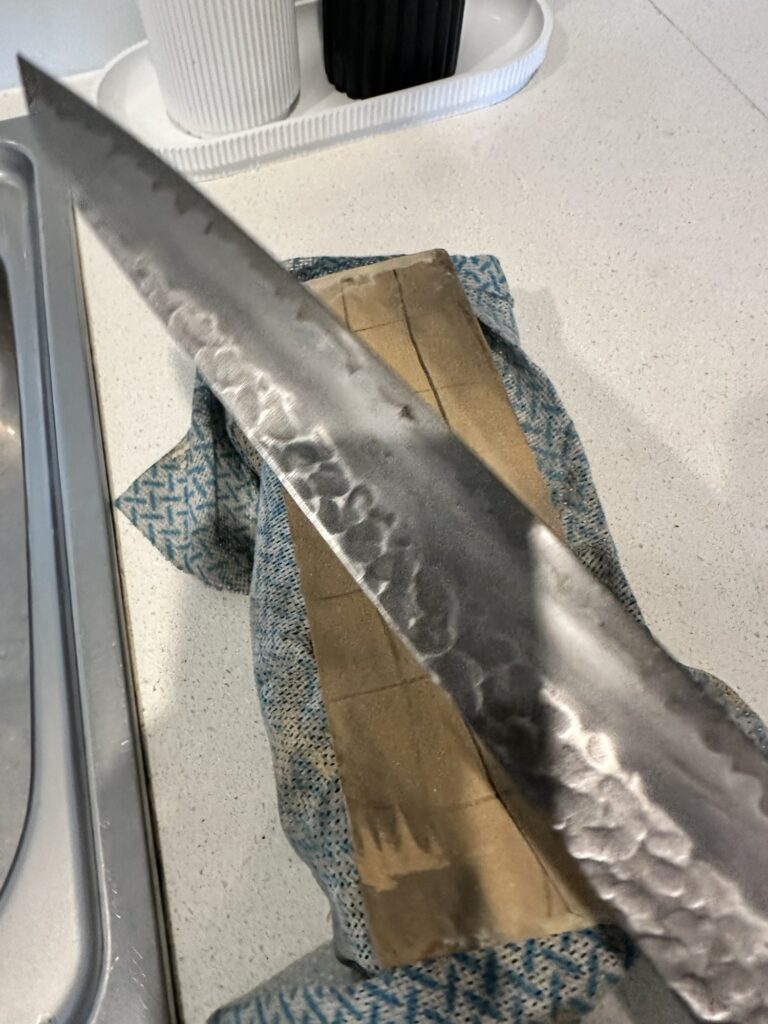
210mm Gyuto VG10 Polished Hammered 67 Layer Damascus Green Handle
Another reason I like this type of tool is that rust removal and sharpening are two different jobs.
If a knife is already sharp but develops one tiny rust spot, I do not necessarily want to put the whole knife on a whetstone just to address that one area.
With a Sabitoru, I can concentrate on the problem itself.
This is particularly useful in professional kitchens, where knives are constantly exposed to moisture, acidic ingredients and repeated washing throughout service.
👉 INTERNAL LINK: Add a link here to your article about sharpening Japanese knives and revealing their true potential.
What About Using Sandpaper Instead?
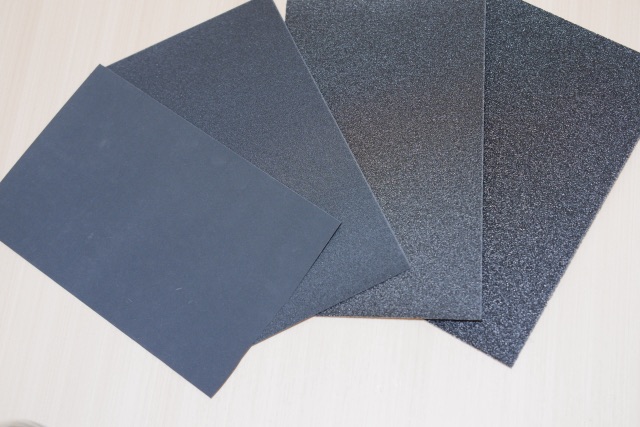
Of course, you can use sandpaper.
I have nothing against it. Different grades of wet-and-dry paper can be extremely useful when restoring or refinishing a blade, and in some situations they give you greater control over the final surface.
But Sabitoru has one very practical advantage: convenience.
It is compact, easy to hold and easy to keep inside a knife kit. If I notice a small rust spot, I do not need to prepare a complete refinishing setup. I have a small abrasive tool ready to use exactly where it is needed.
For a working chef, that simplicity matters.
👉 INTERNAL LINK: The True Value of Japanese Knives | 7 Reasons They Are Worth the Investment
One Thing I Would Like to See: Sabitoru Extra Fine
The Fine Sabitoru is #320, but personally, I would love to see the manufacturer produce an even finer version someday.
Maybe a Sabitoru Extra Fine.
For extremely light surface rust or very delicate maintenance, an even finer abrasive could potentially give users another level of control. There are times when I want to remove as little material as possible and disturb the original finish as little as possible.
Until then, Fine is the grade I have chosen to bring into Asaoya Yaichi.
A Small Tool That Makes Japanese Knife Rust Removal Easier
Japanese knives do not need complicated maintenance, but carbon steel does require attention.
Keep the blade clean, dry it properly after use and do not allow active rust to remain on the steel. When a small rust spot does appear, having the right tool can make the job considerably easier.
Sabitoru does not replace a whetstone, and it does not replace proper knife care. Sandpaper still has its place as well.
What it does offer is something different: a compact, targeted and practical way to perform Japanese knife rust removal, especially in areas that are difficult to reach with a flat stone.
That is exactly why I like it.
The Sabitoru Fine Rust Eraser will be coming soon to Asaoya Yaichi in Australia. Once it arrives, I will also add my own photographs showing how I use it on Japanese kitchen knives.
👉 Explore more:
https://blog.asaoyayaichi.com.au
👉 Visit our online store:
https://asaoyayaichi.com.au
Thank you for reading, and I hope to see you again in the next story.