When a knife does not become as sharp as expected, many people assume the problem is their technique or the knife itself.
But sometimes, the real problem is the whetstone.
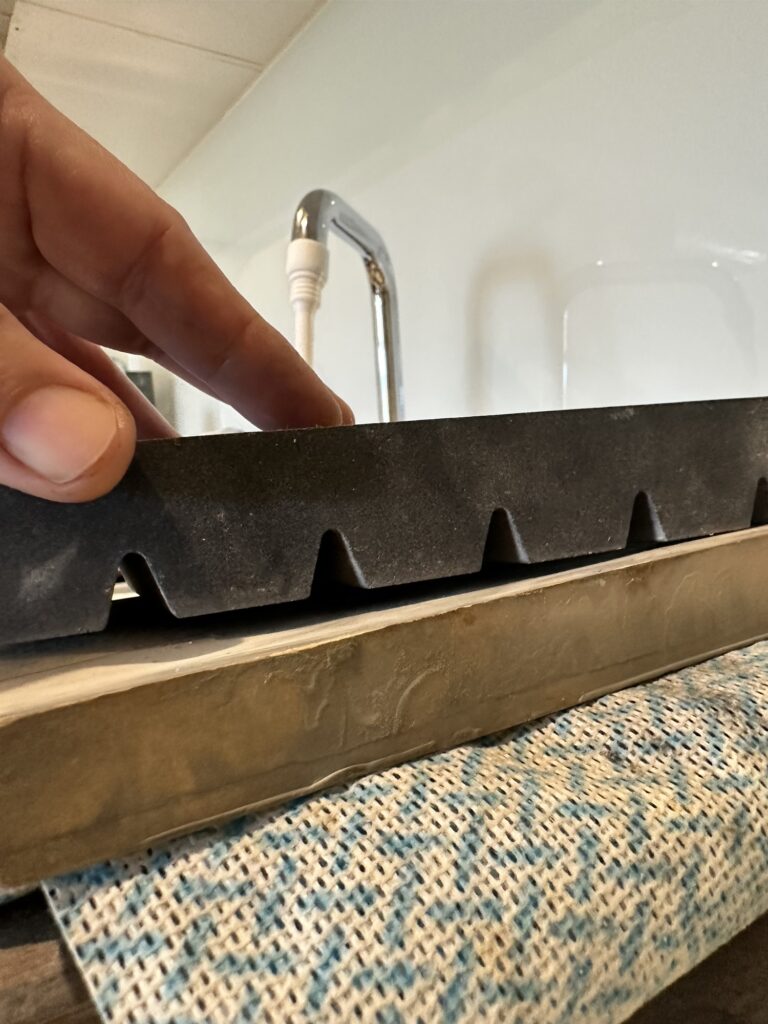
As a whetstone is used, its surface gradually wears down. Because we often sharpen in the same area, the centre can become hollow. Flattening restores the stone to an even surface so the blade can make consistent contact while sharpening.
What Happens When the Stone Is Not Flat?
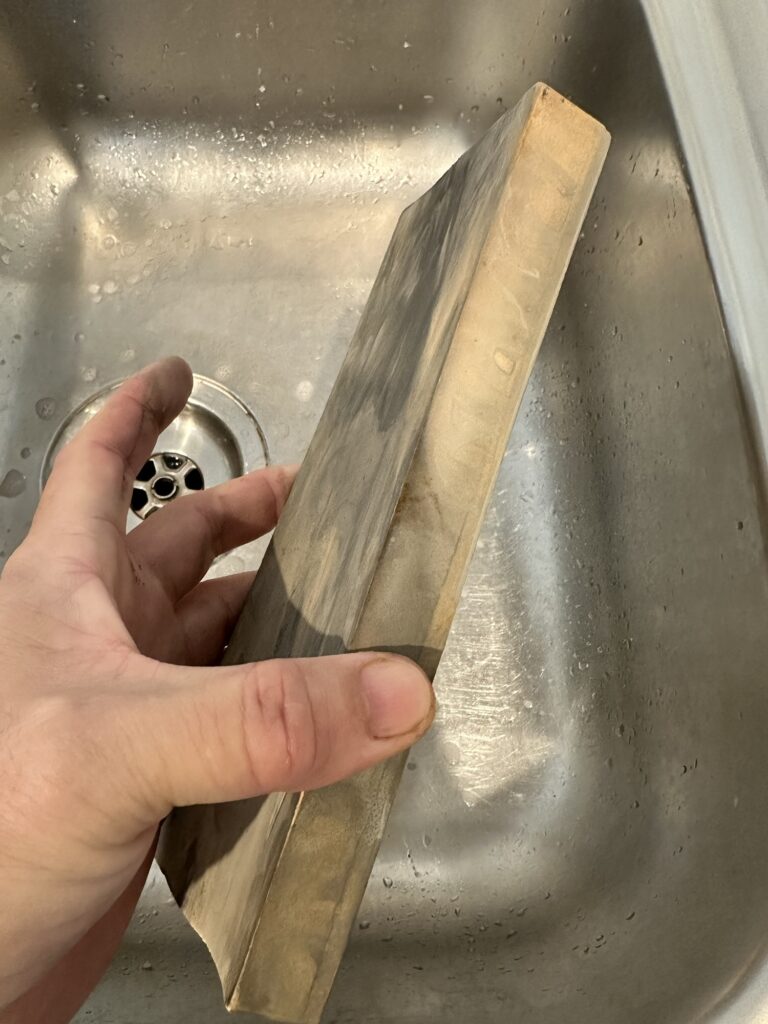
Sharpening on a hollow whetstone can make it difficult to maintain a consistent angle.
The blade may still become sharp enough to cut, but the bevel can become uneven. It may also be difficult to raise an even burr along the entire edge, and over time the shape of the blade may be affected.
This is something I learned through experience.
A Lesson From My Early Years as a Chef
When I first became a chef, I used a whetstone that was kept at the restaurant.
It had not been flattened and was already noticeably hollow. At the time, I did not understand why that mattered.
My knives became sharp enough to use, so I continued sharpening on that same stone for around two years.
Later, while visiting Japan, I took one of my knives back to the shop where I had bought it in Kappabashi and asked them to sharpen it.
The person looked at the knife and said:
“This is no good.”
He laughed dismissively, but did not explain what was wrong, why it had happened, or how I could correct it.
I will not name the shop. However, I never bought another knife from them.
I accept that my sharpening was not good. But beginners cannot improve when they are only criticised and given no explanation.
How Often Should You Flatten a Whetstone?
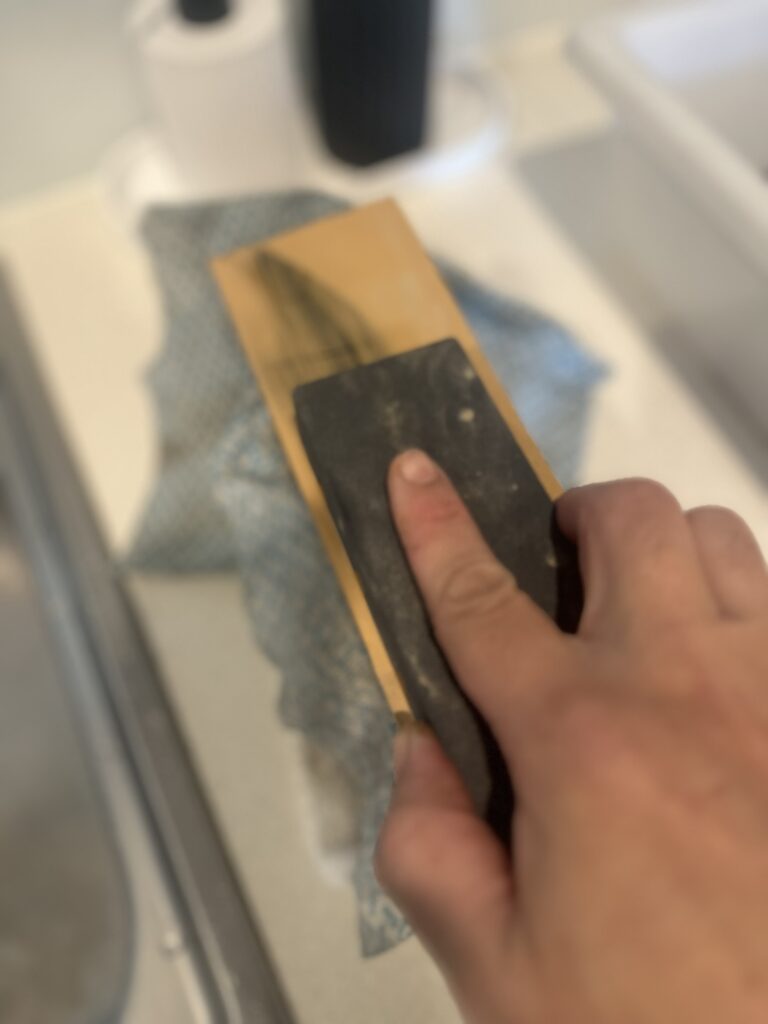
There is no single rule.
It depends on how often you sharpen, the hardness of the stone and the amount of pressure you use.
Some people flatten their stone before every sharpening session. Others check it after sharpening several knives.
The important thing is to inspect the surface regularly and flatten it before the hollow becomes too deep.
What That Experience Taught Me
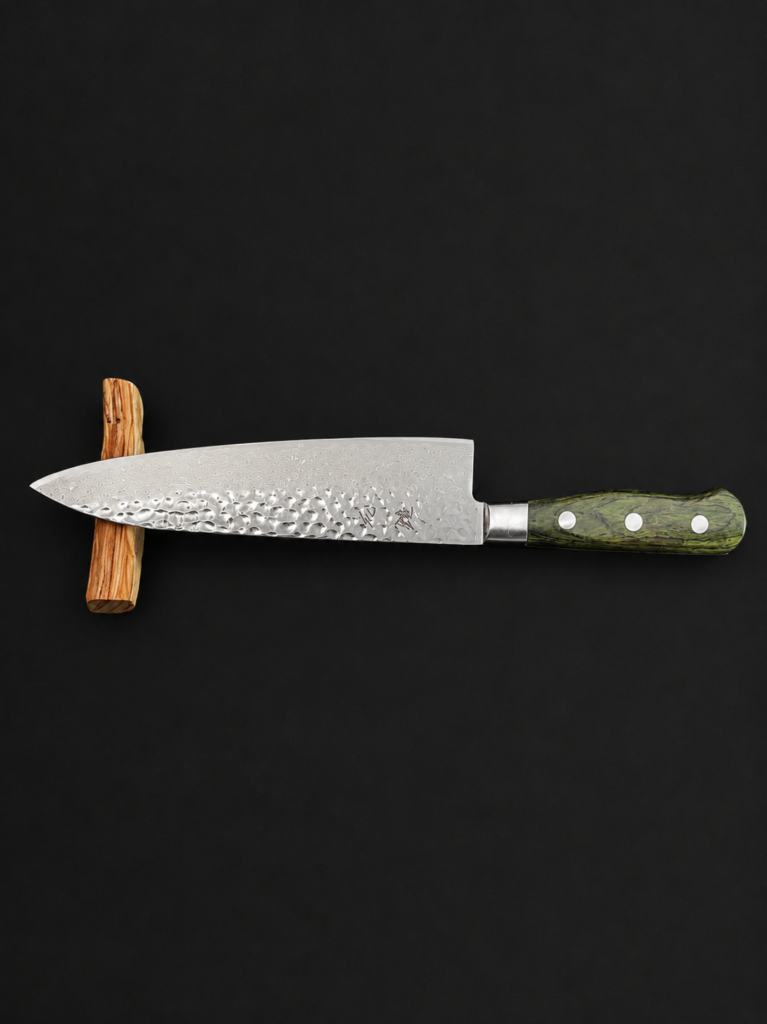
180mm Santoku VG10 Polished Hammered 67 Layer Damascus Green Handle
Today, I find myself selling knives.
At the moment, Asaoya Yaichi does not offer a professional sharpening service, and I do not pretend to be a sharpening specialist.
However, I do want to treat customers differently from the way I was treated.
People should not be made to feel embarrassed because they are beginners or because they have made a mistake. I made plenty of mistakes myself, including sharpening on an unflattened whetstone for two years.
When possible, I want to explain:
- What has gone wrong
- Why it matters
- What can be done next
Selling a knife should not be the end of the relationship.
Good information and simple maintenance can help a well-made knife remain part of someone’s kitchen for many years.
Looking for a Japanese Knife Made to Last?
At Asaoya Yaichi, we offer handcrafted Tosa knives made by skilled Japanese craftspeople.
Whether you are buying your first Japanese knife or adding to your collection, proper sharpening and whetstone maintenance will help it perform at its best.
Explore our collection of authentic handcrafted Tosa knives.
From Tosa, Japan, to your kitchen.