Why I Chose Tosa Knives
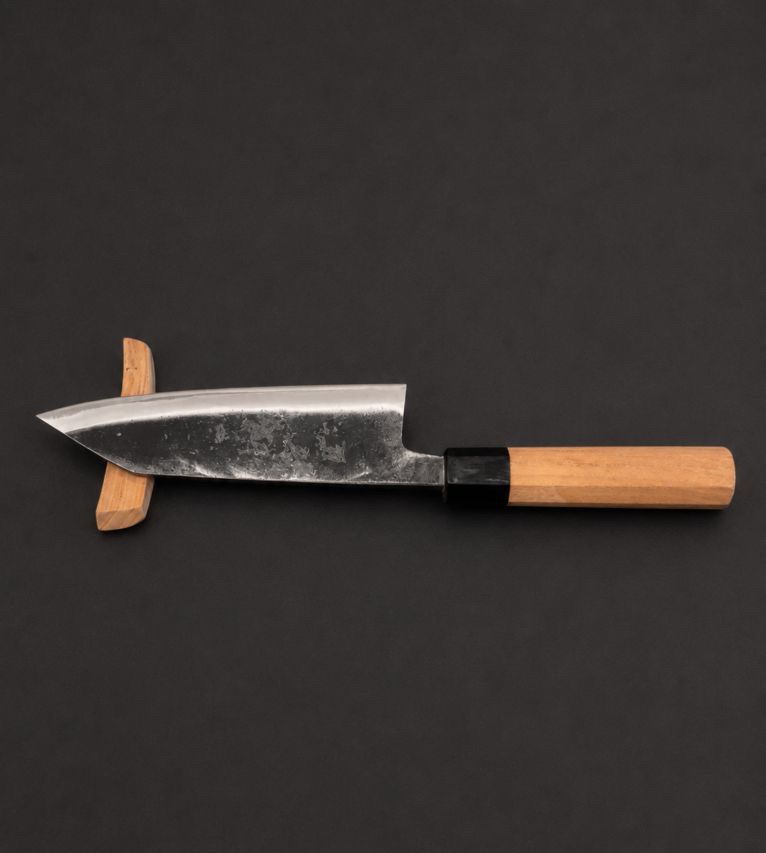
165mm Kiritsuke Aogami #2 Kurouchi Walnut Octagonal Handle
I’ll be honest.
The first time I held a traditional Tosa knife, I wasn’t impressed.
At that stage of my career, I believed the best Japanese knives had to look a certain way.
Mirror-polished.
Beautifully finished.
Elegant.
To me, that was what a premium knife looked like.
Then I picked up a traditional Kurouchi Tosa knife.
It felt different.
It looked different.
If I’m being completely honest, I didn’t really like it.
It seemed rough.
Almost unfinished.
I couldn’t understand why so many people respected it
Looking back now, I realise the knife wasn’t the problem.
I simply hadn’t lived with it long enough.
Twenty-Five Years Behind the Knife
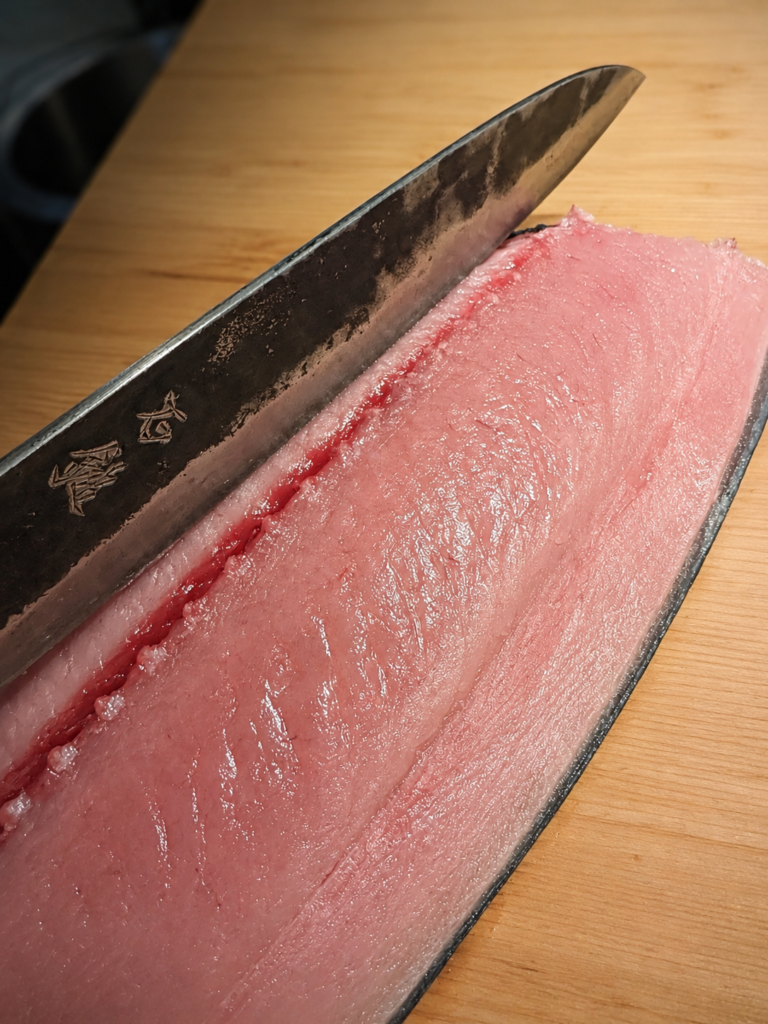
For more than twenty-five years, I worked as a chef in both Japan and Australia.
Except for my days off, I spent almost every day with a knife in my hand.
Preparing fish.
Breaking down ingredients.
Serving customers who expected consistency every single service.
A professional kitchen teaches you something that catalogues and advertisements never can.
A knife isn’t judged by how beautiful it looks when it’s new.
It’s judged by how it performs after years of work.
After thousands of sharpenings.
After countless services.
After becoming part of your own hands.
The Knife That Taught Me This Lesson
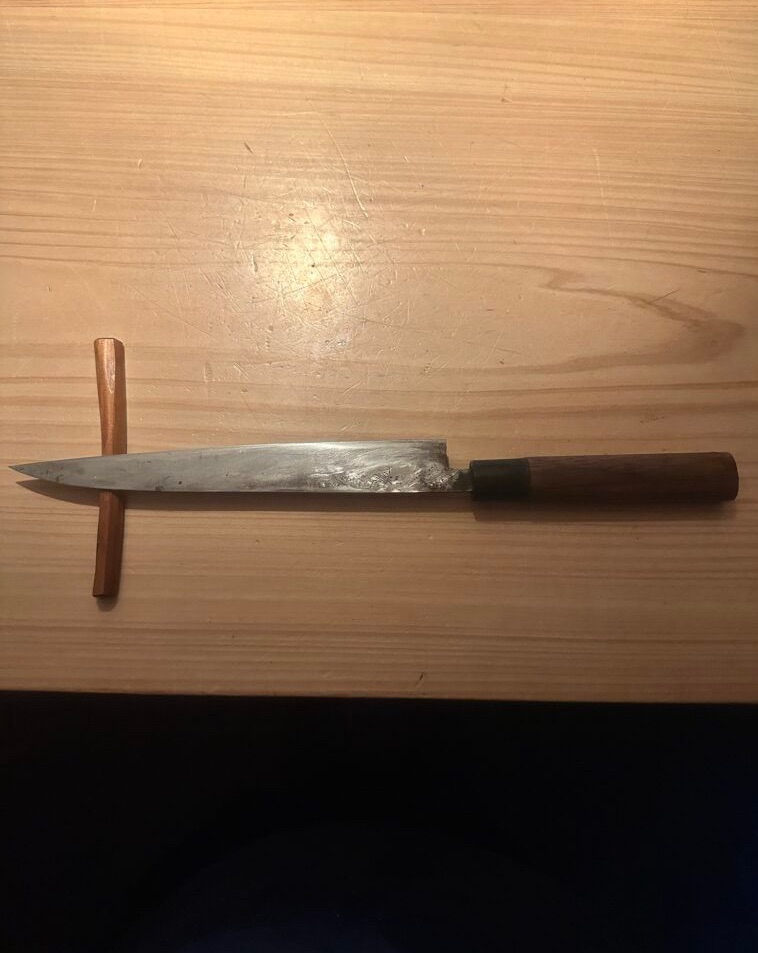
A 40-Year-Old Yanagiba Knife My Mother Passed Down to Me
The most valuable knife I own isn’t the newest.
It isn’t the most expensive.
It’s a Yanagiba that belonged to my mother.
She loved cooking, and she cared for that knife for decades.
Today, around forty years after it first entered our family, I still use it.
Every time I sharpen it, I’m reminded that a great knife isn’t something you simply buy.
It’s something you build a relationship with.
Every sharpening changes it.
Every meal leaves a memory.
Every year gives it more character.
The knife I use today is no longer exactly the knife my mother once held.
It has become part of both our stories.
That is something money cannot buy.
Discovering Tosa Again
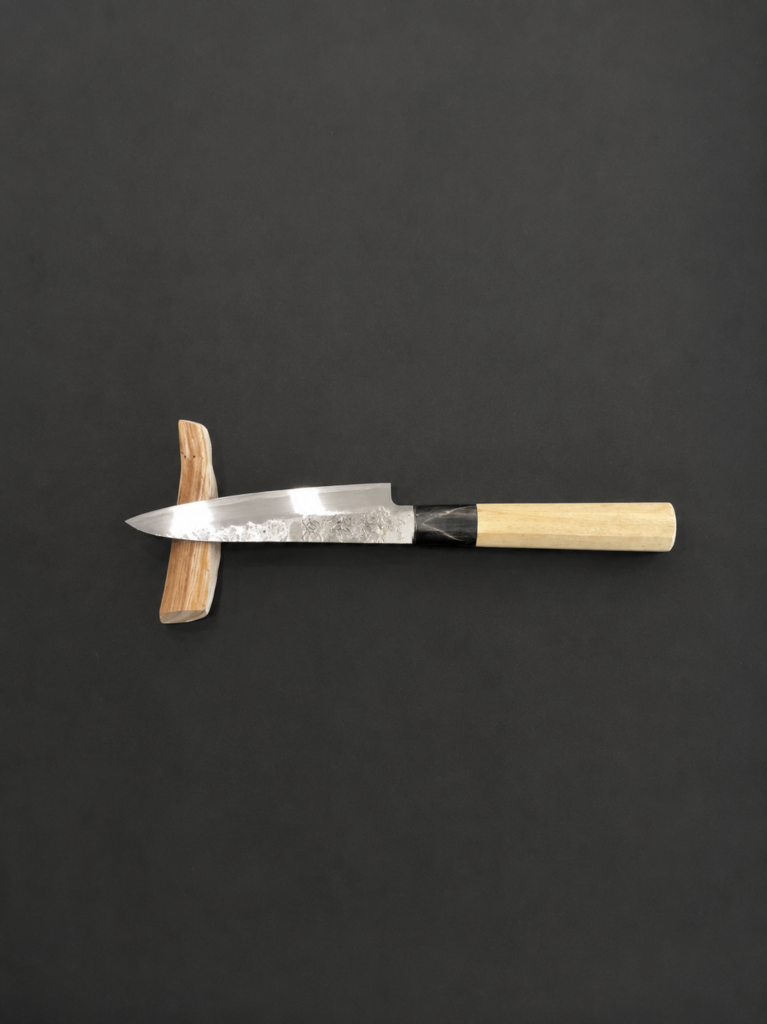
120mm Petty Ginsan Nashiji Forged Magnolia Octagonal Handle Buffalo Horn Ferrule
Years later, something unexpected happened.
My brother-in-law had a close relationship with Ishizuchi Kanamono Seisakusho.
Through that connection, I received several sample knives.
At first, I didn’t expect much.
After all, my first impression of traditional Tosa knives had never been particularly strong.
But I decided to use them.
Not for a day.
Not for a week.
I used them in the way a chef truly tests a knife.
Day after day.
Service after service.
Sharpening them.
Maintaining them.
Learning them.
Slowly, my opinion began to change.
What I had once mistaken for roughness turned out to be honesty.
What I had once considered simple became incredibly practical.
The knife wasn’t trying to impress me on the first day.
It was asking me to discover it over time.
That is when I truly began to understand Tosa knives.
More Than a Supplier
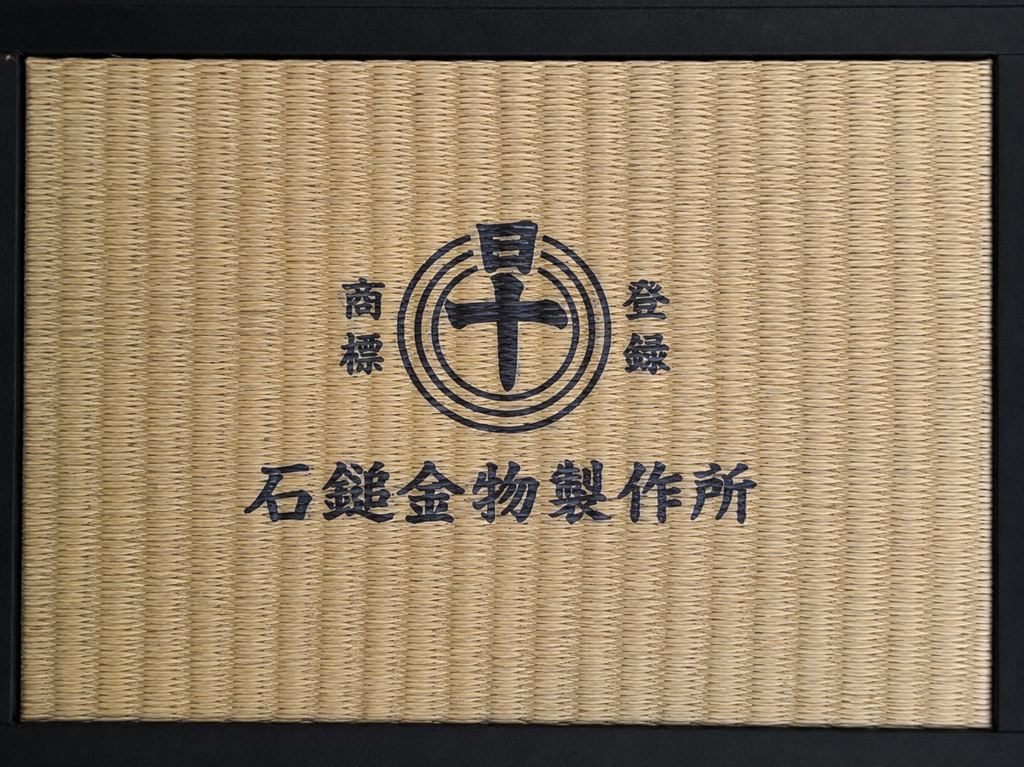
As I learned more about Ishizuchi Kanamono Seisakusho, I realised that their story reflected the very philosophy I had begun to appreciate.
Their history dates back more than one hundred years to the early Taisho era, when the company began as Ishizuchi Agricultural Machinery.
Its purpose was simple: to provide dependable tools for people whose livelihoods depended on them.
Farmers.
Foresters.
Fishermen.
People who worked with their hands every day.
As Japan changed, so did the company.
Today, Ishizuchi Kanamono Seisakusho works alongside traditional Tosa blacksmiths, helping preserve generations of craftsmanship while introducing authentic Tosa knives to people around the world.
That story resonated deeply with me.
These knives were never created simply to impress someone in a showroom.
They were created to be used.
Maintained.
Sharpened.
Trusted.
Perhaps that is why my opinion changed so dramatically.
I had been judging these knives by how they looked.
Instead, I should have judged them by how they lived.
That simple realisation changed the way I looked at Tosa knives forever.
It is also the reason Asaoya Yaichi exists today.
Not simply to sell handcrafted knives.
But to introduce the people, traditions and craftsmanship behind every blade, ensuring that the remarkable spirit of Tosa continues to be appreciated by future generations.
If this story has sparked your curiosity, I warmly invite you to explore our collection of authentic handcrafted Tosa knives.
Explore Our Collection
If this story has sparked your curiosity, I’d be honoured to welcome you to Asaoya Yaichi.
Every knife in our collection is carefully sourced through Ishizuchi Kanamono Seisakusho and handcrafted by traditional blacksmiths in Tosa, Japan.
These are not simply knives to own.
They are knives to use, maintain, sharpen and grow with over a lifetime.
Explore our collection:
Asaoya Yaichi – Authentic Tosa Knives
Thank you for taking the time to read my story.
In Part 2 – A Knife That Grows With You, I’ll share why I believe the finest handcrafted knives are never truly finished when they leave the blacksmith, but continue to grow alongside the people who use them.
The blacksmith begins the story.
The owner completes it.