
If I could own only one Japanese knife for chefs, what would I choose?
After more than 25 years working in professional kitchens, I have used many different knives for many different jobs. Gyuto, Santoku, Sujihiki, Yanagiba, Deba and other specialised Japanese knives all have their own strengths. If I had the space and freedom to choose, I would always prefer using the right knife for each task.
But what if I could keep only one?
From the knives we currently carry at Asaoya Yaichi, my choice would be a 180mm Kiritsuke.
Not because it is the best knife for every individual job. It isn’t. I would choose it because its combination of size, blade width and pointed tip allows it to handle an unusually wide range of kitchen work.
That is what I would want from my only knife.
Why I Would Choose a 180mm Japanese Knife for Chefs
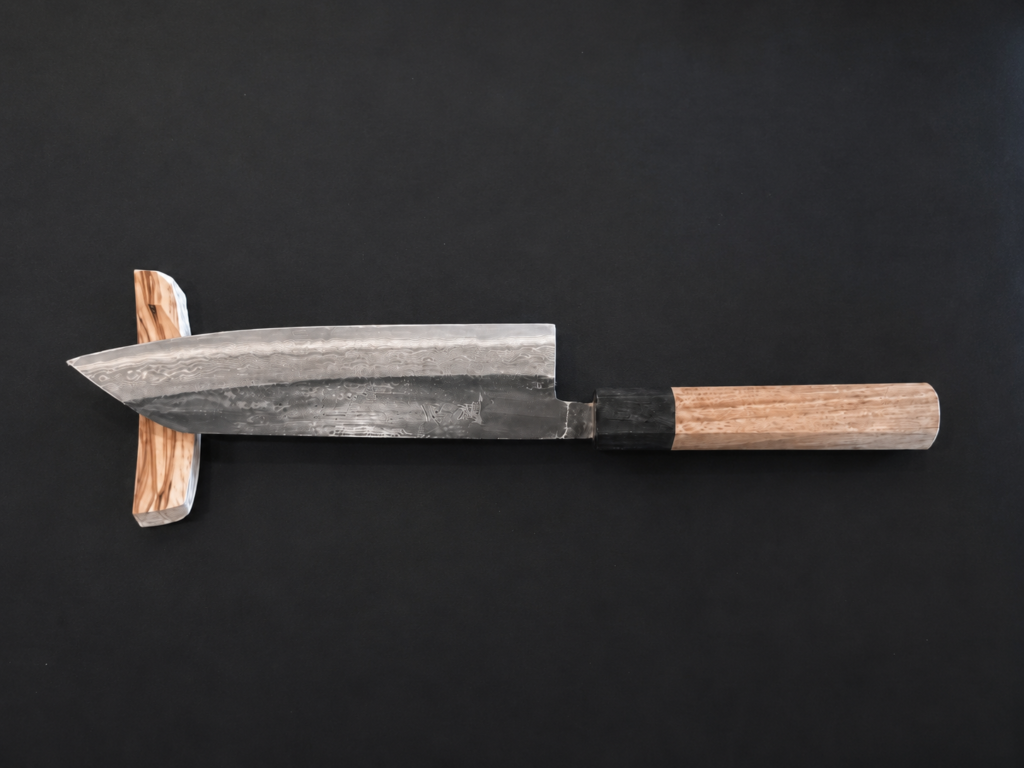
180mm Kiritsuke Aogami #2 Kurouchi Walnut Octagonal Handle
A 180mm blade sits in a very useful position between compact home-kitchen knives and longer professional blades.
For vegetables, the Kiritsuke has enough blade height and width to feel stable when cutting harder ingredients such as daikon. Compared with a narrow Sujihiki, I find a wider blade much easier when I need to apply controlled downward pressure through a firm vegetable.
At the same time, 180mm is still compact enough to remain agile.
This balance is important. If I can own only one Japanese knife for chefs, I don’t want something that excels at one specialised task while becoming inconvenient for everything else.
👉 INTERNAL LINK: Read our article about why Santoku knives became one of Japan’s most practical kitchen knives.
The Kiritsuke Tip Changes What One Knife Can Do
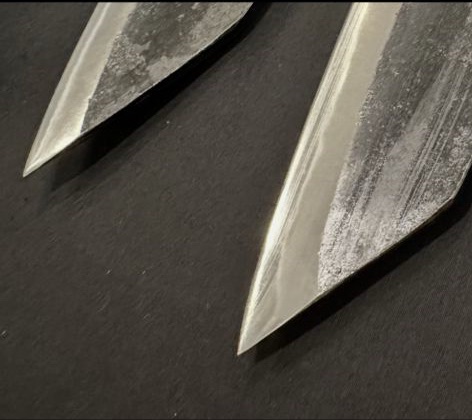
165mm Kiritsuke Aogami #2 Kurouchi Walnut Octagonal Handle
The feature that really makes me choose the Kiritsuke is its pointed tip.
A sharp, accessible tip can be extremely useful when working with fish. Of course, if I were preparing fish every day and could choose a dedicated knife, I would use a Deba. But that isn’t the question here.
The question is what I would use if I had only one knife.
When breaking down a fish, a precise tip can help with detailed cuts around fins, bones and joints. When removing a fish head, rather than trying to force a blade directly through heavy bone, I prefer finding the natural joint and cutting through it cleanly. A pointed Kiritsuke tip gives me the control needed for that kind of work.
👉 INTERNAL LINK: Discover the history of Tosa knives and how Japanese blades developed alongside specialised kitchen work.
Can This Japanese Knife for Chefs Handle Sashimi?
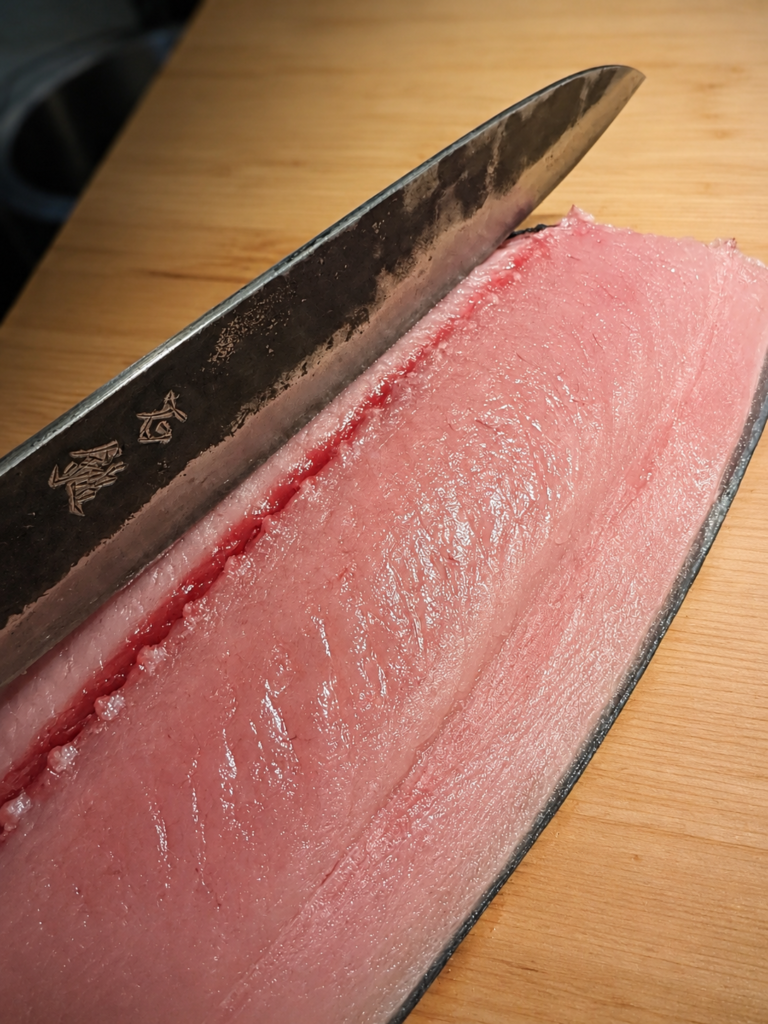
For sashimi, I would normally prefer a longer Yanagiba or Sujihiki. Their long blades allow cleaner slicing with fewer movements.
However, again, we are choosing only one knife.
A 180mm Kiritsuke still gives me a relatively fine, pointed blade that can perform controlled slicing. For preparing a modest amount of sashimi at home or in situations where a dedicated sashimi knife is unavailable, I would be comfortable using it.
The pointed tip also gives me more control over small, precise cuts than I would get from a more rounded blade profile.
👉 INTERNAL LINK: Read what 25 years in professional kitchens taught me about carbon steel and sashimi.
Why the Pointed Tip Also Works Well With Meat
The same characteristic becomes useful when preparing meat.
When trimming sinew, connective tissue or silver skin, I often want to get the tip underneath the tissue first and then guide the edge along it. A pointed Kiritsuke makes that movement natural.
A Sujihiki would be excellent for trimming and slicing meat, but its narrow blade would not be my first choice for harder vegetables or general chopping.
This is exactly why choosing one knife changes the decision.
👉 INTERNAL LINK: See why the first edge of an expensive Japanese knife doesn’t always reveal its true potential.
The Best Japanese Knife for Chefs Is Not Always the Most Specialised

Japanese knife culture has developed highly specialised tools for good reason. A Deba is better suited to serious fish work. A Yanagiba is superior for traditional sashimi slicing. A Sujihiki gives me more blade length for slicing meat.
I wouldn’t pretend that a 180mm Kiritsuke replaces all of them.
But if someone took away my knife roll tomorrow and told me I could choose just one Japanese knife for chefs, I wouldn’t choose the knife that performs one job perfectly.
I would choose the knife that allows me to perform the greatest number of jobs well.
After more than 25 years in kitchens, that distinction matters to me.
👉 INTERNAL LINK: Learn the difference between hand-forged and machine-made Japanese knives and why construction is only part of choosing the right knife.
My One Japanese Knife After 25 Years as a Chef
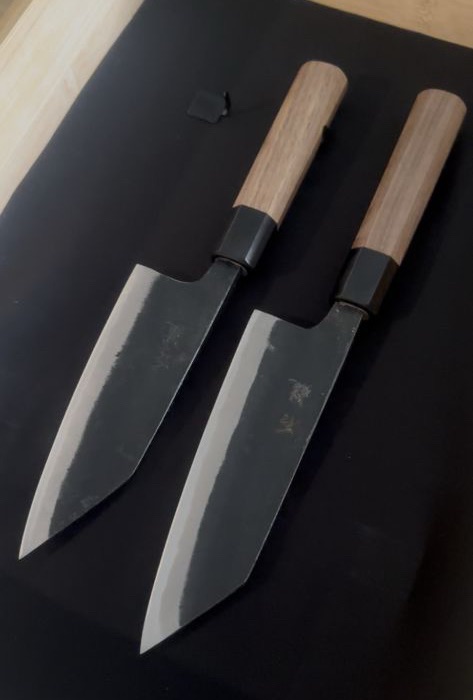
So my choice is simple: a 180mm Kiritsuke.
It gives me enough blade width for vegetables, enough length for everyday slicing, a pointed tip for fish work and detailed preparation, and the precision I want when trimming meat.
Would it always be the perfect knife?
No.
But perfection at one task isn’t what I am looking for in this experiment. I am looking for versatility.
And if I could walk into a kitchen tomorrow with only one Japanese knife in my hand, the 180mm Kiritsuke is the one I would want to carry.
After 25 years, sometimes the best knife isn’t the one that can do one thing better than everything else.
It’s the one that lets you keep cooking.
👉 Explore more:
https://blog.asaoyayaichi.com.au
👉 Visit our online store:
https://asaoyayaichi.com.au
Thank you for reading, and I hope to see you again in the next story.