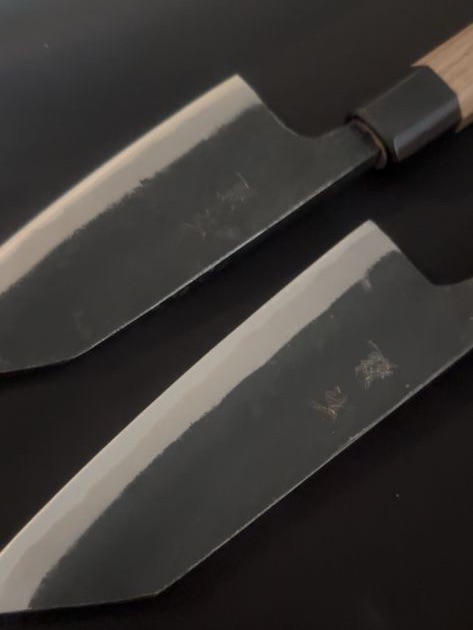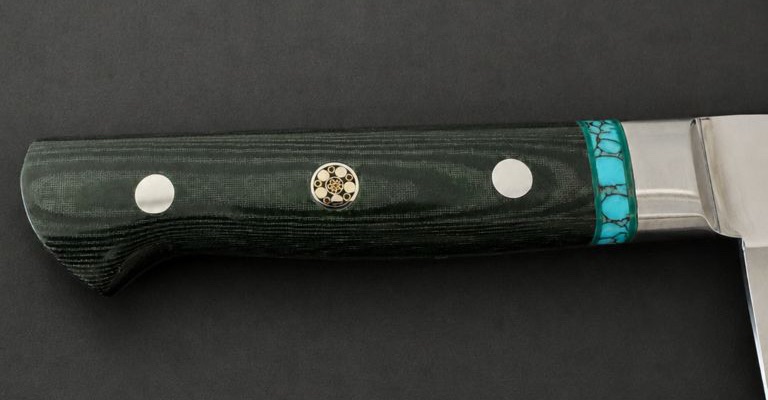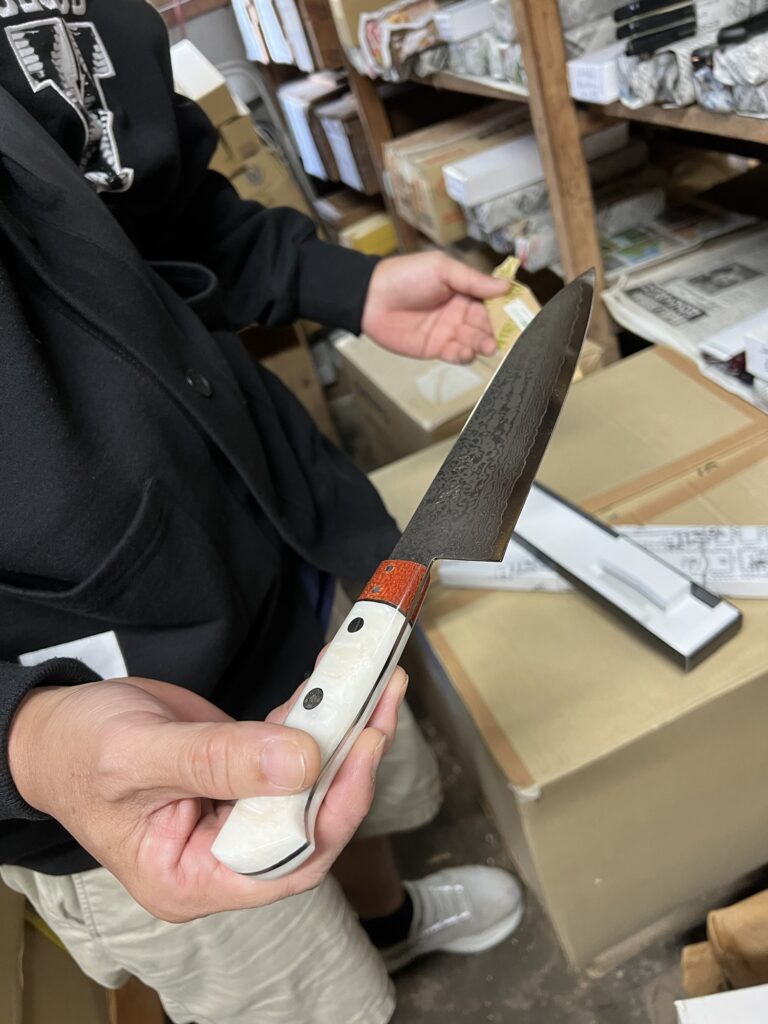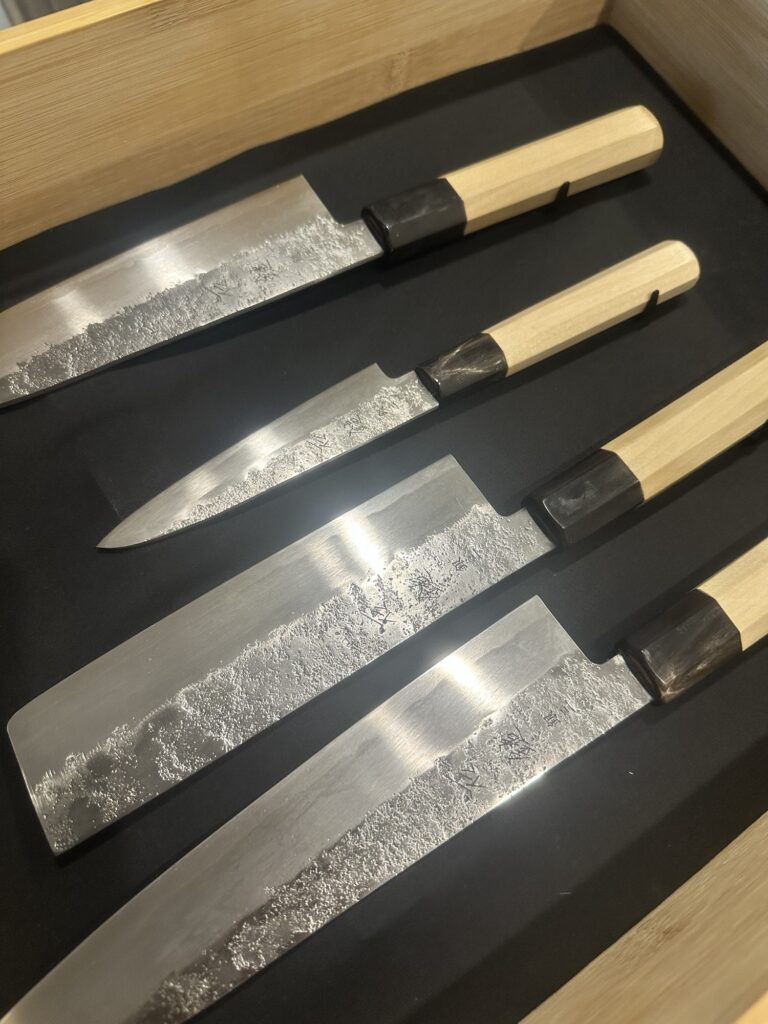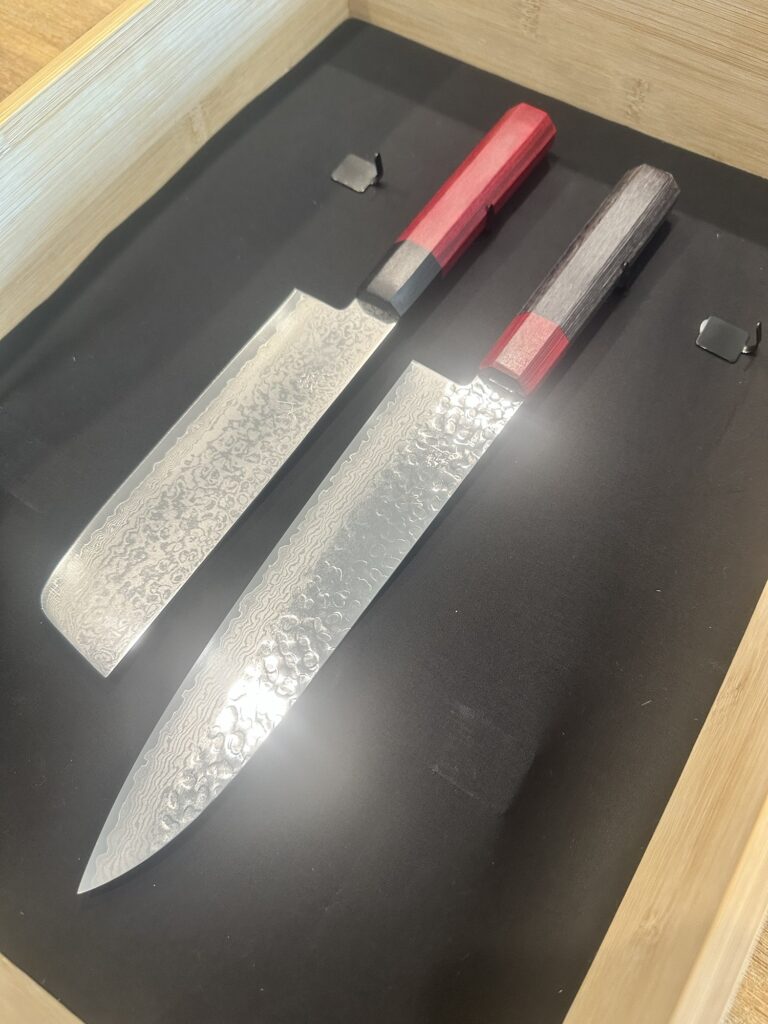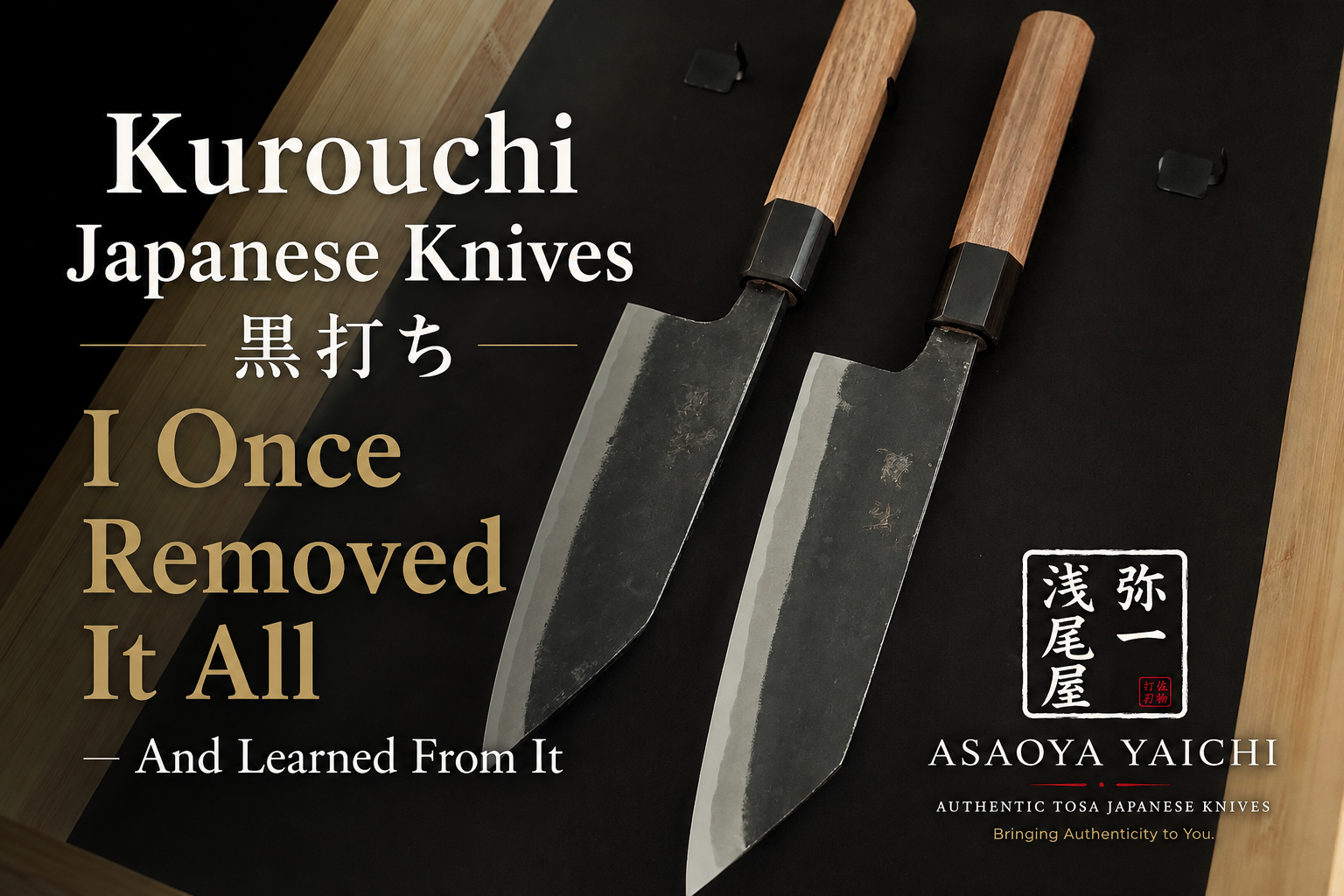
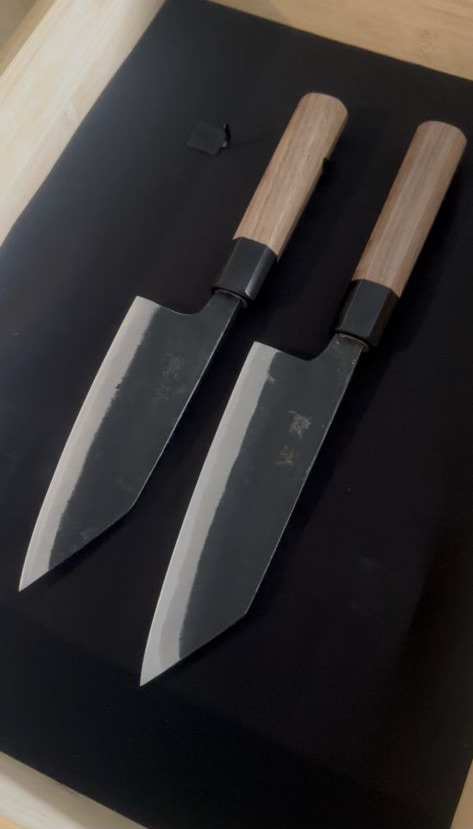
Kurouchi Japanese Knives have a distinctive appearance that is immediately recognisable. The dark, almost unfinished-looking surface left from the forging process gives each knife a character very different from a polished blade.
But I have to admit something.
I have used Kurouchi knives for years, but I have never been someone who believes every knife has to be Kurouchi. I like them, I use them, and I appreciate the traditional appearance — but my relationship with Kurouchi has been a little more complicated than that.
In fact, many years ago, I completely removed the Kurouchi finish from one of my knives.
Looking back now, I probably wouldn’t do it the same way again.
What Are Kurouchi Japanese Knives?
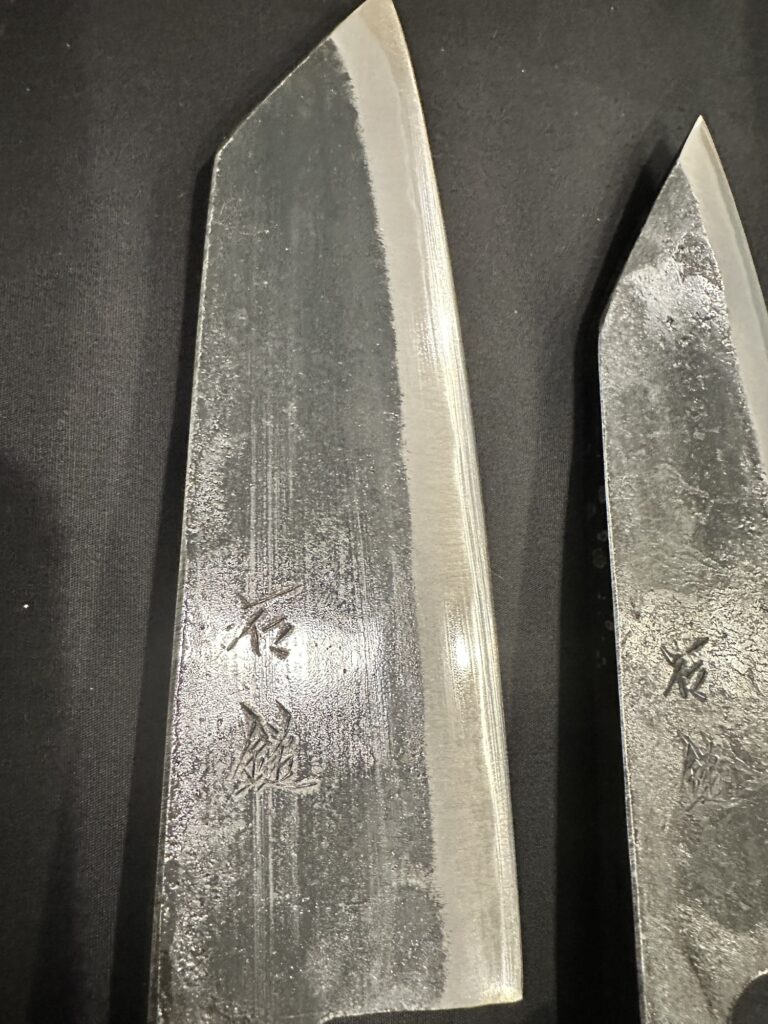
The word Kurouchi (黒打ち) literally refers to the black finish commonly seen on traditionally forged Japanese knives. Rather than polishing the entire surface of the blade, part of the dark forge scale is intentionally left on the knife.
This gives Kurouchi Japanese Knives their rustic and unmistakably handmade appearance.
For me, though, the interesting part of Kurouchi isn’t simply how it looks when the knife is new. It is what happens after you actually start using it.
A handmade knife doesn’t stay frozen in the condition in which you bought it. Scratches appear. The blade gets sharpened. Carbon steel develops patina. Handles change with use. And the Kurouchi finish itself can slowly wear and change.
That is part of owning and using a handmade Japanese knife.
👉 Related story: Handmade Japanese Knives | 7 Fascinating Reasons No Two Are Ever Exactly the Same
The Time I Removed All the Kurouchi
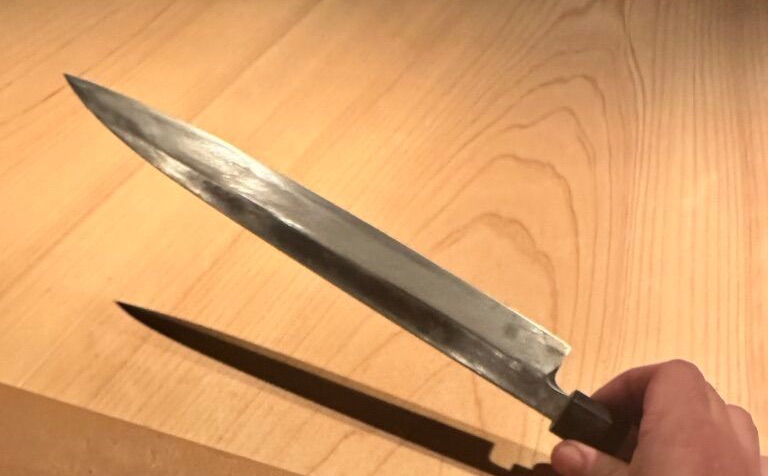
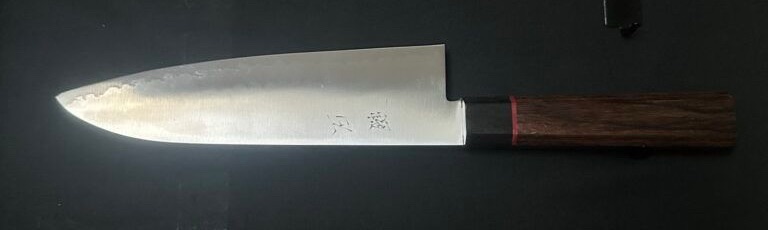
The Sujihiki I Removed the Kurouchi From
Years ago, I was given a Kurouchi sujihiki.
At the time, I had become slightly obsessed with mirror polishing knives. I enjoyed taking a blade and seeing just how clean and reflective I could make the surface.
So one day I had an idea.
Why not remove the black finish?
I took the knife to the whetstones and gradually removed all of the Kurouchi.
Every bit of it.
At the time, I was happy with what I had done. I wanted a polished knife, so I made it polished.
But today, I see that knife differently.
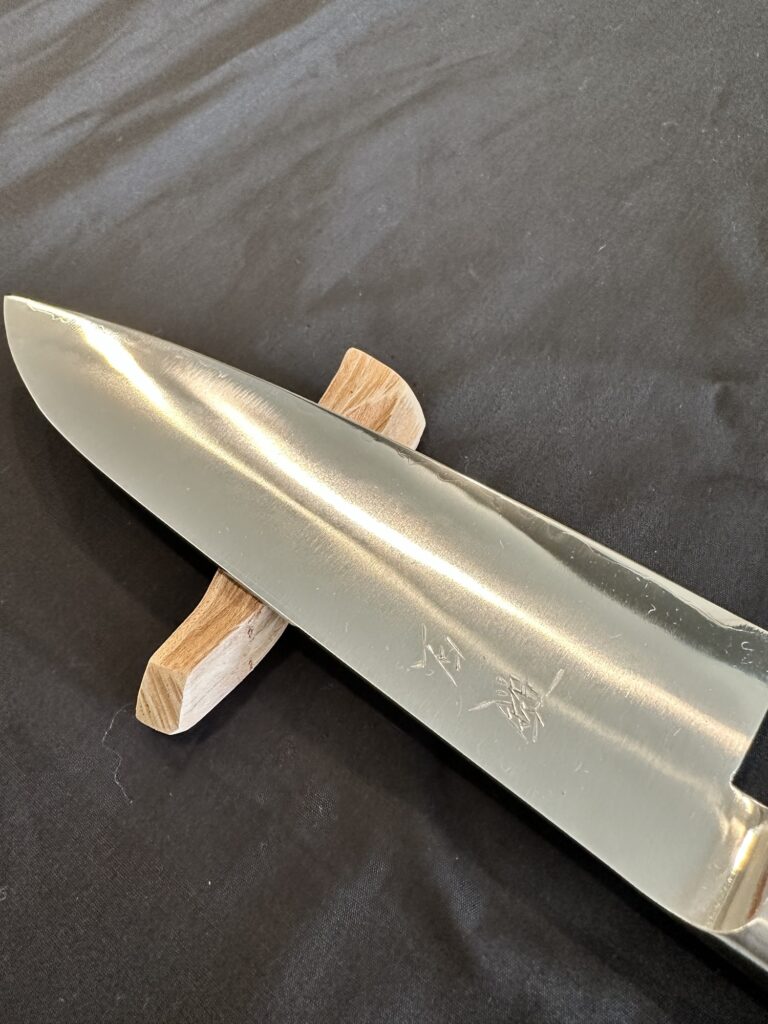
If I were doing the same project now, I would probably leave the black Kurouchi finish above the bevel and polish the exposed steel below it to a mirror finish.
The contrast between deep black Kurouchi and bright polished steel would probably look much better.
More importantly, it would preserve part of the original character of the knife.
Sometimes you only learn what you like after doing something the other way first.
👉 Related story: 漆黒 Shikkoku | Where Deep Black Forging Creates a Masterpiece
Kurouchi Japanese Knives Change With You
This is something I think buyers should understand before choosing Kurouchi Japanese Knives.
They change.
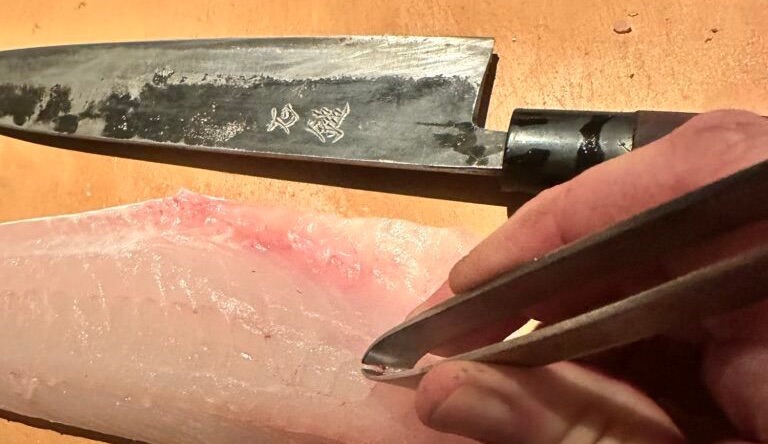
The black finish can gradually wear. Areas that receive more contact may look different from areas that receive less. The appearance may become less uniform than when the knife was brand new.
Whether that is good or bad depends entirely on the person holding the knife.
Personally, I am fine with it.
If a knife changes because I have cooked thousands of meals with it, sharpened it countless times and used it every day, I don’t necessarily see those changes as damage.
They are part of the knife.
It is similar to the way I think about patina on carbon steel. Some people want to remove every mark immediately. Others enjoy watching the blade develop its own appearance through use.
Neither person is necessarily wrong.
👉 Related story: Ancient Patina 古色 | 7 Powerful Truths About Japanese Knife Patina That Even Surprised Me
Kurouchi Is Probably Not for Everyone
There is another side to this.
I previously wrote about a chef I knew who loved keeping his knives absolutely spotless. Even a small amount of cloudiness on the blade could bother him.
There is nothing wrong with that.
Some people simply love a perfectly polished Japanese knife.
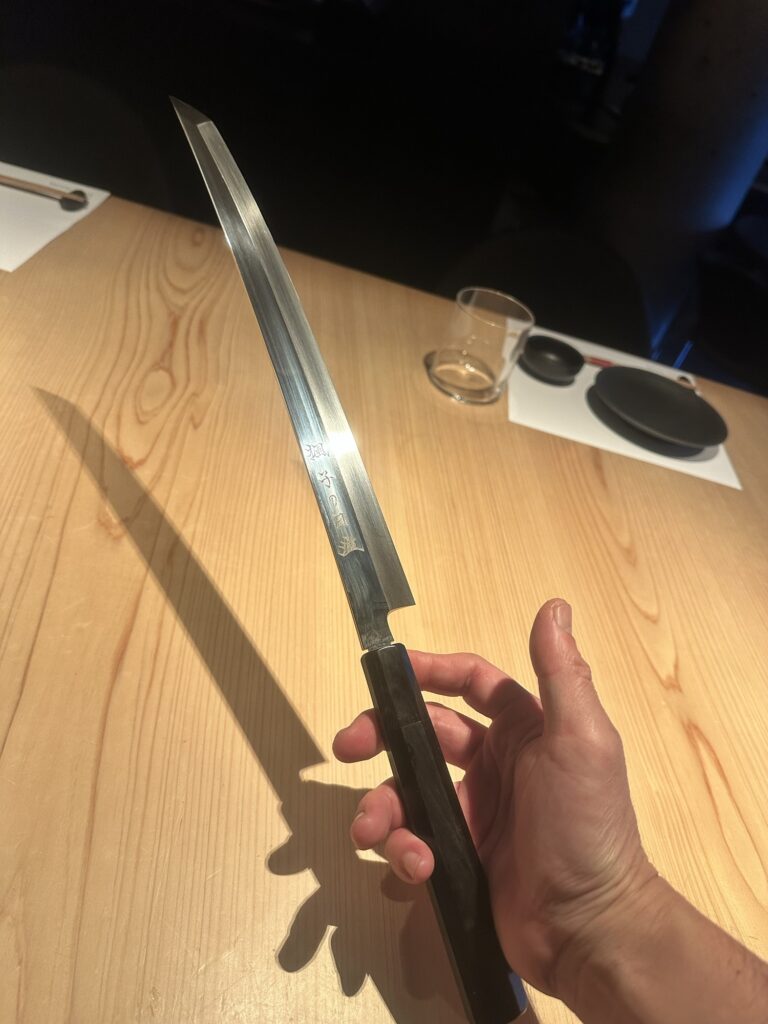
For someone like that, a Kurouchi knife may not be the best choice.
If you expect your knife to look exactly the same after years of professional use as it did on the day you opened the box, the natural changes of a Kurouchi finish could become frustrating.
This is why I don’t think there is one “best” Japanese knife finish.
The right knife depends on the person.
Some people love mirror polishing. Some love Nashiji. Some love Damascus patterns. Others want the rustic appearance of Kurouchi.
The important thing is understanding what you are buying and choosing something that suits the way you see your tools.
👉 Related story: The True Value of Japanese Knives | 7 Reasons
Why I See Kurouchi Differently Today
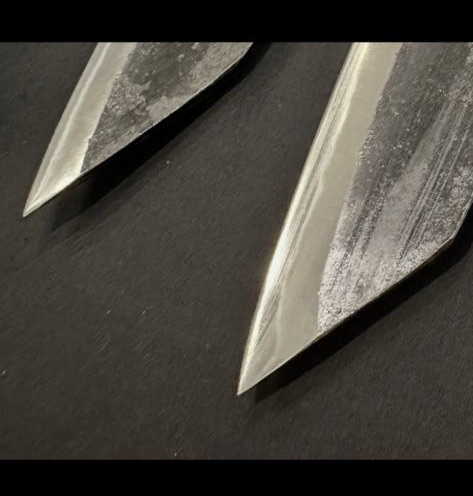
Kiritsuke Thick Deba Aogami #2 Kurouchi Walnut Octagonal Handle
After more than 25 years working as a chef in Japan and Australia, my relationship with knives has changed.
When I was younger, I sometimes wanted a knife to look perfect.
Today, I am much more interested in what happens after years of actually using it.
A scratch doesn’t automatically bother me. A developing patina doesn’t necessarily need to disappear. A handle that has changed slightly through years of work can remind me how much that knife has been used.
And if the Kurouchi finish slowly changes, I can accept that too.
Perhaps that is why I now look back at the sujihiki I completely polished and think I would do things differently today.
I don’t regret experimenting with it. In fact, I’m glad I did.
It taught me something.
A handmade Japanese knife doesn’t always need to be improved, corrected or returned to perfection. Sometimes the changes that happen through use are exactly what give the knife its character.
👉 Related story: 切味 Kireaji | 7 Truths About the Feel of Sharpness
Kurouchi Japanese Knives Are Made to Be Used
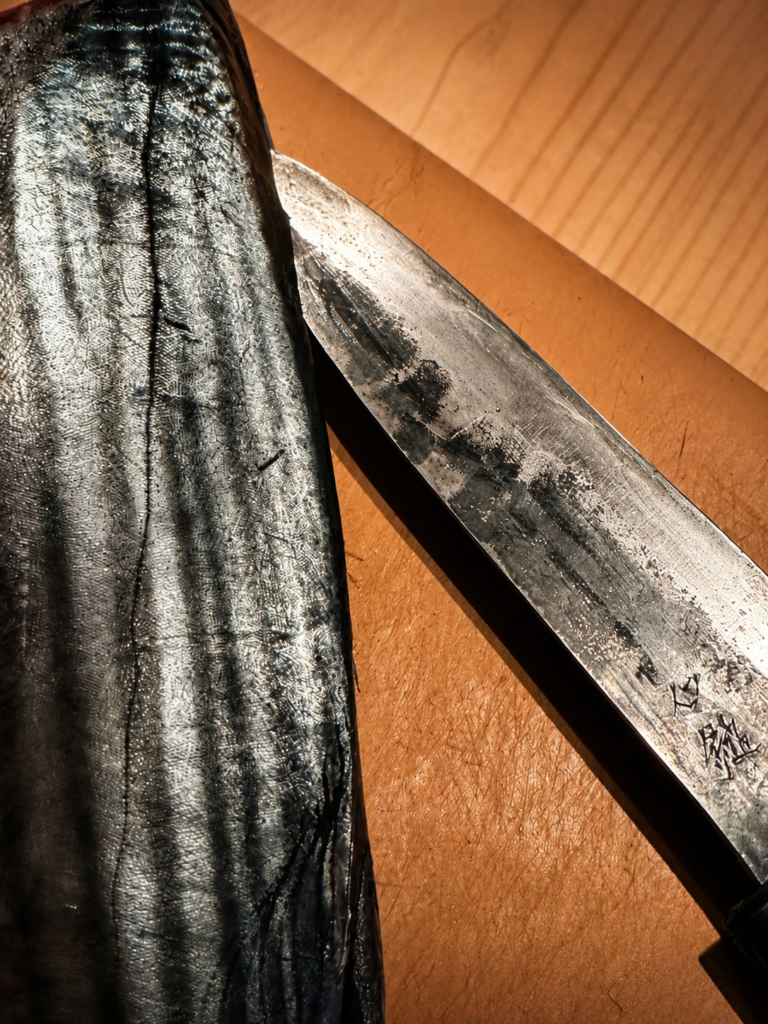
240mm Thick Deba Aogami #2 Kurouchi Walnut Handle
For me, this is ultimately the attraction of Kurouchi Japanese Knives.
Not because Kurouchi is better than every other finish.
Not because every chef should own one.
And certainly not because a Kurouchi knife will remain perfectly black forever.
I like the fact that it can change.
If the black finish wears in a way that I like, great. If it develops differently from what I imagined, I can still see that as part of the knife’s story.
That attitude won’t suit everyone.
And that’s okay.
A Japanese knife is a personal tool. After years of sharpening, cooking and caring for it, it becomes different from the knife that originally arrived from the blacksmith.
Maybe that is something worth appreciating rather than preventing.
After all, I once removed every trace of Kurouchi from a knife because I thought polished steel looked better.
Today?
I’d probably leave some of that black behind.
👉 Explore more:
https://blog.asaoyayaichi.com.auhttps://blog.asaoyayaichi.com.au
👉 Visit our online store:
https://asaoyayaichi.com.au
Thank you for reading, and I hope to see you again in the next story.