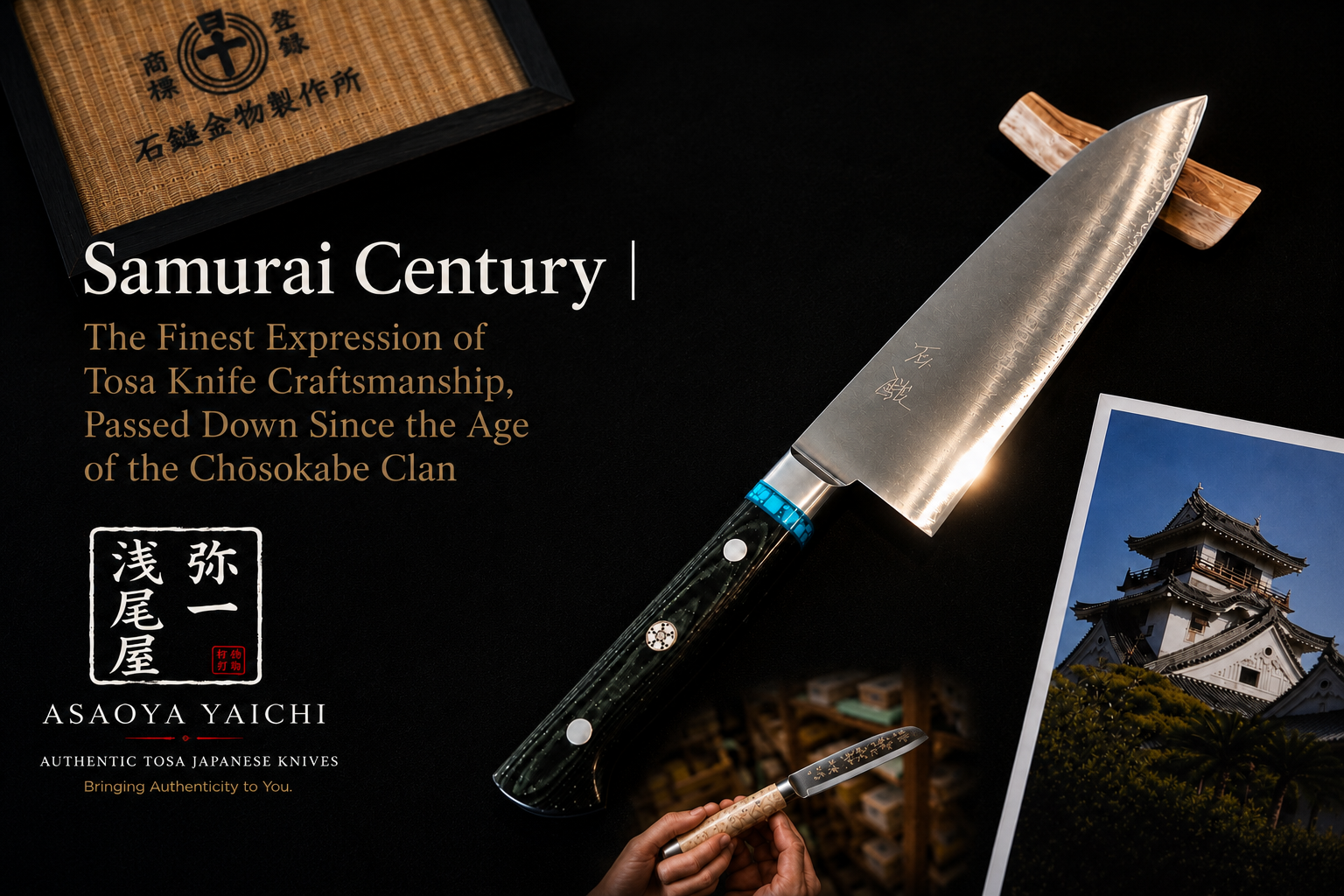
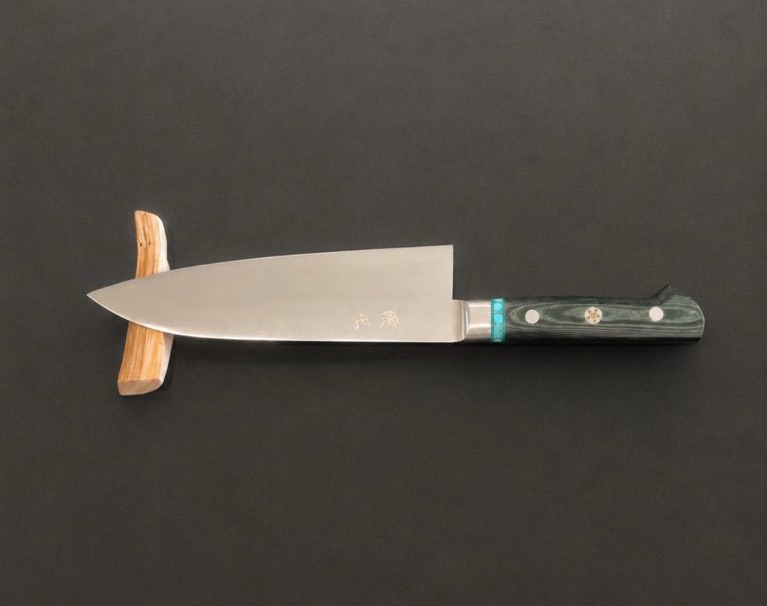
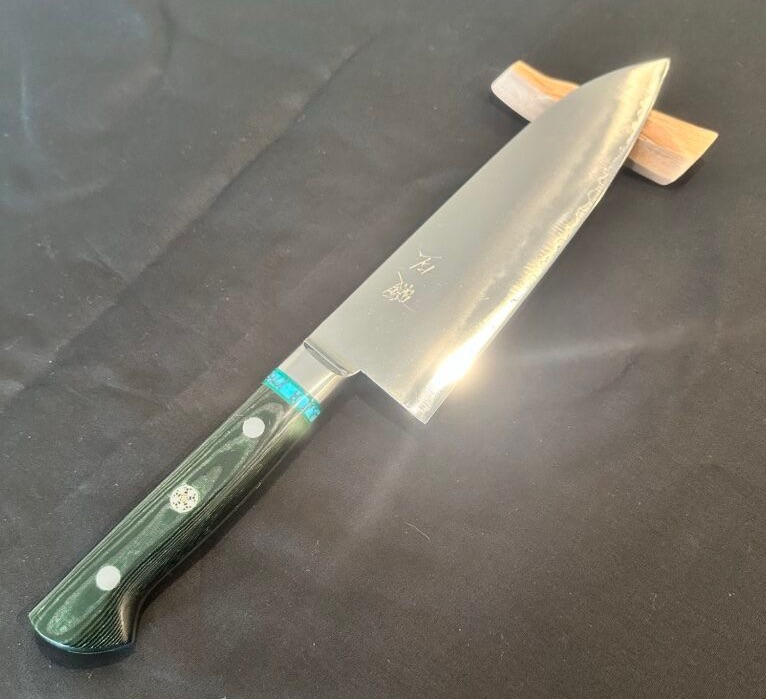
180mm Santoku Aogami #2 Green Micarta Handle with Turquoise Spacer
A$680.00
Some knives are designed simply to cut.
Others carry the story of generations.
This 180mm Santoku Aogami #2 Green Micarta Handle with Turquoise Spacer is one of those rare knives that feels like it belongs to both the past and the present.
When people think about Japanese knives, they often focus on razor-sharp edges, beautiful finishes, or premium steels. Those qualities certainly matter, but I believe the most valuable part of a handcrafted knife is something you cannot immediately see.
It is the history.
It is the knowledge passed from one craftsman to another.
It is the spirit that has survived for centuries.
That is exactly what I see every time I hold this Santoku.
A Tradition Forged During the Samurai Era
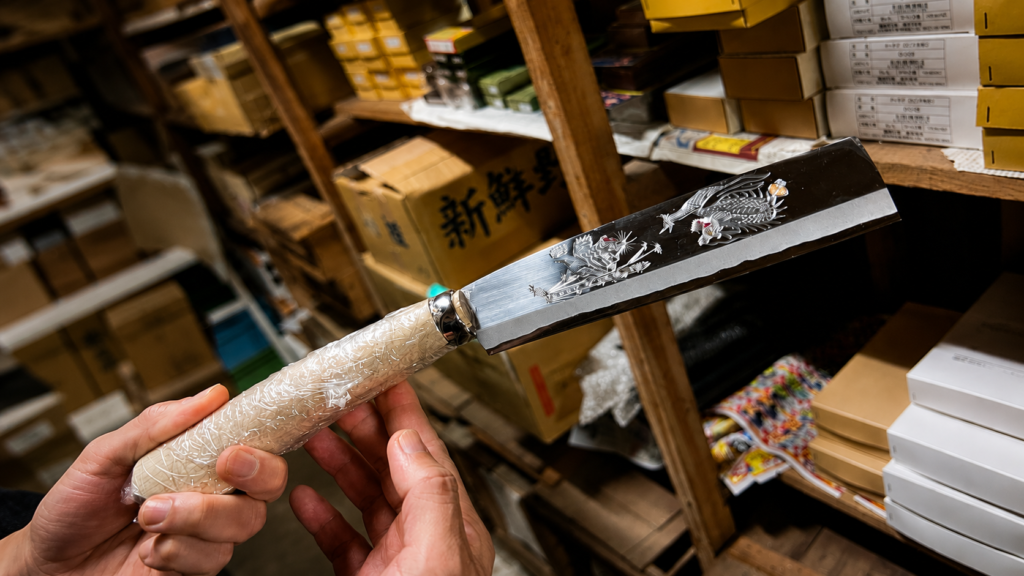
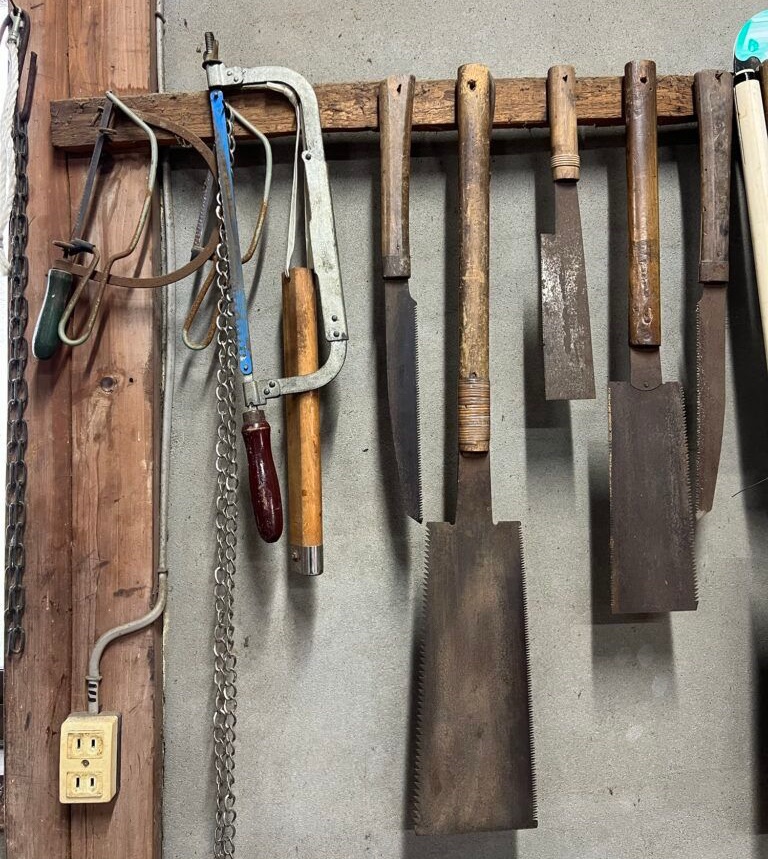
Handcrafted farming tools from Tosa
The story of Tosa knives begins more than 400 years ago, during Japan’s Sengoku period.
According to the history shared by Ishizuchi Kanamono Manufacturing, the roots of Tosa blacksmithing can be traced back to the rule of the Chōsokabe Clan, who unified Tosa Province in the late 1500s. Historical records mention that nearly 400 blacksmiths were already working throughout the region.
As Tosa became one of Japan’s leading forestry areas, local craftsmen produced axes, hatchets, sickles, and countless agricultural tools needed for everyday life.
The techniques required to create tools that could survive years of demanding work eventually evolved into the craftsmanship used to forge kitchen knives.
Those same forging methods, refined over hundreds of years, are still alive today.
Every handcrafted Tosa knife represents generations of practical knowledge rather than simply modern manufacturing.
That heritage is one of the reasons I became fascinated by Tosa knives.
A Knife That Respects Tradition

This Santoku stays true to those traditional roots.
Its core steel is Aogami #2 (Blue Steel No.2), one of Japan’s most respected carbon steels.
Professional chefs have trusted Aogami steels for decades because they offer outstanding sharpness, excellent edge retention, impressive toughness, and are surprisingly enjoyable to sharpen.
Rather than feeling disposable, Aogami #2 develops character over time.
With proper care, the edge becomes familiar.
The sharpening becomes rewarding.
The knife slowly becomes your own.
That is something mass-produced knives rarely offer.
A Modern Interpretation of Wabi-Sabi
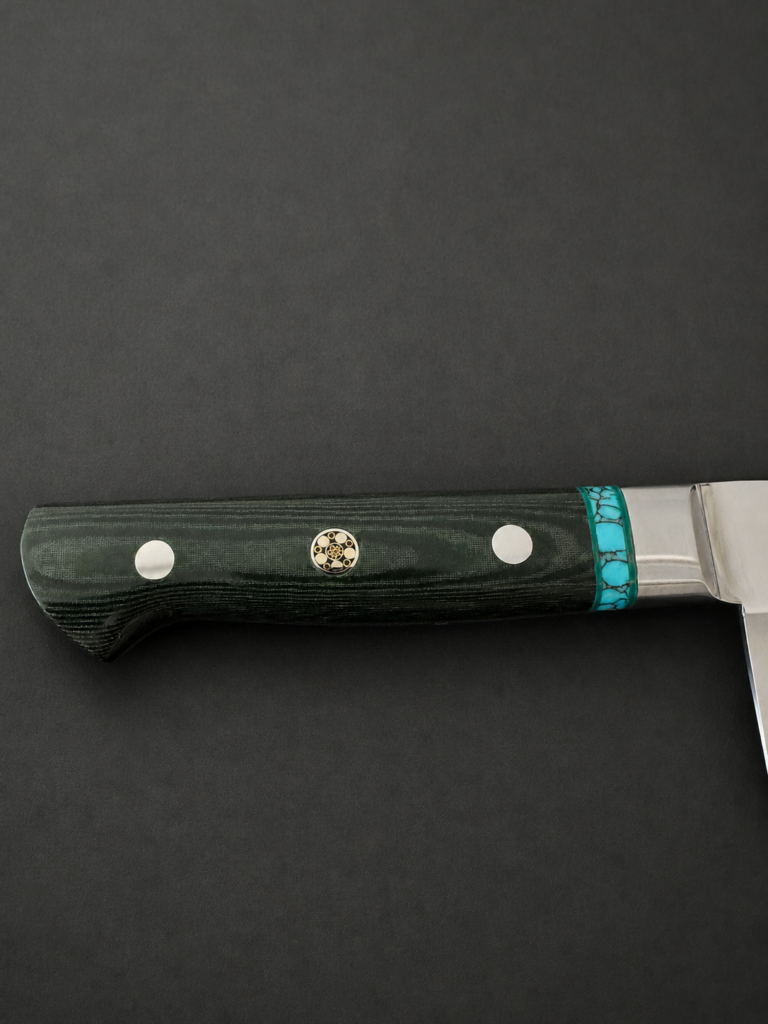
While the blade reflects centuries of tradition, the handle introduces something refreshingly modern.
The Green Micarta handle provides outstanding durability, excellent grip, and stability in busy kitchens.
Between the blade and the handle sits a beautiful turquoise spacer.
It is only a small detail.
Yet it completely changes the personality of the knife.
Instead of making the knife flashy, it creates a quiet contrast between traditional Japanese craftsmanship and contemporary materials.
To me, that perfectly reflects the Japanese idea of wabi-sabi.
Wabi-sabi is not about perfection.
It is about appreciating balance.
It is about respecting simplicity.
It is about finding beauty that grows naturally with time.
The carbon steel blade will slowly develop its own patina.
The handle will gain its own character.
Years from now, this knife will not look exactly as it does today.
It will look even better because it will tell your own story.
Why This Knife Impressed Me
I worked as a professional chef for more than 25 years.
During that time, I have used knives from many famous makers, worked with numerous steels, and sharpened countless blades.
Because of that experience, I have become difficult to impress.
Many knives perform well.
Many knives look beautiful.
Very few make me stop and think,
“This is something special.”
This Santoku did.
The balance feels natural.
The blade has confidence without feeling heavy.
The cutting performance is exactly what I expect from quality Aogami #2 steel.
At the same time, every detail feels intentional.
Nothing appears to have been added simply for decoration.
Everything serves a purpose.
As a chef, I appreciate that.
As someone introducing authentic Japanese knives to Australia, I respect it even more.
More Than Just a Kitchen Tool
One reason I started Asaoya Yaichi was because I wanted people outside Japan to experience authentic craftsmanship rather than simply buying another factory-made knife.
Many knives today are designed around efficiency.
Tosa knives are different.
They are built around craftsmanship.
Every hammer mark.
Every grind.
Every sharpened edge.
Every handle fitting.
They all reflect the experience of skilled craftsmen who continue techniques handed down over generations.
That is becoming increasingly rare.
When you purchase a handcrafted Tosa knife, you are supporting more than a product.
You are helping preserve one of Japan’s traditional crafts.
You are supporting craftsmen whose knowledge has survived since the age of the samurai.
The Spirit of Tosa Lives On

Whenever I hold this Santoku, I cannot help but think about the generations of blacksmiths who came before.
From agricultural tools forged during the time of the Chōsokabe Clan…
To the exceptional kitchen knives produced today…
The philosophy has remained remarkably consistent.
Build tools that work.
Build tools that last.
Build tools that people will be proud to use every day.
That is exactly what this knife represents.
The 180mm Santoku Aogami #2 Green Micarta Handle with Turquoise Spacer is not simply a beautiful Japanese knife.
It is the meeting point of over four centuries of Tosa blacksmithing, premium Aogami #2 steel, modern craftsmanship, and the quiet beauty of wabi-sabi.
After more than twenty-five years as a chef, I can honestly say that knives like this do not appear very often.
If you are searching for an authentic handcrafted Japanese knife that carries genuine history, exceptional cutting performance, and timeless design, I believe this Santoku is one of the finest examples of Tosa craftsmanship available today.
It is more than a knife.
It is a small piece of Japanese history that can be used, appreciated, and passed down for generations.
Discover Authentic Tosa Knives
If this knife speaks to you, I’d love for you to explore the rest of our collection.
Every knife at Asaoya Yaichi is personally selected based on more than 25 years of professional chef experience, with a focus on craftsmanship, performance, and the traditions of Tosa blacksmithing.
👉 Shop Japanese Knives
https://www.asaoyayaichi.com.au