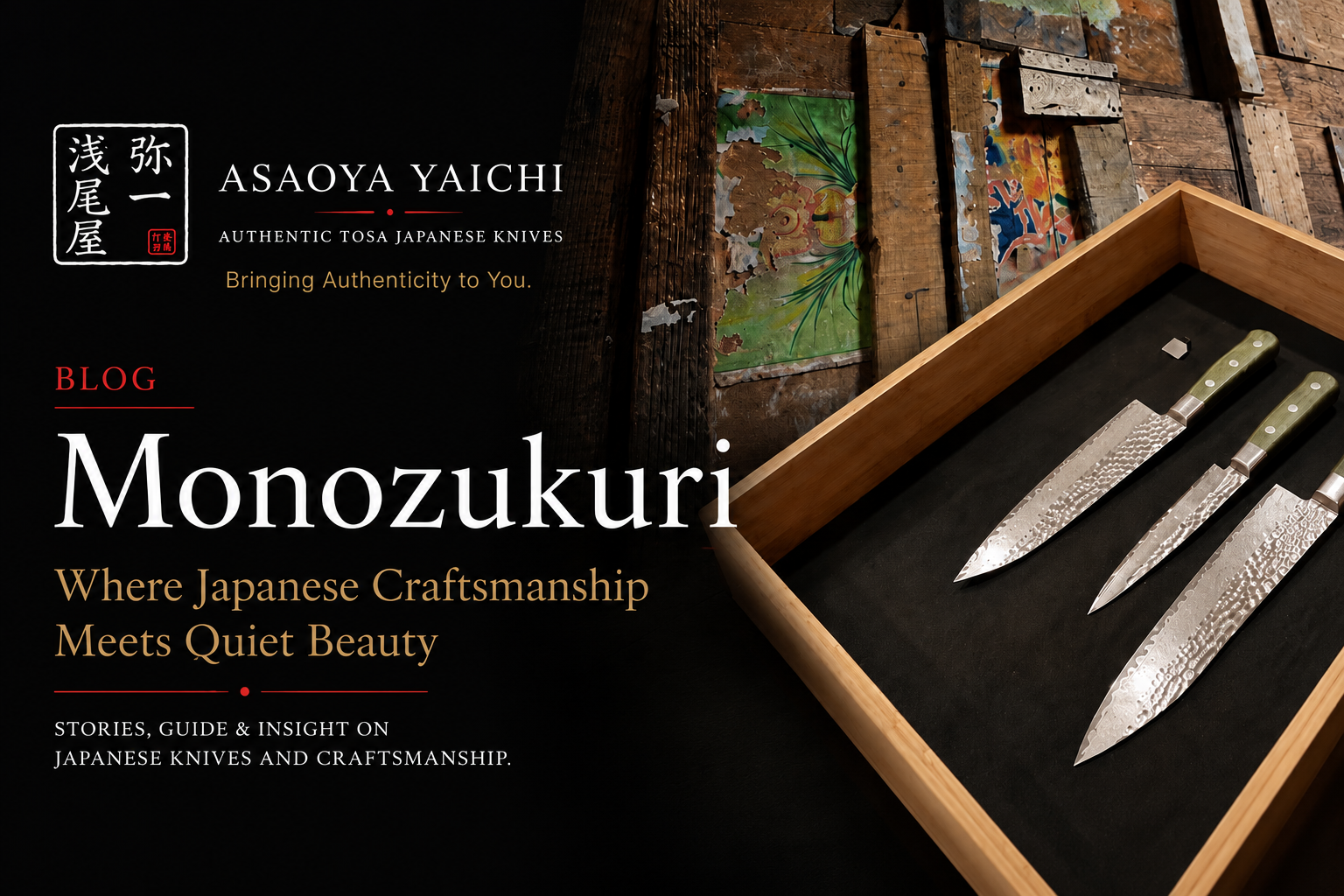
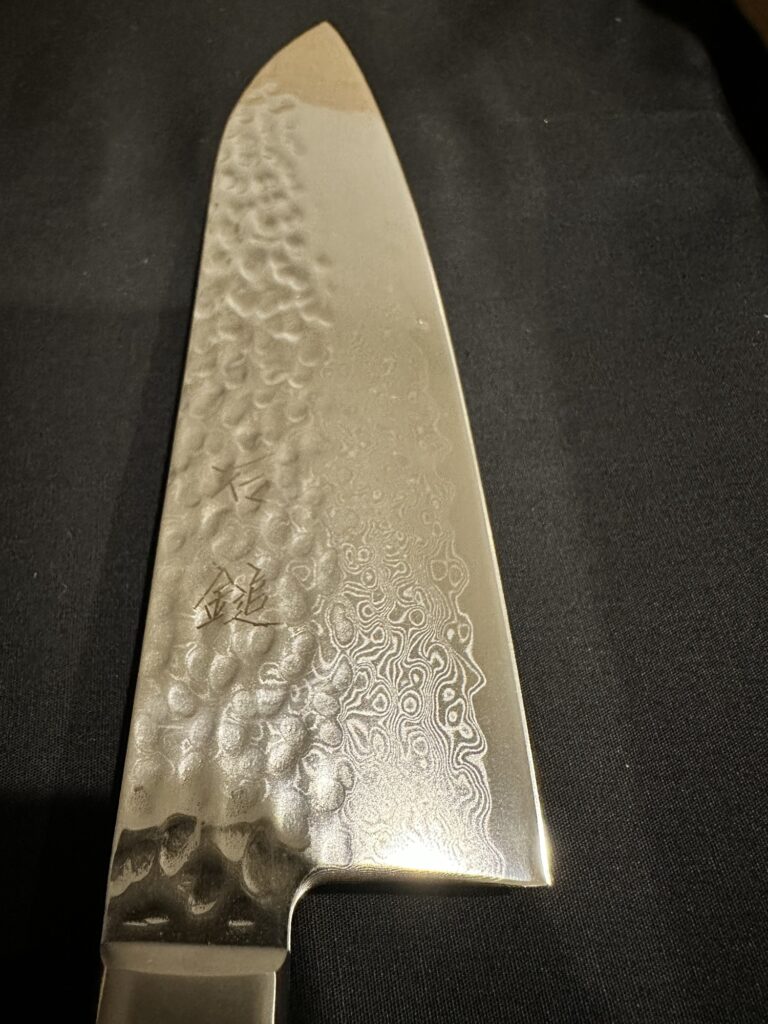
When people search for Japanese knives, they often picture striking Damascus patterns, polished finishes, or eye-catching designs.
Those features certainly have their place.
But after spending more than 25 years working as a chef, I’ve come to believe that the best knife isn’t necessarily the one that attracts the most attention.
It’s the one you enjoy reaching for every single day.
A knife that feels perfectly balanced in your hand.
A knife that performs beautifully, looks elegant without being flashy, and quietly earns your trust over time.
That is the philosophy behind this collection.
In Japan, there is a word that perfectly expresses this way of thinking.
What Is Monozukuri?
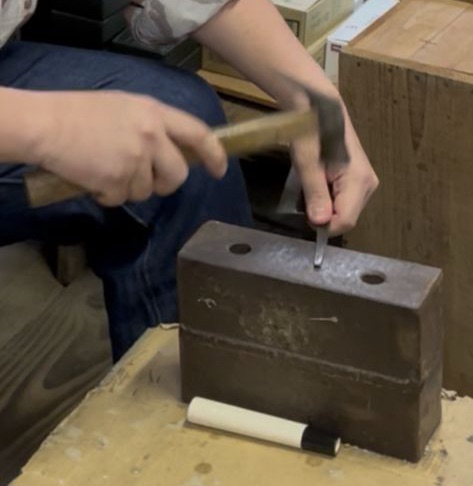
Monozukuri literally means “making things.”
But its true meaning goes much deeper than manufacturing.
It represents the dedication of Japanese craftspeople who constantly refine their skills, pay attention to the smallest details, and never compromise on quality.
For generations, Japanese blacksmiths have passed their knowledge from one craftsman to the next.
Every knife they create reflects years of experience, patience, and pride in their work.
Rather than chasing trends, they focus on creating tools that perform beautifully and last for many years.
That philosophy is exactly what inspired this collection.
Every knife is designed to honour traditional Japanese craftsmanship while fitting naturally into today’s kitchens.
Premium VG10 Steel with a Beautiful 67-Layer Damascus Blade
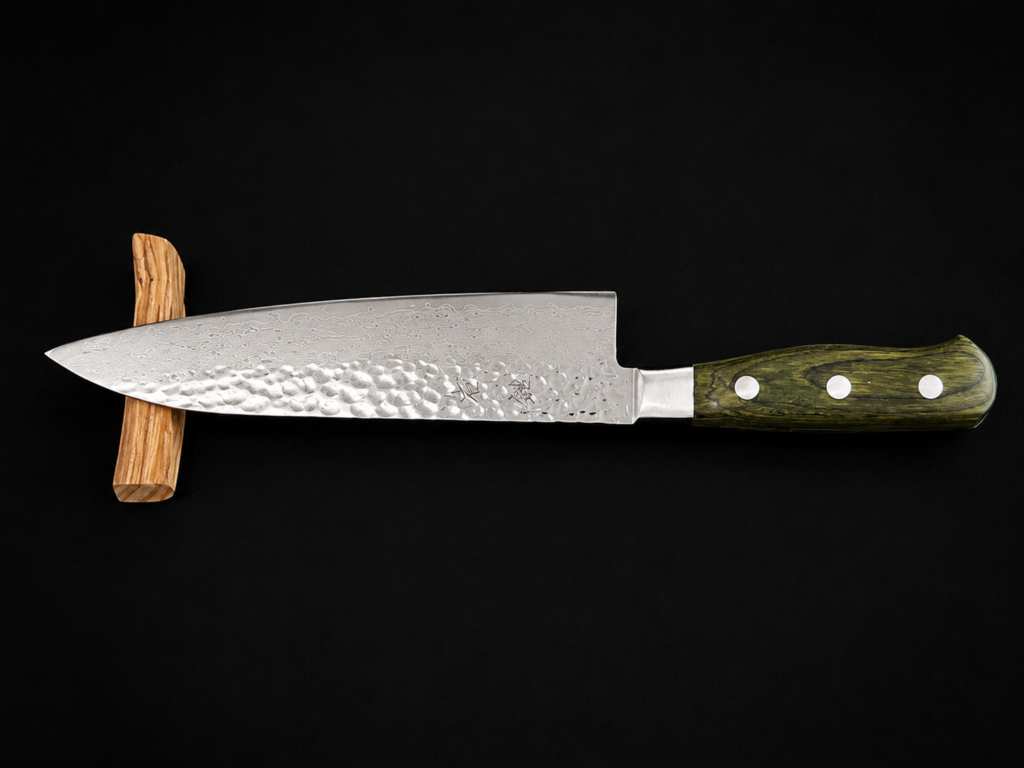
180mm Santoku VG10 Polished Hammered 67 Layer Damascus Green Handle
A$380.00
Every knife in this collection is handcrafted in Japan using VG10 stainless steel and features a beautifully finished 67-layer Damascus blade.
VG10 has earned its reputation as one of Japan’s most respected stainless steels for good reason.
It offers outstanding sharpness, excellent edge retention, impressive corrosion resistance, and is much easier to maintain than traditional carbon steel.
That makes it an excellent choice for both professional chefs and passionate home cooks who want the performance of premium Japanese knives without constantly worrying about rust.
The Damascus blade isn’t simply there to create a beautiful pattern.
Each layer reflects the precision and care of Japanese craftsmanship.
The flowing lines give every knife its own unique character while maintaining the practical performance needed for everyday cooking.
Beautiful tools shouldn’t stay in a display cabinet.
They should become part of your daily routine.
If you’d like to learn more about choosing the right steel, you may also enjoy this article:
Related Article:
Carbon Steel vs Stainless Steel | Which Japanese Knife Is Right for You?
(Insert your internal blog link here.)
A Contemporary Handle Inspired by Japanese Simplicity
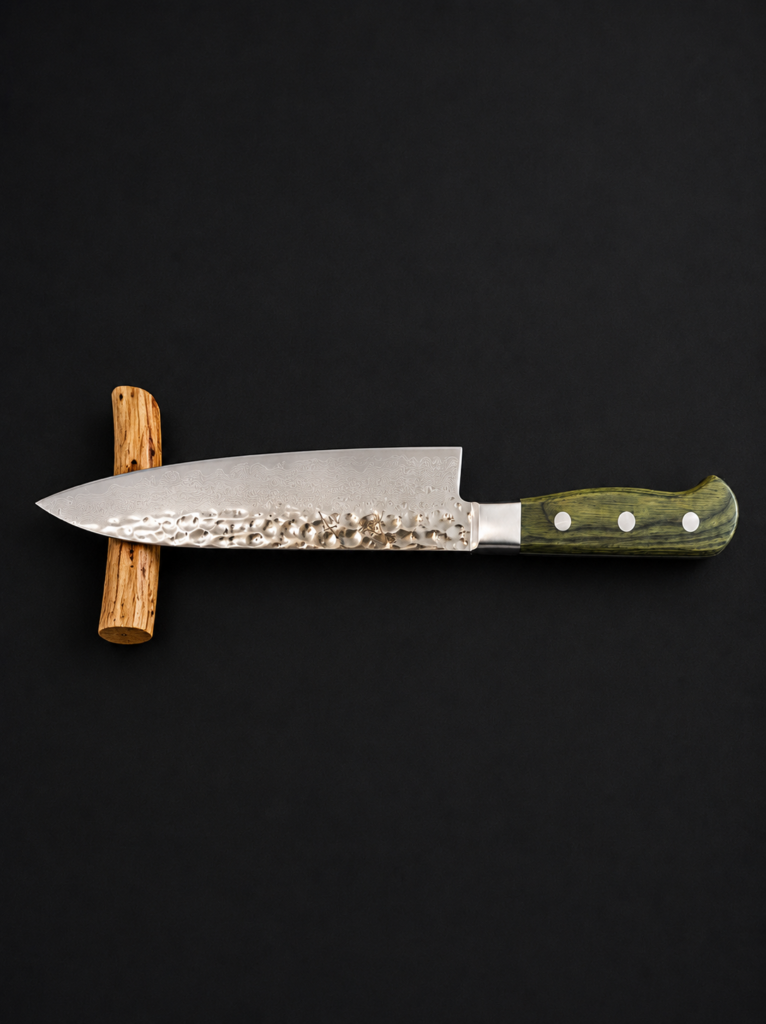
135mm Petty VG10 Polished Hammered 67 Layer Damascus Green Handle
A$260.00
While the blade immediately catches your attention, what truly makes this collection different is the handle.
Traditional Japanese knives are often fitted with magnolia or walnut handles.
They’re beautiful and timeless.
This collection takes a different approach.
The calm green handle introduces a contemporary style while still respecting the understated beauty that Japanese craftsmanship is known for.
Rather than competing with the Damascus pattern, it complements it.
Nothing feels over-designed.
Nothing feels excessive.
The balance between blade and handle creates a knife that feels refined, comfortable, and natural in the hand.
It’s modern without losing its connection to tradition.
To me, that’s one of the most attractive features of this collection.
Another Expression of Japanese Beauty
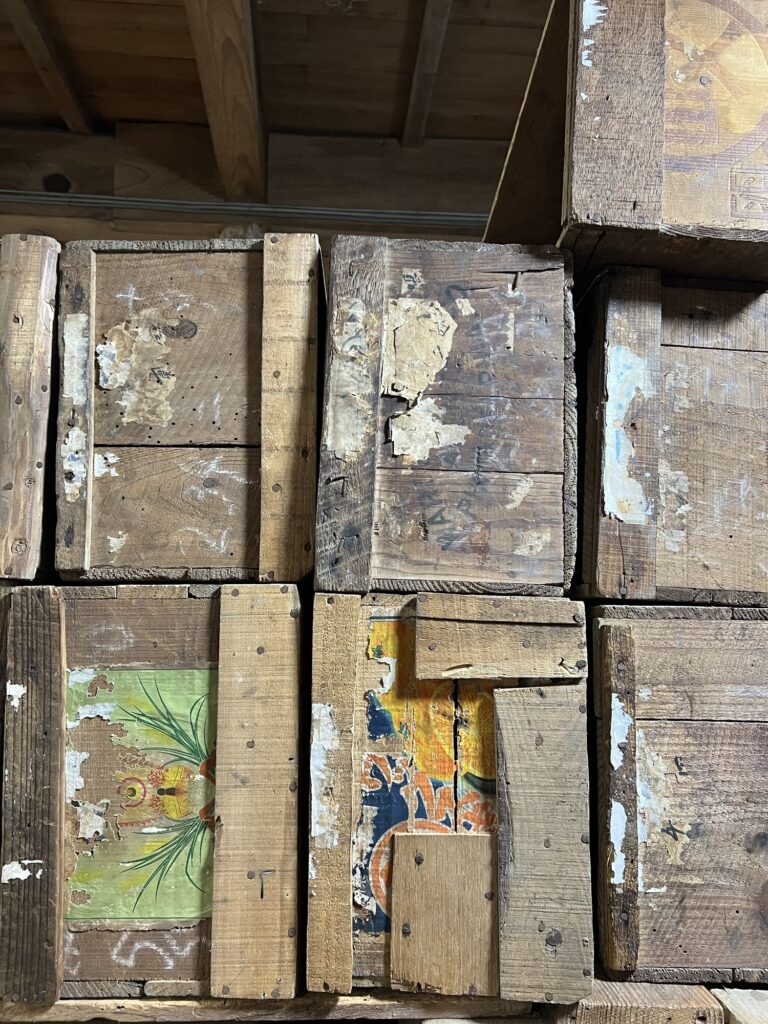
Some time ago, I introduced our Wabi-Sabi collection.
That series celebrated traditional finishes, natural textures, and the quiet beauty that develops through years of use.
This collection tells a different story.
Instead of focusing entirely on traditional appearance, it combines centuries of Japanese blacksmithing with contemporary materials and thoughtful design.
It’s a different expression of Japanese craftsmanship.
Neither is better.
They’re simply different philosophies.
If you’re interested in the traditional side of Japanese knife making, you might also enjoy reading:
Related Article:
Wabi-Sabi | Experience the Quiet Beauty of This Handcrafted Santoku Knife
(Insert your internal blog link here.)
One embraces the beauty of age and simplicity.
The other demonstrates how Japanese craftsmanship can continue evolving while respecting its heritage.
Both represent the spirit of Monozukuri.
Because Monozukuri isn’t about resisting change.
It’s about improving with every generation while never losing sight of the craftsmanship that came before.
Three Knives. One Complete Collection
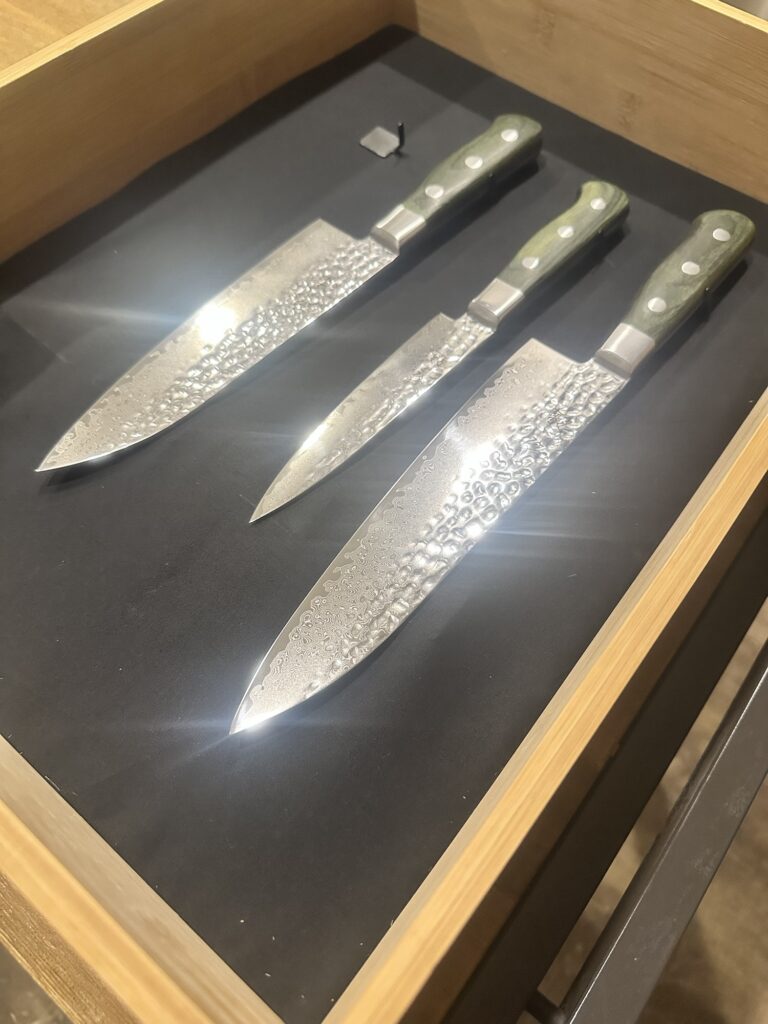
This collection is available in three carefully selected models.
Santoku
The Santoku is one of Japan’s most versatile kitchen knives.
Whether you’re preparing vegetables, slicing meat, or cutting fish, it’s designed to handle everyday cooking with ease.
Its balanced size makes it an excellent choice for home cooks looking for a single knife that can do almost everything.
Gyuto
The Gyuto is Japan’s answer to the Western chef’s knife.
Its longer blade offers greater versatility when working with larger vegetables, meat, and fish while maintaining the precision that Japanese knives are known for.
If you enjoy preparing a wide variety of ingredients, the Gyuto quickly becomes one of the most useful knives in the kitchen.
Petty
The Petty knife is designed for precision.
From peeling fruit and vegetables to trimming meat or preparing garnishes, it provides complete control for delicate work that larger knives simply can’t match.
Although it’s the smallest knife in the collection, many chefs consider it one of the most frequently used.
Each knife has its own purpose.
Together, they create a collection capable of handling almost every task in the kitchen.
Because every knife shares the same premium VG10 steel, beautifully finished 67-layer Damascus blade, and distinctive green handle, they work together not only in performance but also in appearance.
Why I Recommend Building the Complete Collection
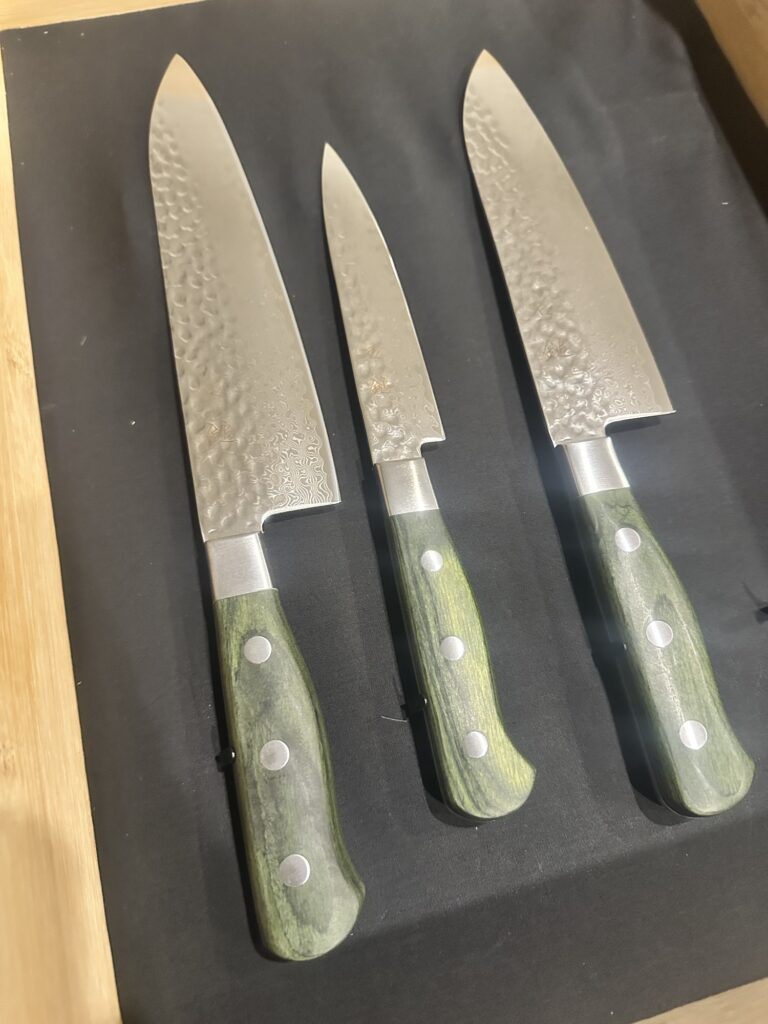
Many people begin by purchasing a single Japanese knife.
That’s exactly what I would recommend if you’re just starting your journey.
However, once you experience the quality of a handcrafted knife, it’s easy to understand why so many people gradually build a complete collection.
Having the right knife for each task makes cooking smoother, more enjoyable, and more efficient.
The Santoku becomes your everyday companion.
The Gyuto handles larger ingredients with confidence.
The Petty takes care of all the finer details.
Instead of asking one knife to do every job, each knife performs the task it was designed for.
As a result, not only does cooking become easier, but your knives also stay in better condition because each blade is used appropriately.
My Experience After More Than 25 Years as a Chef
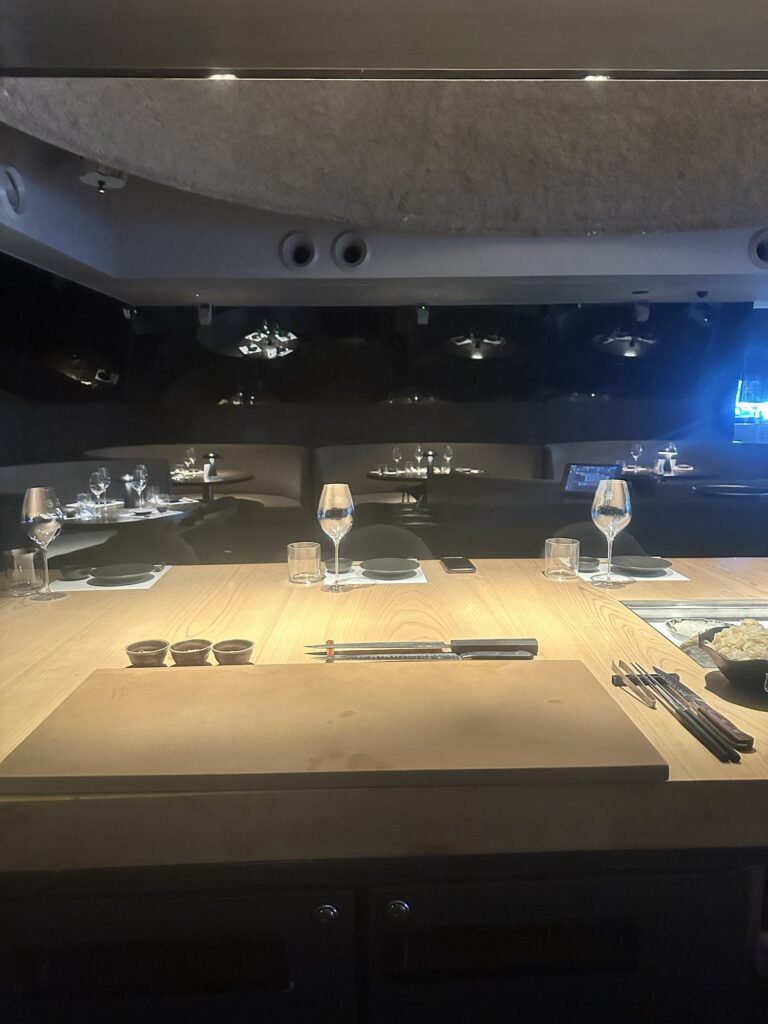
Having worked as a chef for more than 25 years, I’ve noticed something that many people don’t think about until they experience it themselves.
When your knives all belong to the same collection, people notice.
In professional kitchens, fellow chefs often comment on how clean and professional a matching set looks.
It’s not unusual for someone to walk past and say,
“Those knives look great together.”
I’ve also spent many years working at sushi counters where customers can clearly see the knives being used.
Interestingly, customers notice them too.
I’ve had guests compliment the appearance of a matching set before they’ve even tasted the food.
Of course, beautiful knives don’t make someone a better chef.
Skill, experience, and technique will always be far more important.
But presentation matters.
Just as chefs take pride in wearing a clean uniform and maintaining an organised workstation, using knives from the same collection creates a sense of consistency and professionalism.
It reflects the respect we have for our craft.
That’s one of the reasons I personally enjoy using knives from the same series whenever possible.
Not because they match.
But because together they create a workspace that feels organised, intentional, and enjoyable to work in every day.
For me, that’s another reason why I often recommend building a complete Japanese knife set rather than collecting individual knives from different collections.
It’s something I’ve genuinely appreciated throughout my career, and I believe many passionate home cooks will appreciate it too.
More Than Just a Knife
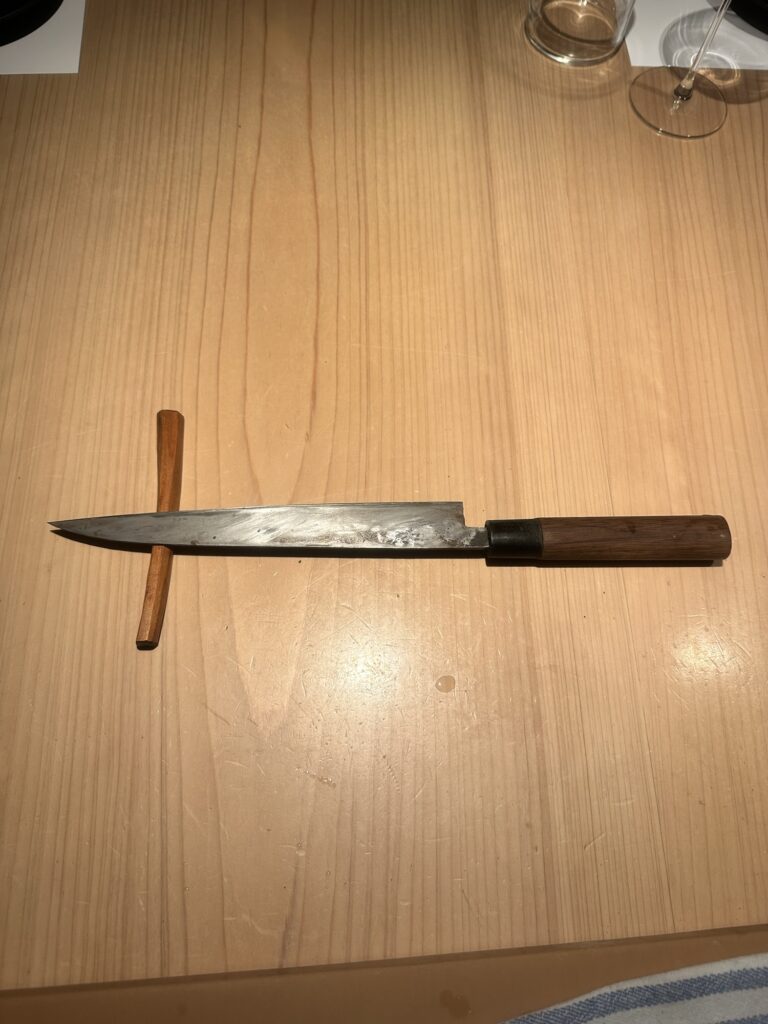
After more than 25 years as a chef, I’ve come to realise that a great knife is far more than just a cutting tool.
It’s something you rely on every day.
It becomes part of the way you cook, the way you work, and even the way you present yourself as a chef.
The longer you use a well-made knife, the more you appreciate the skill, experience, and dedication that went into creating it.
That’s exactly what Monozukuri is all about.
It’s not simply making products.
It’s about creating something with care, purpose, and pride—something designed to be used and appreciated for many years.
Every handcrafted knife in this collection reflects that philosophy.
The Asaoya Yaichi Philosophy
At Asaoya Yaichi, our goal has never been to offer the largest selection of Japanese knives.
Instead, we carefully select knives that we genuinely believe in.
As someone who has spent over two decades working in professional kitchens, I understand how important it is to trust the tools you use every day.
That’s why every knife we offer is chosen not only for its appearance, but also for its performance, durability, and the craftsmanship behind it.
We want to introduce authentic handcrafted Japanese knives that you’ll enjoy using for many years—not simply because they’re beautiful, but because they earn their place in your kitchen every time you cook.
Continue Exploring Japanese Knives
If you’d like to learn more about authentic Japanese knives, you may also enjoy these articles:
- Carbon Steel vs Stainless Steel | Which Japanese Knife Is Right for You?
- Wabi-Sabi | Experience the Quiet Beauty of This Handcrafted Santoku Knife
- Santoku vs Gyuto | Which Japanese Knife Should You Choose?
- Why Do Japanese Knives Rust So Easily? (And Why That’s Not a Bad Thing)
- Why Flattening Your Whetstone Matters
- Knife Handle Guide | Choosing the Right Handle for Your Japanese Knife
- Sujihiki Knives | The Appeal of Asaoya Yaichi’s Carefully Selected Sujihiki Knives
You can explore all of our latest articles here:
👉 https://blog.asaoyayaichi.com.au
Discover the Collection
If you’re looking for handcrafted VG10 Damascus Japanese knives that combine traditional Japanese craftsmanship with thoughtful modern design, we invite you to explore this collection.
Whether you choose the Santoku, Gyuto, Petty, or the complete Japanese knife set, you’ll be investing in knives that were created to perform beautifully for years to come.
More importantly, you’ll experience a small part of the philosophy that has guided Japanese craftspeople for generations.
Monozukuri isn’t simply about making knives.
It’s about making them the right way.
From Tosa, Japan, to your kitchen.
Explore our handcrafted Japanese knives
Shop the collection:
https://www.asaoyayaichi.com.au
As both a chef and the founder of Asaoya Yaichi, I hope these knives bring you the same enjoyment and confidence they’ve brought me throughout my career.