タグ: VG10N

  • 探究 Tankyū | What Does VG10 Actually Mean?

    探究 Tankyū | What Does VG10 Actually Mean?


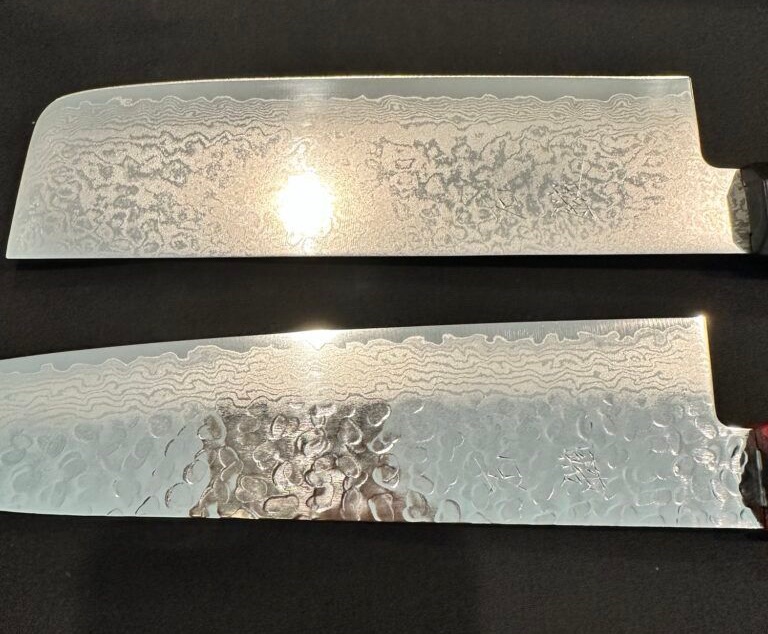
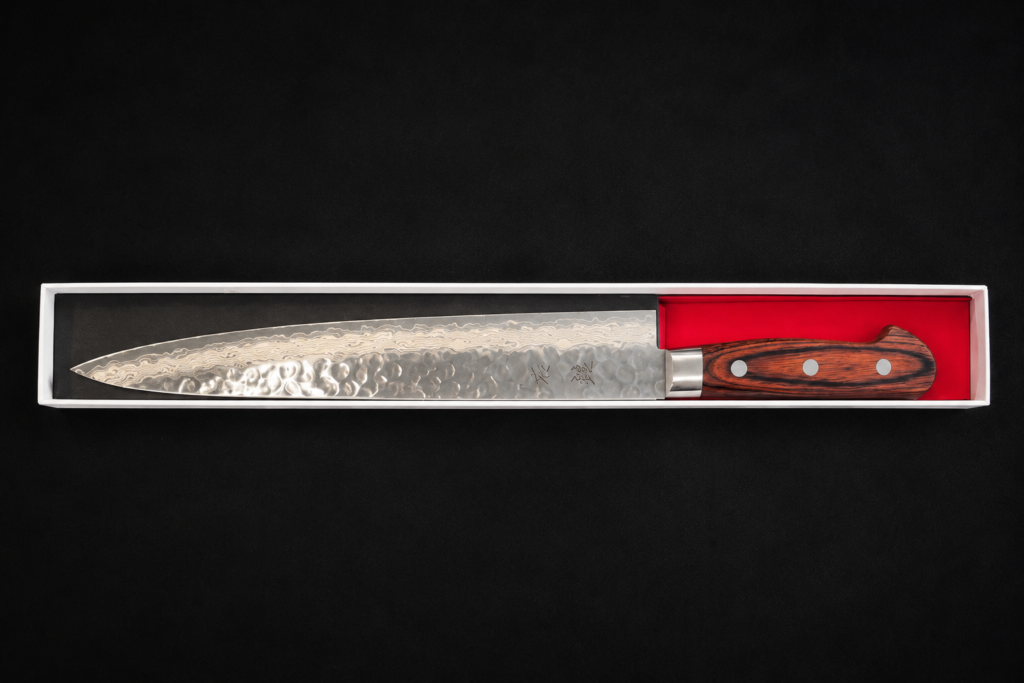
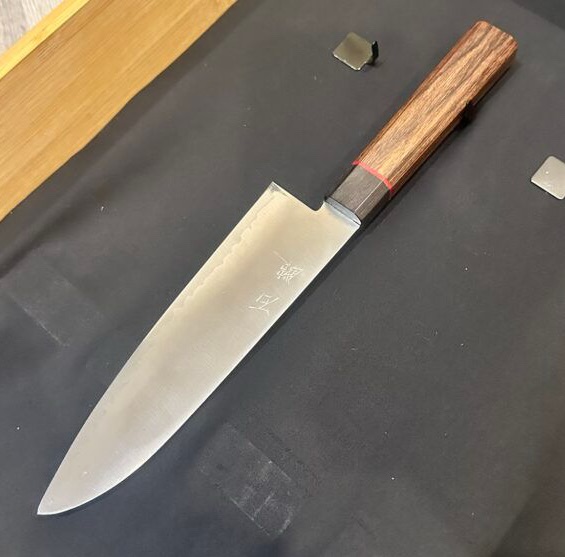
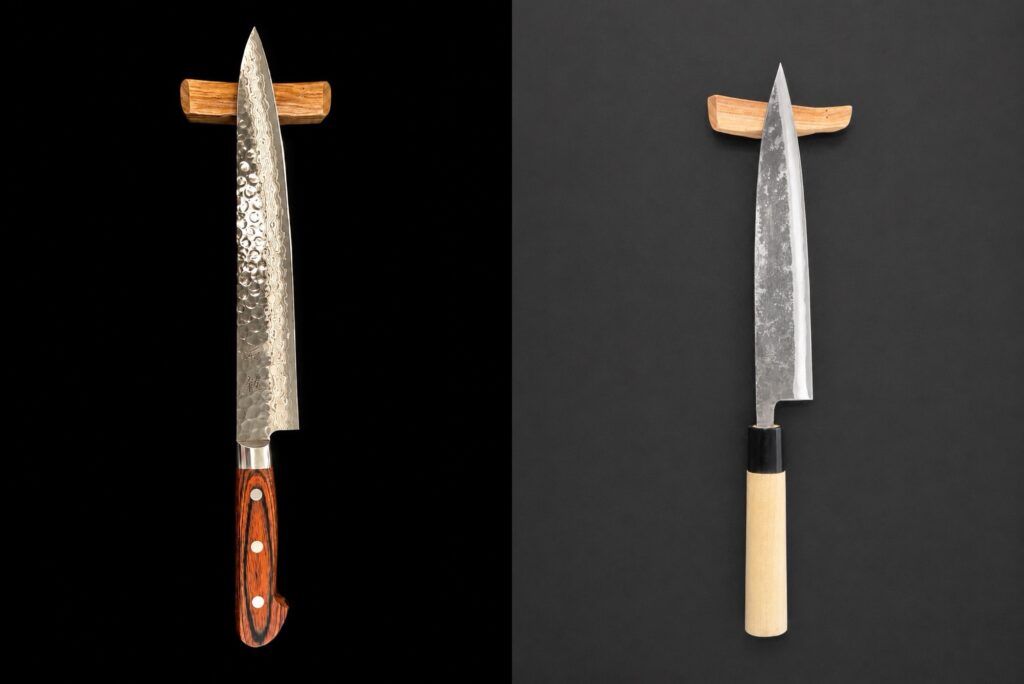
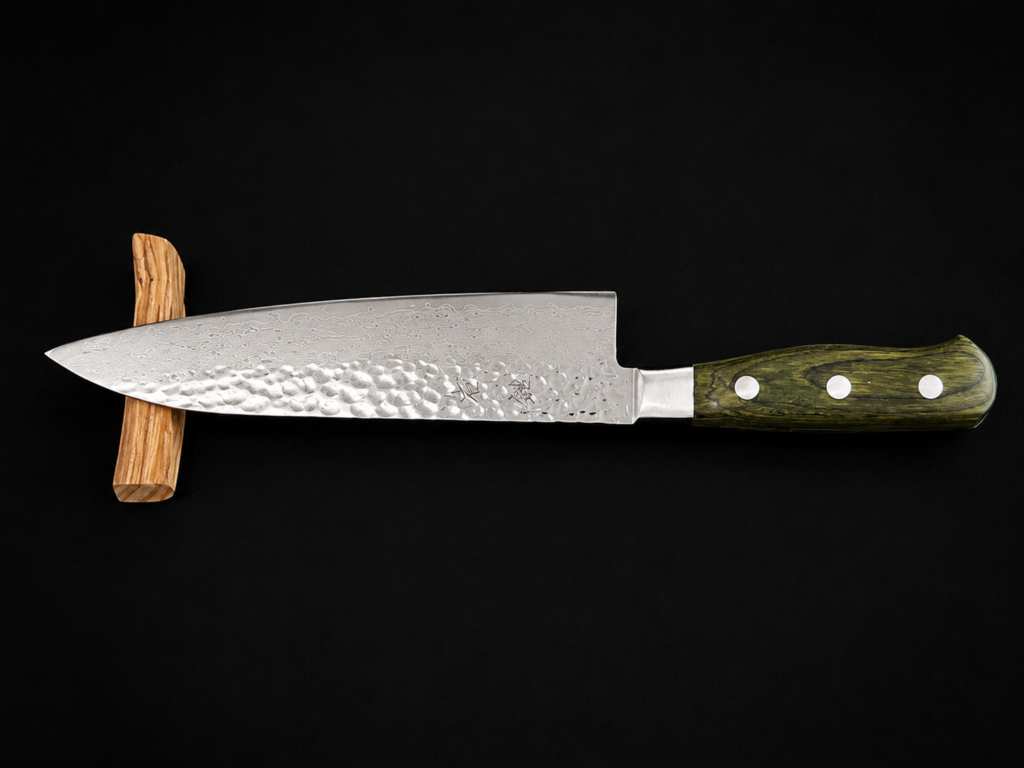
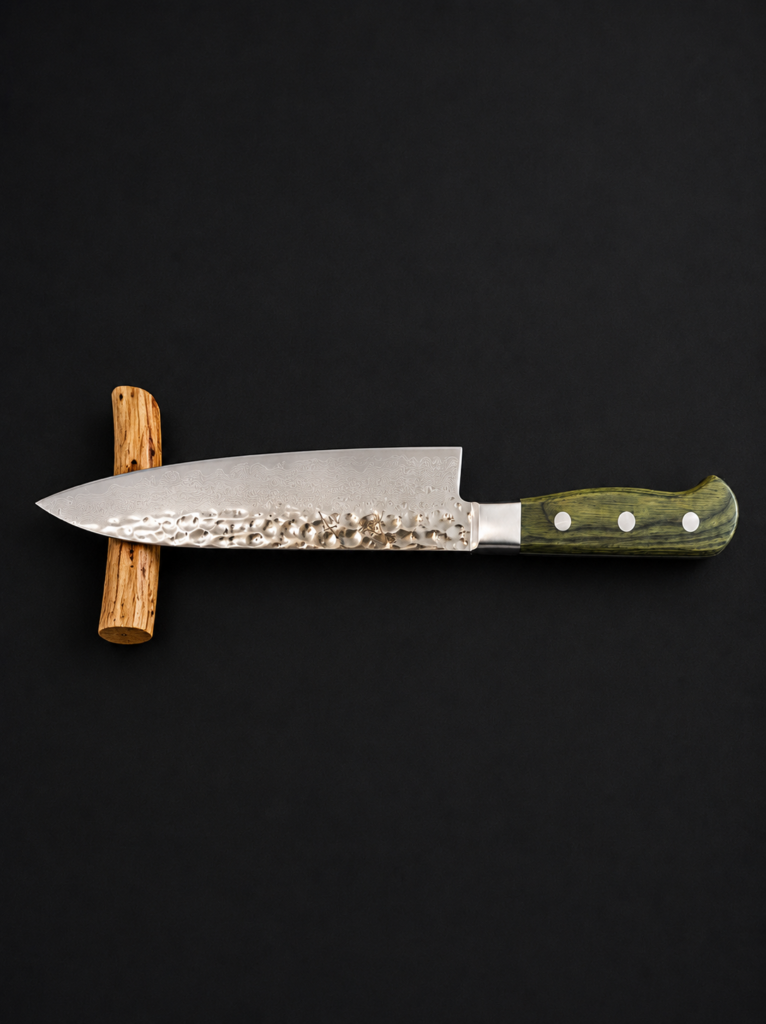
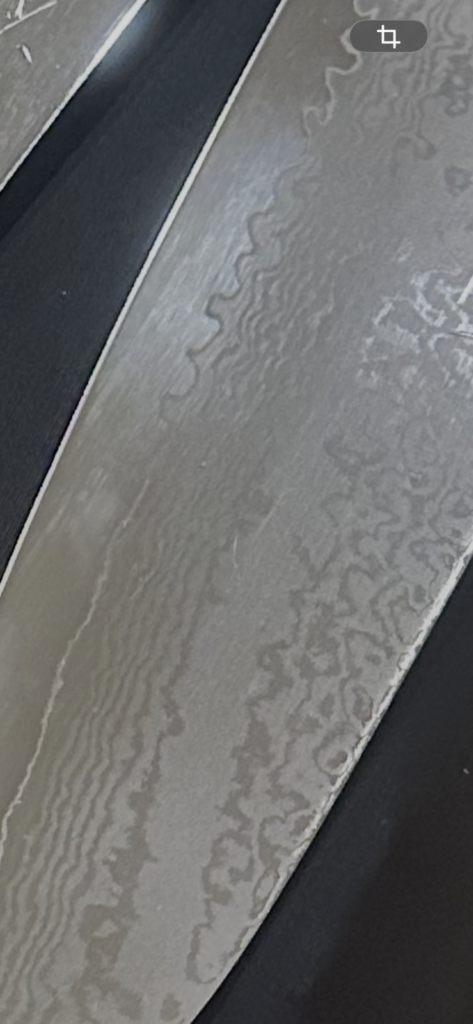
    240mm Sujihiki VG10 Hammered 17 Layer Damascus Mahogany

    I had used VG10 Japanese knife steel for years before I ever stopped to ask a very simple question: what does VG10 actually mean?

    After more than 25 years working as a chef in Japan and Australia, I knew VG10 as a practical stainless steel used in many Japanese knives. I knew how it felt on the cutting board, how it responded to sharpening, and how convenient stainless steel could be in a busy kitchen. But if someone had asked me what the letters meant, why cobalt was in it, or exactly what made VG10 different from other stainless steels, I probably would not have had a very good answer.

    Since starting a Japanese knife business, I have found myself asking questions I never really thought about as a chef.

    So this time, I became curious about VG10 and decided to look into it.

    VG10 Japanese Knife Steel: What Does the Name Actually Mean?
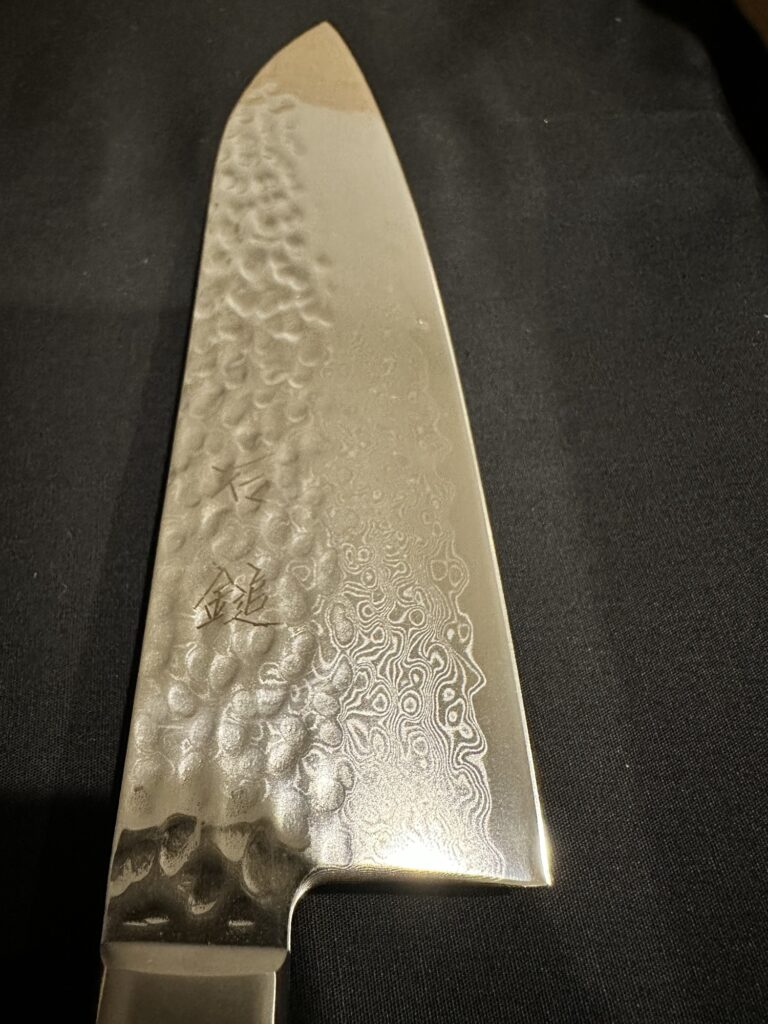
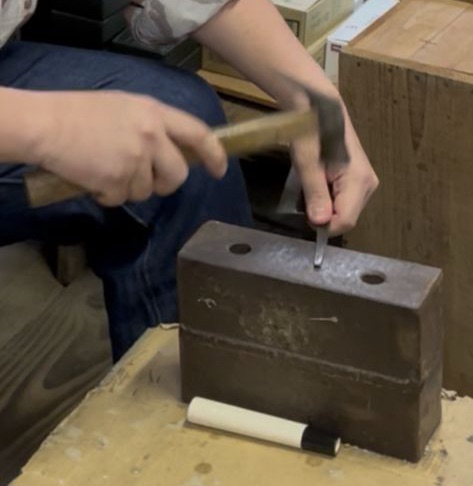
    Ishizuchi Kanamono Manufactory

    One of the first things I discovered was that this apparently simple question was not quite as straightforward as I expected.

    VG10 is an original blade steel produced by Takefu Special Steel in Echizen, Fukui Prefecture, Japan. On the manufacturer’s Japanese website, the steel is identified as V金10 (VG10), or “V Kin 10.” Takefu also produces other steels in the same family, including VG1, VG2, VG5 and VG7.

    When I started searching for what the letters “VG” actually mean, I found several different explanations online. However, I could not find a clear statement on Takefu Special Steel’s official VG10 page defining the letters in the same way.

    What I could confirm was that VG10 is a Japanese stainless blade steel produced by Takefu Special Steel and officially identified in Japan as V金10 (VG10).

    In the end, I did not find a definitive answer to exactly what “VG” stands for from the manufacturer’s information I checked. That was also one of the things I learned by looking into it.

    👉 INTERNAL LINK: Japanese Knife Names — the article about where Japanese knife names come from

    What Is Actually Inside VG10 Japanese Knife Steel?
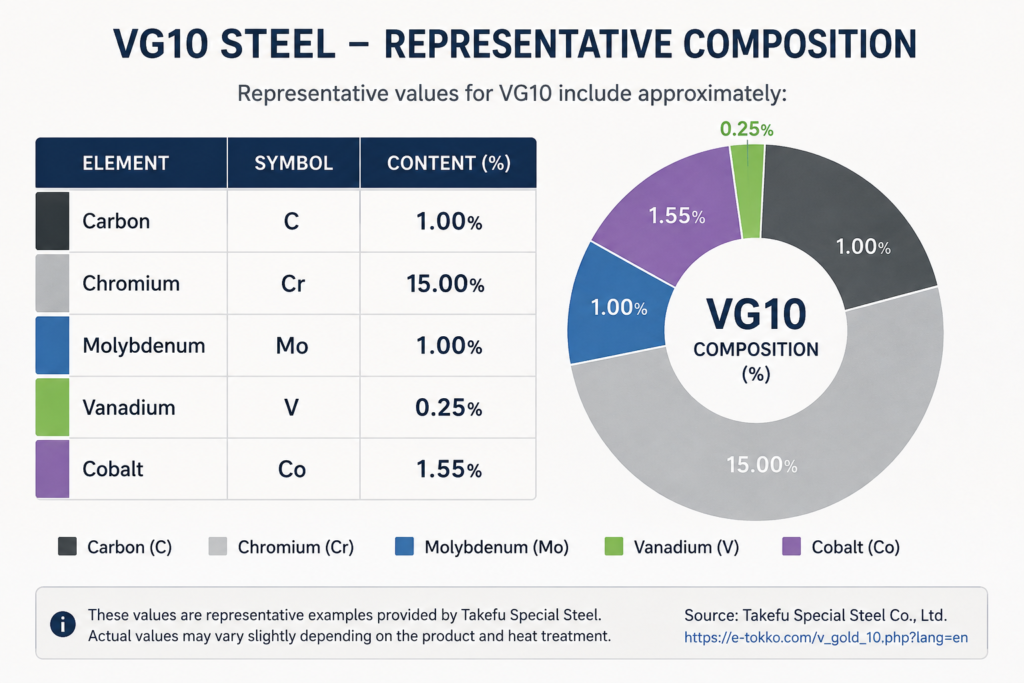
    V金10 (VG10)

    This was the part that made me realise how little I had thought about the steel itself.

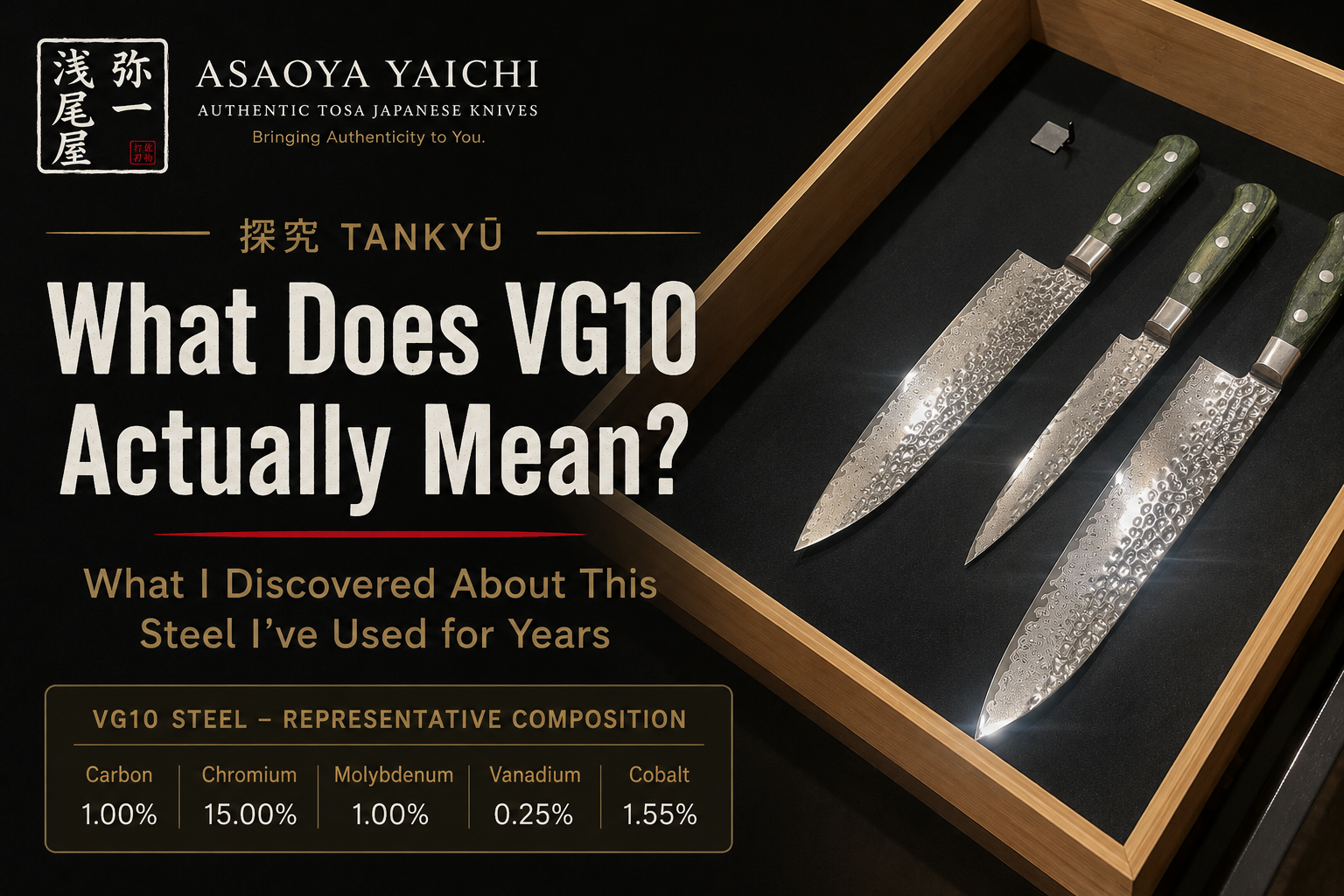
    According to Takefu Special Steel, representative values for VG10 include approximately 1.00% carbon, 15.00% chromium, 1.00% molybdenum, 0.25% vanadium and 1.55% cobalt.

    I had heard the word “cobalt” many times before. But then I had another very simple question:

    What exactly is cobalt?

    Cobalt is a metallic chemical element, represented by the symbol Co. In VG10 Japanese knife steel, it forms part of an alloy containing several different elements, each contributing to the characteristics of the finished steel.

    Takefu explains that chromium, molybdenum and cobalt strengthen the steel matrix and help achieve high hardness and long-lasting cutting performance. Vanadium helps refine the microstructure, while chromium, molybdenum and vanadium contribute to hard carbides that improve wear resistance.

    Suddenly, a steel I had simply called “VG10” for years became much more interesting.

    👉 INTERNAL LINK: Hardness 硬度 — 7 Truths About HRC in Japanese Knives

    Why Is VG10 So Popular in Japanese Knives?
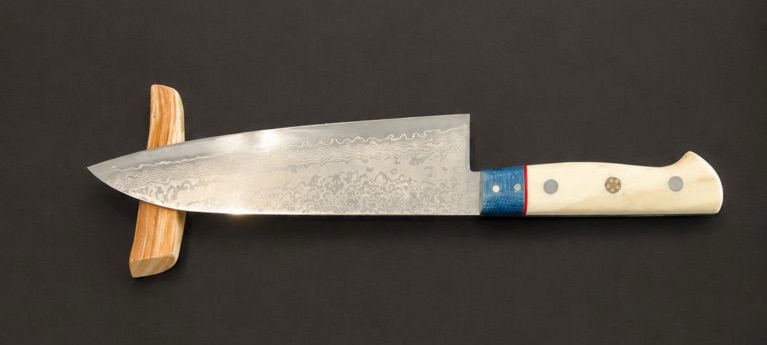

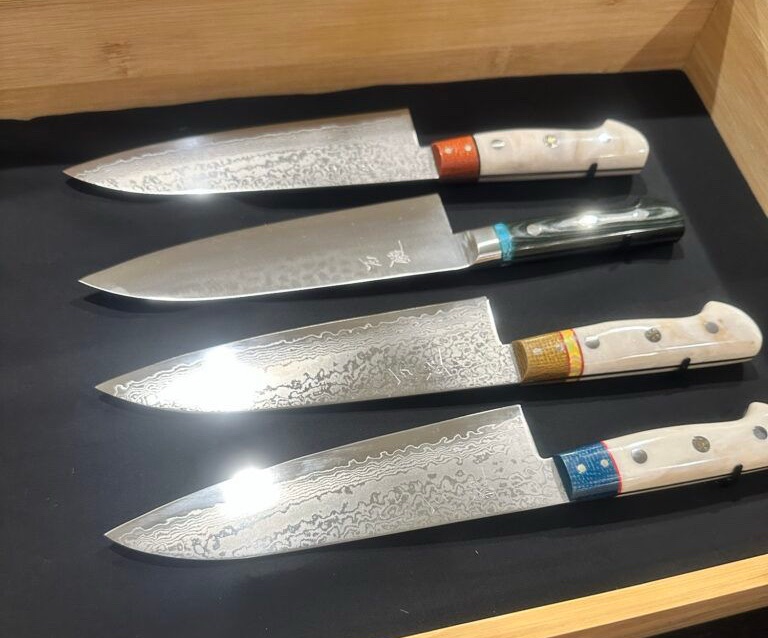
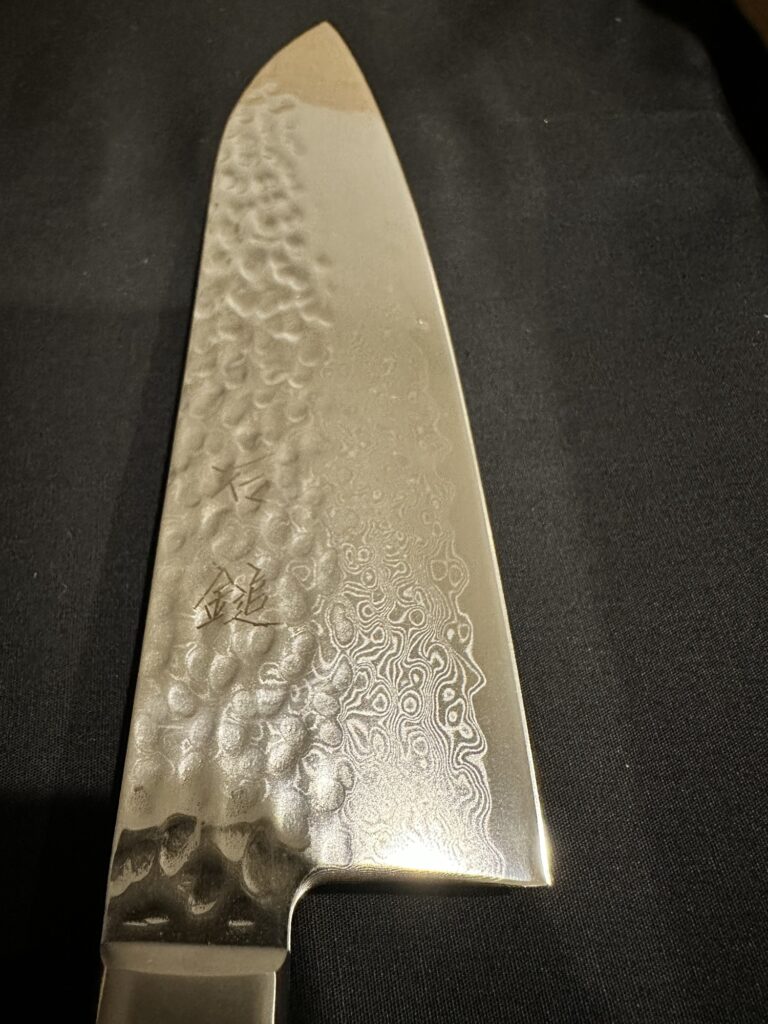
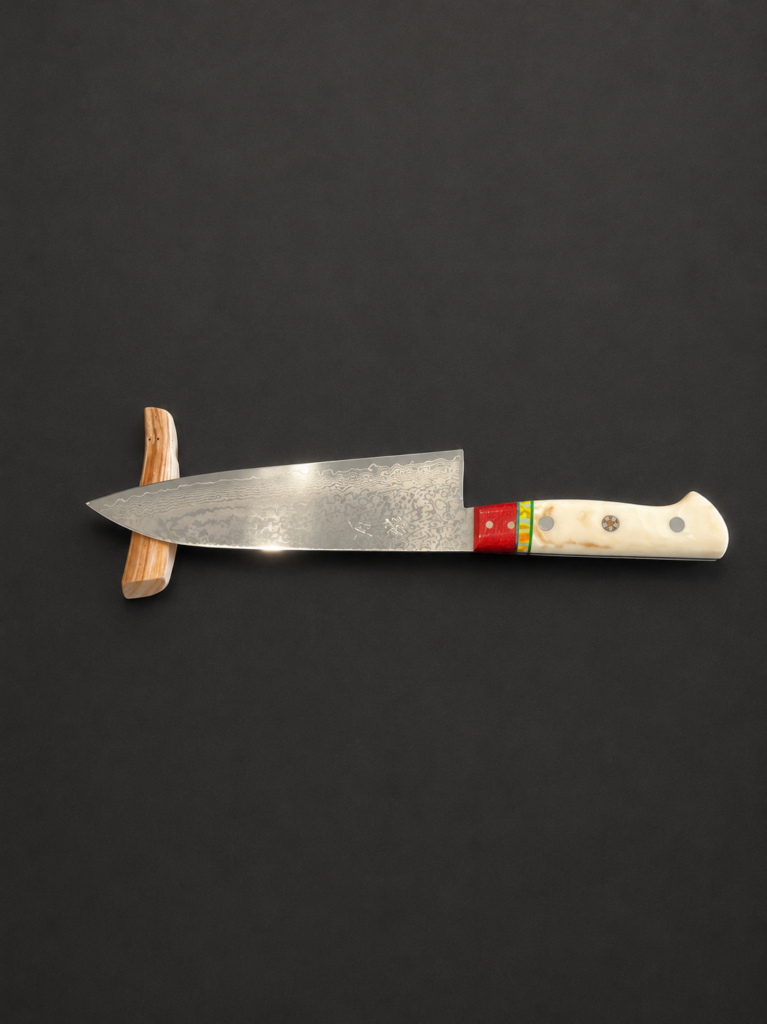
    180mm Santoku VG10N 33 Layer Damascus Green Marble Handle Rainbow Spacer Blue

    On paper, VG10 has a combination of characteristics that makes a lot of sense for kitchen knives.

    Takefu Special Steel lists excellent corrosion resistance and sharpness among its qualities and says the steel is used not only for kitchen knives but also for general-purpose knives and machine blades. The manufacturer also describes VG10 as having good machinability and being relatively easy to sharpen.

    That combination is important in a real kitchen.

    A kitchen knife gets wet. It touches acidic ingredients. It gets sharpened repeatedly. In a professional kitchen, it may be used for hours during a single service.

    For many cooks, having good edge performance while avoiding some of the maintenance required by traditional carbon steel is an attractive balance.

    That helps me understand why VG10 Japanese knife steel has become such a familiar name in Japanese kitchen knives around the world.

    👉 INTERNAL LINK: Carbon Steel vs Stainless Steel — Japanese Knife Guide

    VG10 Japanese Knife Steel From a Chef’s Perspective
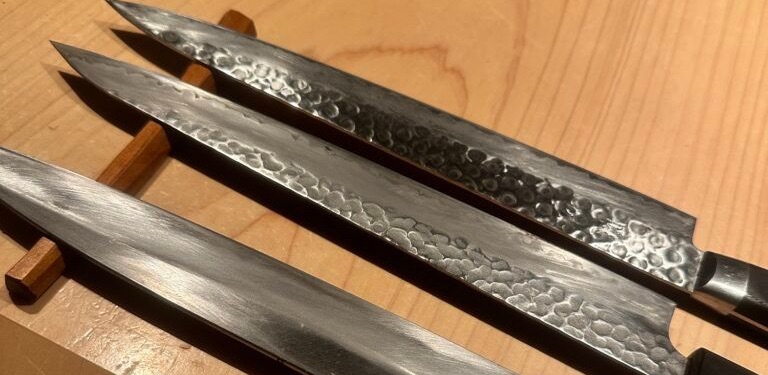
    Here I can look at VG10 from the perspective I know best: actually using knives.

    I have spent more than 25 years using knives, sharpening them and working with them in professional kitchens. From that experience, I can understand why VG10 became so popular.

    I have used both carbon steels and stainless steels over the years, and I do not believe the name of the steel alone determines whether a knife is good.

    Blade geometry, heat treatment, sharpening, construction and the person actually using the knife all make a difference.

    A well-made and properly sharpened VG10 knife can be an excellent professional tool.

    At the same time, two knives made from the same VG10 steel can still feel very different in the hand and on the cutting board. The steel is an important part of a knife, but it is only one part of the whole knife.

    That is something years in professional kitchens taught me long before I started looking into steel compositions.

    👉 INTERNAL LINK: Kireaji — the article about why sharpness is more than just steel

    Learning About VG10 After Years of Using It
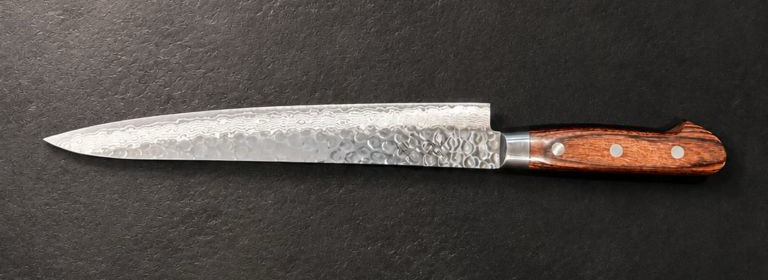

    240mm Sujihiki VG10 Hammered 17 Layer Damascus Mahogan

    One thing I enjoy about running Asaoya Yaichi is that it has made me curious about knives all over again.

    For most of my career, I did not stand in a kitchen thinking about chromium percentages, vanadium or cobalt. I thought about whether my knife was sharp, whether it felt right, whether I could control it, and whether it could handle the work I needed it to do.

    Now I find myself asking why.

    Why is it called VG10?

    Why does it contain cobalt?

    Why do different steels feel different on the sharpening stones?

    Why can two knives made from supposedly similar materials feel different when you actually use them?

    Once I started looking into these questions, I found that one answer often led to another question.

    And perhaps that is one of the most interesting things about learning more about Japanese knives.

    👉 INTERNAL LINK: 真価 — the article about sharpening and bringing out the true potential of a Japanese knife

    Final Thoughts on VG10 Japanese Knife Steel

    VG10 Japanese knife steel was something I thought I understood simply because I had used it for years.

    But once I started looking into it, I discovered there was much more behind those three characters than I had ever considered.

    Learning about chromium, molybdenum, vanadium and cobalt does not change the experience I have gained from actually using knives. Instead, it gives me another way to understand and appreciate a tool I have spent most of my working life holding.

    For years, I looked at knives mainly through the eyes of a chef.

    Now, running Asaoya Yaichi has given me another reason to keep asking questions about them.

    Sometimes a very basic question can lead somewhere surprisingly interesting.

    And this time, it started with just three characters:

    VG10.

    👉 Explore more:
    https://blog.asaoyayaichi.com.au

    👉 Visit our online store:
    https://asaoyayaichi.com.au

    Thank you for reading, and I hope to see you again in the next story.
  • Hardness 硬度 | 7 Powerful Truths About Japanese Knife HRC That Surprised Even a Chef

    Hardness 硬度 | 7 Powerful Truths About Japanese Knife HRC That Surprised Even a Chef

    Ishizuchi Kanamono Manufactory

    For more than 25 years, I have worked as a professional chef using Japanese knives almost every day. Surprisingly, although I often saw numbers like HRC 60, HRC 61, or HRC 63, I never truly understood what they meant. I simply assumed that a higher number meant a better knife.

    As I began selling handcrafted Japanese knives through Asaoya Yaichi, customers started asking about Japanese knife hardness more often. Rather than pretending I knew every technical detail, I decided to research it properly.

    What I discovered changed the way I think about knives. More importantly, I realised that my experiences in professional kitchens over the last 25 years matched what the science says about knife hardness.

    If you’ve ever wondered what HRC really means, whether a harder knife is always better, or how hardness affects sharpening, this guide is for you.

    Internal Link: Beginner’s Guide to Japanese Kitchen Knives


    What Is Japanese Knife Hardness?


    240mm Thick Deba Aogami #2 Kurouchi Walnut Handle

    Japanese knife hardness is usually measured using the Rockwell Hardness C Scale (HRC). This test measures how resistant the steel is to indentation using a diamond-tipped tester.

    The higher the HRC number, the harder the steel.

    However, this does not automatically mean the knife is better.

    Hardness is only one characteristic of a knife. Heat treatment, steel quality, blade geometry, sharpening, and craftsmanship all play equally important roles.

    A knife with perfect balance will usually outperform a knife that simply has the highest hardness rating.

    Internal Link: Carbon Steel vs Stainless Steel | Which Should You Choose?


    Why Japanese Knife Hardness Matters


    165mm Usuba A8 Hammered Damascus Black & Red Octagonal Handle

    Japanese knife hardness affects several important characteristics.

    Better Edge Retention

    Harder steel usually keeps its edge much longer.

    That means you can prepare many more ingredients before the knife begins to lose its sharpness.

    This is one reason many Japanese knives are loved by professional chefs.

    More Difficult Sharpening

    The same hardness that keeps the edge sharp also makes the knife more difficult to sharpen.

    Removing steel takes longer, especially if the blade has become quite dull.

    Greater Risk of Chipping

    Very hard steel is less flexible.

    If used incorrectly on bones, frozen food, or by twisting the blade sideways, small chips can occur.

    That doesn’t mean the knife is weak—it simply means it should be used correctly.


    Japanese Knife Hardness in Real Kitchen Experience


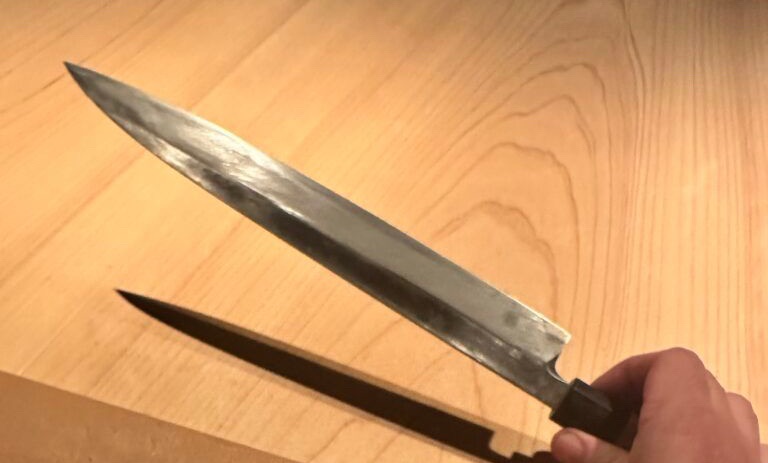
    210mm Sujihiki Aogami #2 Kurouchi Magnolia Handle

    This was probably the biggest surprise for me.

    I realised that although I didn’t know the HRC numbers, I had already experienced the difference between softer and harder steels throughout my career.

    Years ago, I used a sujihiki made from relatively soft steel.

    It was so flexible that if I applied too much pressure while sharpening, I could actually feel the blade flex slightly on the whetstone.

    The edge didn’t last particularly long.

    However, when it became dull, I could restore an excellent edge very quickly.

    It sharpened easily and always performed well enough for daily professional work.


    240mm Sujihiki VG10 Hammered 17 Layer Damascus Mahogany

    Later, I switched to harder stainless steel knives.

    The difference was immediately obvious.

    When freshly sharpened, the cutting performance was incredible.

    The edge stayed sharp much longer than my previous knife.

    But there was another side to the story.

    Once the knife finally became dull, it was much harder to bring back.

    It took considerably longer to raise a burr, and if I accidentally changed the sharpening angle, correcting the edge required much more patience.

    After researching Japanese knife hardness, I finally understood why.

    Harder steel offers outstanding edge retention, but it also demands greater sharpening skill.

    Softer steel loses its edge sooner, yet it rewards the user by being forgiving and much easier to sharpen.

    Neither is objectively better.

    They simply suit different users and different situations.

    Internal Link: Why Flattening Your Whetstone Matters


    Common HRC Ranges for Japanese Knives


    180mm Santoku Aogami #2 Green Micarta Handle with Turquoise Spacer

    Although every manufacturer uses different heat treatments, these are general guidelines.

    HRC 55–58

    • Tough and flexible
    • Easy to sharpen
    • Loses its edge relatively quickly

    HRC 59–61

    • Excellent balance
    • Suitable for many home cooks
    • Common among quality Japanese knives

    HRC 61–64

    • Outstanding edge retention
    • Very sharp cutting performance
    • Requires proper technique and sharpening skills

    Above HRC 64

    • Extremely hard
    • Exceptional edge retention
    • Less forgiving and often intended for experienced users

    Remember, these are only general ranges.

    Steel composition and heat treatment are often more important than the HRC number alone.

    Internal Link: Professional Choice | Why I Still Use Carbon Steel for Sashimi After 25 Years


    Should You Buy the Hardest Japanese Knife?


    180mm Santoku SG2 Rosewood Octagonal Handle

    Many people assume that the highest HRC automatically means the best knife.

    After researching this subject, I don’t believe that’s true.

    A knife should match the way you cook.

    If you enjoy sharpening and want maximum edge retention, harder steel can be fantastic.

    If you prefer quick maintenance and easy sharpening, a slightly softer blade may actually make your cooking more enjoyable.

    The best knife isn’t the one with the highest number.

    It’s the one that suits your cooking style.


    Final Thoughts on Japanese Knife Hardness


    Ginsan Nashiji Forged Magnolia Octagonal Handle Buffalo Horn Ferrule series

    Researching Japanese knife hardness taught me something I honestly didn’t know after more than 25 years in professional kitchens.

    I had always judged knives by how they performed.

    Only later did I realise that hardness helps explain why they perform that way.

    Today, I still don’t choose a knife based only on its HRC rating.

    I look at the steel, the heat treatment, the craftsmanship, the intended purpose, and how the knife feels in my hand.

    The HRC number is useful, but it’s only one piece of a much bigger picture.

    If this article helped you understand Japanese knife hardness a little better, I hope it also gives you more confidence when choosing your next knife.

    Internal Link: Handmade Japanese Knives | 7 Fascinating Reasons No Two Are Ever Exactly the Same


    👉 Explore more:
    https://blog.asaoyayaichi.com.au

    👉 Visit our online store:
    https://asaoyayaichi.com.au

    Thank you for reading, and I hope to see you again in the next story.
  • Professional Choice | Why I Still Use Carbon Steel for Sashimi After 25 Years

    Professional Choice | Why I Still Use Carbon Steel for Sashimi After 25 Years

    Ishizuchi Kanamono Manufactory

    If you asked me what knife I still reach for after more than 25 years as a professional chef, my answer might surprise you.

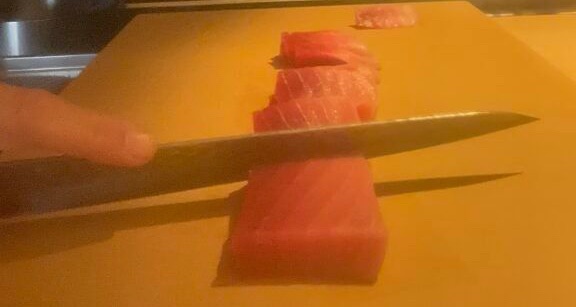
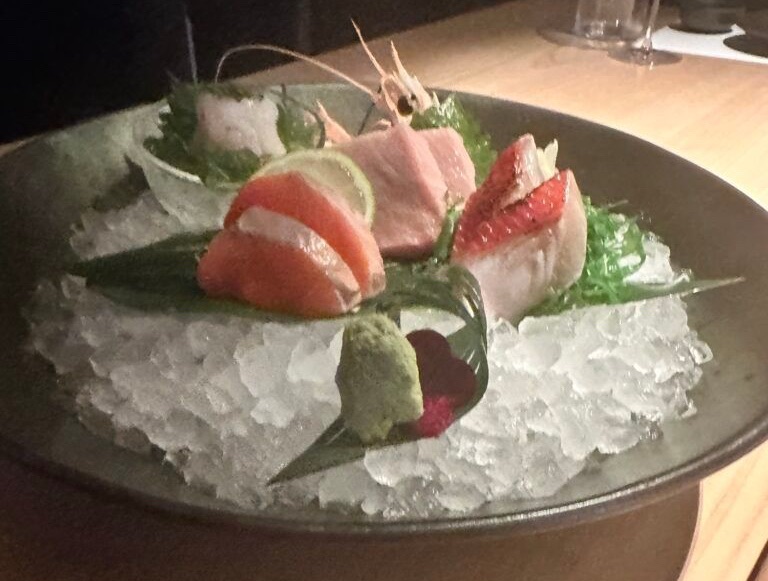
    Despite owning and using modern stainless steel knives such as VG10, Ginsan, and SG2, I still find myself reaching for a carbon steel sashimi knife whenever I’m preparing sashimi.

    Does that mean carbon steel is always better?

    Not at all.

    After using both carbon steel and stainless steel knives in busy professional kitchens, I’ve learned that every knife has its place. Choosing the right knife isn’t about following trends—it’s about understanding what works best for the job.


    Why I Still Choose a Carbon Steel Sashimi Knife


    210mm Sujihiki Aogami #2 Kurouchi Magnolia Handle

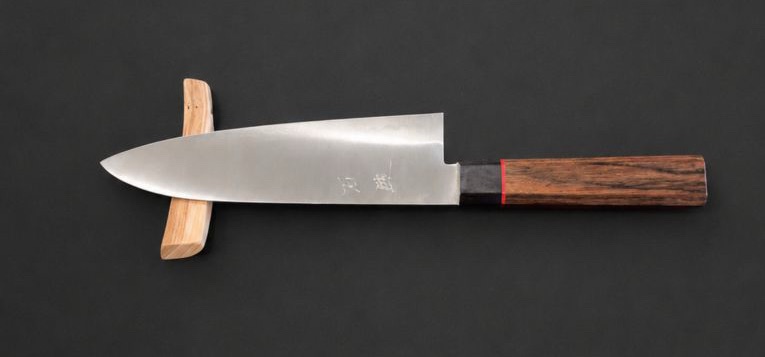
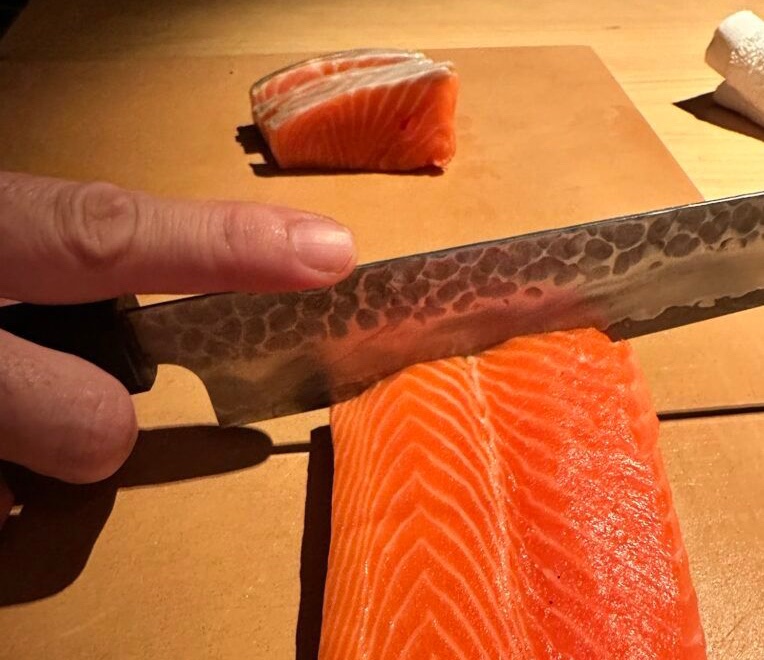
    When slicing sashimi, I enjoy using my Aogami carbon steel knife.

    The first thing I notice is how effortlessly it moves through the fish. The edge feels incredibly refined, allowing long, smooth slices with very little resistance.

    Some chefs believe carbon steel produces cleaner cuts and may even reduce unwanted fish aroma, particularly when slicing tuna or bonito. Whether that’s caused by the steel itself or simply by its exceptional edge is still open to debate.

    Personally, I don’t choose carbon steel because I believe it performs miracles.

    I choose it because I enjoy the feeling every time I use it.

    Internal Link: 👉 Beginner’s Guide to Japanese Kitchen Knives


    Stainless Steel Is Better Than Many People Think


    180mm Santoku SG2 Rosewood Octagonal Handl

    Modern stainless steels have improved dramatically.

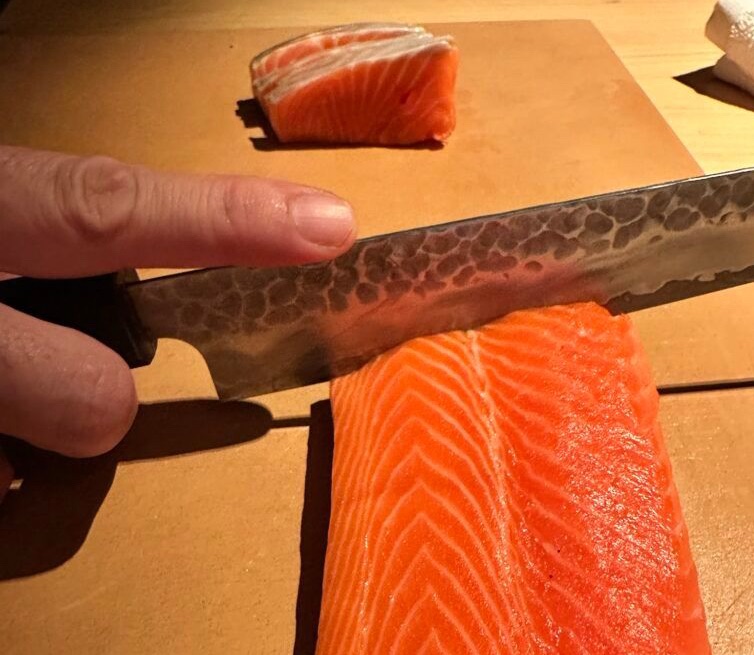
    A properly sharpened VG10 sujihiki can produce beautiful sashimi with excellent edge retention and outstanding corrosion resistance.

    If my VG10 sujihiki and my carbon steel knife are both sharpened to the same level, I honestly don’t think most customers would notice any difference once the sashimi reaches the plate.

    This is why I always tell people not to become obsessed with steel names.

    The sharpness of the edge is far more important.

    Internal Link: 👉 Ultimate | The Pinnacle of Stainless Steel – 180mm SG2 Santoku with Rosewood Octagonal Handle


    Why I Use Stainless Steel for Onions and Tomatoes

    Kitchen knife

    My knife choice changes completely when preparing vegetables.

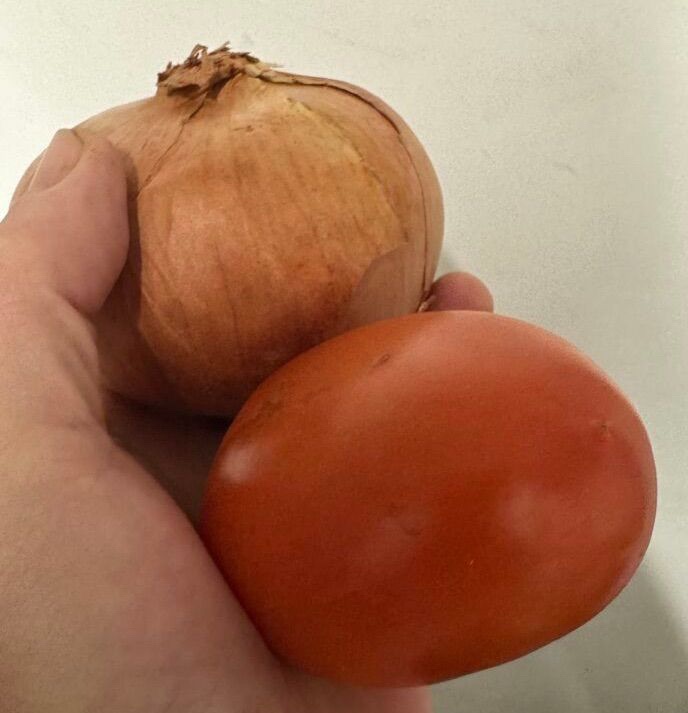
    For onions, tomatoes, citrus fruits, and many everyday ingredients, I usually grab my stainless steel gyuto.

    It’s not because carbon steel cannot cut them.

    It’s because stainless steel lets me work without constantly thinking about maintenance.

    Acidic ingredients can react with carbon steel, so I know I’ll need to clean and dry the knife quickly. During a busy shift, stainless steel simply makes life easier.

    Convenience matters in a professional kitchen.

    Internal Link: 👉 Why Do Japanese Knives Rust So Easily?


    Sharpness Is More Important Than Steel


    240mm Sujihiki VG10 Hammered 17 Layer Damascus Mahogany

    After more than two decades in professional kitchens, I’ve learned one simple truth.

    A perfectly sharpened VG10 knife is far better than a dull carbon steel knife.

    Many people focus entirely on steel—Aogami, Shirogami, VG10, SG2, or Ginsan.

    But steel only gives a knife its potential.

    Sharpening determines how much of that potential you actually experience.

    Learning how to sharpen properly will improve your cooking far more than changing from one steel to another.

    Internal Link: 👉 Why Flattening Your Whetstone Matters


    My Advice After 25 Years

    VG10 & Aogami #2

    People often ask me which knife they should buy.

    My answer is always the same.

    If you enjoy traditional Japanese craftsmanship and don’t mind a little extra care, a carbon steel knife is incredibly satisfying to own.

    If you want outstanding performance with less maintenance, high-quality stainless steel is an excellent choice.

    Neither is wrong.

    In my own kitchen, I still use both.

    Carbon steel for sashimi.

    Stainless steel for much of my everyday preparation.

    Not because one is superior, but because each knife suits a different purpose.

    That, in my opinion, is what professional cooking is all about.

    Internal Link: 👉 The True Value of Japanese Knives | 7 Reasons They Are Worth the Investment


    Final Thoughts

    After more than 25 years as a chef, I’ve stopped asking which steel is “better.”

    Instead, I ask which knife is better for today’s job.

    For me, that often means reaching for a carbon steel knife when preparing sashimi and a stainless steel knife for everyday kitchen work.

    If there’s one lesson I’ve learned throughout my career, it’s this:

    The best knife isn’t determined by its steel alone. It’s determined by how well it’s sharpened, maintained, and matched to the task at hand.

    Whether you choose carbon steel or stainless steel, investing in a quality Japanese knife and learning how to care for it will reward you for years to come.


    👉 Explore more:
    https://blog.asaoyayaichi.com.au

    👉 Visit our online store:
    https://asaoyayaichi.com.au

    Thank you for reading, and I hope to see you again in the next story.
  • Monozukuri | Where Japanese Craftsmanship Meets Quiet Beauty

    Monozukuri | Where Japanese Craftsmanship Meets Quiet Beauty

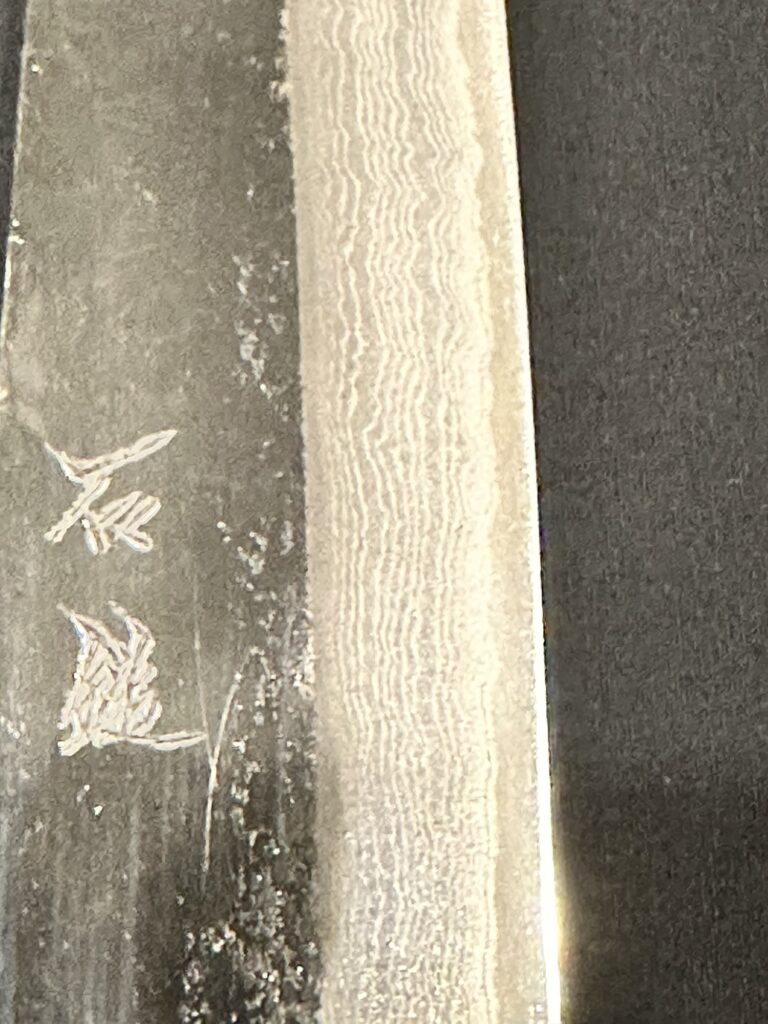
    67-Layer Damascus Blade

    When people search for Japanese knives, they often picture striking Damascus patterns, polished finishes, or eye-catching designs.

    Those features certainly have their place.

    But after spending more than 25 years working as a chef, I’ve come to believe that the best knife isn’t necessarily the one that attracts the most attention.

    It’s the one you enjoy reaching for every single day.

    A knife that feels perfectly balanced in your hand.

    A knife that performs beautifully, looks elegant without being flashy, and quietly earns your trust over time.

    That is the philosophy behind this collection.

    In Japan, there is a word that perfectly expresses this way of thinking.

    What Is Monozukuri?

    Ishizuchi Kanamono Manufactory

    Monozukuri literally means “making things.”

    But its true meaning goes much deeper than manufacturing.

    It represents the dedication of Japanese craftspeople who constantly refine their skills, pay attention to the smallest details, and never compromise on quality.

    For generations, Japanese blacksmiths have passed their knowledge from one craftsman to the next.

    Every knife they create reflects years of experience, patience, and pride in their work.

    Rather than chasing trends, they focus on creating tools that perform beautifully and last for many years.

    That philosophy is exactly what inspired this collection.

    Every knife is designed to honour traditional Japanese craftsmanship while fitting naturally into today’s kitchens.

    Premium VG10 Steel with a Beautiful 67-Layer Damascus Blade


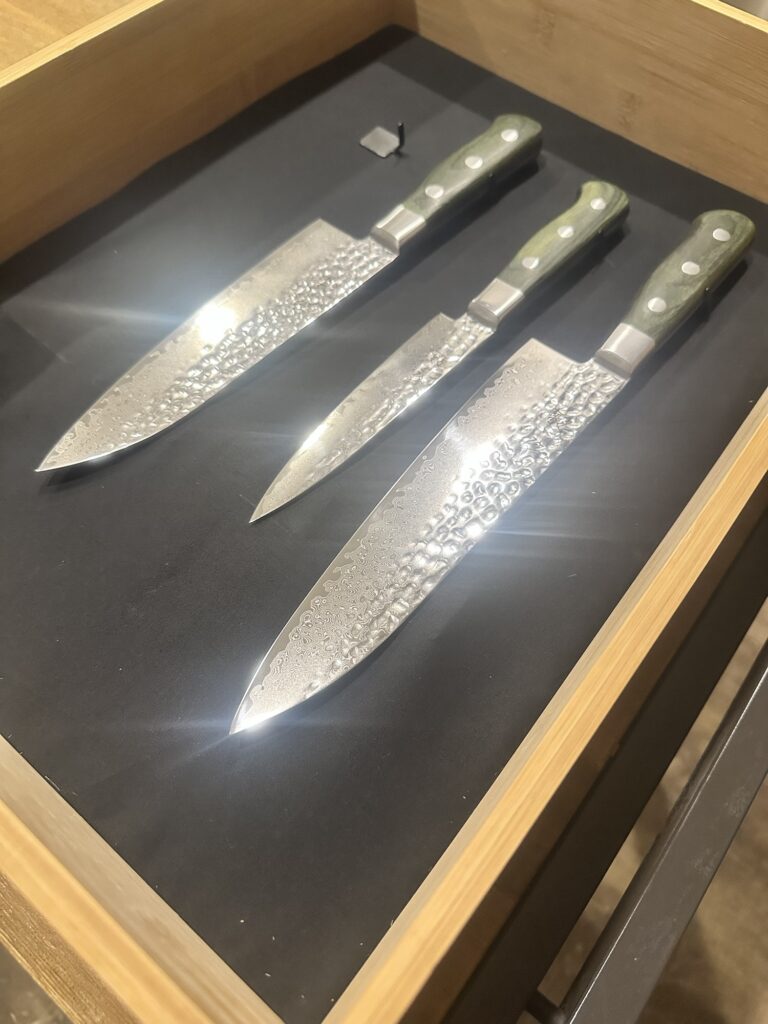
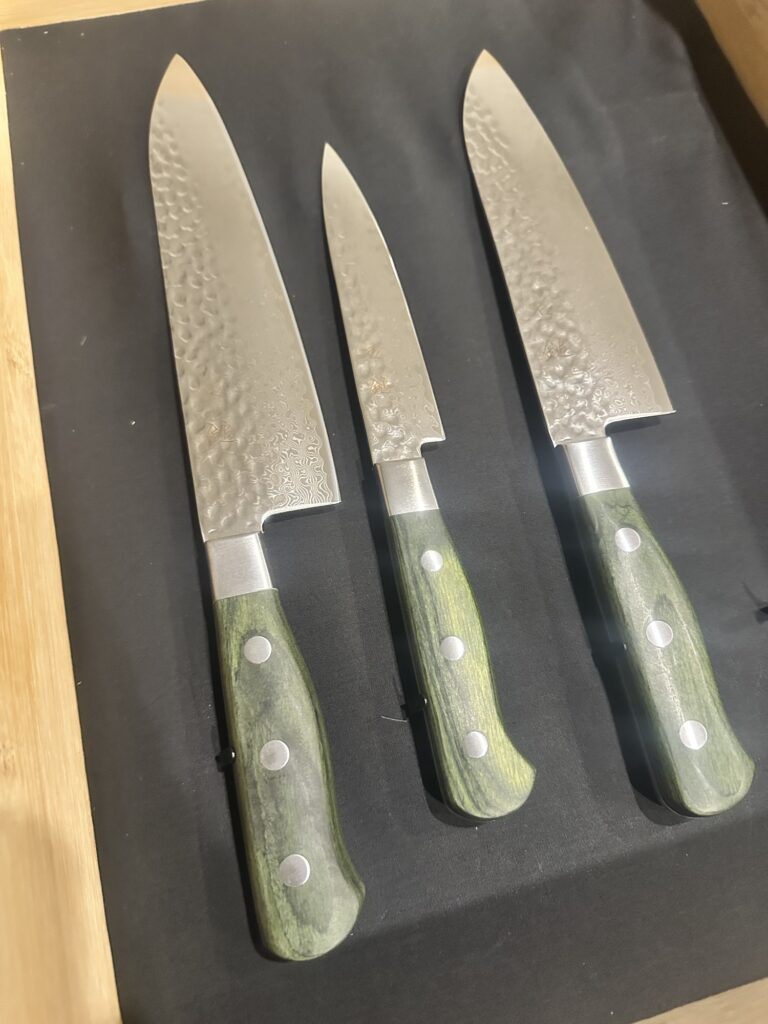
    180mm Santoku VG10 Polished Hammered 67 Layer Damascus Green Handle
    A$380.00

    Every knife in this collection is handcrafted in Japan using VG10 stainless steel and features a beautifully finished 67-layer Damascus blade.

    VG10 has earned its reputation as one of Japan’s most respected stainless steels for good reason.

    It offers outstanding sharpness, excellent edge retention, impressive corrosion resistance, and is much easier to maintain than traditional carbon steel.

    That makes it an excellent choice for both professional chefs and passionate home cooks who want the performance of premium Japanese knives without constantly worrying about rust.

    The Damascus blade isn’t simply there to create a beautiful pattern.

    Each layer reflects the precision and care of Japanese craftsmanship.

    The flowing lines give every knife its own unique character while maintaining the practical performance needed for everyday cooking.

    Beautiful tools shouldn’t stay in a display cabinet.

    They should become part of your daily routine.

    If you’d like to learn more about choosing the right steel, you may also enjoy this article:

    Related Article:
    Carbon Steel vs Stainless Steel | Which Japanese Knife Is Right for You?

    (Insert your internal blog link here.)

    A Contemporary Handle Inspired by Japanese Simplicity


    135mm Petty VG10 Polished Hammered 67 Layer Damascus Green Handle
    A$260.00

    While the blade immediately catches your attention, what truly makes this collection different is the handle.

    Traditional Japanese knives are often fitted with magnolia or walnut handles.

    They’re beautiful and timeless.

    This collection takes a different approach.

    The calm green handle introduces a contemporary style while still respecting the understated beauty that Japanese craftsmanship is known for.

    Rather than competing with the Damascus pattern, it complements it.

    Nothing feels over-designed.

    Nothing feels excessive.

    The balance between blade and handle creates a knife that feels refined, comfortable, and natural in the hand.

    It’s modern without losing its connection to tradition.

    To me, that’s one of the most attractive features of this collection.

    Another Expression of Japanese Beauty

    Wabi-Sabi

    Some time ago, I introduced our Wabi-Sabi collection.

    That series celebrated traditional finishes, natural textures, and the quiet beauty that develops through years of use.

    This collection tells a different story.
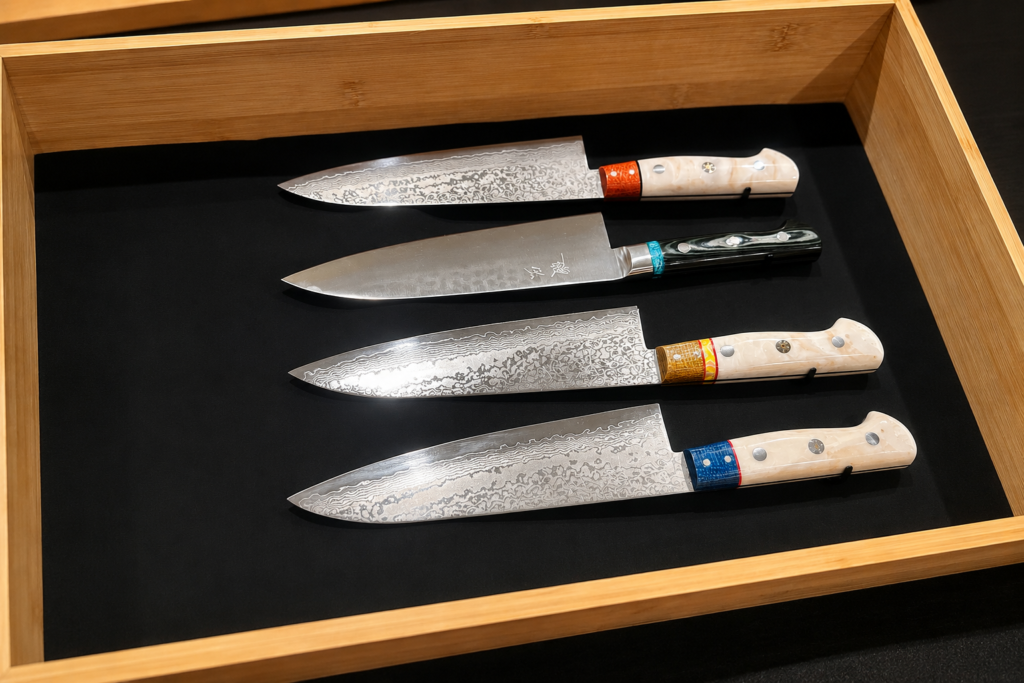
    Instead of focusing entirely on traditional appearance, it combines centuries of Japanese blacksmithing with contemporary materials and thoughtful design.

    It’s a different expression of Japanese craftsmanship.

    Neither is better.

    They’re simply different philosophies.

    If you’re interested in the traditional side of Japanese knife making, you might also enjoy reading:

    Related Article:
    Wabi-Sabi | Experience the Quiet Beauty of This Handcrafted Santoku Knife

    (Insert your internal blog link here.)

    One embraces the beauty of age and simplicity.

    The other demonstrates how Japanese craftsmanship can continue evolving while respecting its heritage.

    Both represent the spirit of Monozukuri.

    Because Monozukuri isn’t about resisting change.

    It’s about improving with every generation while never losing sight of the craftsmanship that came before.

    Three Knives. One Complete Collection

    Knife Set

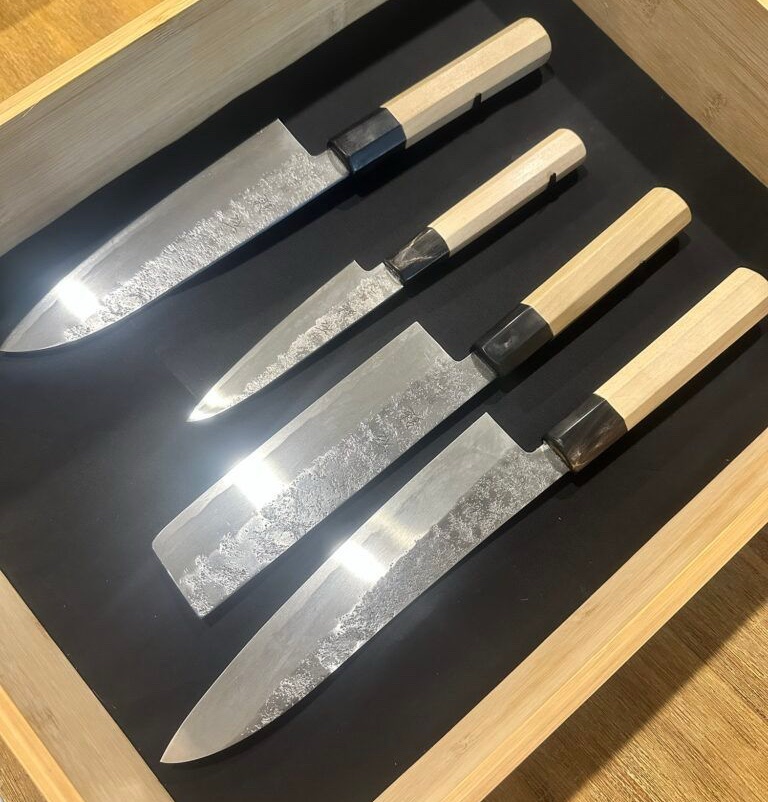
    This collection is available in three carefully selected models.

    Santoku

    The Santoku is one of Japan’s most versatile kitchen knives.

    Whether you’re preparing vegetables, slicing meat, or cutting fish, it’s designed to handle everyday cooking with ease.

    Its balanced size makes it an excellent choice for home cooks looking for a single knife that can do almost everything.

    Gyuto

    The Gyuto is Japan’s answer to the Western chef’s knife.

    Its longer blade offers greater versatility when working with larger vegetables, meat, and fish while maintaining the precision that Japanese knives are known for.

    If you enjoy preparing a wide variety of ingredients, the Gyuto quickly becomes one of the most useful knives in the kitchen.

    Petty

    The Petty knife is designed for precision.

    From peeling fruit and vegetables to trimming meat or preparing garnishes, it provides complete control for delicate work that larger knives simply can’t match.

    Although it’s the smallest knife in the collection, many chefs consider it one of the most frequently used.

    Each knife has its own purpose.

    Together, they create a collection capable of handling almost every task in the kitchen.

    Because every knife shares the same premium VG10 steel, beautifully finished 67-layer Damascus blade, and distinctive green handle, they work together not only in performance but also in appearance.

    Why I Recommend Building the Complete Collection

    Many people begin by purchasing a single Japanese knife.

    That’s exactly what I would recommend if you’re just starting your journey.

    However, once you experience the quality of a handcrafted knife, it’s easy to understand why so many people gradually build a complete collection.

    Having the right knife for each task makes cooking smoother, more enjoyable, and more efficient.

    The Santoku becomes your everyday companion.

    The Gyuto handles larger ingredients with confidence.

    The Petty takes care of all the finer details.

    Instead of asking one knife to do every job, each knife performs the task it was designed for.

    As a result, not only does cooking become easier, but your knives also stay in better condition because each blade is used appropriately.

    My Experience After More Than 25 Years as a Chef

    Having worked as a chef for more than 25 years, I’ve noticed something that many people don’t think about until they experience it themselves.

    When your knives all belong to the same collection, people notice.

    In professional kitchens, fellow chefs often comment on how clean and professional a matching set looks.

    It’s not unusual for someone to walk past and say,

    “Those knives look great together.”

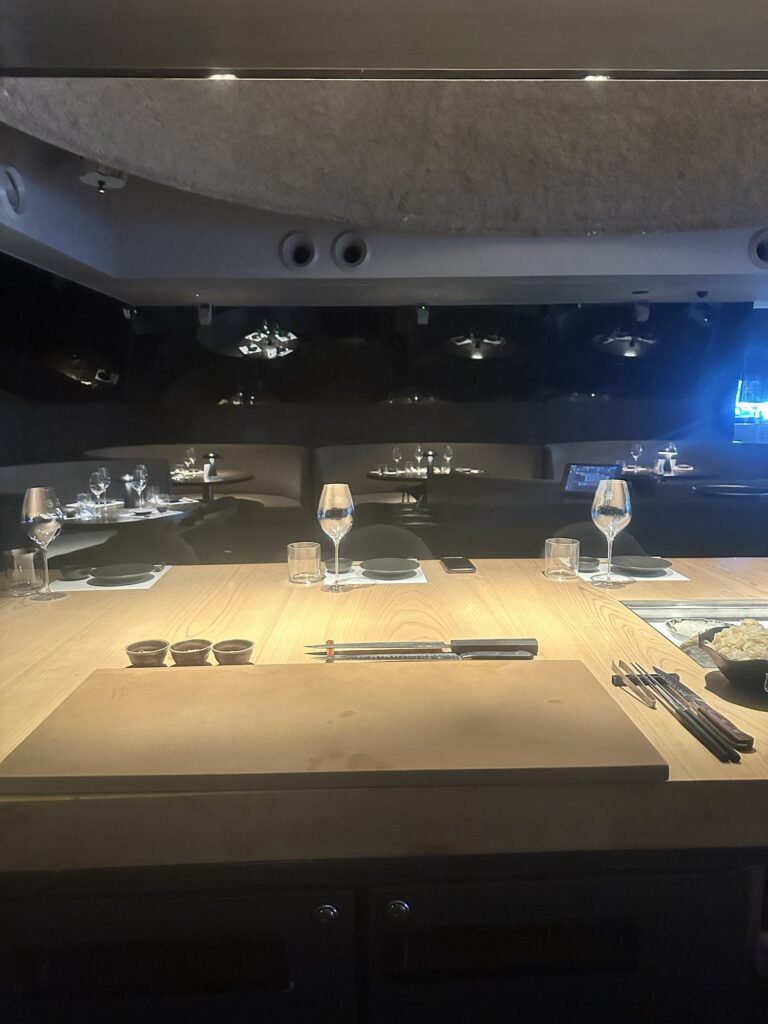
    I’ve also spent many years working at sushi counters where customers can clearly see the knives being used.

    Interestingly, customers notice them too.

    I’ve had guests compliment the appearance of a matching set before they’ve even tasted the food.

    Of course, beautiful knives don’t make someone a better chef.

    Skill, experience, and technique will always be far more important.

    But presentation matters.

    Just as chefs take pride in wearing a clean uniform and maintaining an organised workstation, using knives from the same collection creates a sense of consistency and professionalism.

    It reflects the respect we have for our craft.

    That’s one of the reasons I personally enjoy using knives from the same series whenever possible.

    Not because they match.

    But because together they create a workspace that feels organised, intentional, and enjoyable to work in every day.

    For me, that’s another reason why I often recommend building a complete Japanese knife set rather than collecting individual knives from different collections.

    It’s something I’ve genuinely appreciated throughout my career, and I believe many passionate home cooks will appreciate it too.

    More Than Just a Knife

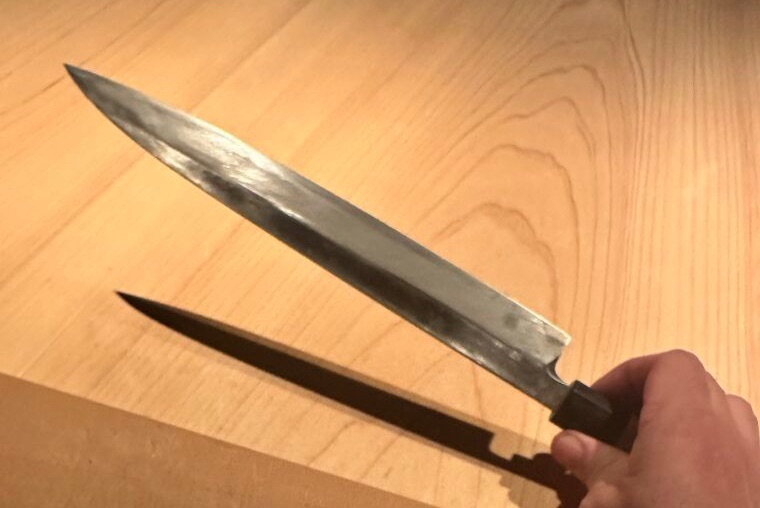
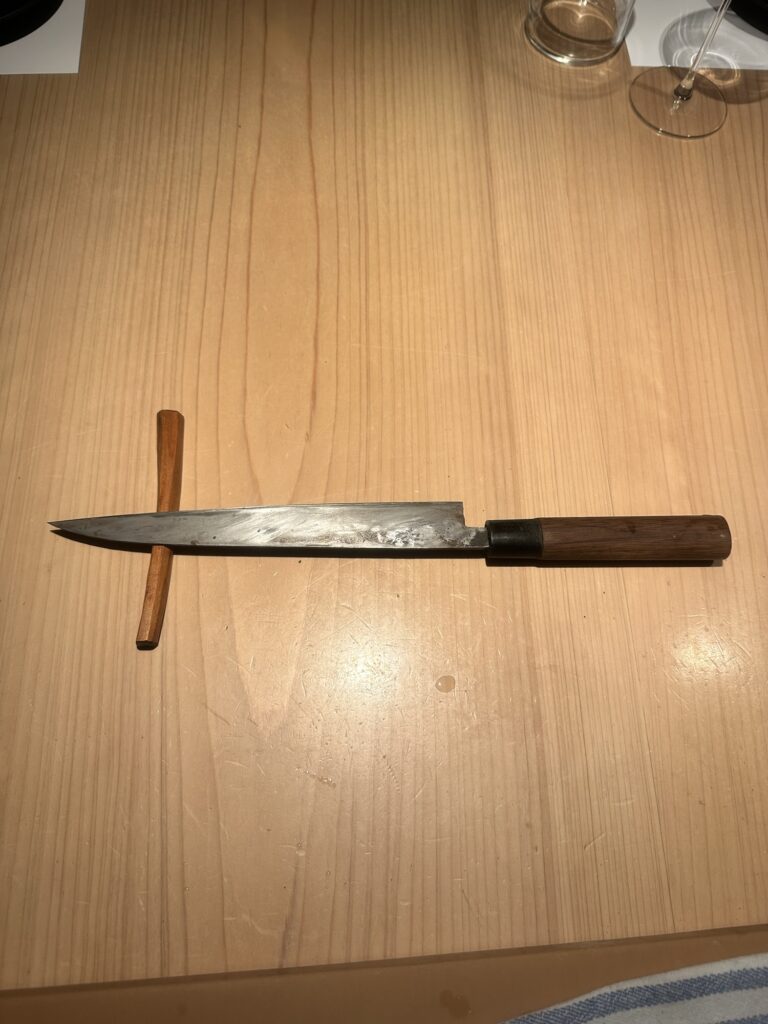
    A yanagiba knife that has been used for 40 years

    After more than 25 years as a chef, I’ve come to realise that a great knife is far more than just a cutting tool.

    It’s something you rely on every day.

    It becomes part of the way you cook, the way you work, and even the way you present yourself as a chef.

    The longer you use a well-made knife, the more you appreciate the skill, experience, and dedication that went into creating it.

    That’s exactly what Monozukuri is all about.

    It’s not simply making products.

    It’s about creating something with care, purpose, and pride—something designed to be used and appreciated for many years.

    Every handcrafted knife in this collection reflects that philosophy.

    The Asaoya Yaichi Philosophy

    Asaoya Yaichi

    At Asaoya Yaichi, our goal has never been to offer the largest selection of Japanese knives.

    Instead, we carefully select knives that we genuinely believe in.

    As someone who has spent over two decades working in professional kitchens, I understand how important it is to trust the tools you use every day.

    That’s why every knife we offer is chosen not only for its appearance, but also for its performance, durability, and the craftsmanship behind it.

    We want to introduce authentic handcrafted Japanese knives that you’ll enjoy using for many years—not simply because they’re beautiful, but because they earn their place in your kitchen every time you cook.

    Continue Exploring Japanese Knives

    If you’d like to learn more about authentic Japanese knives, you may also enjoy these articles:

    You can explore all of our latest articles here:

    👉 https://blog.asaoyayaichi.com.au

    Discover the Collection

    If you’re looking for handcrafted VG10 Damascus Japanese knives that combine traditional Japanese craftsmanship with thoughtful modern design, we invite you to explore this collection.

    Whether you choose the Santoku, Gyuto, Petty, or the complete Japanese knife set, you’ll be investing in knives that were created to perform beautifully for years to come.

    More importantly, you’ll experience a small part of the philosophy that has guided Japanese craftspeople for generations.

    Monozukuri isn’t simply about making knives.

    It’s about making them the right way.

    From Tosa, Japan, to your kitchen.

    Explore our handcrafted Japanese knives

    Shop the collection:
    https://www.asaoyayaichi.com.au

    As both a chef and the founder of Asaoya Yaichi, I hope these knives bring you the same enjoyment and confidence they’ve brought me throughout my career.

  • Wabi-Sabi | Experience the Quiet Beauty of This Handcrafted Santoku Knife

    Wabi-Sabi | Experience the Quiet Beauty of This Handcrafted Santoku Knife

    Ishizuchi Kanamono Manufactory

    When people think of a beautiful Japanese knife, many imagine a mirror-polished blade or an eye-catching Damascus pattern.

    While those styles certainly have their place, Japanese culture has long embraced a different idea of beauty.

    Rather than seeking perfection, traditional Japanese aesthetics celebrate simplicity, balance, authenticity, and the quiet character that develops over time.

    This philosophy is known as Wabi-Sabi.

    Wabi-Sabi isn’t simply about appearance. It is about appreciating craftsmanship, natural materials, and the beauty that comes from using something every day.


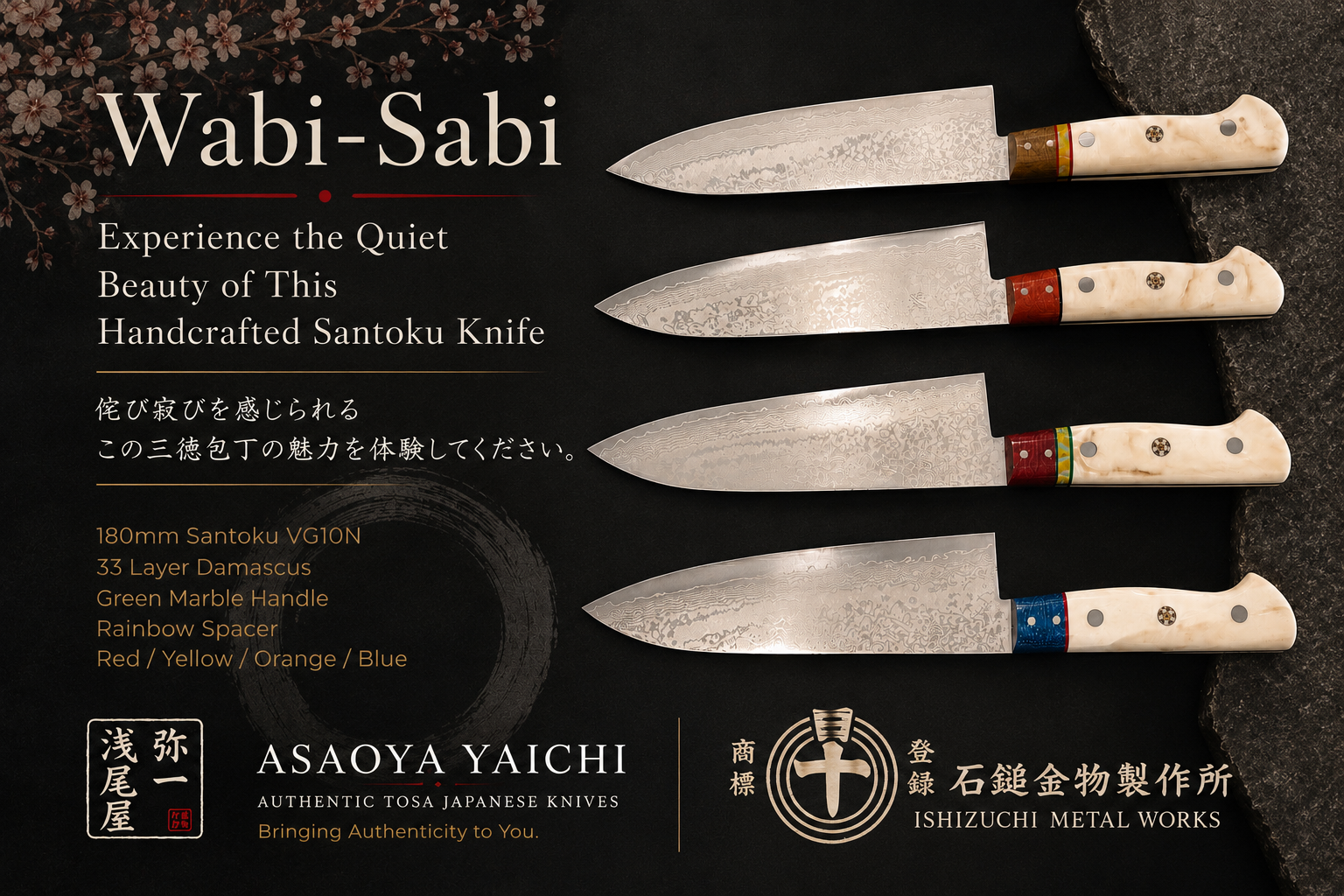
    180mm Santoku VG10N 33 Layer Damascus Green Marble Handle Rainbow Spacer Red
    A$780.00

    For me, the 180mm Santoku VG10N 33 Layer Damascus Green Marble Handle Rainbow Spacer Red perfectly captures that philosophy.

    The flowing 33-layer Damascus pattern is elegant without being overwhelming.

    Instead of demanding attention, it reveals more detail every time the light hits the blade from a different angle.

    The longer you look at it, the more you appreciate its subtle beauty.

    The green marble handle makes every knife unique.

    Because the material naturally varies, no two handles are ever identical.

    Each knife has its own personality, something I believe perfectly reflects the spirit of handcrafted Japanese craftsmanship.

    Between the blade and the handle sits a beautiful rainbow spacer.

    Rather than feeling flashy, it provides a tasteful modern accent that complements the traditional Damascus blade and the elegant green marble handle.

    Together, these elements create a knife that feels refined, balanced, and unmistakably Japanese.

    Asaoya Yaichi

    This series is also available in four different handle coloursRed, Yellow, Orange, and Blue.

    Each colour offers its own distinctive personality while maintaining the same exceptional craftsmanship and cutting performance.

    Whether you prefer something bold or something more understated, there is a version that will suit your own style and kitchen.

    There is also something very special about this collection that I’d like to share.

    I was recently told that, due to personal circumstances, the blacksmith responsible for producing these knives may not be creating new designs in the future.

    Nothing has been officially confirmed, and of course everyone hopes that new creations will continue.

    However, there is a genuine possibility that this collection could become one of the final series produced by this craftsman.

    If that turns out to be the case, these knives will represent far more than beautiful kitchen tools.

    They will become lasting examples of one artisan’s work and dedication.

    To me, that adds another layer of meaning to owning one.

    Not because it might become rare, but because it carries the story of a craftsman whose work deserves to be appreciated.

    Of course, beauty alone isn’t enough.

    A great knife must also perform exceptionally well.

    VG10 Stainless Steel

    This Santoku is forged from VG10N stainless steel, one of Japan’s most respected stainless steels.

    It offers excellent edge retention, impressive corrosion resistance, and straightforward maintenance, making it an excellent choice for both professional chefs and passionate home cooks.

    If you’ve always admired handcrafted Japanese knives but felt hesitant about maintaining carbon steel, VG10N offers an ideal balance between performance and convenience.

    The 180mm Santoku is also one of the most versatile knives you can own.

    From vegetables and meat to fish and everyday meal preparation, it handles almost every kitchen task with confidence.

    It is no surprise that Santoku has become one of the world’s most popular Japanese knife styles.

    Having worked as a chef for more than 25 years, I’ve handled countless Japanese knives.

    Some impress immediately with extravagant finishes.

    Others focus purely on performance.

    But the knives that remain with you for years are usually the ones you naturally reach for every single day.

    This Santoku feels exactly like that.

    Beautiful without trying too hard.

    Elegant without being fragile.

    Practical enough for everyday cooking while carrying the soul of traditional Japanese craftsmanship.

    Perhaps that is the true meaning of Wabi-Sabi.

    Finding beauty not in perfection, but in honest craftsmanship, thoughtful design, and an object that becomes more meaningful every time you use it.

    If you’re looking for a handcrafted Japanese knife that combines timeless beauty, exceptional performance, and the possibility of becoming part of a very special chapter in a Japanese craftsman’s story, this Santoku deserves a place in your kitchen.


    Discover Authentic Handcrafted Tosa Knives

    Asaoya Yaichi

    At Asaoya Yaichi, we carefully select authentic handcrafted knives from Tosa, Japan.

    Every knife we offer has been chosen not only for its performance, but also for the story, craftsmanship, and tradition behind it.

    Explore our collection today and experience the beauty of authentic Japanese craftsmanship.

    https://www.asaoyayaichi.com.au

    From Tosa, Japan, to your kitchen.