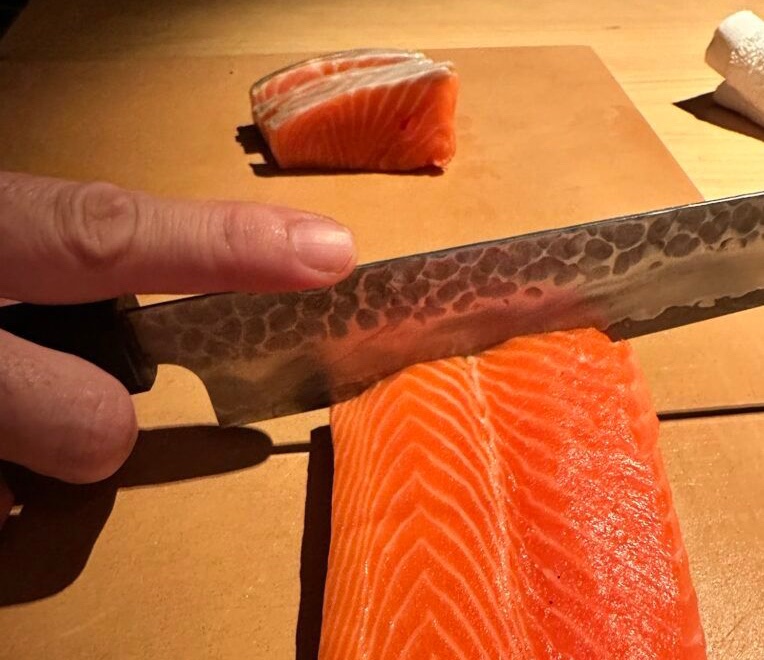
For more than 25 years, I have worked as a professional chef using Japanese knives almost every day. Surprisingly, although I often saw numbers like HRC 60, HRC 61, or HRC 63, I never truly understood what they meant. I simply assumed that a higher number meant a better knife.
As I began selling handcrafted Japanese knives through Asaoya Yaichi, customers started asking about Japanese knife hardness more often. Rather than pretending I knew every technical detail, I decided to research it properly.
What I discovered changed the way I think about knives. More importantly, I realised that my experiences in professional kitchens over the last 25 years matched what the science says about knife hardness.
If you’ve ever wondered what HRC really means, whether a harder knife is always better, or how hardness affects sharpening, this guide is for you.
➡ Internal Link: Beginner’s Guide to Japanese Kitchen Knives
What Is Japanese Knife Hardness?
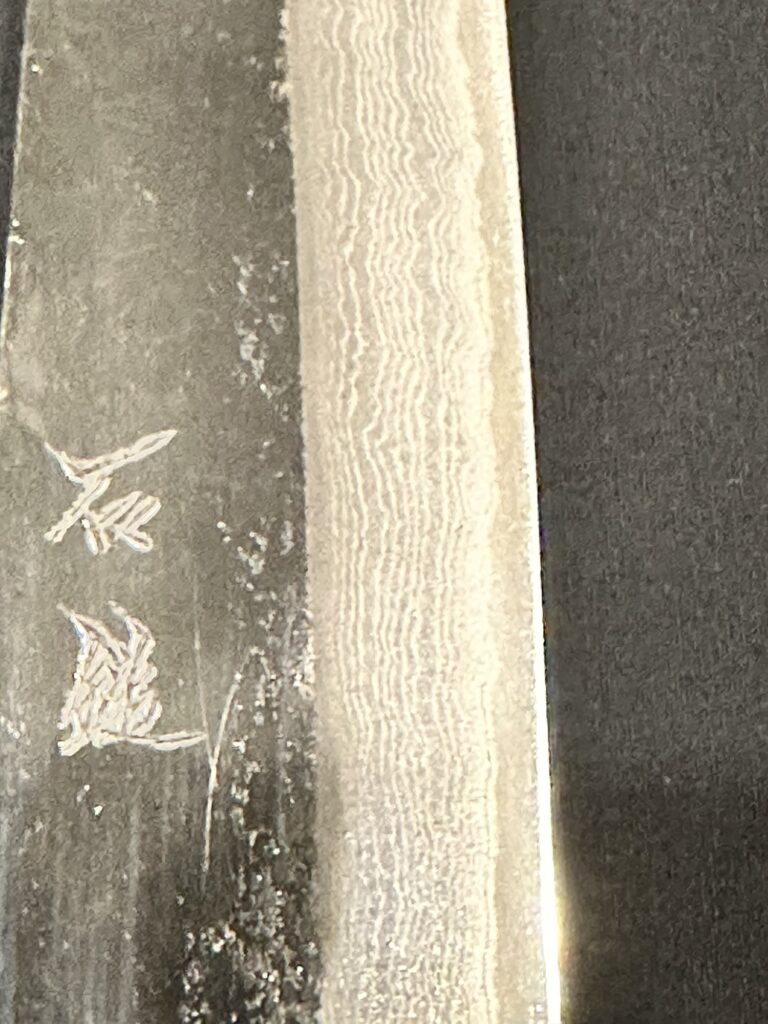
240mm Thick Deba Aogami #2 Kurouchi Walnut Handle
Japanese knife hardness is usually measured using the Rockwell Hardness C Scale (HRC). This test measures how resistant the steel is to indentation using a diamond-tipped tester.
The higher the HRC number, the harder the steel.
However, this does not automatically mean the knife is better.
Hardness is only one characteristic of a knife. Heat treatment, steel quality, blade geometry, sharpening, and craftsmanship all play equally important roles.
A knife with perfect balance will usually outperform a knife that simply has the highest hardness rating.
➡ Internal Link: Carbon Steel vs Stainless Steel | Which Should You Choose?
Why Japanese Knife Hardness Matters
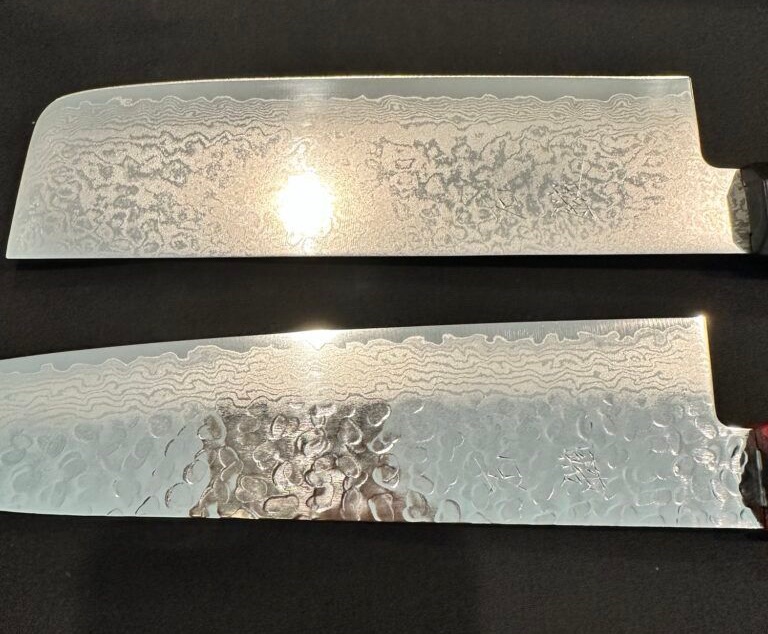
165mm Usuba A8 Hammered Damascus Black & Red Octagonal Handle
Japanese knife hardness affects several important characteristics.
Better Edge Retention
Harder steel usually keeps its edge much longer.
That means you can prepare many more ingredients before the knife begins to lose its sharpness.
This is one reason many Japanese knives are loved by professional chefs.
More Difficult Sharpening
The same hardness that keeps the edge sharp also makes the knife more difficult to sharpen.
Removing steel takes longer, especially if the blade has become quite dull.
Greater Risk of Chipping
Very hard steel is less flexible.
If used incorrectly on bones, frozen food, or by twisting the blade sideways, small chips can occur.
That doesn’t mean the knife is weak—it simply means it should be used correctly.
Japanese Knife Hardness in Real Kitchen Experience
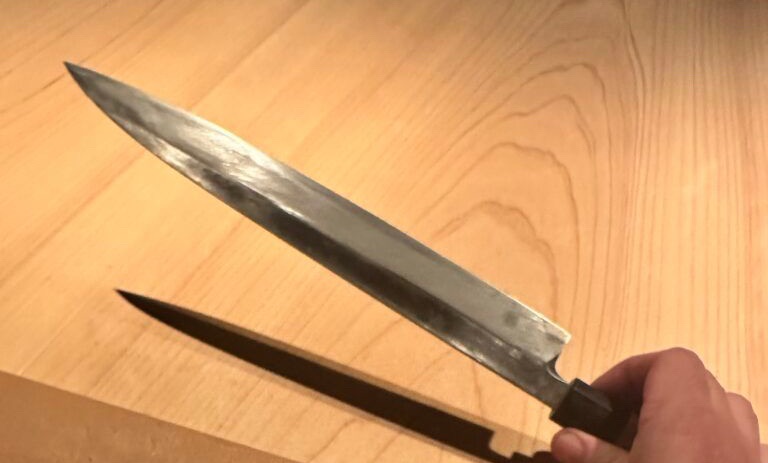
210mm Sujihiki Aogami #2 Kurouchi Magnolia Handle
This was probably the biggest surprise for me.
I realised that although I didn’t know the HRC numbers, I had already experienced the difference between softer and harder steels throughout my career.
Years ago, I used a sujihiki made from relatively soft steel.
It was so flexible that if I applied too much pressure while sharpening, I could actually feel the blade flex slightly on the whetstone.
The edge didn’t last particularly long.
However, when it became dull, I could restore an excellent edge very quickly.
It sharpened easily and always performed well enough for daily professional work.
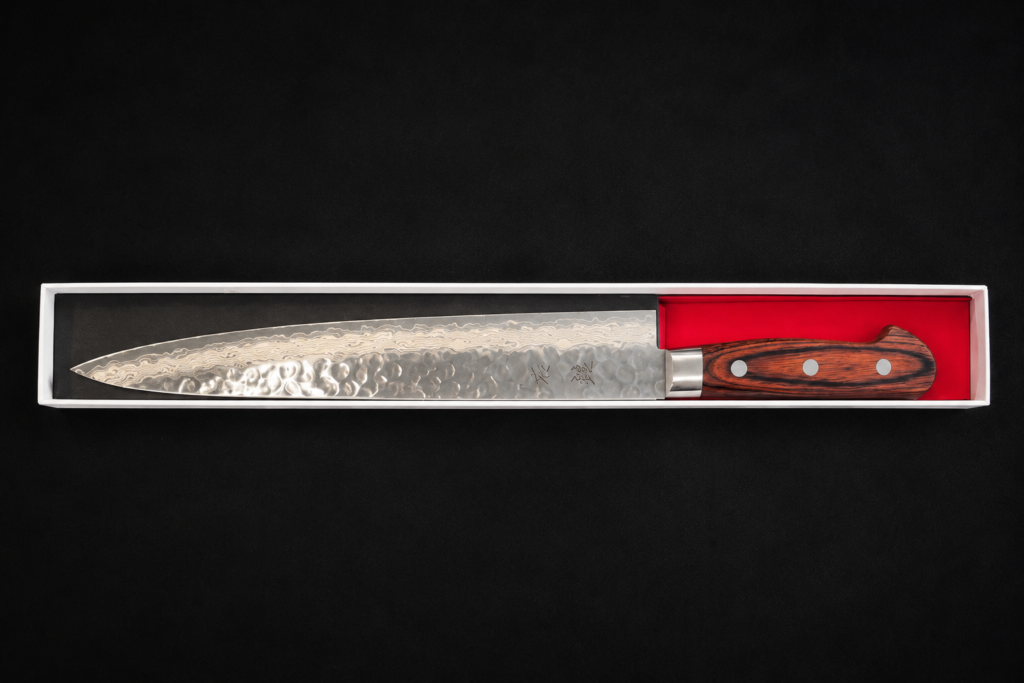
240mm Sujihiki VG10 Hammered 17 Layer Damascus Mahogany
Later, I switched to harder stainless steel knives.
The difference was immediately obvious.
When freshly sharpened, the cutting performance was incredible.
The edge stayed sharp much longer than my previous knife.
But there was another side to the story.
Once the knife finally became dull, it was much harder to bring back.
It took considerably longer to raise a burr, and if I accidentally changed the sharpening angle, correcting the edge required much more patience.
After researching Japanese knife hardness, I finally understood why.
Harder steel offers outstanding edge retention, but it also demands greater sharpening skill.
Softer steel loses its edge sooner, yet it rewards the user by being forgiving and much easier to sharpen.
Neither is objectively better.
They simply suit different users and different situations.
➡ Internal Link: Why Flattening Your Whetstone Matters
Common HRC Ranges for Japanese Knives
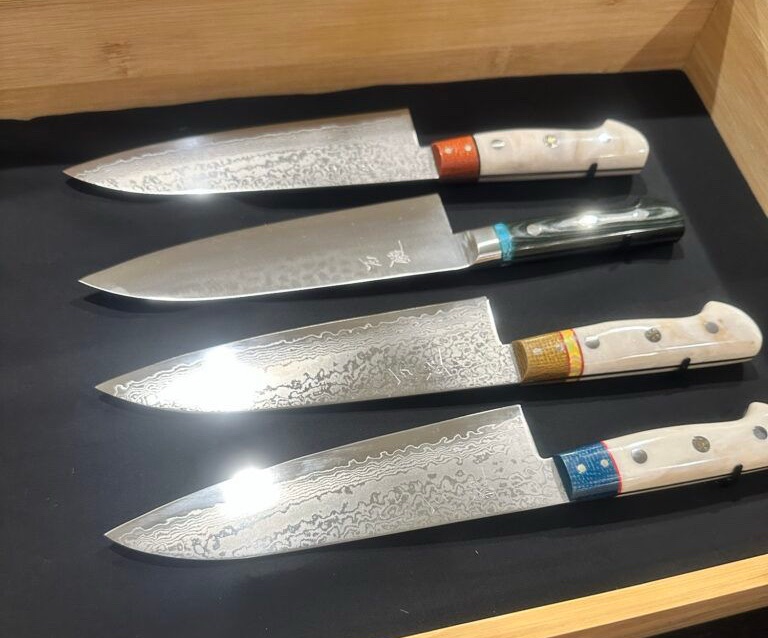
180mm Santoku Aogami #2 Green Micarta Handle with Turquoise Spacer
Although every manufacturer uses different heat treatments, these are general guidelines.
HRC 55–58
- Tough and flexible
- Easy to sharpen
- Loses its edge relatively quickly
HRC 59–61
- Excellent balance
- Suitable for many home cooks
- Common among quality Japanese knives
HRC 61–64
- Outstanding edge retention
- Very sharp cutting performance
- Requires proper technique and sharpening skills
Above HRC 64
- Extremely hard
- Exceptional edge retention
- Less forgiving and often intended for experienced users
Remember, these are only general ranges.
Steel composition and heat treatment are often more important than the HRC number alone.
➡ Internal Link: Professional Choice | Why I Still Use Carbon Steel for Sashimi After 25 Years
Should You Buy the Hardest Japanese Knife?
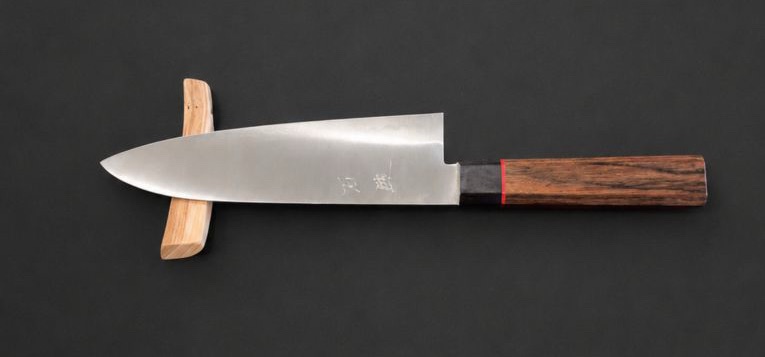
180mm Santoku SG2 Rosewood Octagonal Handle
Many people assume that the highest HRC automatically means the best knife.
After researching this subject, I don’t believe that’s true.
A knife should match the way you cook.
If you enjoy sharpening and want maximum edge retention, harder steel can be fantastic.
If you prefer quick maintenance and easy sharpening, a slightly softer blade may actually make your cooking more enjoyable.
The best knife isn’t the one with the highest number.
It’s the one that suits your cooking style.
Final Thoughts on Japanese Knife Hardness
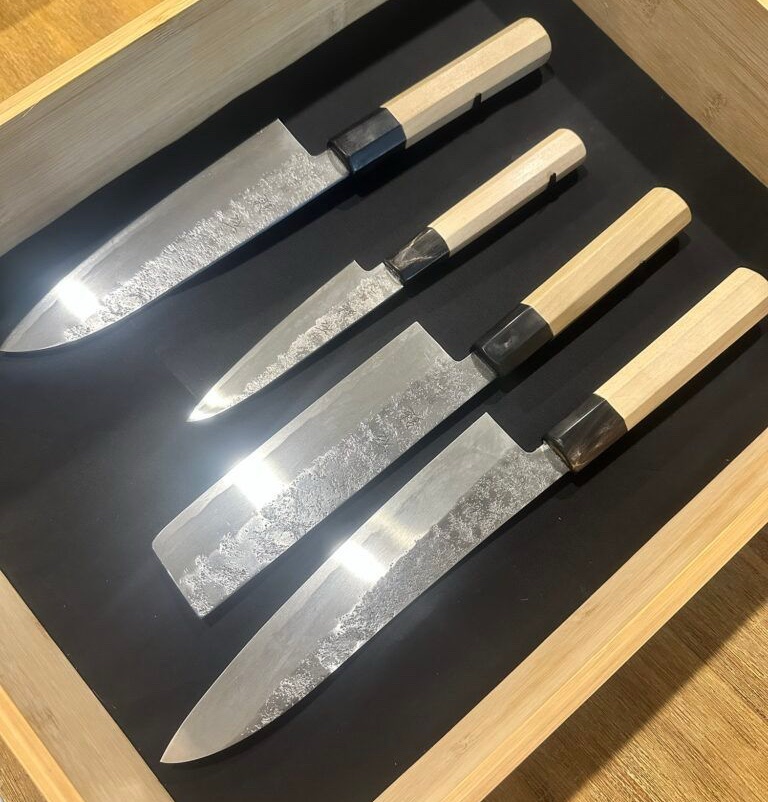
Ginsan Nashiji Forged Magnolia Octagonal Handle Buffalo Horn Ferrule series
Researching Japanese knife hardness taught me something I honestly didn’t know after more than 25 years in professional kitchens.
I had always judged knives by how they performed.
Only later did I realise that hardness helps explain why they perform that way.
Today, I still don’t choose a knife based only on its HRC rating.
I look at the steel, the heat treatment, the craftsmanship, the intended purpose, and how the knife feels in my hand.
The HRC number is useful, but it’s only one piece of a much bigger picture.
If this article helped you understand Japanese knife hardness a little better, I hope it also gives you more confidence when choosing your next knife.
➡ Internal Link: Handmade Japanese Knives | 7 Fascinating Reasons No Two Are Ever Exactly the Same
👉 Explore more:
https://blog.asaoyayaichi.com.au
👉 Visit our online store:
https://asaoyayaichi.com.au
Thank you for reading, and I hope to see you again in the next story.