タグ: Knife Steel

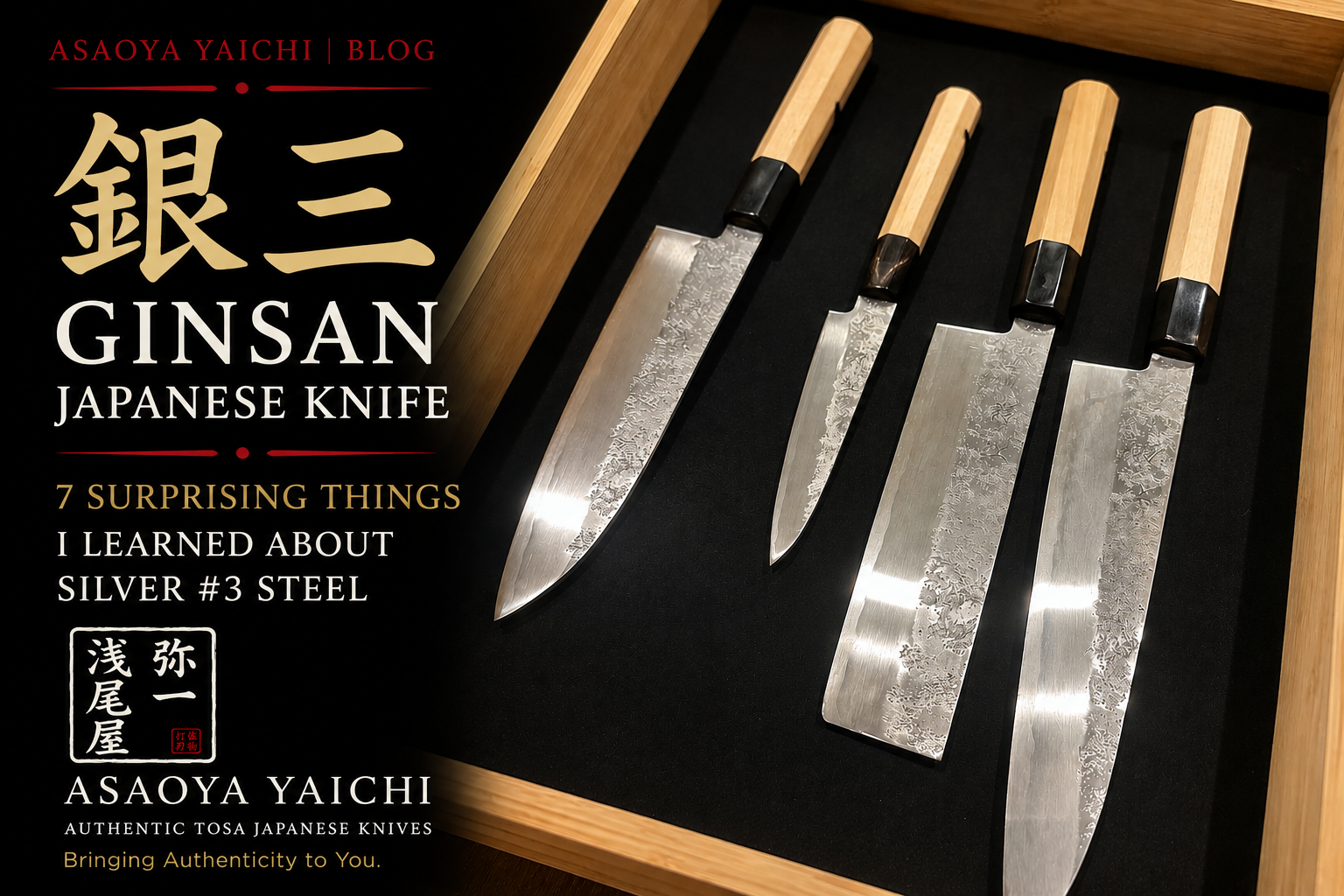
  • 銀三 | Ginsan Japanese Knife :  7 Surprising Things I Learned About Silver #3 Steel

    銀三 | Ginsan Japanese Knife : 7 Surprising Things I Learned About Silver #3 Steel


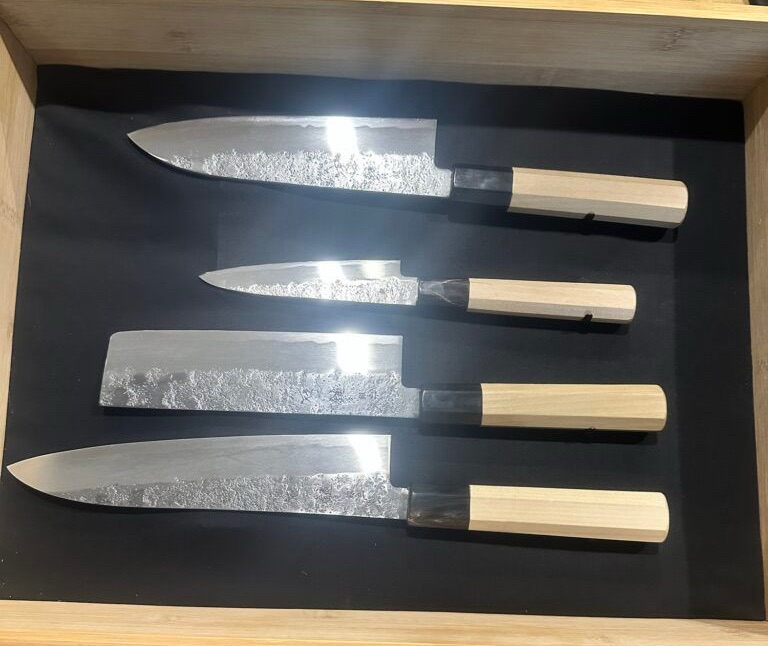
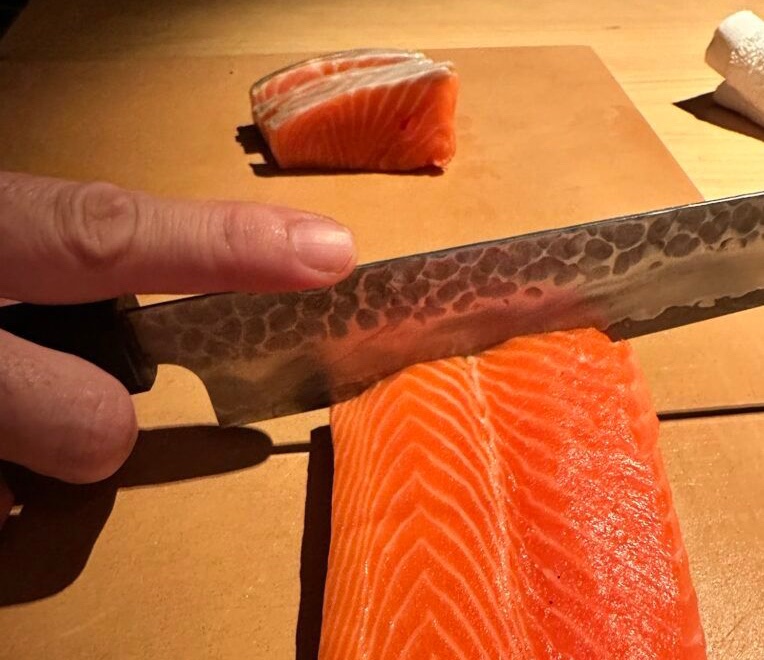
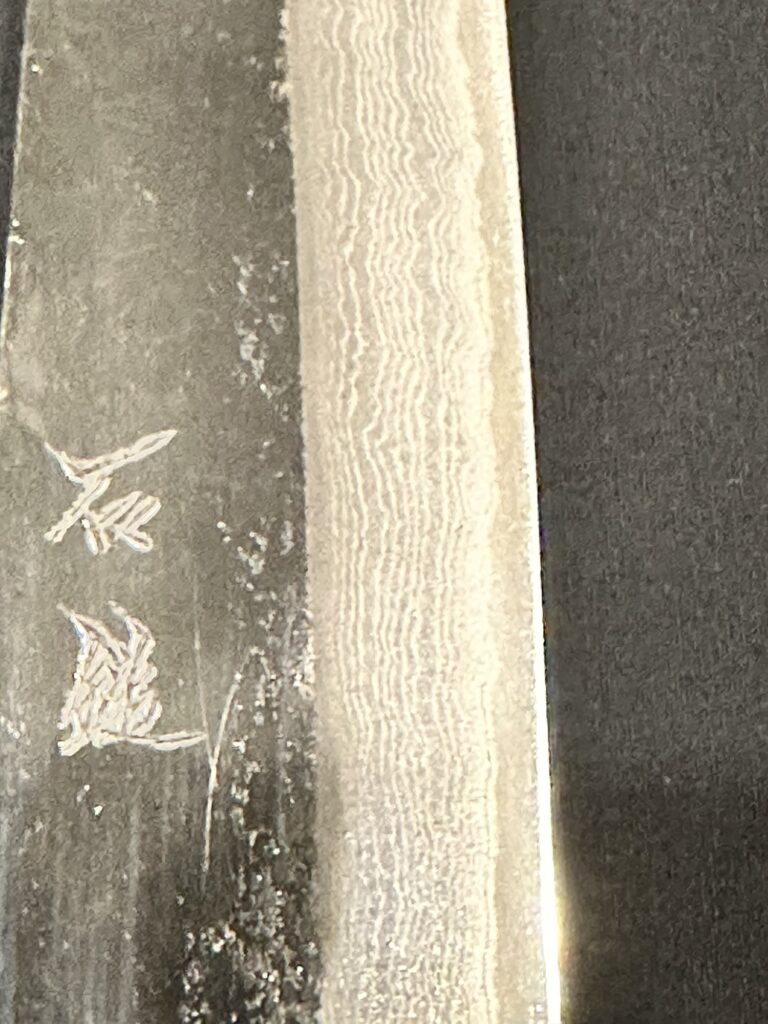
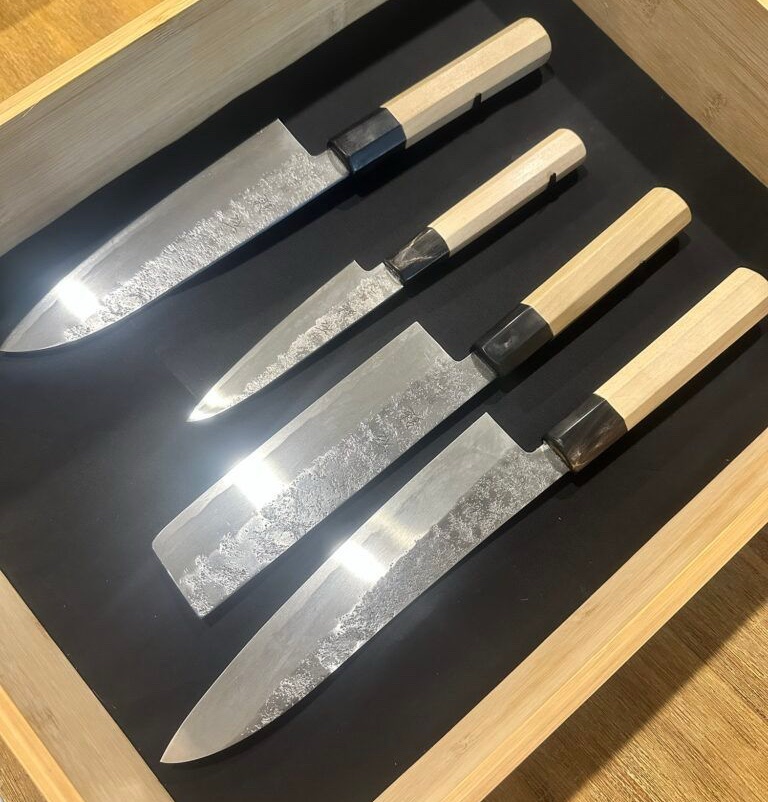
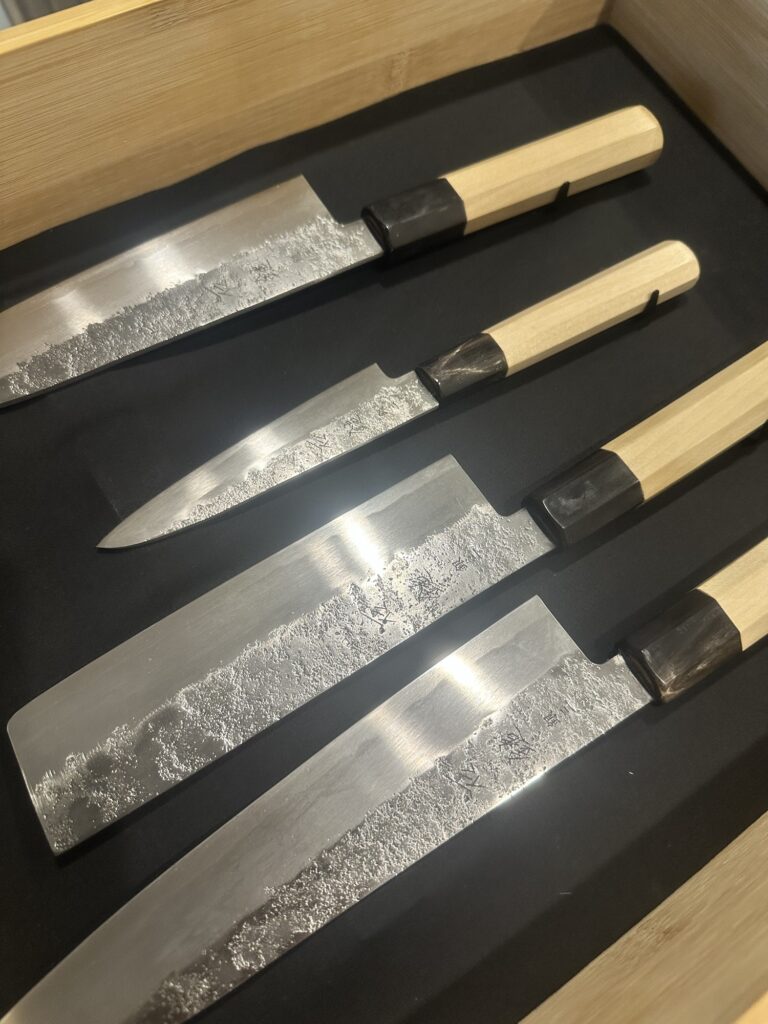
    Ginsan Nashiji Forged Magnolia Octagonal Handle Buffalo Horn Ferrule

    For more than 25 years as a chef in Japan and Australia, I have used many different Japanese knives. But when it came to Ginsan Japanese Knife steel, my knowledge was surprisingly simple: I knew Ginsan was stainless steel, and that was about it.

    Since starting Asaoya Yaichi, I have become much more curious about the steels behind the knives I use and sell. I recently looked deeper into Aogami and Shirogami, and this time I wanted to understand Ginsan.

    Why is it called Ginsan? Is it really stainless? Can it still rust? And why is it sometimes compared with carbon steel?

    So, once again, I decided to look it up.

    What Is Ginsan Japanese Knife Steel?
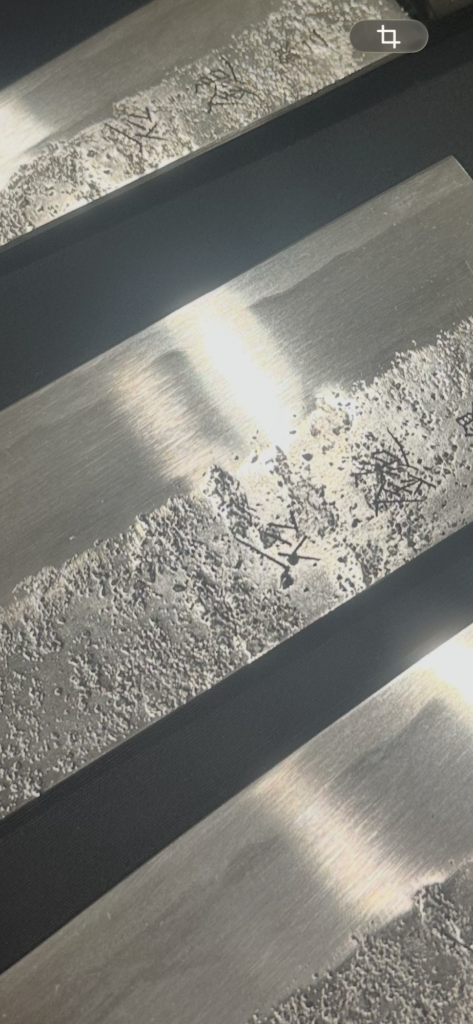

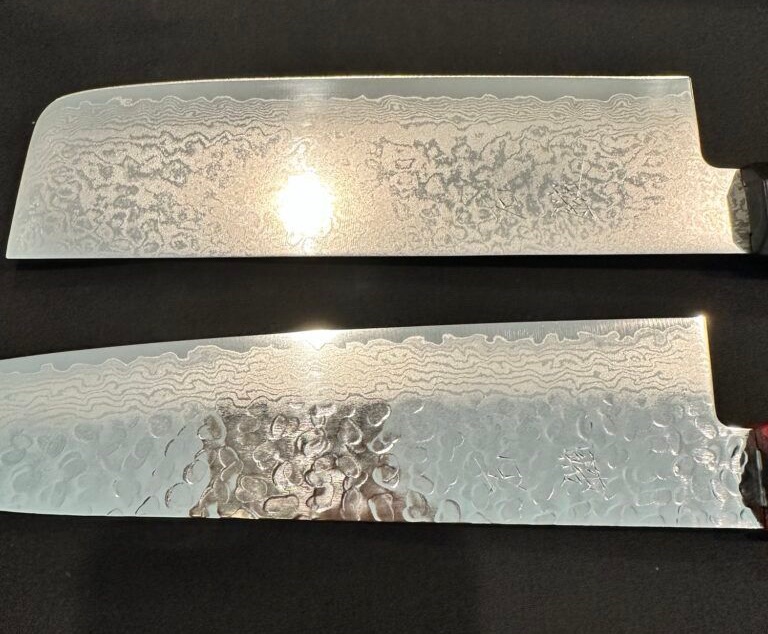
    165mm Nakiri Ginsan Nashiji Forged Magnolia Octagonal Handle Buffalo Horn Ferrule

    Ginsan is commonly known as Gingami No.3, or Silver Paper No.3. It is a Japanese stainless cutlery steel from the Yasugi Specialty Steel family.

    Just as Aogami means “Blue Paper” and Shirogami means “White Paper,” Gingami means “Silver Paper.” The names come from the identification system traditionally used for these different steels. Despite the name, it does not mean that silver is added to the blade.

    👉 INTERNAL LINK: Link here to the article about Aogami and Shirogami and why they are called Blue Paper and White Paper steels.

    Ginsan contains roughly 1% carbon and around 13–14% chromium. The chromium gives it significantly more corrosion resistance than traditional carbon steels such as Aogami and Shirogami.

    That makes Ginsan stainless steel.

    But stainless does not mean rust-proof.

    Does a Ginsan Japanese Knife Rust?
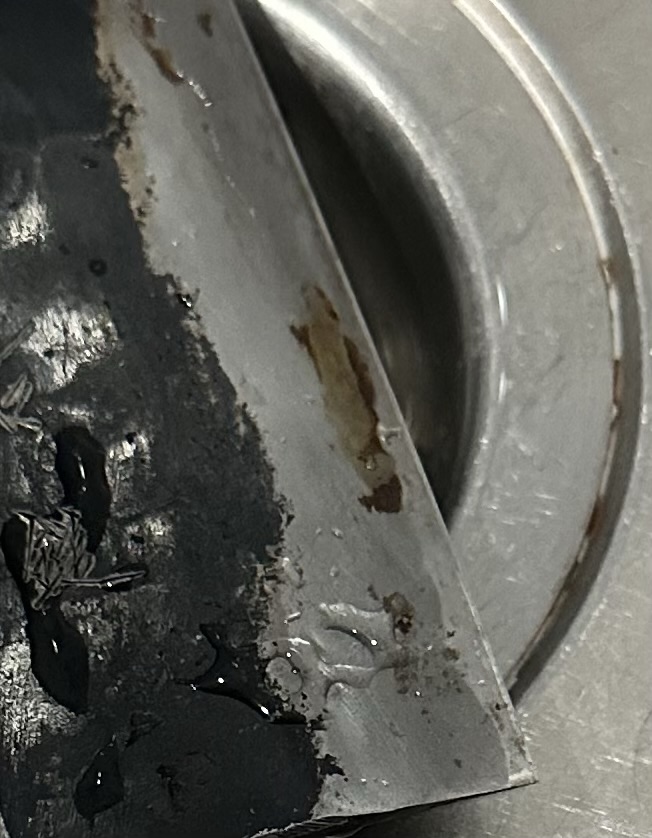

    Why Do Japanese Knives Rust So Easily? 

    Yes, it can.

    A Ginsan Japanese Knife is much more resistant to corrosion than a carbon steel knife, but water, salt or acidic food residue left on the blade for long periods can still cause problems.

    This distinction is important. “Stainless” is better understood as stain-resistant, rather than a guarantee that the knife can never rust.

    For a professional kitchen, however, that extra resistance can make a big difference. Fish, citrus, onions, tomatoes, salt and moisture are all part of everyday work.

    👉 INTERNAL LINK: Link here to the article about Japanese knife patina and how carbon steel changes through use.

    Ginsan gives you much more freedom from the constant maintenance required by carbon steel while still being designed as a serious cutlery steel.

    Why Ginsan Japanese Knife Steel Is Interesting
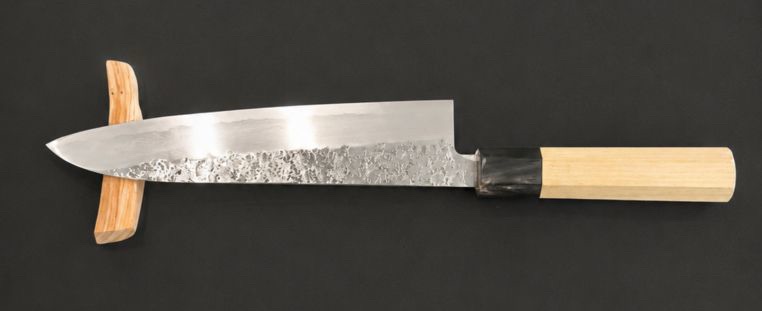

    210mm Gyuto Ginsan Nashiji Forged Magnolia Octagonal Handle Buffalo Horn Ferrule

    This is where Ginsan became much more interesting to me.

    When people hear “stainless knife,” they may imagine an ordinary, relatively soft kitchen knife. Ginsan does not really fit that image.

    It can be hardened to levels suitable for high-quality Japanese knives and is also known for being relatively pleasant to sharpen compared with some highly alloyed stainless steels.

    As someone who has sharpened my own working knives for many years, this matters to me.

    Eventually, every knife needs sharpening. How the steel responds to the stone, how easily you can bring the edge back, and the edge you can create are more important in everyday work than simply reading specifications.

    👉 INTERNAL LINK: Link here to the article about sharpening and bringing out the true potential of a Japanese knife.

    Ginsan Japanese Knife vs Carbon Steel
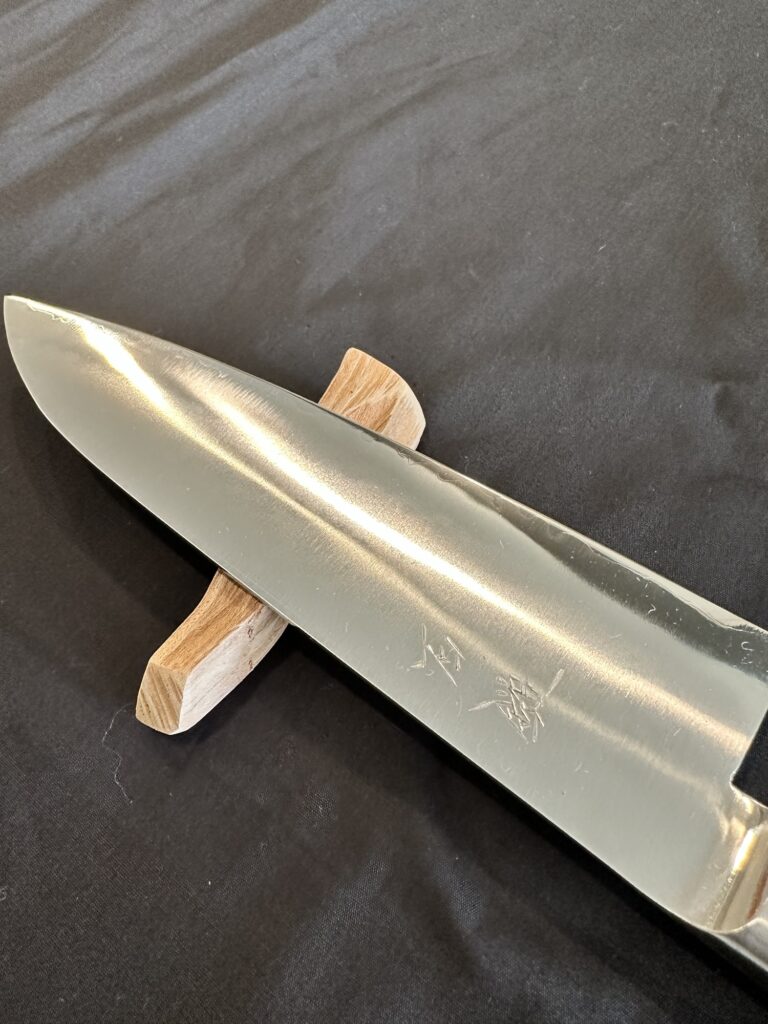
    Carbon Steel

    I do not think this comparison should be about deciding which steel is “better.”

    Aogami, Shirogami and Ginsan each have different characteristics.

    Traditional carbon steels can take fantastic edges and can be very enjoyable to sharpen, but they demand more attention. They react to moisture and acidic ingredients, develop patina and can rust quickly if neglected.

    Ginsan offers another approach.

    It combines stainless corrosion resistance with some characteristics that people appreciate in traditional Japanese knife steels, particularly sharpness and sharpening response.

    That is probably why Ginsan is sometimes described as a stainless steel for people who like carbon steel.

    👉 INTERNAL LINK: Link here to the article comparing carbon steel and stainless steel Japanese knives.

    How Is Ginsan Different From VG10?
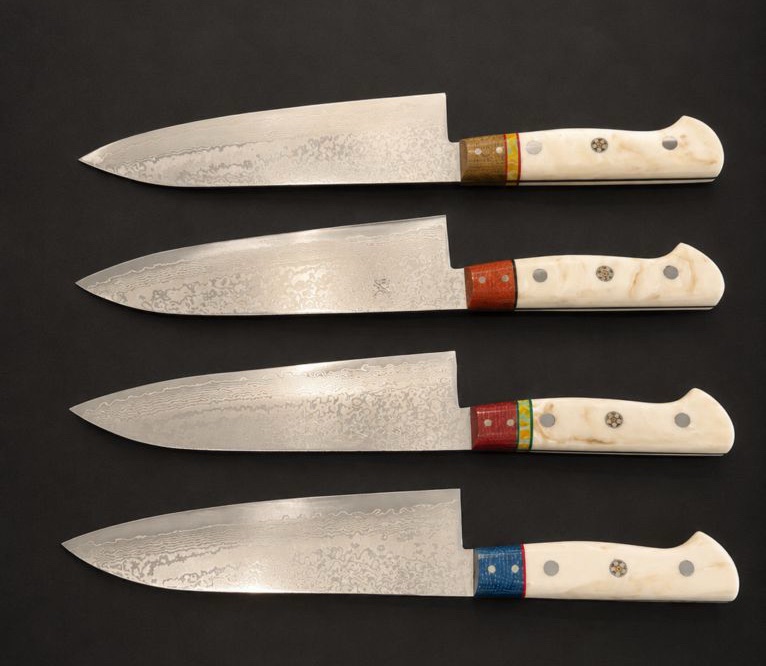
    VG10 stainless steels

    Both Ginsan and VG10 are stainless steels commonly used in quality Japanese knives, but their compositions are different.

    Ginsan has a relatively simple composition based mainly around carbon and chromium. VG10 is more highly alloyed and also contains elements such as molybdenum, vanadium and cobalt.

    That does not mean one is automatically better.

    I have used VG10 professionally and know how capable it can be. Ginsan simply offers a different balance.

    After more than 25 years working with knives, I believe the steel name alone cannot tell you how good a finished knife will be. Heat treatment, blade geometry, thickness, grinding and sharpening all matter.

    👉 INTERNAL LINK: Link here to the article about Japanese knife hardness and why HRC alone does not determine performance.

    That is why I am becoming less interested in asking, “What is the best steel?”

    A better question is, “What kind of knife works best for the person using it?”

    Is Ginsan Japanese Knife Steel Good for Chefs?
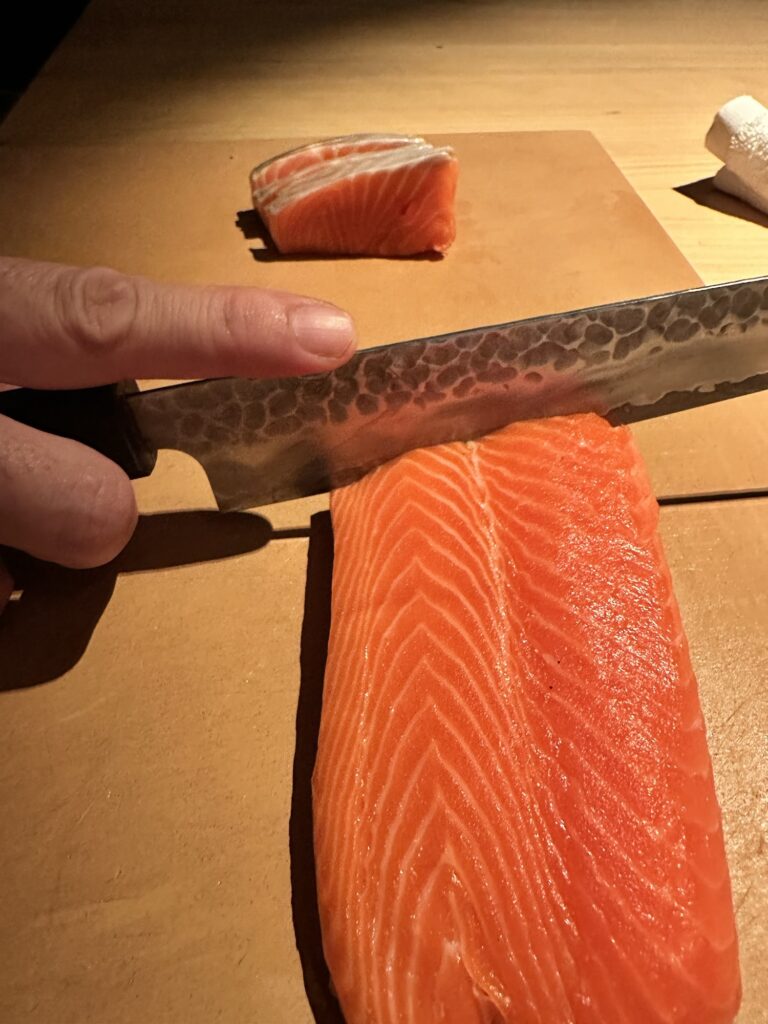
    Ishizuchi Kanamono Manufactory

    After learning more about it, I can understand why Ginsan is popular with both professional cooks and serious home users.

    Professional kitchens demand practicality. You may be cutting fish one minute, vegetables the next, washing your knife and immediately moving on to another job.

    A steel combining high cutting performance with good corrosion resistance makes a lot of sense in that environment.

    For home cooks, the same qualities can be attractive. Not everyone wants to worry about wiping a carbon steel blade immediately after cutting every ingredient.

    A Ginsan Japanese Knife offers the possibility of excellent sharpness with easier everyday maintenance.

    What I Learned About Ginsan
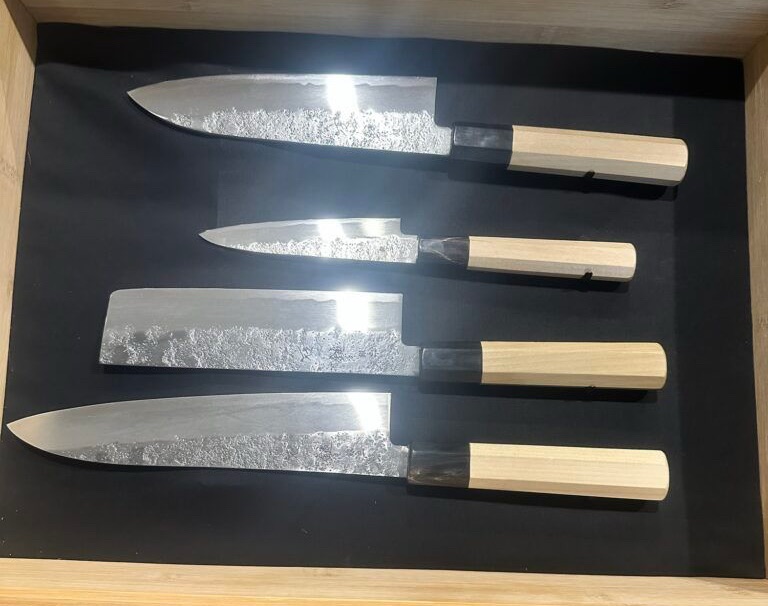

    Ginsan Nashiji Forged Magnolia Octagonal Handle Buffalo Horn

    Before researching this article, my understanding was basically:

    Ginsan = stainless steel.

    That was about it.

    And after more than 25 years as a chef, I am perfectly comfortable admitting that.

    For most of my career, I cared more about whether a knife actually worked than memorising the chemical composition of its steel. I sharpened knives, used them and developed my preferences through experience.

    Starting Asaoya Yaichi has made me look deeper.

    I now understand why Ginsan occupies such an interesting position among Japanese knife steels. It provides corrosion resistance and easier maintenance while still offering the characteristics expected from a high-quality Japanese knife.

    But the biggest thing I keep learning is that the steel name is only the beginning.

    A Ginsan Japanese Knife can be excellent, but heat treatment, geometry, grinding, sharpening and the skill of the people making it ultimately determine what that steel becomes in your hand.

    And now, at least, when someone says “Ginsan,” I know a little more than simply:

    “Oh, that’s stainless steel.”

    👉 Explore more:
    https://blog.asaoyayaichi.com.au

    👉 Visit our online store:
    https://asaoyayaichi.com.au

    Thank you for reading, and I hope to see you again in the next story.
  • 切味 Kireaji | 7 Surprising Truths About What Makes a Japanese Knife Feel Sharp

    切味 Kireaji | 7 Surprising Truths About What Makes a Japanese Knife Feel Sharp


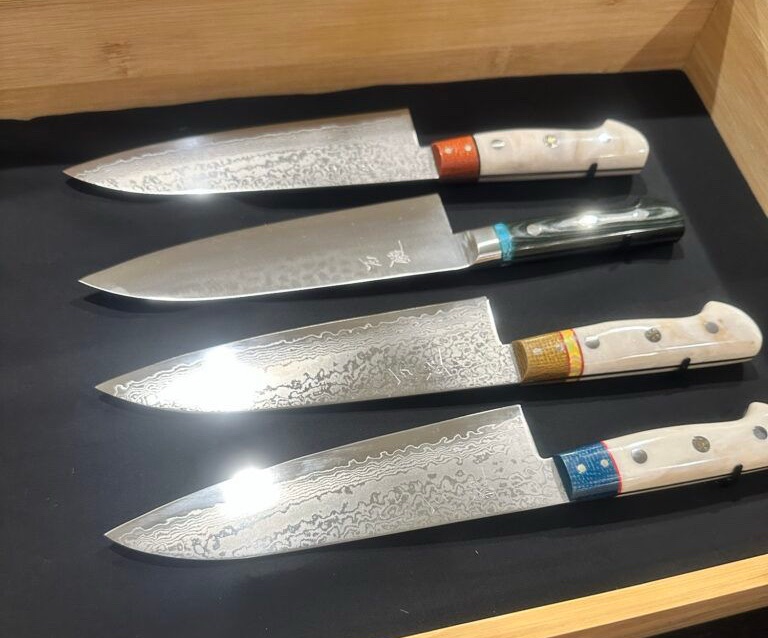
    180mm Santoku Aogami #2 Green Micarta Handle with Turquoise Spacer

    Japanese knife sharpness is often described as though it were something simple. A knife is either sharp or it is not. It cuts paper cleanly, shaves hair, or slices through a tomato, and we decide that it is sharp.

    But after working as a professional chef for more than 25 years, I have come to feel that sharpness is not quite that simple.

    In Japanese, there is a word that expresses something slightly different: 切味 — Kireaji.

    Kireaji literally relates to the “cutting feel” of a blade. For me, that is a better way to describe what happens when a knife actually meets food.

    Sometimes I sharpen a knife and it seems almost perfect. The blade enters the ingredient effortlessly, as though there is almost no resistance.

    Other times, I sharpen what feels like exactly the same way, using the same stones and technique, yet the knife somehow feels heavier through the cut.

    It is still sharp.

    But it does not feel the same.

    And occasionally, I can even feel a slight roughness through the edge.

    After all these years of using knives professionally, this still fascinates me.

    1. Japanese Knife Sharpness Is More Than “Sharp or Dull”


    Ishizuchi Kanamono Manufactory 

    One of the biggest things I have learned is that Japanese knife sharpness cannot always be explained by a simple sharp-versus-dull measurement.

    A knife may easily cut paper and still feel slightly heavy when slicing food.

    Another knife may not seem dramatically different in a basic sharpness test, yet when it touches fish, meat or vegetables, the blade seems to glide straight through.

    That sensation is difficult to describe until you have experienced it.

    For me, this is where the idea of Kireaji becomes useful.

    It is not simply whether the edge can cut. It is the resistance you feel as the blade enters the ingredient, the way the knife continues through it, and even the feedback transmitted through the handle into your hand.

    👉 INTERNAL LINK: Japanese Knife Bevels | Single Bevel vs Double Bevel Explained

    Understanding the bevel and edge geometry is an important part of understanding why two sharp knives can feel completely different.

    2. Why Japanese Knife Sharpness Can Feel Different After Sharpening

    This is something that still surprises me.

    I can sharpen the same knife on the same stones using what I believe is the same technique, but the final Kireaji is not always identical.

    Sometimes the result is exceptional.

    The knife feels incredibly smooth. There is almost no hesitation when the blade touches the ingredient.

    Then another day, the knife is definitely sharp, but I feel slightly more resistance.

    Why?

    There are many possible explanations. The exact sharpening angle may have changed slightly. The burr may have formed differently. The burr removal may not have been identical. Pressure on the stone may have changed without me consciously noticing it.

    Even the final refinement of the edge can influence the sensation.

    Sharpening by hand contains countless tiny variables.

    That is one reason I think sharpening Japanese knives remains interesting even after many years.

    You can always learn something.

    👉 INTERNAL LINK: Why Flattening Your Whetstone Matters More Than You Think | The Foundation of a Sharp Edge

    3. Japanese Knife Sharpness Can Sometimes Feel Rough

    There is another sensation I occasionally notice after sharpening: a slight roughness.

    The knife cuts.

    It may even cut very well.

    But the edge does not feel completely smooth.

    This is particularly interesting because it demonstrates the difference between simply achieving an edge and achieving an edge that feels right.

    A microscopic burr or differences in edge refinement may contribute to this sensation. The finish produced by the sharpening stone can also influence how the edge interacts with food.

    A highly polished edge and an edge with more microscopic “bite” can both be sharp, but they may not feel identical.

    And depending on what you are cutting, one may actually feel better than the other.

    This is why I do not believe sharpness should always be judged by a single test.

    A kitchen knife exists to cut food.

    Ultimately, food is where I judge it.

    👉 INTERNAL LINK: The True Value of Japanese Knives | 7 Reasons They Are Worth the Investment

    4. A Brand-New Japanese Knife Is Not Always Perfect


    Ginsan Nashiji Forged Magnolia Octagonal Handle Buffalo Horn Series

    This may surprise people buying their first high-quality Japanese knife.

    Brand-new does not necessarily mean the edge will feel perfect to you.

    I have used new knives that felt fantastic immediately.

    I have also taken brand-new knives out of the box and thought:

    “This can be better.”

    That does not necessarily mean there is something wrong with the knife.

    The factory or craftsman has applied an edge, but that edge may not be exactly the edge that suits the person using it.

    Sometimes after sharpening a new knife myself, the character of the knife seems to change.

    Suddenly it feels like my knife.

    The resistance changes. The edge responds differently. The Kireaji becomes closer to what I personally expect from a professional kitchen knife.

    This is another reason I would never judge the full potential of a Japanese knife only by its first few cuts straight out of the box.

    5. Steel Changes Japanese Knife Sharpness and Kireaji

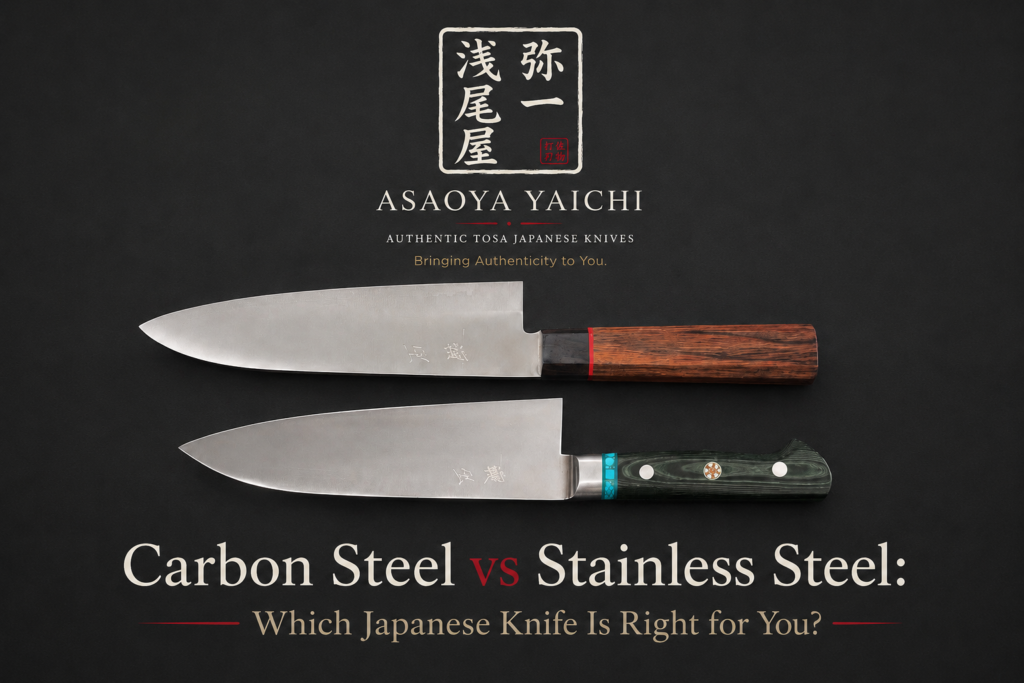
    Carbon Steel vs Stainless Steel: Which Japanese Knife Is Right for You?

    Steel absolutely plays a role.

    Over the years I have used both carbon and stainless steels, and I do not think every steel produces exactly the same cutting sensation.

    Aogami, Ginsan, VG10, SG2 and other steels have different characteristics. Hardness, carbide structure, heat treatment, edge stability and sharpening response can all influence how an edge behaves.

    But there is an important point here.

    Harder does not automatically mean better Kireaji.

    A high HRC number can contribute to edge retention and allow certain steels to support fine edges, but hardness alone cannot describe what the knife will feel like when it passes through a piece of fish.

    That is why I think choosing a knife purely by its steel specification can sometimes be misleading.

    Specifications are important.

    But your hand does not read specifications.

    It feels the knife.

    👉 INTERNAL LINK: Hardness 硬度 | 7 Powerful Truths About Japanese Knife HRC That Surprised Even a Chef

    6. Blade Geometry May Matter More Than We Realise

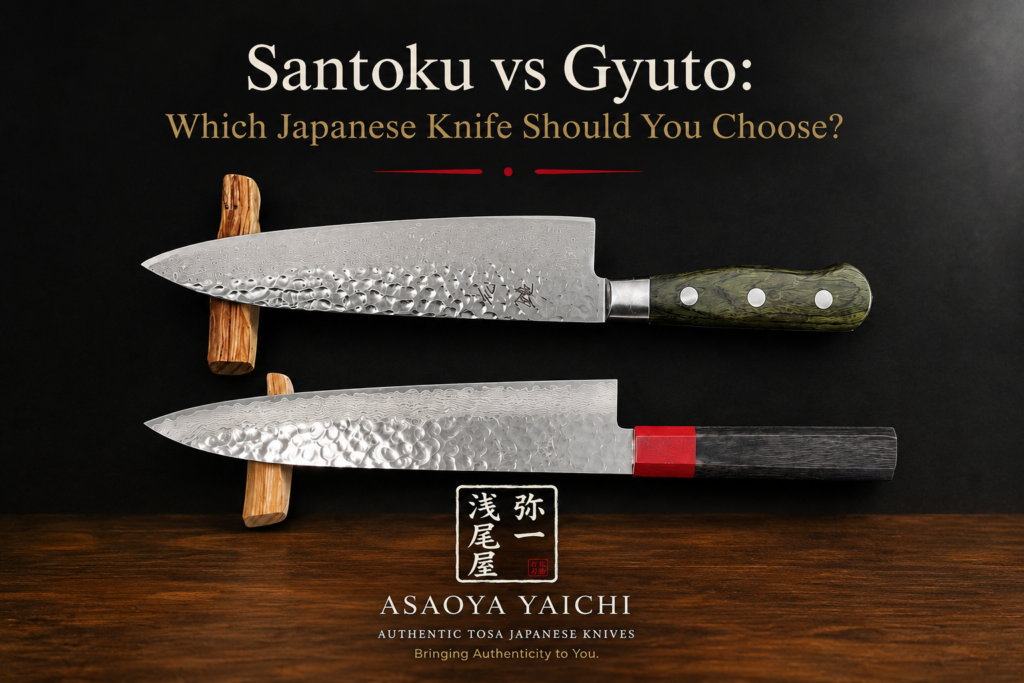
    Santoku vs Gyuto: Which Japanese Knife Should You Choose? | Asaoya Yaichi

    Two knives made from the same steel can still feel completely different.

    Why?

    Because we are not cutting food with steel specifications.

    We are cutting with a three-dimensional object.

    Blade thickness, edge angle, grind, taper, blade height and the geometry behind the edge all influence how easily a knife passes through food.

    A very sharp edge can enter an ingredient easily, but if the blade geometry creates resistance behind that edge, the entire cutting motion may still feel heavy.

    This is one reason a Gyuto, Santoku and Sujihiki can produce very different sensations even when all three are extremely sharp.

    A Sujihiki moving through sashimi has a different purpose from a Santoku working through vegetables.

    The shape of the knife is part of its Kireaji.

    👉 INTERNAL LINK: 均衡 Kinkō | 7 Powerful Reasons Japanese Knife Balance Matters More Than You Think

    Balance does not create sharpness by itself, but it can strongly influence how that sharpness feels in your hand.

    7. The Best Japanese Knife Sharpness Cannot Be Explained by Numbers Alone

    After more than 25 years working with kitchen knives, perhaps the most interesting thing I have learned is how difficult it is to describe the perfect edge.

    HRC cannot explain everything.

    Steel cannot explain everything.

    Sharpening angle cannot explain everything.

    Even a paper-cutting test cannot explain everything.

    There is a moment when a properly sharpened knife touches an ingredient and simply goes through.

    No hesitation.

    No unnecessary pressure.

    No feeling that you need to force the blade.

    You feel it immediately.

    That sensation is what I think about when I hear the word Kireaji.

    And perhaps this is also why Japanese knives remain so interesting to me after decades in professional kitchens.

    I still do not produce exactly the same edge every single time I sharpen.

    Sometimes I finish sharpening and the knife feels good.

    Sometimes it feels very good.

    And occasionally, everything seems to come together perfectly and the blade simply glides.

    Those moments remind me that sharpening is not just maintenance.

    It is a skill that continues to teach you.

    Japanese Knife Sharpness Is Something You Feel

    We often try to understand Japanese knives through numbers.

    HRC.

    Blade length.

    Sharpening angle.

    Steel type.

    These measurements are useful, but they cannot completely describe the experience of using a knife.

    Japanese knife sharpness is ultimately something you feel through your hand and through the food you are cutting.

    The steel matters.

    The heat treatment matters.

    The sharpening matters.

    The geometry matters.

    The person holding the knife matters too.

    Perhaps that is the real meaning of Kireaji.

    Not simply whether a knife is sharp, but how the knife feels when it cuts.

    And even after more than 25 years of using knives professionally, that small difference still makes me want to pick up a knife, sharpen it again, and see if I can make the next edge just a little better.

    👉 Explore more:
    https://blog.asaoyayaichi.com.au

    👉 Visit our online store:
    https://asaoyayaichi.com.au

    Thank you for reading, and I hope to see you again in the next story.
  • Ancient Patina 古色 | 7 Powerful Truths About Japanese Knife Patina That Even Surprised Me

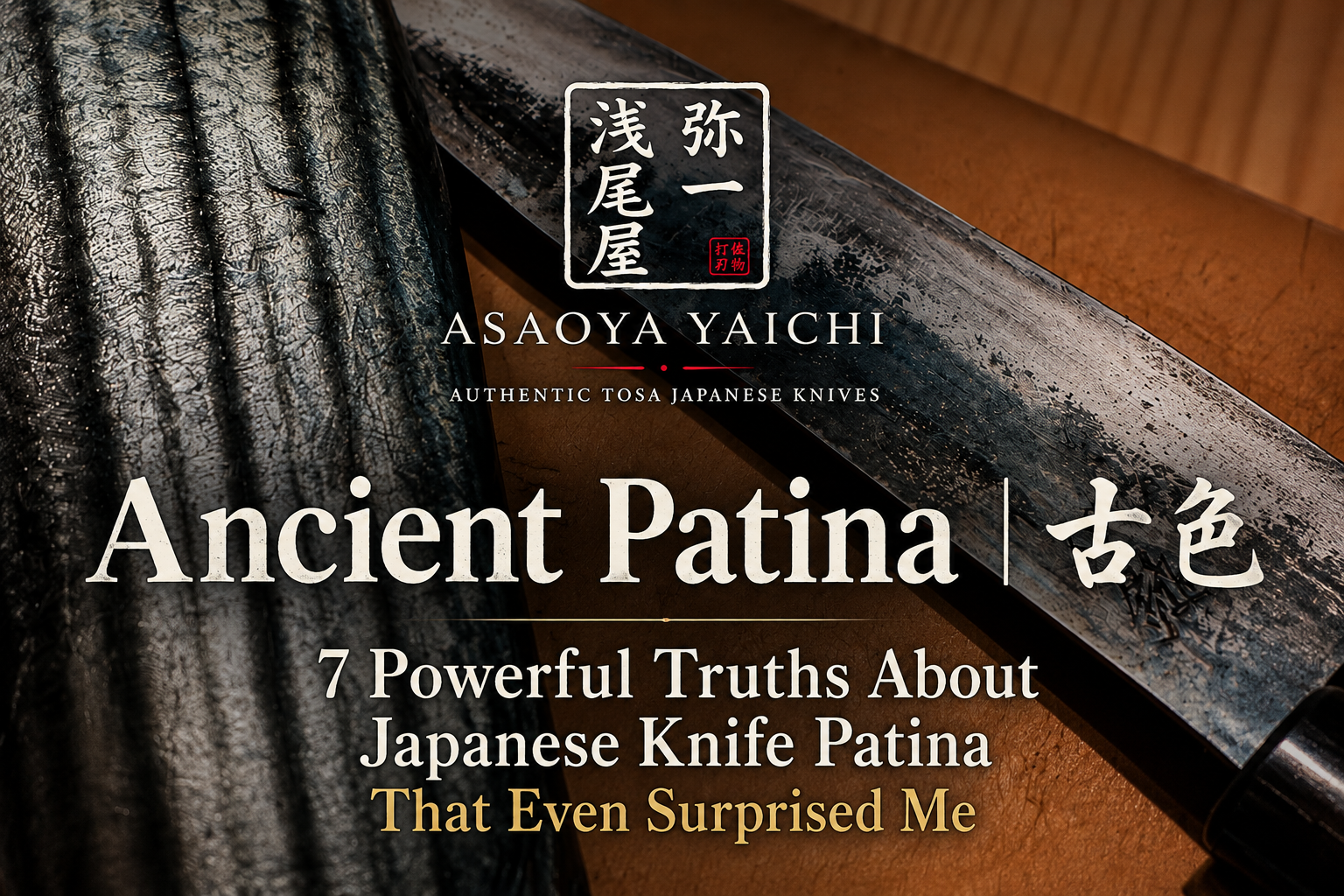
    Ancient Patina 古色 | 7 Powerful Truths About Japanese Knife Patina That Even Surprised Me

    Ishizuchi Kanamono Manufactory

    If you own or are thinking about buying a carbon steel Japanese knife, you’ve probably heard the term Japanese Knife Patina. Until I started selling handcrafted Japanese knives, I honestly thought any discoloration on a blade was something to avoid.

    What surprised me was discovering that many knife enthusiasts actually appreciate a beautiful patina. For some, it’s not damage at all—it’s a sign that the knife is being used, cared for, and developing its own unique character.

    In this article, I’ll explain what Japanese Knife Patina really is, how it differs from rust, and why so many experienced knife users see it as something worth embracing.


    What Is Japanese Knife Patina?

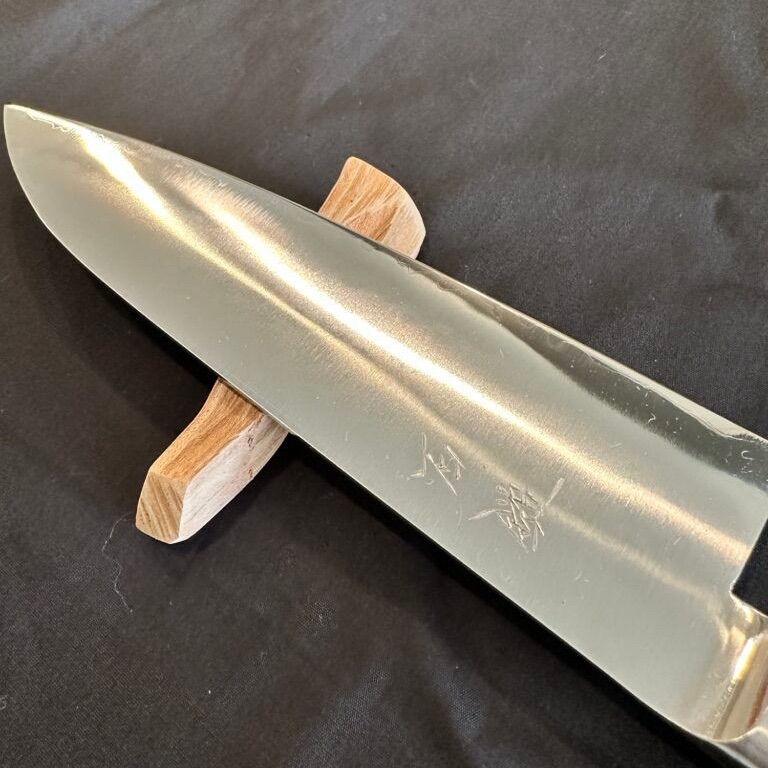
    Patina

    Japanese Knife Patina is a natural oxide layer that develops on carbon steel after repeated use. It often appears in shades of blue, grey, purple, or dark charcoal depending on the foods you cut and how you care for the knife.

    Unlike red rust, patina is generally stable and can even help slow further oxidation.

    Many professional chefs never try to remove it. Instead, they simply keep the blade clean and dry after use.

    ➡ Read more: Beginner’s Guide to Japanese Kitchen Knives


    Why Japanese Knife Patina Is Different From Rust

    One of the biggest misconceptions is that every color change means corrosion.

    Here’s the difference:

    Japanese Knife Patina

    • Blue, grey, or dark tones
    • Forms naturally during normal use
    • Can act as a protective oxide layer
    • Often appreciated by carbon steel knife users

    Rust

    • Red or orange color
    • Caused by moisture left on the blade
    • Can damage the steel if ignored
    • Should be removed as soon as possible

    Understanding this difference helps you enjoy your knife with more confidence instead of worrying every time the blade changes color.

    Read more: Why Do Japanese Knives Rust So Easily?


    Why Some Knife Enthusiasts Love Japanese Knife Patina

    This was the part that surprised me the most.

    For years I simply used carbon steel knives because they performed exceptionally well. I never thought much about the color changing over time.

    After starting Asaoya Yaichi, I learned that many collectors and professional chefs actually enjoy watching their Japanese Knife Patina develop.

    To them, every knife tells a story.

    The blade reflects years of cooking, countless ingredients, and the owner’s personal journey.

    No two patinas are exactly alike, making every knife even more unique.


    Does Everyone Want a Patina?

    Mirror Polished

    Not at all.

    Some people love the bright mirror finish of a freshly polished knife.

    Others prefer the rich character that develops through daily use.

    Neither preference is right or wrong.

    It’s simply a matter of taste.

    A mirror-polished knife highlights craftsmanship, while a beautiful Japanese Knife Patina reflects years of real-world experience.

    ➡➡ Professional Choice | Why I Still Use Carbon Steel for Sashimi After 25 Years


    How to Care for Japanese Knife Patina

    If you own a carbon steel knife, proper maintenance is still essential.

    Keep the blade clean

    Wash the knife by hand after use using mild detergent.

    Dry immediately

    Never leave water on carbon steel.

    Store properly

    Keep the knife in a dry location with good airflow.

    Don’t panic over color changes

    Blue or grey tones are often completely normal.

    The goal isn’t to prevent every change.

    The goal is to prevent red rust.

    ➡ Read more: 5 Common Mistakes That Damage Japanese Knives


    My Honest Discovery About Japanese Knife Patina

    I spent more than 25 years working as a professional chef.

    Yet one thing I didn’t truly appreciate until I started selling handcrafted Japanese knives was how differently people view Japanese Knife Patina.

    I always focused on performance.

    Many enthusiasts also appreciate the story the blade tells.

    That changed the way I look at carbon steel knives.

    A handcrafted Japanese knife isn’t just a cutting tool.

    It’s something that evolves with its owner over time.

    Perhaps that’s one of the reasons handmade Japanese knives continue to fascinate so many people around the world.

    Read more: Handmade Japanese Knives | 7 Fascinating Reasons No Two Are Ever Exactly the Same


    Final Thoughts

    Whether you prefer a mirror finish or a naturally developed Japanese Knife Patina, both represent different ways of appreciating handcrafted Japanese knives.

    One celebrates perfection.

    The other celebrates experience.

    Whichever you prefer, the most important thing is to enjoy using your knife and taking proper care of it.


    👉 Explore more:
    https://blog.asaoyayaichi.com.au

    👉 Visit our online store:
    https://asaoyayaichi.com.au

    Thank you for reading, and I hope to see you again in the next story.
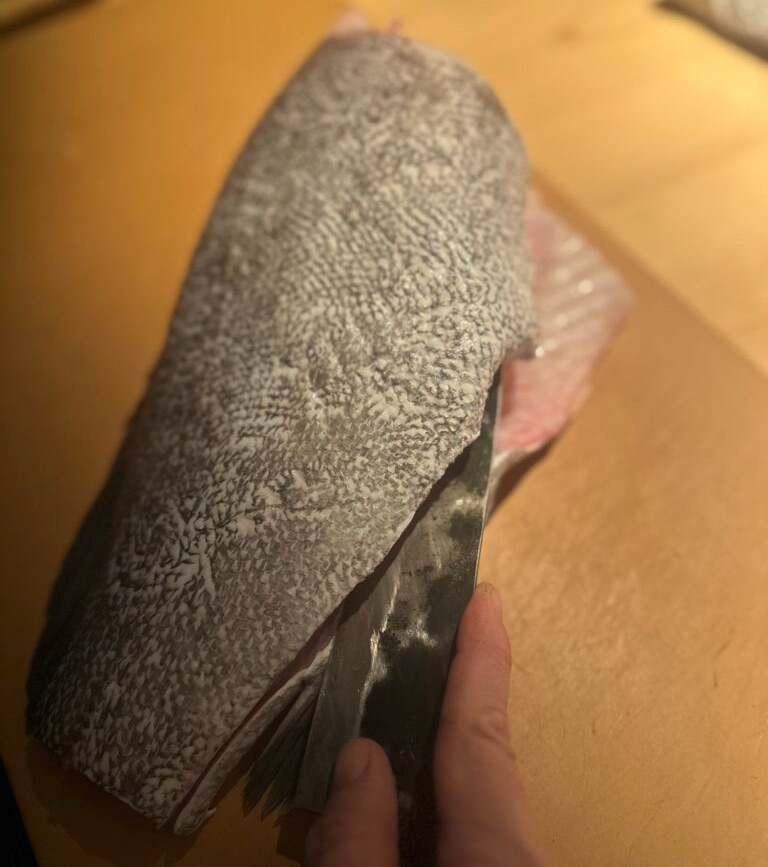
  • Hardness 硬度 | 7 Powerful Truths About Japanese Knife HRC That Surprised Even a Chef

    Hardness 硬度 | 7 Powerful Truths About Japanese Knife HRC That Surprised Even a Chef

    Ishizuchi Kanamono Manufactory

    For more than 25 years, I have worked as a professional chef using Japanese knives almost every day. Surprisingly, although I often saw numbers like HRC 60, HRC 61, or HRC 63, I never truly understood what they meant. I simply assumed that a higher number meant a better knife.

    As I began selling handcrafted Japanese knives through Asaoya Yaichi, customers started asking about Japanese knife hardness more often. Rather than pretending I knew every technical detail, I decided to research it properly.

    What I discovered changed the way I think about knives. More importantly, I realised that my experiences in professional kitchens over the last 25 years matched what the science says about knife hardness.

    If you’ve ever wondered what HRC really means, whether a harder knife is always better, or how hardness affects sharpening, this guide is for you.

    Internal Link: Beginner’s Guide to Japanese Kitchen Knives


    What Is Japanese Knife Hardness?


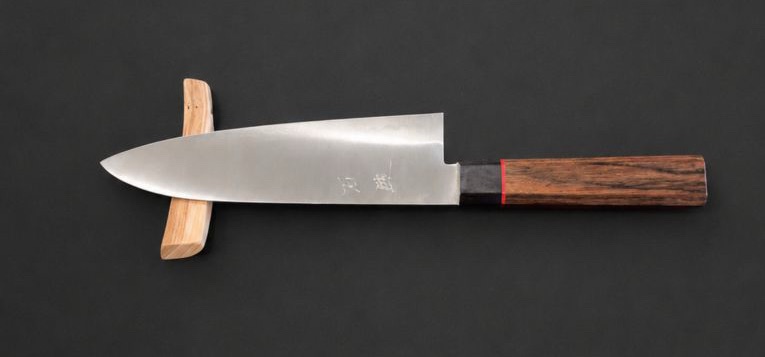
    240mm Thick Deba Aogami #2 Kurouchi Walnut Handle

    Japanese knife hardness is usually measured using the Rockwell Hardness C Scale (HRC). This test measures how resistant the steel is to indentation using a diamond-tipped tester.

    The higher the HRC number, the harder the steel.

    However, this does not automatically mean the knife is better.

    Hardness is only one characteristic of a knife. Heat treatment, steel quality, blade geometry, sharpening, and craftsmanship all play equally important roles.

    A knife with perfect balance will usually outperform a knife that simply has the highest hardness rating.

    Internal Link: Carbon Steel vs Stainless Steel | Which Should You Choose?


    Why Japanese Knife Hardness Matters


    165mm Usuba A8 Hammered Damascus Black & Red Octagonal Handle

    Japanese knife hardness affects several important characteristics.

    Better Edge Retention

    Harder steel usually keeps its edge much longer.

    That means you can prepare many more ingredients before the knife begins to lose its sharpness.

    This is one reason many Japanese knives are loved by professional chefs.

    More Difficult Sharpening

    The same hardness that keeps the edge sharp also makes the knife more difficult to sharpen.

    Removing steel takes longer, especially if the blade has become quite dull.

    Greater Risk of Chipping

    Very hard steel is less flexible.

    If used incorrectly on bones, frozen food, or by twisting the blade sideways, small chips can occur.

    That doesn’t mean the knife is weak—it simply means it should be used correctly.


    Japanese Knife Hardness in Real Kitchen Experience


    210mm Sujihiki Aogami #2 Kurouchi Magnolia Handle

    This was probably the biggest surprise for me.

    I realised that although I didn’t know the HRC numbers, I had already experienced the difference between softer and harder steels throughout my career.

    Years ago, I used a sujihiki made from relatively soft steel.

    It was so flexible that if I applied too much pressure while sharpening, I could actually feel the blade flex slightly on the whetstone.

    The edge didn’t last particularly long.

    However, when it became dull, I could restore an excellent edge very quickly.

    It sharpened easily and always performed well enough for daily professional work.


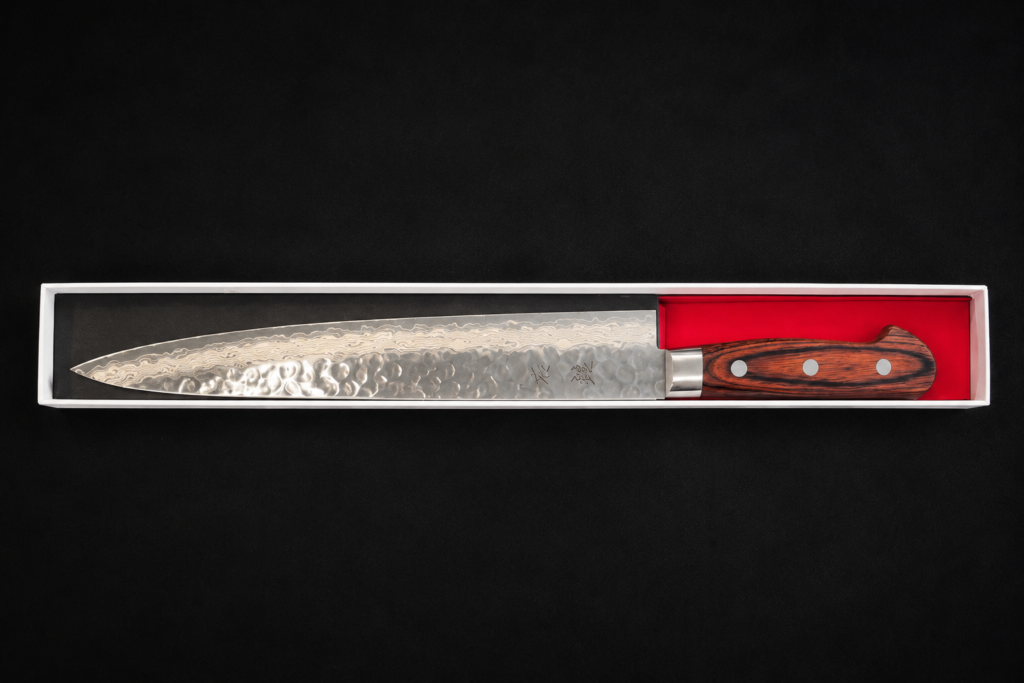
    240mm Sujihiki VG10 Hammered 17 Layer Damascus Mahogany

    Later, I switched to harder stainless steel knives.

    The difference was immediately obvious.

    When freshly sharpened, the cutting performance was incredible.

    The edge stayed sharp much longer than my previous knife.

    But there was another side to the story.

    Once the knife finally became dull, it was much harder to bring back.

    It took considerably longer to raise a burr, and if I accidentally changed the sharpening angle, correcting the edge required much more patience.

    After researching Japanese knife hardness, I finally understood why.

    Harder steel offers outstanding edge retention, but it also demands greater sharpening skill.

    Softer steel loses its edge sooner, yet it rewards the user by being forgiving and much easier to sharpen.

    Neither is objectively better.

    They simply suit different users and different situations.

    Internal Link: Why Flattening Your Whetstone Matters


    Common HRC Ranges for Japanese Knives


    180mm Santoku Aogami #2 Green Micarta Handle with Turquoise Spacer

    Although every manufacturer uses different heat treatments, these are general guidelines.

    HRC 55–58

    • Tough and flexible
    • Easy to sharpen
    • Loses its edge relatively quickly

    HRC 59–61

    • Excellent balance
    • Suitable for many home cooks
    • Common among quality Japanese knives

    HRC 61–64

    • Outstanding edge retention
    • Very sharp cutting performance
    • Requires proper technique and sharpening skills

    Above HRC 64

    • Extremely hard
    • Exceptional edge retention
    • Less forgiving and often intended for experienced users

    Remember, these are only general ranges.

    Steel composition and heat treatment are often more important than the HRC number alone.

    Internal Link: Professional Choice | Why I Still Use Carbon Steel for Sashimi After 25 Years


    Should You Buy the Hardest Japanese Knife?


    180mm Santoku SG2 Rosewood Octagonal Handle

    Many people assume that the highest HRC automatically means the best knife.

    After researching this subject, I don’t believe that’s true.

    A knife should match the way you cook.

    If you enjoy sharpening and want maximum edge retention, harder steel can be fantastic.

    If you prefer quick maintenance and easy sharpening, a slightly softer blade may actually make your cooking more enjoyable.

    The best knife isn’t the one with the highest number.

    It’s the one that suits your cooking style.


    Final Thoughts on Japanese Knife Hardness


    Ginsan Nashiji Forged Magnolia Octagonal Handle Buffalo Horn Ferrule series

    Researching Japanese knife hardness taught me something I honestly didn’t know after more than 25 years in professional kitchens.

    I had always judged knives by how they performed.

    Only later did I realise that hardness helps explain why they perform that way.

    Today, I still don’t choose a knife based only on its HRC rating.

    I look at the steel, the heat treatment, the craftsmanship, the intended purpose, and how the knife feels in my hand.

    The HRC number is useful, but it’s only one piece of a much bigger picture.

    If this article helped you understand Japanese knife hardness a little better, I hope it also gives you more confidence when choosing your next knife.

    Internal Link: Handmade Japanese Knives | 7 Fascinating Reasons No Two Are Ever Exactly the Same


    👉 Explore more:
    https://blog.asaoyayaichi.com.au

    👉 Visit our online store:
    https://asaoyayaichi.com.au

    Thank you for reading, and I hope to see you again in the next story.