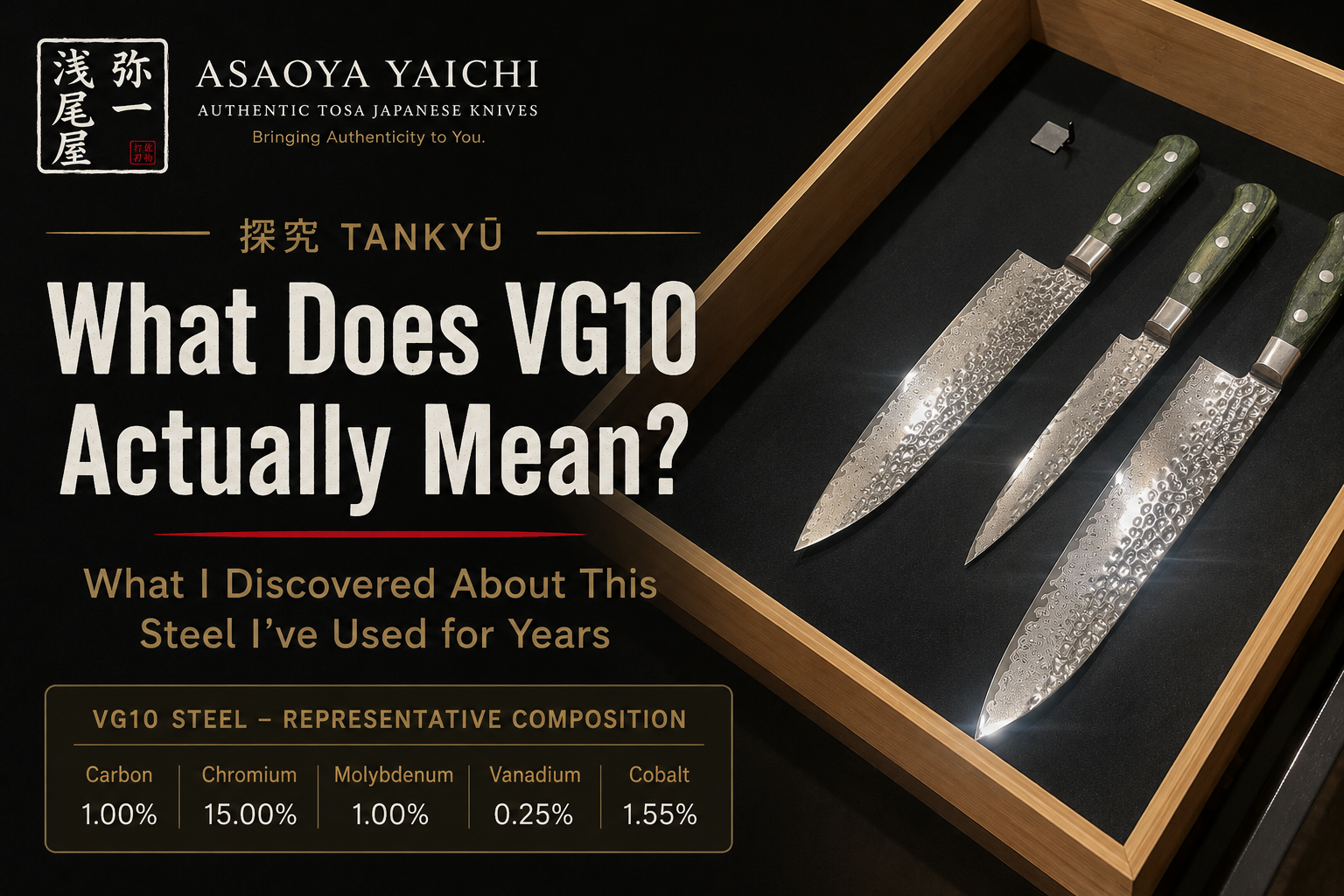
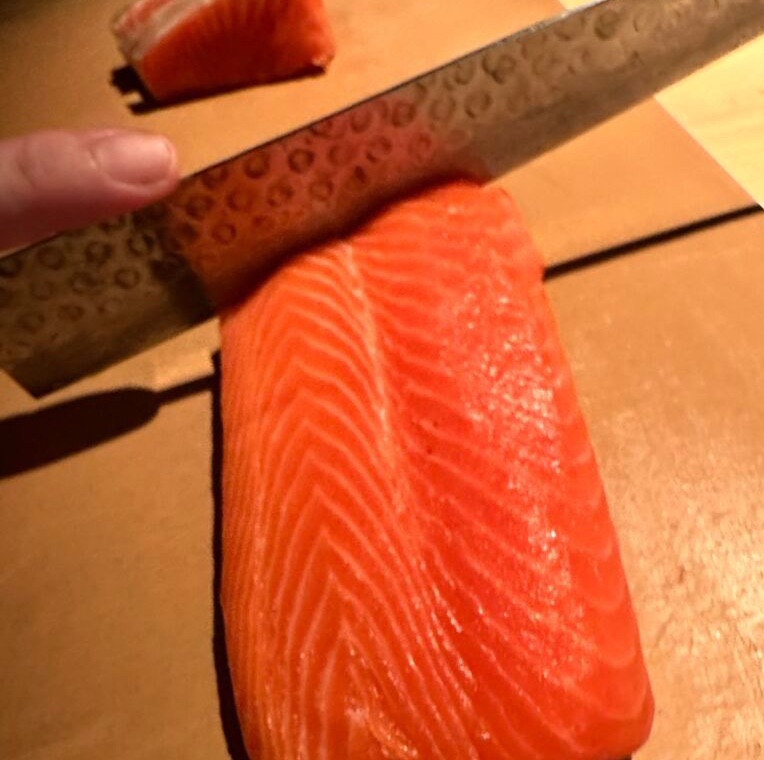
240mm Sujihiki VG10 Hammered 17 Layer Damascus Mahogany
I had used VG10 Japanese knife steel for years before I ever stopped to ask a very simple question: what does VG10 actually mean?
After more than 25 years working as a chef in Japan and Australia, I knew VG10 as a practical stainless steel used in many Japanese knives. I knew how it felt on the cutting board, how it responded to sharpening, and how convenient stainless steel could be in a busy kitchen. But if someone had asked me what the letters meant, why cobalt was in it, or exactly what made VG10 different from other stainless steels, I probably would not have had a very good answer.
Since starting a Japanese knife business, I have found myself asking questions I never really thought about as a chef.
So this time, I became curious about VG10 and decided to look into it.
VG10 Japanese Knife Steel: What Does the Name Actually Mean?
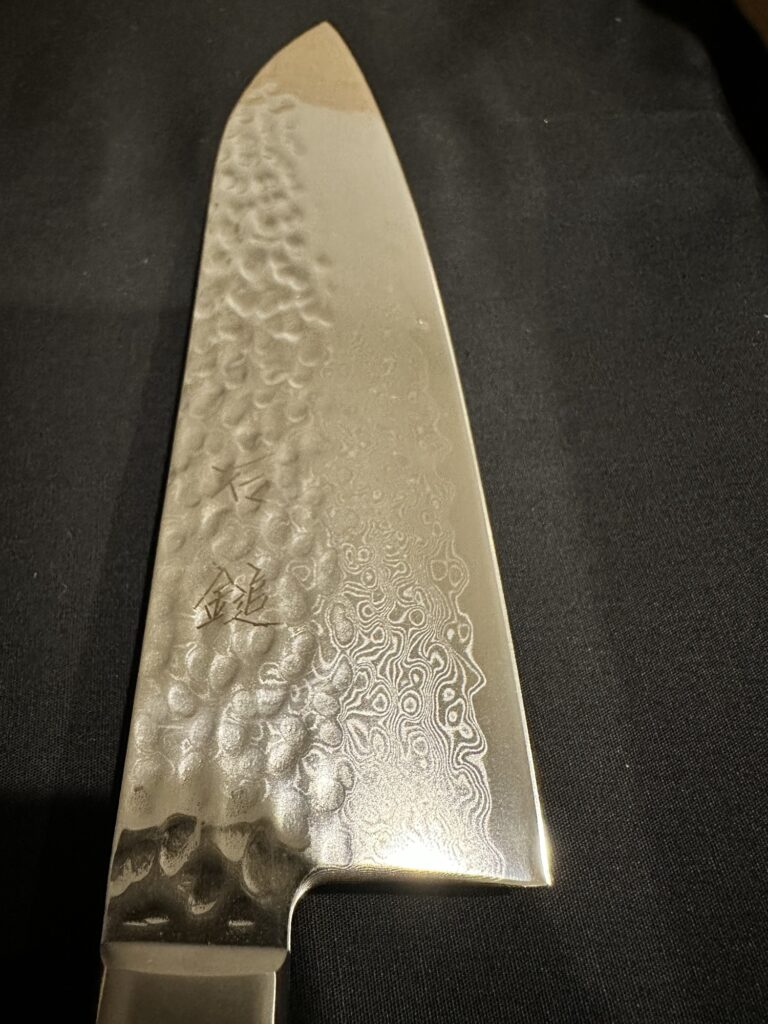
One of the first things I discovered was that this apparently simple question was not quite as straightforward as I expected.
VG10 is an original blade steel produced by Takefu Special Steel in Echizen, Fukui Prefecture, Japan. On the manufacturer’s Japanese website, the steel is identified as V金10 (VG10), or “V Kin 10.” Takefu also produces other steels in the same family, including VG1, VG2, VG5 and VG7.
When I started searching for what the letters “VG” actually mean, I found several different explanations online. However, I could not find a clear statement on Takefu Special Steel’s official VG10 page defining the letters in the same way.
What I could confirm was that VG10 is a Japanese stainless blade steel produced by Takefu Special Steel and officially identified in Japan as V金10 (VG10).
In the end, I did not find a definitive answer to exactly what “VG” stands for from the manufacturer’s information I checked. That was also one of the things I learned by looking into it.
👉 INTERNAL LINK: Japanese Knife Names — the article about where Japanese knife names come from
What Is Actually Inside VG10 Japanese Knife Steel?
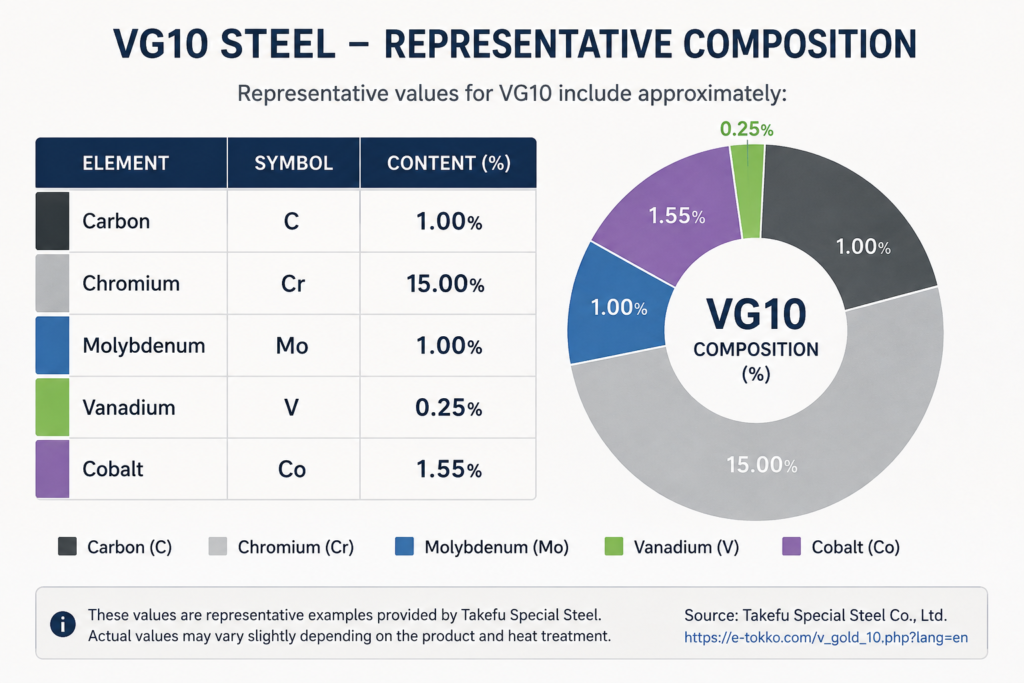
This was the part that made me realise how little I had thought about the steel itself.
According to Takefu Special Steel, representative values for VG10 include approximately 1.00% carbon, 15.00% chromium, 1.00% molybdenum, 0.25% vanadium and 1.55% cobalt.
I had heard the word “cobalt” many times before. But then I had another very simple question:
What exactly is cobalt?
Cobalt is a metallic chemical element, represented by the symbol Co. In VG10 Japanese knife steel, it forms part of an alloy containing several different elements, each contributing to the characteristics of the finished steel.
Takefu explains that chromium, molybdenum and cobalt strengthen the steel matrix and help achieve high hardness and long-lasting cutting performance. Vanadium helps refine the microstructure, while chromium, molybdenum and vanadium contribute to hard carbides that improve wear resistance.
Suddenly, a steel I had simply called “VG10” for years became much more interesting.
👉 INTERNAL LINK: Hardness 硬度 — 7 Truths About HRC in Japanese Knives
Why Is VG10 So Popular in Japanese Knives?
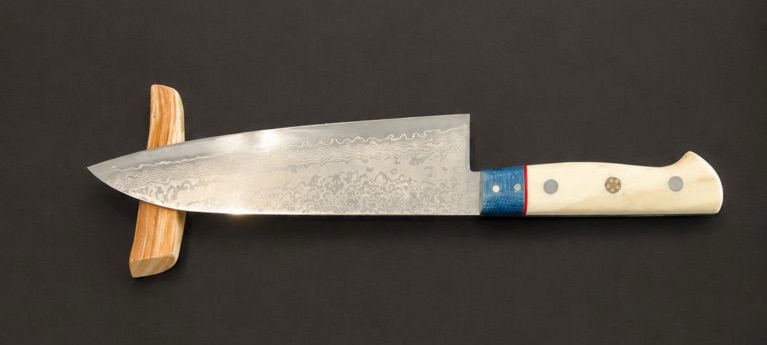
180mm Santoku VG10N 33 Layer Damascus Green Marble Handle Rainbow Spacer Blue
On paper, VG10 has a combination of characteristics that makes a lot of sense for kitchen knives.
Takefu Special Steel lists excellent corrosion resistance and sharpness among its qualities and says the steel is used not only for kitchen knives but also for general-purpose knives and machine blades. The manufacturer also describes VG10 as having good machinability and being relatively easy to sharpen.
That combination is important in a real kitchen.
A kitchen knife gets wet. It touches acidic ingredients. It gets sharpened repeatedly. In a professional kitchen, it may be used for hours during a single service.
For many cooks, having good edge performance while avoiding some of the maintenance required by traditional carbon steel is an attractive balance.
That helps me understand why VG10 Japanese knife steel has become such a familiar name in Japanese kitchen knives around the world.
👉 INTERNAL LINK: Carbon Steel vs Stainless Steel — Japanese Knife Guide
VG10 Japanese Knife Steel From a Chef’s Perspective
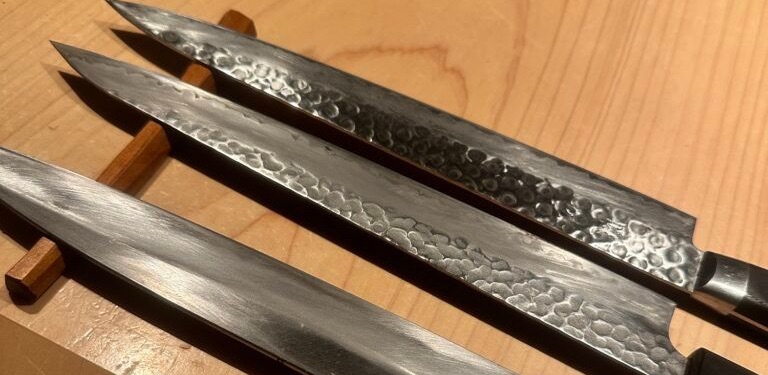
Here I can look at VG10 from the perspective I know best: actually using knives.
I have spent more than 25 years using knives, sharpening them and working with them in professional kitchens. From that experience, I can understand why VG10 became so popular.
I have used both carbon steels and stainless steels over the years, and I do not believe the name of the steel alone determines whether a knife is good.
Blade geometry, heat treatment, sharpening, construction and the person actually using the knife all make a difference.
A well-made and properly sharpened VG10 knife can be an excellent professional tool.
At the same time, two knives made from the same VG10 steel can still feel very different in the hand and on the cutting board. The steel is an important part of a knife, but it is only one part of the whole knife.
That is something years in professional kitchens taught me long before I started looking into steel compositions.
👉 INTERNAL LINK: Kireaji — the article about why sharpness is more than just steel
Learning About VG10 After Years of Using It
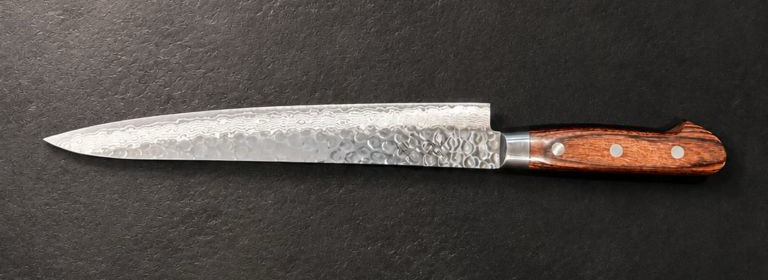
240mm Sujihiki VG10 Hammered 17 Layer Damascus Mahogan
One thing I enjoy about running Asaoya Yaichi is that it has made me curious about knives all over again.
For most of my career, I did not stand in a kitchen thinking about chromium percentages, vanadium or cobalt. I thought about whether my knife was sharp, whether it felt right, whether I could control it, and whether it could handle the work I needed it to do.
Now I find myself asking why.
Why is it called VG10?
Why does it contain cobalt?
Why do different steels feel different on the sharpening stones?
Why can two knives made from supposedly similar materials feel different when you actually use them?
Once I started looking into these questions, I found that one answer often led to another question.
And perhaps that is one of the most interesting things about learning more about Japanese knives.
👉 INTERNAL LINK: 真価 — the article about sharpening and bringing out the true potential of a Japanese knife
Final Thoughts on VG10 Japanese Knife Steel
VG10 Japanese knife steel was something I thought I understood simply because I had used it for years.
But once I started looking into it, I discovered there was much more behind those three characters than I had ever considered.
Learning about chromium, molybdenum, vanadium and cobalt does not change the experience I have gained from actually using knives. Instead, it gives me another way to understand and appreciate a tool I have spent most of my working life holding.
For years, I looked at knives mainly through the eyes of a chef.
Now, running Asaoya Yaichi has given me another reason to keep asking questions about them.
Sometimes a very basic question can lead somewhere surprisingly interesting.
And this time, it started with just three characters:
VG10.
👉 Explore more:
https://blog.asaoyayaichi.com.au
👉 Visit our online store:
https://asaoyayaichi.com.au
Thank you for reading, and I hope to see you again in the next story.