After more than 25 years working as a chef in Japan and Australia, I had never really thought seriously about Japanese knife thickness.
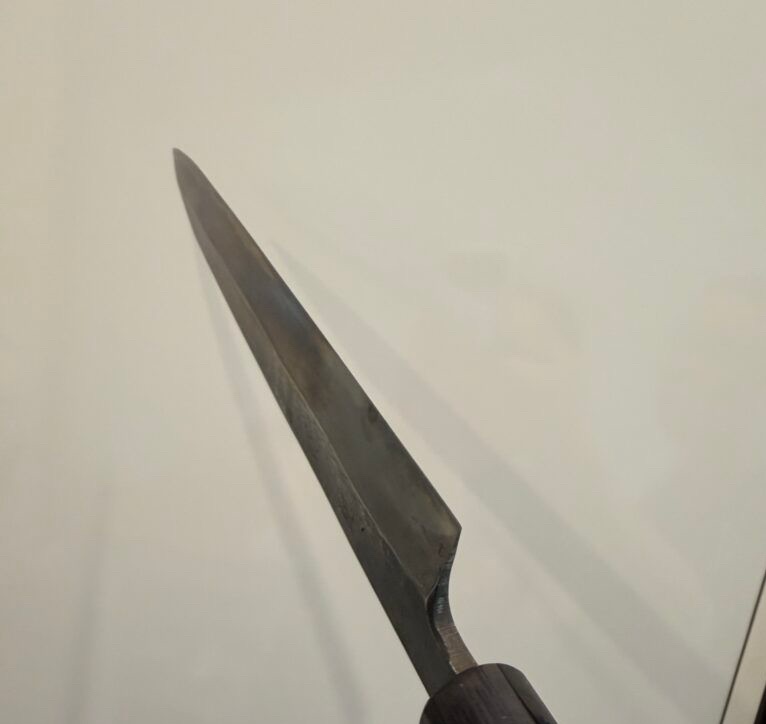
Of course, I have used both thin and thick knives. From experience, I have always felt that thinner knives are generally easier to use. They enter ingredients smoothly, require less effort, and simply feel good when cutting.
But I had never really asked myself why.
Since I started selling Japanese knives, I have found myself questioning things I used for years without thinking about them.
This time, the question was simple:
When we say a Japanese knife is “thin,” what part of the knife are we actually talking about?
And does thinner really mean better?
What Does Japanese Knife Thickness Actually Mean?
At first, I assumed knife thickness simply meant the thickness of the spine.
That is certainly one measurement, but it does not tell us everything about how a knife will cut.
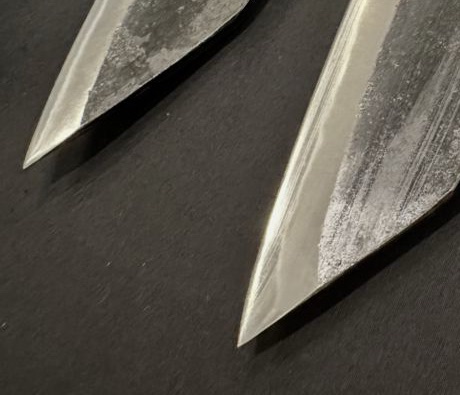
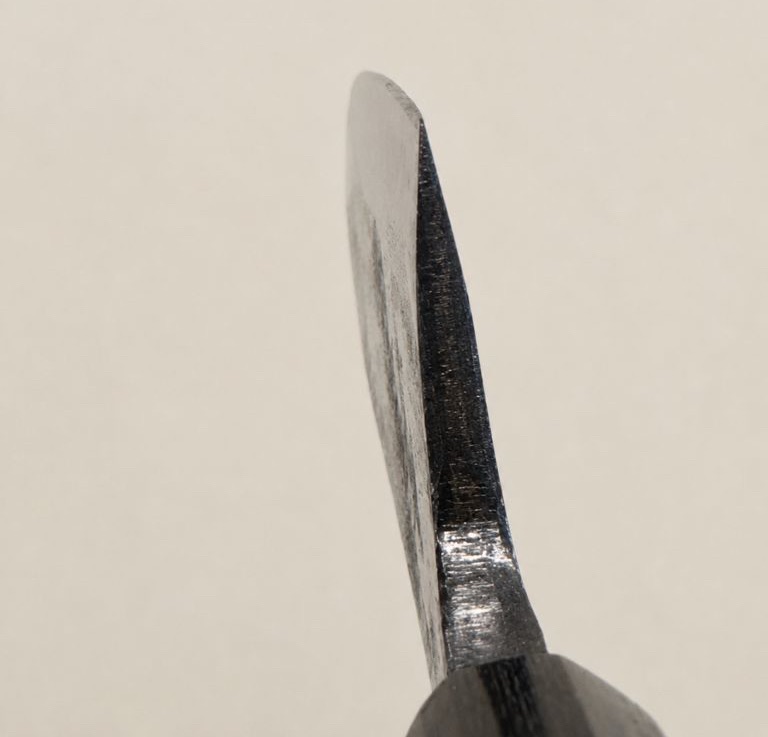
A blade changes thickness from the spine down towards the cutting edge. The area immediately behind the edge can have a major influence on how easily the knife passes through food.
When I learned this, it immediately made sense from my experience as a chef.
I have used knives that felt extremely sharp at the edge but somehow required more effort when cutting. I have also used knives that seemed to slip through ingredients almost effortlessly.
The sharpness of the edge was not necessarily the only difference.
👉 INTERNAL LINK: Link to “切味 Kireaji” — the article about how we actually experience sharpness.
Why Does a Thin Japanese Knife Feel Easier to Use?
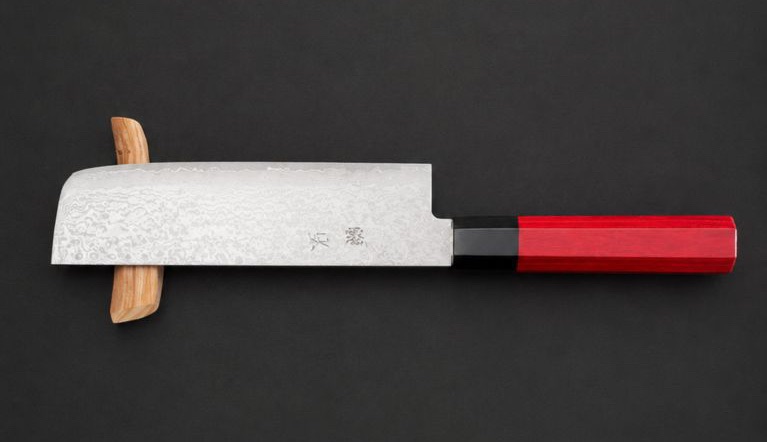
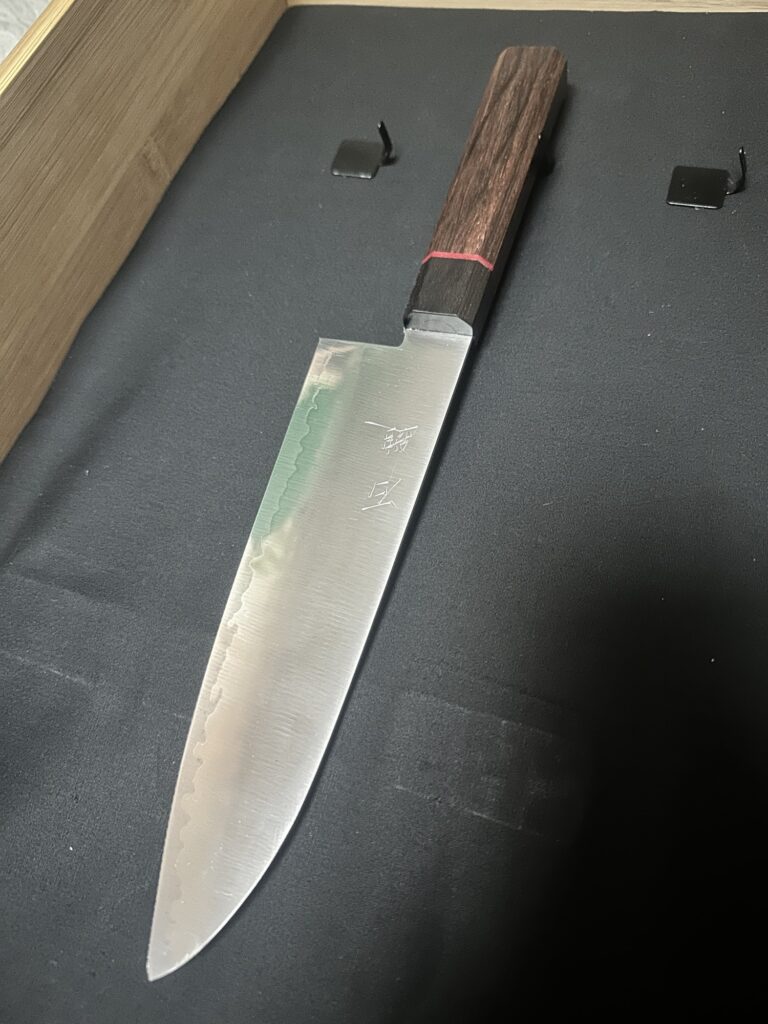
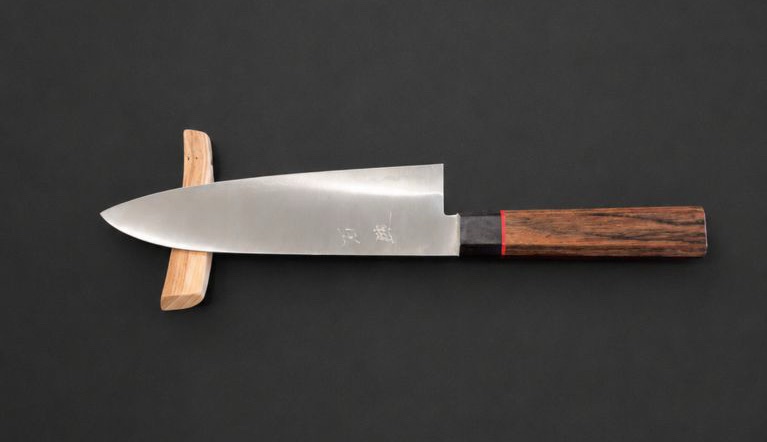
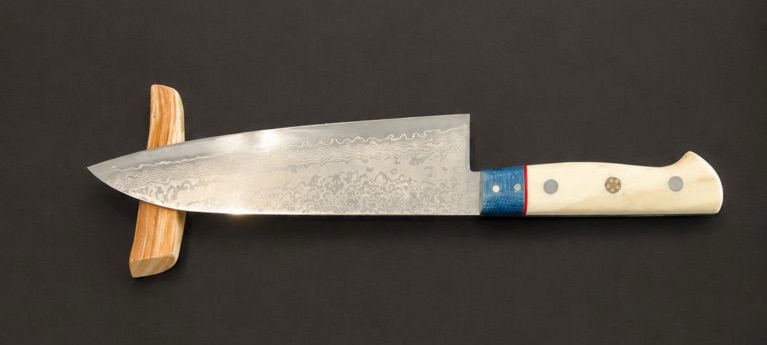
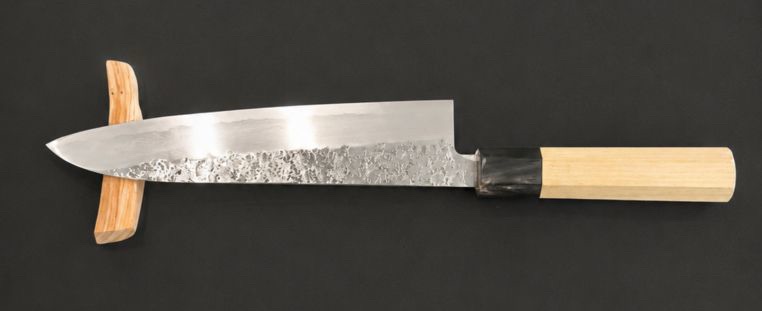
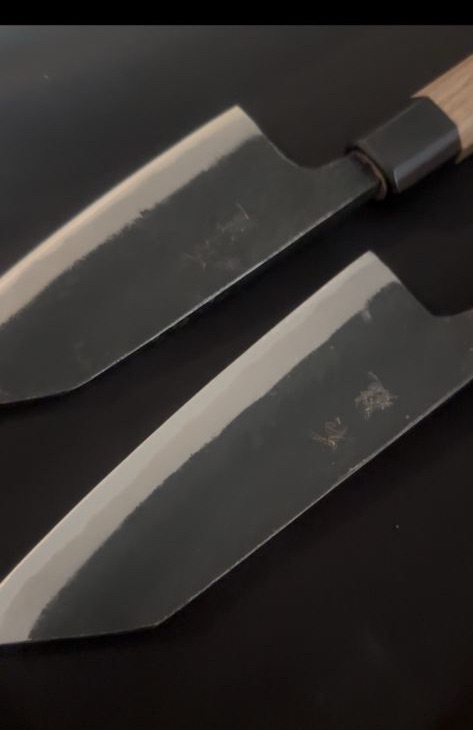
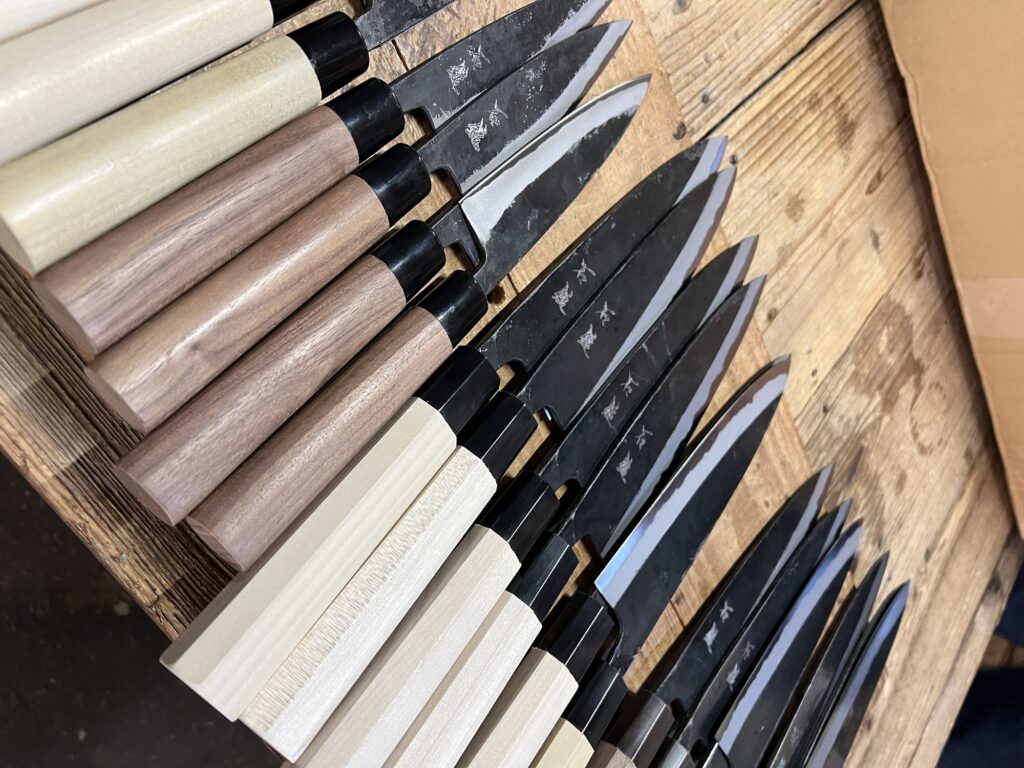
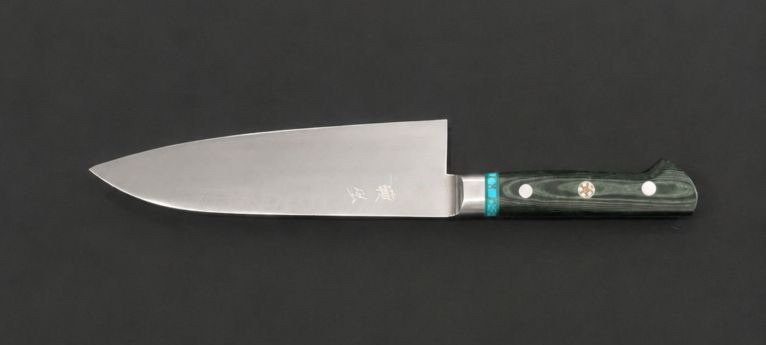
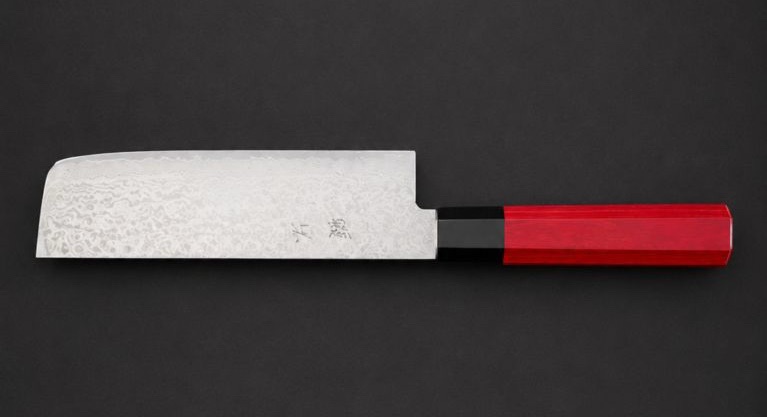
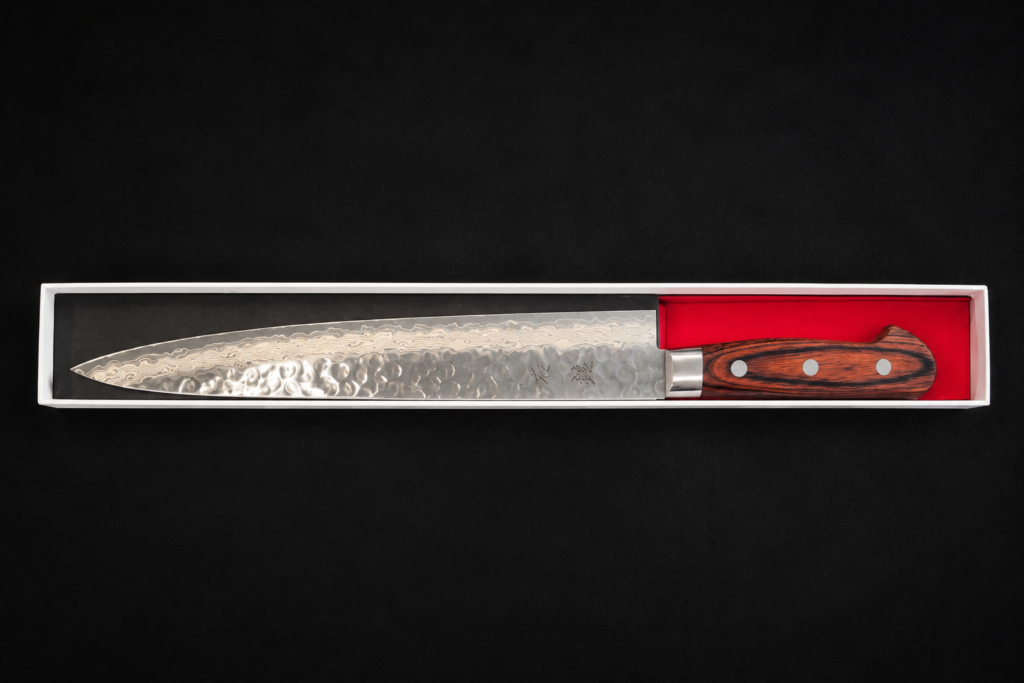
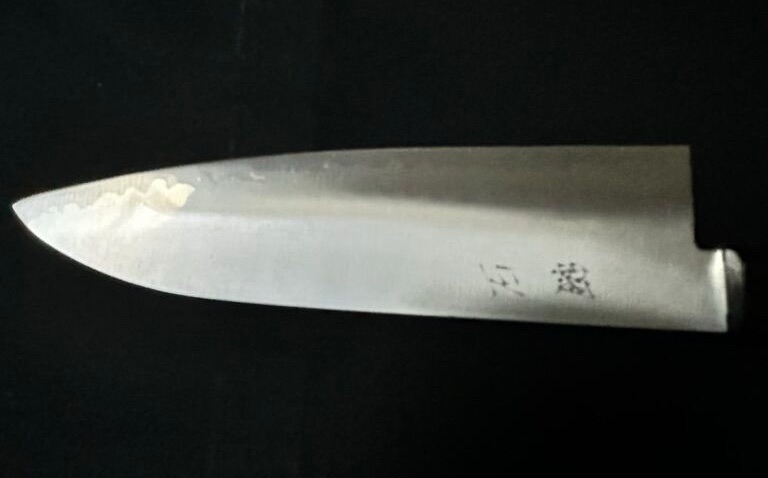
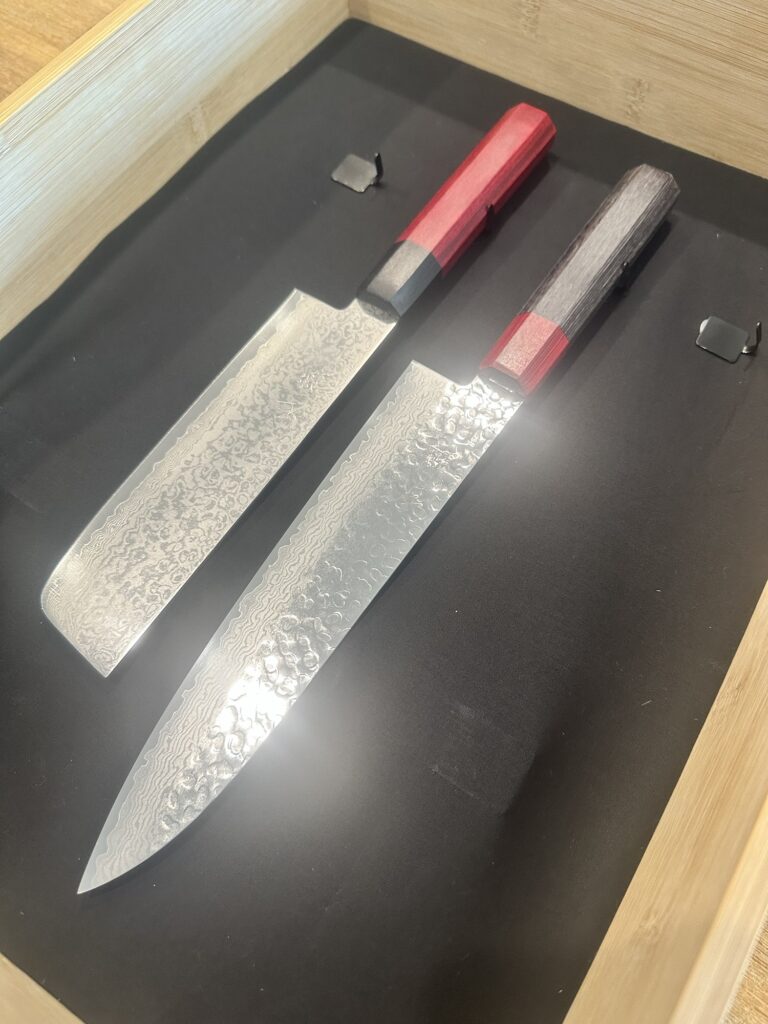
165mm Usuba A8 Hammered Damascus Black & Red Octagonal Handle
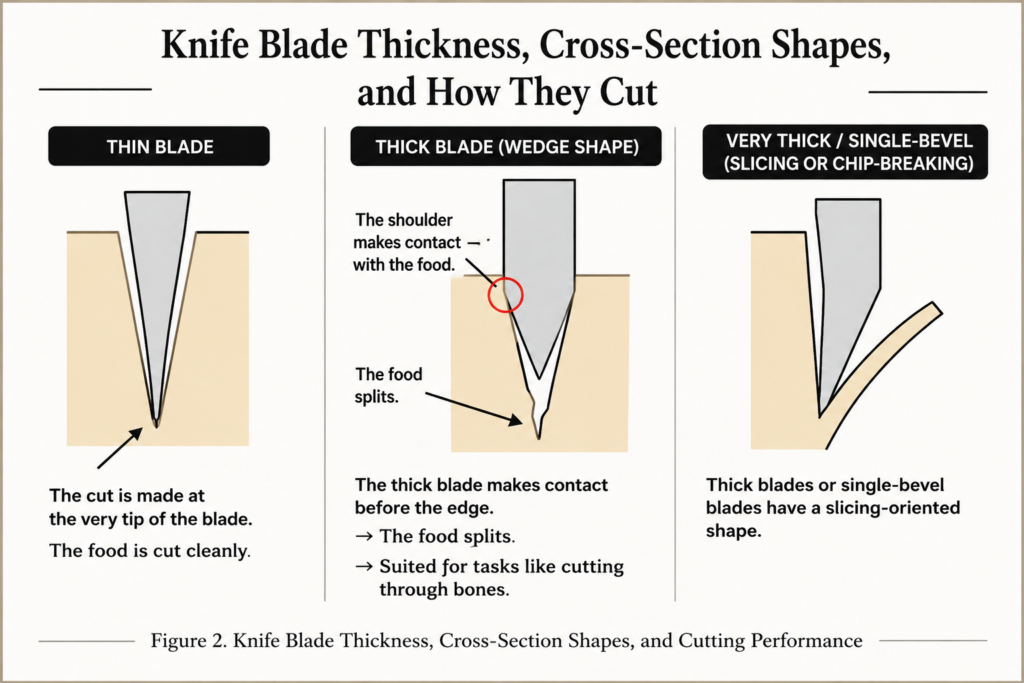
A simple cross-section diagram helped me understand this surprisingly well.
Imagine two sharp blades entering the same ingredient. One remains relatively thin behind the cutting edge, while the other becomes thick very quickly.
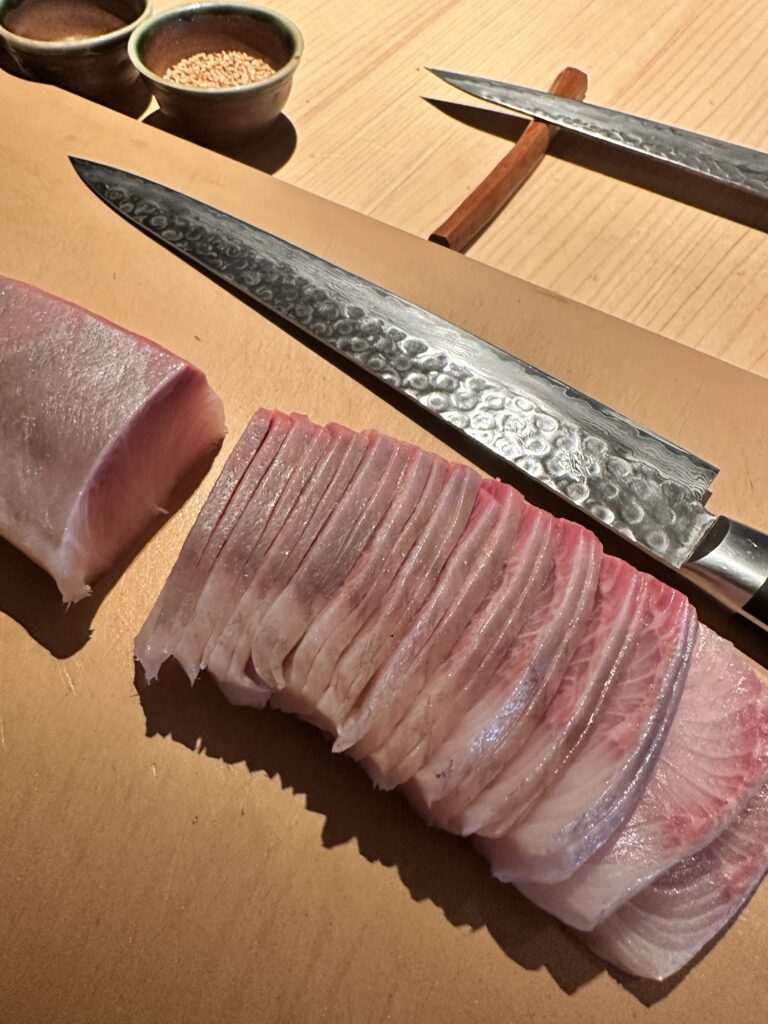
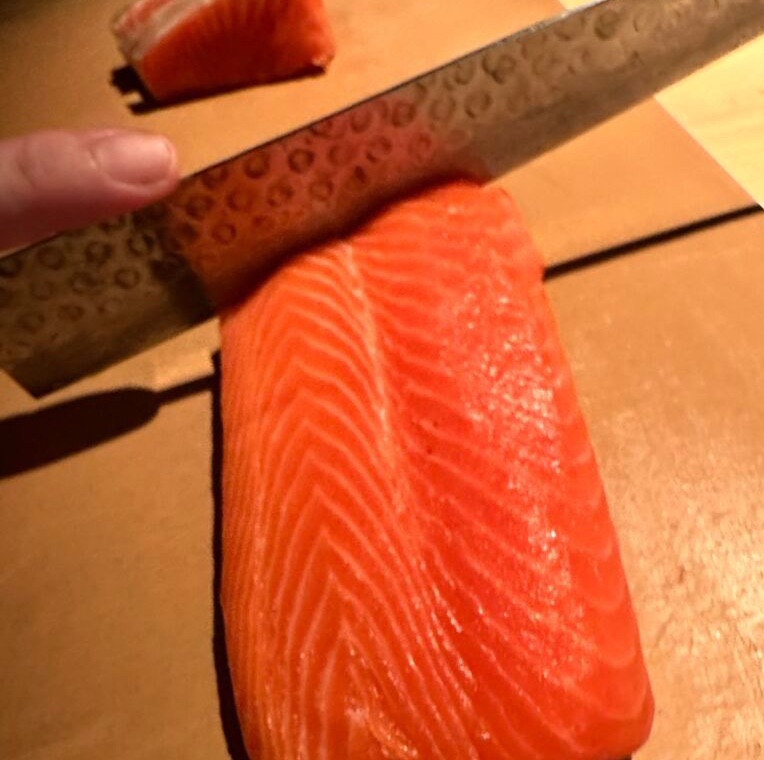
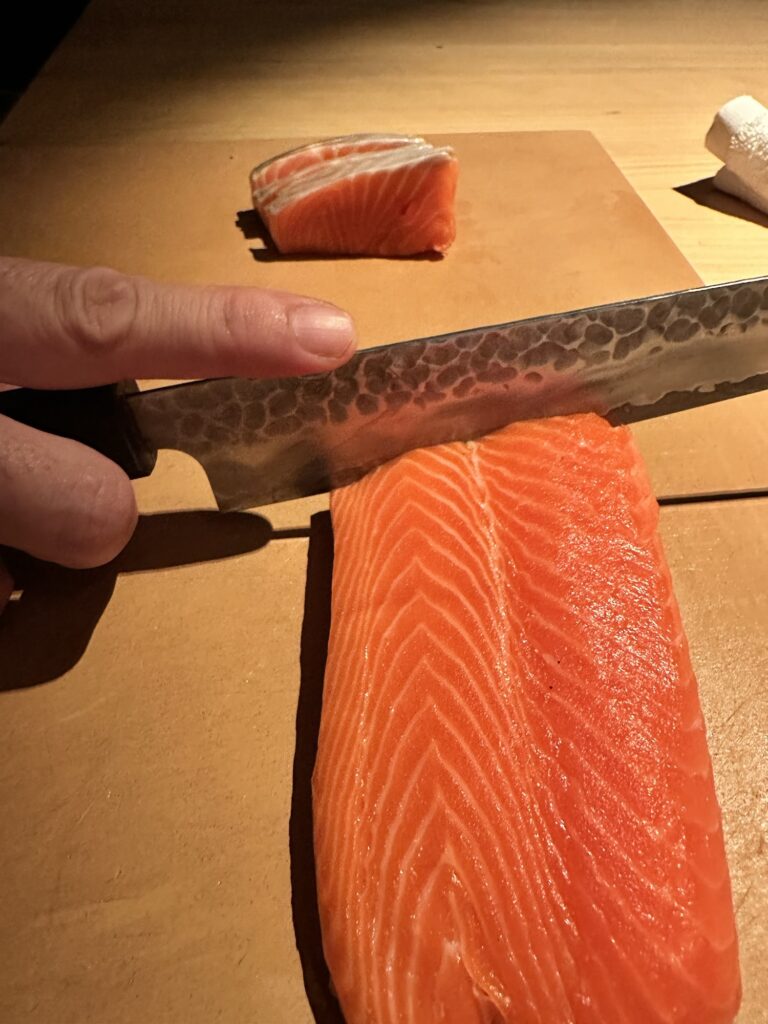
The thinner blade can continue through the food with less resistance. With the thicker blade, the sides of the blade begin pushing against the ingredient and forcing it apart.
Both edges may be equally sharp, but they can feel completely different in actual use.
This is why Japanese knife thickness is not simply about one measurement at the spine. The thickness behind the edge, the shoulders and the taper of the blade all contribute to how it moves through food.
For someone like me who spent years judging knives mainly by how they felt in my hand, it was interesting to finally understand part of the reason behind that feeling.
How Thin Is a “Thin” Japanese Knife?
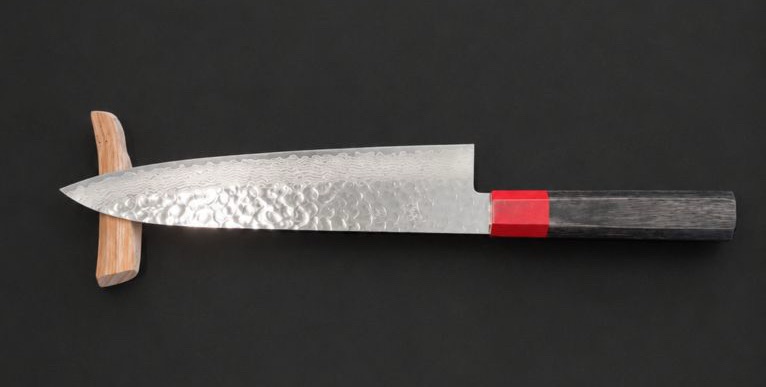
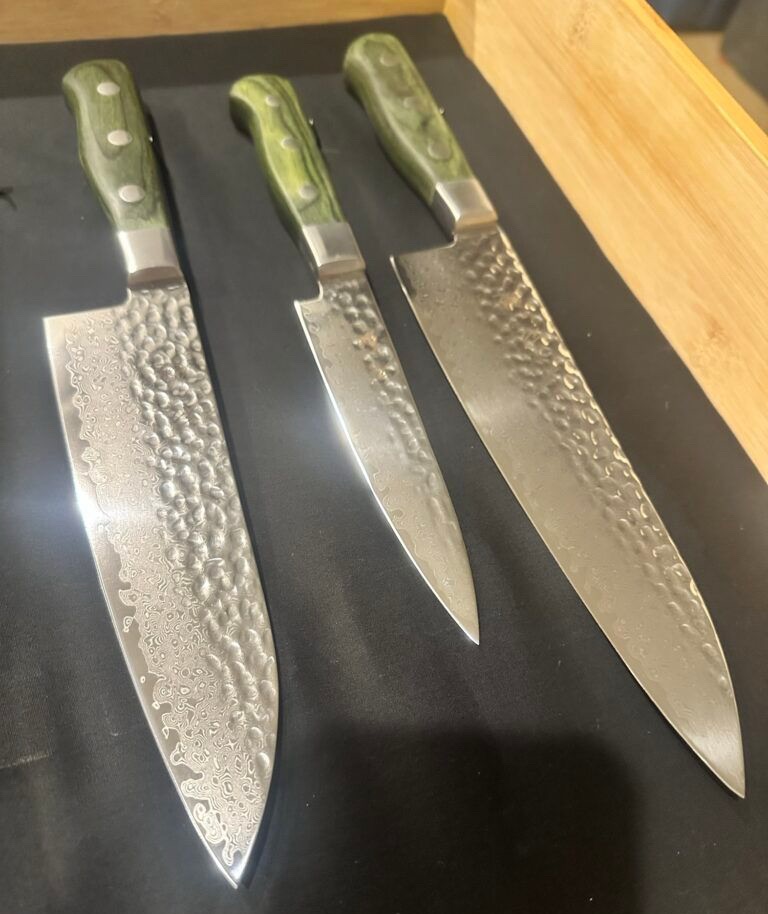
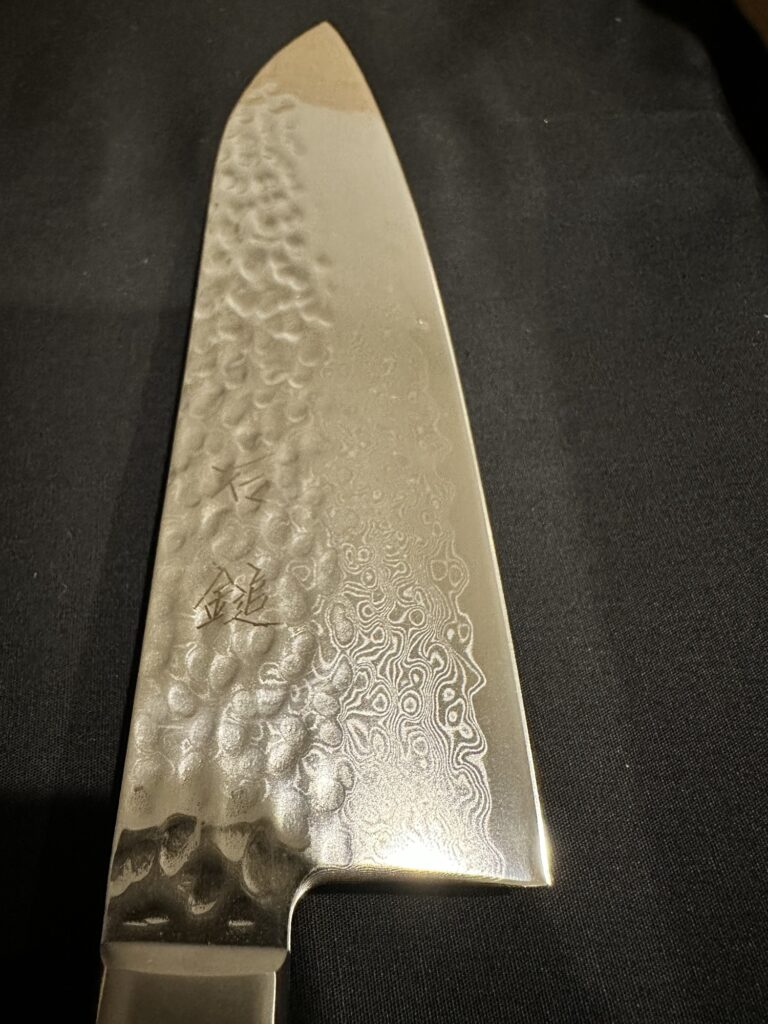
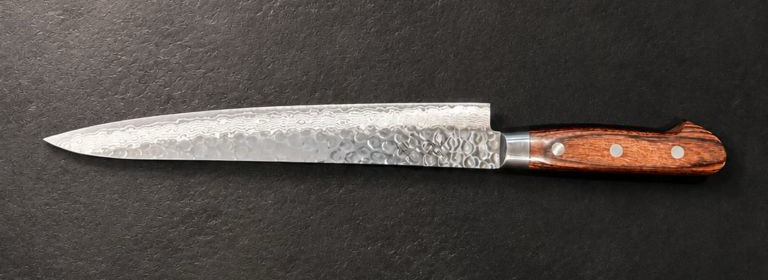
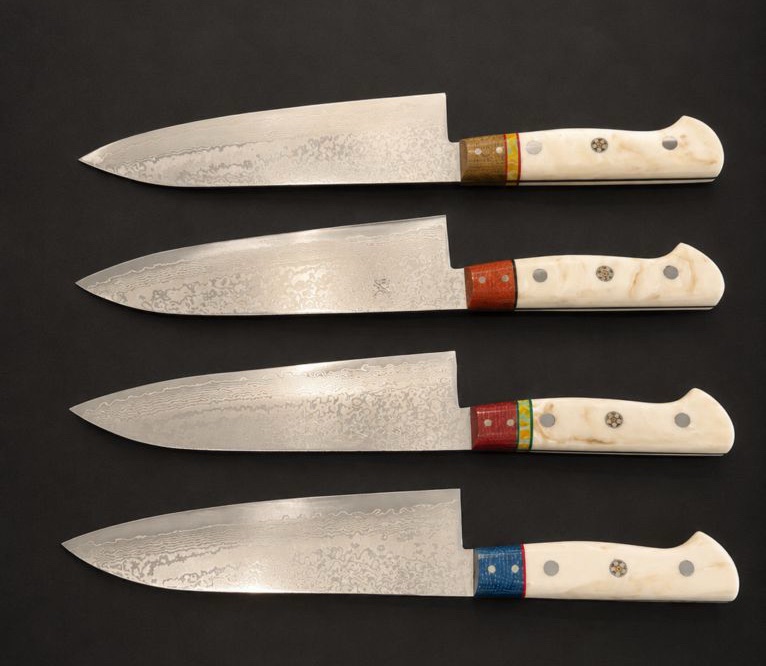
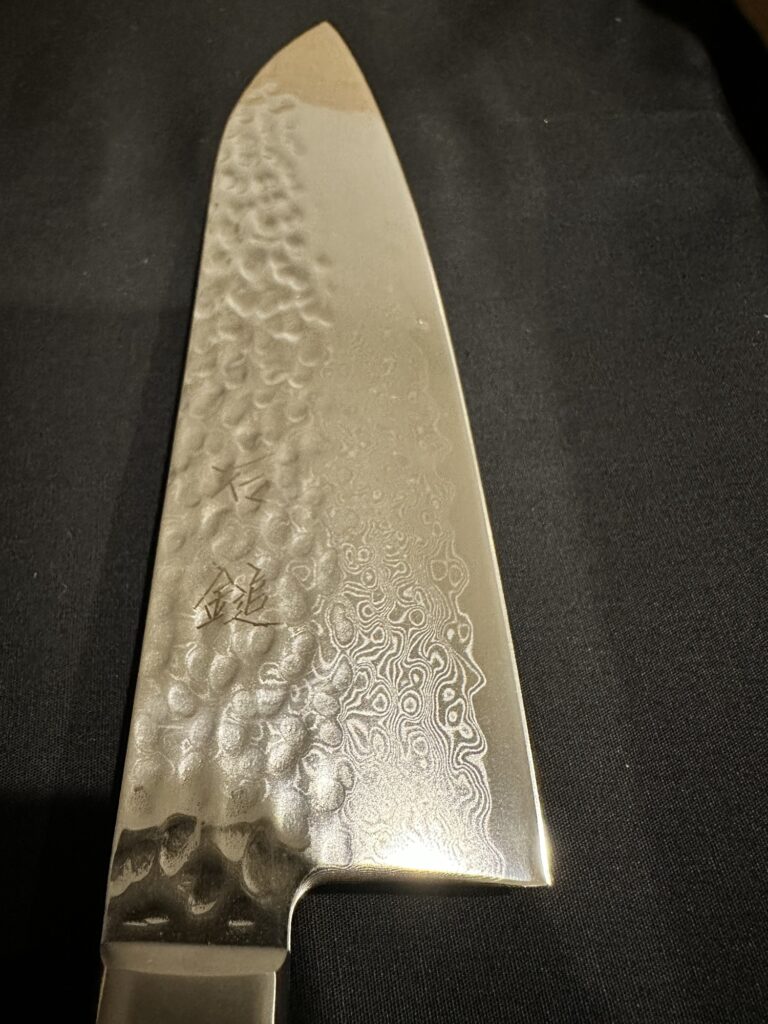
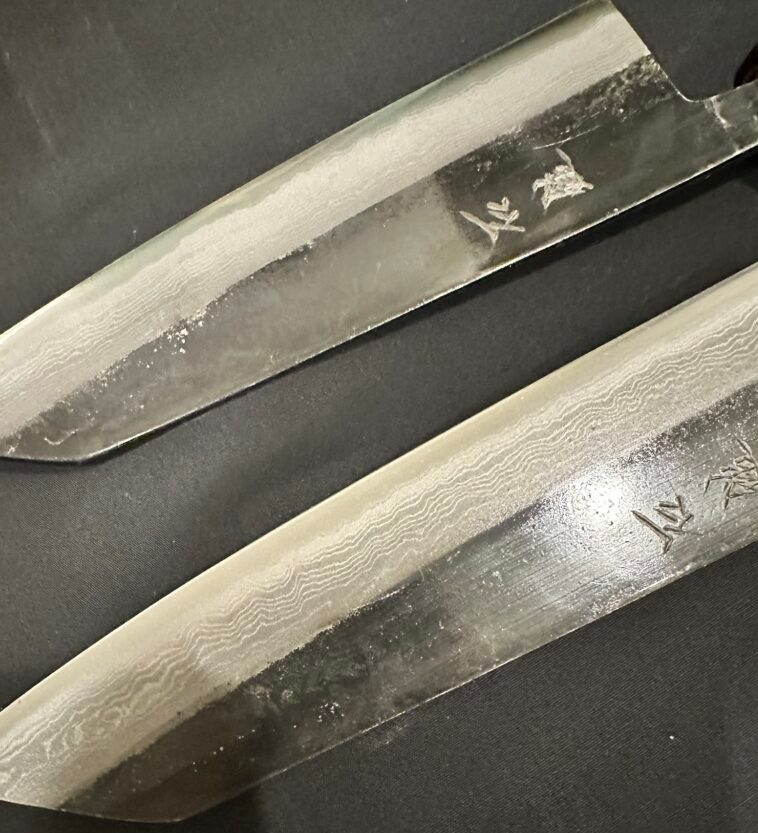
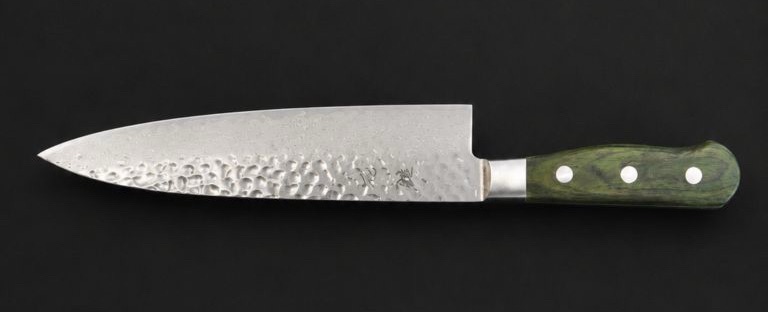
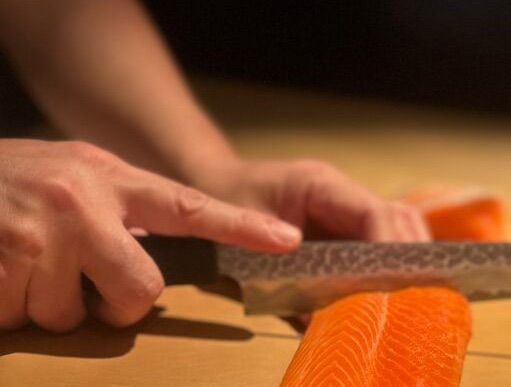
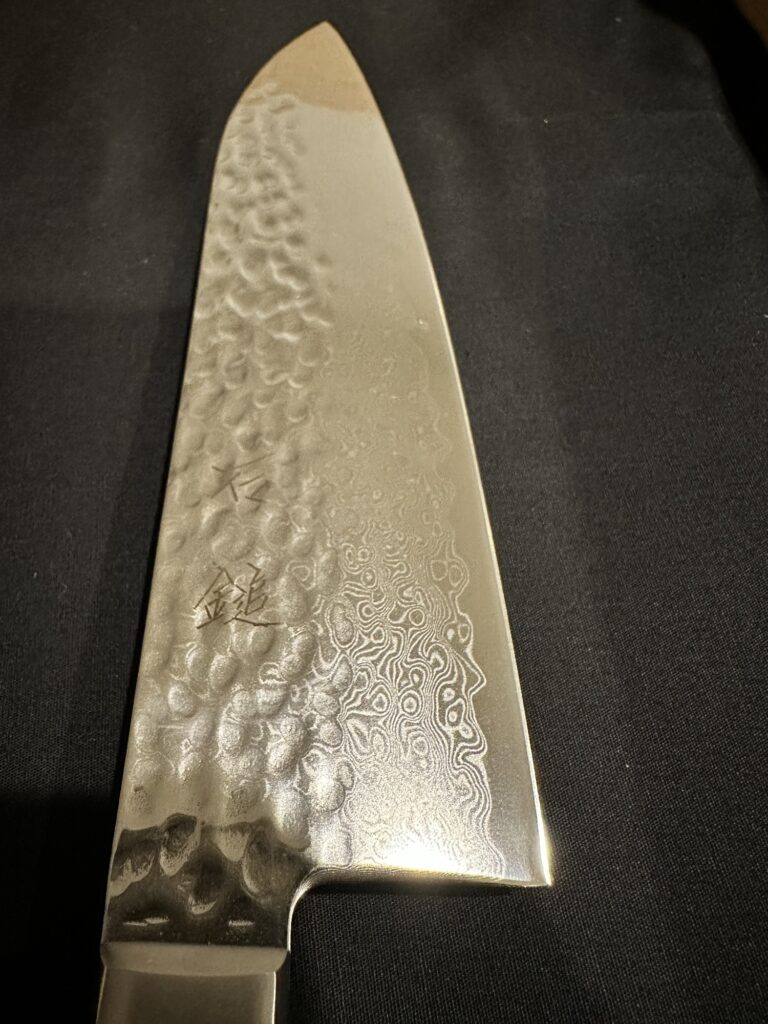
165mm Santoku A10 Damascus Black & Red Octagonal Handle
I also wondered whether there was a particular measurement where a Japanese knife officially becomes thin.
There really isn’t one simple number.
A measurement such as 2 mm at the spine can be useful, but where that measurement is taken matters. A blade may also become progressively thinner towards the tip.
Two knives with similar spine thickness can therefore feel very different if their geometry behind the edge is different.
The purpose of the knife matters too.
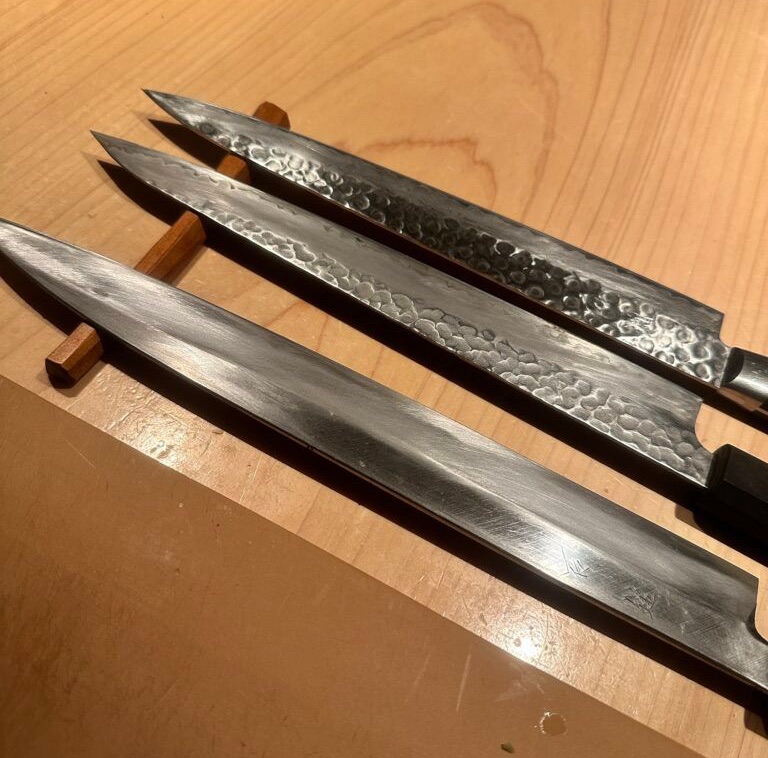
A gyuto and a deba should not have the same geometry simply because thinner sounds better. Japanese knives developed into different shapes because they were designed for different jobs.
👉 INTERNAL LINK: Link to “Japanese Knife Names” — the article about the origins of different Japanese knife types.
Japanese Knife Thickness: Thinner Is Not Always Better
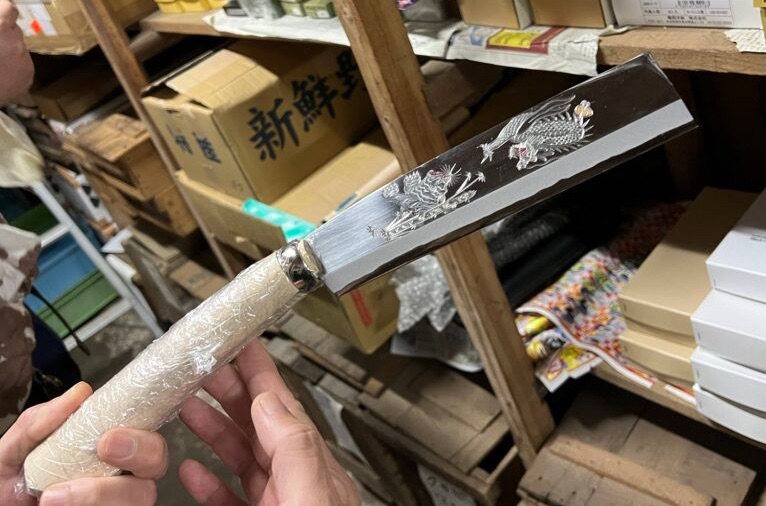
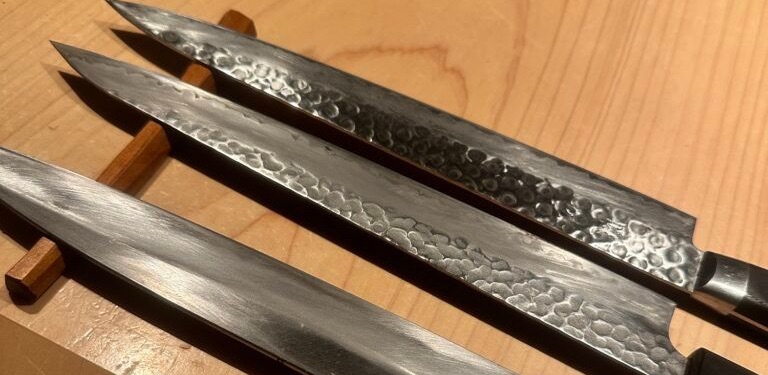
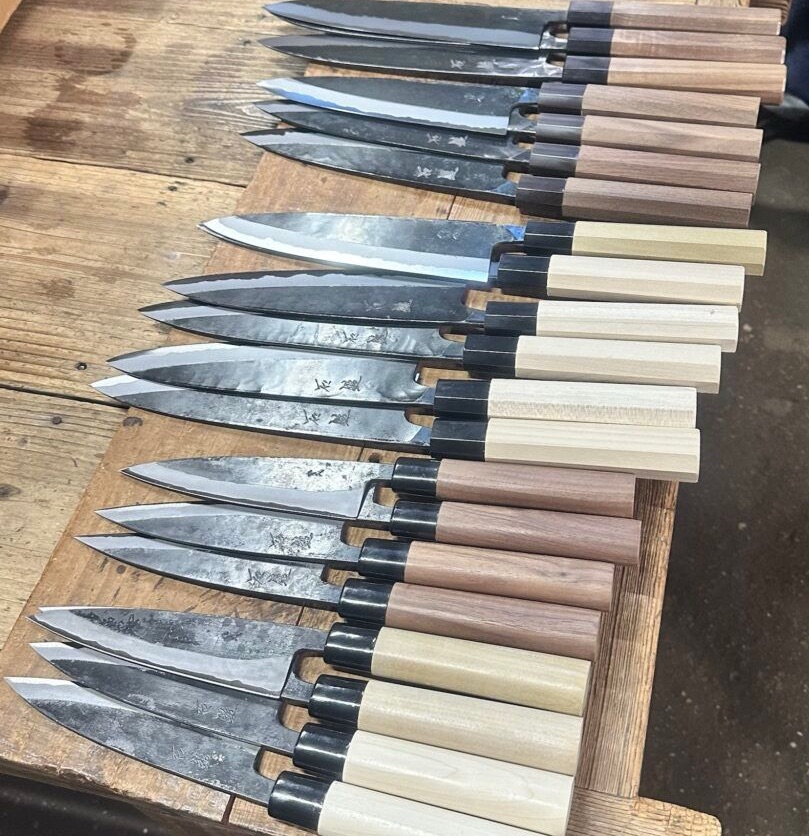
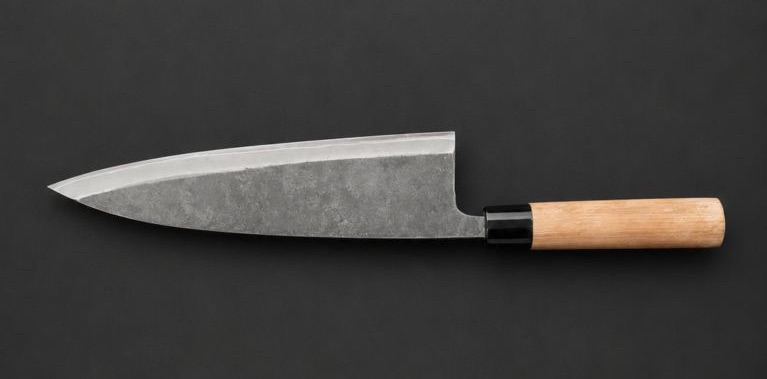
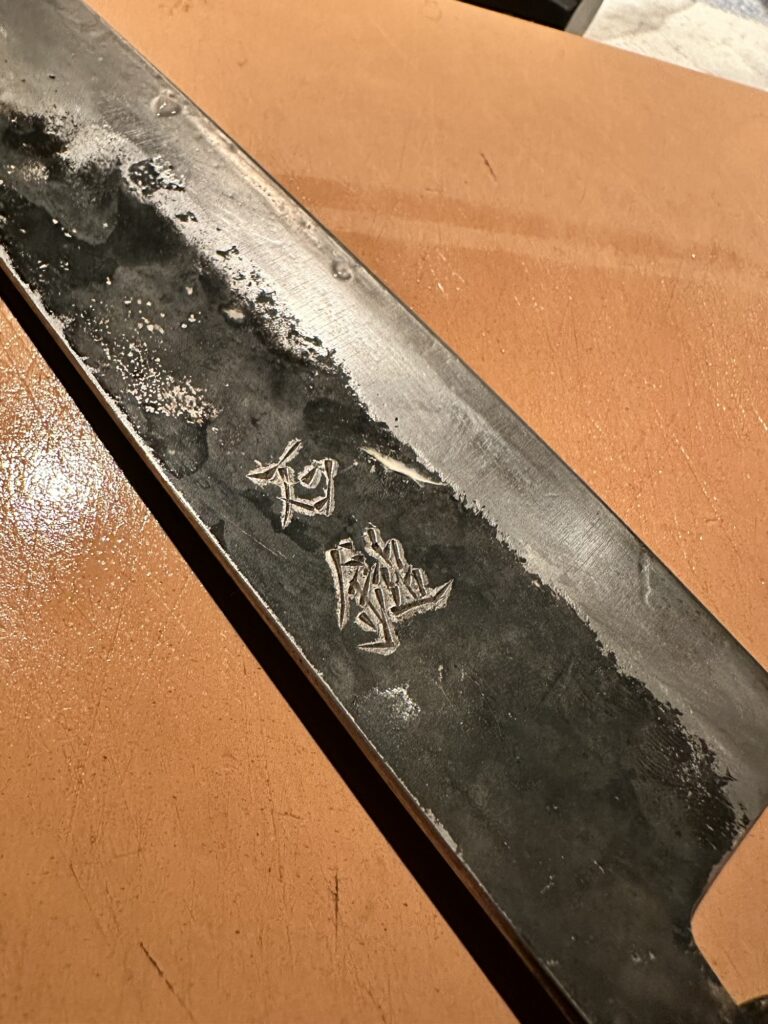
Ishizuchi Kanamono Manufactory
This was probably the most important thing I learned.
A thin blade can reduce resistance through food, but that does not mean every knife should be made as thin as possible.
Thickness also provides strength and stiffness.
A deba, for example, needs enough strength for working around fish bones and joints. Making it extremely thin would defeat part of the purpose of the knife.
So instead of asking only:
“How thin is this knife?”
I think the better question is:
“Is this knife thin enough for its purpose while still having the strength it needs?”
👉 INTERNAL LINK: Link to “Kinkō 均衡” — the article about Japanese knife balance and how a knife feels in use.
Steel Is Important — But Geometry Matters Too
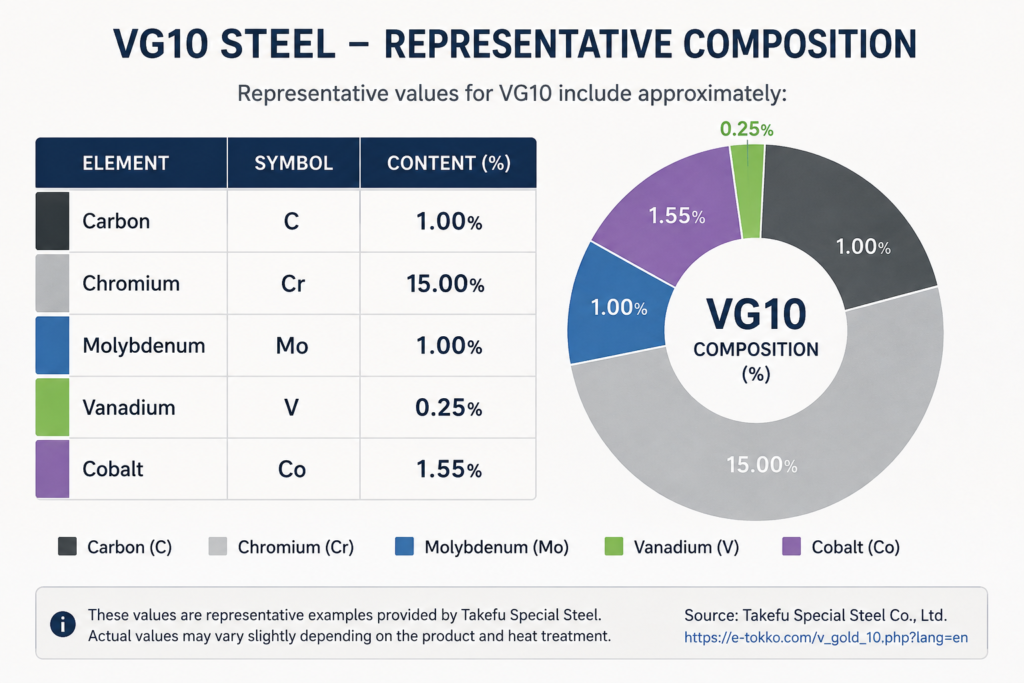
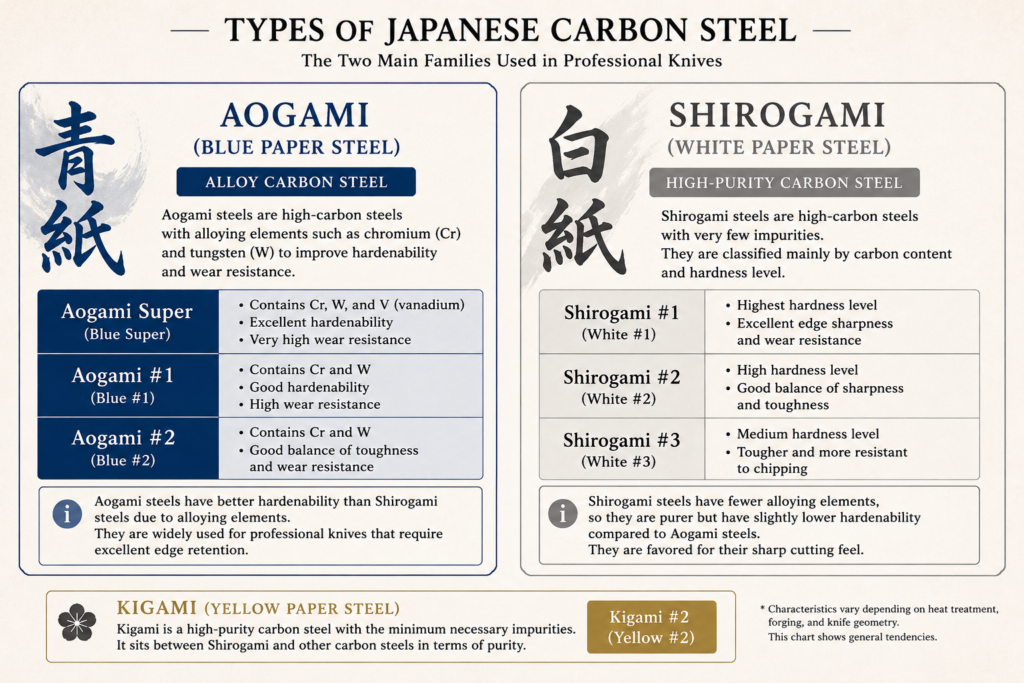
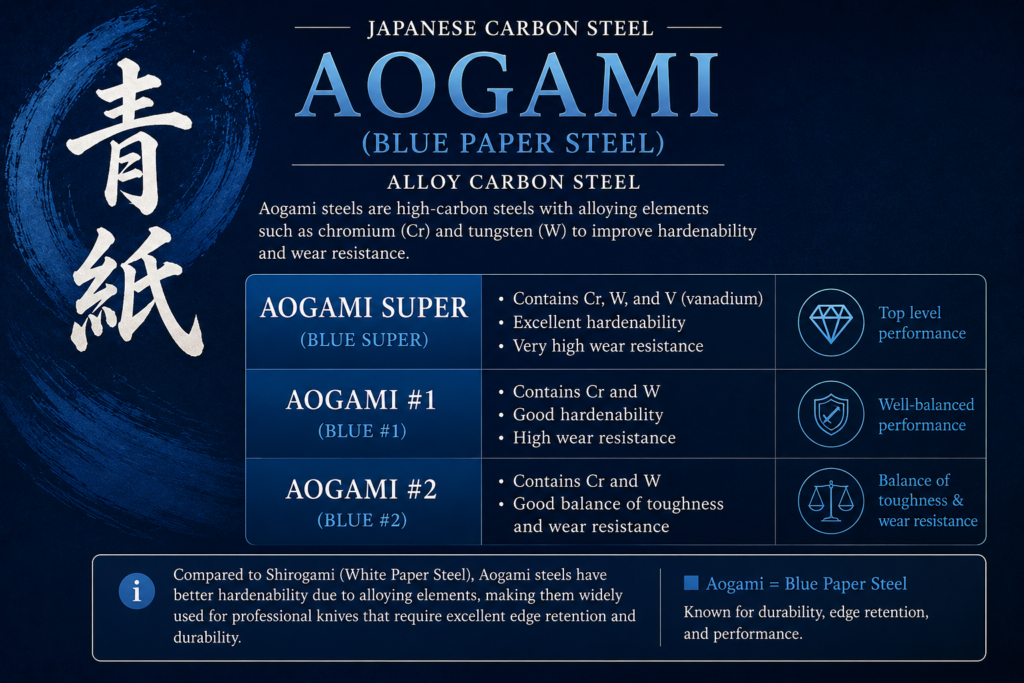
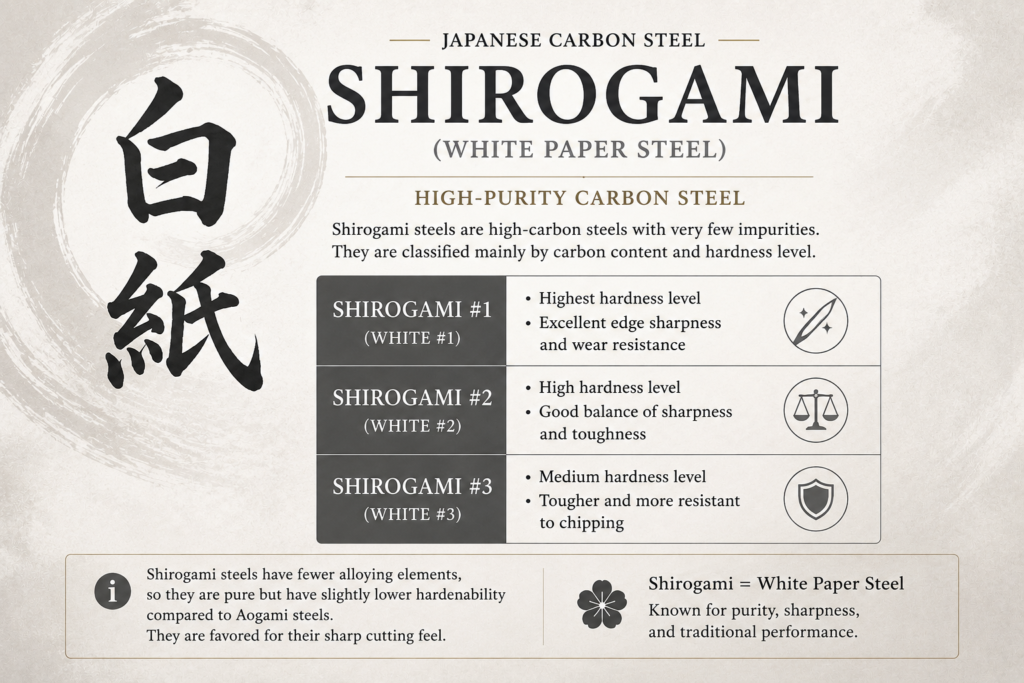
Recently, I have been researching steels such as Ginsan, VG10 and SG2.
Steel is obviously important, but looking into Japanese knife thickness reminded me that the steel name alone cannot tell us how a knife will actually feel when cutting.
Steel matters. Heat treatment matters. Sharpening matters. Blade geometry matters.
They all work together.
This is why two knives made from the same steel can still feel surprisingly different.
For me as a chef, the final test has always been much simpler than the specifications:
How does it actually feel when I cut food?
👉 INTERNAL LINK: Link to the SG2 article — explaining SG2 steel and its characteristics.
I Have Actually Made My Own Knives Feel Thicker
This part is not something I only learned while researching this article.
I have actually experienced it myself — partly because I can be a little lazy with sharpening.
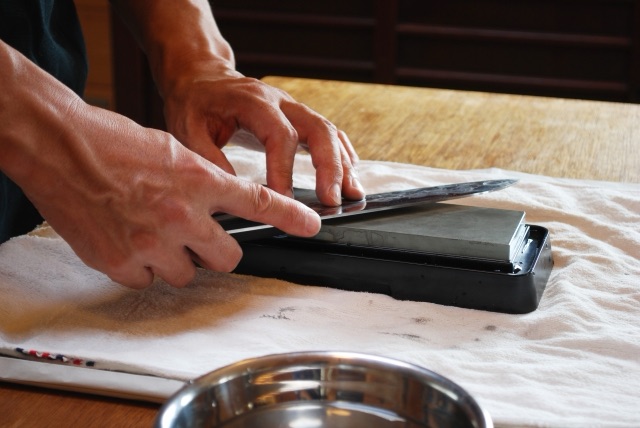
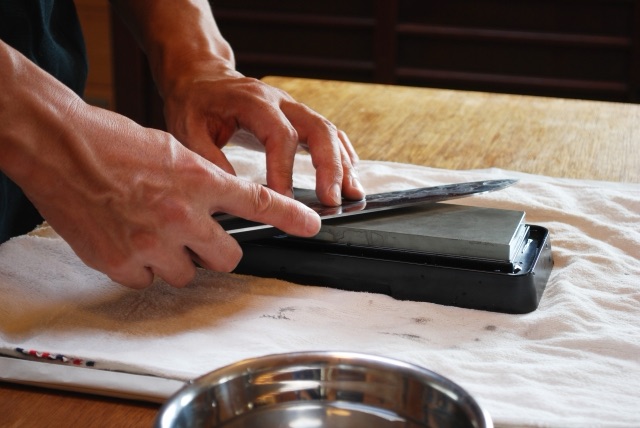
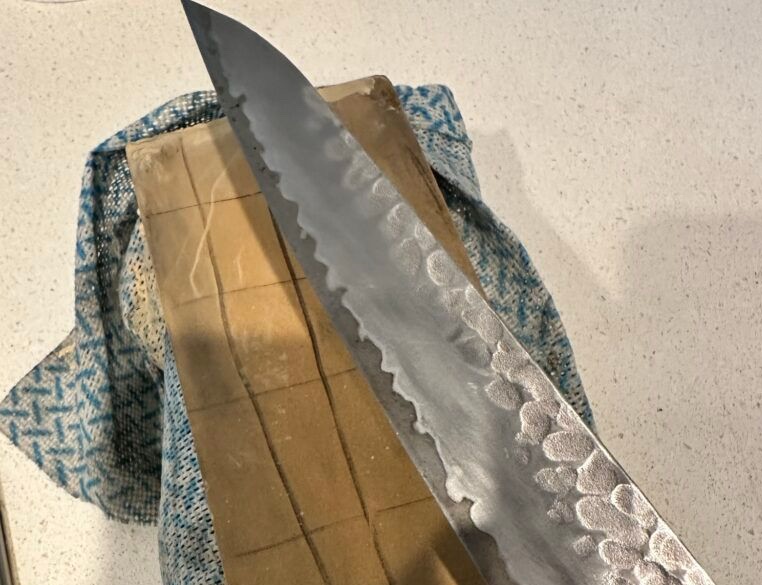
If I keep sharpening a knife at too steep an angle, I can still create a sharp edge. But over time, the geometry around the edge can become thicker.
The knife may feel sharp when I test the edge, yet it does not pass through food as easily as it once did.
I have also made a similar mistake by continuing to use a whetstone after it had become dished instead of flattening it properly.
I knew I should flatten it.
Sometimes I just didn’t.
That uneven stone affected the way I was sharpening, and eventually the knife did not feel the same.
So when I read about thickness behind the edge and blade geometry, I thought:
I’ve done this to my own knives.
That experience taught me something important. Sharpening is not only about making the very edge sharp. Maintaining the geometry behind the edge matters too.
These days, I pay much more attention to keeping my stones flat and to the angle I am sharpening at.
Sometimes the best lessons come from doing it wrong yourself.
👉 INTERNAL LINK: Link to “真価” — the article about sharpening and bringing out the true potential of a Japanese knife.
So, Do I Think Thinner Japanese Knives Are Better?
After looking into all of this, I wanted to give myself a clear answer.
Is a thinner knife a better knife?
My answer is:
Not always. But for most of the everyday kitchen knives I use, I still prefer a thinner blade.
Before I understood the geometry, I already knew from experience that thinner knives often felt easier to use. They entered ingredients more smoothly and required less effort.
Now I understand more about why.
Of course, I would not want a deba to be as thin as a light vegetable knife. Different knives need different levels of strength, weight and stiffness.
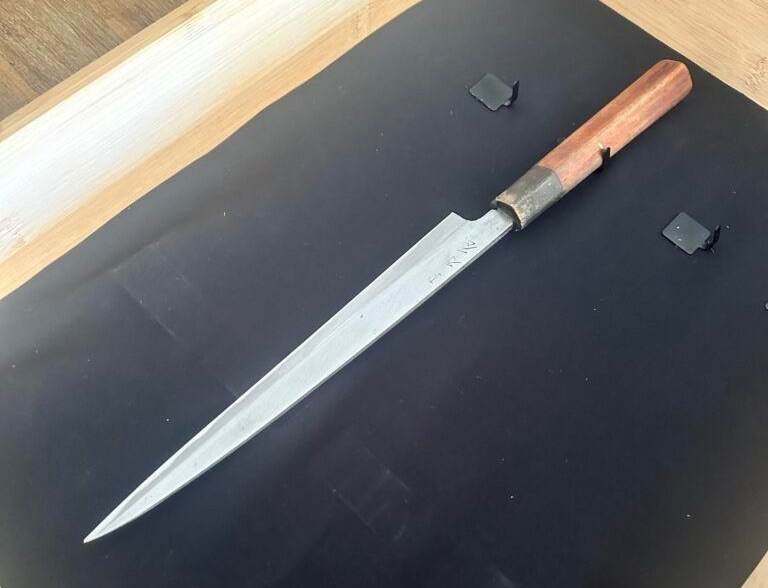
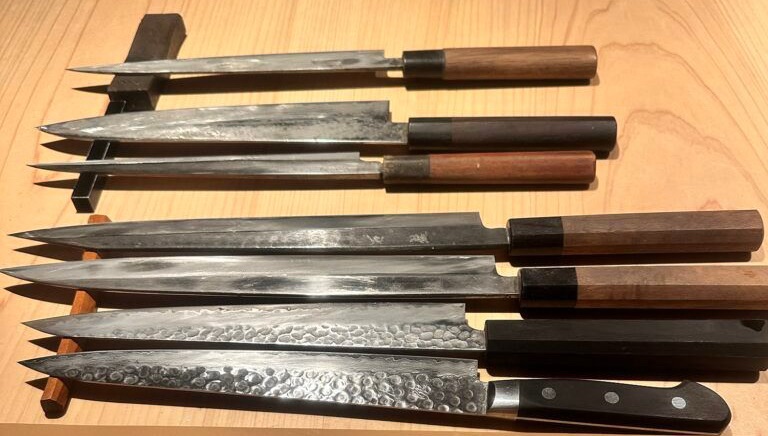
But if I am choosing a gyuto, santoku or sujihiki for everyday work, I personally prefer a blade that feels thin and moves through food with as little resistance as possible.
So after more than 25 years using knives professionally, this is my conclusion:
Thin does not automatically mean better. But if a knife can keep the strength required for its job, I prefer it thin.
Maybe my hands already knew that long before I understood the reason.
I just never stopped to ask why.
👉 Explore more:
https://blog.asaoyayaichi.com.au
👉 Visit our online store:
https://asaoyayaichi.com.au
Thank you for reading, and I hope to see you again in the next story.