A Japanese knife can become much more than just a tool.
After more than 25 years working as a professional chef in Japan and Australia, I have used many knives. Some have been sharpened countless times. Some have developed scratches, sharpening marks, patina, and other signs of daily work.
Over time, those imperfections can become part of what makes a knife feel personal.
But recently, a chef I work with reminded me that there is another way to love a knife.
He had bought a new knife and was genuinely disappointed when he noticed a small scratch on the blade. The scratch had absolutely no effect on its performance, but that wasn’t the point.
He wanted to keep his knife beautiful.
It made me think that perhaps there are two very different ways to develop Japanese Knife Attachment.
One is to let a knife change through years of use.
The other is to protect its beauty for as long as possible.
And I think both are completely valid.
1. Japanese Knife Attachment Can Grow Through Use
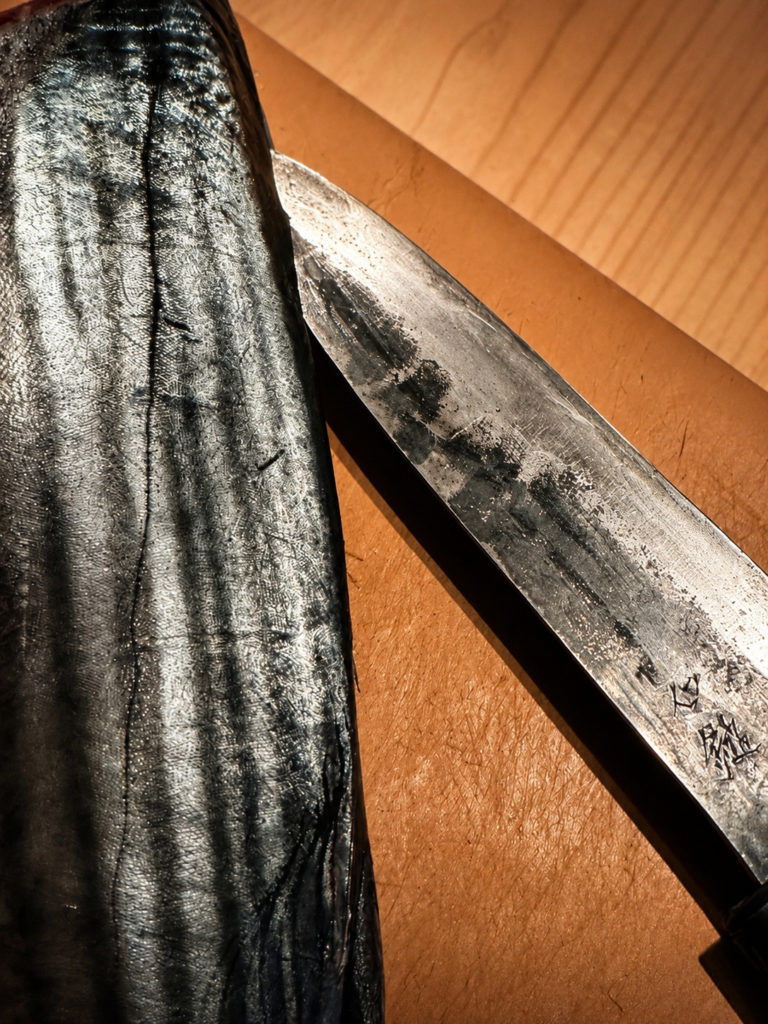
For many professional chefs, a knife becomes personal simply by using it.
You sharpen it. You learn its balance. You understand how much pressure it needs and how the blade reacts to different ingredients.
Eventually, you pick it up without even thinking.
Small scratches appear. The polish changes. Carbon steel may develop a patina. The handle slowly begins to show signs of years of work.
For some knives, I actually enjoy watching this happen.
Those marks aren’t necessarily damage. They can be evidence that the knife has spent years doing exactly what it was made to do.
A working knife doesn’t always need to look new.
👉 INTERNAL LINK: Ancient Patina 古色 | 7 Powerful Truths About Japanese Knife Patina That Even Surprised Me
Sometimes it looks better because it doesn’t.
2. A Small Scratch Can Mean Something Completely Different
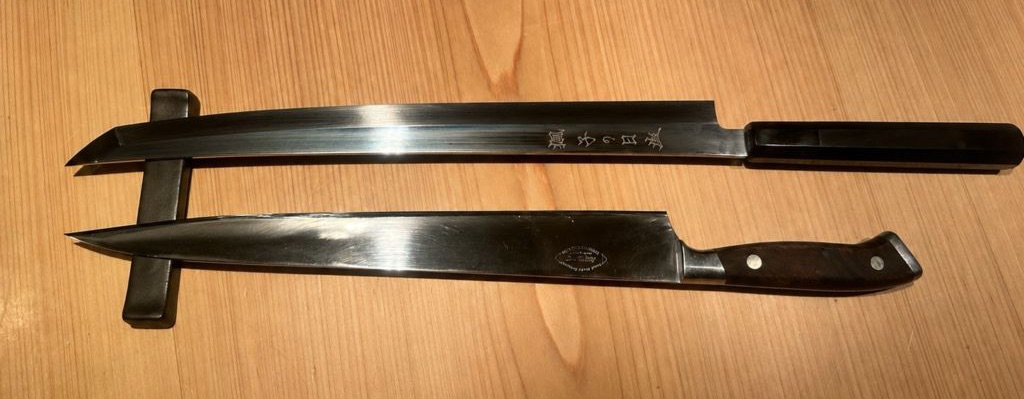
The chef I mentioned earlier showed me the opposite perspective.
His knife still performed exactly the same after the scratch appeared, but emotionally, something had changed.
He had bought something he considered beautiful, and he wanted to preserve that beauty.
I understand that.
Japanese knives aren’t only cutting tools. They can represent craftsmanship, tradition, design, and personal taste.
A polished blade, unusual handle, Damascus pattern, kurouchi finish, or beautiful forging can be the reason someone falls in love with a particular knife.
Telling that person, “It’s just a tool,” misses the point.
There are knives we want to use hard.
And there are knives we want to protect.
3. Patina and Scratches Aren’t the Only Way to Build Character
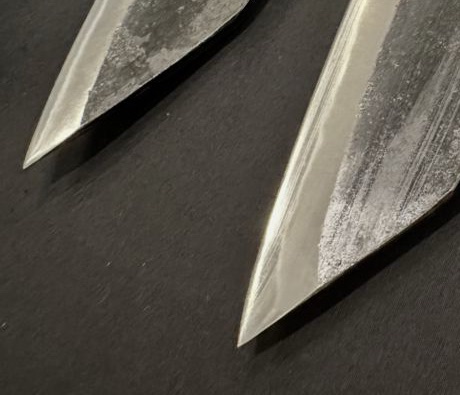
There is a romantic idea that a Japanese knife should become scratched, sharpened, and covered with the signs of years of use.
I like that kind of knife.
But it doesn’t mean every knife needs to age that way.
A carbon steel knife that develops a beautiful patina can be wonderful. A knife that remains incredibly clean and polished after years of careful ownership can also be beautiful.
Both require attention.
One owner may enjoy watching the steel slowly change.
Another may carefully polish and maintain the blade to prevent unnecessary scratches.
The results may look completely different, but both owners are building a relationship with their knives.
That, to me, is part of Japanese Knife Attachment.
4. Your Hand Learns the Knife Too
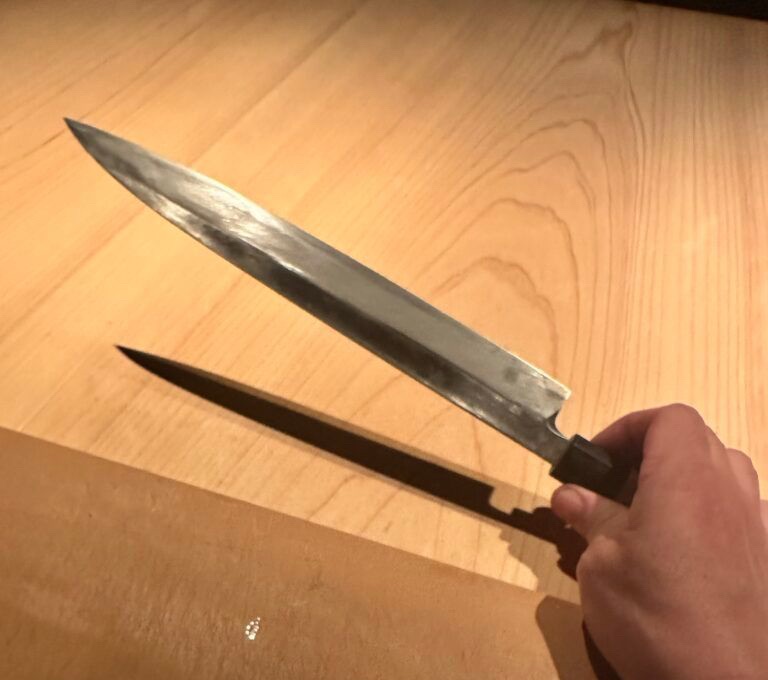
Appearance is only one part of the relationship.
After using the same knife repeatedly, you begin to understand things that specifications alone can’t explain.
You know how the handle sits in your hand. You understand its balance point. You know how the blade moves through fish, meat, and vegetables.
👉 INTERNAL LINK: Japanese Knife Handles | 7 Powerful Reasons the Right Handle Matters
You may also notice that two knives that appear similar on paper can feel completely different when cutting.
Steel, hardness, geometry, sharpening, weight, and balance all contribute to that feeling, but the person holding the knife matters too.
👉 INTERNAL LINK: 切味 Kireaji | 7 Surprising Truths About What Makes a Japanese Knife Feel Sharp
Eventually, your hand learns the knife almost as much as you learn how to use it.
That familiarity takes time.
5. Sharpening Slowly Makes the Knife Your Own
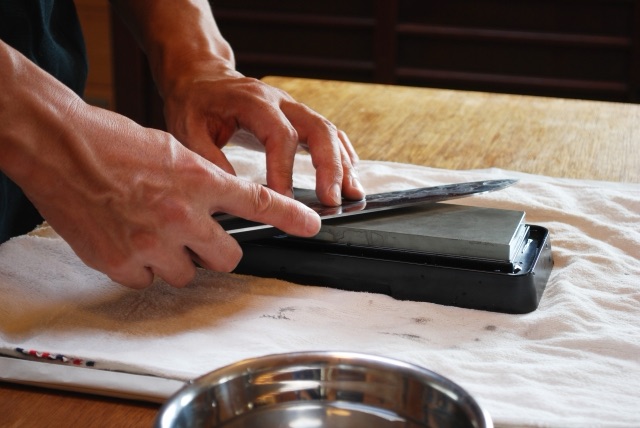
Sharpening is another important part of this process.
Every time you sharpen a knife, you make a tiny change to the blade.
After years of sharpening, a professional chef’s knife may look very different from the same model when it was new.
Personally, I like that with my working knives.
The blade carries the history of cooking, sharpening, maintenance, mistakes, corrections, and experience.
Keeping your sharpening stones flat is also part of maintaining that relationship with your knife.
👉 INTERNAL LINK: Why Flattening Your Whetstone Matters
A well-used knife develops a history.
And that history belongs to the person who used it.
6. Some Knives Are Tools — Others Are Showpieces
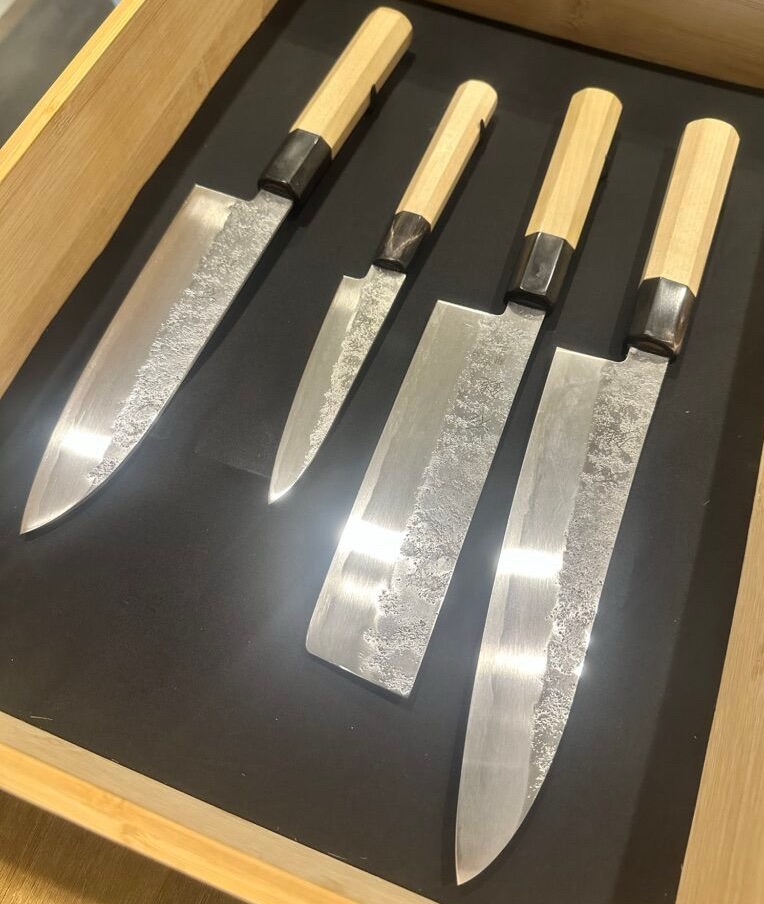
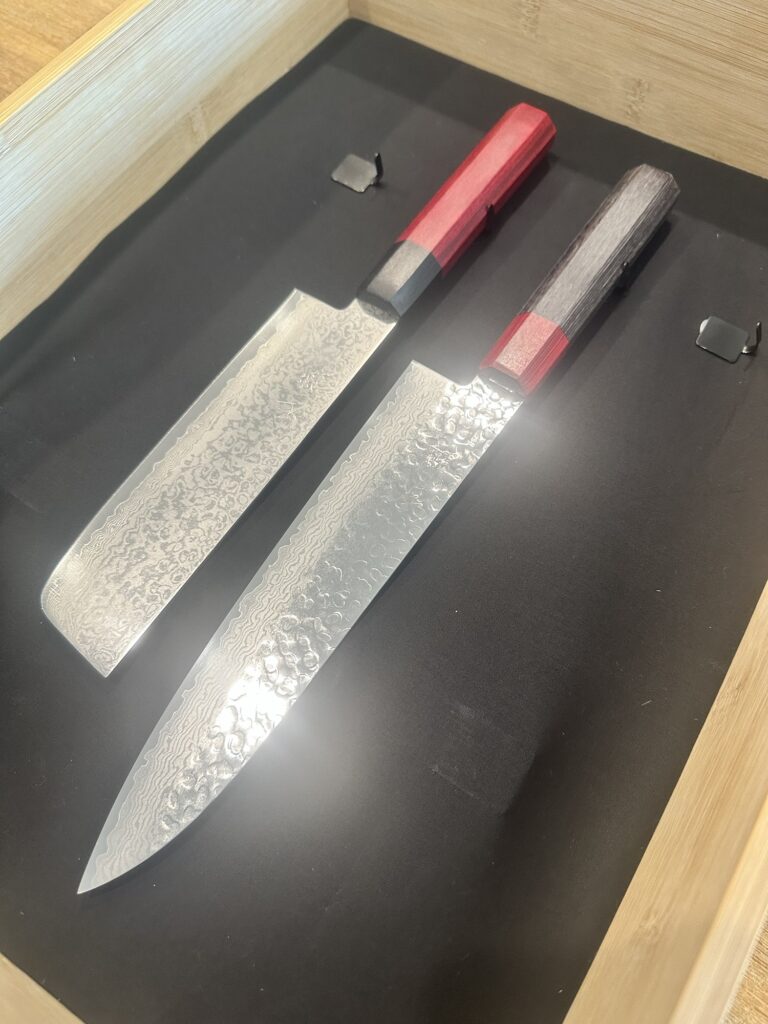
Ginsan Nashiji Forged Magnolia Octagonal Handle Buffalo Horn
This distinction has become more interesting to me recently.
There are knives I want to use without worrying too much about cosmetic changes.
They are working knives.
Their purpose is performance. If normal use creates scratches, sharpening marks, or patina, I can accept that.
But there are other knives that make you stop and look at them.
Beautiful polishing. An unusual handle. Damascus patterns. Traditional finishes. Exceptional craftsmanship.
Those knives can create a completely different feeling.
A handmade Japanese knife can also become more personal because no two handcrafted knives are ever perfectly identical.
👉 INTERNAL LINK: The True Value of Japanese Knives | 7 Reasons They Are Worth the Investment
Perhaps that is why some knives eventually become difficult to replace, even when newer or more expensive knives are available.
7. My Next Japanese Knife May Be an Experiment
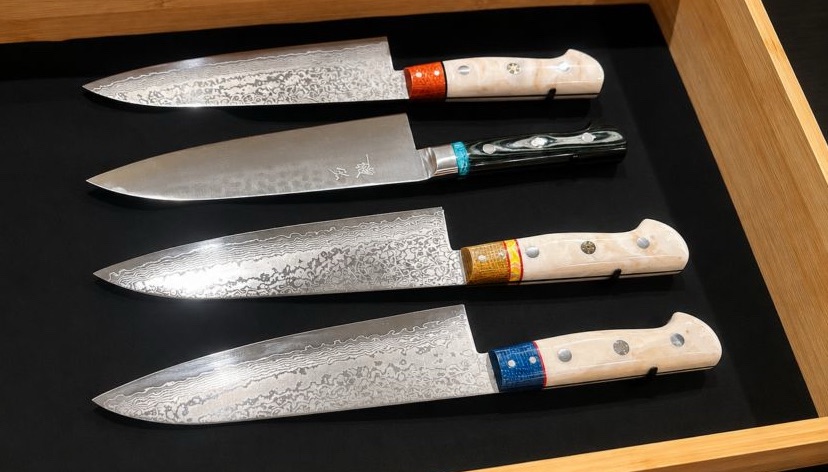
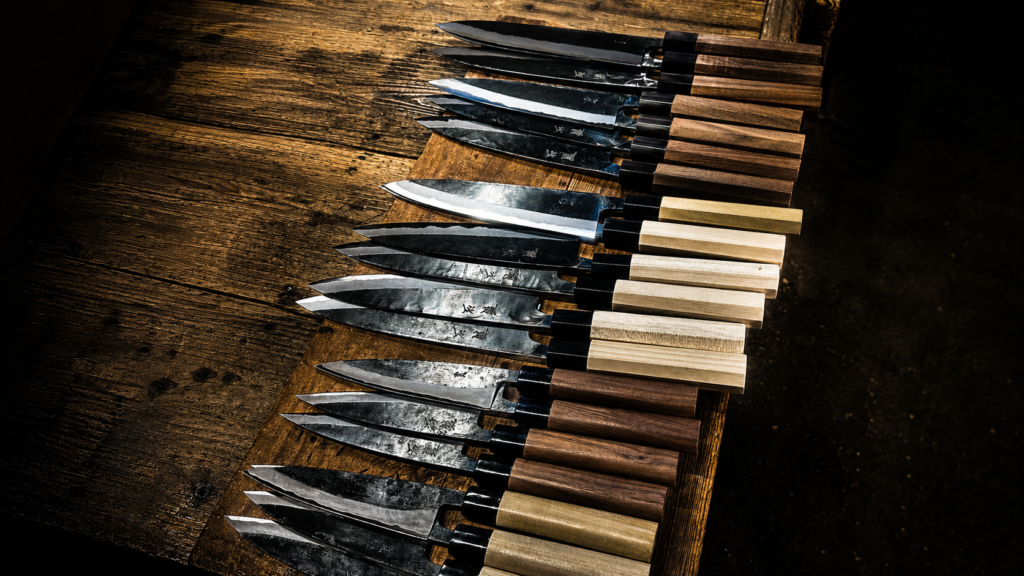
Knife Collection
If I buy another knife specifically as a showpiece, I want to try something I haven’t really done before.
I want to see how carefully I can preserve it.
Not by putting it in a box and never using it.
I still want to use it.
But I would pay much more attention to how I clean it, dry it, sharpen it, store it, and protect the blade from unnecessary scratches.
Instead of allowing time to naturally transform the knife, I would see how much of its original beauty I could preserve.
In a way, that would still be “raising” the knife.
Just differently.
Maybe after five or ten years, it would tell a completely different story from the working knives I have used throughout my career.
I think both stories would be worth telling.
There Is No Single Right Way to Love a Japanese Knife
Two people can own similar Japanese knives and develop completely different relationships with them.
One may proudly accept the scratches, sharpening marks, patina, and years of professional use.
Another may carefully protect the polish and feel disappointed by even the smallest scratch.
Neither is wrong.
A Japanese knife doesn’t become personal simply because it gets old.
It becomes personal because of the time, care, work, and attention you give it.
For some people, beauty comes from allowing a knife to change.
For others, beauty comes from trying to preserve it.
Maybe Aichaku — 愛着 is found somewhere between the two.
And perhaps the most special Japanese knife isn’t always the newest or most expensive one.
It’s the one you wouldn’t want to replace.
➖➖➖➖➖➖
🇯🇵 Authentic handcrafted Tosa Japanese knives, sourced directly from Japan.
I work directly with Ishizuchi Kanamono Seisakusho to bring genuine handcrafted Tosa knives to Australia.
With over 25 years as a professional chef in Japan and Australia, I only offer knives that I genuinely trust and use.
➖➖➖➖➖➖
What you’ll find here:
✔ Authentic handcrafted Tosa knives
✔ Behind-the-scenes from Japanese blacksmiths
✔ Knife care & sharpening tips
✔ Japanese knife education for beginners
✔ Real experiences from a chef who uses knives every day
Every knife has a story.
Every handle is unique.
Every blade is made to be used—not just admired.
Whether you’re a home cook, a professional chef, or simply appreciate Japanese craftsmanship, I hope you’ll discover something that inspires you.
➖➖➖➖➖➖
🌏 Australia-wide shipping
🔗 Shop authentic Tosa knives:
www.asaoyayaichi.com.au
📩 Feel free to DM me if you have any questions or need help choosing the right knife.
➖➖➖➖➖➖
Explore the full article on our blog:
👉 https://blog.asaoyayaichi.com.au
Discover our handcrafted Japanese knives: