For most of my 25 years working as a professional chef, I honestly did not care much about Japanese knife steel.
I knew my knives felt different, but I rarely thought about the reason. Some held their edge longer. Some could lose their initial sharpness but still somehow get me through a busy service. Others became frustrating once the edge started to fade. Some were easy to sharpen, while others required more patience. And, of course, some rusted much more easily than others.
I noticed all of these differences long before I understood the steels behind them.
It was only after starting Asaoya Yaichi and learning more seriously about Japanese knives that those years of experience began to connect with what I was learning about steel.
If you are looking for Japanese knives in Australia, understanding these differences can make choosing your next knife much easier.
👉 Visit the Asaoya Yaichi online store to explore our Japanese knives in Australia.
Japanese Knife Steel Was Never My Priority in the Kitchen
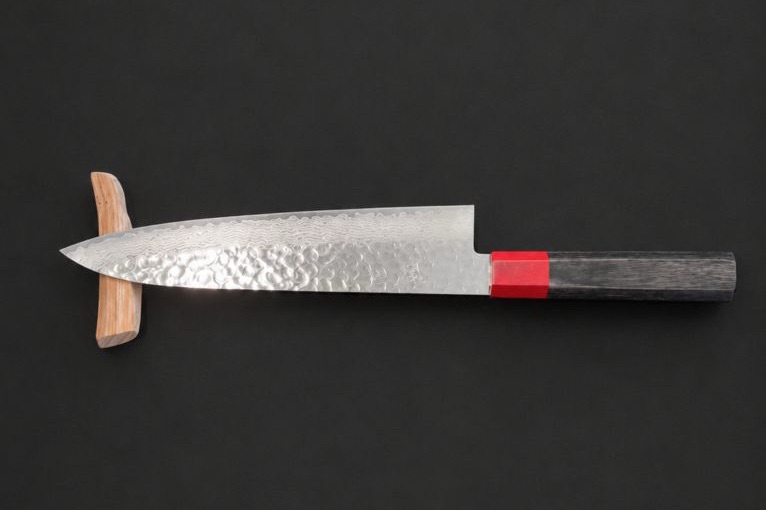
165mm Santoku A10 Damascus Black & Red Octagonal Handle
As a working chef, I was interested in practical results.
Does it cut well? How long can I use it before sharpening? Can I keep using it when the edge starts to fade? How quickly can I bring the edge back?
I did not stand in the kitchen thinking about carbon percentages or steel specifications.
Looking back, however, I realise I had been learning about Japanese knife steel through my hands for years without knowing it.
👉 INTERNAL LINK: Hand-Forged vs Machine-Made Knives
Learning more about knife making also taught me that steel is only part of the story. Heat treatment, blade geometry, sharpening and construction all influence how a knife performs.
Learning Japanese Knife Steel Finally Explained My Preferences
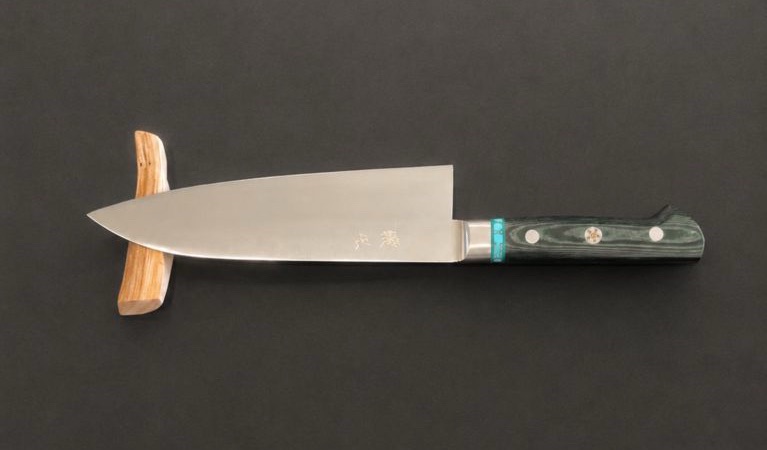
180mm Santoku Aogami #2 Green Micarta Handle with Turquoise Spacer
Once I started selling Japanese knives, I needed to understand what I was actually selling.
That changed the way I looked at my own knives.
Suddenly, experiences from many years in professional kitchens started making sense. Today I know that I personally enjoy using Aogami #2 and Aogami Super. They suit the way I work and, importantly, the way I sharpen.
That does not mean I believe they are the best steels for everyone.
👉 INTERNAL LINK: Is an Expensive Japanese Knife Really Worth It?
Specifications and price can tell us something about a knife, but they cannot completely describe what it will feel like after months or years of real kitchen use.
Choosing Japanese Knife Steel for Japanese Knives in Australia
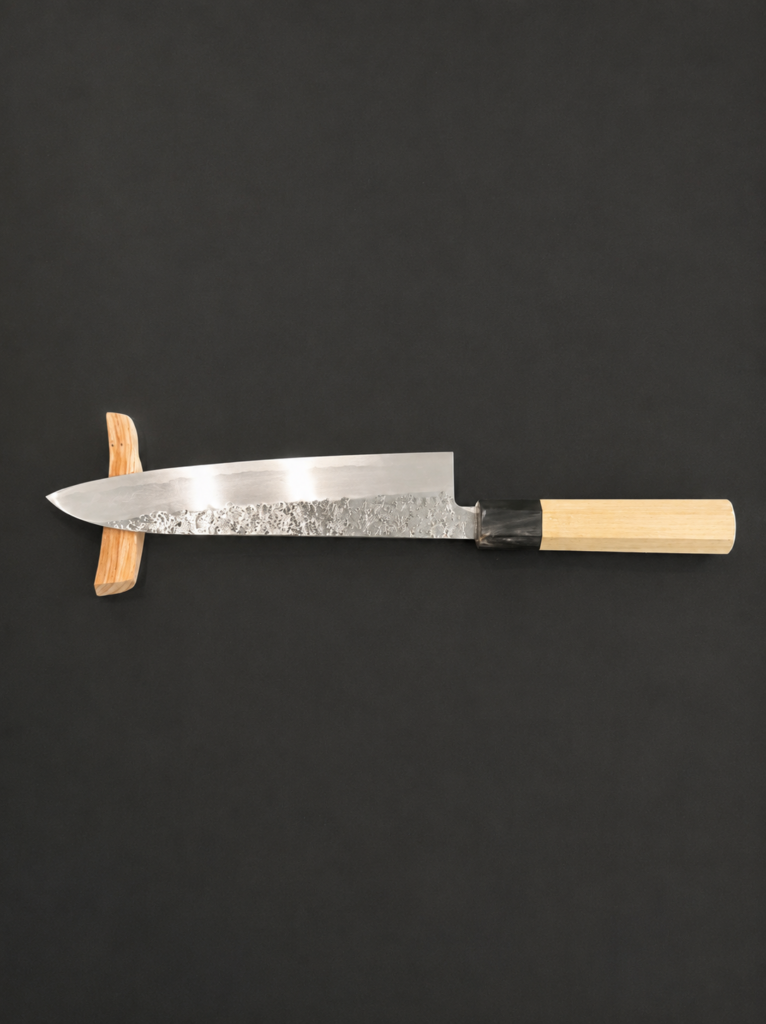
210mm Gyuto Ginsan Nashiji Forged Magnolia Octagonal Handle Buffalo Horn Ferrule
This becomes particularly important when choosing Japanese knives in Australia.
As a professional chef, I use my knives constantly. With carbon steel, I wash the blade, dry it and continue using it regularly. Patina develops, but personally I have not found rust particularly difficult to manage during everyday professional use.
Home use can be very different.
You might use a carbon-steel knife tonight and then not touch it again for several days. If moisture remains on the blade during that time, rust can appear surprisingly quickly.
That is one reason stainless steels such as VG10 or Ginsan can make a lot of sense for people who want a Japanese knife without constantly thinking about maintenance.
👉 INTERNAL LINK: Japanese Knife Rust Removal: 5 Powerful Reasons I Keep a Sabitoru Fine in My Knife Kit
Stainless does not mean completely rust-proof, but it is generally more forgiving.
This is also why there is no single answer when someone asks me which steel they should choose.
Japanese Knife Steel and What I Feel at the Sharpening Stone
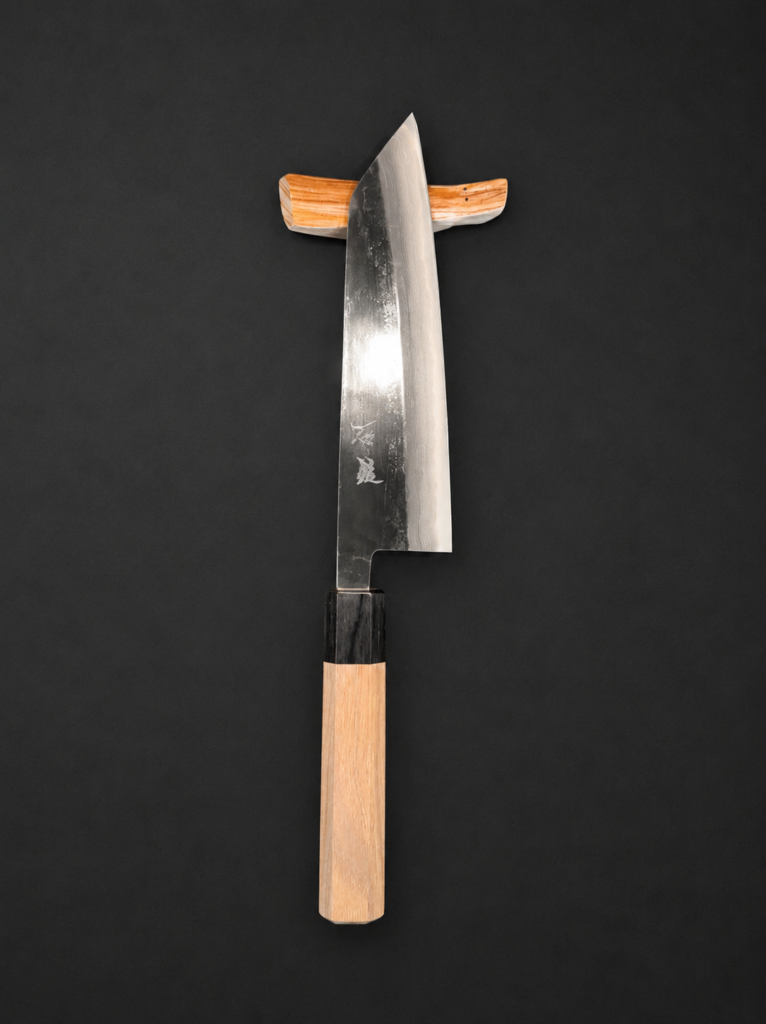
180mm Kiritsuke Aogami #2 Kurouchi Walnut Octagonal Handle
There is another difference I have noticed over the years: sharpening.
This is my personal experience rather than a rule for every knife, but when some stainless knives become very dull, I find they can become frustrating.
I can usually bring them back to a reasonably sharp edge without too much trouble. But getting that edge back to the extremely sharp condition I personally want can sometimes require patience.
With Aogami carbon steels, I often feel that I can bring the edge back more naturally.
Of course, this depends on much more than simply whether a knife is carbon or stainless. Hardness, heat treatment, blade geometry and sharpening stones all matter.
That is why I prefer talking about what I have actually experienced rather than saying one steel is universally better.
👉 INTERNAL LINK: 切付 | Japanese Knife for Chefs: 1 Powerful Choice After 25 Years in Professional Kitchens
Japanese Knives Australia: Steel Is Only the Beginning
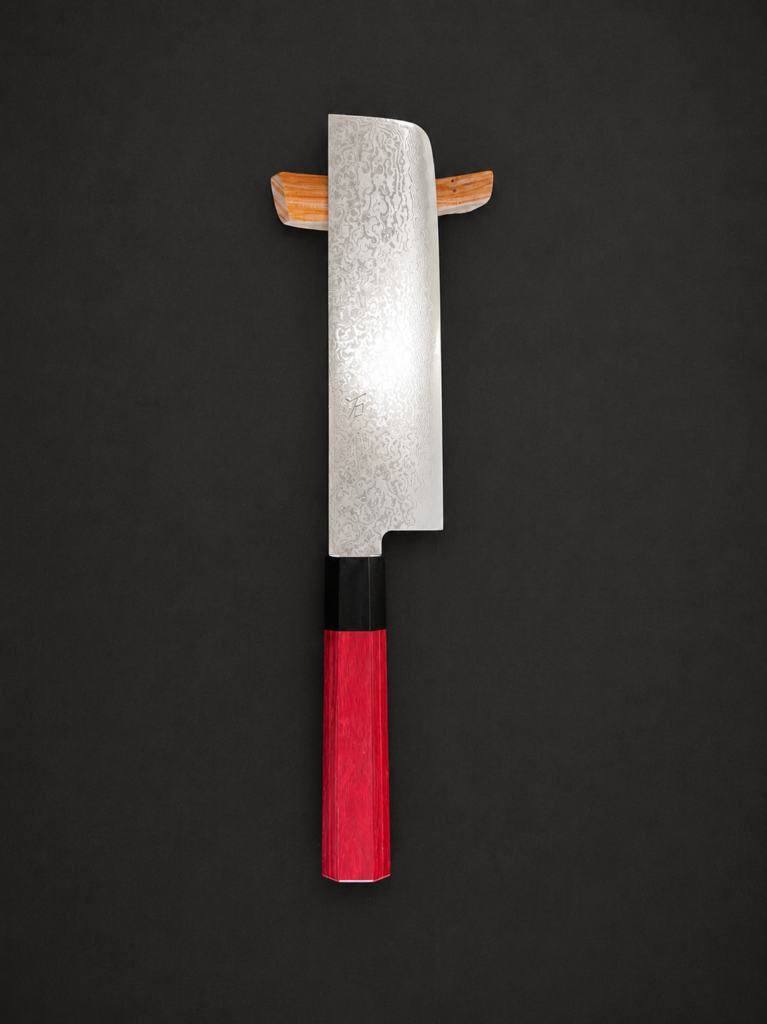
165mm Usuba A8 Hammered Damascus Black & Red Octagonal Handle
If you are searching for Japanese knives in Australia, I would not start by asking, “What is the best steel?”
I would start with different questions.
How often do you cook? Do you sharpen your own knives? Are you comfortable drying a carbon-steel blade immediately after use? Do you want something easy to maintain? What shape and length actually suit the food you prepare?
Understanding Japanese knife steel helps answer those questions, but steel should not become the only reason you choose a knife.
I recently wrote about the Japanese knives I would personally choose after more than 25 years in professional kitchens. That article looks beyond steel and considers the complete knife from the perspective of actual use.
👉 IMPORTANT INTERNAL LINK: Japanese Knives Australia: 5 Powerful Choices I Would Make After 25 Years as a Professional Chef
For me, that is the real value of finally learning about steel.
Twenty-five years ago, I could tell you whether I liked a knife. I just could not always explain why.
Today, I understand much better why Aogami #2 and Aogami Super suit me, why stainless steel can be a better choice for many people, and why the most impressive steel name does not automatically make the best knife for the person holding it.
If you are choosing Japanese knives in Australia, learn about the steel—but choose the knife according to the way you actually cook.
👉 Explore more:
https://blog.asaoyayaichi.com.au
👉 Visit our online store:
https://asaoyayaichi.com.au
Thank you for reading, and I hope to see you again in the next story.