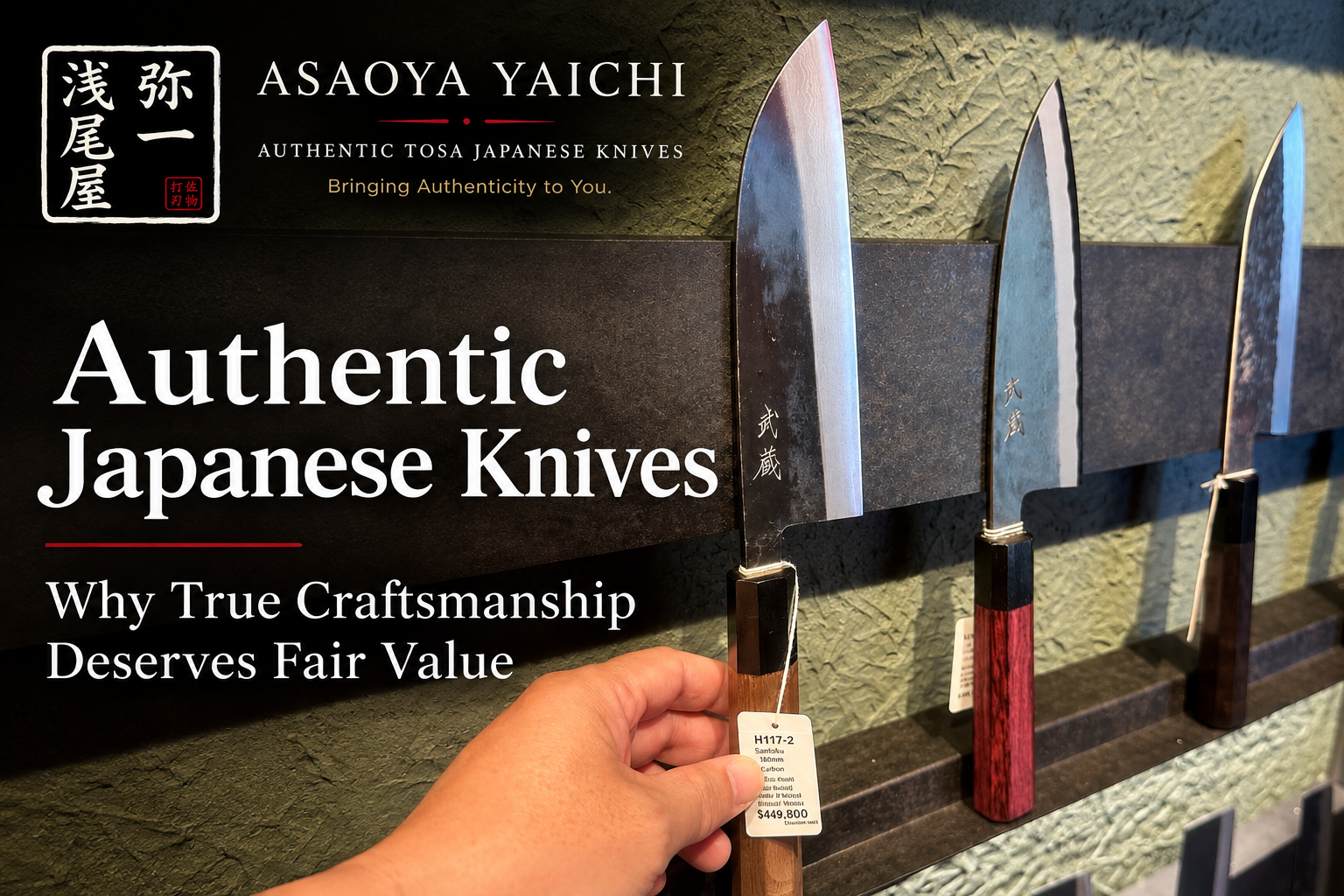
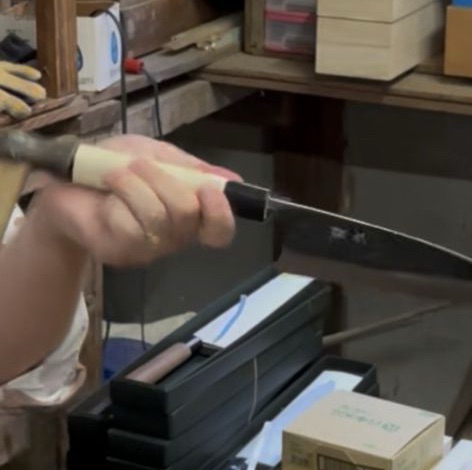
Authentic Japanese Knives are often discussed in terms of sharpness, steel, performance and craftsmanship. But behind every genuine handmade knife is something that is much harder to see: the years of knowledge, experience and dedication required to make it.
Price matters. I understand that completely. A more affordable knife can make Japanese knives accessible to more people, especially those buying their first serious kitchen knife. There is nothing wrong with offering good value, and there is nothing wrong with occasional sales or promotions.
But I believe there is an important difference between making a good knife more accessible and allowing genuine craftsmanship to become a permanent race toward the lowest possible price.
At Asaoya Yaichi, that distinction matters to me.
👉 Visit our online store:
https://asaoyayaichi.com.au
Authentic Japanese Knives Are More Than Products
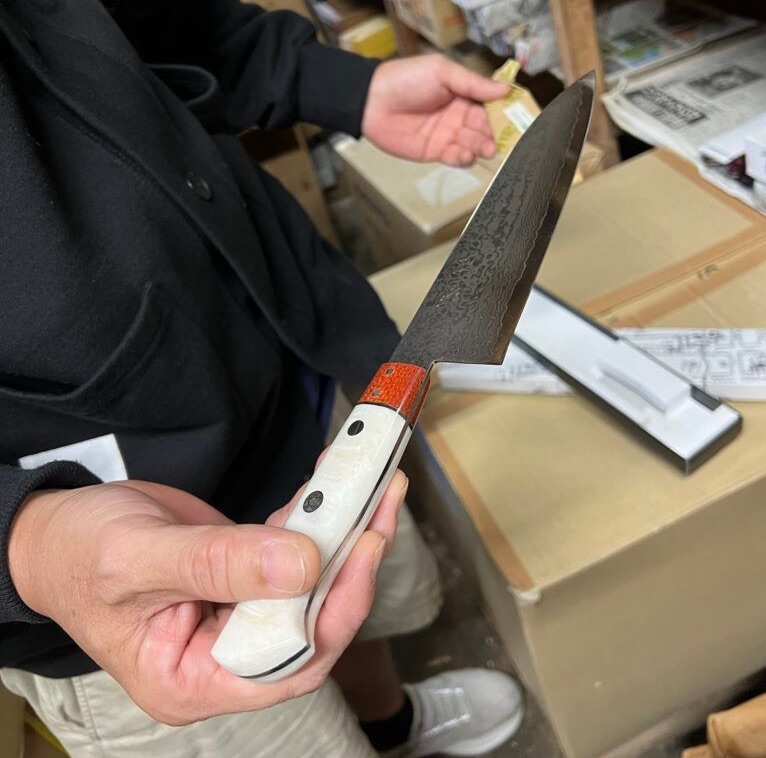
180mm Santoku VG10N 33 Layer Damascus Green Marble Handle Rainbow Spacer Orange
When we pick up a handmade Japanese knife, we see the finished blade. We do not immediately see the years it took the craftsman to develop the skills required to make it.
Forging, heat treatment, grinding, sharpening and finishing all require experience. The final knife represents not only materials and labour, but knowledge passed down and refined over generations.
That is why I believe Authentic Japanese Knives should be valued for more than their specifications.
👉 INTERNAL LINK: “Hand-Forged vs Machine-Made Japanese Knives”
This does not mean that an expensive knife is automatically a better knife. I have worked in professional kitchens for more than 25 years, and I know very well that price alone does not determine how useful a knife will be.
👉 INTERNAL LINK: “Is an Expensive Japanese Knife Really Worth It?”
But there is a difference between questioning whether a knife is worth its price and expecting genuine craftsmanship to continually become cheaper.
Fair Value Does Not Mean Never Having a Sale
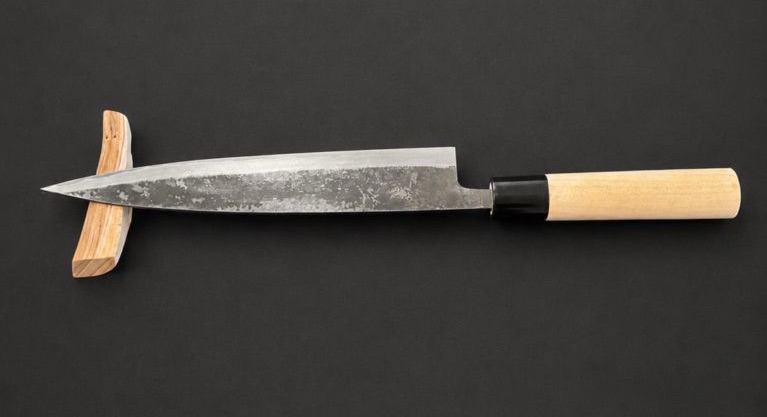
210mm Sujihiki Aogami #2 Kurouchi Magnolia Handle
I think this distinction is important.
A seasonal promotion, special offer or occasional discount can help someone experience a good Japanese knife for the first time. A retailer may choose to reduce its own margin for many different reasons.
That does not change the underlying value of the craftsmanship.
What concerns me is not discounting itself. It is the idea that authentic handmade products should always compete by becoming cheaper than the next seller.
If price becomes the main battlefield, eventually someone in the chain has to absorb that pressure.
And I do not want that pressure to continually move towards the people actually making the knives.
Authentic Japanese Knives Exist Because Craftsmen Still Make Them
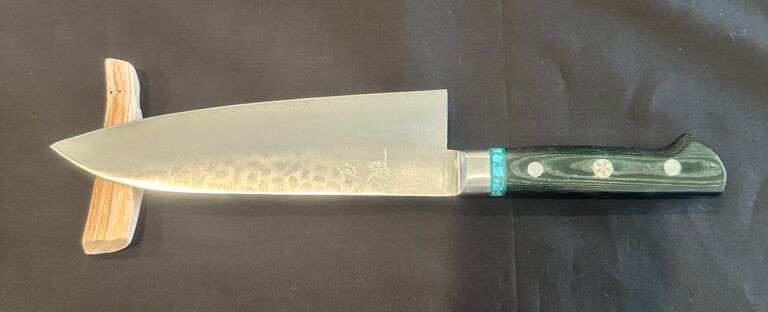
180mm Santoku Aogami #2 Green Micarta Handle with Turquoise Spacer
Today, Japanese-style knives are produced around the world. Many are affordable, and some are perfectly good kitchen tools.
There is room for them.
But genuine Japanese craftsmanship exists because there are still people willing to spend years learning how to forge, heat treat, grind and finish blades.
👉 INTERNAL LINK: “Tosa Knives and Kurouchi — Why the Black Finish Became So Common”
Traditional craftsmanship cannot survive on admiration alone.
People can tell craftsmen that their work is beautiful, important and culturally valuable. But if the profession cannot provide a sustainable future, eventually fewer people may be willing to dedicate their lives to learning it.
The Future of Authentic Japanese Knives Depends on the Next Generation
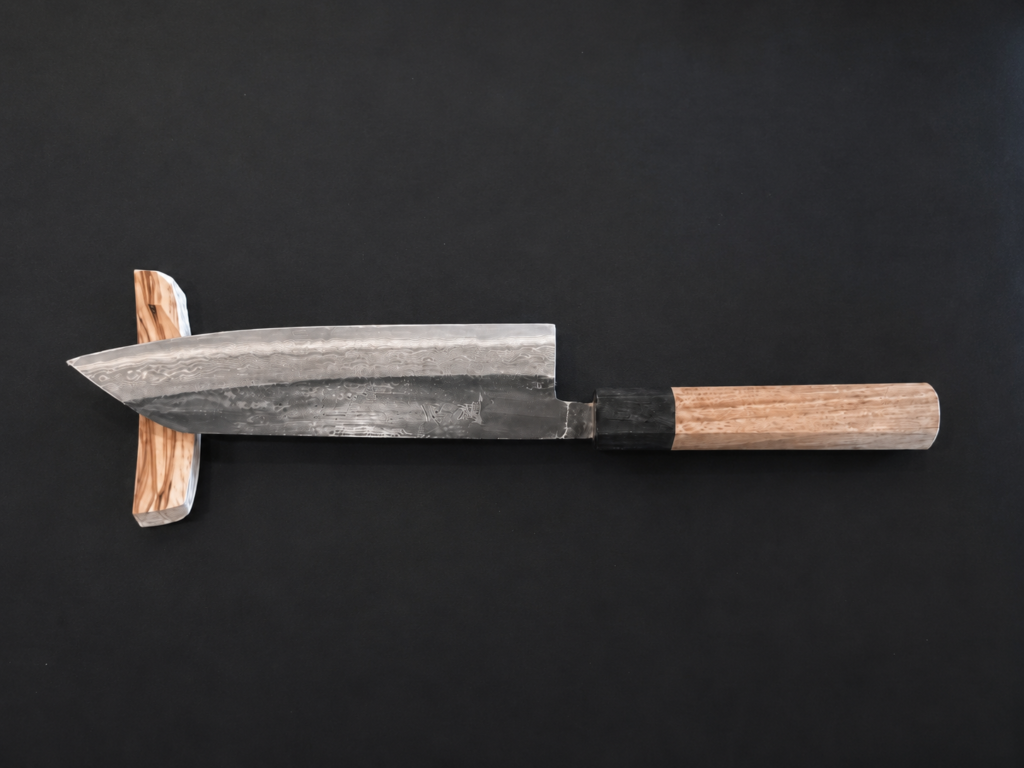
180mm Kiritsuke Aogami #2 Kurouchi Walnut Octagonal Handle

This is where the subject becomes much bigger than the price of one knife.
Preserving Japanese knife making is not simply about keeping old techniques alive today. Someone has to learn those techniques tomorrow.
👉 INTERNAL LINK: 流通 | Tosa Knife History: 5 Surprising Ways Tosa Blades Spread Across Japan
I want young people to be able to look at a respected blacksmith and think:
“I want to become like that person.”
For that to happen, craftsmanship must offer more than respect. It must also offer the possibility of building a meaningful and sustainable career.
If a young apprentice can see that an exceptional craftsman is recognised around the world, that their knives are valued, and that their name itself carries meaning, becoming a blacksmith can become something to aspire to.
That matters because without a next generation, even centuries of tradition can eventually stop.
I also believe that achieving this future is not the responsibility of blacksmiths alone. Those of us who sell Japanese knives have a role to play as well.
Rather than seeing each other only as competitors, perhaps knife retailers can collectively help raise the appreciation and value of genuine Japanese craftsmanship. We may run different businesses, carry different knives and approach the market in different ways, but ultimately, a stronger appreciation for authentic Japanese knives can help support the craftsmen and the tradition we all depend on.
I Want Craftsmen’s Names to Carry Value
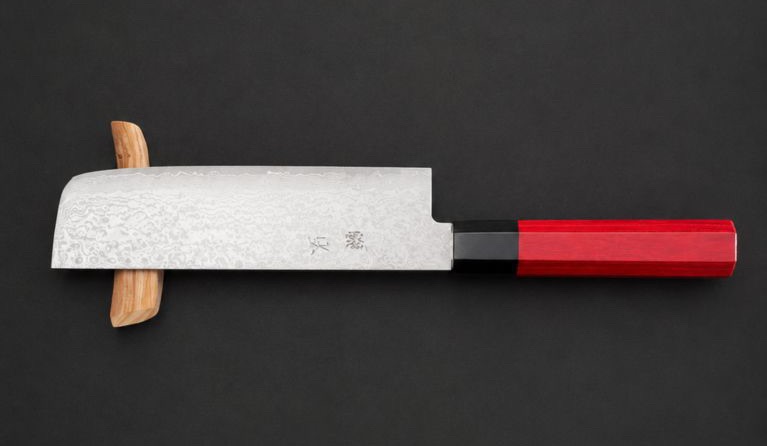
165mm Usuba A8 Hammered Damascus Black & Red Octagonal Handle
One of my hopes for Japanese knives is that the finest examples will increasingly be viewed in the same way we appreciate fine watches, jewellery and other forms of exceptional craftsmanship.
Not because a kitchen knife should become something too precious to use.
Quite the opposite. A great knife should be used.
But we can use something every day while still respecting the person who created it.
In the world of fine craftsmanship, the maker’s name can become part of the object’s value. I would like to see more Japanese blacksmiths receive that same recognition.
I want people to say:
“This knife was made by this craftsman.”
And for that statement to mean something.
👉 INTERNAL LINK: “Handmade Japanese Knives” / your existing article discussing handmade knives and long blacksmith waiting times
Perhaps one day a young person will see a blacksmith whose knives are respected and valued around the world and think, “If I dedicate myself to this craft, maybe my name could mean something too.”
That is how a tradition gains a future.
Authentic Japanese Knives Should Carry Their True Value Forward
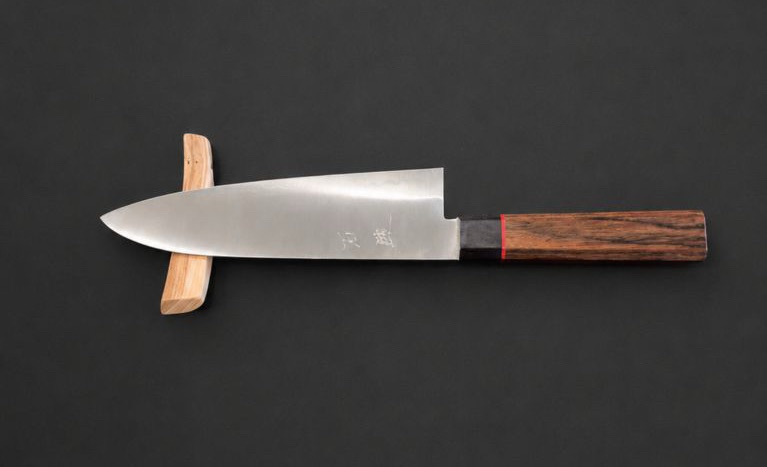
180mm Santoku SG2 Rosewood Octagonal Handle
At Asaoya Yaichi, I want customers to receive good value. There may be promotions, special offers and opportunities to purchase knives at reduced prices.
But I do not want the long-term value of Authentic Japanese Knives to be determined simply by who can sell them for the lowest price.
There is a difference between offering customers a good deal and undervaluing the craft itself.
For me, respecting Japanese knife making means respecting the customer, the knife and the people who make it.
I hope Japanese Knives in Australia continue to gain recognition not only for their sharpness and performance, but also for the craftsmen and traditions behind them.
Because when craftsmen are properly valued, the profession itself has value.
And when a profession has a future, a young person may dream of becoming part of it.
A good knife can last for many years.
A healthy tradition should last for generations.
👉 Explore more:
https://blog.asaoyayaichi.com.au
👉 Visit our online store:
https://asaoyayaichi.com.au
Thank you for reading, and I hope to see you again in the next story.