タグ: Japanese Knife History

  • 流通 | Tosa Knife History: 5 Surprising Ways Tosa Blades Spread Across Japan

    流通 | Tosa Knife History: 5 Surprising Ways Tosa Blades Spread Across Japan

    Ishizuchi Kanamono Manufactory

    When I started looking deeper into Tosa knife history, I became curious about something I had never really thought about before.

    We often talk about how Tosa blades were forged, the blacksmiths who made them, and the traditions that survived for hundreds of years. But after researching the history of Tosa knives recently, another simple question came to mind:

    How did these blades actually get from the blacksmiths of Tosa into the hands of people elsewhere in Japan?

    I sell Tosa knives in Australia today, yet I honestly did not know much about how Tosa blades were distributed in the past. So, as with many of the subjects on this blog, I decided to look it up.

    Tosa Knife History Started With More Than Kitchen Knives
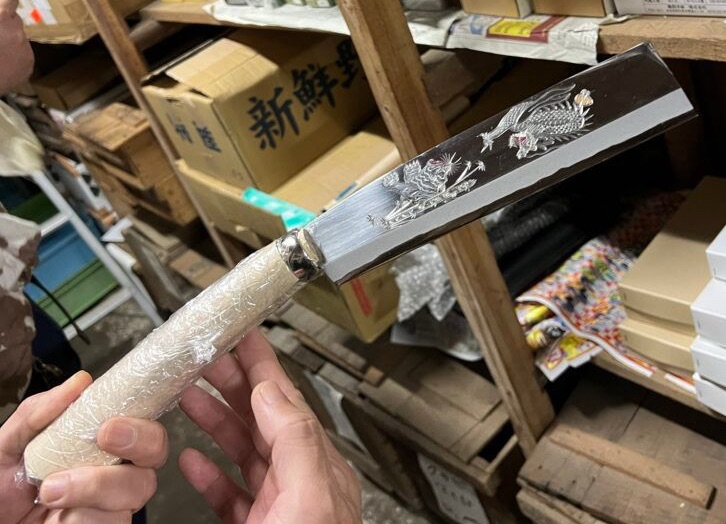

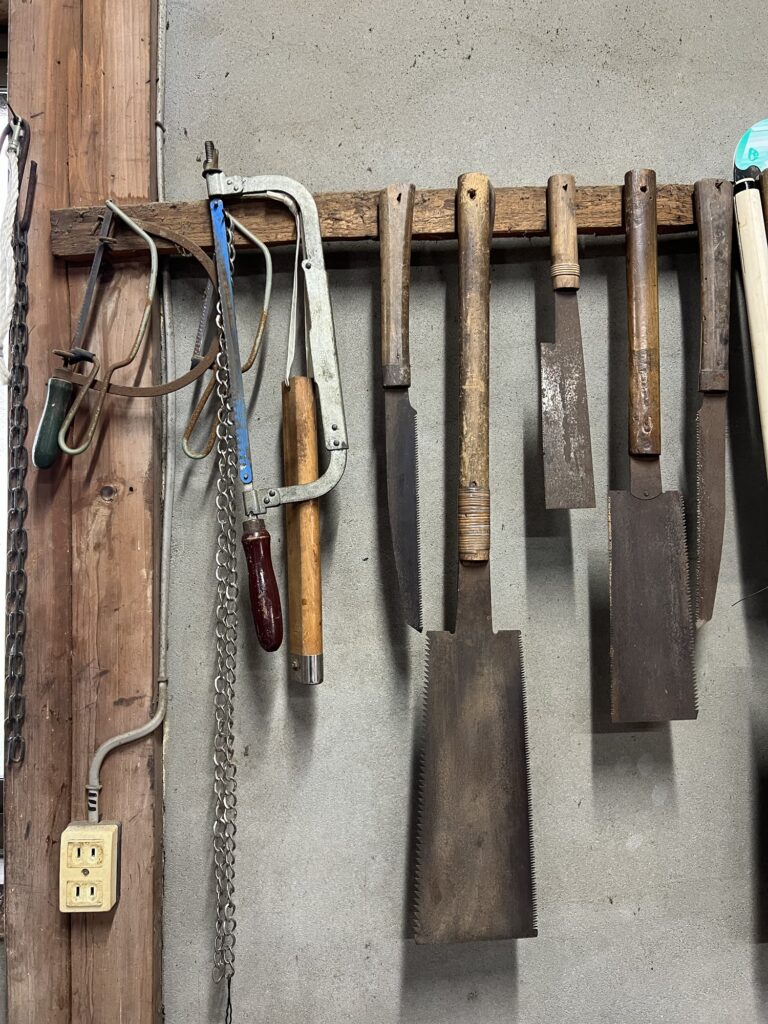
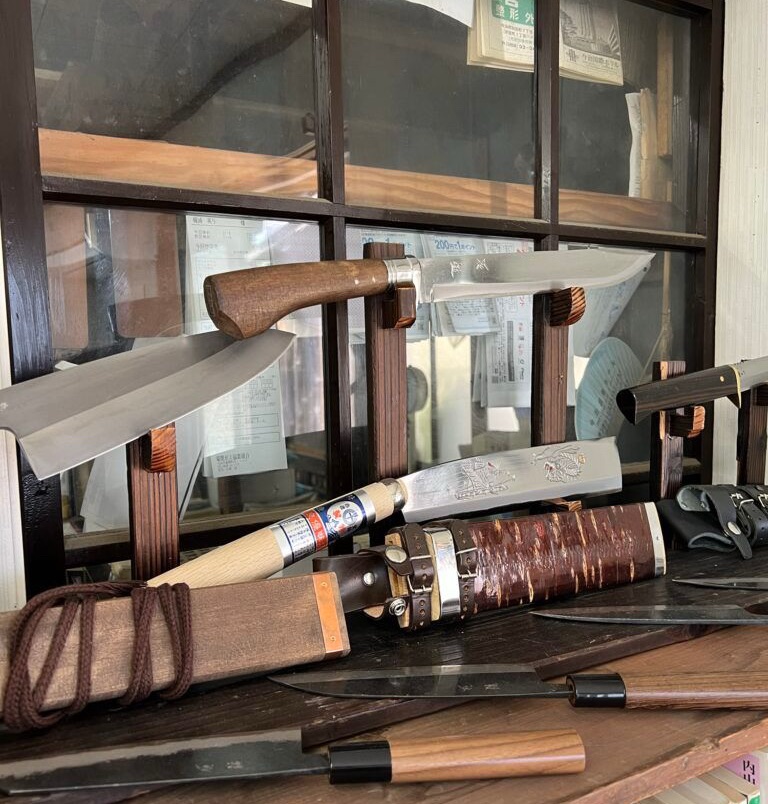
    Japanese nata (traditional Japanese forestry blade)

    One thing that becomes clear when researching Tosa knife history is that we should not imagine Tosa as simply a historical kitchen-knife production area.

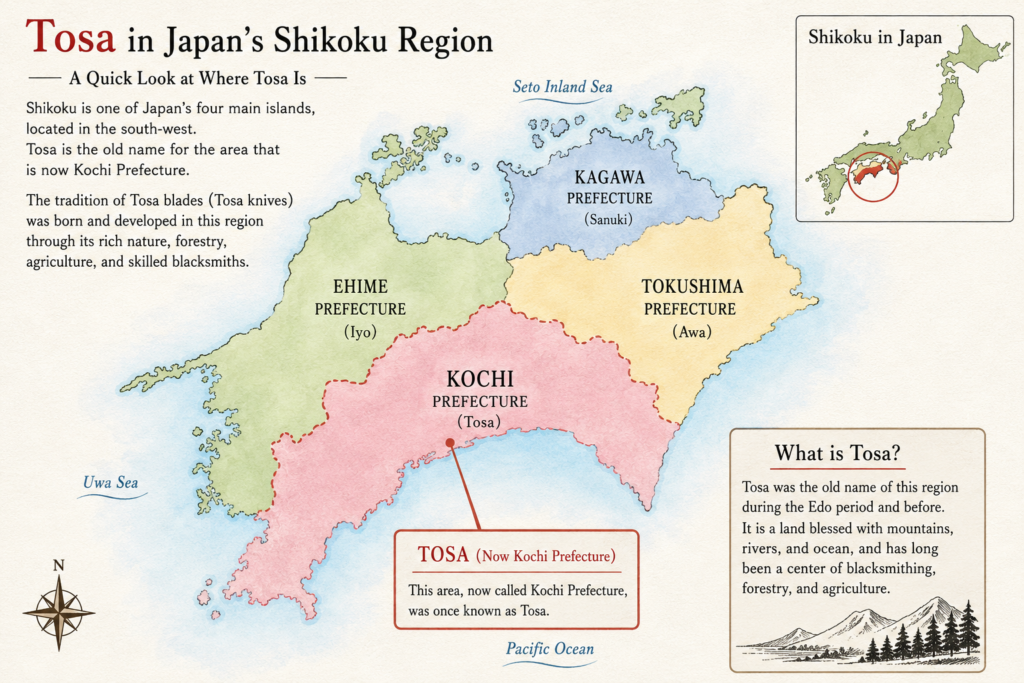
    Kochi Prefecture, historically known as Tosa Province, has long been closely connected with forestry. Its warm, rainy climate supported extensive forests, and timber became an important resource.

    Working in those forests required cutting tools.

    Axes, hatchets, sickles and saws were essential working tools, and the demand for agricultural and forestry blades helped Tosa’s blacksmithing industry develop. During the early Edo period, policies encouraging forestry and the development of new farmland increased this demand significantly.

    In other words, these blades were not originally objects made to sit beautifully in a display case. They were tools made to work.

    👉 INTERNAL LINK: Link here to “Tosa Knife History — From Samurai Era to Modern Tosa Knives”

    The Forests Helped Tosa Blades Travel
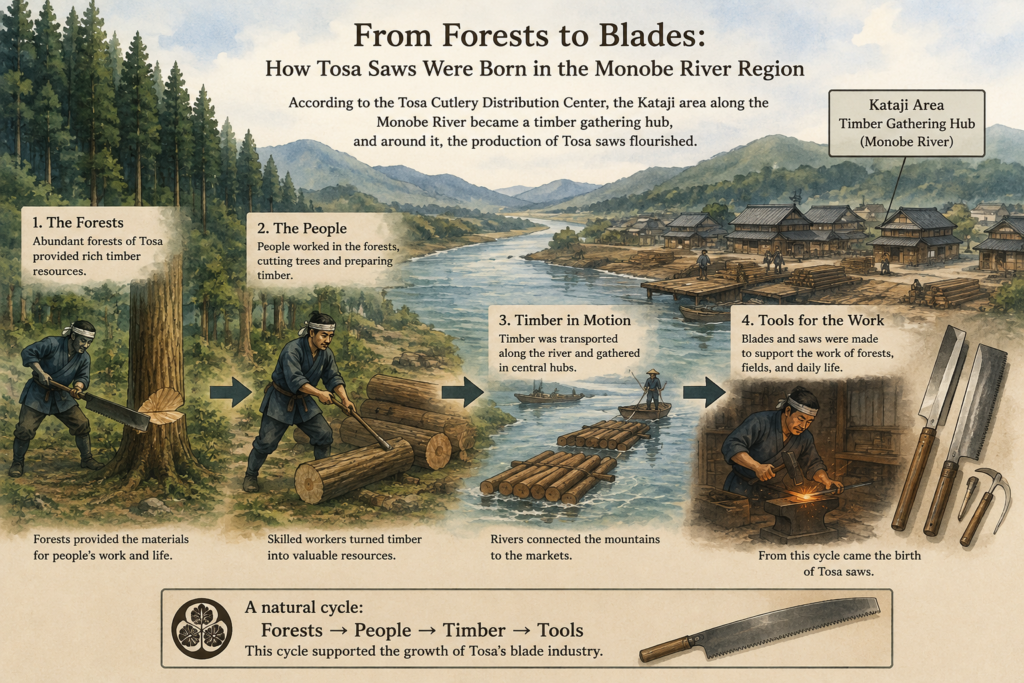
    This was the part I found particularly interesting.

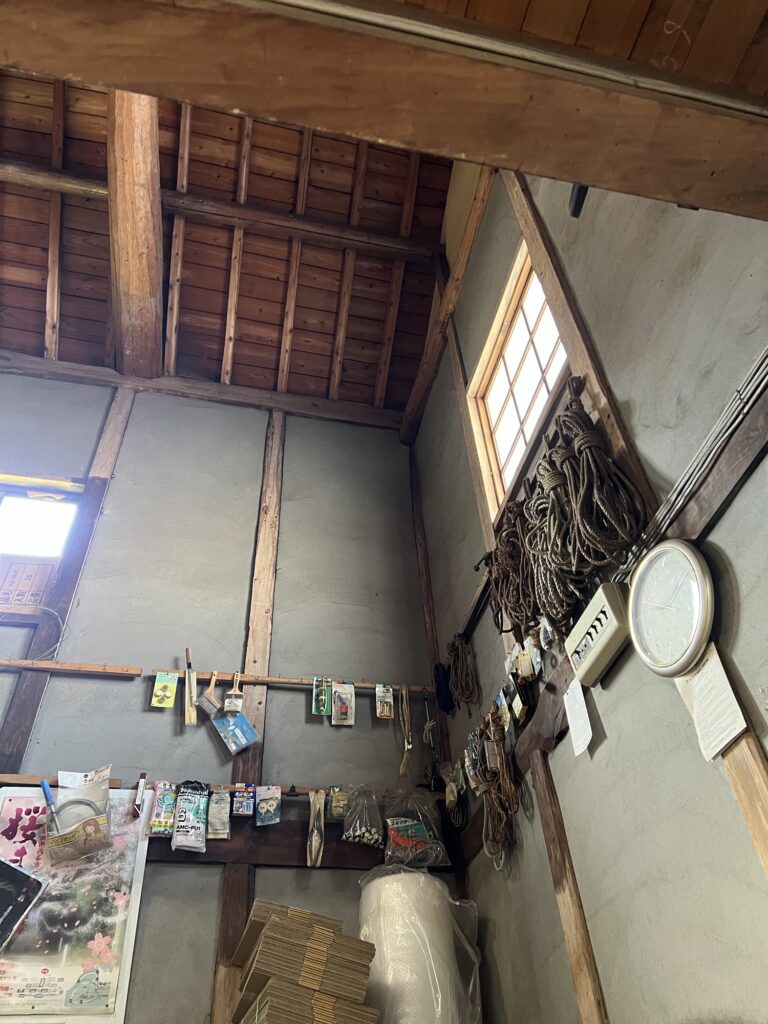
    Tosa’s blade industry developed alongside its timber industry. One example is the Tosa saw. Historical information from the Tosa Cutlery Distribution Center explains that Tosa saw production developed around Kataji, an area along the Monobe River that served as a gathering point for timber.

    So there was a natural relationship between the forests, the workers, the movement of timber and the tools required to work with it.

    As Tosa’s forestry culture developed, its blades gained a reputation as practical working tools.

    Some accounts also describe forestry workers carrying Tosa-made tools when travelling to work in other regions. Other workers saw and used these blades, helping their reputation spread beyond Kochi.

    That is very different from modern marketing.

    There was no Instagram, online advertising or SEO. A tool could build its reputation simply because someone used it every day and trusted it.

    👉 INTERNAL LINK: Link here to “Kurouchi Japanese Knives — The Traditional Black Finish

    Tosa Knife History and the Growth of Distribution
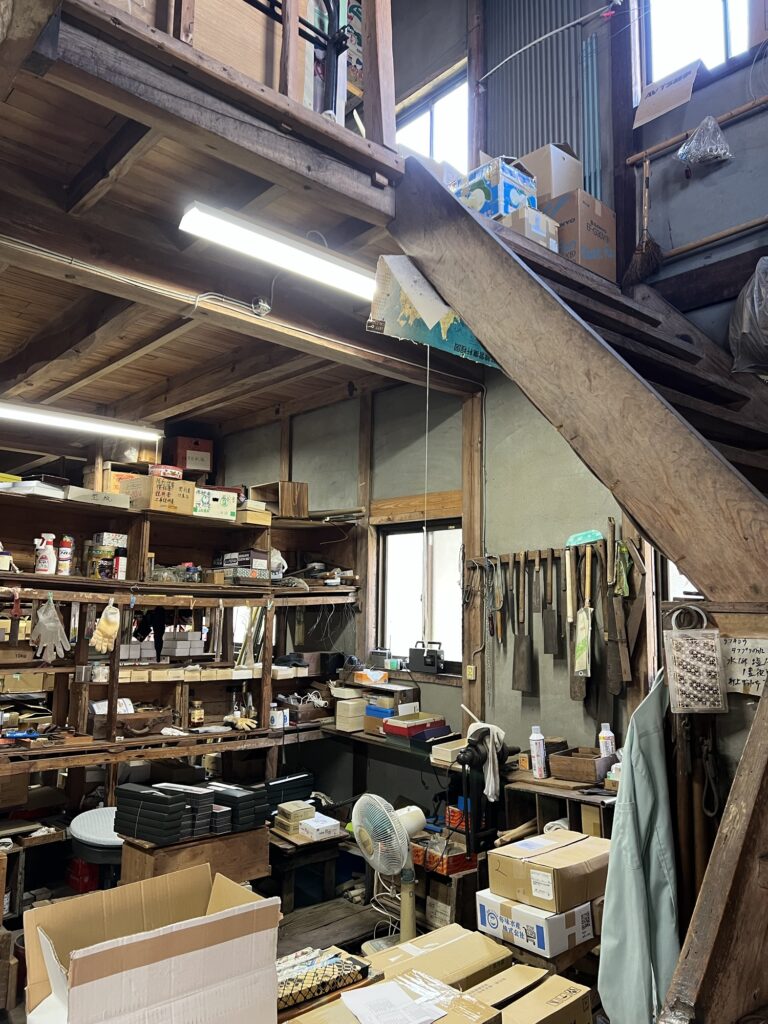

    A Traditional Tosa Blade Merchant

    By the Meiji period, the distribution story becomes clearer.

    Historical accounts of the Tosa blade industry indicate that around 1887, sales routes had expanded beyond the local area. They later spread throughout Shikoku and into the Chugoku region of western Honshu.

    As this happened, wholesalers dealing in forged blades began to develop, creating a more organised distribution system.

    I found this fascinating because it shows a transition.

    A blade could begin in a small workshop, pass through merchants and wholesalers, and eventually reach users far beyond the place where it had been forged.

    The blacksmith did not necessarily need to travel across Japan himself. A distribution network was beginning to connect regional craftsmanship with a much larger market.

    👉 INTERNAL LINK: Link here to “Handmade Japanese Knives — Why No Two Are Exactly the Same”

    Tosa Knife History Was Built Around Practical Tools
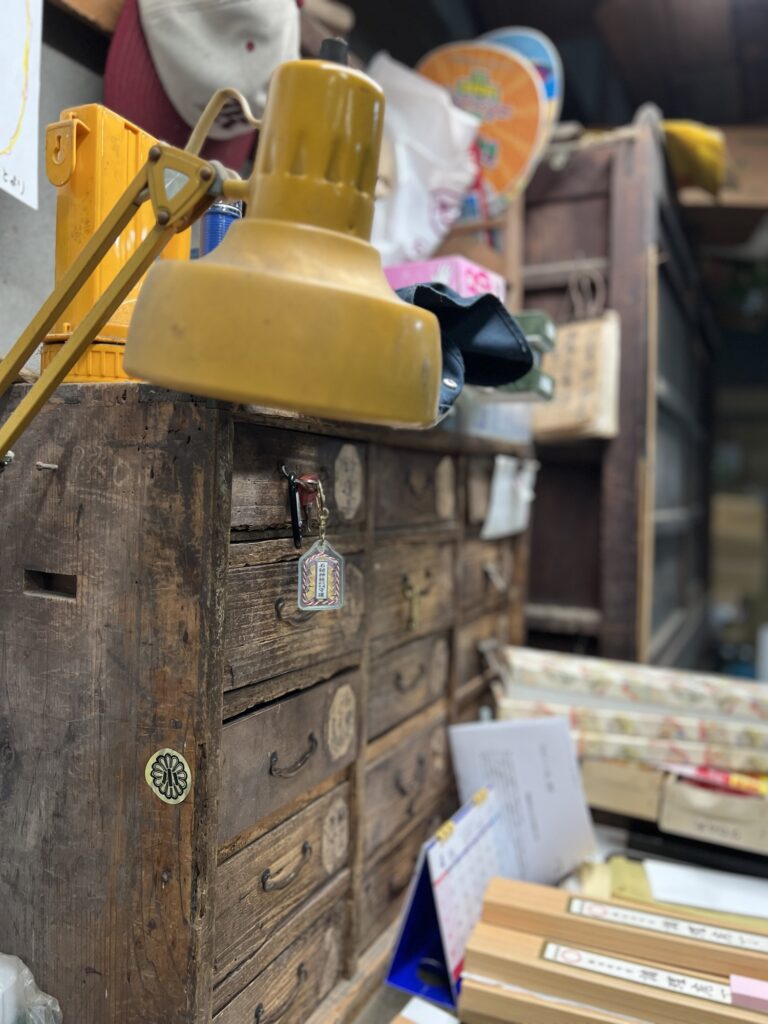
    The more I read about Tosa knife history, the more I feel that practicality is one of the keys to understanding Tosa blades.

    Their reputation was not created only by beautiful craftsmanship.

    These were blades expected to cut wood, clear land, harvest crops and perform demanding everyday work. Kitchen knives later became an important part of the tradition, but they belong to a much broader culture of forged working tools.

    Perhaps that is one reason I personally find Tosa knives so appealing.

    They can be beautiful, but they were never supposed to be beautiful only.

    👉 INTERNAL LINK: Link here to “Japanese Knife Finishes — What I Learned After 25 Years as a Chef”

    From Tosa to Australia
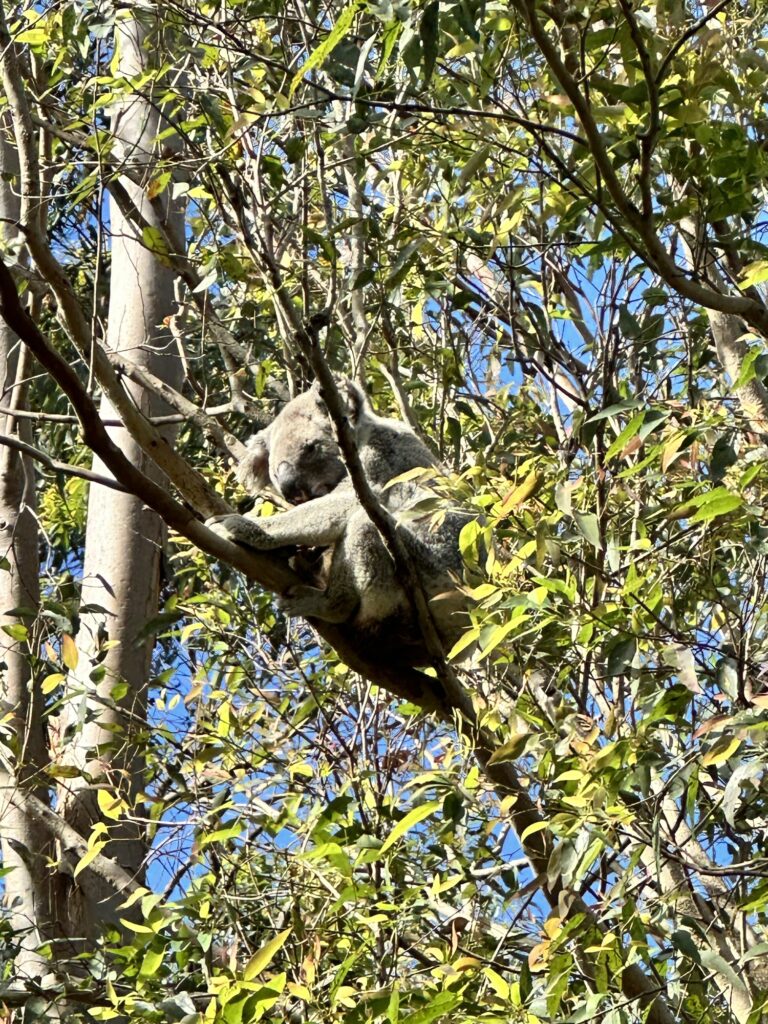

    A real koala spotted by Asaoya Yaichi 🐨

    And this is where researching the past made me think about what I am doing today.

    Hundreds of years ago, Tosa blacksmiths made blades for people working in the forests, farms and kitchens of Japan. Over time, those blades travelled farther through workers, merchants and developing distribution networks.

    Today, the distance is much greater.

    I work directly with Ishizuchi Kanamono Seisakusho and bring handcrafted Tosa knives from Japan to Australia.

    Of course, modern shipping and online stores make distribution completely different. But when I look at the bigger picture, perhaps the basic idea has not changed as much as I expected.

    A blacksmith makes a tool.

    Someone believes in that tool.

    And then someone carries it to the next person who will use it.

    I did not know much about this side of Tosa knife history before researching it. Now, every time I unpack a shipment of Tosa knives here in Australia, I think I may be participating in a very small continuation of a journey that began long before me.

    👉 INTERNAL LINK: Link here to “The True Value of Japanese Knives — Why a Good Knife Can Last for Decades”

    👉 Explore more:
    https://blog.asaoyayaichi.com.au

    👉 Visit our online store:
    https://asaoyayaichi.com.au

    Thank you for reading, and I hope to see you again in the next story.
  • 土佐 Tosa | The Powerful History of Tosa Knives I Wanted to Know

    土佐 Tosa | The Powerful History of Tosa Knives I Wanted to Know

    When you work with something every day, sometimes you forget to ask where it actually came from.

    I sell Tosa knives in Australia, sourcing handcrafted Japanese knives directly from Shikoku, Japan. I have also spent more than 25 years working as a chef in Japan and Australia. I know how these knives feel in the hand, how they sharpen, and how they perform in a professional kitchen.

    But recently, I realised there was something I wanted to understand better.

    How did Tosa knives actually begin?

    I knew that Tosa had a long history of blacksmithing, but I wanted to look deeper into why this particular part of Japan became known for forged blades. What I found made me appreciate the history behind these knives even more.

    The History of Tosa Knives Goes Back Centuries

    Ishizuchi Kanamono Manufactory

    The story of Tosa knives is closely connected to the geography and working life of Kochi Prefecture, historically known as Tosa Province.

    Kochi is a mountainous region with extensive forests. For generations, forestry was an important part of life there, and people needed strong, dependable tools for cutting trees, clearing land and working in the mountains.

    That naturally created demand for forged tools such as axes, hatchets, sickles and saws.

    The history, however, goes back even further.

    Sword-making techniques are said to have reached Tosa during the Kamakura period. By 1590, the Chōsokabe Land Survey Records documented 399 blacksmiths in Tosa Province.

    That number surprised me.

    It shows that blacksmithing was already deeply established in the region more than 400 years ago.

    How Tosa Knives Grew With Forestry and Agriculture


    From Agricultural Tools to Tosa Knives

    The major development of Tosa forged blades came during the early Edo period.

    In 1621, reforms by the Tosa Domain encouraged the development of forestry and new agricultural land. As forestry and farming expanded, so did the need for reliable cutting tools.

    Blacksmiths responded to that demand.

    Over time, production increased and techniques improved. What began as tools essential for daily work gradually developed into what we now recognise as the tradition of Tosa Uchihamono, or Tosa forged blades.

    This is one thing I find particularly interesting about Tosa.

    The tradition was not created simply to make beautiful objects.

    These were working tools.

    They had to cut. They had to survive hard use. And they had to be practical enough for people who depended on them for their livelihood.

    👉 INTERNAL LINK: Read more about why handmade Japanese knives are never exactly the same

    Tosa Knives and the Tradition of Free Forging


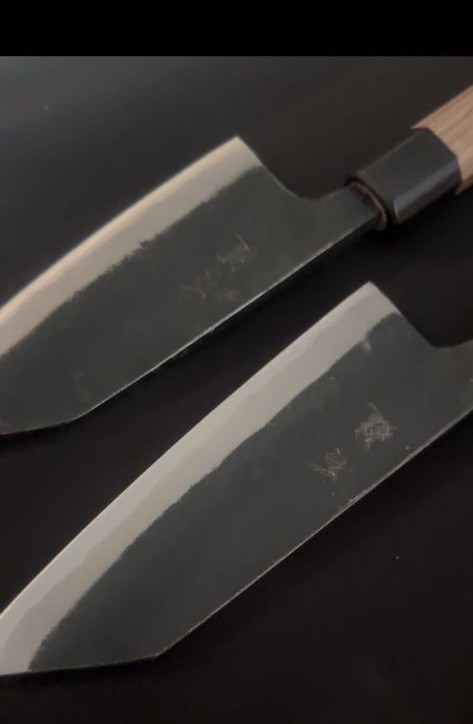
    Kiritsuke Aogami #2 Kurouchi Walnut Octagonal Handle

    Another characteristic that caught my attention while researching Tosa knives was something known as jiyū tanzō, or “free forging.”

    Rather than relying entirely on fixed moulds, Tosa blacksmiths traditionally forged different shapes and sizes according to their intended purpose.

    That flexibility made sense in a region where people needed many different kinds of blades for forestry, agriculture and everyday life.

    Even today, you can see something of that character in handcrafted Japanese knives.

    Small differences in hammer marks, blade shape and finish are not necessarily imperfections. To me, they are reminders that a knife was made by human hands rather than simply coming from an automated production line.

    👉 INTERNAL LINK: Read more about Japanese knife finishes and what they really mean

    👉 INTERNAL LINK: Read more about Kurouchi Japanese knives and the traditional black finish

    From Traditional Tosa Blades to Modern Kitchen Knives


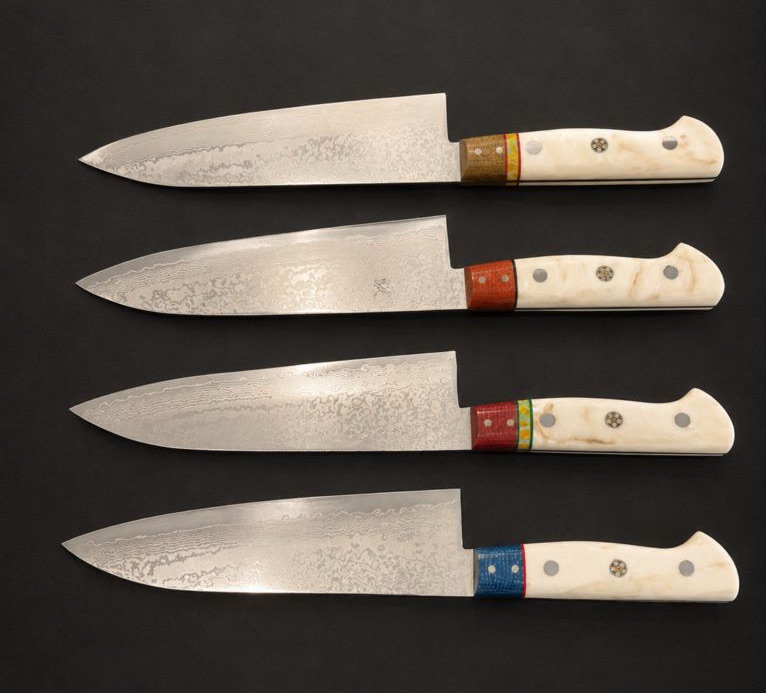
    180mm Santoku VG10N 33 Layer Damascus Green Marble Handle Rainbow Spacer

    Today, Tosa knives are known far beyond Kochi.

    In 1998, Tosa Uchihamono was officially designated as a Traditional Craft of Japan. The tradition includes not only kitchen knives but also axes, sickles, hatchets, saws and other working blades.

    Modern Japanese kitchen knives have naturally evolved as well.

    Today we can find traditional carbon steels such as Aogami alongside stainless steels and modern powder metallurgy steels. Handles, finishes and blade styles have changed to suit contemporary cooks, but the connection between Japanese knife making and traditional forging remains.

    👉 INTERNAL LINK: Learn more about Aogami and Shirogami steels

    👉 INTERNAL LINK: Read my guide to Ginsan steel and why I like it for kitchen knives

    For me, that combination is what makes the history of Tosa so interesting.

    It is not simply a tradition frozen in the past.

    It has continued to evolve.

    Why the History of Tosa Knives Matters to Me


    Wooden Box for Traditional Knives

    After looking into this history, I see the knives I work with a little differently.

    I started Asaoya Yaichi because I wanted to bring genuine handcrafted Japanese knives from Shikoku to Australia. As a chef, my first concern will always be practical: does the knife actually work well in a kitchen?

    But there is another side to it.

    Learning about Tosa knives reminded me that Japanese blades did not develop only as kitchen tools. Their history is connected to forestry, agriculture, sword-making knowledge and generations of blacksmiths adapting their skills to what people actually needed.

    That history does not automatically make every knife perfect.

    But I think understanding where these traditions came from gives us a better appreciation of why Japanese forged knives are the way they are today.

    Perhaps that is what I like most about the history of Tosa.

    These blades were never meant to exist only behind glass.

    They were made to be used.

    And more than 400 years later, that practical spirit can still be found in the Japanese forging traditions that continue across Shikoku today.

    👉 Explore more:
    https://blog.asaoyayaichi.com.au

    👉 Visit our online store:
    https://asaoyayaichi.com.au

    Thank you for reading, and I hope to see you again in the next story.
  • Japanese Knife Names | 7 Fascinating Origins I Was Curious Enough to Look Up

    Japanese Knife Names | 7 Fascinating Origins I Was Curious Enough to Look Up

    Name

    After more than 25 years working as a chef in Japan and Australia, there are certain words I have used thousands of times without really thinking about them.

    Santoku. Gyuto. Deba. Yanagiba. Nakiri. Usuba. Sujihiki.

    They are simply Japanese knife names that become part of everyday language when you work in a kitchen.

    But recently, a very simple question crossed my mind:

    Why are these knives actually called that?

    I knew what they were designed to do. I knew how they felt in my hand and when I would choose one over another. But when I started thinking about the actual Japanese knife names, I realised there were some origins I had never really investigated.

    So, purely because I was curious, I decided to look them up.

    And some of the answers were more interesting than I expected.

    Japanese Knife Names Often Tell You Something About the Knife

    Ishizuchi Kanamono Manufactory

    One thing becomes obvious when looking closely at Japanese knife names: many of them are surprisingly practical.

    The name may describe the ingredient, the shape of the blade, or the type of work the knife was intended to perform.

    That makes sense.

    Traditional Japanese knives were not originally created because someone needed another product for a catalogue. They developed as working tools for particular jobs.

    And their names often preserve that history.

    👉 RELATED: Read our Beginner’s Guide to Japanese Knives to learn more about the basic types and how they are used.

    1. Santoku 三徳 — The “Three Virtues”


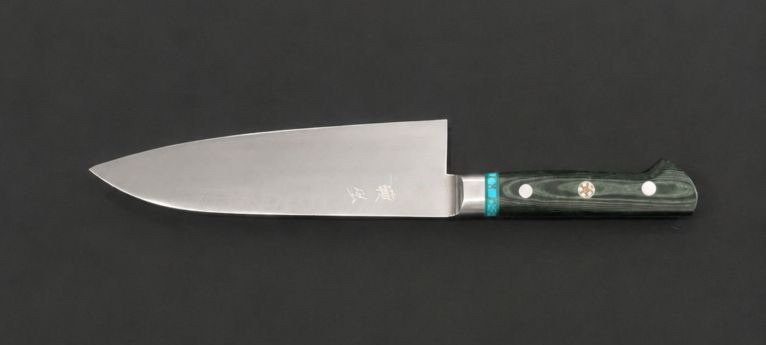
    180mm Santoku Aogami #2 Green Micarta Handle with Turquoise Spacer

    Santoku is probably one of the best-known Japanese knife names outside Japan.

    The kanji are:

    三 — three
    徳 — virtue or merit

    So 三徳 literally means something close to “three virtues.”

    Today, the Santoku is regarded as an all-purpose Japanese kitchen knife. One common explanation connects those “three virtues” with its ability to handle several major categories of food, often described as meat, fish and vegetables.

    The Santoku itself is relatively modern compared with traditional Japanese specialist knives. It developed as Japanese eating habits and home kitchens changed, combining characteristics suited to a broader range of everyday ingredients.

    That is probably why the name feels so appropriate.

    It is not a knife devoted to one narrow task.

    Its strength is versatility.

    After years in professional kitchens, I can understand why the Santoku became so popular. For someone who wants one practical Japanese knife for everyday cooking, its name describes its character remarkably well.

    👉 RELATED: Explore our article on Japanese Knife Balance and why a knife’s feel can matter as much as its specifications.

    2. Gyuto 牛刀 — Literally, “Cow Sword”


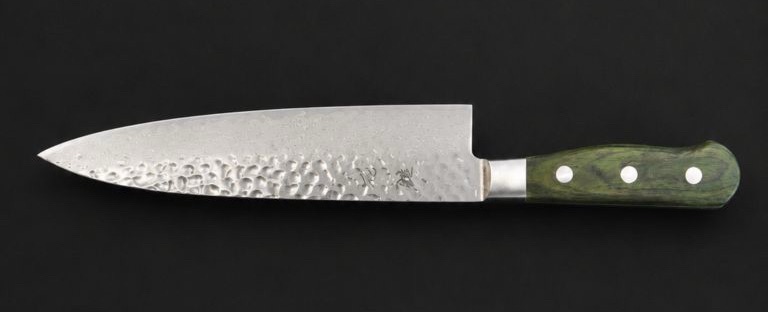
    210mm Gyuto VG10 Polished Hammered 67 Layer Damascus Green Handle

    This is one of my favourites simply because the literal translation sounds much more dramatic in English.

    牛 means cow or cattle.

    刀 means blade or sword.

    So Gyuto 牛刀 literally means something like “cow blade” or “cow sword.”

    The Gyuto developed from Western-style chef’s knives introduced into Japan as meat consumption became more common.

    Originally, its association with cutting meat explains the use of the character 牛.

    Today, of course, nobody buys a Gyuto only to cut beef.

    It has become one of the most versatile Japanese kitchen knives and is used for meat, fish, vegetables and countless other jobs.

    Interestingly, the name remembers an earlier purpose even though the knife itself has moved far beyond it.

    That is something I find fascinating about Japanese knife names.

    Sometimes the history stays in the name long after the way we use the tool has changed.

    3. Deba 出刃 — A Familiar Name With a Less Certain Story


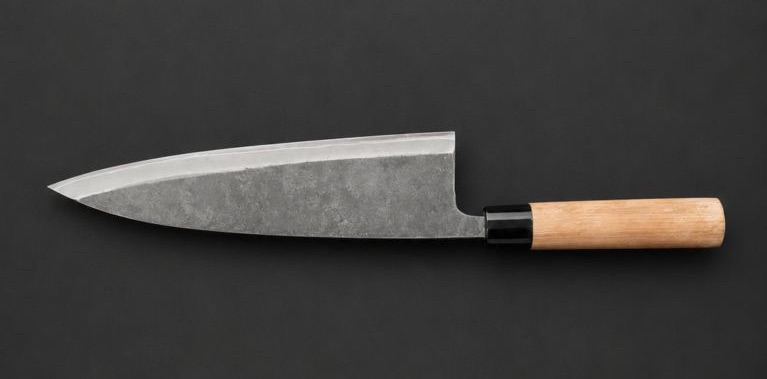
    240mm Thick Deba Aogami #2 Kurouchi Walnut Handle

    Then we come to Deba.

    This is where researching Japanese knife names gets more interesting because not every origin is perfectly clear.

    出 means something like to come out, protrude or emerge.

    刃 means blade or edge.

    There are different explanations surrounding how the name Deba came into use, including an old story connecting the name with a craftsman whose protruding teeth supposedly inspired the term.

    It is an entertaining story, but the precise historical origin of the name is not something I would present as absolute fact.

    What we do know is what the Deba became: one of the classic Japanese knives for processing fish.

    Its thick spine, substantial weight and strong heel make it very different from a delicate slicing knife.

    For me, that uncertainty actually makes the name more interesting.

    We use the word “Deba” so casually today that it is easy to forget the name itself has travelled through generations of Japanese cooking history.

    👉 RELATED: Read Japanese Knife Bevels — Single Bevel vs Double Bevel Explained for more about traditional Japanese blade geometry.

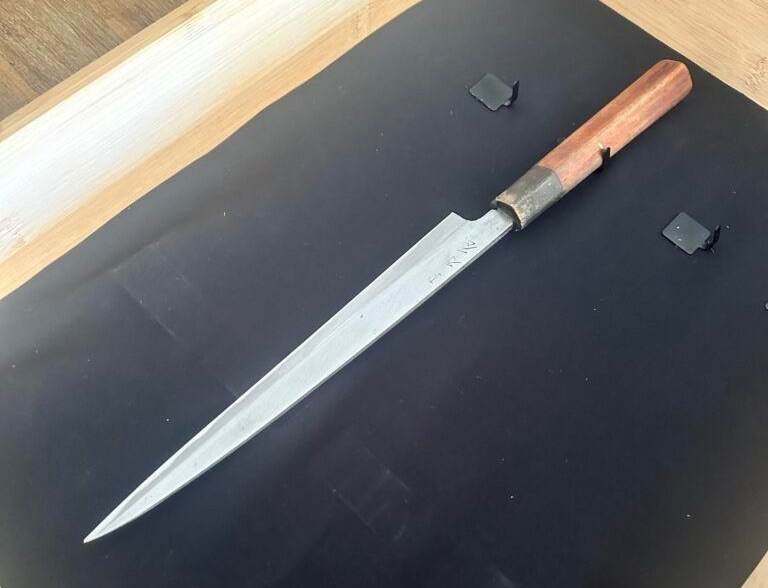
    4. Yanagiba 柳刃 — The Willow Blade

    Yanagiba is much easier to visualise.

    柳 means willow.

    刃 means blade.

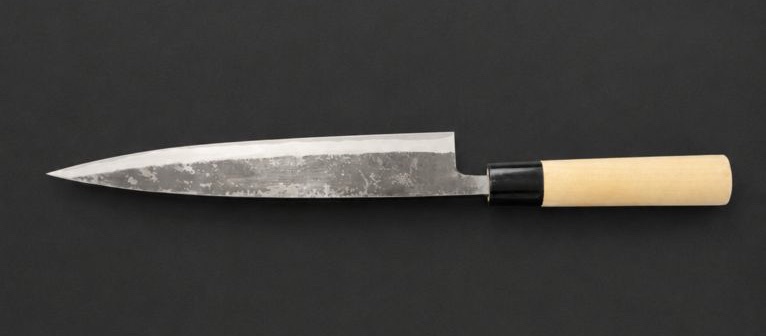
    The long, narrow shape of the knife resembles a willow leaf, giving us the name 柳刃 — “willow blade.”

    This is one of those Japanese knife names that makes immediate sense once you see the kanji and the knife together.

    The long blade is closely associated with slicing sashimi and other delicate proteins. Rather than using repeated short sawing movements, its length allows a cook to make a long, controlled slicing motion.

    As someone who has spent many years working with fish and sashimi, this is where the poetry of the name and the practicality of the tool come together beautifully.

    It looks like a willow leaf.

    But that elegant shape also has a job to do.

    5. Nakiri 菜切 — A Name That Says Exactly What It Does


    165mm Nakiri Ginsan Nashiji Forged Magnolia Octagonal Handle Buffalo Horn Ferrule

    Some Japanese knife names are much less mysterious.

    Nakiri is one of them.

    菜 means vegetable or greens.

    切 comes from cutting.

    Put them together and 菜切 essentially means “vegetable cutter.”

    Simple.

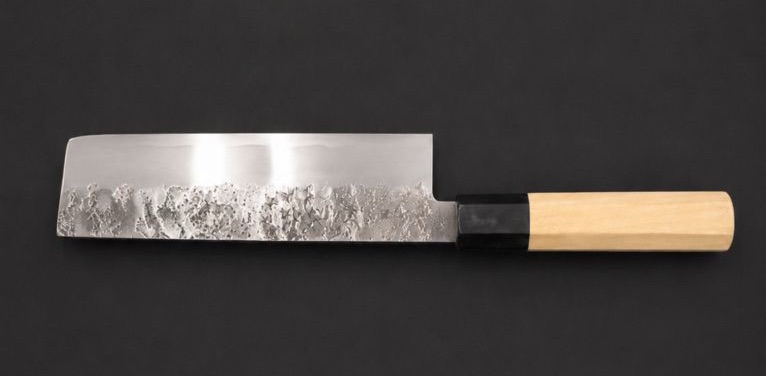
    The rectangular blade and relatively straight cutting edge make the Nakiri particularly suited to vegetable preparation.

    There is something I like about the honesty of this name.

    No complicated marketing.

    No dramatic terminology.

    It cuts vegetables, so it is called a vegetable cutter.

    The name also reminds us how important vegetables have always been in Japanese home cooking.

    👉 RELATED: Read about Japanese Knife Handles and why handle shape can change the way different knives feel in the hand.

    6. Usuba 薄刃 — The “Thin Blade”


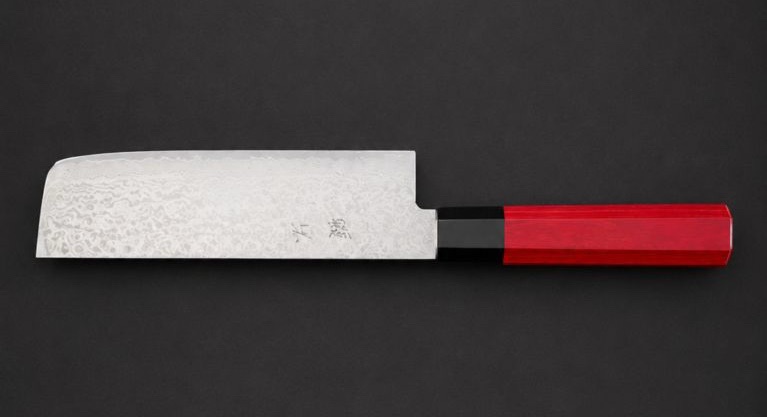
    165mm Usuba A8 Hammered Damascus Black & Red Octagonal Handle

    Usuba is another beautifully direct name.

    薄 means thin.

    刃 means blade.

    So 薄刃 means simply “thin blade.”

    The Usuba is a traditional Japanese vegetable knife, particularly associated with precise vegetable work.

    Although its rectangular profile can look similar to a Nakiri at first glance, traditional Usuba knives are generally more specialised and are strongly associated with professional Japanese cuisine.

    The thin cutting geometry makes sense when you consider the precision required for traditional vegetable techniques.

    Again, the name does not try to make the knife sound exotic.

    It describes one of its defining characteristics.

    7. Sujihiki 筋引 — “Pulling the Sinew”


    210mm Sujihiki Aogami #2 Kurouchi Magnolia Handle

    Finally, there is Sujihiki.

    筋 can mean sinew, muscle fibre, tendon or line depending on context.

    引 means to pull or draw.

    The name reflects the knife’s relationship with trimming and slicing meat, particularly working along or removing sinew and connective tissue.

    Today, the Sujihiki is widely used as a Japanese slicing knife.

    For me personally, this is an especially familiar knife. I have used Sujihiki extensively in professional kitchens, including for fish and slicing work.

    And this is another example of how Japanese knife names can outlive their narrow original interpretation.

    A modern Sujihiki can do far more than its literal name might suggest.

    👉 RELATED: Read 切味 Kireaji to explore why the feeling of sharpness is about more than simply whether a knife can cut.

    Japanese Knife Names Are Small Pieces of Culinary History

    I started researching this simply because I was curious.

    After more than 25 years as a chef, I thought it was funny that I had said these names countless times without stopping to think about where they came from.

    And that may be what I enjoyed most about looking into Japanese knife names.

    Gyuto remembers the arrival and growth of meat cookery.

    Nakiri tells you exactly what generations of cooks used it for.

    Yanagiba describes the beauty of its shape.

    Usuba describes its thin blade.

    Sujihiki remembers the work it was designed to perform.

    Santoku reflects versatility.

    And Deba reminds us that sometimes the history behind an everyday word is not quite as simple as we assume.

    A Japanese knife is a tool.

    But its name can also carry a small piece of Japanese food culture, language and history.

    I have worked with Japanese knives for most of my professional life, and I am still finding things about them that make me curious.

    That is probably why I never get tired of them.

    This article started with one very simple thought:

    “Why is a Deba called a Deba?”

    Sometimes that is enough reason to start looking.

    And I think I might have found another series worth continuing.

    👉 Explore more:
    https://blog.asaoyayaichi.com.au

    👉 Visit our online store:
    https://asaoyayaichi.com.au

    Thank you for reading, and I hope to see you again in the next story.