
Japanese Knife Care Australia can sound more complicated than it really is. After more than 25 years working in professional kitchens in Japan and Australia, I have learned that looking after a Japanese knife does not require a complicated routine.
For people searching for Japanese Knives Australia, understanding how to care for the blade is just as important as choosing the right knife. Different steels require different levels of maintenance, but the basic principles are simple: keep the blade clean and dry, sharpen it correctly, and use the right maintenance products only when necessary.
At Asaoya Yaichi, I want people in Australia to enjoy using Japanese knives rather than worry about maintaining them.
👉 Visit our online store and explore our Japanese knives in Australia:
https://asaoyayaichi.com.au
Japanese Knife Care Australia Starts with Understanding the Steel

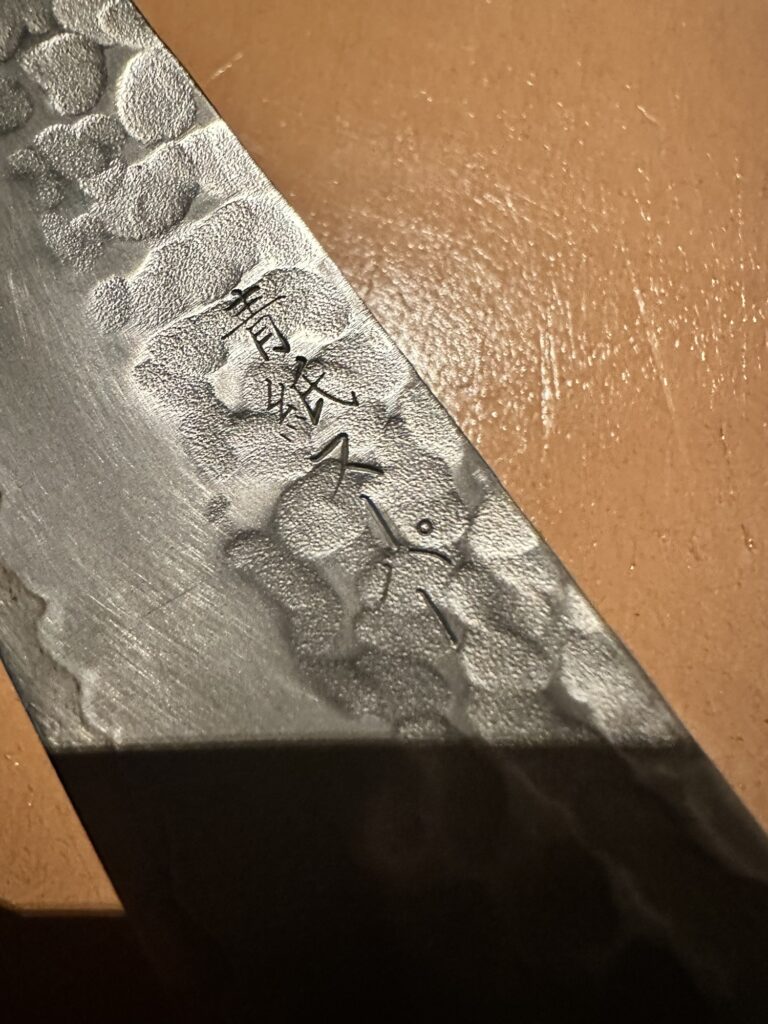
Ginsan Nashiji Forged Magnolia Octagonal Handle Buffalo Horn
The first lesson in Japanese Knife Care Australia is that not every Japanese knife needs the same care.
Carbon steels such as Aogami #2 and Aogami Super can develop rust if moisture is left on the blade. Stainless steels such as VG10, Ginsan and SG2 are generally easier to maintain in everyday kitchens.
This does not mean one steel is automatically better than another.
I personally enjoy carbon steel, especially for certain fish work, but I also appreciate the convenience of stainless steel in a busy professional kitchen.
Understanding the steel should therefore be part of choosing among the many Japanese Knives Australia has available today.
👉 INTERNAL LINK: Japanese Knife Steel: 5 Powerful Lessons After 25 Years in Professional Kitchens
1. Keep Your Japanese Knife Clean and Dry

This is probably the most important habit.
After using a knife, I do not like leaving it wet beside the sink. Wash it, wipe it properly and keep the blade dry. This is particularly important with carbon steel.
You do not need to become nervous every time water touches the blade. Japanese knives are tools made to be used.
Use the knife, clean it, dry it and put it away safely.
After decades in professional kitchens, I believe simple habits are more useful than complicated maintenance routines.
2. Camellia Oil Does Not Need to Be Thick
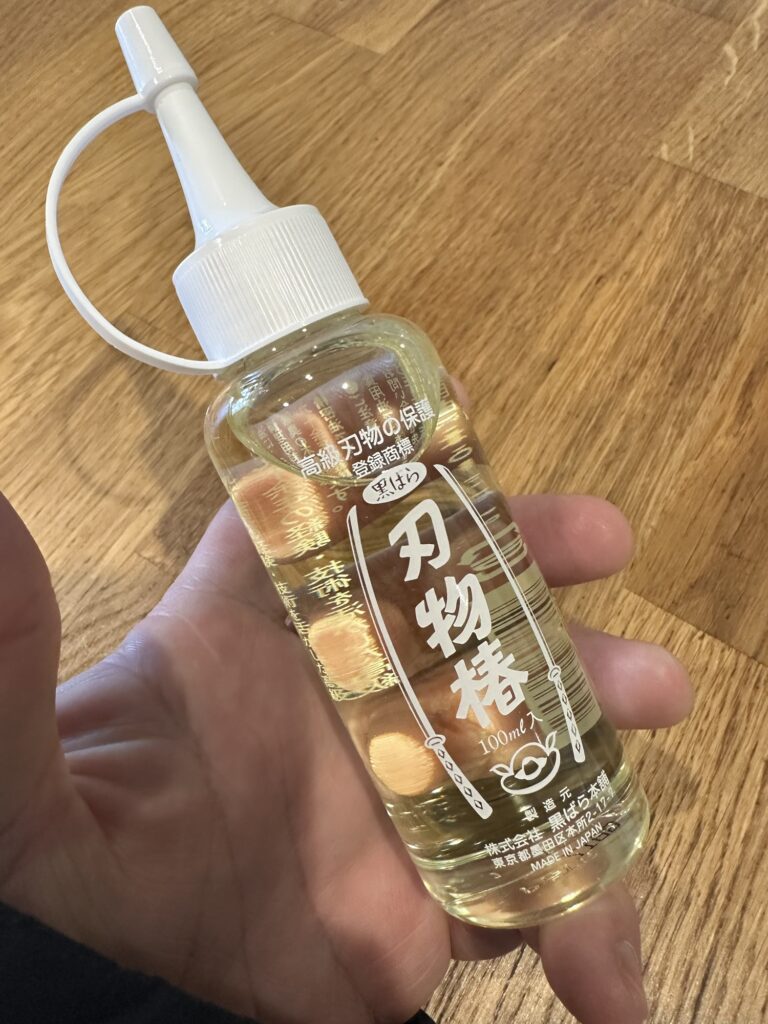
For carbon steel knives that will not be used for some time, I use camellia oil.
One thing I have learned from experience is that more oil is not necessarily better. A very thin protective film is enough. In the past, I have experienced oil becoming sticky after being left too heavily on a blade.
For me, Japanese Knife Care Australia should remain practical and simple.
👉 INTERNAL LINK: Camellia Oil — Why a Thin Protective Film Is Enough for Japanese Knives
3. Rust Does Not Mean the Knife Is Finished

Carbon steel changes as you use it. Patina is normal, but actual rust should be addressed before it develops further.
I have used Sabitoru Fine for removing light rust and found it useful as part of my own knife maintenance.
The important thing is not to panic and aggressively grind the blade as soon as you see a small mark.
Start gently.
👉 INTERNAL LINK: Japanese Knife Rust Removal: 5 Powerful Lessons Using Sabitoru Fine
4. Sharpening Is Part of Japanese Knife Care Australia
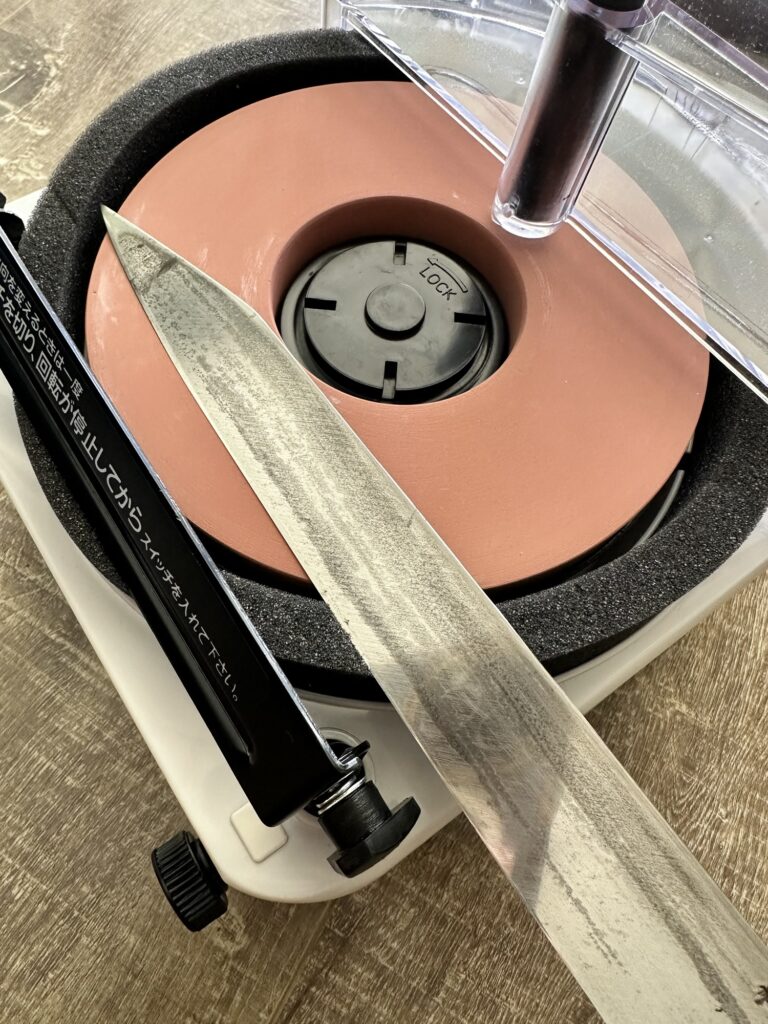
I sharpen my own knives regularly. At home I use a 1000-grit stone, and at work I also use a 6000-grit finish.
I flatten my stones every time because a stone that is no longer flat makes consistent sharpening much harder.
A Japanese knife should not be treated as something that stays sharp forever.
Sharpening is part of owning the knife. Over time, you begin to understand the angle, steel and edge that suit the way you work.
This is also something I believe people should consider when looking at Japanese Knives Australia. Choosing the knife is only the beginning. Learning how that knife behaves over years of use is part of the experience.
5. Expensive Does Not Mean Maintenance-Free

I have seen extremely expensive Japanese knives in professional kitchens, including knives costing thousands of dollars.
Price does not remove the need for care.
Even an expensive blade can lose its edge, rust or become damaged through poor use. At the same time, a reasonably priced knife that is sharpened and maintained properly can perform beautifully for many years.
👉 INTERNAL LINK: Is an Expensive Japanese Knife Really Worth It?
6. Hand-Forged Japanese Knives Develop Their Own Character
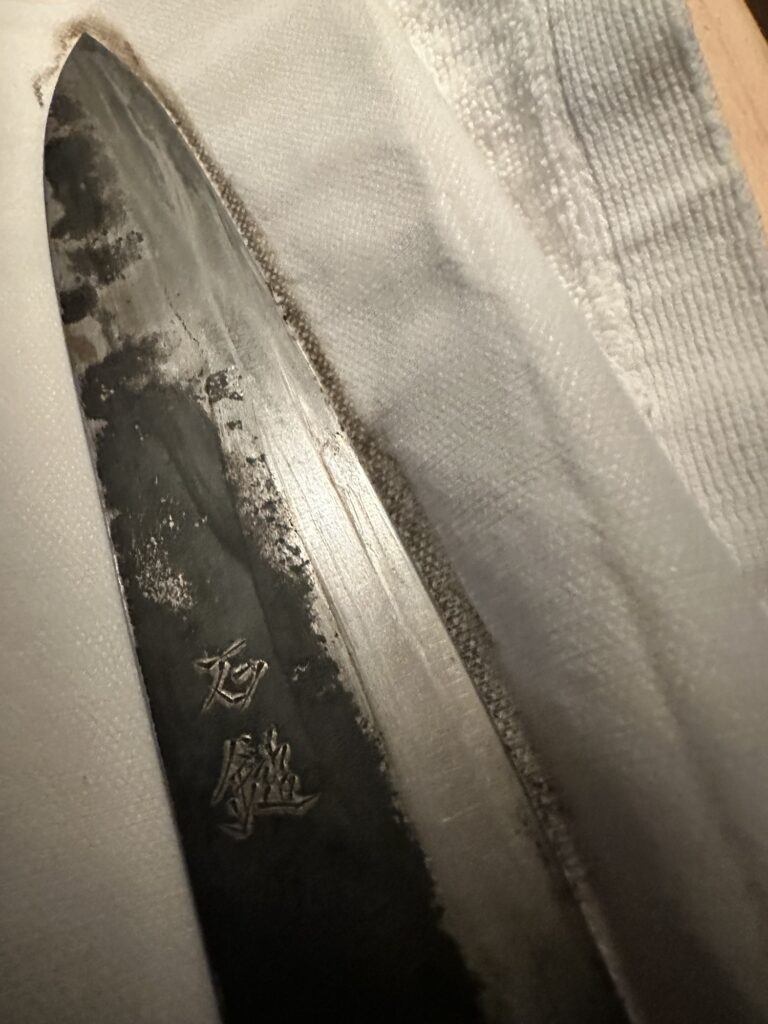
One reason I enjoy hand-forged Japanese knives is that they change with use.
The blade is sharpened. Carbon steel develops character. The handle becomes familiar in your hand. Small signs of years spent cooking gradually become part of the knife.
That is very different from thinking of a knife as a disposable kitchen tool.
For me, this long relationship between the cook and the knife is one of the reasons traditional Japanese knives still have real value today.
👉 INTERNAL LINK: Hand-Forged vs Machine-Made Knives: It’s About More Than Sharpness
7. Japanese Knife Care Should Help You Choose the Right Knife
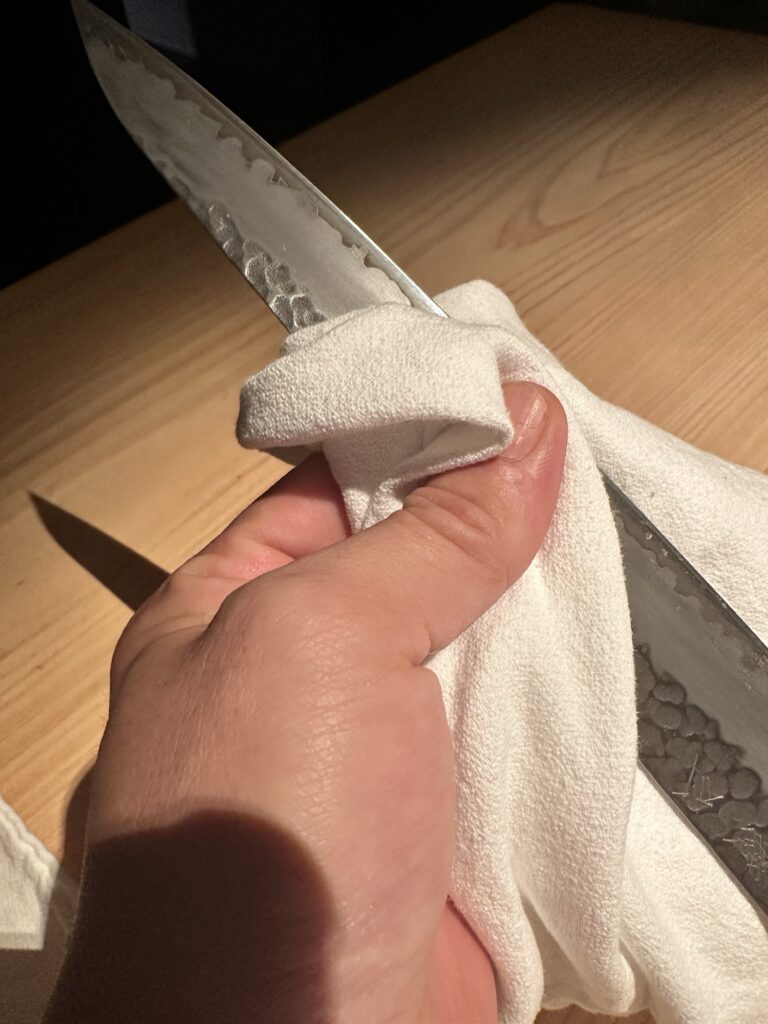
Sometimes people see Japanese knives, particularly carbon steel knives, and immediately think they will be difficult to own.
I do not think that should stop anyone.
Choose a steel that suits your lifestyle. If you want lower maintenance, VG10, Ginsan or SG2 can be excellent choices. If you enjoy sharpening and caring for your tools, carbon steel such as Aogami #2 can be extremely rewarding.
That is why I believe Japanese Knife Care Australia and Japanese Knives Australia naturally belong together.
When choosing a Japanese knife in Australia, do not look only at appearance, price or sharpness. Think about how you cook, how often you use the knife, whether you enjoy sharpening, and how much maintenance you realistically want to do.
There is no single Japanese knife that is right for everyone.
👉 INTERNAL LINK: Japanese Knives Australia: 5 Powerful Choices I Would Make After 25 Years as a Professional Chef
After more than 25 years in professional kitchens, my approach remains simple: use your knife, respect it, sharpen it, keep it clean and enjoy cooking with it.
A good Japanese knife is made to work.
For anyone discovering Japanese Knives Australia, I hope understanding basic knife care makes choosing and owning a Japanese knife easier, rather than more intimidating.
Take care of a good knife, and it can stay beside you for many years.
👉 Explore more:
https://blog.asaoyayaichi.com.au
👉 Visit our online store:
https://asaoyayaichi.com.au
Thank you for reading, and I hope to see you again in the next story.
—————————————————
Where to See and Buy Our Knives
Our Partner Stores
Chanoyu — Nerang, Gold Coast

Visit Chanoyu and See Our Japanese Knives
If you are on the Gold Coast, we would love you to visit Chanoyu, a Japanese café in Nerang where you can see and purchase a selection of Asaoya Yaichi knives in person.
Chanoyu is a lovely place to slow down and enjoy Japanese-inspired food, excellent matcha, coffee and handmade desserts. Its warm, peaceful atmosphere makes it a pleasure to visit, whether you are stopping in for breakfast, lunch or something sweet. We are delighted that our knives have a place there.

Visit Chanoyu: Shop 6A, 54–58 Nerang Street, Nerang QLD 4211
Opening hours: Monday to Saturday, 7:00 am–2:00 pm; closed Sunday
Website: https://www.chanoyucafe.com/
Instagram: https://www.instagram.com/chanoyugc/
The selection of knives on display may change. If you are interested in a particular Asaoya Yaichi knife, please contact us through https://asaoyayaichi.com.au before visiting, and we will help you check whether it is available at Chanoyu.