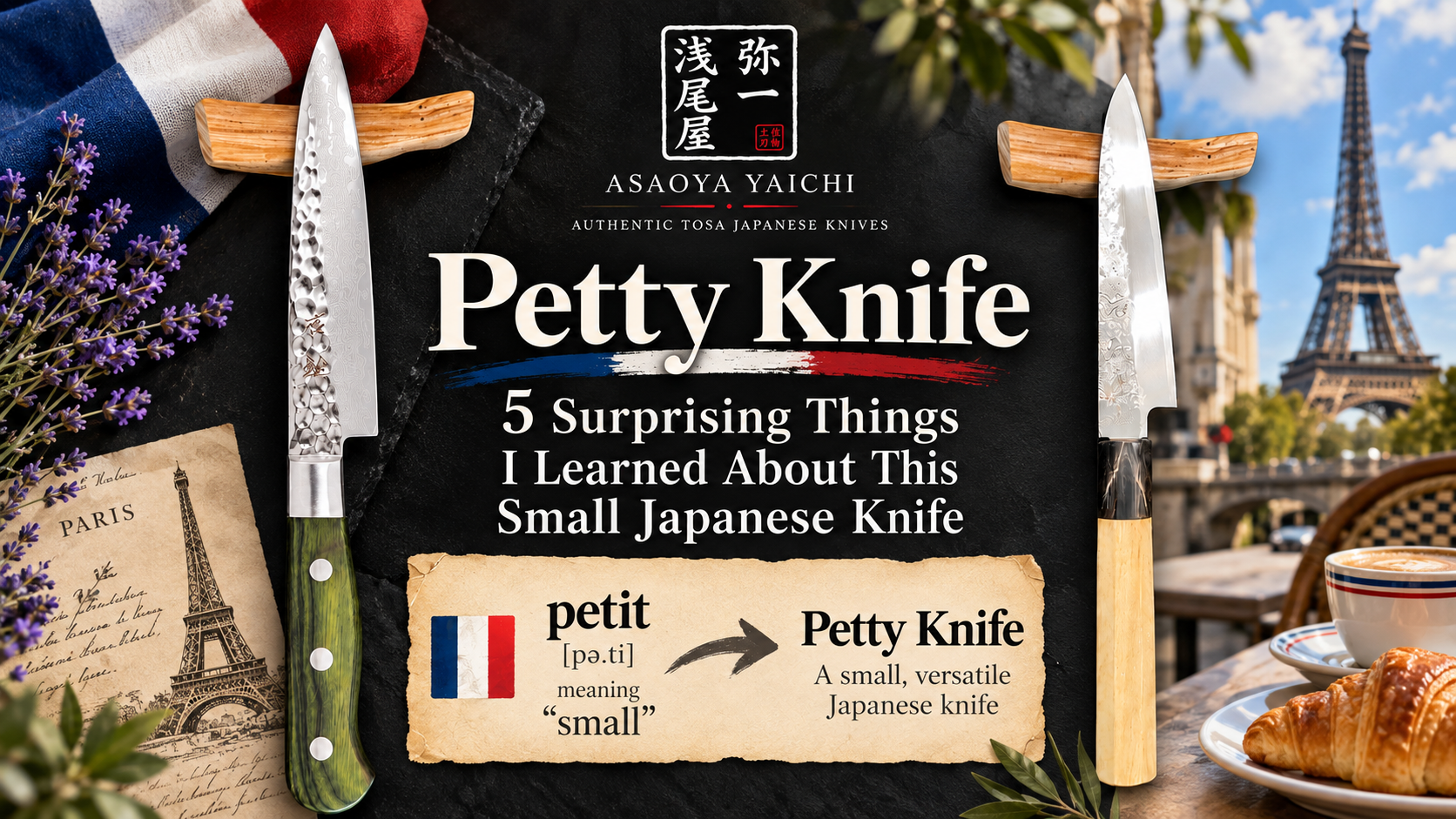

120mm Petty Ginsan Nashiji Forged Magnolia Octagonal Handle Buffalo Horn Ferrule
I have worked as a professional chef for more than 25 years, and during that time I have used many different Japanese knives. Gyuto, Santoku, Sujihiki, Yanagiba, Deba, Nakiri — and of course, the Petty Knife.
But recently I realised something surprisingly simple.
I had used a Petty Knife for years, but I had never really stopped to ask why it was called “Petty.”
Was it actually the English word “petty”? Was it originally a Japanese knife? Or did the name come from somewhere else?
So I decided to look into it.
For anyone exploring Japanese Knives Australia, understanding the history and purpose behind each knife can be just as interesting as comparing steels, shapes and finishes.
👉 Looking for Japanese knives in Australia? Visit Asaoya Yaichi:
https://asaoyayaichi.com.au
Petty Knife — Where Does the Name Come From?

The first thing I learned was that the name Petty Knife does not originally come from the English meaning of “petty.”
It is generally traced to the French word “petit,” meaning “small.”
In Japanese, the knife is called ペティナイフ (peti naifu), essentially combining the idea of “small” with the English word “knife.”
That was something I genuinely did not know.
I had spent years working with these knives in professional kitchens without ever thinking seriously about the origin of the name.
It is another reminder that many Japanese knife terms have histories that are not always obvious from the words we use today.
👉 INTERNAL LINK: Tosa Knife History — From Samurai-Era Craft to the Modern Kitchen
Is the Petty Knife Really a Traditional Japanese Knife?

135mm Petty VG10 Polished Hammered 67 Layer Damascus Green Handle
This is where the story becomes even more interesting.
The Petty Knife belongs to the Western-influenced side of Japanese kitchen knives rather than the older traditional Japanese knife families.
As Western-style cooking and Western knife shapes became established in Japan, Japanese makers adapted those forms using their own approach to knife making.
Today, the Petty Knife is widely recognised as a Japanese utility knife.
It is often around 120–150mm, although sizes vary between makers. Its compact blade gives much more control than a full-sized Gyuto or Santoku when working with smaller ingredients.
👉 INTERNAL LINK: Japanese Knives Australia: 5 Powerful Choices I Would Make After 25 Years as a Professional Chef
Petty Knife Uses in My Professional Kitchen
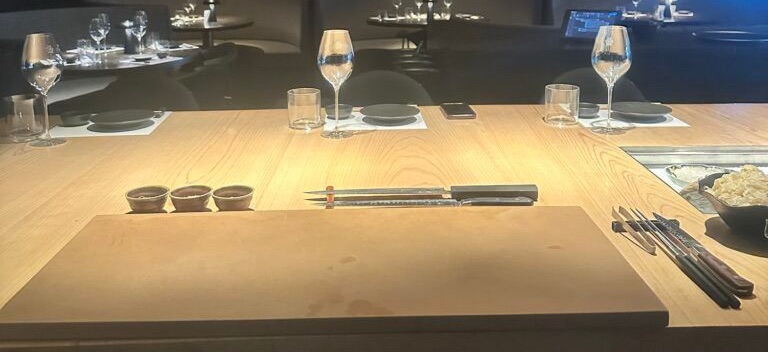
For me, this is where specifications become less important than actual kitchen experience.
A Petty Knife is useful when a larger knife simply feels unnecessary.
Trimming meat, removing sinew, preparing small vegetables, cutting fruit, cleaning small pieces of fish or doing detailed work around an ingredient are all situations where a smaller blade can be extremely convenient.
I personally like 135mm Petty Knives because they still feel compact while giving enough blade length to do real preparation work.
You could describe a Petty Knife as sitting somewhere between a Western paring knife and a small chef’s knife.
That versatility is probably why it quietly becomes one of those knives you keep reaching for.
Petty Knife Steel Still Matters
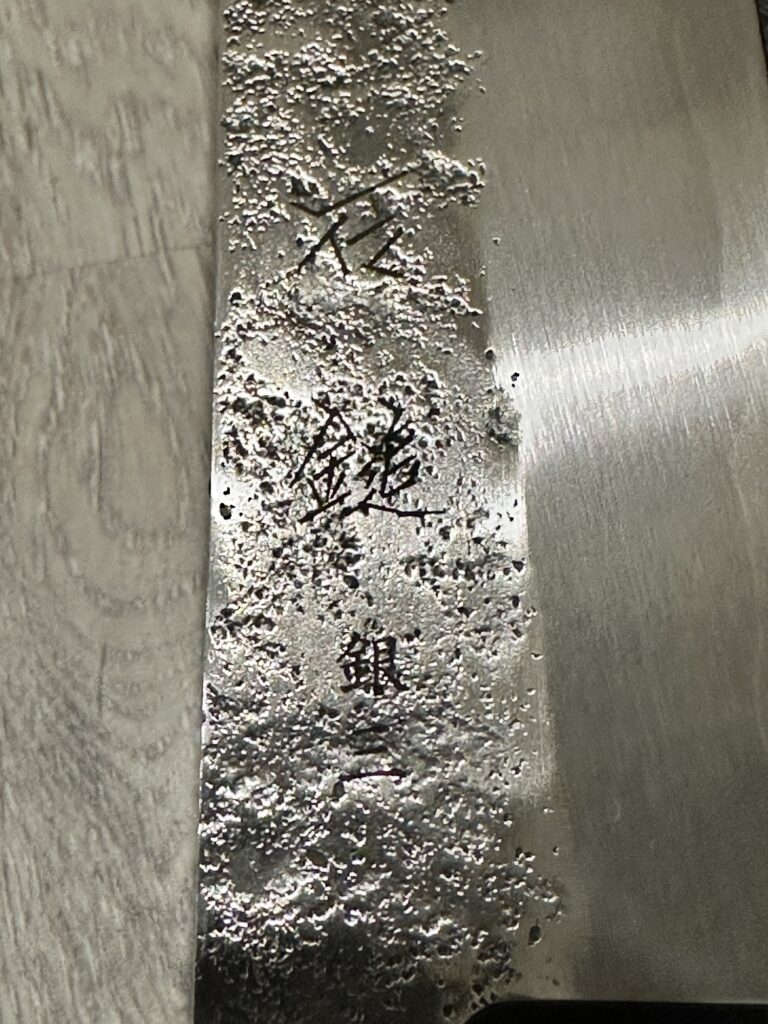
Being small does not mean the steel becomes unimportant.
A Petty Knife can be made from many of the same steels used in larger Japanese knives, including stainless steels and traditional carbon steels.
The choice affects maintenance, sharpening, edge retention and how the knife feels in everyday use.
For someone buying Japanese knives in Australia, this is worth considering carefully. A knife that suits a professional chef working every day may not necessarily be the best choice for someone cooking at home several times a week.
👉 INTERNAL LINK: Japanese Knife Steel: 5 Powerful Lessons After 25 Years in Professional Kitchens
The same applies to the surface finish. A polished Petty Knife, Nashiji finish or Kurouchi blade can look completely different even when the basic purpose of the knife remains similar.
👉 INTERNAL LINK: 仕上げ | Japanese Knife Finishes…
Petty Knife and the Character of Japanese Knives

One reason I enjoy learning more about Japanese knives is that even a small knife can lead into a much bigger story.
A Petty Knife may have Western influences, but Japanese makers have developed it into something that now sits naturally alongside Gyuto, Santoku, Nakiri and other knives in Japanese knife collections.
And when you start looking at individual makers, steels, handles and finishes, two Petty Knives of the same length can feel completely different.
This is also why I do not think Japanese knives should be judged only by blade length or steel name.
The maker, construction, balance, grind, handle and intended purpose all contribute to the finished knife.
👉 INTERNAL LINK: Kurouchi Japanese Knives…
Choosing a Petty Knife in Australia

135mm Petty VG10 Polished Hammered 67 Layer Damascus
For people searching for Japanese Knives Australia, the Gyuto and Santoku naturally receive most of the attention.
But the Petty Knife should not be overlooked.
If you already own a larger Japanese knife, a Petty Knife can be an excellent second knife because it covers many of the smaller jobs where a 180mm Santoku or 210mm Gyuto can feel unnecessarily large.
And after researching the name myself, I now find the Petty Knife even more interesting.
I had been using one for years without knowing that the name itself carried a small piece of European and Japanese knife history.
Sometimes the knives we think we already know still have something new to teach us.
👉 Explore more:
https://blog.asaoyayaichi.com.au
👉 Visit our online store:
https://asaoyayaichi.com.au
Thank you for reading, and I hope to see you again in the next story.
—————————————————
Where to See and Buy Our Knives
Our Partner Stores
Chanoyu — Nerang, Gold Coast
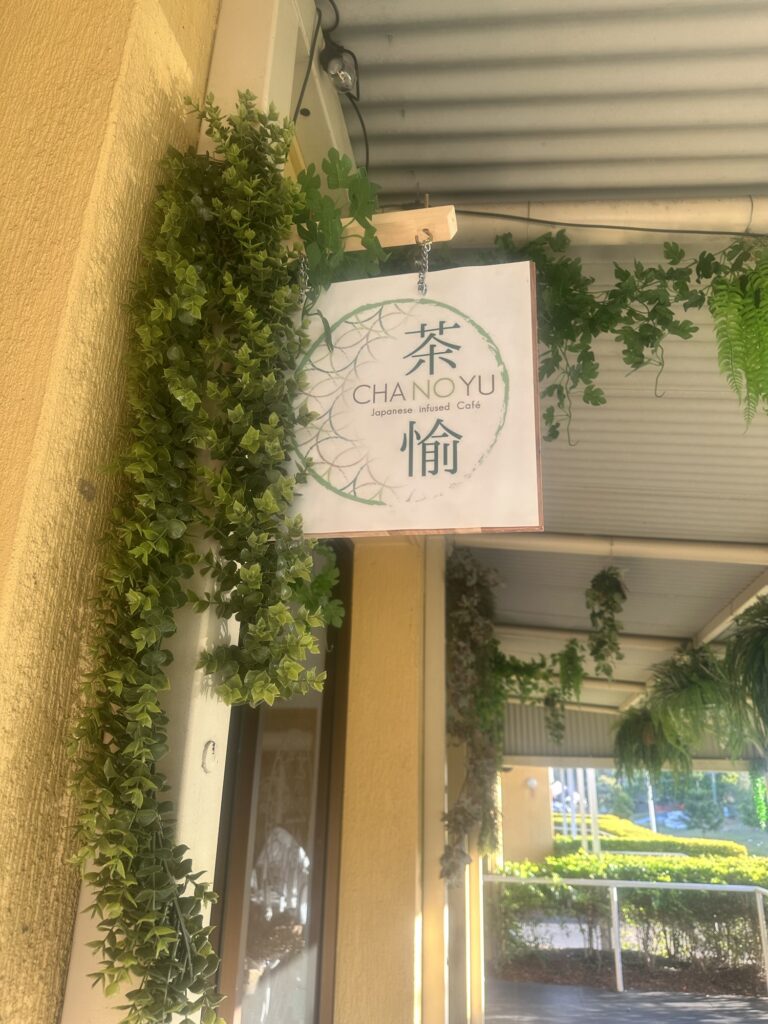
Visit Chanoyu and See Our Japanese Knives
If you are on the Gold Coast, we would love you to visit Chanoyu, a Japanese café in Nerang where you can see and purchase a selection of Asaoya Yaichi knives in person.
Chanoyu is a lovely place to slow down and enjoy Japanese-inspired food, excellent matcha, coffee and handmade desserts. Its warm, peaceful atmosphere makes it a pleasure to visit, whether you are stopping in for breakfast, lunch or something sweet. We are delighted that our knives have a place there.
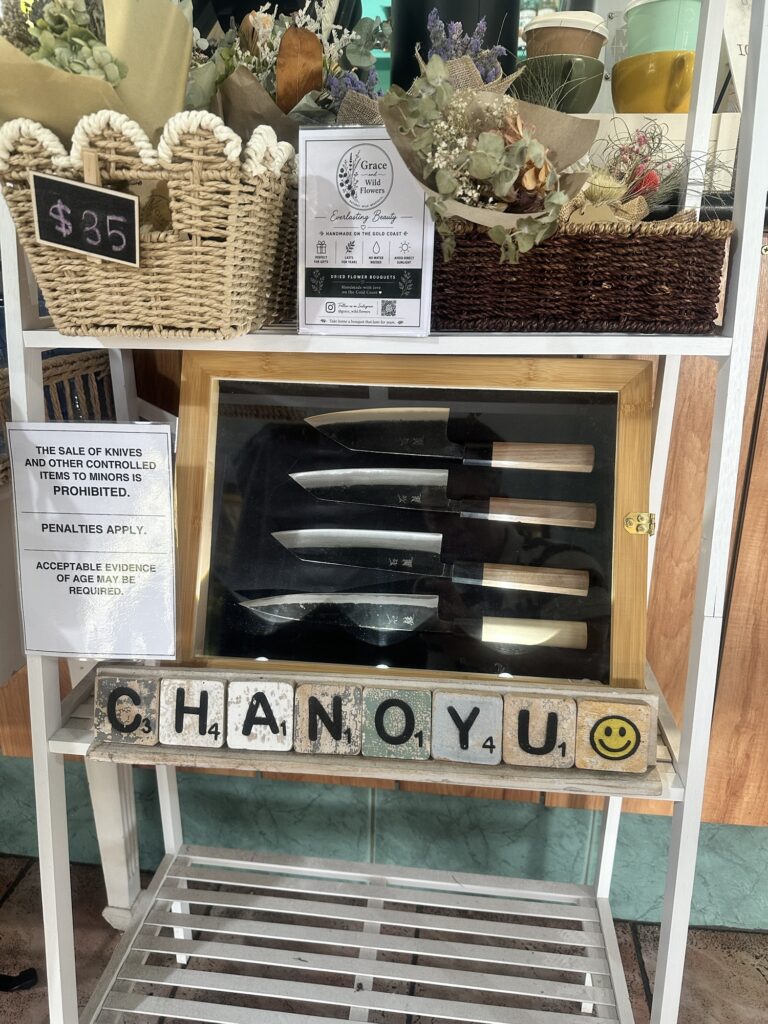
Visit Chanoyu: Shop 6A, 54–58 Nerang Street, Nerang QLD 4211
Opening hours: Monday to Saturday, 7:00 am–2:00 pm; closed Sunday
Website: https://www.chanoyucafe.com/
Instagram: https://www.instagram.com/chanoyugc/
The selection of knives on display may change. If you are interested in a particular Asaoya Yaichi knife, please contact us through https://asaoyayaichi.com.au before visiting, and we will help you check whether it is available at Chanoyu.