タグ: Damascus Santoku

  • Beni 紅 | 2 Black and Red Japanese Knives That Create a Striking Set

    Beni 紅 | 2 Black and Red Japanese Knives That Create a Striking Set


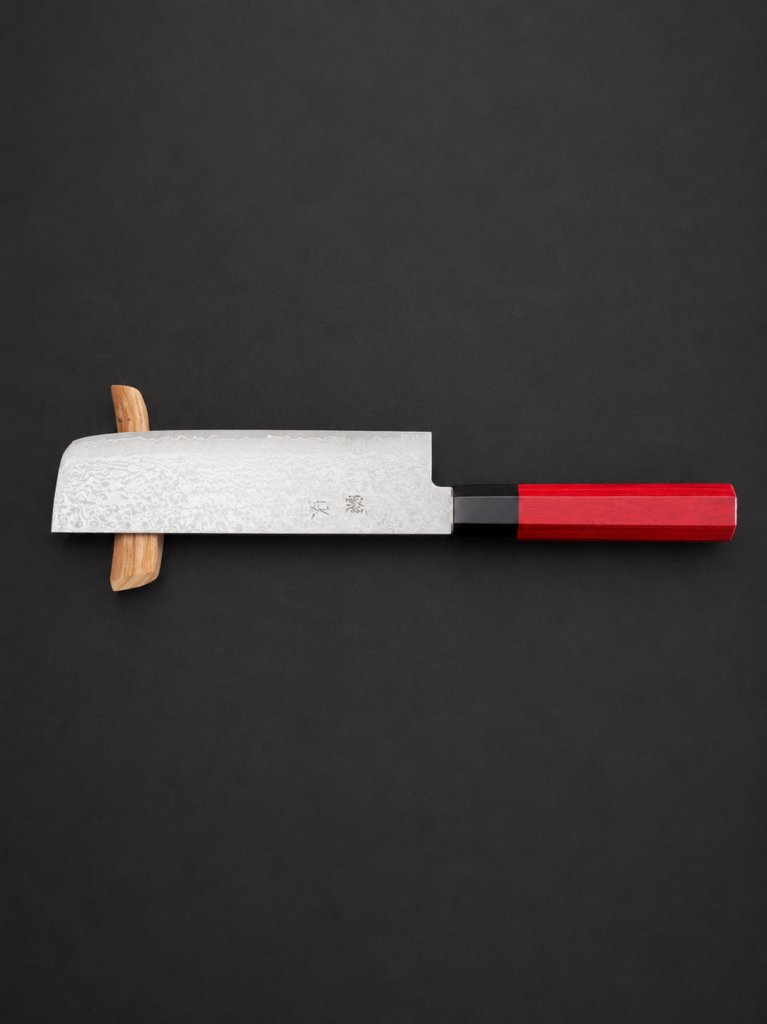
    165mm Usuba A8 Hammered Damascus Black & Red Octagonal Handle
    A$430.00

    When people think of beautiful Japanese knives, they often picture polished Damascus blades or traditional wooden handles. While those features certainly have their charm, sometimes it is the combination of colours that leaves the strongest impression.

    That is exactly what makes these Black and Red Japanese Knives so memorable.

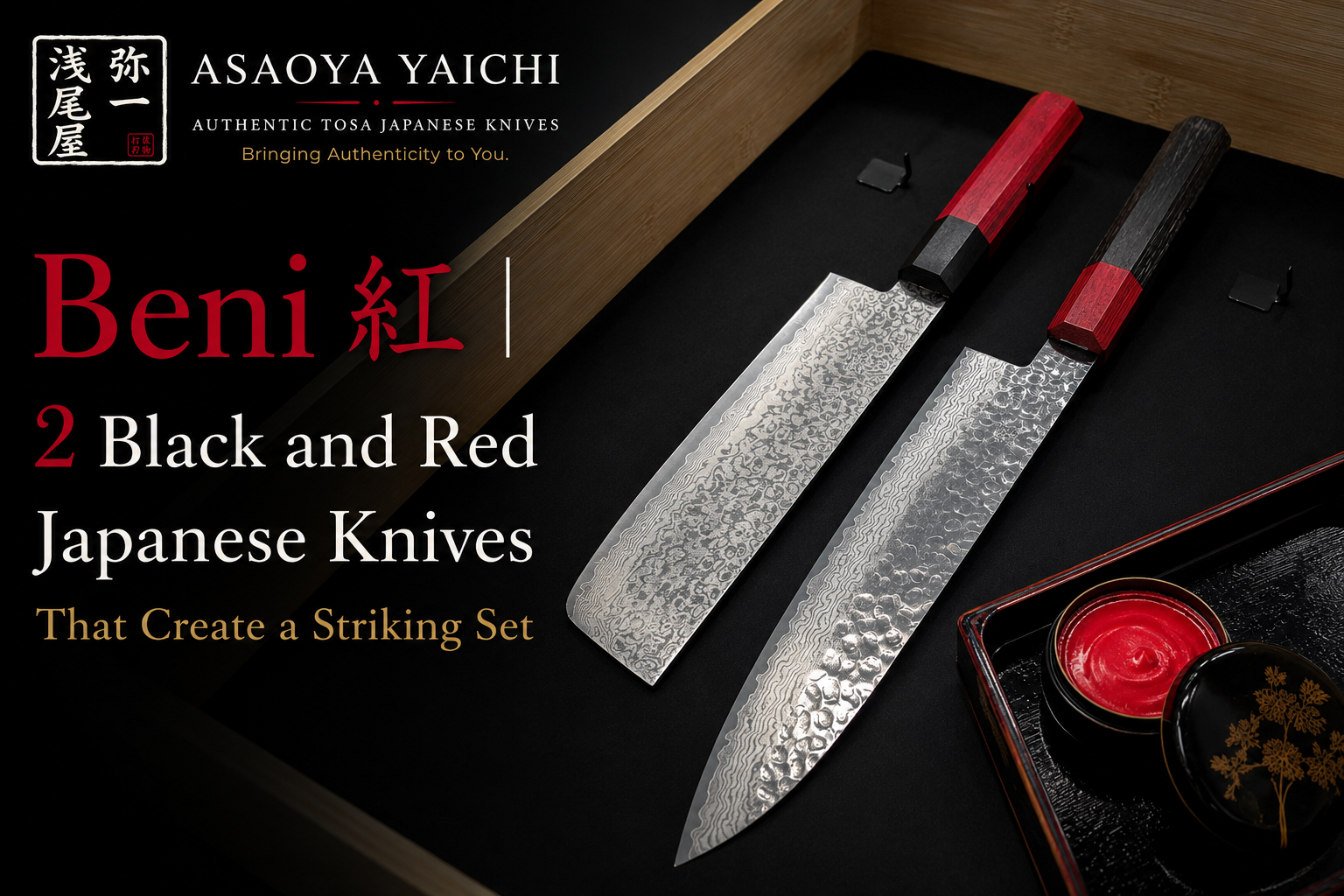
    The deep black and vibrant red octagonal handles create a striking contrast that reflects both elegance and strength. Inspired by traditional Japanese aesthetics, these handcrafted knives are designed not only to perform exceptionally in the kitchen but also to become pieces you are proud to display.

    Whether you’re a professional chef or a passionate home cook, these knives offer something special every time you pick them up.

    If you’re looking for authentic handcrafted Japanese knives in Australia, you’ll find our carefully selected collection at Asaoya Yaichi


    Why Black and Red Japanese Knives Stand Out
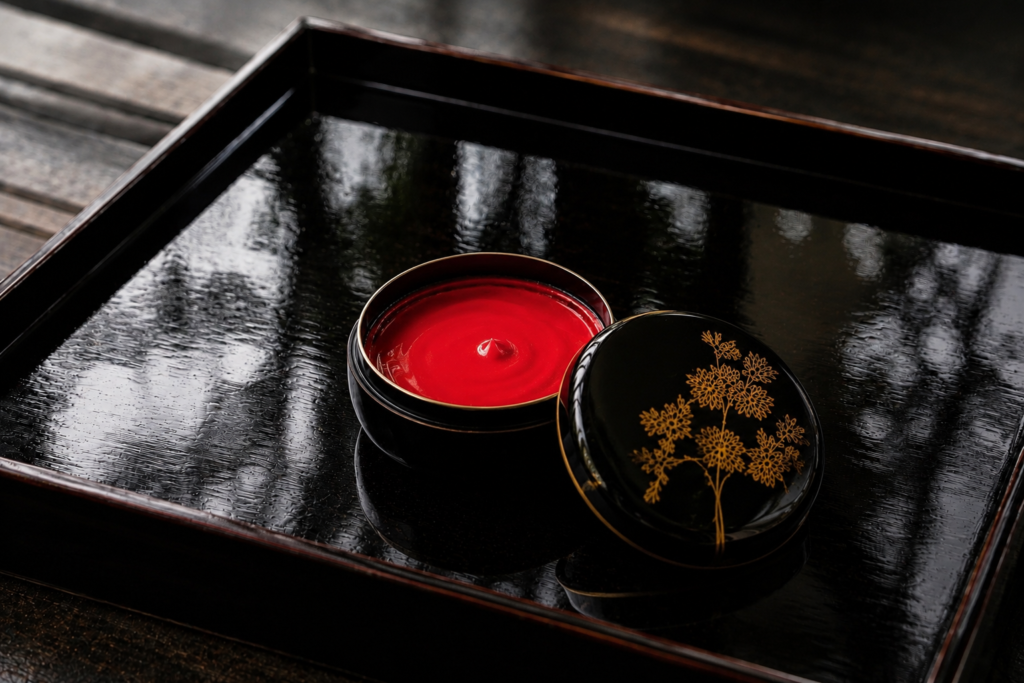
    Wabi-Sabi

    Japanese craftsmanship has always balanced beauty with practicality.

    Black has long represented sophistication, stability and quiet confidence, while red symbolises passion, celebration and energy. Together they create a timeless contrast that immediately attracts attention without appearing overly flashy.

    These Black and Red Japanese Knives perfectly capture that balance.

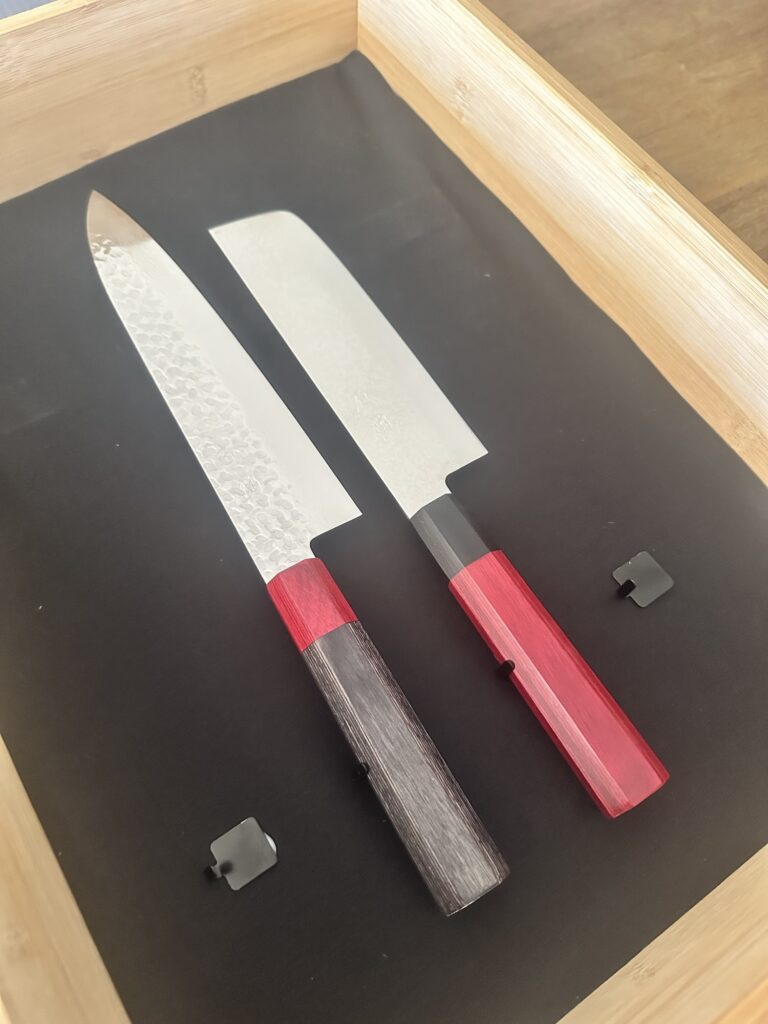
    Each knife features a beautiful Damascus blade paired with a carefully finished octagonal handle combining rich black and vibrant red. The result is a knife that looks equally at home in a professional sushi bar, an open restaurant kitchen or a modern family home.

    Unlike mass-produced knives, handcrafted Japanese knives develop a personal connection with their owner. Every scratch tells a story, and every meal prepared becomes part of that journey.

    Read our Beginner’s Guide to Japanese Knives


    Two Black and Red Japanese Knives with Different Personalities
    Ishizuchi Kanamono Manufactory

    Although these knives share the same elegant design language, each serves a different purpose in the kitchen.

    165mm Usuba A8 Hammered Damascus

    The 165mm Usuba is designed primarily for vegetables.

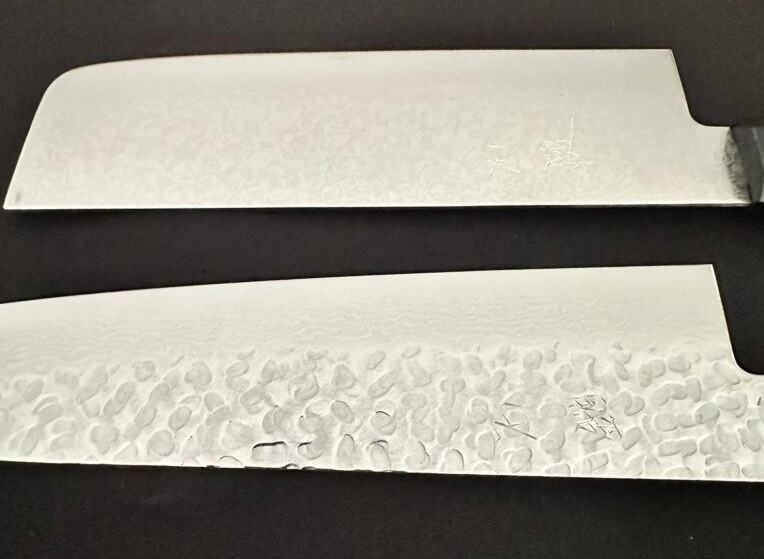
    Made from A8 stainless steel, it offers excellent corrosion resistance, toughness and easy maintenance. The hammered Damascus finish not only adds visual depth but also helps reduce food sticking to the blade.

    Whether you’re preparing fine julienne vegetables, decorative garnishes or paper-thin slices, the Usuba provides impressive precision while remaining forgiving for everyday use.

    Its lightweight balance also makes long preparation sessions far more comfortable.


    165mm Santoku A10 Damascus

    The matching 165mm Santoku features A10 stainless steel.

    With its higher carbon content, A10 achieves greater hardness and longer edge retention than A8 while still offering excellent corrosion resistance.

    As an all-purpose Japanese kitchen knife, the Santoku handles vegetables, meat and fish with remarkable ease.

    For many home cooks, this will quickly become the knife they reach for every day.

    Learn more about Carbon Steel vs Stainless Steel


    Why They Create the Perfect Japanese Knife Set
    Damascus blade

    Each knife is beautiful individually.

    Together, however, they become something truly special.

    The matching black and red handles create a visual harmony rarely found when purchasing knives separately.

    Displayed side by side on a magnetic knife rack, they immediately become a focal point in the kitchen.

    Many customers have recently chosen to purchase both knives together rather than individually.

    It’s easy to understand why.

    The combination creates a complete Japanese knife set that feels intentional, elegant and perfectly balanced.

    The Usuba handles vegetables with incredible precision.

    The Santoku takes care of almost everything else.

    Together they cover most daily kitchen tasks while maintaining a consistent appearance that reflects traditional Japanese craftsmanship.

    Rather than mixing different handle colours and styles, this matching pair creates a professional, coordinated look that many chefs appreciate.

    Discover Our Knife Care Guid


    Japanese Craftsmanship You Can Enjoy Every Day
    Fucha ryori Bon

    Beautiful knives should never be reserved only for special occasions.

    These Black and Red Japanese Knives were made to be used.

    Every blade is handcrafted using techniques that have been refined over generations while incorporating modern stainless steel for practical everyday performance.

    The octagonal handles provide a comfortable grip for both left- and right-handed users, while the Damascus pattern ensures every knife has its own unique appearance.

    They’re not simply decorative pieces.

    They’re tools designed to prepare countless family meals, dinner parties and special celebrations for many years.

    Explore the Story Behind Tosa Knife Craftsmanship


    More Than Just a Beautiful Knife
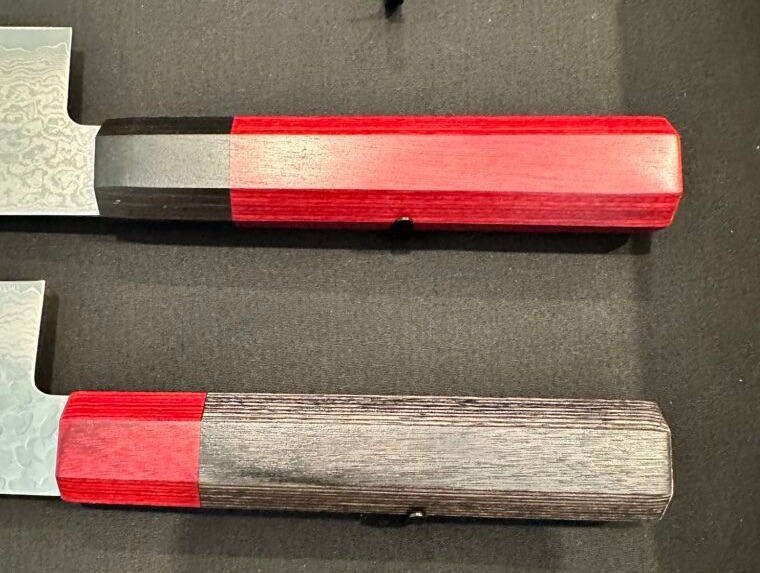
    Black and Red Japanese Knives Handle

    As someone who has worked as a professional chef for over 25 years, I’ve learned that the best knife is the one you genuinely enjoy using.

    Performance is essential.

    Comfort matters.

    But so does the feeling you get every time you reach for it.

    That’s one reason I appreciate matching knife collections.

    When your knives share the same design language, your kitchen feels organised, professional and enjoyable to work in.

    These Black and Red Japanese Knives deliver exactly that experience.


    Final Thoughts on Black and Red Japanese Knives

    Authentic Japanese knives are an investment that can be enjoyed for many years.

    These two handcrafted knives combine traditional Japanese beauty with practical everyday performance.

    Purchased individually, each knife offers outstanding quality.

    Purchased together, they create a striking Japanese knife set whose black and red contrast makes an unforgettable impression.

    Whether you’re upgrading your own kitchen or searching for a meaningful gift, this matching pair offers beauty, craftsmanship and functionality in equal measure.

    If you’d like to explore these knives in more detail or discover more handcrafted Japanese knives from Tosa, visit https://asaoyayaichi.com.au.

    Every knife in our collection has been carefully selected because we believe exceptional craftsmanship deserves to be used, appreciated and passed on.

    Read Why Handcrafted Japanese Knives Are Different

    Explore Our Complete Japanese Knife Collection at https://asaoyayaichi.com.au
  • Monozukuri | Where Japanese Craftsmanship Meets Quiet Beauty

    Monozukuri | Where Japanese Craftsmanship Meets Quiet Beauty

    67-Layer Damascus Blade

    When people search for Japanese knives, they often picture striking Damascus patterns, polished finishes, or eye-catching designs.

    Those features certainly have their place.

    But after spending more than 25 years working as a chef, I’ve come to believe that the best knife isn’t necessarily the one that attracts the most attention.

    It’s the one you enjoy reaching for every single day.

    A knife that feels perfectly balanced in your hand.

    A knife that performs beautifully, looks elegant without being flashy, and quietly earns your trust over time.

    That is the philosophy behind this collection.

    In Japan, there is a word that perfectly expresses this way of thinking.

    What Is Monozukuri?

    Ishizuchi Kanamono Manufactory

    Monozukuri literally means “making things.”

    But its true meaning goes much deeper than manufacturing.

    It represents the dedication of Japanese craftspeople who constantly refine their skills, pay attention to the smallest details, and never compromise on quality.

    For generations, Japanese blacksmiths have passed their knowledge from one craftsman to the next.

    Every knife they create reflects years of experience, patience, and pride in their work.

    Rather than chasing trends, they focus on creating tools that perform beautifully and last for many years.

    That philosophy is exactly what inspired this collection.

    Every knife is designed to honour traditional Japanese craftsmanship while fitting naturally into today’s kitchens.

    Premium VG10 Steel with a Beautiful 67-Layer Damascus Blade


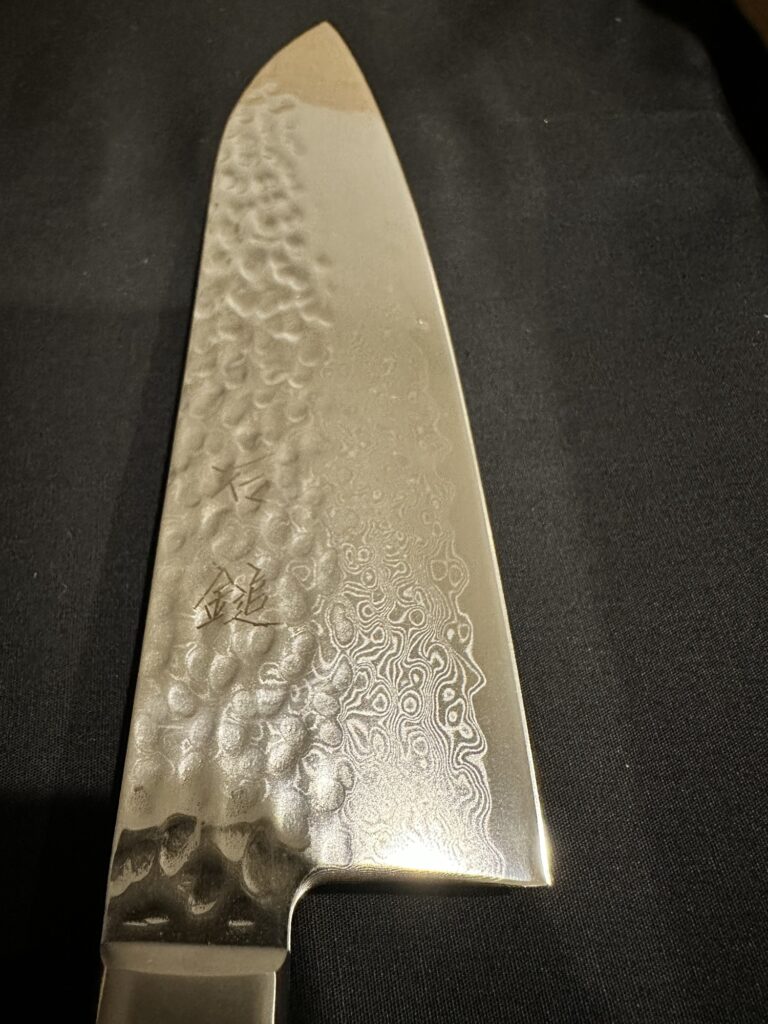
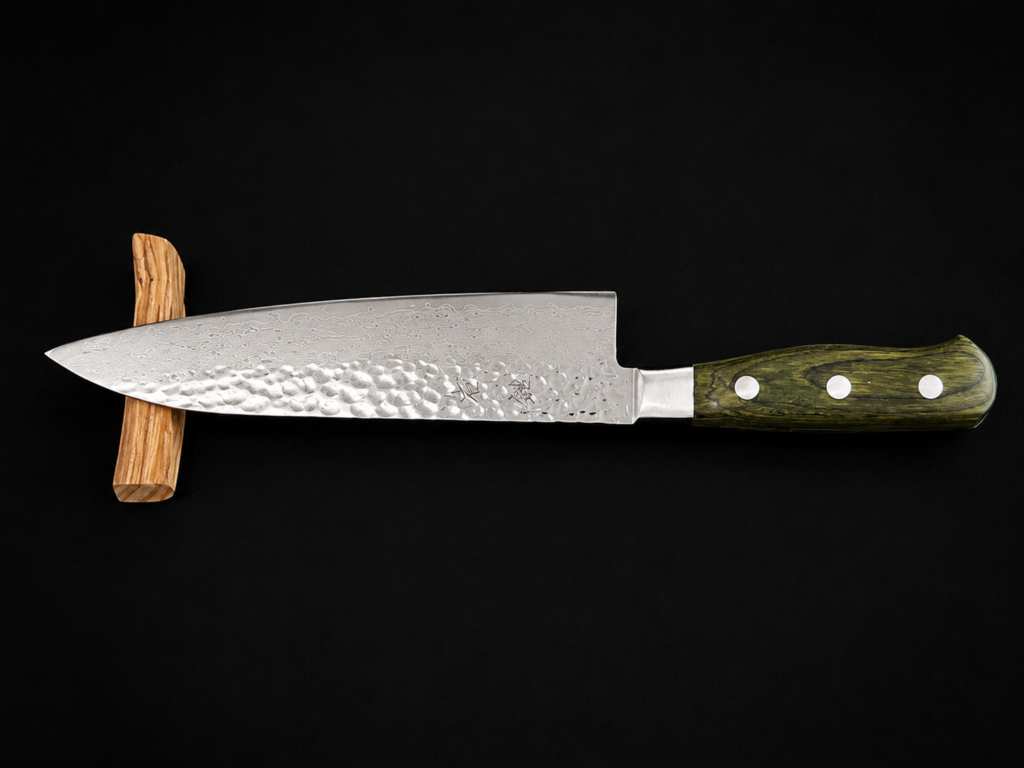
    180mm Santoku VG10 Polished Hammered 67 Layer Damascus Green Handle
    A$380.00

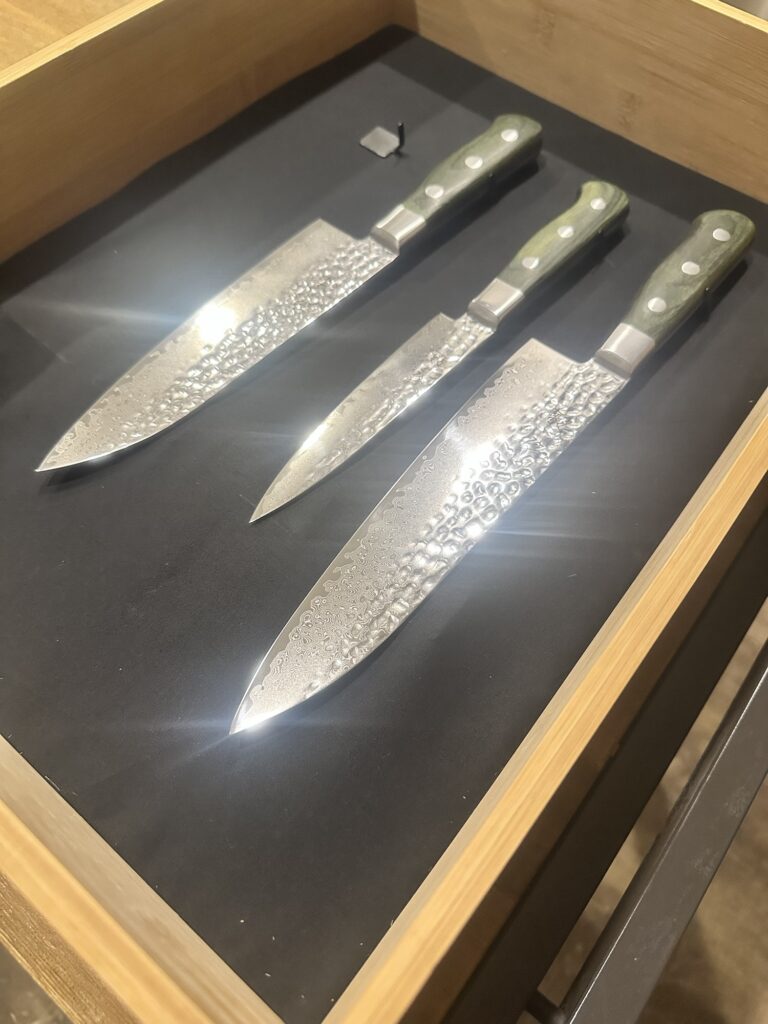
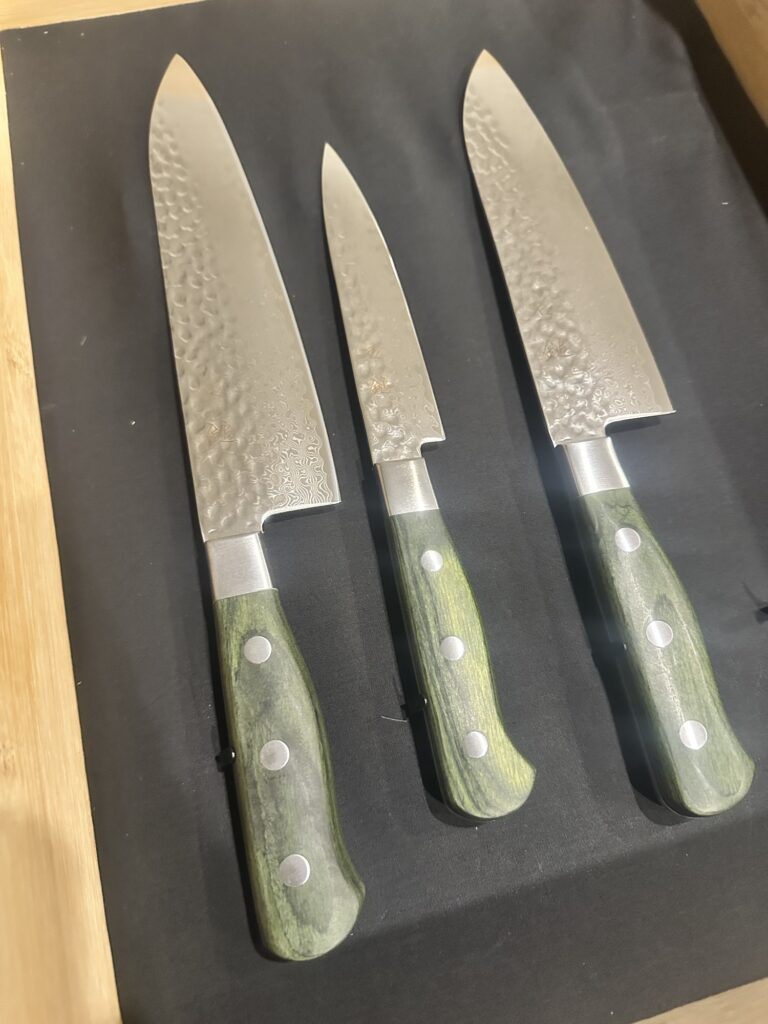
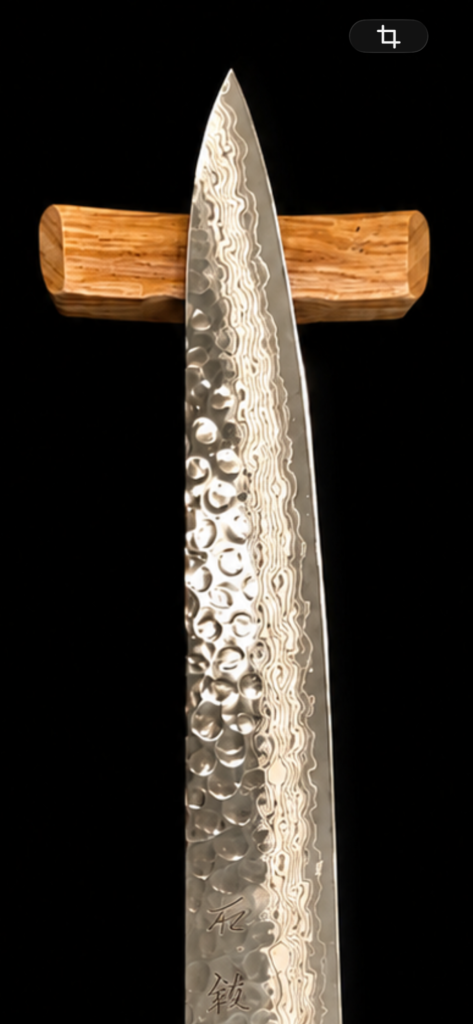
    Every knife in this collection is handcrafted in Japan using VG10 stainless steel and features a beautifully finished 67-layer Damascus blade.

    VG10 has earned its reputation as one of Japan’s most respected stainless steels for good reason.

    It offers outstanding sharpness, excellent edge retention, impressive corrosion resistance, and is much easier to maintain than traditional carbon steel.

    That makes it an excellent choice for both professional chefs and passionate home cooks who want the performance of premium Japanese knives without constantly worrying about rust.

    The Damascus blade isn’t simply there to create a beautiful pattern.

    Each layer reflects the precision and care of Japanese craftsmanship.

    The flowing lines give every knife its own unique character while maintaining the practical performance needed for everyday cooking.

    Beautiful tools shouldn’t stay in a display cabinet.

    They should become part of your daily routine.

    If you’d like to learn more about choosing the right steel, you may also enjoy this article:

    Related Article:
    Carbon Steel vs Stainless Steel | Which Japanese Knife Is Right for You?

    (Insert your internal blog link here.)

    A Contemporary Handle Inspired by Japanese Simplicity


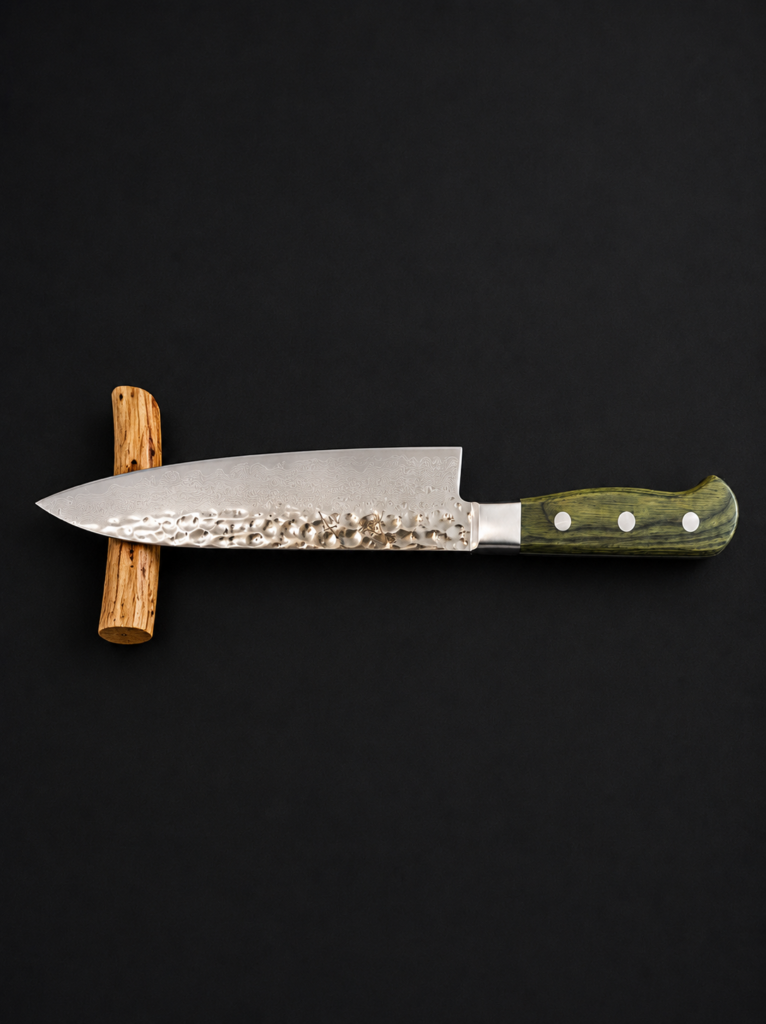
    135mm Petty VG10 Polished Hammered 67 Layer Damascus Green Handle
    A$260.00

    While the blade immediately catches your attention, what truly makes this collection different is the handle.

    Traditional Japanese knives are often fitted with magnolia or walnut handles.

    They’re beautiful and timeless.

    This collection takes a different approach.

    The calm green handle introduces a contemporary style while still respecting the understated beauty that Japanese craftsmanship is known for.

    Rather than competing with the Damascus pattern, it complements it.

    Nothing feels over-designed.

    Nothing feels excessive.

    The balance between blade and handle creates a knife that feels refined, comfortable, and natural in the hand.

    It’s modern without losing its connection to tradition.

    To me, that’s one of the most attractive features of this collection.

    Another Expression of Japanese Beauty

    Wabi-Sabi

    Some time ago, I introduced our Wabi-Sabi collection.

    That series celebrated traditional finishes, natural textures, and the quiet beauty that develops through years of use.

    This collection tells a different story.

    Instead of focusing entirely on traditional appearance, it combines centuries of Japanese blacksmithing with contemporary materials and thoughtful design.

    It’s a different expression of Japanese craftsmanship.

    Neither is better.

    They’re simply different philosophies.

    If you’re interested in the traditional side of Japanese knife making, you might also enjoy reading:

    Related Article:
    Wabi-Sabi | Experience the Quiet Beauty of This Handcrafted Santoku Knife

    (Insert your internal blog link here.)

    One embraces the beauty of age and simplicity.

    The other demonstrates how Japanese craftsmanship can continue evolving while respecting its heritage.

    Both represent the spirit of Monozukuri.

    Because Monozukuri isn’t about resisting change.

    It’s about improving with every generation while never losing sight of the craftsmanship that came before.

    Three Knives. One Complete Collection

    Knife Set

    This collection is available in three carefully selected models.

    Santoku

    The Santoku is one of Japan’s most versatile kitchen knives.

    Whether you’re preparing vegetables, slicing meat, or cutting fish, it’s designed to handle everyday cooking with ease.

    Its balanced size makes it an excellent choice for home cooks looking for a single knife that can do almost everything.

    Gyuto

    The Gyuto is Japan’s answer to the Western chef’s knife.

    Its longer blade offers greater versatility when working with larger vegetables, meat, and fish while maintaining the precision that Japanese knives are known for.

    If you enjoy preparing a wide variety of ingredients, the Gyuto quickly becomes one of the most useful knives in the kitchen.

    Petty

    The Petty knife is designed for precision.

    From peeling fruit and vegetables to trimming meat or preparing garnishes, it provides complete control for delicate work that larger knives simply can’t match.

    Although it’s the smallest knife in the collection, many chefs consider it one of the most frequently used.

    Each knife has its own purpose.

    Together, they create a collection capable of handling almost every task in the kitchen.

    Because every knife shares the same premium VG10 steel, beautifully finished 67-layer Damascus blade, and distinctive green handle, they work together not only in performance but also in appearance.

    Why I Recommend Building the Complete Collection

    Many people begin by purchasing a single Japanese knife.

    That’s exactly what I would recommend if you’re just starting your journey.

    However, once you experience the quality of a handcrafted knife, it’s easy to understand why so many people gradually build a complete collection.

    Having the right knife for each task makes cooking smoother, more enjoyable, and more efficient.

    The Santoku becomes your everyday companion.

    The Gyuto handles larger ingredients with confidence.

    The Petty takes care of all the finer details.

    Instead of asking one knife to do every job, each knife performs the task it was designed for.

    As a result, not only does cooking become easier, but your knives also stay in better condition because each blade is used appropriately.

    My Experience After More Than 25 Years as a Chef

    Having worked as a chef for more than 25 years, I’ve noticed something that many people don’t think about until they experience it themselves.

    When your knives all belong to the same collection, people notice.

    In professional kitchens, fellow chefs often comment on how clean and professional a matching set looks.

    It’s not unusual for someone to walk past and say,

    “Those knives look great together.”

    I’ve also spent many years working at sushi counters where customers can clearly see the knives being used.

    Interestingly, customers notice them too.

    I’ve had guests compliment the appearance of a matching set before they’ve even tasted the food.

    Of course, beautiful knives don’t make someone a better chef.

    Skill, experience, and technique will always be far more important.

    But presentation matters.

    Just as chefs take pride in wearing a clean uniform and maintaining an organised workstation, using knives from the same collection creates a sense of consistency and professionalism.

    It reflects the respect we have for our craft.

    That’s one of the reasons I personally enjoy using knives from the same series whenever possible.

    Not because they match.

    But because together they create a workspace that feels organised, intentional, and enjoyable to work in every day.

    For me, that’s another reason why I often recommend building a complete Japanese knife set rather than collecting individual knives from different collections.

    It’s something I’ve genuinely appreciated throughout my career, and I believe many passionate home cooks will appreciate it too.

    More Than Just a Knife

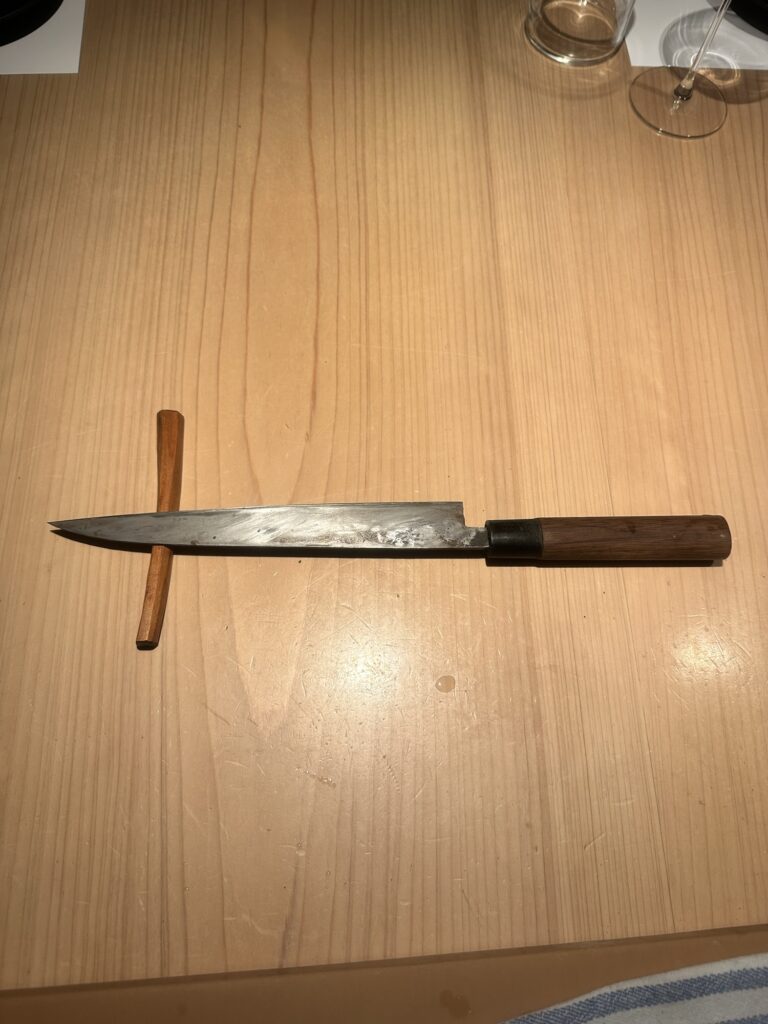
    A yanagiba knife that has been used for 40 years

    After more than 25 years as a chef, I’ve come to realise that a great knife is far more than just a cutting tool.

    It’s something you rely on every day.

    It becomes part of the way you cook, the way you work, and even the way you present yourself as a chef.

    The longer you use a well-made knife, the more you appreciate the skill, experience, and dedication that went into creating it.

    That’s exactly what Monozukuri is all about.

    It’s not simply making products.

    It’s about creating something with care, purpose, and pride—something designed to be used and appreciated for many years.

    Every handcrafted knife in this collection reflects that philosophy.

    The Asaoya Yaichi Philosophy

    Asaoya Yaichi

    At Asaoya Yaichi, our goal has never been to offer the largest selection of Japanese knives.

    Instead, we carefully select knives that we genuinely believe in.

    As someone who has spent over two decades working in professional kitchens, I understand how important it is to trust the tools you use every day.

    That’s why every knife we offer is chosen not only for its appearance, but also for its performance, durability, and the craftsmanship behind it.

    We want to introduce authentic handcrafted Japanese knives that you’ll enjoy using for many years—not simply because they’re beautiful, but because they earn their place in your kitchen every time you cook.

    Continue Exploring Japanese Knives

    If you’d like to learn more about authentic Japanese knives, you may also enjoy these articles:

    You can explore all of our latest articles here:

    👉 https://blog.asaoyayaichi.com.au
    Discover the Collection

    If you’re looking for handcrafted VG10 Damascus Japanese knives that combine traditional Japanese craftsmanship with thoughtful modern design, we invite you to explore this collection.

    Whether you choose the Santoku, Gyuto, Petty, or the complete Japanese knife set, you’ll be investing in knives that were created to perform beautifully for years to come.

    More importantly, you’ll experience a small part of the philosophy that has guided Japanese craftspeople for generations.

    Monozukuri isn’t simply about making knives.

    It’s about making them the right way.

    From Tosa, Japan, to your kitchen.

    Explore our handcrafted Japanese knives

    Shop the collection:
    https://www.asaoyayaichi.com.au
    As both a chef and the founder of Asaoya Yaichi, I hope these knives bring you the same enjoyment and confidence they’ve brought me throughout my career.

  • Wabi-Sabi | Experience the Quiet Beauty of This Handcrafted Santoku Knife

    Wabi-Sabi | Experience the Quiet Beauty of This Handcrafted Santoku Knife

    Ishizuchi Kanamono Manufactory

    When people think of a beautiful Japanese knife, many imagine a mirror-polished blade or an eye-catching Damascus pattern.

    While those styles certainly have their place, Japanese culture has long embraced a different idea of beauty.

    Rather than seeking perfection, traditional Japanese aesthetics celebrate simplicity, balance, authenticity, and the quiet character that develops over time.

    This philosophy is known as Wabi-Sabi.

    Wabi-Sabi isn’t simply about appearance. It is about appreciating craftsmanship, natural materials, and the beauty that comes from using something every day.


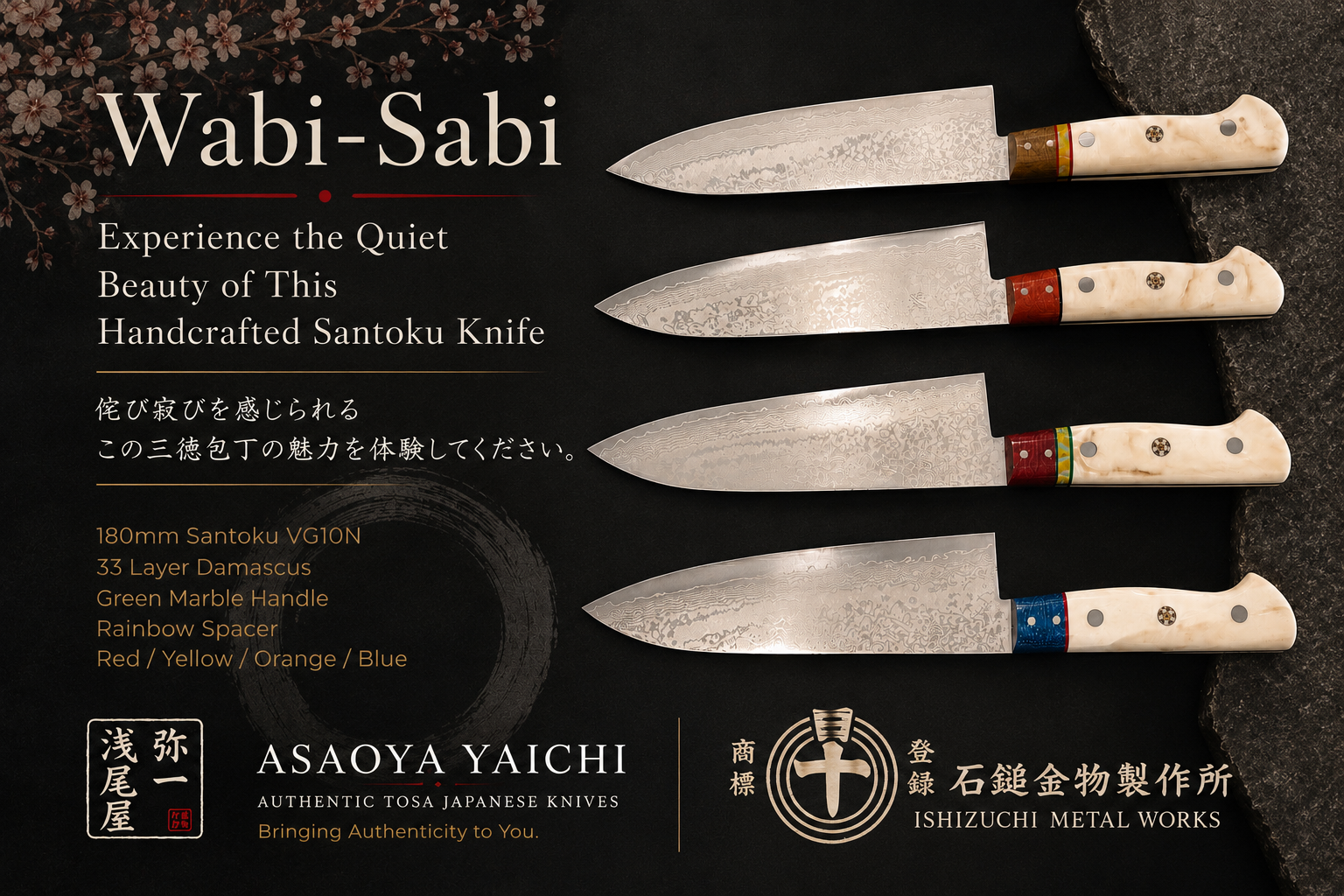
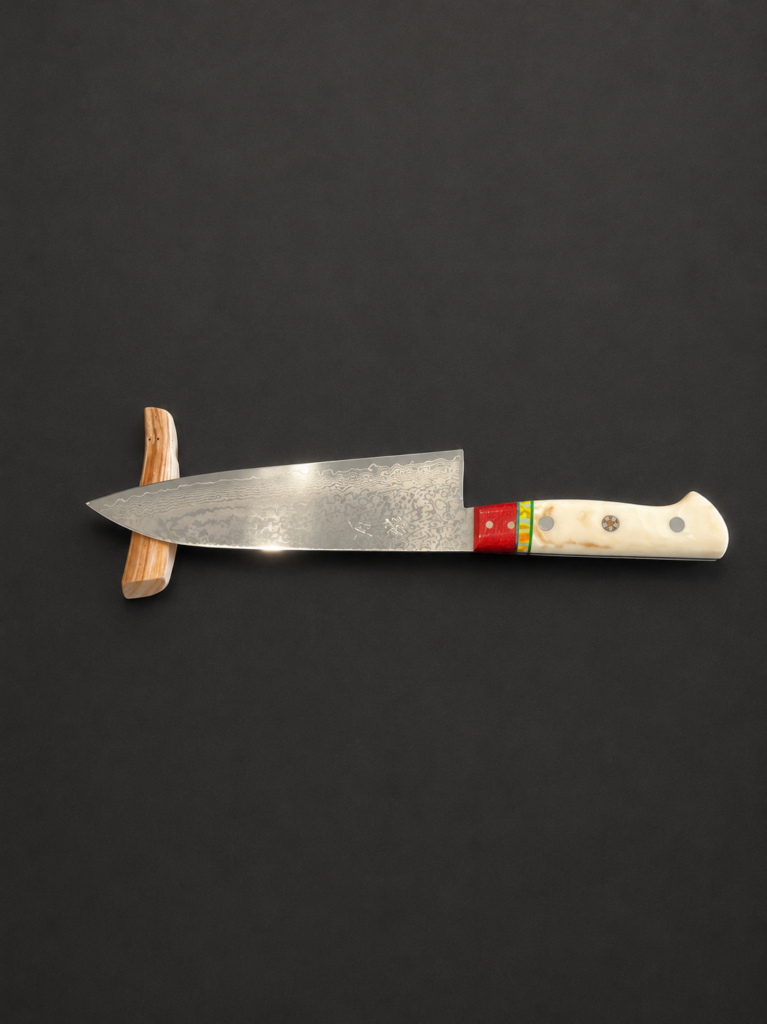
    180mm Santoku VG10N 33 Layer Damascus Green Marble Handle Rainbow Spacer Red
    A$780.00

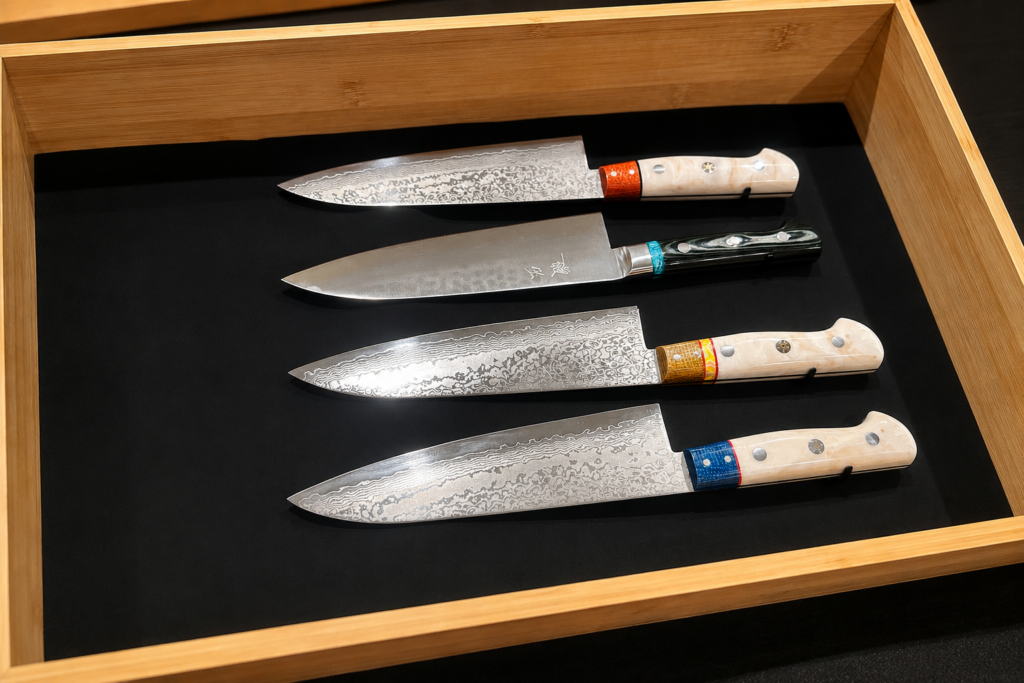
    For me, the 180mm Santoku VG10N 33 Layer Damascus Green Marble Handle Rainbow Spacer Red perfectly captures that philosophy.

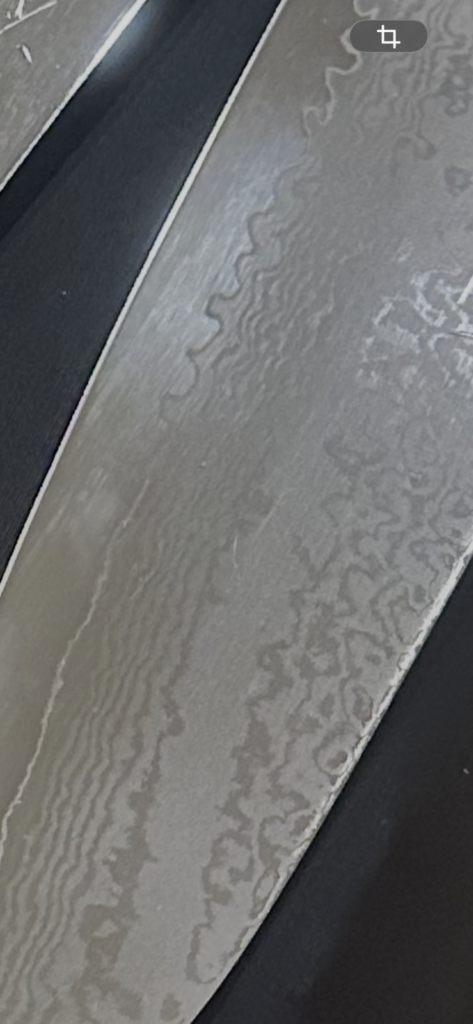
    The flowing 33-layer Damascus pattern is elegant without being overwhelming.

    Instead of demanding attention, it reveals more detail every time the light hits the blade from a different angle.

    The longer you look at it, the more you appreciate its subtle beauty.

    The green marble handle makes every knife unique.

    Because the material naturally varies, no two handles are ever identical.

    Each knife has its own personality, something I believe perfectly reflects the spirit of handcrafted Japanese craftsmanship.

    Between the blade and the handle sits a beautiful rainbow spacer.

    Rather than feeling flashy, it provides a tasteful modern accent that complements the traditional Damascus blade and the elegant green marble handle.

    Together, these elements create a knife that feels refined, balanced, and unmistakably Japanese.

    Asaoya Yaichi

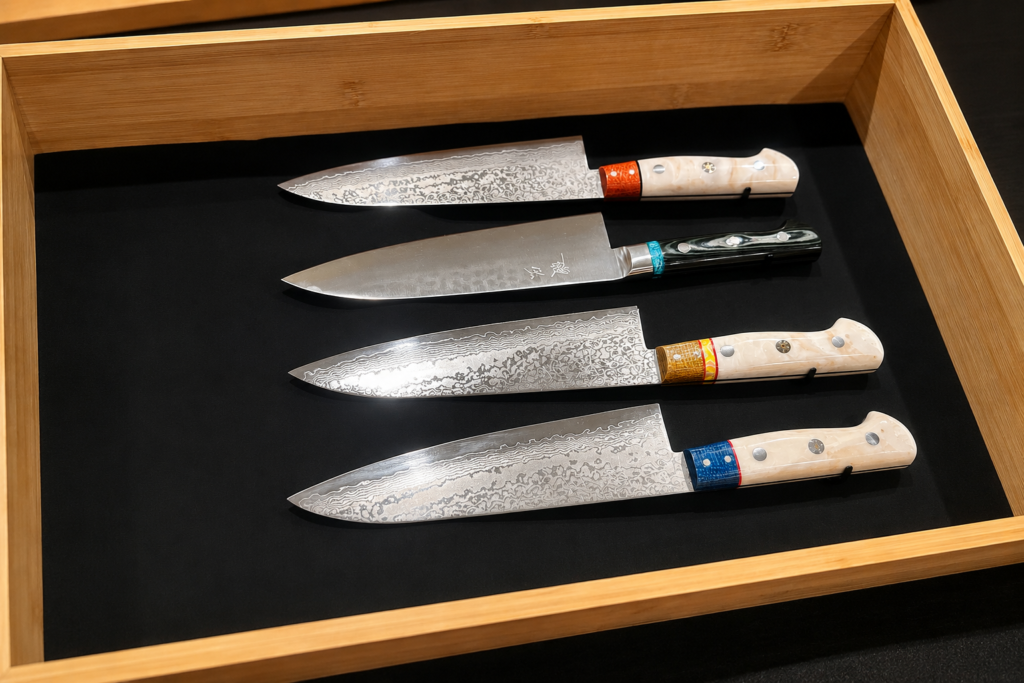
    This series is also available in four different handle coloursRed, Yellow, Orange, and Blue.

    Each colour offers its own distinctive personality while maintaining the same exceptional craftsmanship and cutting performance.

    Whether you prefer something bold or something more understated, there is a version that will suit your own style and kitchen.

    There is also something very special about this collection that I’d like to share.

    I was recently told that, due to personal circumstances, the blacksmith responsible for producing these knives may not be creating new designs in the future.

    Nothing has been officially confirmed, and of course everyone hopes that new creations will continue.

    However, there is a genuine possibility that this collection could become one of the final series produced by this craftsman.

    If that turns out to be the case, these knives will represent far more than beautiful kitchen tools.

    They will become lasting examples of one artisan’s work and dedication.

    To me, that adds another layer of meaning to owning one.

    Not because it might become rare, but because it carries the story of a craftsman whose work deserves to be appreciated.

    Of course, beauty alone isn’t enough.

    A great knife must also perform exceptionally well.

    VG10 Stainless Steel

    This Santoku is forged from VG10N stainless steel, one of Japan’s most respected stainless steels.

    It offers excellent edge retention, impressive corrosion resistance, and straightforward maintenance, making it an excellent choice for both professional chefs and passionate home cooks.

    If you’ve always admired handcrafted Japanese knives but felt hesitant about maintaining carbon steel, VG10N offers an ideal balance between performance and convenience.

    The 180mm Santoku is also one of the most versatile knives you can own.

    From vegetables and meat to fish and everyday meal preparation, it handles almost every kitchen task with confidence.

    It is no surprise that Santoku has become one of the world’s most popular Japanese knife styles.

    Having worked as a chef for more than 25 years, I’ve handled countless Japanese knives.

    Some impress immediately with extravagant finishes.

    Others focus purely on performance.

    But the knives that remain with you for years are usually the ones you naturally reach for every single day.

    This Santoku feels exactly like that.

    Beautiful without trying too hard.

    Elegant without being fragile.

    Practical enough for everyday cooking while carrying the soul of traditional Japanese craftsmanship.

    Perhaps that is the true meaning of Wabi-Sabi.

    Finding beauty not in perfection, but in honest craftsmanship, thoughtful design, and an object that becomes more meaningful every time you use it.

    If you’re looking for a handcrafted Japanese knife that combines timeless beauty, exceptional performance, and the possibility of becoming part of a very special chapter in a Japanese craftsman’s story, this Santoku deserves a place in your kitchen.


    Discover Authentic Handcrafted Tosa Knives

    Asaoya Yaichi

    At Asaoya Yaichi, we carefully select authentic handcrafted knives from Tosa, Japan.

    Every knife we offer has been chosen not only for its performance, but also for the story, craftsmanship, and tradition behind it.

    Explore our collection today and experience the beauty of authentic Japanese craftsmanship.

    https://www.asaoyayaichi.com.au
    From Tosa, Japan, to your kitchen.

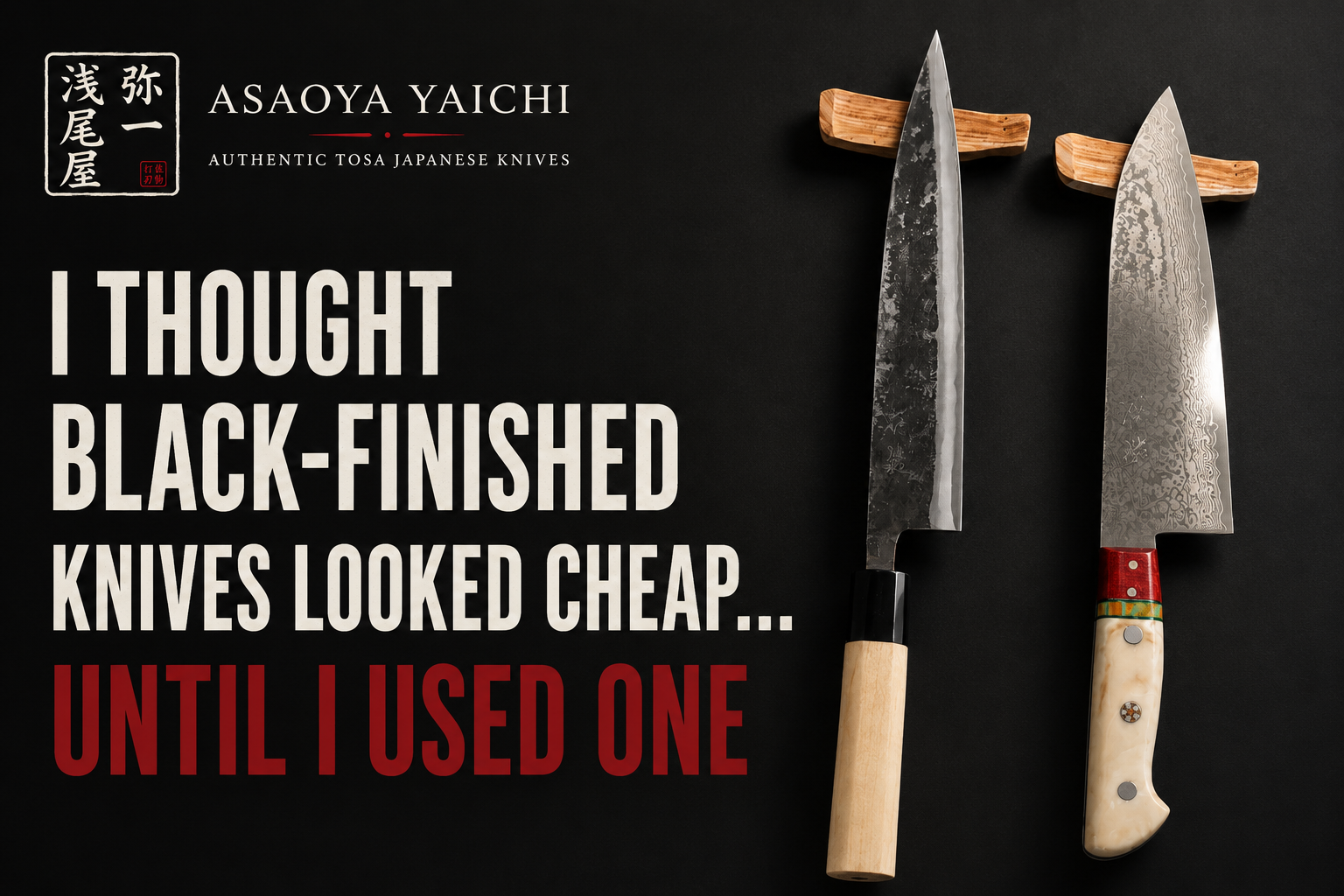
  • I Thought Black-Finished Knives Looked Cheap… Until I Used One

    I Thought Black-Finished Knives Looked Cheap… Until I Used One


    240mm Sujihiki VG10 Hammered 17 Layer Damascus Mahogany

    Black-Finished Knives changed the way I think about Japanese knives. I used to believe they looked cheap, but after years of using them professionally, my opinion completely changed.

    When people think of a beautiful Japanese knife, many imagine a polished Damascus blade with striking patterns.

    I understand why.

    I actually use several Damascus knives myself. To be honest, many of them came to me as sample knives rather than because I specifically chose Damascus.

    But if I’m being completely honest, I’ve never believed a knife is beautiful simply because it has a Damascus pattern.

    A great-looking knife is a great-looking knife, whether it’s Damascus, polished, or black-finished.

    My First Impression of a Black-Finished Knife

    Black-Finished Knives - Handcrafted Tosa Knife

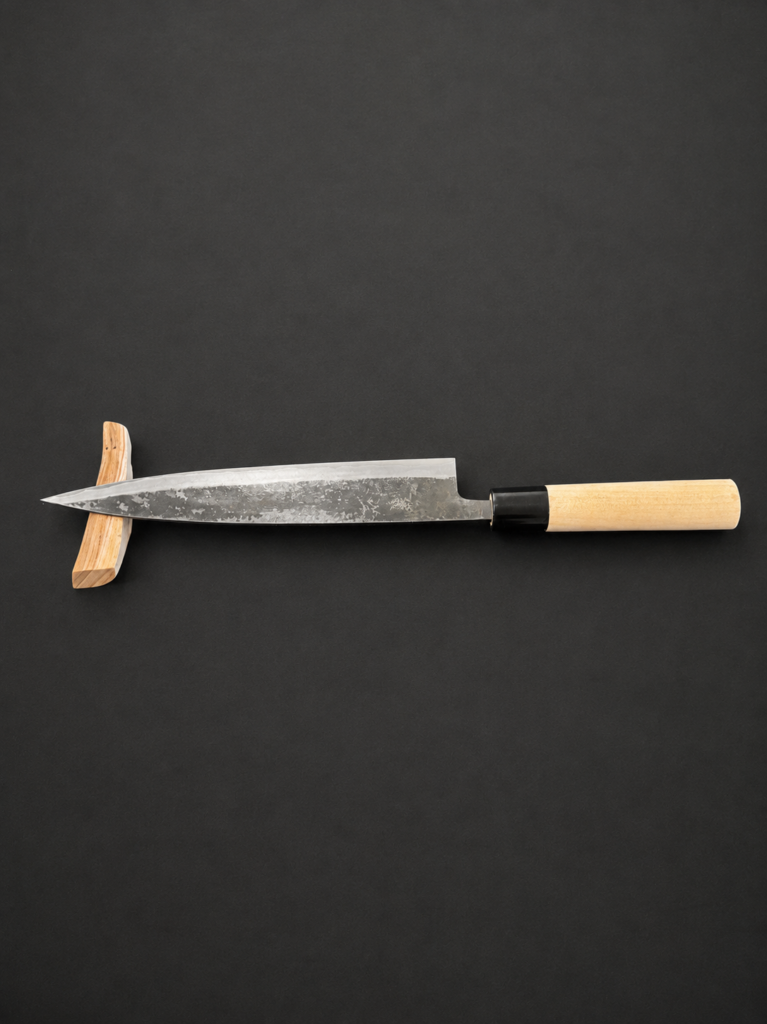
    210mm Sujihiki Aogami #2 Kurouchi Magnolia Handle

    Before I had anything to do with Tosa knives, the head chef I worked with owned a black-finished (Kurouchi) sujihiki.

    The first time I saw it, I honestly thought,

    “What is this? It looks like a toy.”

    Back then, I believed expensive Japanese knives had to be shiny and perfectly polished.

    I couldn’t understand why anyone would want a knife with a dark, rough finish.

    I was completely judging it by its appearance.

    Then I Started Using One


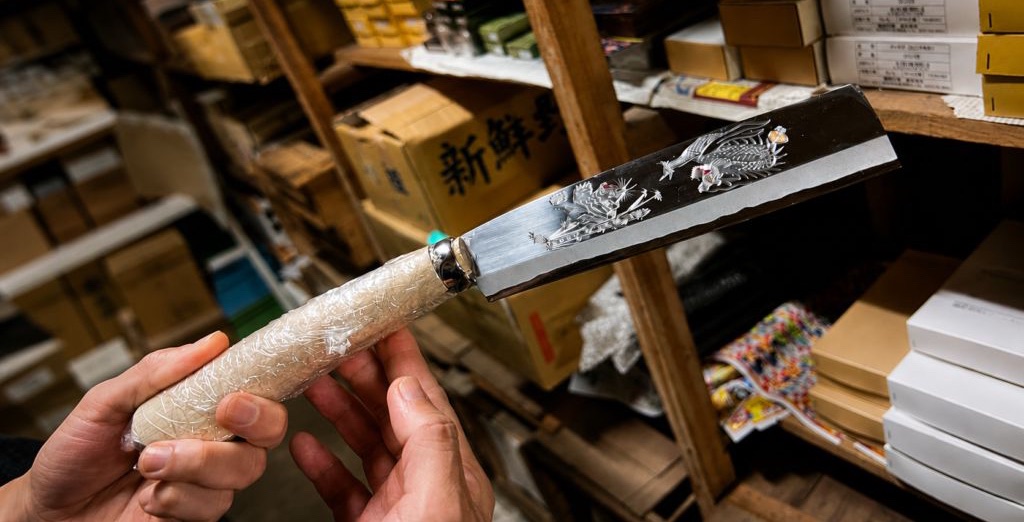
    165mm Kiritsuke Aogami #2 Kurouchi Walnut Octagonal Handle

    Eventually, I had the chance to use a Kurouchi sujihiki made with Aogami #2 steel.

    I liked it, although personally it felt a little softer than I expected.

    Later, I switched to a Kurouchi gyuto made with Aogami super steel.

    That knife completely changed my opinion.

    It held an excellent edge, felt incredibly reliable, and suited the way I cook.

    I’ve used it for everything—from filleting fish to breaking down large fish and even cutting through the heads of salmon and kingfish.

    It has never let me down.

    A Knife That Becomes Yours

    Ishizuchi Kanamono Manufactory

    The more I used that knife, the more it felt like it belonged to me.

    The scratches, the patina, and the marks from years of work became part of its story—and mine.

    I’ve been using that knife for around five years now.

    Even today, I still reach for it almost every day.

    Looking back, it’s funny to think I once dismissed black-finished knives because of how they looked.

    Now I know that the beauty of a knife isn’t just in its appearance.

    It’s in how it performs, how it ages, and how it earns your trust over time.


    Looking for an Authentic Japanese Knife?


    180mm Santoku VG10N 33 Layer Damascus Green Marble Handle Rainbow Spacer Red

    Looking for an Authentic Japanese Knife?

    If you’re searching for a handcrafted Japanese knife made by skilled artisans—not just one that looks beautiful, but one that’s built to perform for years—I’d love to introduce you to the craftsmanship of Tosa.

    One of the biggest lessons I’ve learned as a chef is that a knife should never be judged by its appearance alone. When I was younger, I believed a polished blade represented quality, while a black-finished knife looked unfinished or even cheap. Years of working in professional kitchens completely changed that way of thinking.

    A knife earns its value through performance. The way it holds its edge, the confidence it gives you during service, and how it continues to perform after years of use are far more important than a shiny finish. That’s exactly why my opinion of Kurouchi knives changed so dramatically.

    At Asaoya Yaichi, we carefully select authentic handcrafted Tosa knives made by experienced Japanese blacksmiths. Every knife is forged using traditional techniques that have been refined over generations, with an emphasis on performance, durability, and practical everyday use.

    Whether you choose a polished finish, Damascus, or a traditional Kurouchi finish, there is no single “best” choice. Every finish has its own character and purpose. The most important thing is finding a knife that suits your cooking style, feels comfortable in your hand, and becomes a trusted tool you’ll enjoy using for many years.

    If you’ve never used a black-finished knife before, don’t let your first impression stop you. I made exactly the same mistake. Sometimes the knives that impress you the most aren’t the ones that shine the brightest—they’re the ones that quietly earn your trust every single day.

    Explore our collection and discover the handcrafted Tosa knife that could become part of your own story.

    Explore the collection at:

    https://www.asaoyayaichi.com.au
    From Tosa, Japan, to your kitchen.

  • Wabi-Sabi Vibes: A Rare Japanese Santoku Knife Where Tradition Meets Modern Design

    Wabi-Sabi Vibes: A Rare Japanese Santoku Knife Where Tradition Meets Modern Design

    Introduction

    When I first saw this knife, one thought immediately came to mind.

    “What an unexpected combination.”

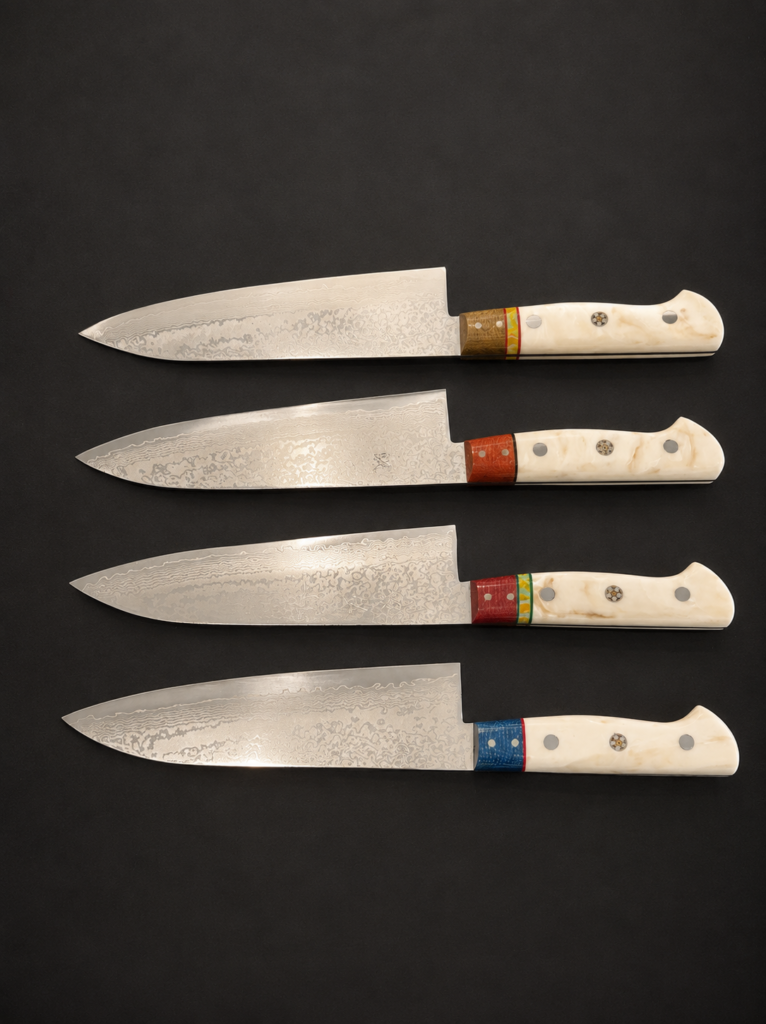
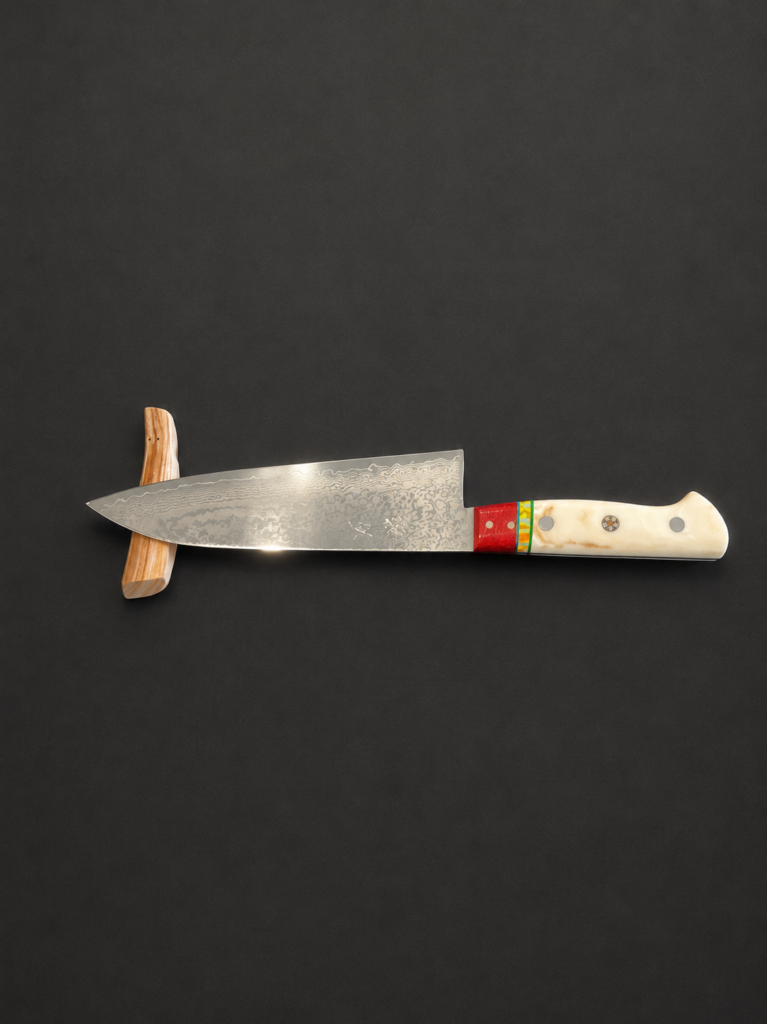
    A beautifully traditional Japanese Damascus blade paired with a bold marble-style handle that feels almost like modern art.

    At first, it shouldn’t work.

    Yet somehow, it does.

    The more I looked at it, the more one phrase stayed in my mind:

    Wabi-Sabi Vibes.


    What Does Wabi-Sabi Really Mean?

    When people hear the words Wabi-Sabi, they often imagine old temples, quiet tea rooms, weathered wood, or handmade pottery shaped by time.

    Those images certainly represent Wabi-Sabi.

    But to me, Wabi-Sabi is something much deeper.

    It is the appreciation of authenticity over perfection.

    It is seeing beauty in individuality, craftsmanship, and the stories that objects carry.

    Rather than resisting change, Wabi-Sabi embraces the passage of time while respecting tradition.

    That philosophy is deeply connected to handcrafted Japanese knives.

    Every authentic Japanese knife carries the experience of the blacksmith, generations of knowledge, and countless hours of craftsmanship.

    It is far more than simply a kitchen tool.


    A Santoku That Blends Tradition With Modern Design

    The first thing that catches your eye is the blade.

    Elegant Damascus layers.

    A classic Santoku profile.

    Traditional Japanese forging techniques.

    Everything about the blade reflects generations of Japanese craftsmanship.

    Then your attention moves to the handle.

    Instead of walnut or magnolia wood, this knife features a striking marble-style handle with bold contemporary colours.

    It feels modern.

    Confident.

    Almost futuristic.

    Yet surprisingly, nothing feels out of place.

    The traditional blade and contemporary handle complement one another beautifully.

    That harmony between old and new is exactly what makes this knife unforgettable.


    Tradition Doesn’t Mean Standing Still

    Some people believe traditional craftsmanship should never change.

    I respectfully disagree.

    Japanese craftsmanship has survived for centuries because artisans have continued to preserve traditional techniques while embracing new ideas, new materials, and new artistic expressions.

    Respecting tradition does not mean rejecting innovation.

    When traditional forging meets contemporary design, something unique happens.

    The soul remains unchanged.

    The personality evolves.

    For me, that is exactly what Wabi-Sabi Vibes represent.

    A quiet balance between heritage and creativity.


    A Knife That May Never Be Made Again

    This Santoku is also special for another reason.

    The blacksmith who creates this series has recently stepped back from regular production due to personal circumstances.

    Because of this, we simply don’t know when—or even if—more of these knives will ever be produced.

    Each knife therefore represents more than exceptional craftsmanship.

    It captures a particular moment in a craftsman’s journey.

    Once these are gone, there is no guarantee another batch will ever become available.

    That rarity makes every piece even more meaningful.


    More Than Just Sharpness

    After more than 25 years working as a chef in both Japan and Australia, I’ve learned that great knives are remembered for more than how well they cut.

    The finest knives have character.

    They have personality.

    They have stories.

    This Santoku brings together a traditional Japanese Damascus blade, an unmistakably modern marble-style handle, and a level of rarity that cannot be manufactured.

    It is not simply another kitchen knife.

    It is a conversation piece.

    A functional work of art.

    A knife that represents both the past and the future of Japanese craftsmanship.

    That is why I call it…

    Wabi-Sabi Vibes.


    Discover Authentic Tosa Japanese Knives

    At Asaoya Yaichi, our goal is not simply to sell Japanese knives.

    We want to introduce the stories behind authentic handcrafted Tosa knives and the remarkable artisans who continue to preserve this centuries-old tradition.

    If you’re looking for a Japanese knife with true character, craftsmanship, and authenticity, we invite you to explore our collection.

    Explore Our Collection

    👉 Shop Authentic Tosa Japanese Knives
    https://www.asaoyayaichi.com.au

    Continue Reading

    If you enjoyed this article, you may also like:

    Read more at:

    👉 https://blog.asaoyayaichi.com.au

    Thank you for supporting authentic Japanese craftsmanship and the artisans who continue to keep these traditional skills alive.

    Bringing Authenticity to You.

    Asaoya Yaichi