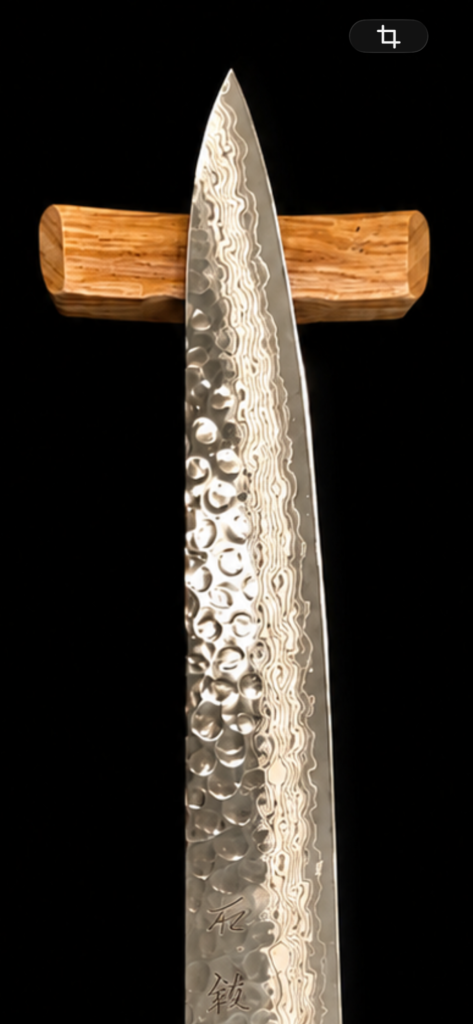
240mm Sujihiki VG10 Hammered 17 Layer Damascus Mahogany
Black-Finished Knives changed the way I think about Japanese knives. I used to believe they looked cheap, but after years of using them professionally, my opinion completely changed.
When people think of a beautiful Japanese knife, many imagine a polished Damascus blade with striking patterns.
I understand why.
I actually use several Damascus knives myself. To be honest, many of them came to me as sample knives rather than because I specifically chose Damascus.
But if I’m being completely honest, I’ve never believed a knife is beautiful simply because it has a Damascus pattern.
A great-looking knife is a great-looking knife, whether it’s Damascus, polished, or black-finished.
My First Impression of a Black-Finished Knife
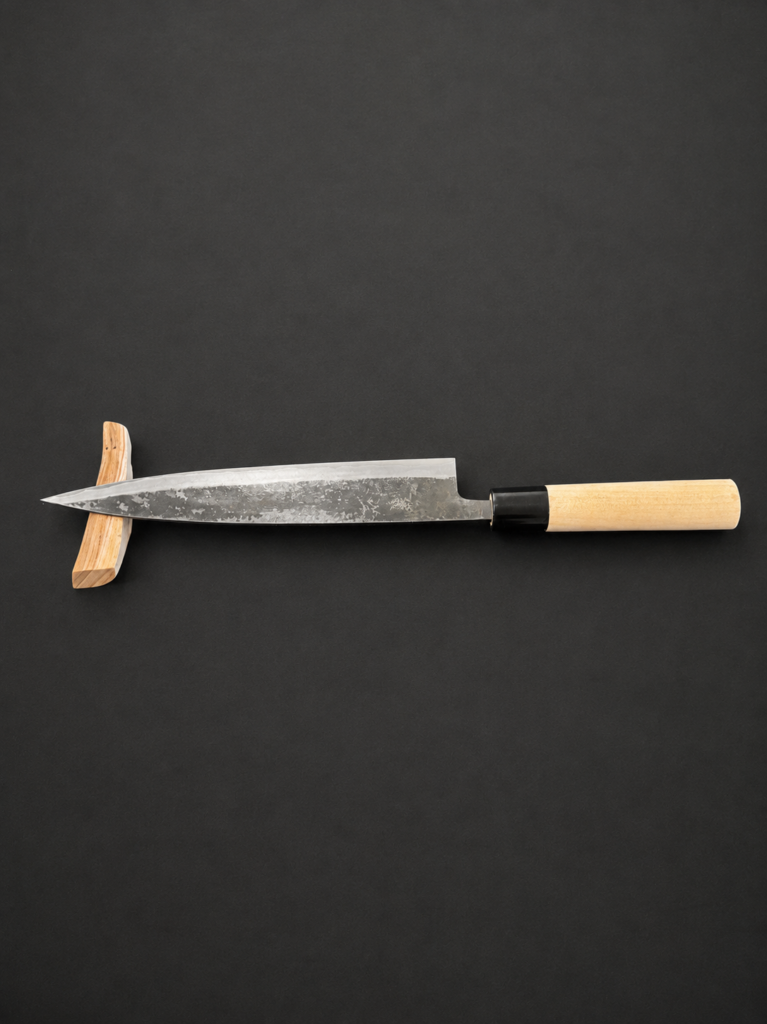
210mm Sujihiki Aogami #2 Kurouchi Magnolia Handle
Before I had anything to do with Tosa knives, the head chef I worked with owned a black-finished (Kurouchi) sujihiki.
The first time I saw it, I honestly thought,
“What is this? It looks like a toy.”
Back then, I believed expensive Japanese knives had to be shiny and perfectly polished.
I couldn’t understand why anyone would want a knife with a dark, rough finish.
I was completely judging it by its appearance.
Then I Started Using One
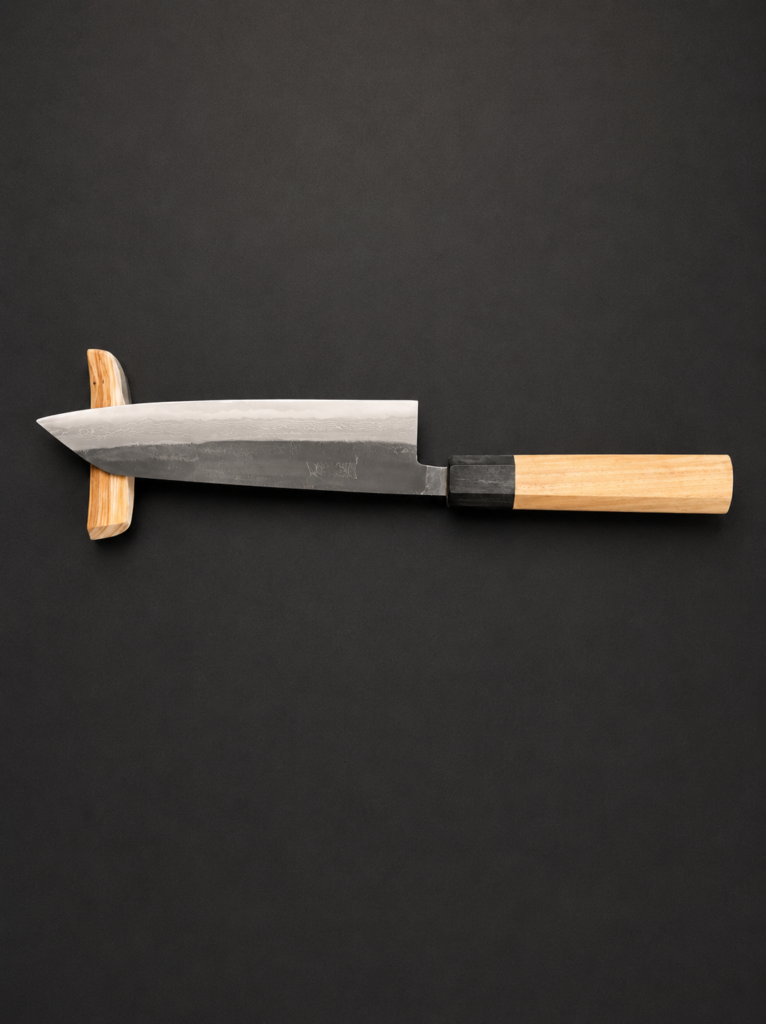
165mm Kiritsuke Aogami #2 Kurouchi Walnut Octagonal Handle
Eventually, I had the chance to use a Kurouchi sujihiki made with Aogami #2 steel.
I liked it, although personally it felt a little softer than I expected.
Later, I switched to a Kurouchi gyuto made with Aogami super steel.
That knife completely changed my opinion.
It held an excellent edge, felt incredibly reliable, and suited the way I cook.
I’ve used it for everything—from filleting fish to breaking down large fish and even cutting through the heads of salmon and kingfish.
It has never let me down.
A Knife That Becomes Yours
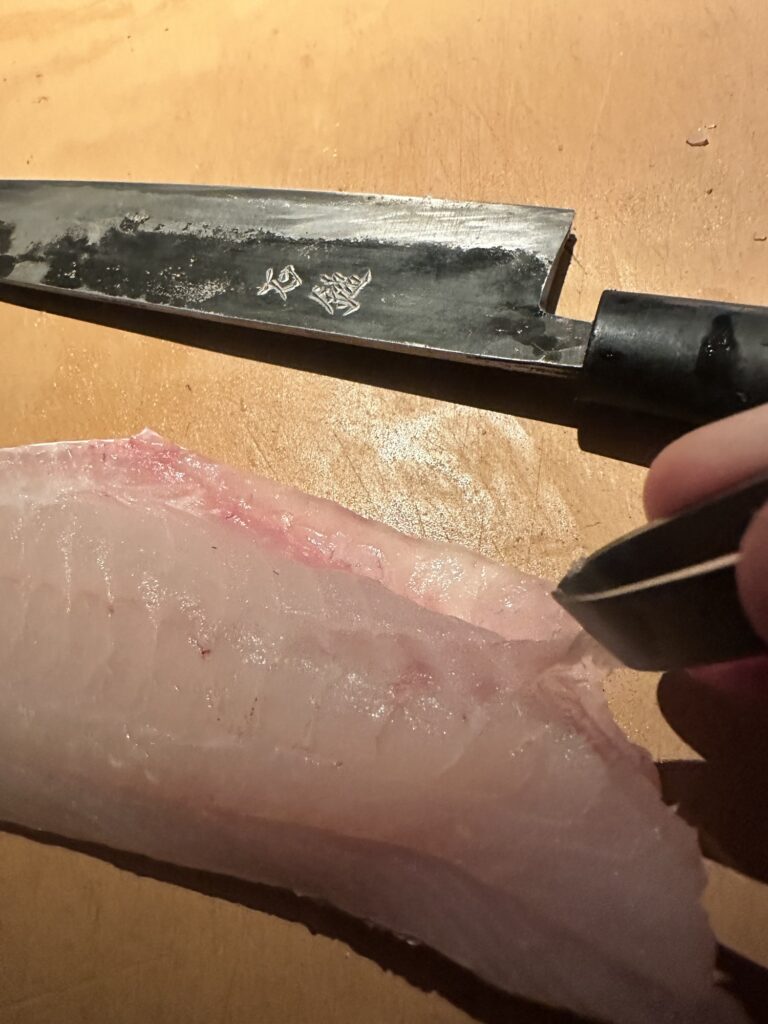
The more I used that knife, the more it felt like it belonged to me.
The scratches, the patina, and the marks from years of work became part of its story—and mine.
I’ve been using that knife for around five years now.
Even today, I still reach for it almost every day.
Looking back, it’s funny to think I once dismissed black-finished knives because of how they looked.
Now I know that the beauty of a knife isn’t just in its appearance.
It’s in how it performs, how it ages, and how it earns your trust over time.
Looking for an Authentic Japanese Knife?
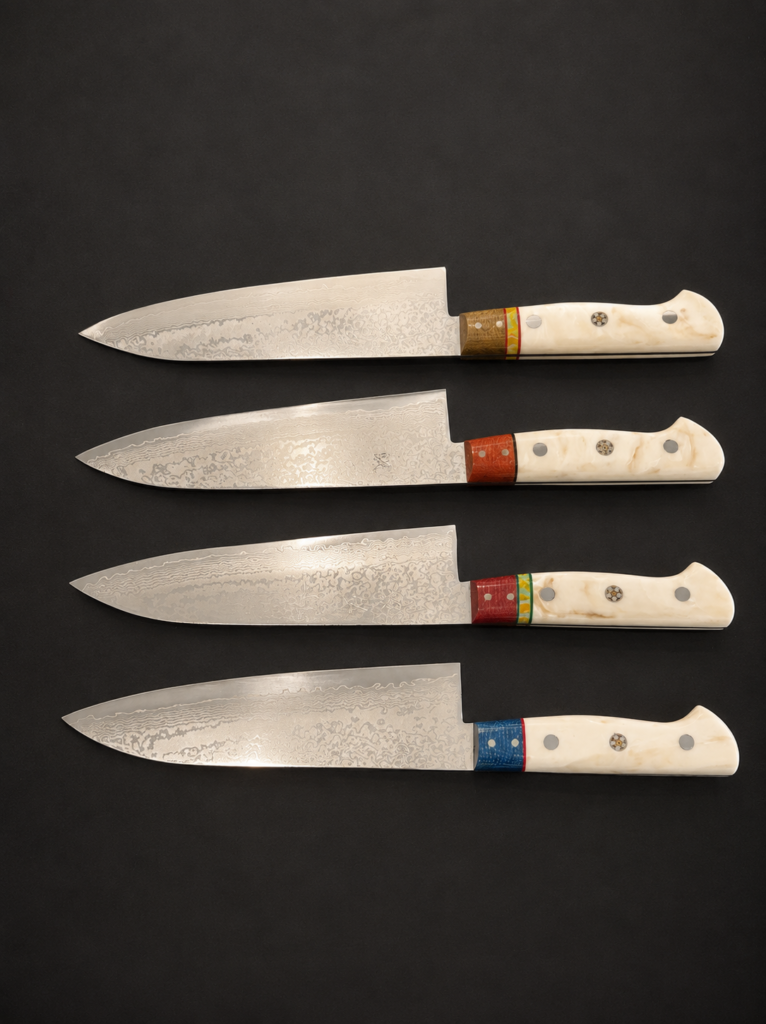
180mm Santoku VG10N 33 Layer Damascus Green Marble Handle Rainbow Spacer Red
Looking for an Authentic Japanese Knife?
If you’re searching for a handcrafted Japanese knife made by skilled artisans—not just one that looks beautiful, but one that’s built to perform for years—I’d love to introduce you to the craftsmanship of Tosa.
One of the biggest lessons I’ve learned as a chef is that a knife should never be judged by its appearance alone. When I was younger, I believed a polished blade represented quality, while a black-finished knife looked unfinished or even cheap. Years of working in professional kitchens completely changed that way of thinking.
A knife earns its value through performance. The way it holds its edge, the confidence it gives you during service, and how it continues to perform after years of use are far more important than a shiny finish. That’s exactly why my opinion of Kurouchi knives changed so dramatically.
At Asaoya Yaichi, we carefully select authentic handcrafted Tosa knives made by experienced Japanese blacksmiths. Every knife is forged using traditional techniques that have been refined over generations, with an emphasis on performance, durability, and practical everyday use.
Whether you choose a polished finish, Damascus, or a traditional Kurouchi finish, there is no single “best” choice. Every finish has its own character and purpose. The most important thing is finding a knife that suits your cooking style, feels comfortable in your hand, and becomes a trusted tool you’ll enjoy using for many years.
If you’ve never used a black-finished knife before, don’t let your first impression stop you. I made exactly the same mistake. Sometimes the knives that impress you the most aren’t the ones that shine the brightest—they’re the ones that quietly earn your trust every single day.
Explore our collection and discover the handcrafted Tosa knife that could become part of your own story.
Explore the collection at:
https://www.asaoyayaichi.com.au
From Tosa, Japan, to your kitchen.