When people choose a Japanese knife, they usually focus on the blade.
Should it be carbon steel or stainless steel?
VG10 or Aogami #2?
Gyuto or Santoku?
Those are all important questions—but after more than 25 years working as a chef, I’ve learned that the handle is just as important as the blade.
A knife can have incredible steel, but if it doesn’t feel comfortable in your hand, you’ll never enjoy using it.
The Handle Changes How a Knife Feels
Many people assume the handle is simply there to hold the knife.
In reality, it affects:
- Balance
- Overall weight
- Grip comfort
- Fatigue during long prep sessions
- Control for fine cuts
These are things you notice more and more the longer you use a knife.
Personally, I generally prefer lightweight natural wooden handles.
A lighter handle makes the knife feel more agile, especially during long hours of preparation.
Natural wood also develops its own character over time, making each knife feel unique.
Different Woods, Different Feel
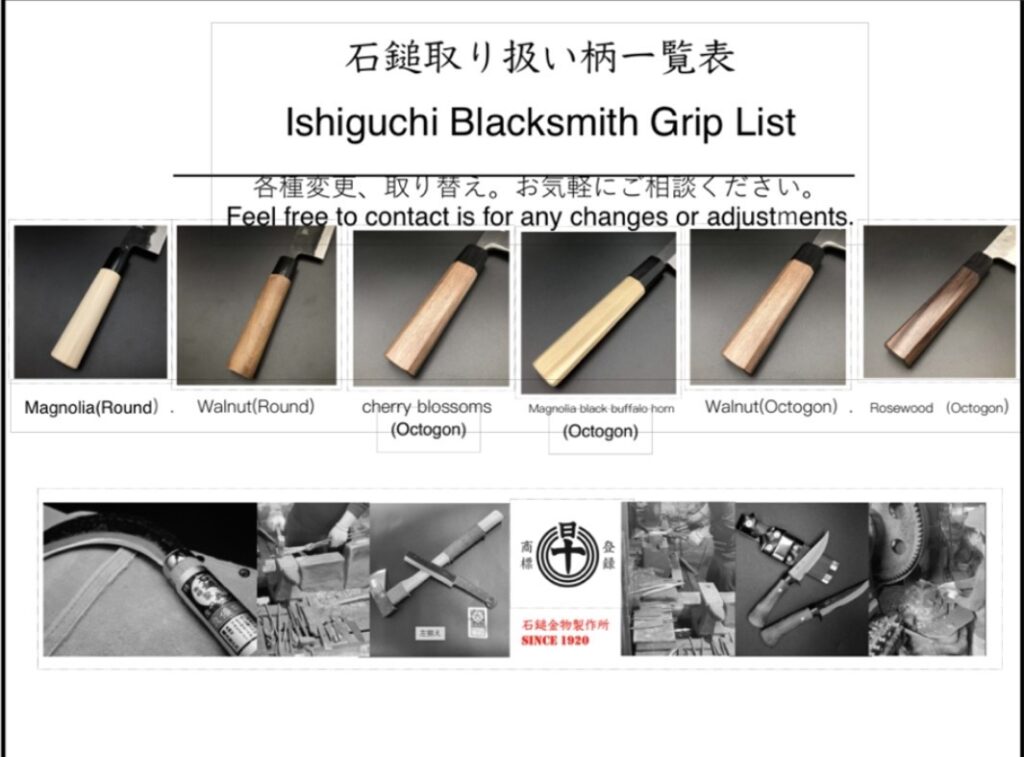
One thing I found particularly interesting when visiting Ishizuchi Kanamono Seisakusho was the variety of handles they offer.
Their standard handle options include:
- Magnolia (Round)
- Walnut (Round)
- Cherry Blossom (Octagonal)
- Magnolia with Black Buffalo Horn Ferrule (Octagonal)
- Walnut (Octagonal)
- Rosewood (Octagonal)
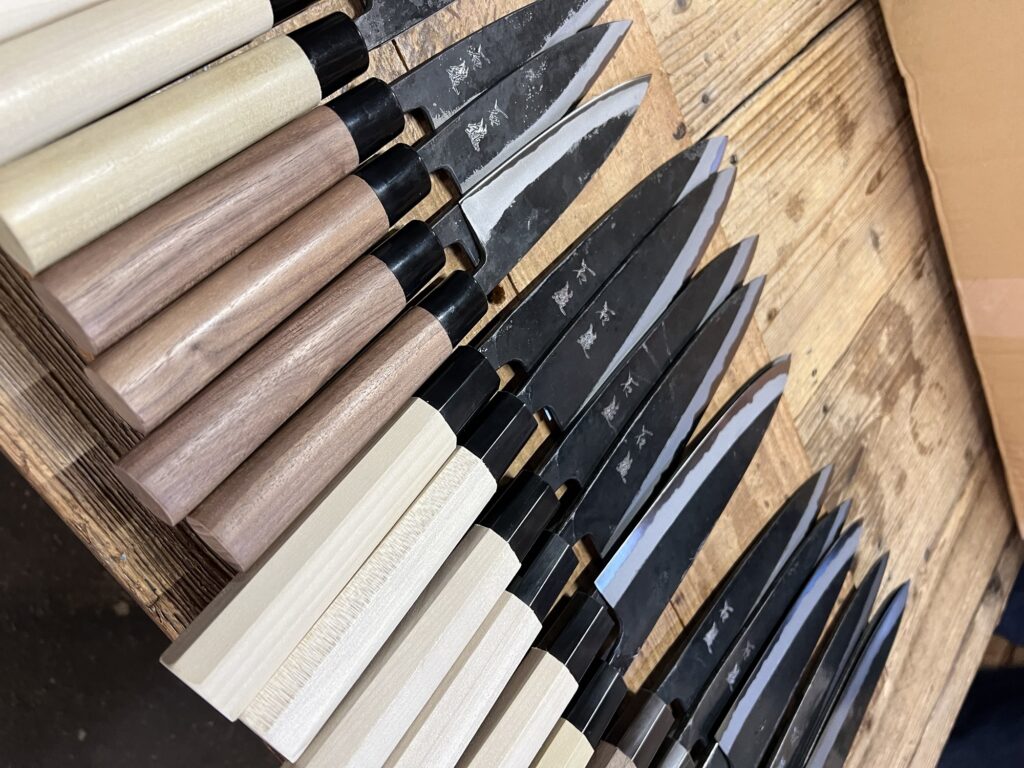
Each wood has its own appearance, weight, and feel in the hand.
Even though the blade may be exactly the same, changing the handle can completely change how the knife feels to use.
The Buffalo Horn Ferrule
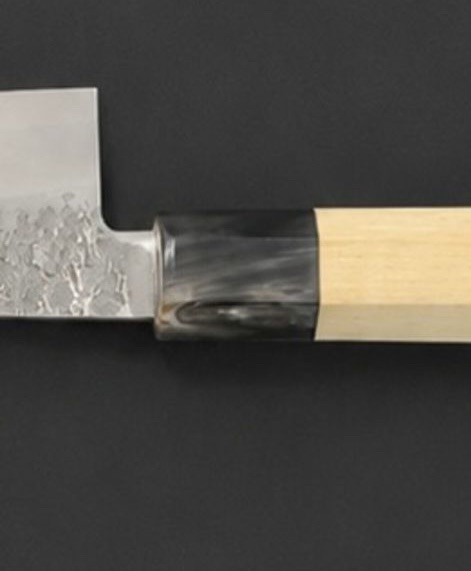
210mm Gyuto Ginsan Nashiji Forged Magnolia Octagonal Handle Buffalo Horn Ferrule
One small detail that many people overlook is the buffalo horn ferrule (the black section between the blade and the wooden handle).
Besides giving the knife a traditional Japanese appearance, it is durable and easy to maintain.
The only trade-off is that it adds a little extra weight compared to an all-wood handle.
Personally, I still prefer lighter wooden handles, but I can certainly understand why many people appreciate the buffalo horn option for its durability and premium look.
There really isn’t a right or wrong choice—it simply depends on what feels best in your hand.
Tradition Meets Modern Design
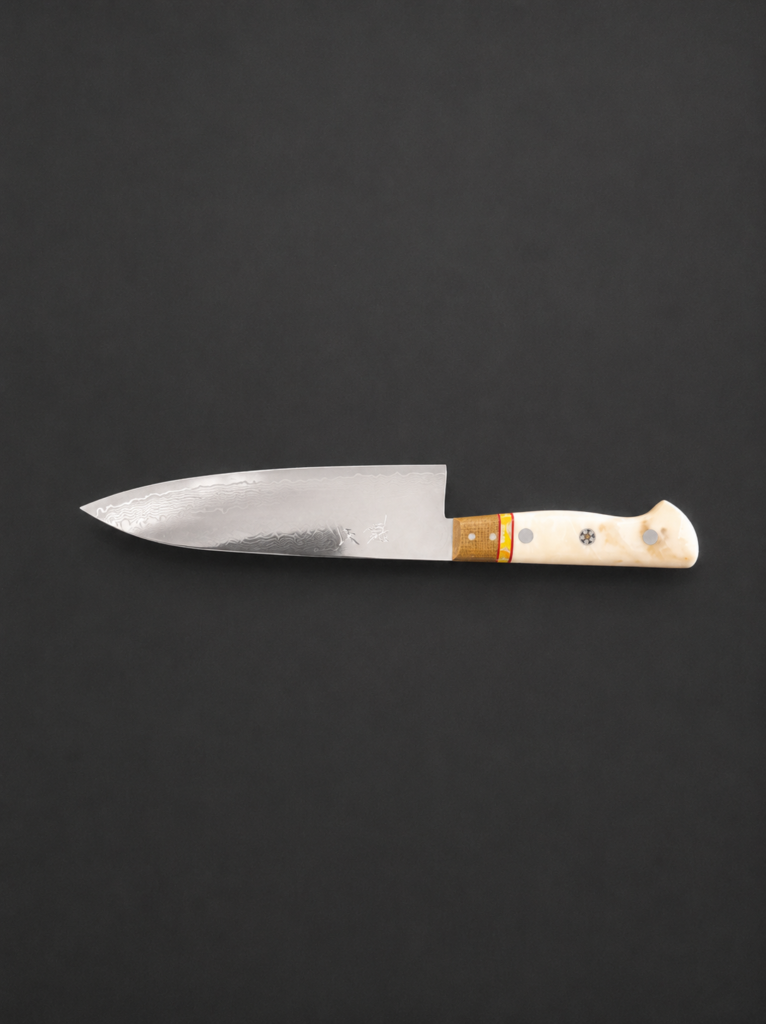
180mm Santoku VG10N 33 Layer Damascus Green Marble Handle Rainbow Spacer Yellowふ
While traditional wooden handles remain the most popular choice, they’re not the only option.
During my visit to Ishizuchi Kanamono Seisakusho, I learned that unique handle materials—including marble—can also be sourced through special orders.
To me, this is where Japanese craftsmanship becomes truly fascinating.
A traditional hand-forged Tosa blade paired with a modern marble handle creates something that feels both timeless and contemporary.
Rather than taking away from tradition, it gives the knife a new expression while preserving the craftsmanship behind the blade.
I think this beautifully reflects the idea of Wabi-Sabi—respecting tradition while allowing it to evolve.
A knife like this isn’t simply made to cut.
It’s a handcrafted tool that can also be appreciated as a work of art.
Looking for Something Unique?
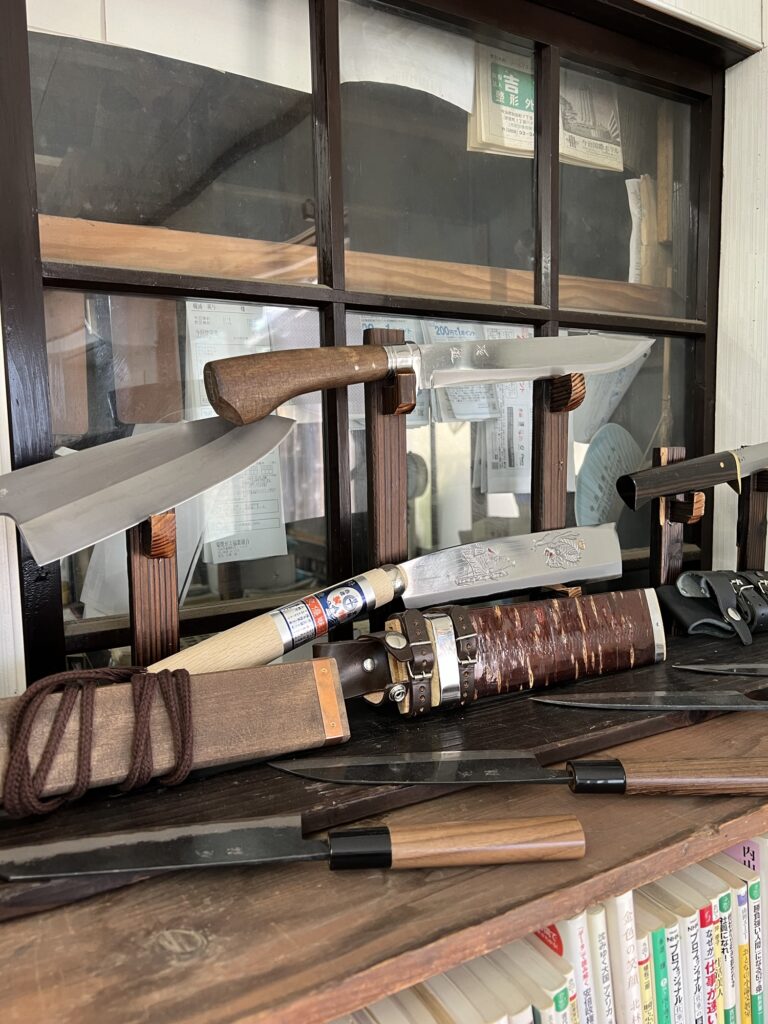
During my visit, I also learned that special handle materials are available through custom orders.
So if you’re looking for something truly personal or distinctive, there may be more options beyond the standard lineup.
Custom handles can make a handcrafted Japanese knife even more unique, creating a knife that reflects your own style as well as the craftsmanship behind it.
My Advice After 25 Years as a Chef
If you’re buying your first Japanese knife, don’t choose based only on the steel.
Hold the knife if you can.
Pay attention to:
- Weight
- Balance
- Shape
- Handle material
A knife should feel like a natural extension of your hand.
Sometimes, changing the handle can make a bigger difference than changing the steel.
Authentic Tosa Knives in Australia
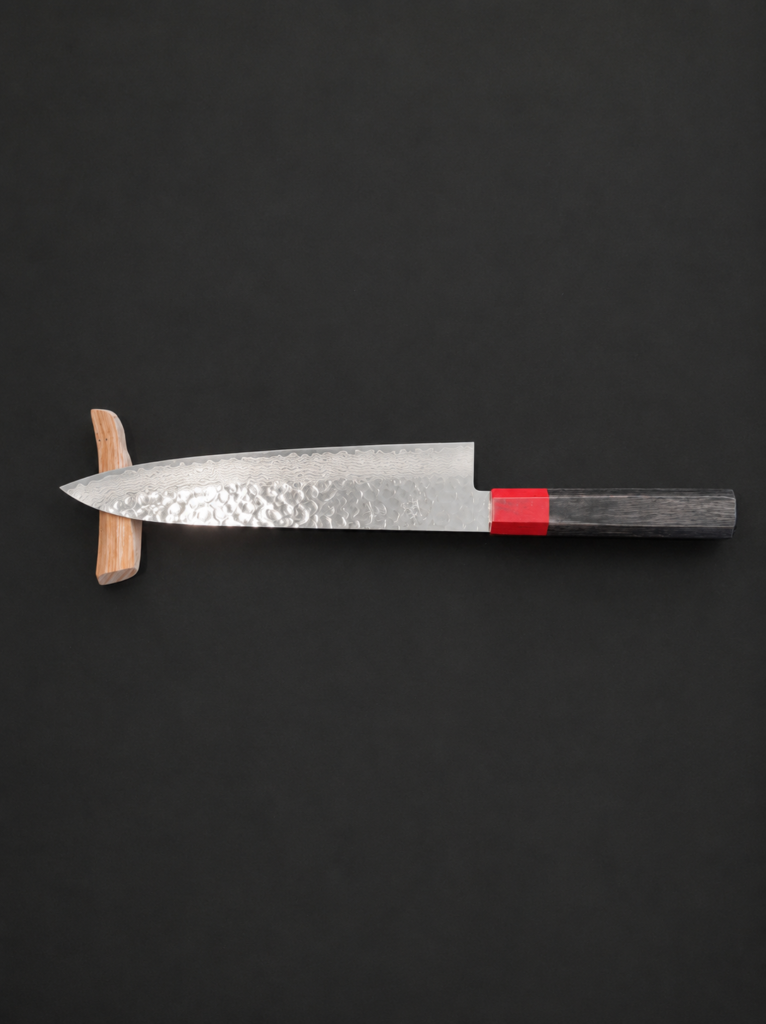
165mm Santoku A10 Damascus Black & Red Octagonal Handle
At Asaoya Yaichi, we work directly with Ishizuchi Kanamono Seisakusho to bring authentic handcrafted Tosa knives to Australia.
Whether you prefer a traditional magnolia handle, walnut, rosewood, or are interested in discussing a custom option, we’re happy to help you find a knife that suits both your cooking style and your hands.
Because the perfect Japanese knife isn’t only about how it cuts—it’s also about how it feels every time you pick it up.
Explore our collection at www.asaoyayaichi.com.au and discover handcrafted Japanese knives made to be used and appreciated for many years.