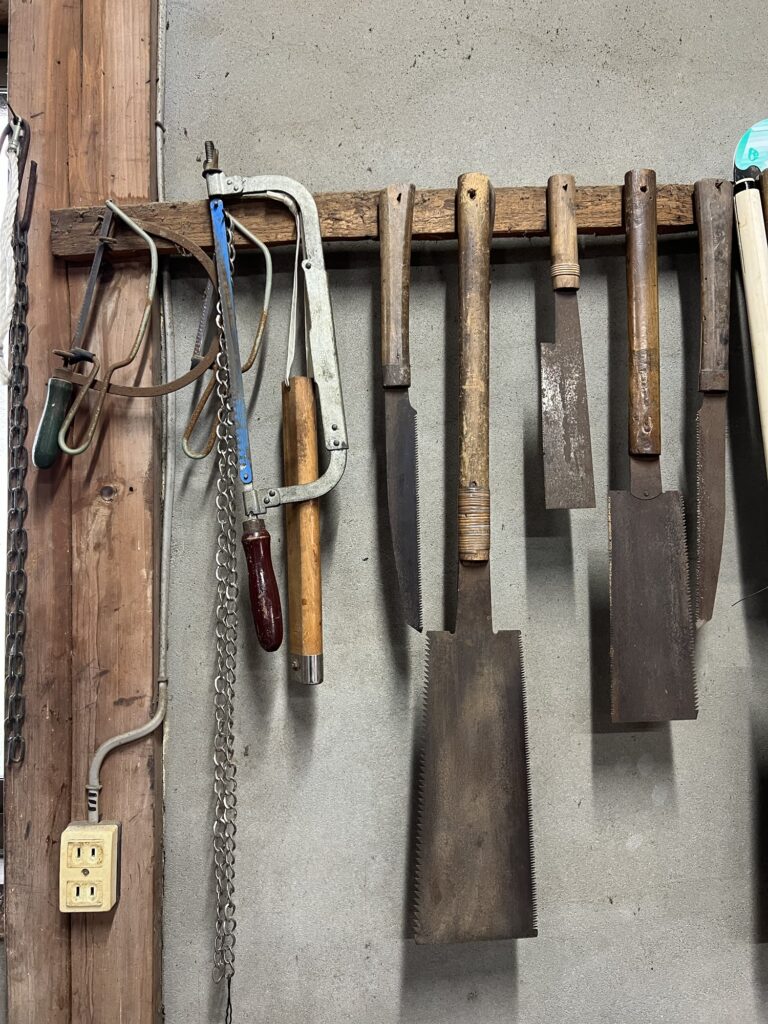
In Japan, a Japanese knife memorial may sound unusual to someone hearing about it for the first time. Why would anyone hold a memorial for a kitchen knife?
But after more than 25 years working as a professional chef, the idea does not feel strange to me at all.
I have thrown away knives that had reached the end of their working lives. However, I never felt comfortable simply putting a knife that had worked beside me for years straight into the rubbish. Before disposing of one, I would purify it with salt and say goodbye with a feeling of gratitude.
I did not think of this as anything particularly special. It simply felt like the right thing to do.
Later, when you look deeper into Japanese knife culture, you discover that this feeling has existed in Japan for generations.
👉 INTERNAL LINK: Tosa Knife History — From Samurai-Era Craft to the Modern Kitchen
1. What Is a Japanese Knife Memorial?

A Japanese knife memorial, or hōchō kuyō (包丁供養), is a way of showing gratitude to knives that have finished their working lives.
Japan has a long tradition of treating tools with respect. A knife may begin as steel forged and shaped by a craftsman, but after years in a kitchen, it carries something else: memories.
For a professional chef, a knife may have prepared thousands of meals. It may have broken down countless fish, sliced vegetables every morning, or been sharpened hundreds of times.
Eventually, even a good knife reaches the end.
In Japan, that does not always mean simply throwing it away.
👉 INTERNAL LINK: The True Value of Japanese Knives | 7 Reasons
2. Japanese Knife Memorial Traditions at Shrines

Photo: KENPEI / Wikimedia Commons / CC BY-SA 3.0One fascinating example can be found at Yasaka Shrine in Kyoto. Within the shrine grounds is Hamono Jinja (刃物神社), or the Knife Shrine, dedicated to Ame-no-Mahitotsu-no-Kami, a deity associated with metalworking. The shrine officially lists hamono kuyō—memorial rites for blades—as one of its blessings.
There are also monuments specifically dedicated to kitchen knives.
At Kochi Hachimangu in Kochi, there is a Hōchō-zuka (包丁塚), or Knife Memorial. The shrine explains that it was established to honour the spirit of knives, described as essential tools of cooks, and accepts old knives for memorial purposes.
For me, the connection to Kochi is especially interesting because Kochi is also home to the long tradition of Tosa blades.
👉 INTERNAL LINK: Tosa Knives and Kurouchi — Why Is the Black Finish So Common?
3. A Japanese Knife Memorial Is About More Than the Knife
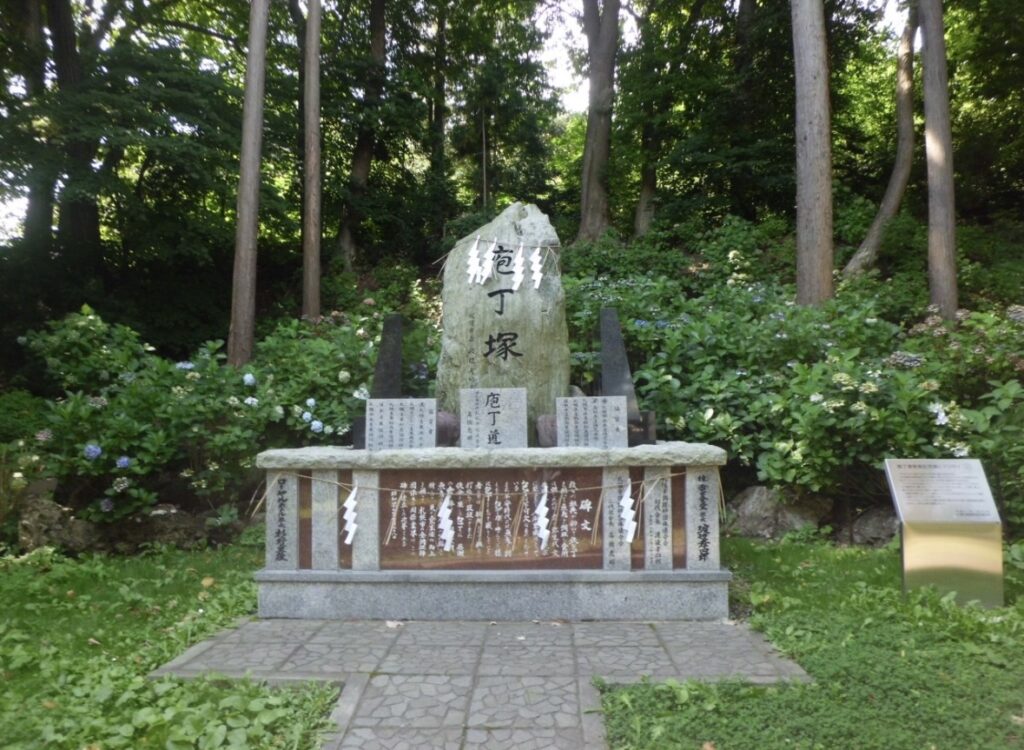
禁樹なずな / Wikimedia Commons / CC BY-SA 4.0At Akasaka Hikawa Shrine in Tokyo, another Hōchō-zuka offers an even deeper meaning.
The memorial was established in 1974. According to the shrine, used knives from chefs are placed there not only to express gratitude for the service of the knives, but also to honour the animals and fish that were prepared with them.
A memorial ceremony is still held there each year.
That idea resonates strongly with me as a chef.
A knife connects many things: the craftsman who made it, the chef who uses it, the ingredients being prepared, and ultimately the person who eats the food.
Perhaps that is why a knife can become much more personal than an ordinary kitchen tool.
👉 INTERNAL LINK: Japanese Knife Regions | Does Where a Knife Comes From Really Matter?
4. Why I Used Salt Before Saying Goodbye
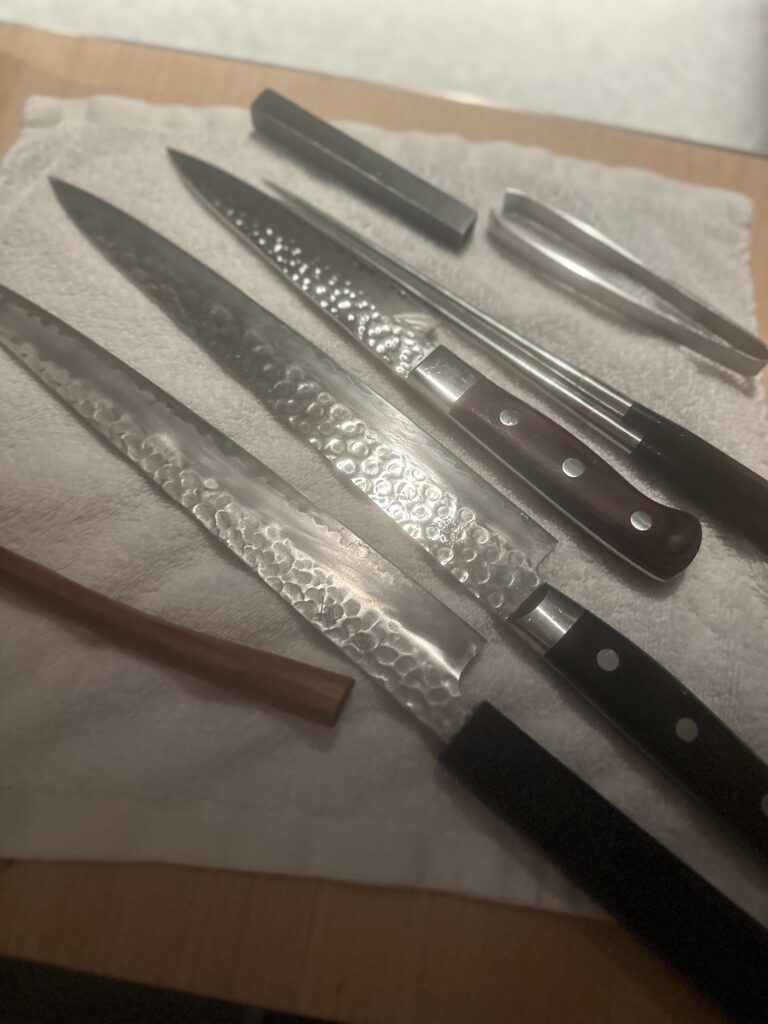
Long before thinking seriously about Japanese knife memorial traditions, I already had my own small ritual.
When I had to dispose of a knife, I purified it with salt first.
I cannot say that every Japanese chef does this, nor would I describe my own practice as a formal religious ceremony. It was simply my personal way of saying:
“Thank you. You worked hard.”
After spending years cooking professionally, throwing a well-used knife directly into the rubbish somehow felt wrong.
Maybe it is because I knew how many hours that knife had spent in my hand.
5. What Japanese Knife Memorial Culture Taught Me
The more I learn about Japanese knives, the more I realise that their value is not only found in steel type, hardness, sharpness or price.
There is also a relationship between a person and a tool.
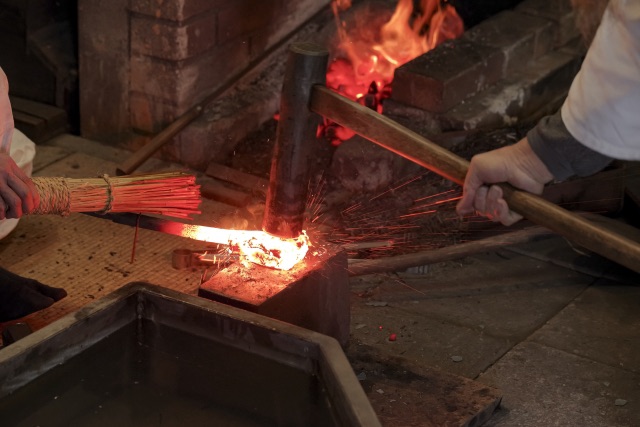
A handmade knife begins with a craftsman. It is sharpened, maintained, sometimes repaired, and gradually changes shape through years of use.
No two working lives are exactly the same.
👉 INTERNAL LINK: Handmade Japanese Knives | 7 Reasons No Two Are the Same
Perhaps a Japanese knife memorial represents the final chapter of that relationship.
You do not need to believe that a knife literally has a spirit to understand the sentiment behind it. If a tool has helped you work for ten, twenty or even forty years, saying “thank you” before letting it go seems surprisingly natural.
For me, this is another small but beautiful part of Japanese knife culture.
A good knife is not simply something we buy, use and replace.
We sharpen it. We care for it. We work with it.
And one day, when its work is finally finished, perhaps it deserves a proper goodbye.
👉 Explore more:
https://blog.asaoyayaichi.com.au
👉 Visit our online store:
https://asaoyayaichi.com.au
Thank you for reading, and I hope to see you again in the next story.