If you own or are thinking about buying a carbon steel Japanese knife, you’ve probably heard the term Japanese Knife Patina. Until I started selling handcrafted Japanese knives, I honestly thought any discoloration on a blade was something to avoid.
What surprised me was discovering that many knife enthusiasts actually appreciate a beautiful patina. For some, it’s not damage at all—it’s a sign that the knife is being used, cared for, and developing its own unique character.
In this article, I’ll explain what Japanese Knife Patina really is, how it differs from rust, and why so many experienced knife users see it as something worth embracing.
What Is Japanese Knife Patina?
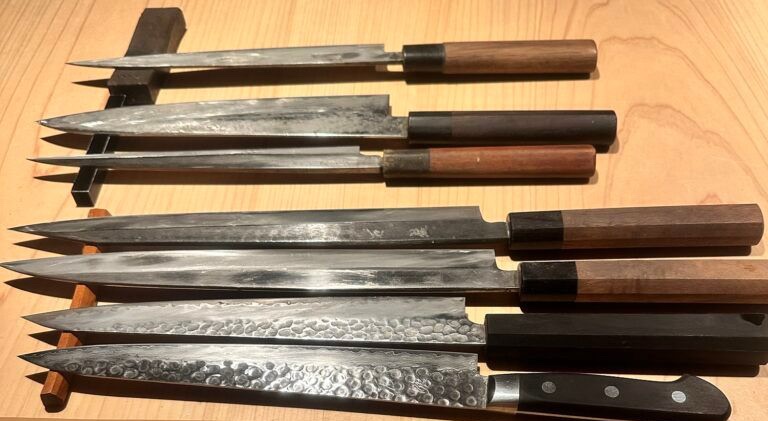
Japanese Knife Patina is a natural oxide layer that develops on carbon steel after repeated use. It often appears in shades of blue, grey, purple, or dark charcoal depending on the foods you cut and how you care for the knife.
Unlike red rust, patina is generally stable and can even help slow further oxidation.
Many professional chefs never try to remove it. Instead, they simply keep the blade clean and dry after use.
➡ Read more: Beginner’s Guide to Japanese Kitchen Knives
Why Japanese Knife Patina Is Different From Rust
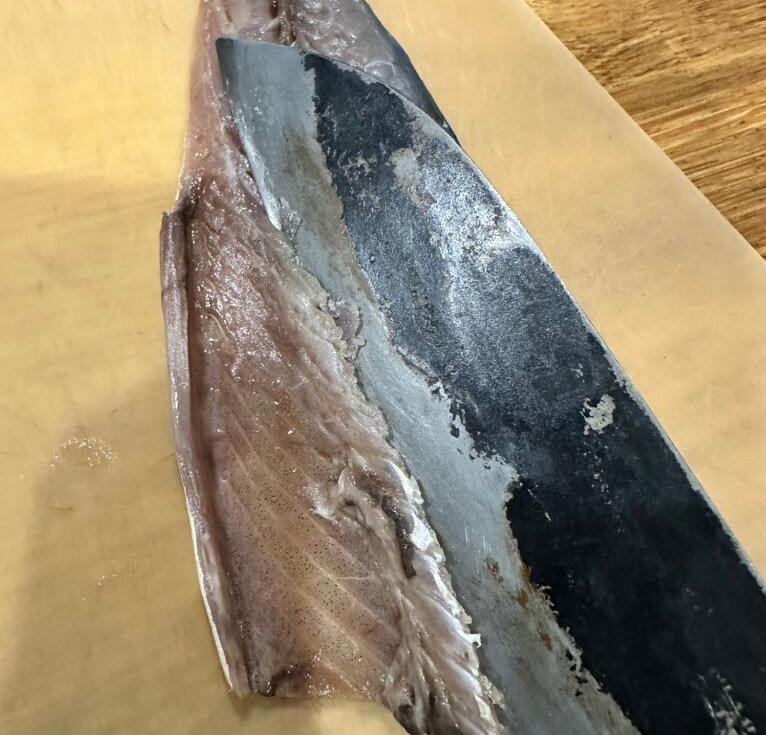
One of the biggest misconceptions is that every color change means corrosion.
Here’s the difference:
Japanese Knife Patina
- Blue, grey, or dark tones
- Forms naturally during normal use
- Can act as a protective oxide layer
- Often appreciated by carbon steel knife users
Rust
- Red or orange color
- Caused by moisture left on the blade
- Can damage the steel if ignored
- Should be removed as soon as possible
Understanding this difference helps you enjoy your knife with more confidence instead of worrying every time the blade changes color.
➡ Read more: Why Do Japanese Knives Rust So Easily?
Why Some Knife Enthusiasts Love Japanese Knife Patina
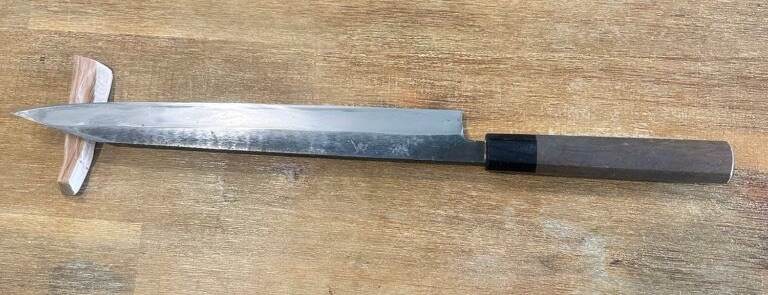
This was the part that surprised me the most.
For years I simply used carbon steel knives because they performed exceptionally well. I never thought much about the color changing over time.
After starting Asaoya Yaichi, I learned that many collectors and professional chefs actually enjoy watching their Japanese Knife Patina develop.
To them, every knife tells a story.
The blade reflects years of cooking, countless ingredients, and the owner’s personal journey.
No two patinas are exactly alike, making every knife even more unique.
Does Everyone Want a Patina?
Not at all.
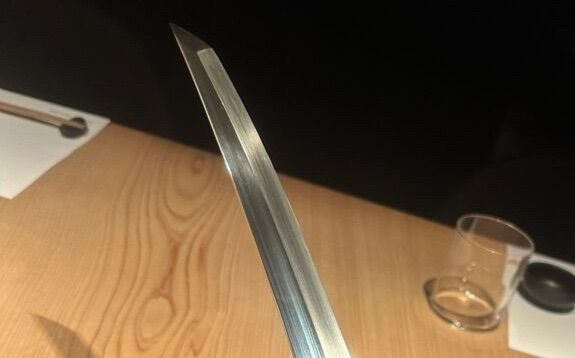
Some people love the bright mirror finish of a freshly polished knife.
Others prefer the rich character that develops through daily use.
Neither preference is right or wrong.
It’s simply a matter of taste.
A mirror-polished knife highlights craftsmanship, while a beautiful Japanese Knife Patina reflects years of real-world experience.
➡➡ Professional Choice | Why I Still Use Carbon Steel for Sashimi After 25 Years
How to Care for Japanese Knife Patina
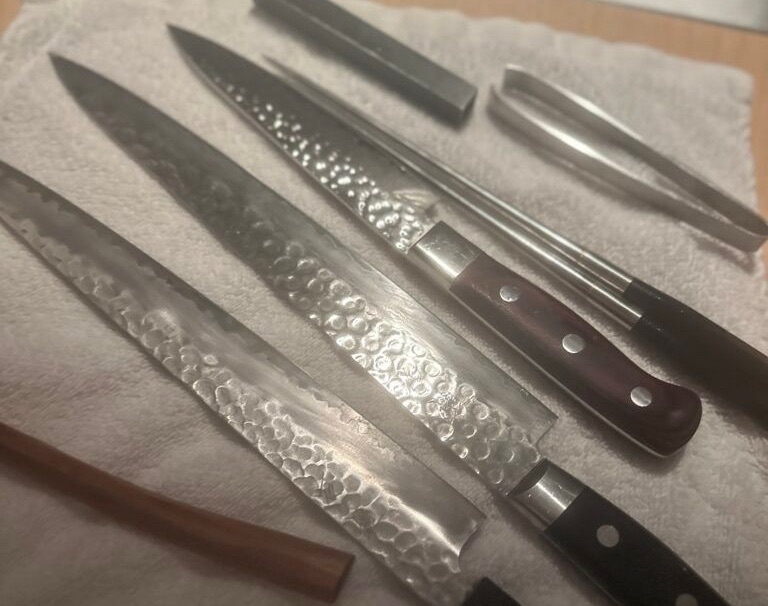
If you own a carbon steel knife, proper maintenance is still essential.
Keep the blade clean
Wash the knife by hand after use using mild detergent.
Dry immediately
Never leave water on carbon steel.
Store properly
Keep the knife in a dry location with good airflow.
Don’t panic over color changes
Blue or grey tones are often completely normal.
The goal isn’t to prevent every change.
The goal is to prevent red rust.
➡ Read more: 5 Common Mistakes That Damage Japanese Knives
My Honest Discovery About Japanese Knife Patina
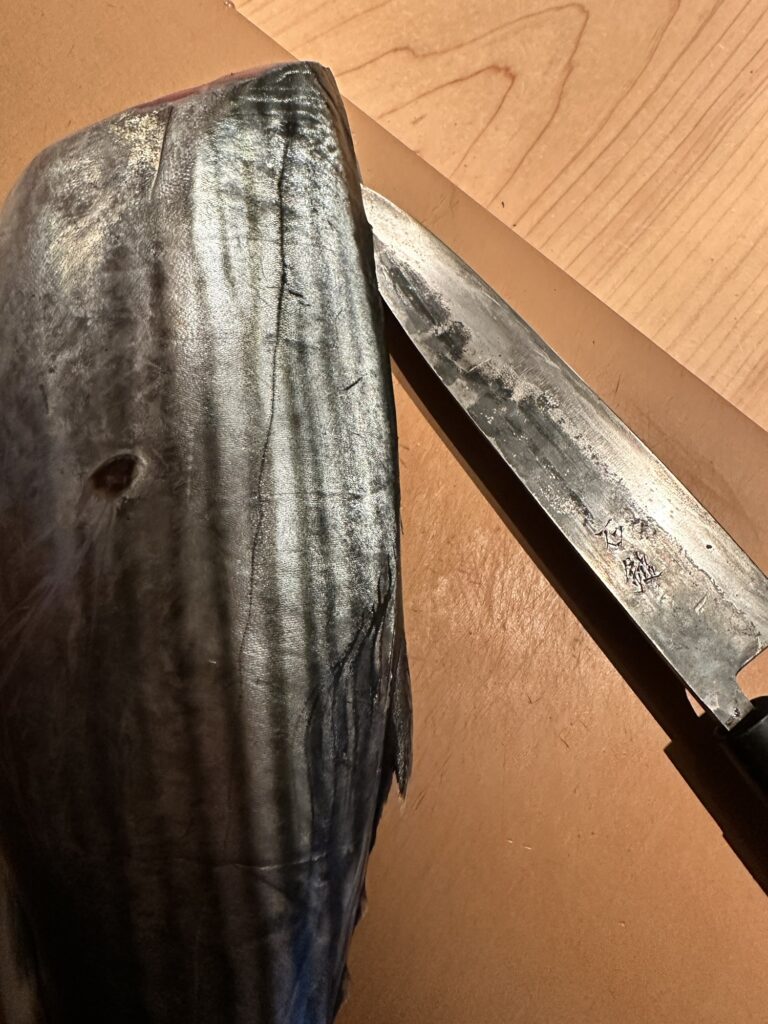
I spent more than 25 years working as a professional chef.
Yet one thing I didn’t truly appreciate until I started selling handcrafted Japanese knives was how differently people view Japanese Knife Patina.
I always focused on performance.
Many enthusiasts also appreciate the story the blade tells.
That changed the way I look at carbon steel knives.
A handcrafted Japanese knife isn’t just a cutting tool.
It’s something that evolves with its owner over time.
Perhaps that’s one of the reasons handmade Japanese knives continue to fascinate so many people around the world.
➡ Read more: Handmade Japanese Knives | 7 Fascinating Reasons No Two Are Ever Exactly the Same
Final Thoughts
Whether you prefer a mirror finish or a naturally developed Japanese Knife Patina, both represent different ways of appreciating handcrafted Japanese knives.
One celebrates perfection.
The other celebrates experience.
Whichever you prefer, the most important thing is to enjoy using your knife and taking proper care of it.
👉 Explore more:
https://blog.asaoyayaichi.com.au
👉 Visit our online store:
https://asaoyayaichi.com.au
Thank you for reading, and I hope to see you again in the next story.