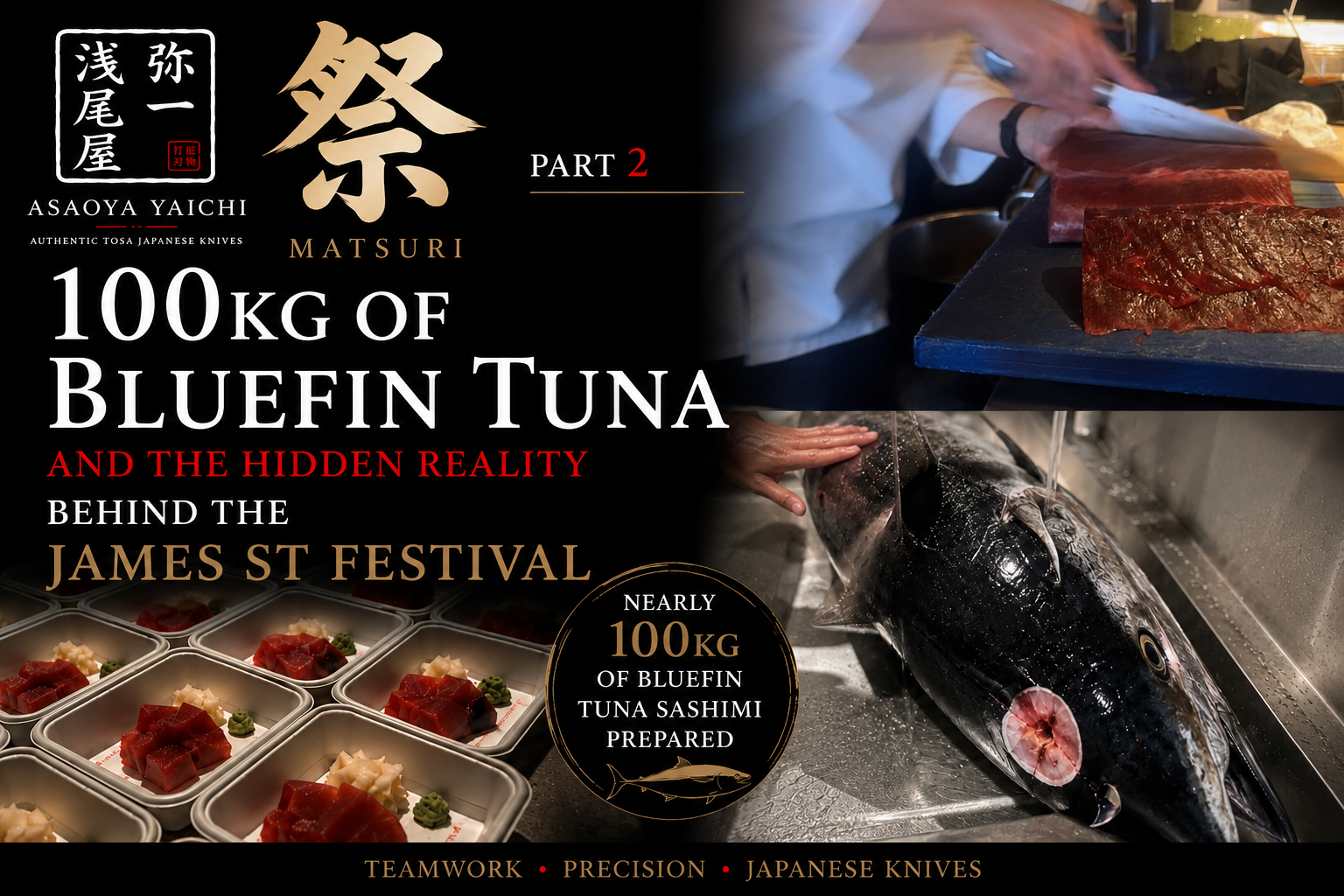
James St Festival Part 2 continues my behind-the-scenes journey through one of Brisbane’s biggest food festivals. After the tuna cutting show ends, the real work begins as nearly 100kg of bluefin tuna sashimi is prepared using handcrafted Japanese knives.
When people visit the James St Festival, they remember the atmosphere, the incredible food, and the famous tuna cutting show.
As a sushi chef working behind the scenes, my memories are very different.
For me, the real challenge began the moment the applause ended.
This is Part 2 of my behind-the-scenes journey through one of Brisbane’s biggest food festivals—a day filled with preparation, teamwork, and the Japanese knives I rely on every day.
James St Festival Tuna Cutting Show Begins
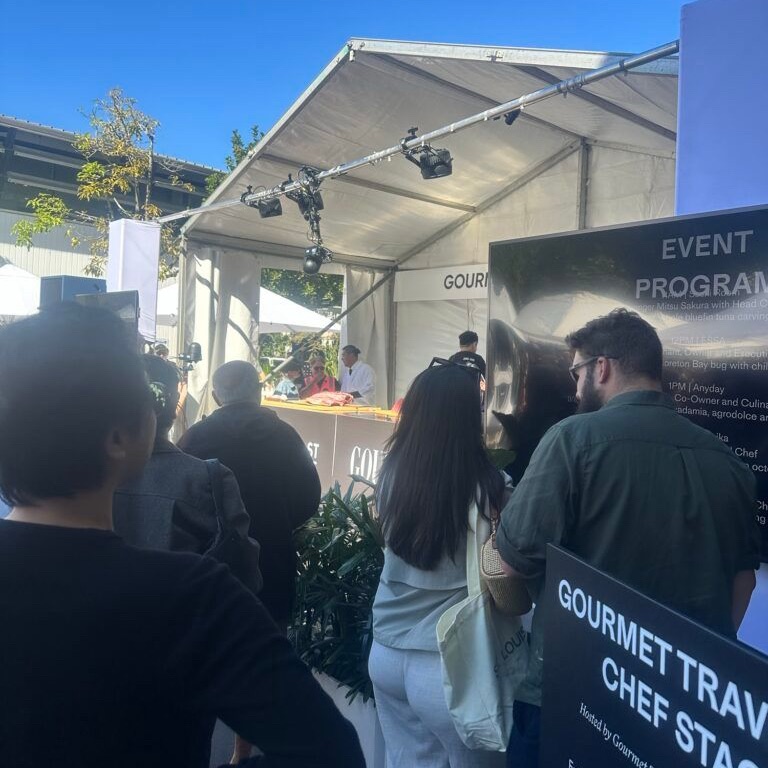
By late morning, hundreds of visitors had gathered around the stage for one of the festival’s biggest attractions—the bluefin tuna cutting show.
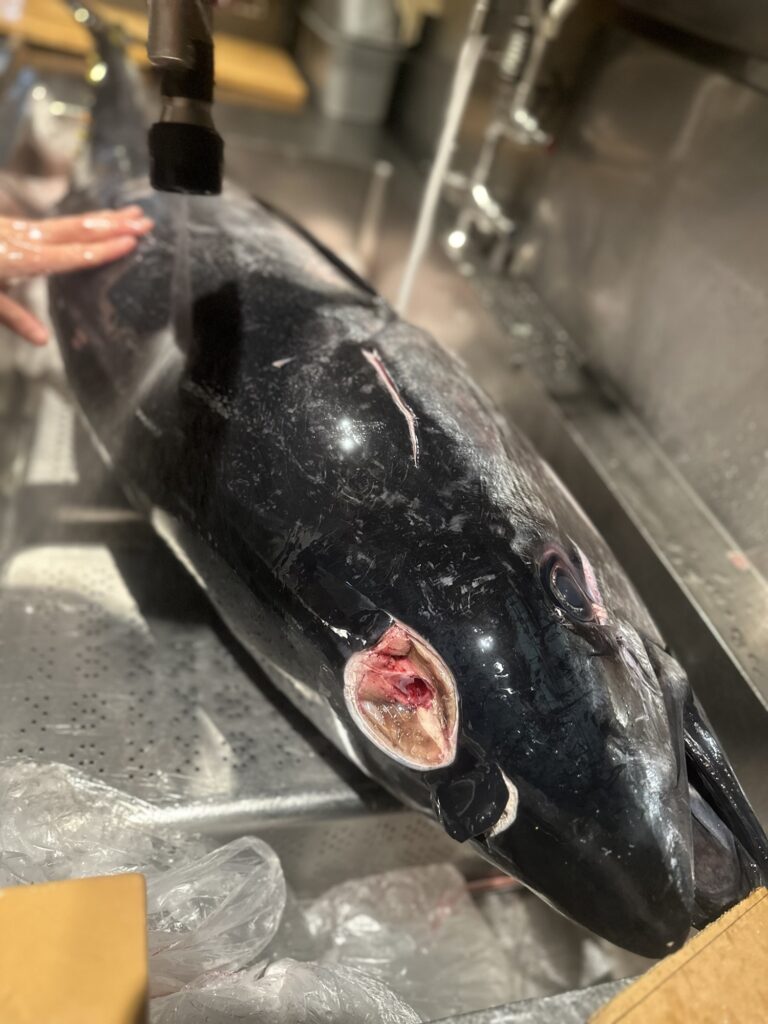
Two enormous whole bluefin tuna were carefully carried onto the stage. Each fish was so heavy that it took four people to lift it safely.
Seeing the crowd’s excitement was incredible. For many people, it was probably the first time they had ever seen a whole bluefin tuna up close.
Ironically, I didn’t get to enjoy the show myself.
While everyone else watched the demonstration, I had already been assigned to help another section of the kitchen prepare for what would happen next.
In a professional kitchen, someone always has to stay behind the scenes to keep everything moving.
James St Festival Gets Even Busier After the Show
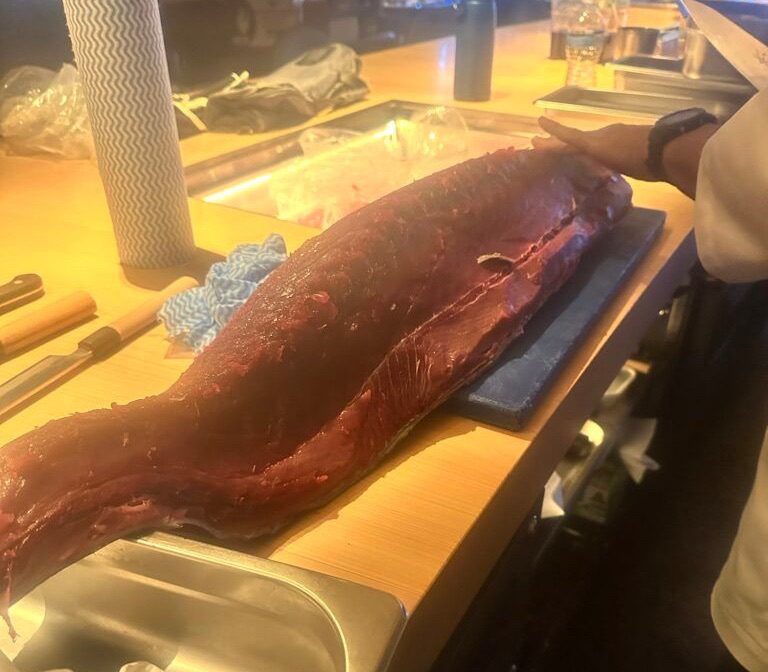
The moment the demonstration finished, large sections of freshly cut bluefin tuna began arriving back in the kitchen.
From that point on, nobody stopped moving.
Every chef returned to their station.
Cut.
Trim.
Slice.
Pack.
Restock.
Repeat.
That rhythm continued for hours.
Every tray of sashimi that left the kitchen had to be replaced immediately.
Customers kept lining up, and the bluefin tuna disappeared almost as quickly as we could prepare it.
There was no time to slow down.
Every slice had to be clean, consistent, and ready to serve.
➡ Internal Link: Sujihiki Knives
James St Festival Served Nearly 100kg of Bluefin Tuna
Throughout the day, we prepared and sold nearly 100 kilograms of bluefin tuna as sashimi.
Watching that amount of premium fish disappear throughout the day was something I’ll never forget.
Preparing sashimi at that volume requires more than speed.
It demands consistency, concentration, and respect for every piece of fish.
Every cut matters.
Even after hours of continuous slicing, every piece must look as good as the very first one.
That’s one of the biggest differences between cooking professionally and cooking at home.
➡ Internal Link: Beginner’s Guide to Japanese Kitchen Knives
James St Festival Depends on Japanese Knives
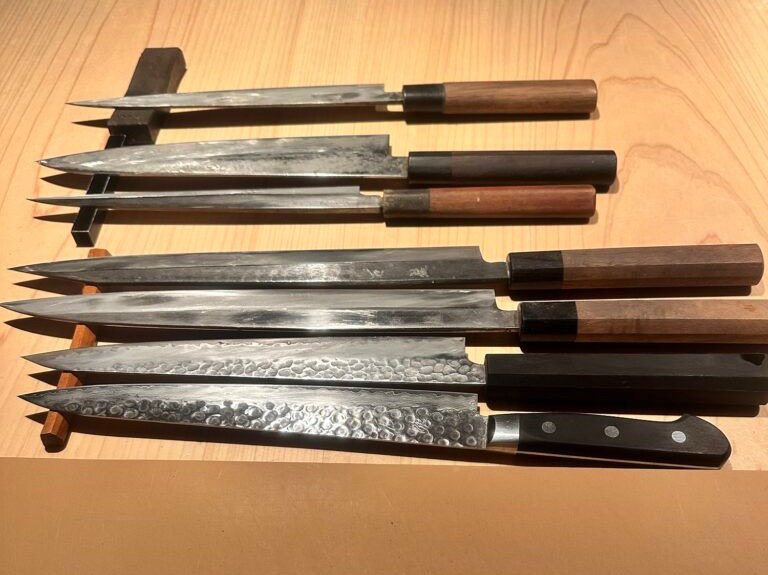
Days like this remind me why I trust handcrafted Japanese knives.
When you’re slicing fish continuously for hours, a knife becomes much more than a tool.
It becomes an extension of your hands.
A well-balanced knife reduces fatigue.
A razor-sharp edge produces cleaner slices.
Most of the knives I used that day were handcrafted by Ishizuchi Metalworks in Kochi, Japan.
Among them was one knife that has been with my family for over 40 years—a Kiya Yanagiba originally passed down from my mother.
Even after decades of professional use, it continues to perform beautifully.
To me, that’s what makes a truly great Japanese knife.
It’s not something you simply own.
It’s something you can pass on to the next generation.
➡ Internal Link: Carbon Steel vs Stainless Steel
➡ Internal Link: Why Do Japanese Knives Rust So Easily?
James St Festival Is Built on Teamwork
Visitors usually remember the chef standing behind the counter.
What they rarely see is the entire team working together behind the scenes.
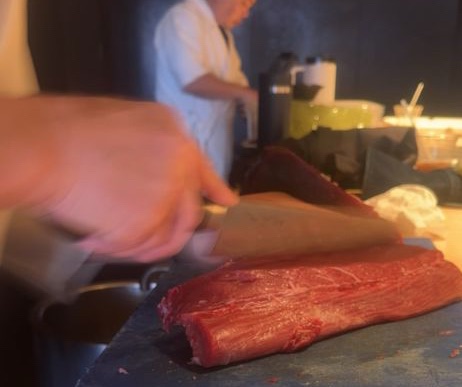
While one chef slices tuna, another prepares the display, another packs fresh sashimi, while others replenish stock, clean equipment, and keep every station organised.
Nobody could manage an event like this alone.
The smooth service that customers experience is only possible because every member of the team works together toward the same goal.
That is one of the greatest lessons I take away from every major food festival.
➡ Internal Link: James St Festival Part 1 – Before the Crowd Arrived
James St Festival Ends Quietly

As the afternoon came to an end, the crowds slowly disappeared.
Inside the kitchen, we cleaned our knives, washed every workstation, packed away equipment, and finally had a chance to take a breath.
Only then did the exhaustion begin to sink in.
For visitors, the James St Festival lasts only a few enjoyable hours.
For the chefs behind the scenes, those few hours represent an entire day of preparation, concentration, teamwork, and hard work.
After more than 25 years as a professional chef, experiences like this still remind me why I love this profession.
Creating memorable experiences for people is always worth the effort.
Final Thoughts
This two-part series has been a little different from my usual articles about Japanese knives.
Instead of focusing only on steel, blade shapes, or craftsmanship, I wanted to share what life really looks like behind the scenes of one of Brisbane’s biggest food festivals.
Every handcrafted Japanese knife has a story.
Every chef has a story.
And every unforgettable meal begins long before the first customer arrives.
If you enjoyed following my journey through the James St Festival, I invite you to explore more stories about traditional Tosa knives, Japanese craftsmanship, and the tools I trust every day as a professional sushi chef.
Whether you’re looking for your first Japanese knife or simply want to learn more about the people and traditions behind them, you’ll find plenty of guides, stories, and handcrafted knives at Asaoya Yaichi.
👉 Explore more:
https://blog.asaoyayaichi.com.au
👉 Visit our online store:
https://asaoyayaichi.com.au
Thank you for reading, and I hope to see you again in the next story.