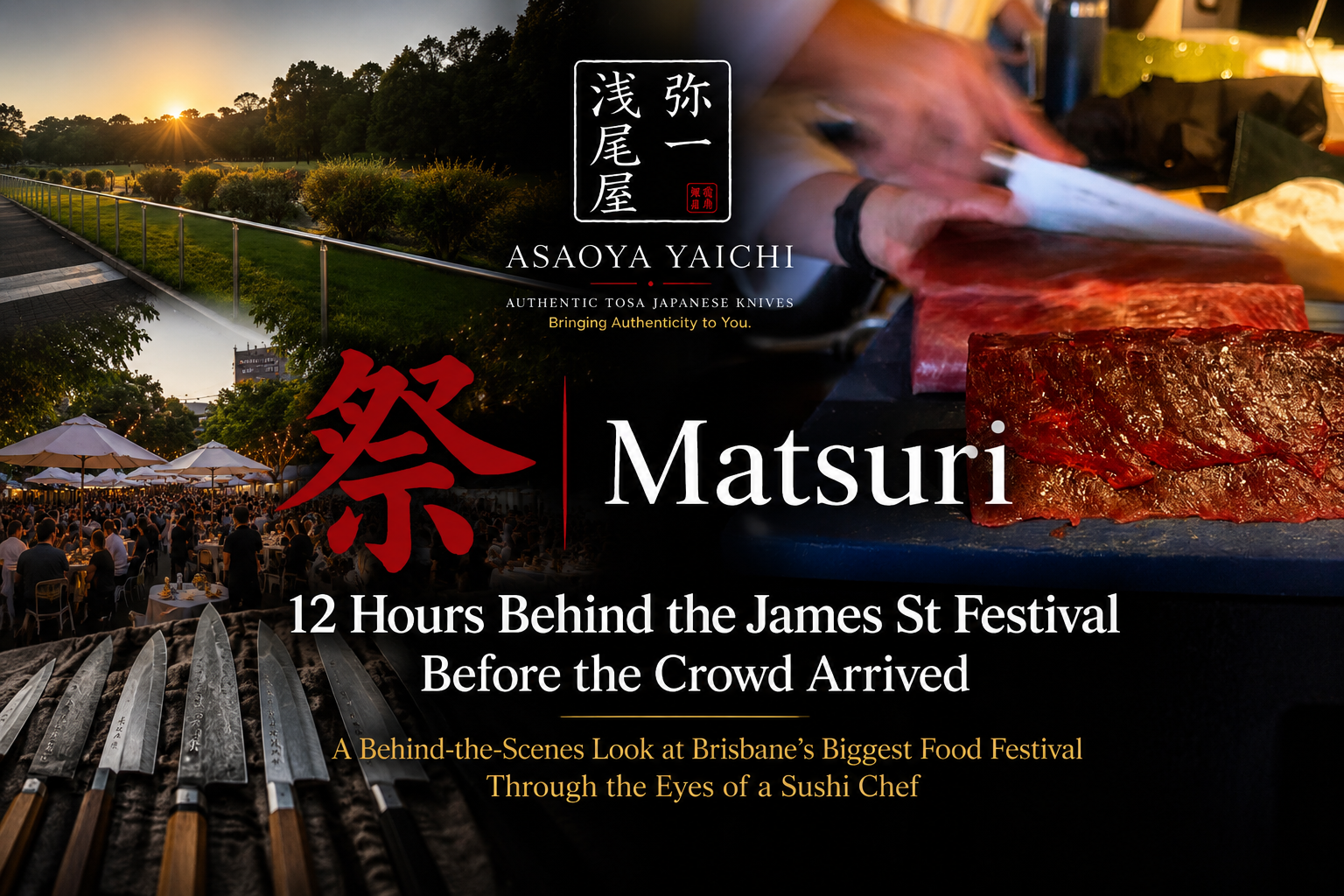
This time, I’d like to share something a little different.
Instead of talking about Japanese knives, steel, or traditional craftsmanship, I’m taking you behind the scenes of one of Brisbane’s biggest food events.
As a professional sushi chef with more than 25 years of experience, I thought it would be interesting to show what happens before the crowds arrive at the James St Festival.
This is the first chapter of that story.
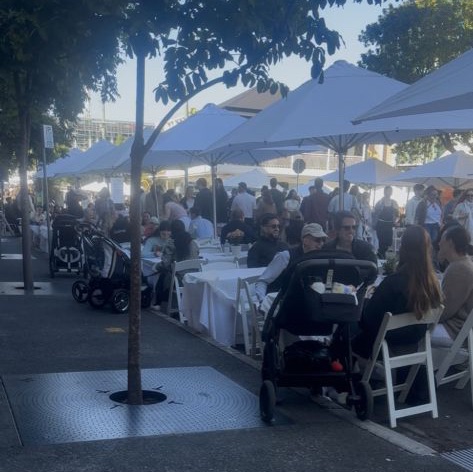
The James St Festival is one of Brisbane’s most popular annual events, attracting thousands of visitors who come to enjoy incredible food, live music, local businesses, and the unique atmosphere that fills James Street every winter.
Most people only see the finished experience—the beautifully presented food, the smiling chefs, and the lively streets packed with visitors.
Very few people ever see what happens before the festival opens.
Long before the first customer walks through the gates, chefs, kitchen staff, and event teams are already working at full speed behind the scenes.
As a professional sushi chef with more than 25 years of experience, I thought it would be interesting to share a different side of the James St Festival—one that most visitors never have the chance to witness.
This is the first chapter of that story.
James St Festival Begins Before Sunrise

My alarm rang at 6:00 a.m.
Thirty minutes later, I climbed onto my beloved e-scooter and headed toward the train station.
Although Brisbane’s winters are relatively mild, riding an e-scooter before sunrise is another story entirely.
The freezing air rushed past my face, and the cold wind against my ears was almost painful.
For a moment I questioned why anyone would willingly leave a warm bed this early on a Sunday morning.
Still, festival day had arrived.
There was work to do.
I reached the station just in time for the 6:55 a.m. train.

As I stood on the platform, the first light of the morning slowly appeared across the horizon.
The sunrise always feels special to me.
No matter how busy life becomes, watching the beginning of a new day reminds me why I love working as a chef.
It represents another opportunity to improve, create, and challenge myself.
The train was almost empty.
Only a handful of passengers sat quietly as we travelled toward the city.
Every time the doors opened, another wave of icy air entered the carriage, making everyone pull their jackets a little tighter.
At 7:39 a.m., I stepped off the train, climbed back onto my e-scooter, and made the short journey to work.
James St Festival Was Already Coming to Life
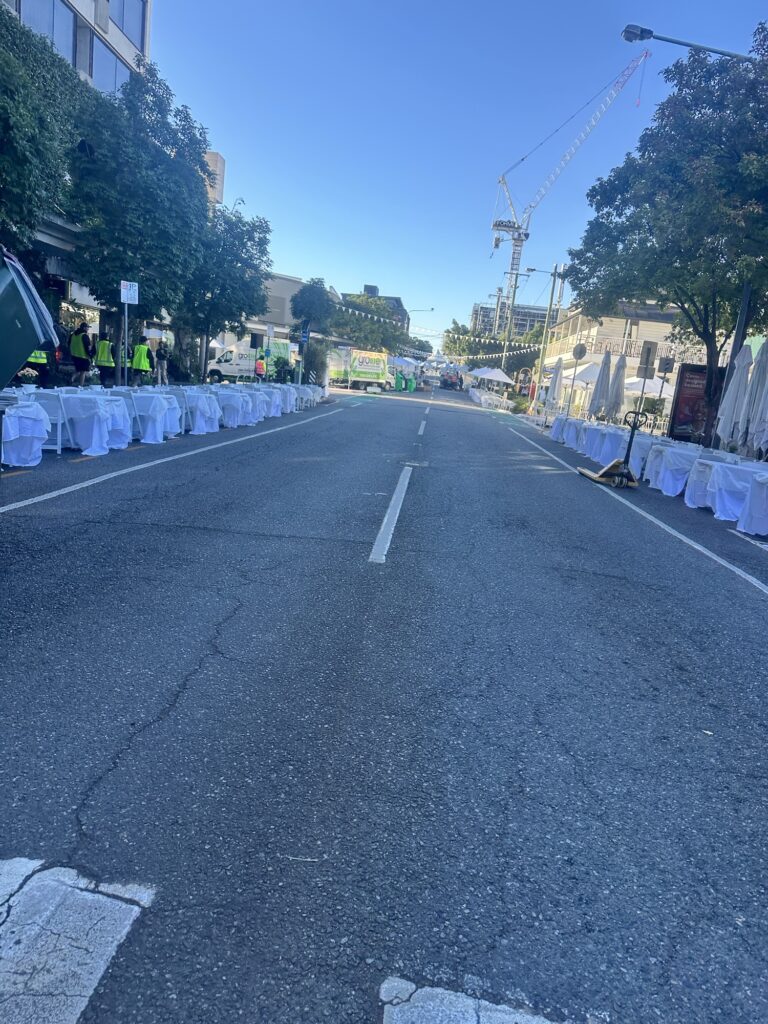
As I approached James Street, I immediately realised this wasn’t an ordinary Sunday.
Roads had been closed.
Temporary barriers lined the streets.
Festival tents stretched along the footpaths.
Large speakers had been installed.
Staff members hurried between stalls carrying equipment and supplies.
The James Street I see almost every week had transformed overnight into something completely different.
Although visitors had not yet arrived, there was already a sense of excitement in the air.
Everyone knew that within only a couple of hours these quiet streets would become one of Brisbane’s busiest destinations.
Seeing the transformation before the crowds arrive is something most people never experience.
For those of us working behind the scenes, however, this is where the James St Festival truly begins.
James St Festival Morning Timeline
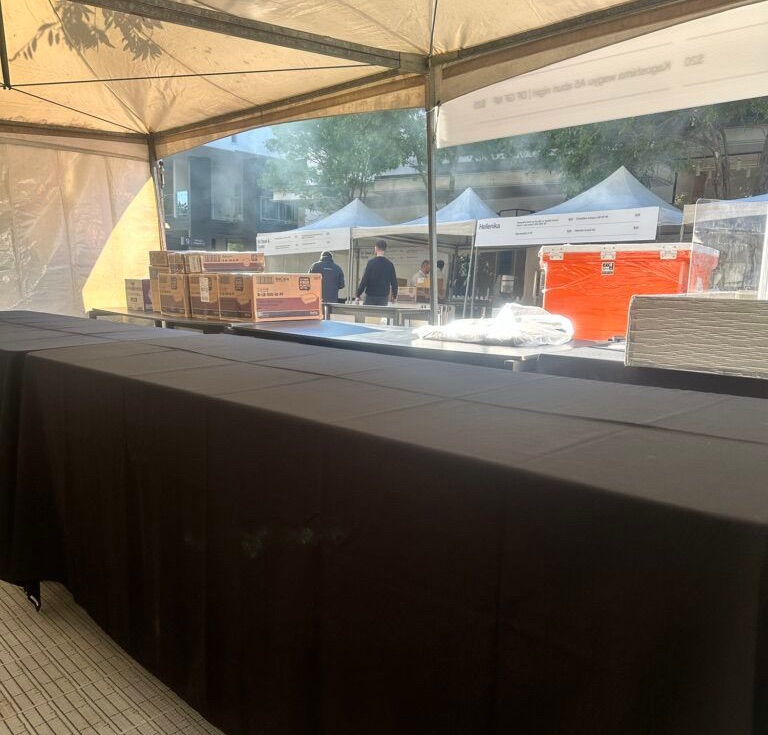
Behind the Scenes
Before the festival officially opened, my morning looked like this.
Time
Activity
6:00 a.m.
Woke up
6:30 a.m.
Left home on my e-scooter
6:55 a.m.
Boarded the train
7:39 a.m.
Arrived at the station
8:00 a.m.
Arrived at work
8:15 a.m.
Began preparing sashimi
10:00 a.m.
James St Festival officially opened
By the time most people were deciding where to have breakfast, our kitchen had already been working for nearly two hours.
James St Festival Preparation Starts with Japanese Knives
After arriving at work, there was no time to relax.
I changed into my uniform, washed my hands, organised my workstation, and immediately began preparing sashimi.
For the entire day, my primary responsibility would be tuna.
That meant slicing, portioning, trimming, and preparing an enormous amount of fish before the lunch rush began.
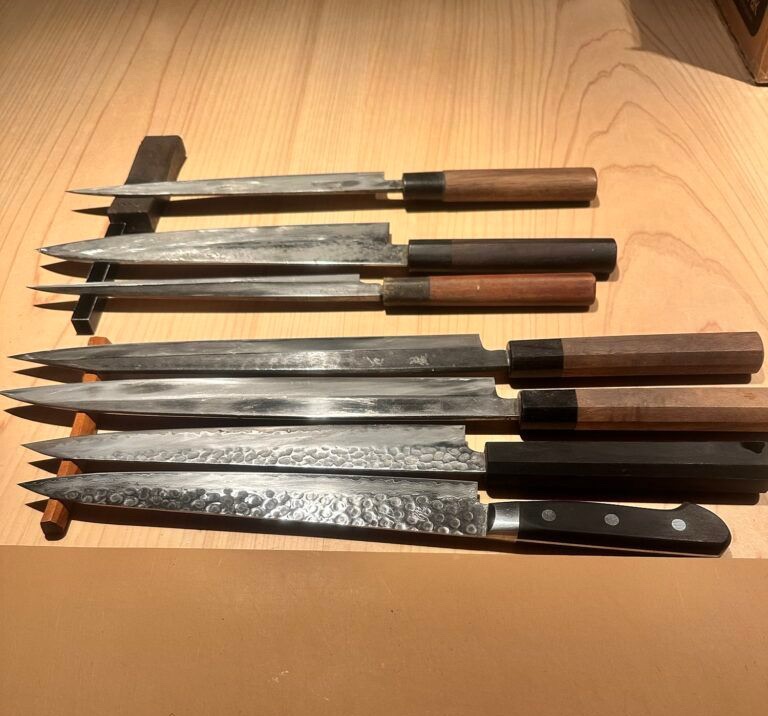
Unlike a normal restaurant service, a major event like the James St Festival requires multiple knives ready for continuous work.
When one knife begins to lose its razor-sharp edge, another immediately takes its place.
Efficiency matters.
Precision matters even more.
Most of the knives laid out in front of me were handcrafted by Ishizuchi Metalworks, the same workshop that supplies the handcrafted Japanese knives available through Asaoya Yaichi.
These knives are not displayed simply because they look beautiful.
They are the knives I genuinely trust in a professional kitchen.
Among them sits one knife that always reminds me why Japanese craftsmanship deserves such respect.
A Kiya knife passed down from my mother.
It is now more than 40 years old, yet it still performs remarkably well in professional service.
Every time I use it, I am reminded that a truly well-made Japanese knife is not something you replace every few years.
It becomes part of your story.
With proper care, it can serve not only one chef, but an entire family across generations.
That is the beauty of traditional Japanese craftsmanship.
➡ Internal Link: Beginner’s Guide to Japanese Kitchen Knives
➡ Internal Link: Carbon Steel vs Stainless Steel – Which One Should You Choose?
James St Festival Preparation Never Stops
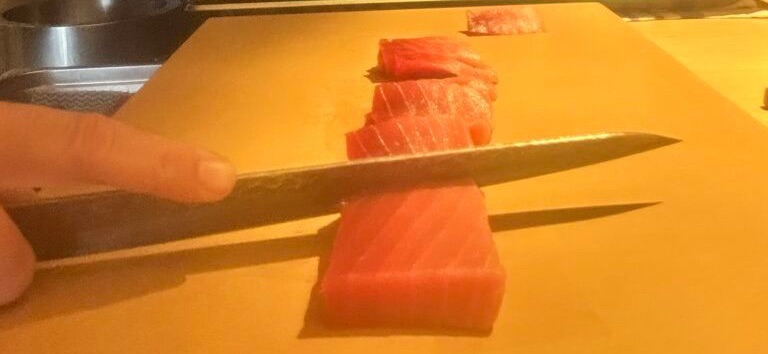
Preparation began with tuna that had already been partially prepared the previous day.
Cut.
Trim.
Slice.
Repeat.
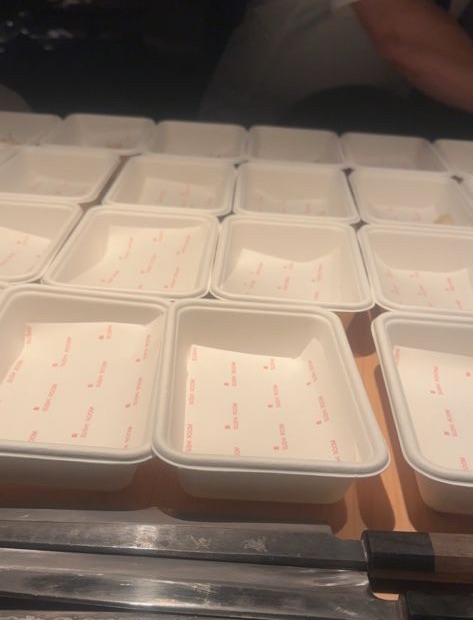
Once enough tuna had been portioned, it all needed to be packed carefully into trays.
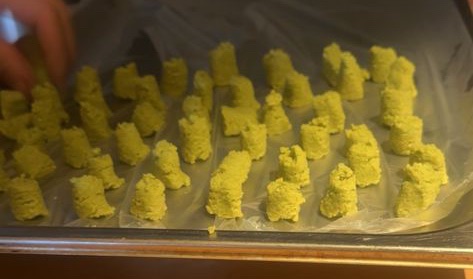
Then came fresh wasabi.
Pickled ginger.
Containers.
Labels.
Cleaning.
Restocking.
Every small task had to be completed before customers arrived.
Professional kitchens never focus on just one job at a time.
Everything happens simultaneously.
While slicing tuna, someone else prepares garnishes.
Another person organises packaging.
Someone checks stock levels.
Another cleans benches and equipment before the next task begins.
The smooth experience customers enjoy is only possible because dozens of small jobs happen together behind the scenes.
By 10:00 a.m., the James St Festival officially opened.
Almost instantly, the atmosphere outside changed.
Music echoed through James Street.
Families and friends filled the walkways.
Queues quickly formed outside popular food stalls.
Laughter spread throughout the precinct.
From inside the kitchen, we could hear the excitement building with every passing minute.
Although we rarely had time to look outside, we knew exactly what was happening beyond the kitchen doors.
The festival had finally begun.
The Biggest Moment of the Day Was About to Begin
As more visitors arrived, the anticipation inside the kitchen continued to grow.
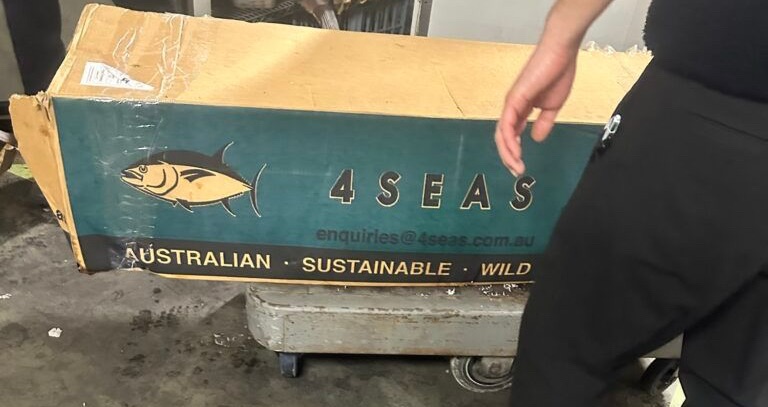
Waiting backstage were two whole bluefin tuna, ready for one of the festival’s biggest attractions—the live tuna cutting demonstration.
For the visitors outside, it would be an exciting show.
For those of us inside the kitchen, it marked the beginning of an entirely different challenge.
What happened after those tuna returned to the kitchen would become the busiest and most intense part of the entire day.
That story continues in Part 2, where I’ll take you behind the scenes of the live tuna cutting demonstration, the incredible rush that followed, and how nearly 100 kilograms of tuna sold out during one unforgettable James St Festival.
➡ Internal Link: Why Do Japanese Knives Rust So Easily?
➡ Internal Link: Sujihiki Knives | The Appeal of Asaoya Yaichi’s Carefully Selected Sujihiki Knives
➡ Internal Link: Samurai Century | The Finest Expression of Tosa Knife Craftsmanship
If you enjoy discovering the stories behind authentic Japanese craftsmanship, professional kitchens, and handcrafted Tosa knives, I invite you to explore the rest of the articles here on Asaoya Yaichi
Every handcrafted knife carries generations of tradition.
Every professional kitchen has a story.
And every festival has a side that most people never get to see.
Explore our latest articles and handcrafted Japanese knives here: