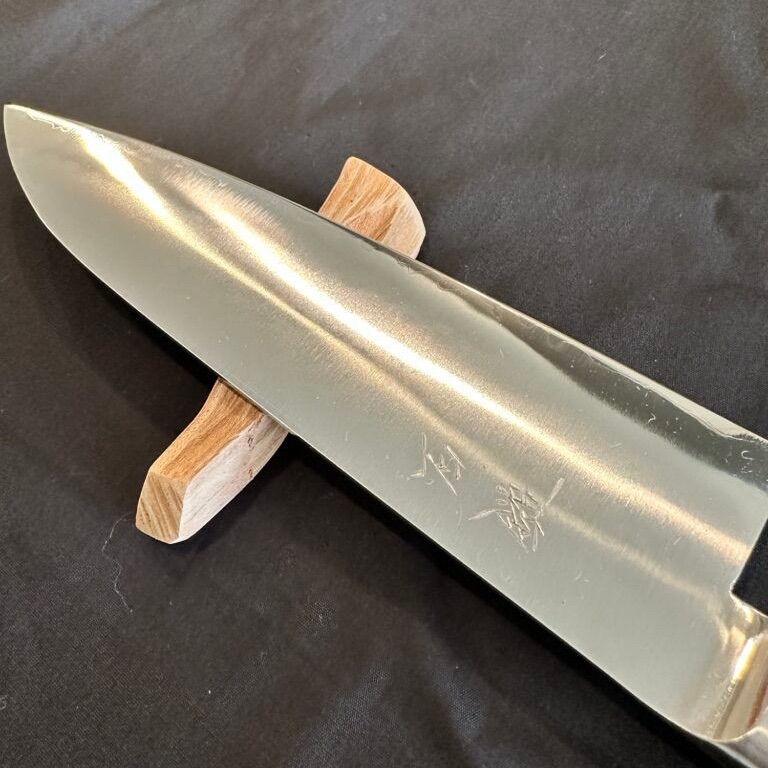
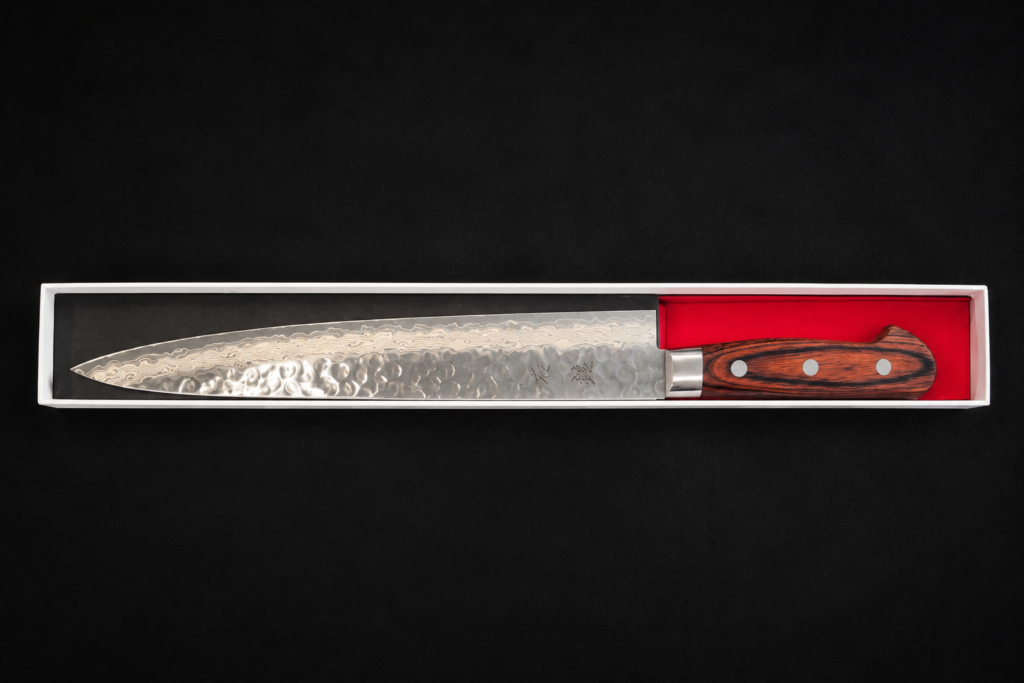
240mm Sujihiki VG10 Hammered 17 Layer Damascus Mahogany
When you buy a new Japanese knife, it is natural to assume that the sharpness you feel straight out of the box represents the very best that knife can offer.
I used to think the same way.
After more than 25 years working as a professional chef in Japan and Australia, I have handled many different Japanese knives. Yet one thing I have learned through actually using and sharpening them is surprisingly simple: a new Japanese knife does not always reveal its full potential on the first cut.
Sometimes I have picked up a brand-new knife and felt a slight roughness at the edge. It was certainly sharp, but something about the cutting feel made me wonder whether there was more hidden inside the blade.
Then I sharpened it myself.
And it cut better.
That experience changed the way I judge a new knife. Today, I do not necessarily see factory sharpness as the final destination. To me, it is simply the starting point.
1. A New Japanese Knife Is the Beginning, Not the Finish
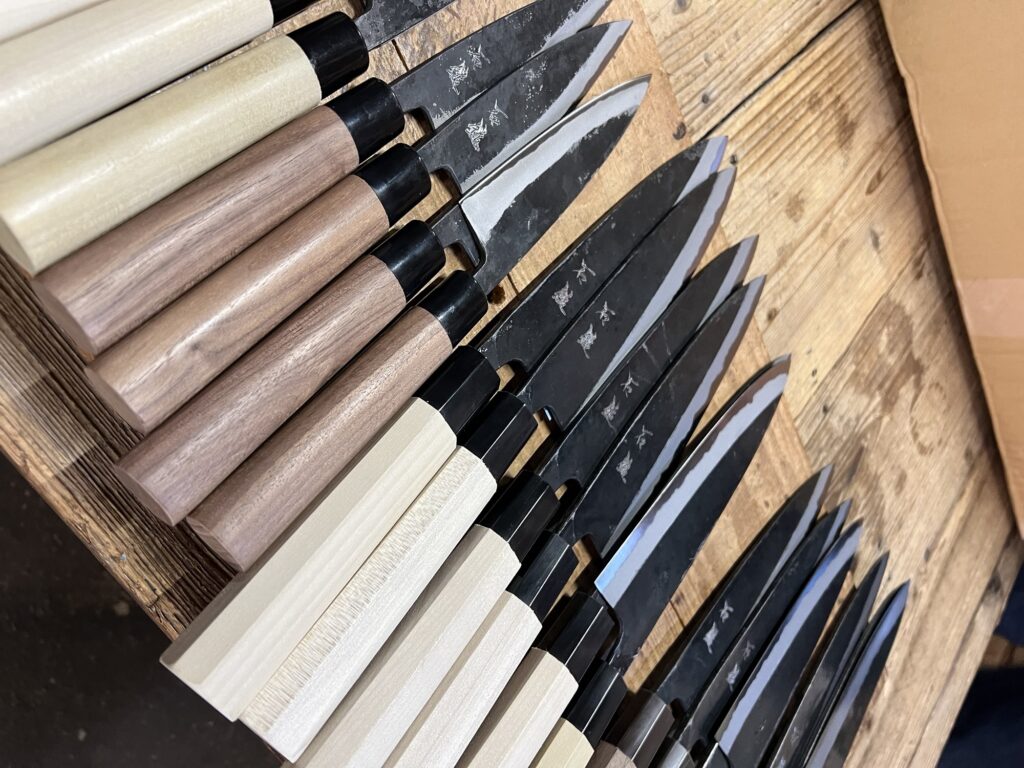
For a long time, I assumed something very straightforward: if a knife is brand new, surely this must be the sharpest it will ever be.
It sounds logical.
But after sharpening some of my own knives, I realised that this was not always true.
A quality Japanese knife may already have excellent steel, geometry and craftsmanship, but the feeling at the edge can still change depending on how it is sharpened and maintained.
This is one reason I believe it is difficult to judge the true character of a knife from its first few cuts alone.
👉 INTERNAL LINK: Japanese Knife Bevels | Single Bevel vs Double Bevel Explained
2. The First Cut Does Not Always Reveal Everything
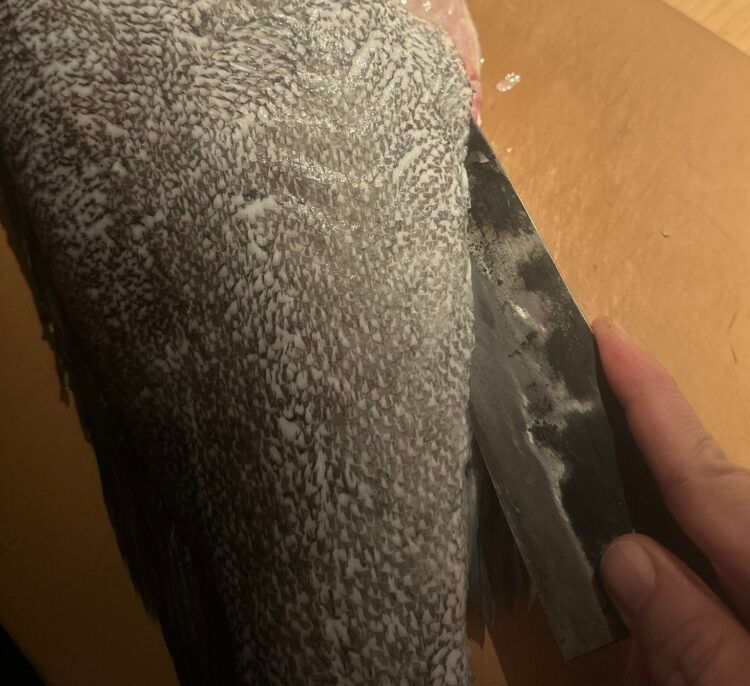
Sharpness is not only about whether a knife can cut through something.
As a chef, I notice how the edge enters the ingredient, how much resistance I feel and how smoothly the blade continues through the cut.
Occasionally, with a new Japanese knife, I have noticed a slightly rough feeling at the edge. This does not automatically mean that the knife is bad or that there is something wrong with the steel.
It simply tells me that I have not yet discovered everything that knife can do.
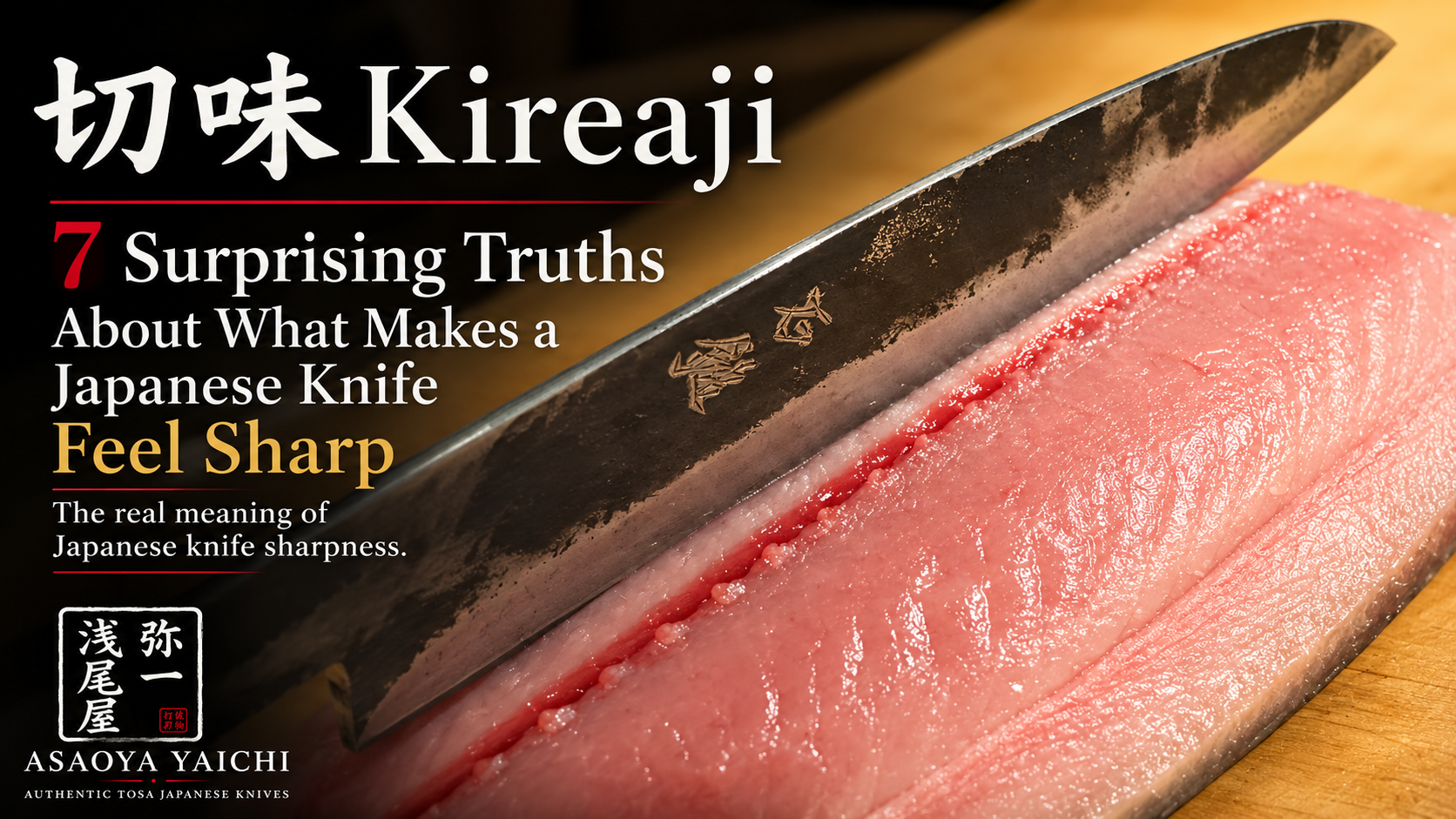
This is also why I have always believed that Kireaji — the feeling of sharpness — is something you experience through your hands, not simply something that can be understood from specifications.
👉 INTERNAL LINK: 切味 Kireaji | 7 Truths About What Sharp Really Feels Like
3. Sharpening My New Japanese Knife Changed My Perspective
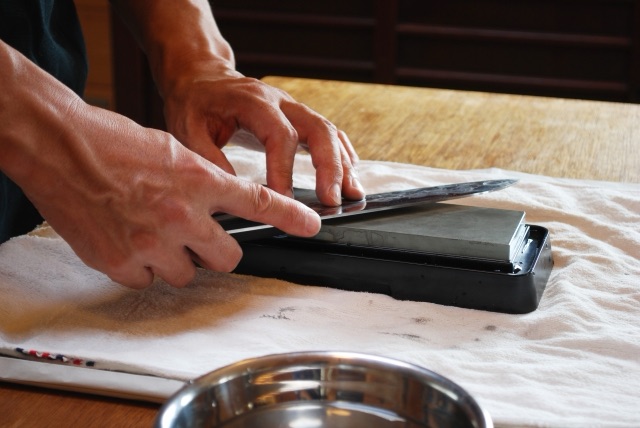
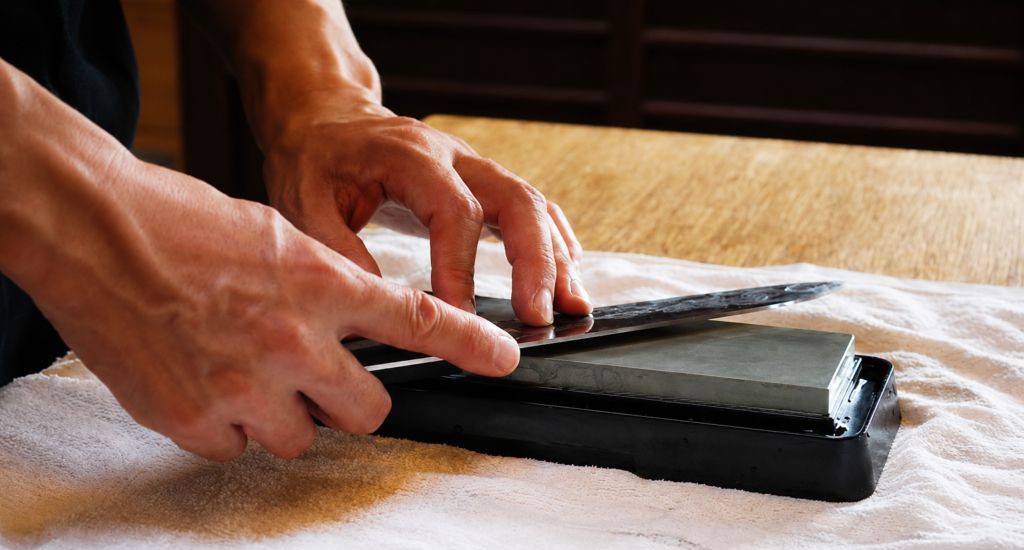
The biggest lesson came when I sharpened a knife myself and realised that I could make it cut better than it did when it was new.
That was an important moment for me.
Until then, part of me had assumed that the manufacturer had already created the ultimate edge. If this was how it cut when new, then perhaps this was simply the maximum performance of that particular knife.
But after sharpening it, the cutting feel improved.
The knife had not changed.
The steel had not changed.
What changed was the edge.
That made me realise that the sharpness of a new Japanese knife should not automatically be treated as a measurement of everything the knife is capable of.
👉 INTERNAL LINK: Whetstone Flattening — Why a Flat Whetstone Matters
4. The Steel Has Potential — The Edge Helps Reveal It
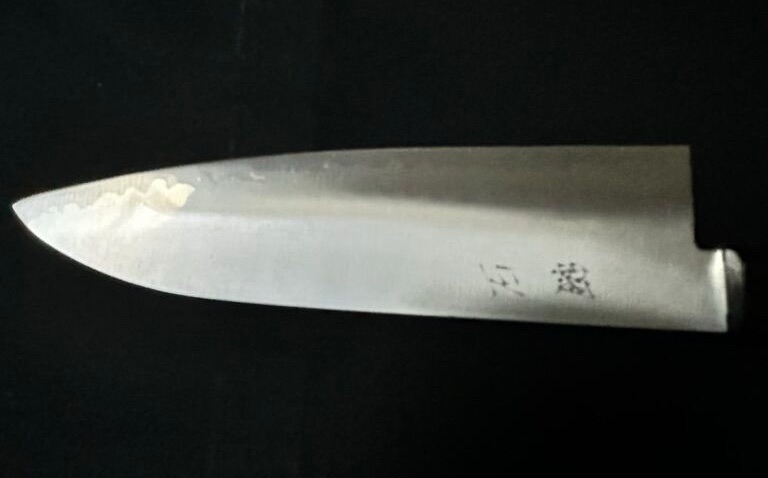
180mm Santoku SG2 Rosewood Octagonal Hand
This is where the Japanese word 真価 — Shinka feels appropriate to me.
Shinka means something close to a thing’s true value or real worth. In this case, I think of it as discovering what a knife is genuinely capable of.
I do not sharpen a knife simply because I want to say, “Now it is sharper.”
For me, there is something more interesting about the process.
A well-made knife already has potential inside it. Through sharpening, use and maintenance, I can gradually discover that potential for myself.
Perhaps a slightly romantic way of saying it is this:
A good knife already has the potential. Sharpening is how I help bring it out.
That is how I have come to think about my own knives.
5. Hardness Alone Cannot Tell Me How a Knife Will Feel
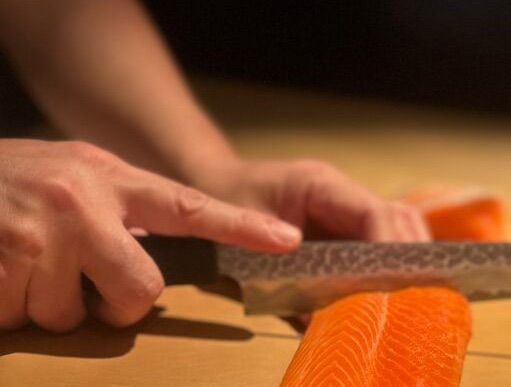
When choosing a Japanese knife, it is easy to focus on specifications such as steel type and HRC hardness.
Those things certainly matter.
But a number on a product description cannot completely tell me how a knife will feel on the cutting board.
I want to use it. I want to sharpen it. I want to understand how the edge responds and how the knife behaves during actual kitchen work.
After years of working with knives, I have learned that specifications can tell me about a knife, but my hands ultimately tell me how I feel about it.
👉 INTERNAL LINK: Hardness 硬度 | 7 Powerful Truths About Japanese Knife HRC
6. Sharpening Also Makes a Knife More Personal
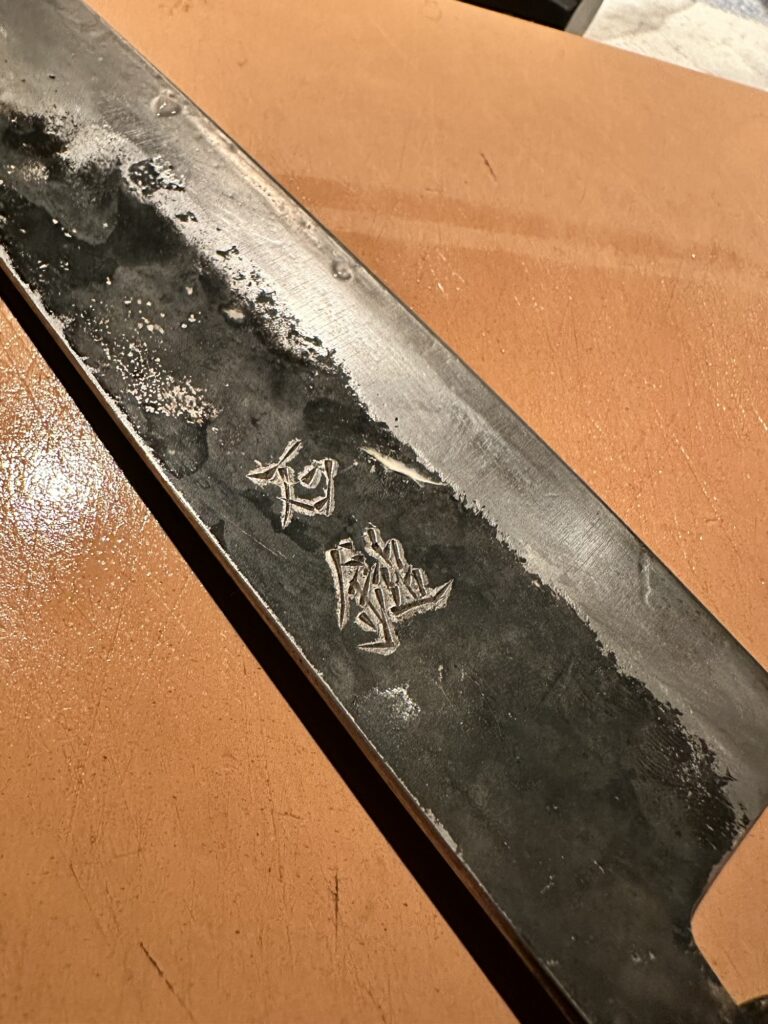
There is another reason I enjoy sharpening my own knives.
Over time, the knife becomes more familiar.
You begin to understand how the steel responds to the stone, how easily the edge comes back and what kind of finish feels right for the work you do.
For me, sharpening is therefore not simply maintenance.
It is part of developing a relationship with the tool.
This is especially important with handcrafted Japanese knives because I do not think of them as disposable kitchen products. A good knife can remain part of your kitchen for many years when it is properly used, sharpened and cared for.
👉 INTERNAL LINK: The True Value of Japanese Knives | 7 Reasons
7. Don’t Judge a New Japanese Knife Too Quickly
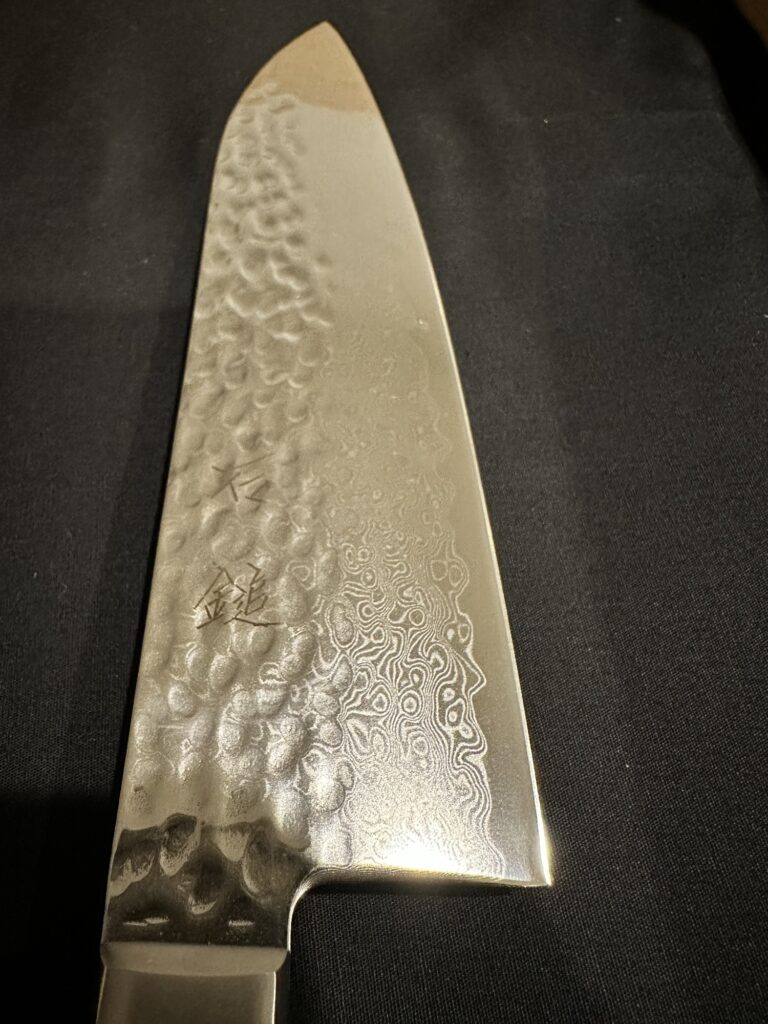
180mm Santoku VG10 Polished Hammered 67 Layer Damascus Green Handle
If there is one thing I would tell someone buying a new Japanese knife, it is this:
Do not assume the first cut tells you everything.
Of course, a new knife should cut well. But I would not immediately conclude that its factory edge represents the absolute limit of what the blade can achieve.
Use it.
Learn how it feels.
And when the time comes, sharpen it properly.
You may discover another level of performance that was already waiting inside the knife.
That, to me, is 真価 — Shinka.
After more than 25 years as a chef, I still enjoy discovering what a knife can really do. Sometimes the most satisfying moment is not taking a new knife out of the box.
It is the moment after sharpening it, making that first cut again, and thinking:
“Yes. This knife had more to give.”
👉 Explore more:
https://blog.asaoyayaichi.com.au
👉 Visit our online store:
https://asaoyayaichi.com.au
Thank you for reading, and I hope to see you again in the next story.