タグ: Blue Paper Steel

  • Japanese Knives Australia Ranking: 5 Exceptional Knives I Would Choose After 25 Years as a Chef

    Japanese Knives Australia Ranking: 5 Exceptional Knives I Would Choose After 25 Years as a Chef

    Asaoya Yaichi

    Choosing a Japanese knife is highly personal. Steel, balance, blade shape, handle design and even appearance can completely change how a knife feels in your hand. After more than 25 years working in professional kitchens, I have learned that the knife I personally want is not always the most expensive one.

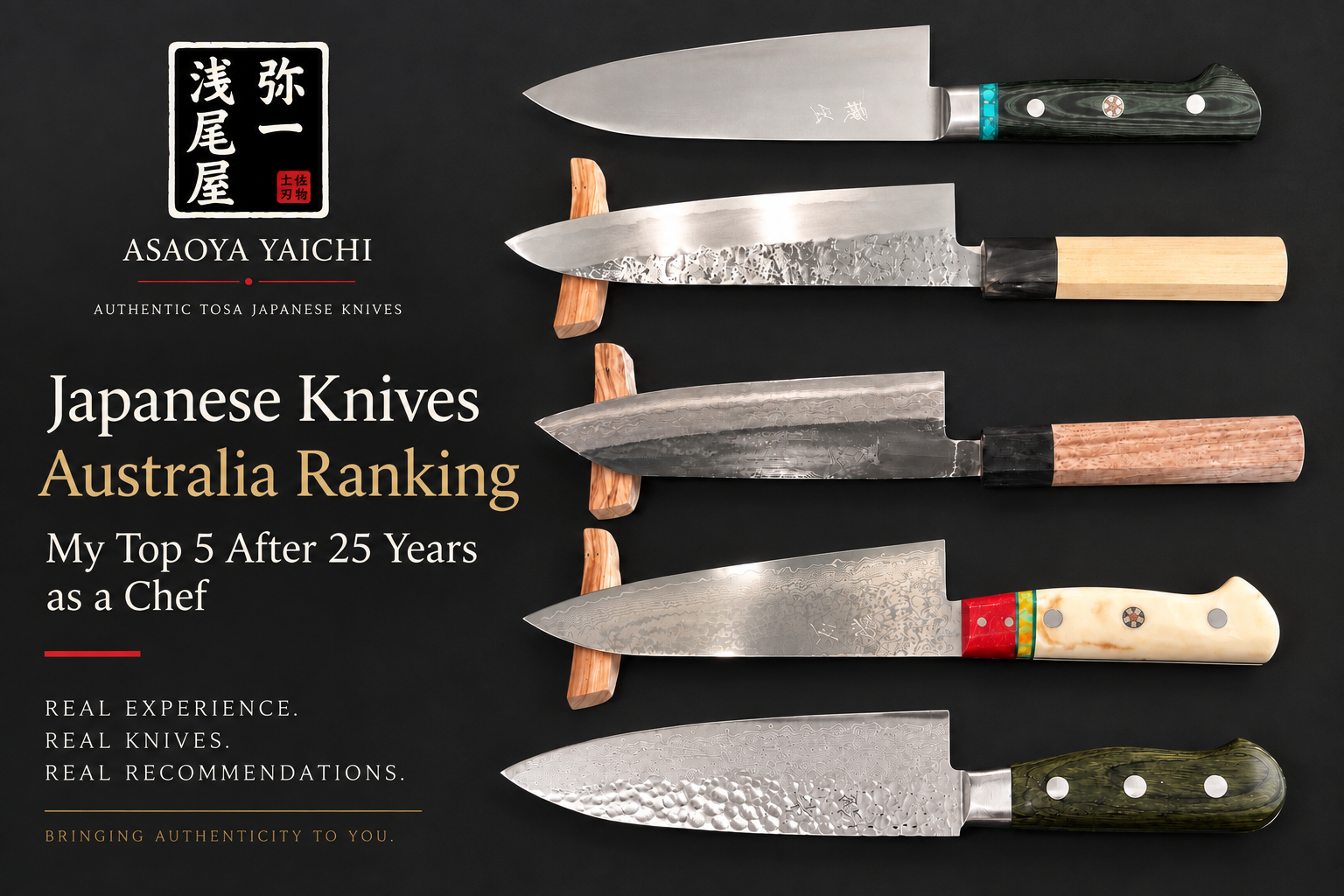
    That is why I wanted to create my own Japanese Knives Australia Ranking. Rather than ranking knives purely by price or specifications, these are five knives from the Asaoya Yaichi collection that stand out to me through a combination of usability, craftsmanship, steel, rarity and character.

    If you are currently looking for Japanese knives in Australia, you can also see our collection here:

    👉 https://asaoyayaichi.com.au

    Japanese Knives Australia Ranking — Why These 5?
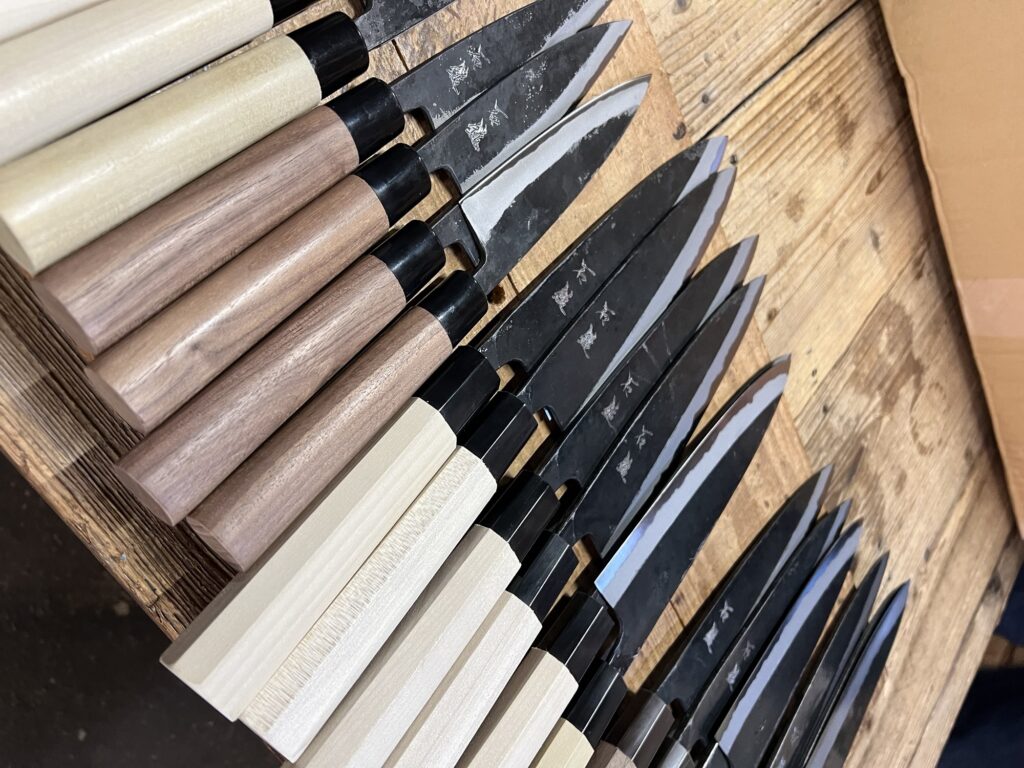
    Ishizuchi Kanamono Manufactory

    There are many excellent Japanese knives available today, so this ranking is deliberately personal. I am looking at these knives from the perspective of someone who has spent decades actually using knives in professional kitchens.

    Some knives impress me because of their practicality. Others because of traditional Japanese craftsmanship. And sometimes there is simply a knife that makes you think, “I want that one.”

    👉 INTERNAL LINK: Read “Is an Expensive Japanese Knife Really Worth It?” here.

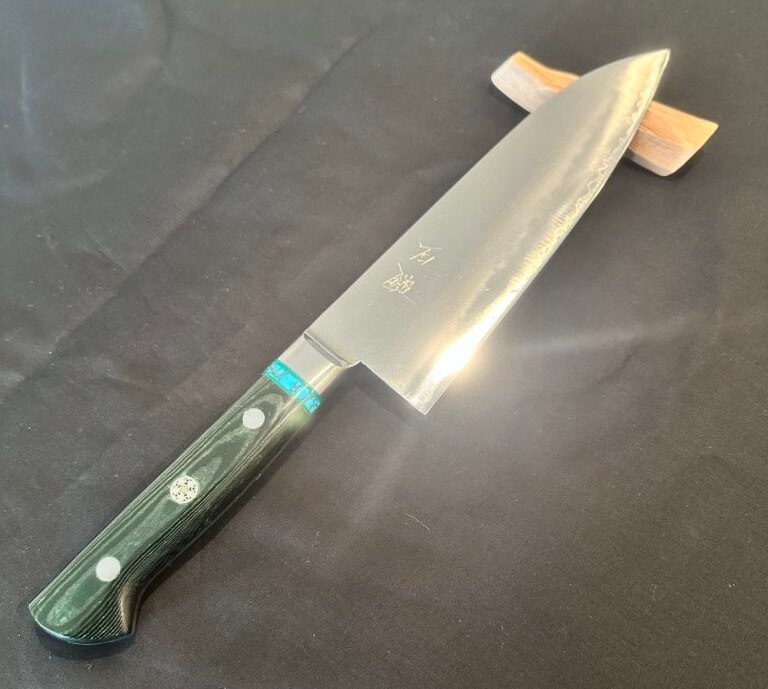
    No. 5 — 210mm Gyuto VG10 Polished Hammered 67 Layer Damascus Green Handle
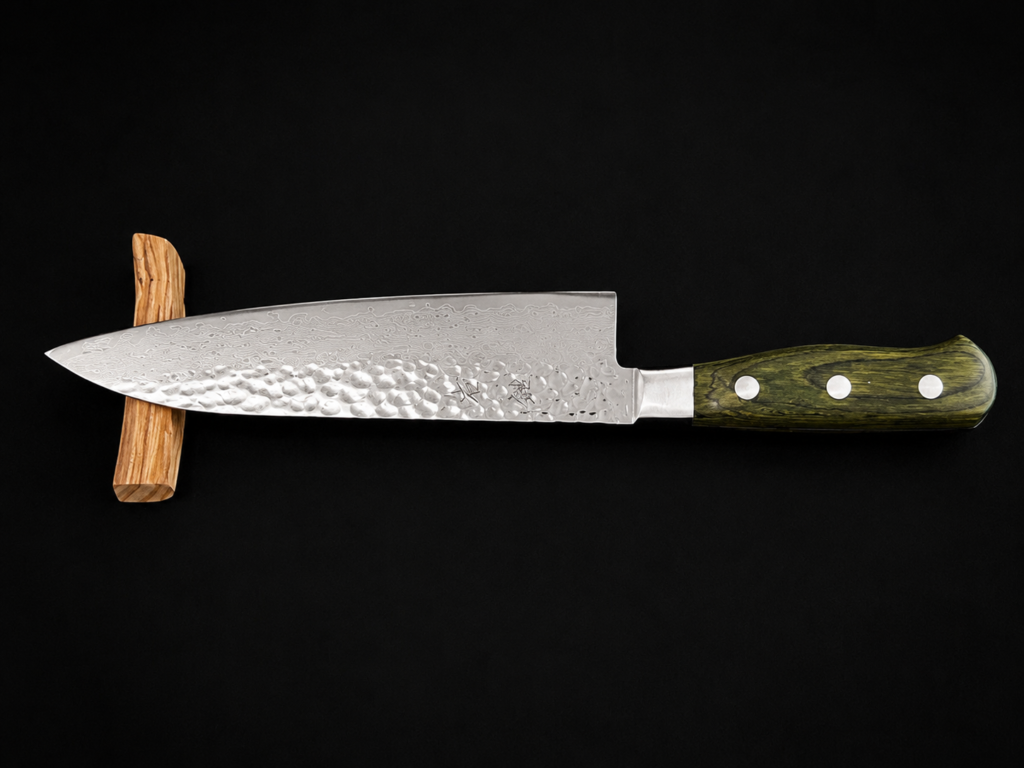

    210mm Gyuto VG10 Polished Hammered 67 Layer Damascus Green Handle

    At number five in my Japanese Knives Australia Ranking is a 210mm Gyuto made from VG10 stainless steel with a polished hammered 67-layer Damascus finish.

    This is what I would call a dependable all-rounder. A 210mm Gyuto is extremely versatile in both professional and home kitchens, while VG10 offers a practical combination of edge retention, corrosion resistance and ease of maintenance.

    The Damascus pattern and green handle also make this knife visually impressive without sacrificing everyday usability.

    Personally, I would be very tempted to purchase this Gyuto together with the matching Petty. As a set, they cover an enormous amount of everyday kitchen work while looking fantastic together.

    👉 INTERNAL LINK: Read “Hand-Forged vs Machine-Made Japanese Knives” here.

    No. 4 — 180mm Santoku VG10N 33 Layer Damascus Green Marble Handle Rainbow Spacer


    180mm Santoku VG10N 33 Layer Damascus Green Marble Handle Rainbow Spacer Orange

    Number four is something quite different.

    This 180mm Santoku combines VG10N steel with 33-layer Damascus, a Green Marble handle and a Rainbow Spacer.

    The marble-style handle immediately catches the eye, but what makes this knife particularly interesting to me is its rarity. Japanese knives with this combination of blade and handle design are not something you see everywhere.

    The 180mm Santoku size is also highly practical. It gives you enough blade for serious preparation while remaining comfortable and controllable for everyday cooking.

    For someone wanting a Japanese knife that feels genuinely different from the usual choices, this is a special piece.

    👉 INTERNAL LINK: Read “Most Popular Japanese Knife Souvenirs” here.

    No. 3 — 180mm Kiritsuke Aogami #2 Kurouchi Walnut Octagonal Handle
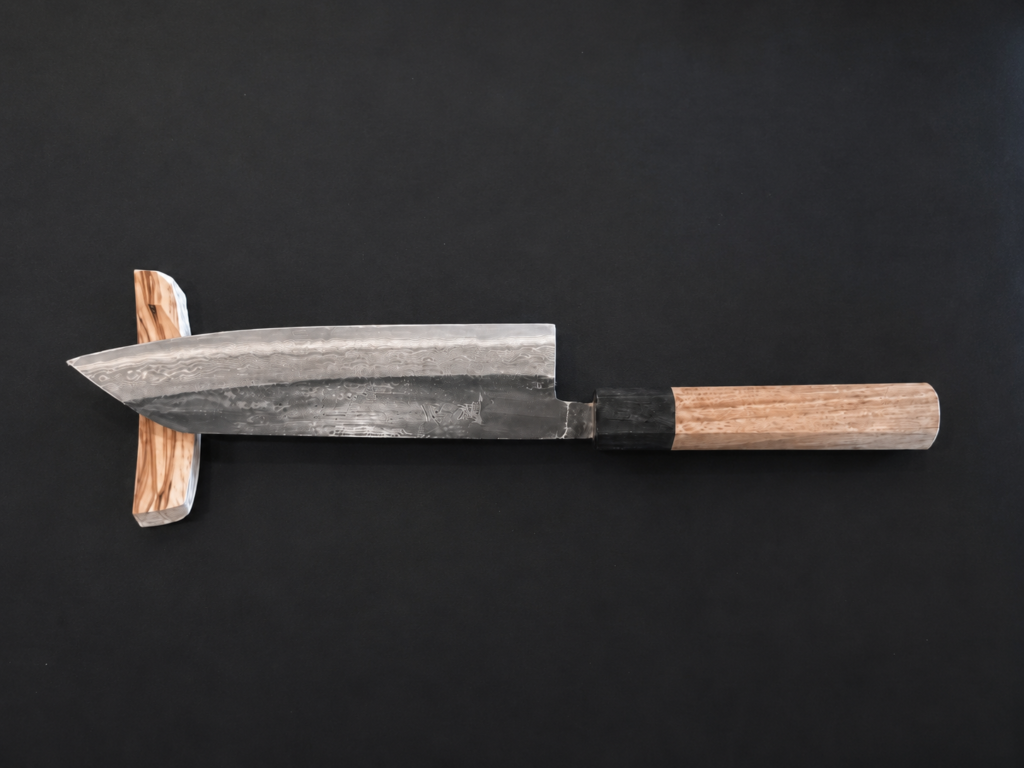

    180mm Kiritsuke Aogami #2 Kurouchi Walnut Octagonal Handle

    If I ranked these knives purely on usability, this could easily be number one.

    I have written about this knife before because I genuinely think its shape is exceptionally easy to use. The Aogami #2 carbon steel is also a steel I personally enjoy working with.

    But what gives this knife its character is the Kurouchi finish.

    The dark, rustic surface carries the character I associate with traditional Tosa knives. It does not try to look overly polished or perfect. For people who understand Japanese knives, that simplicity is part of the attraction.

    This knife is also currently available to see at Chanoyu cafe on the Gold Coast.

    👉 INTERNAL LINK: Read my article about the 180mm Kiritsuke Aogami #2 here.

    No. 2 — Gyuto Ginsan Nashiji Forged Magnolia Octagonal Handle Buffalo Horn Ferrule
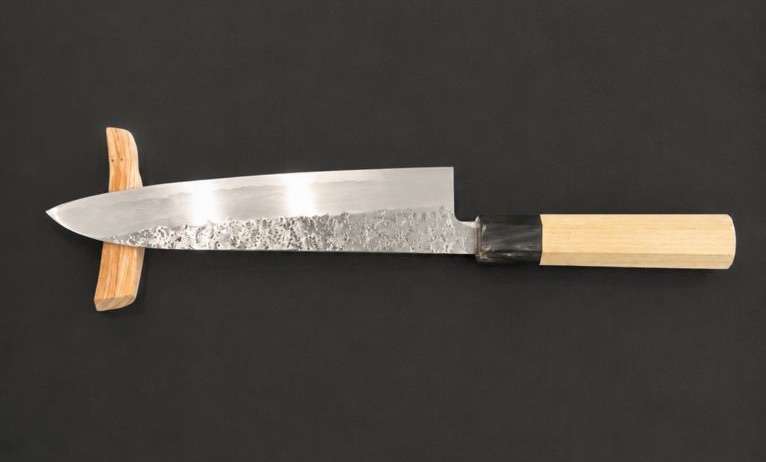

    Gyuto Ginsan Nashiji Forged Magnolia Octagonal Handle Buffalo Horn Ferrule

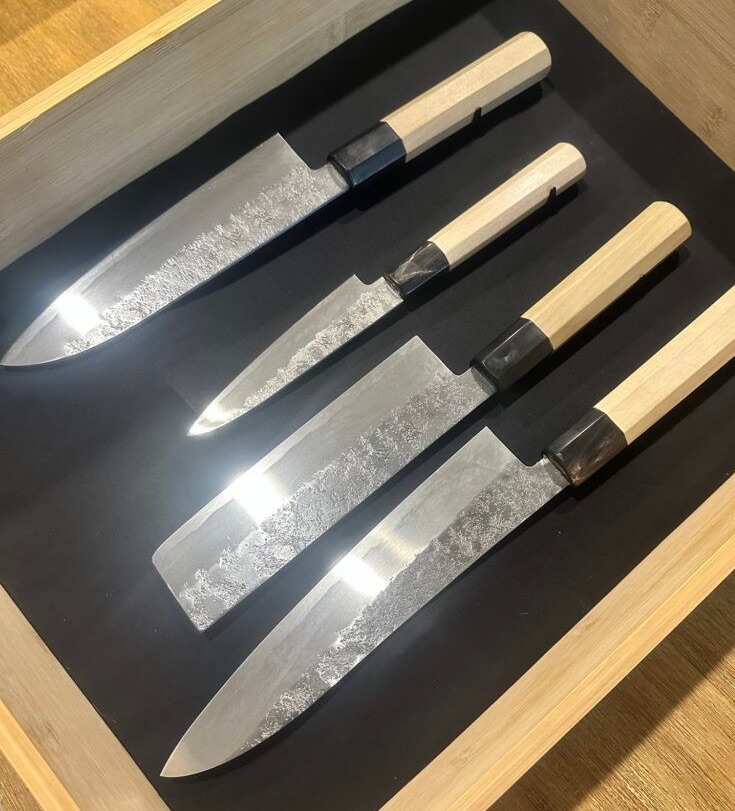
    Number two in my Japanese Knives Australia Ranking is our Ginsan Nashiji Gyuto.

    This knife represents something very different from the modern Damascus designs above. Quality Ginsan stainless steel, a Nashiji finish, forged construction, Magnolia octagonal handle and Buffalo Horn ferrule come together in a knife that feels unmistakably Japanese.

    Interestingly, when I take our knives to businesses and show them in person, this Ginsan series consistently attracts attention. Many of the people I speak with immediately want to know more about it.

    We also carry this style in Gyuto, Santoku, Petty and Nakiri, making it particularly attractive for someone who wants to build a matching Japanese knife set rather than purchase just one knife.

    👉 INTERNAL LINK: Read our article about Ginsan steel and Nashiji-finished Japanese knives here.

    No. 1 — 180mm Santoku Aogami #2 Green Micarta Handle with Turquoise Spacer
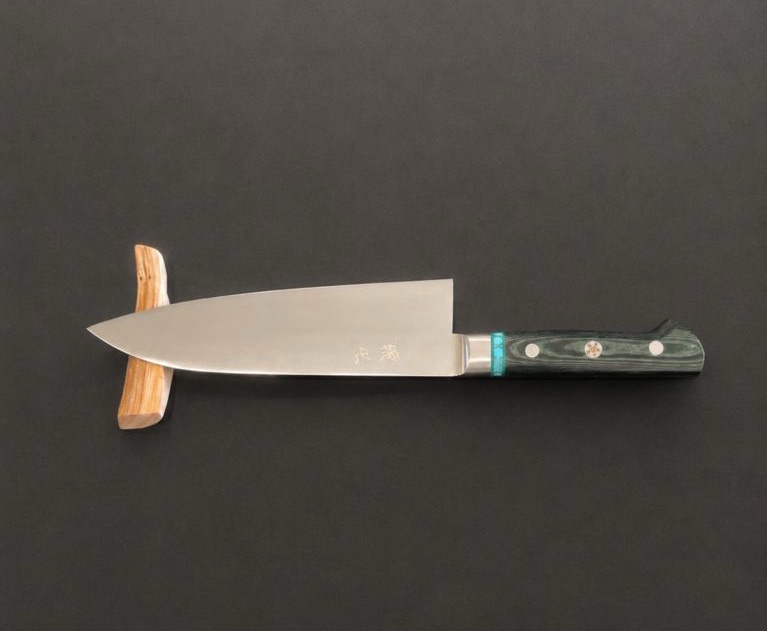

    180mm Santoku Aogami #2 Green Micarta Handle with Turquoise Spacer

    My number one choice is the 180mm Santoku Aogami #2 with Green Micarta Handle and Turquoise Spacer.

    I have featured this knife before, and my opinion has not changed.

    For me, it is simply the coolest knife in the collection.

    The turquoise band running through the handle immediately catches the eye, while Aogami #2 is one of my favourite steels. What I particularly like is the contrast between these elements.

    Aogami #2 represents a very traditional Japanese carbon steel, yet the Green Micarta and turquoise give the knife a modern personality. At the same time, the polished blade still retains a subtle, restrained character that reminds me of Japanese wabi-sabi rather than excessive decoration.

    It is traditional and contemporary at the same time.

    After more than 25 years working with kitchen knives, I have handled plenty of expensive and impressive blades. But if I were choosing one knife from the Asaoya Yaichi collection for myself, this is the one I would want.

    That is why it takes first place in my Japanese Knives Australia Ranking.

    👉 INTERNAL LINK: Read my previous article featuring the Aogami #2 Santoku with Green Micarta and Turquoise Spacer here.

    Final Thoughts on My Japanese Knives Australia Ranking
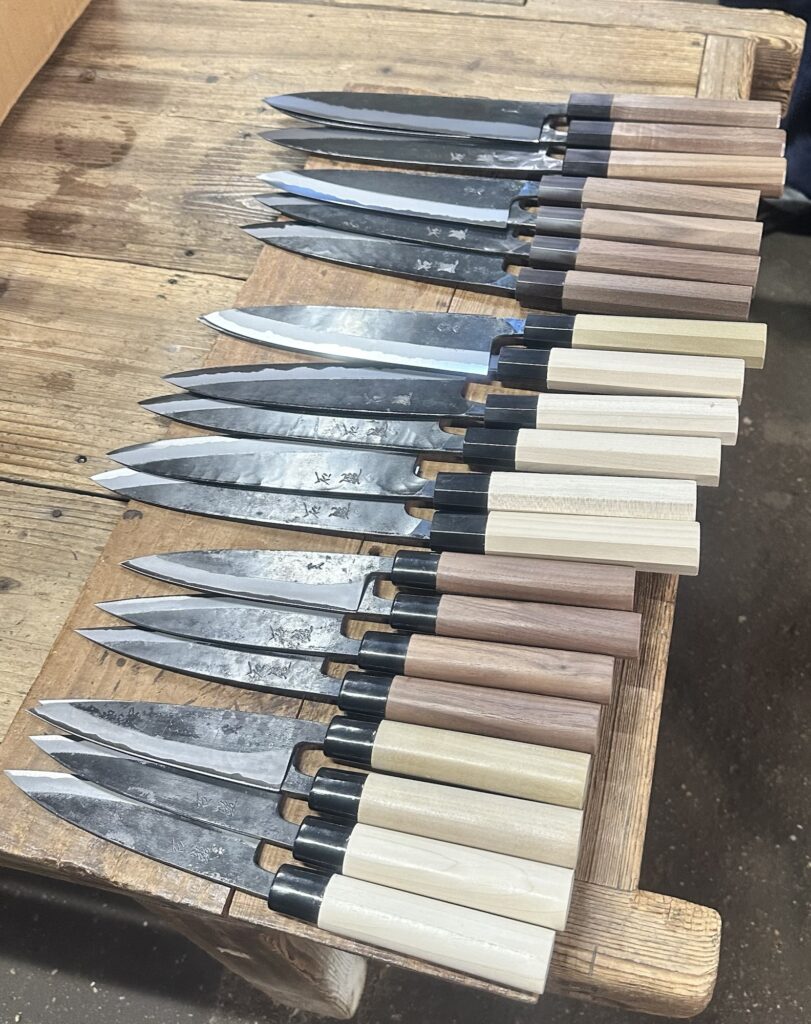
    This is not a ranking based simply on price. It reflects what I personally value after more than 25 years in professional kitchens: usability, steel, craftsmanship, individuality and the feeling a knife gives you when you pick it up.

    Your number one may be completely different from mine — and that is part of what makes Japanese knives so interesting.

    A knife is a tool, but a good knife can also become something personal. Among these five, there are knives I admire, knives I would recommend for their practicality and knives I simply want to own.

    And sometimes, that final feeling matters most.

    👉 Explore more:
    https://blog.asaoyayaichi.com.au

    👉 Visit our online store:
    https://asaoyayaichi.com.au

    Thank you for reading, and I hope to see you again in the next story.
  • Japanese Knives Australia: 5 Powerful Choices I Would Make After 25 Years as a Professional Chef

    Japanese Knives Australia: 5 Powerful Choices I Would Make After 25 Years as a Professional Chef

    Asaoya Yaichi

    When people search for Japanese Knives Australia, they are often faced with an enormous choice of steels, shapes, finishes and prices. After more than 25 years working in professional kitchens in Japan and Australia, I look at knives a little differently. I am less interested in what sounds impressive on paper and more interested in what I would actually want beside me during a long day in the kitchen.

    If you are looking for Japanese knives in Australia, you can also explore the current Asaoya Yaichi collection here:

    👉 Visit our online store:
    https://asaoyayaichi.com.au

    For me, a good knife collection should not simply look beautiful. Each knife should have a purpose, feel comfortable in the hand and be something I genuinely want to use.

    Japanese Knives Australia: My First Choice Would Be Ginsan Nashiji


    Ginsan Nashiji Forged Magnolia Octagonal Handle Buffalo Horn

    If I were building a professional set from the current Asaoya Yaichi range, I would seriously consider starting with Ginsan steel with a Nashiji finish.

    Ideally, I would like a Gyuto, Petty, Nakiri and Santoku in this combination.

    Ginsan, also known as Silver #3, offers an excellent balance for professional work. I like the idea of having the performance and sharpening characteristics associated with a quality Japanese knife while gaining the practical advantage of stainless steel.

    The Nashiji finish is another reason I like this combination. Its subtle, textured appearance has character without being overly decorative. For me, these are knives that can look beautiful while still feeling like serious working tools.

    👉 INTERNAL LINK: Add a link here to the existing Ginsan steel article.

    The Nashiji finish itself also has an interesting place in Japanese knife making.

    Japanese Knives Australia and the Practical Appeal of VG10


    VG10 Polished Hammered 67 Layer Damascus Green Handle

    Another set I would be very comfortable using is our VG10 series with green handles.

    A Gyuto, Petty and Santoku would already cover a huge amount of everyday kitchen work. VG10 is familiar to many people looking for Japanese knives in Australia, and from my experience, a properly sharpened VG10 knife can perform extremely well.

    I currently use a VG10 Sujihiki myself, and that experience is part of why I do not judge a knife only by the reputation or price of its steel. Sharpening, geometry and how the knife is actually used matter enormously.

    👉 INTERNAL LINK: Add a link here to Monozukuri | Where Japanese Craftsmanship Meets Quiet Beauty

    My Personal Choice: Aogami #2 with Turquoise


    180mm Santoku Aogami #2 Green Micarta Handle with Turquoise Spacer

    Then there is the choice that is harder for me to ignore personally: Aogami #2 with a turquoise handle.

    I have used carbon steel extensively during my career, and I still have a particular appreciation for Aogami #2. It requires more care than stainless steel, but for someone comfortable maintaining carbon steel, it can be extremely rewarding.

    The turquoise detail also gives the knife a personality of its own. If I were choosing purely according to my own taste rather than trying to create the most practical matching set, this would be very difficult for me to leave behind.

    Carbon steel is not automatically the right choice for everyone, which is why understanding maintenance is important.

    👉 INTERNAL LINK: Add a link here to Samurai Century | The Finest Expression of Tosa Knife Craftsmanship, Passed Down Since the Age of the Chōsokabe Clan

    The 180mm Kurouchi Kiritsuke Is Still Hard to Beat


    180mm Kiritsuke Aogami #2 Kurouchi Walnut Octagonal Handle

    Purely from the perspective of usability, I also keep coming back to the 180mm Kurouchi Kiritsuke.

    I have written about this knife before because the size and shape make sense to me as a chef. At 180mm, it is large enough to handle serious preparation while remaining compact and controllable.

    For someone exploring Japanese Knives Australia and wanting one versatile knife rather than immediately building a complete set, this style deserves consideration.

    👉 INTERNAL LINK: Add a link here to “切付 | Japanese Knife for Chefs: 1 Powerful Choice After 25 Years in Professional Kitchens.”

    Japanese Knives Australia: Building a More Complete Professional Range

    Ishizuchi Kanamono Manufactory

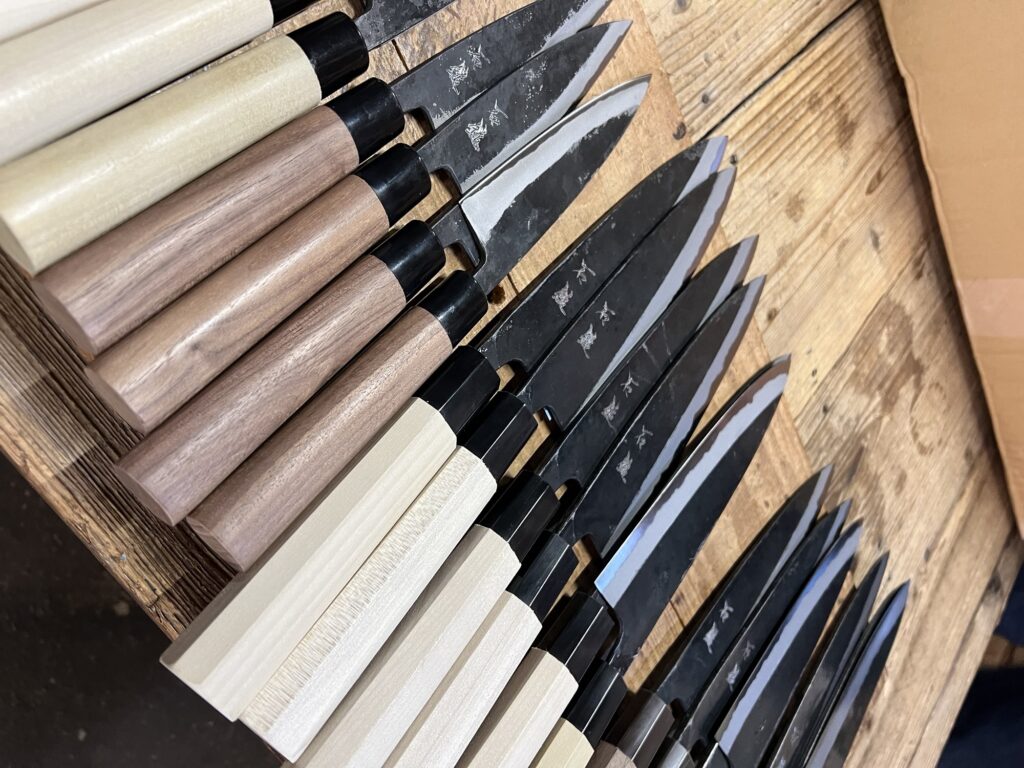
    Looking at the Asaoya Yaichi range as a professional chef, I think we already have a very strong foundation. Gyuto, Santoku, Petty and Nakiri give both professional chefs and home cooks plenty of practical choices across Ginsan, VG10 and carbon steels.

    But I do not consider the collection finished.

    One area I particularly want to expand is traditional Japanese slicing knives. Yanagiba and Takohiki are important knives for sashimi and specialised fish work, and these are areas where I would like Asaoya Yaichi to offer more choice in the future.

    My goal is not to build the biggest collection of Japanese knives in Australia simply for the sake of having more products. I would rather develop a carefully selected range of knives that I can look at after more than 25 years in professional kitchens and genuinely say: I would use these myself.

    That principle will continue to guide how Asaoya Yaichi grows.

    👉 Explore more:
    https://blog.asaoyayaichi.com.au

    👉 Visit our online store:
    https://asaoyayaichi.com.au

    Thank you for reading, and I hope to see you again in the next story.

  • Aogami and Shirogami | 7 Fascinating Things I Learned About Blue and White Paper Steel

    Aogami and Shirogami | 7 Fascinating Things I Learned About Blue and White Paper Steel


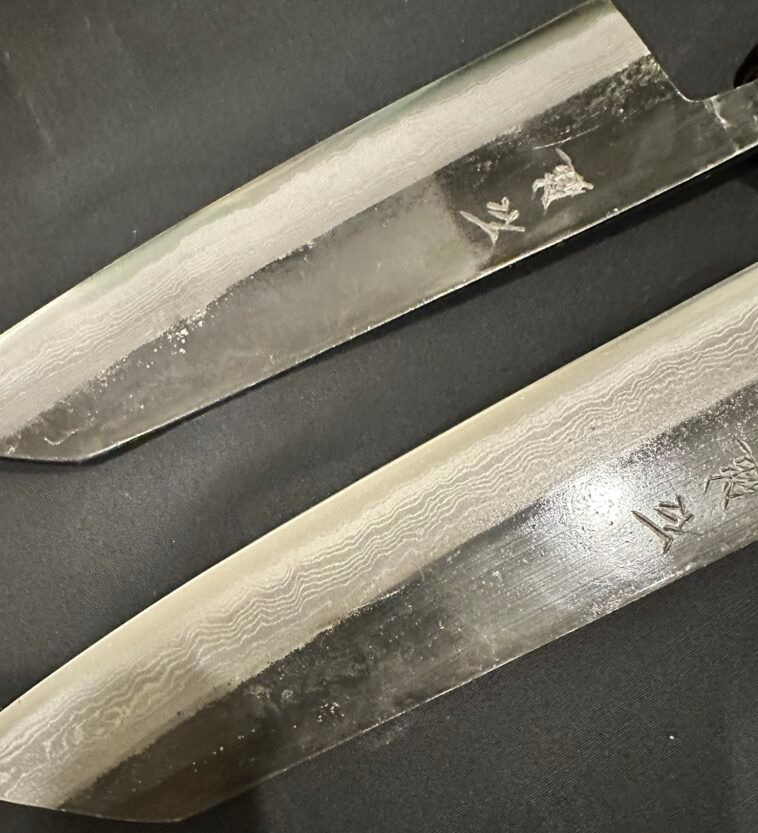
    Kiritsuke Aogami #2 Kurouchi Walnut Octagonal Handle

    Aogami and Shirogami are two traditional Japanese carbon steels that I only started learning about after entering the Japanese knife business.

    I have worked as a professional chef for more than 25 years, but I have a confession to make.

    Until I started selling Japanese knives, I didn’t even know what Aogami and Shirogami were.

    To be honest, I didn’t know there were so many different types of stainless steel either. VG10, Ginsan, SG2… I had used knives for years without paying much attention to what the steel was actually called.

    And even now, I’m still learning what makes each steel different.

    As a chef, I had always judged a knife in a much simpler way. Does it cut well? How does it feel in my hand? How does it feel on the whetstone? And does it work well for the job I need it to do?

    Then, after starting my knife business, I kept seeing the words Aogami and Shirogami.

    Blue Paper Steel. White Paper Steel.

    And one day I thought:

    Why blue? Why white?

    I honestly had no idea.

    So I decided to look it up.

    1. Why Are Aogami and Shirogami Called Blue and White Paper Steel?

    Ishizuchi Kanamono Manufactory

    The answer was much simpler than I expected.

    The steel itself is not blue or white.

    The names Aogami and Shirogami come from the coloured paper traditionally used to distinguish different grades of Yasugi Specialty Steel.

    “Ao” means blue in Japanese, while “Shiro” means white.

    That is why Aogami became known as Blue Paper Steel and Shirogami as White Paper Steel.

    After more than 25 years of using knives, I had never once wondered about this.

    Sometimes the simplest questions are the ones we forget to ask.

    2. So, What Exactly Is Shirogami?

    Once I understood the name, the next question was obvious.

    What is actually different about the steel?

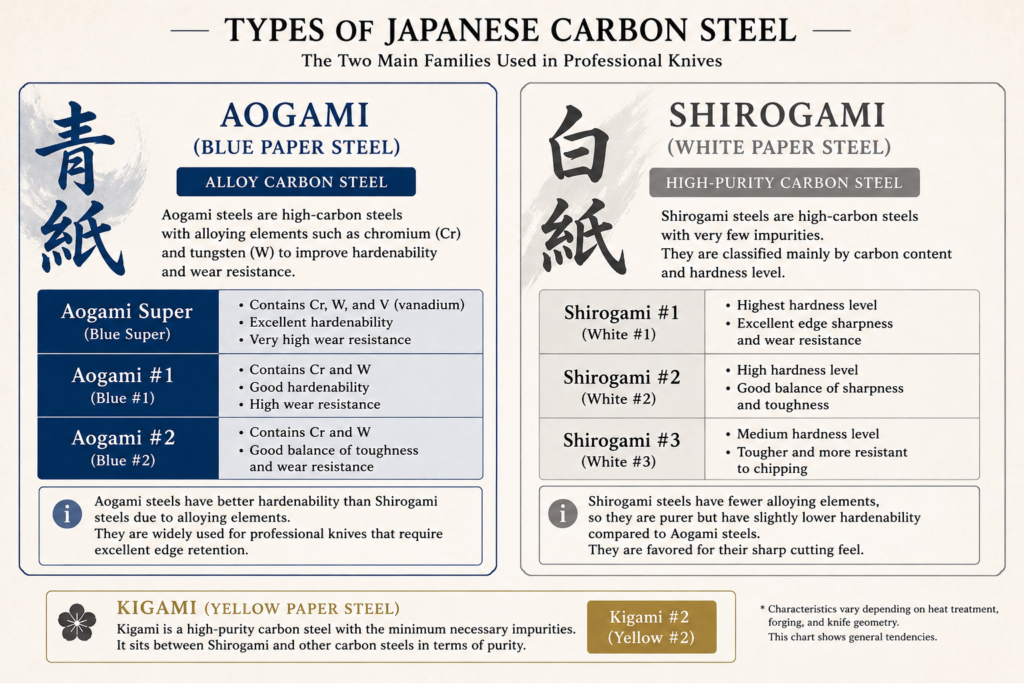
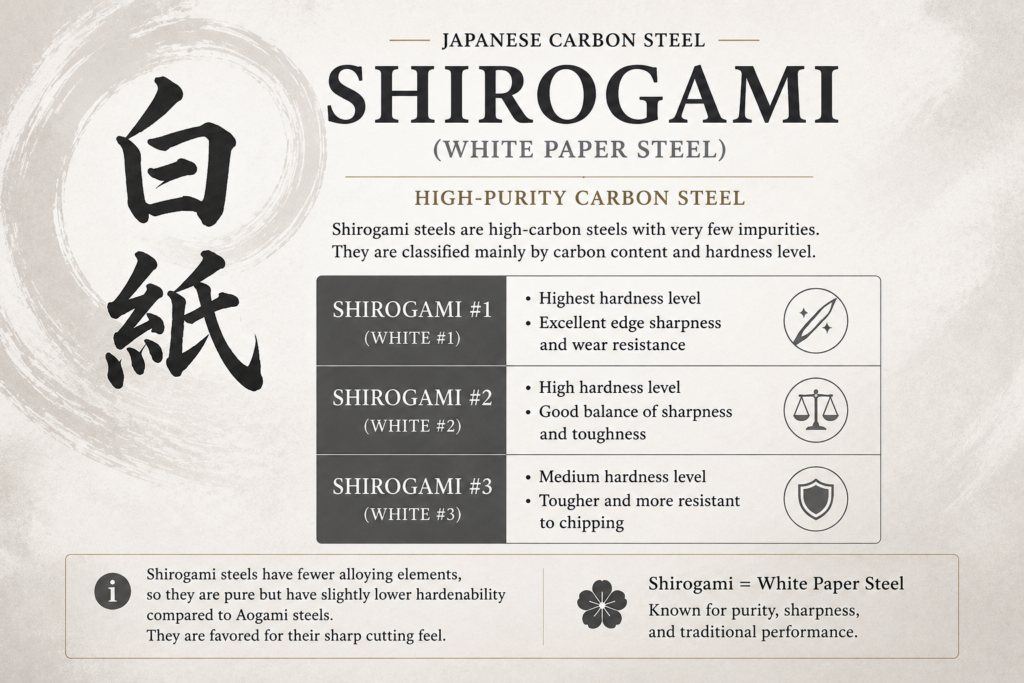
    Shirogami is a high-purity carbon steel with tightly controlled impurities. Its relatively simple composition allows it to take a very fine edge, and it has a strong reputation for responding beautifully to whetstones.

    Of course, it is still carbon steel.

    That means moisture, acidic foods and poor maintenance can cause discolouration and eventually rust.

    It can also develop a natural patina through normal use.

    👉 INTERNAL LINK: Read more about Japanese knife patina:
    https://blog.asaoyayaichi.com.au/japanese-knife-patina/

    For someone used to stainless steel, this extra maintenance may seem inconvenient. For others, it is simply part of the character of a traditional carbon-steel knife.

    3. How Is Aogami Different from Shirogami?

    This is where things started getting more interesting for me.

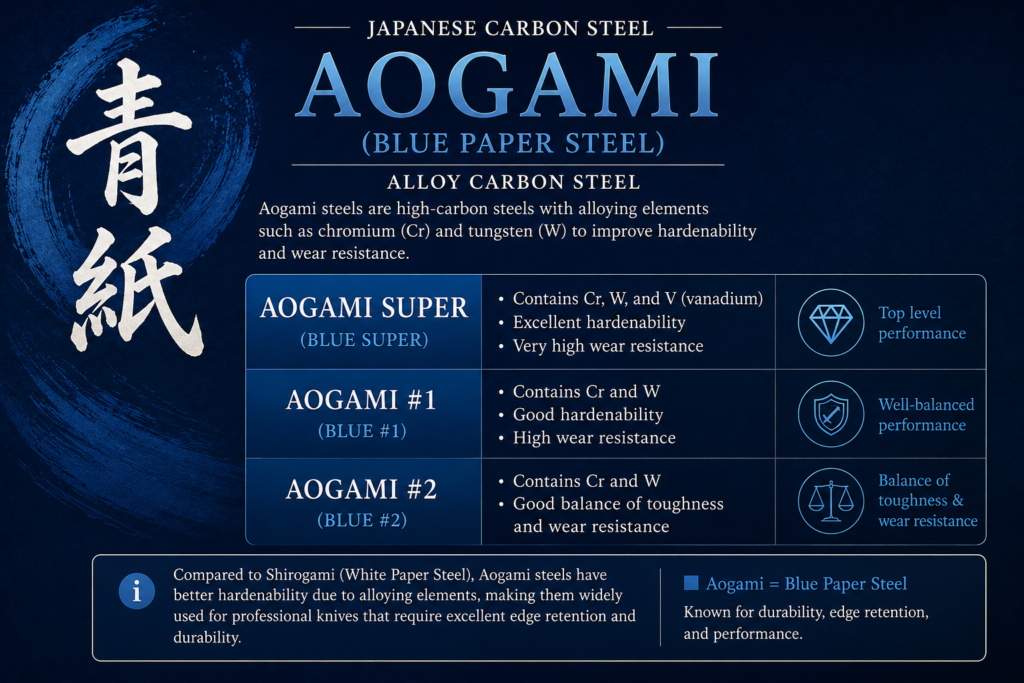
    Aogami contains alloying elements such as chromium and tungsten in addition to carbon. These additions help increase wear resistance and edge retention.

    In simple terms, Aogami is designed to maintain its cutting edge well.

    The trade-off is that greater wear resistance can also mean more effort when sharpening compared with a simpler carbon steel such as Shirogami.

    Before starting a knife business, I never thought about knives in terms of chromium, tungsten or carbon percentages.

    I simply knew whether I liked using a knife or not.

    Learning about the steel has given me another way to understand some of those differences.

    4. Aogami #1, #2 and Aogami Super

    Then I discovered that Aogami itself was not just one steel.

    There is Aogami #1, Aogami #2 and Aogami Super.

    Very simply, the different grades have different carbon and alloy compositions. Aogami #1 has more carbon than #2, while Aogami Super uses additional alloying elements and is known for high hardness and excellent edge retention when properly heat treated.

    At first, it is tempting to think that a higher specification must automatically mean a better knife.

    But the more I learn about Japanese knives, the less I think that way.

    The steel is only one part of the story.

    Heat treatment, blade geometry, grinding, sharpening and the skill of the maker can all affect how the finished knife performs.

    👉 INTERNAL LINK: Read more about Japanese knife hardness and HRC:
    https://blog.asaoyayaichi.com.au/japanese-knife-hardness-hrc/

    5. Shirogami Also Has Different Grades

    Then, of course, I learned that Shirogami also comes in different grades.

    Shirogami #1, #2 and #3 have different carbon contents, with #1 containing more carbon than #2 and #3 containing less.

    Again, I don’t think this means we can simply rank them from “best” to “worst.”

    This is something I have come to understand since entering the knife business.

    Two handmade Japanese knives using the same steel can still feel very different.

    The maker, heat treatment, thickness, blade geometry, sharpening and even the intended purpose of the knife all matter.

    👉 INTERNAL LINK: Why no two handmade Japanese knives are exactly the same:
    https://blog.asaoyayaichi.com.au/handmade-japanese-knives/

    6. Is Aogami Better Than Shirogami?


    180mm Santoku Aogami #2 Green Micarta Handle with Turquoise Spacer

    This was probably my biggest question when I first started learning about Aogami and Shirogami.

    Which one is better?

    After looking into it, I think that may be the wrong question.

    Aogami is well known for edge retention and wear resistance. Shirogami is famous for its sharpening response and ability to take a very refined edge.

    But a knife is something we actually use.

    How often do you sharpen? What ingredients do you cut? How do you use your knife? Do you enjoy sharpening? How much maintenance are you comfortable with?

    And most importantly, how does the knife actually feel when you use it?

    👉 INTERNAL LINK: Read more about Kireaji — the feeling of sharpness:
    https://blog.asaoyayaichi.com.au/japanese-knife-sharpness/

    Specifications can explain part of a knife, but they cannot completely describe the experience of using one.

    7. What I Learned About Aogami and Shirogami

    The biggest thing I learned while researching Aogami and Shirogami was not actually about carbon percentages or alloying elements.

    It was how much I still have to learn.

    I have spent more than 25 years using knives professionally, but that does not mean I spent 25 years studying knife steel.

    I was a chef.

    I picked up a knife, used it, sharpened it, washed it, dried it and went back to work.

    Only after starting my knife business did I begin paying much more attention to the steels behind the knives.

    👉 INTERNAL LINK: Read more about Japanese knife balance:
    https://blog.asaoyayaichi.com.au/japanese-knife-balance/

    And I actually enjoy discovering these things now.

    Aogami. Shirogami. VG10. Ginsan. SG2.

    Names that once meant very little to me are gradually starting to make more sense.

    This time, it started with an extremely simple question.

    Why blue? Why white?

    Now I know.

    But learning about Aogami and Shirogami also reminded me that steel specifications are only part of what makes a Japanese knife interesting.

    The maker matters. Heat treatment matters. Geometry matters. Sharpening matters.

    And finally, the person holding the knife matters.

    So I don’t think we need to decide that Aogami is simply better than Shirogami, or vice versa.

    They are different steels with different characteristics.

    And I’m still learning about both.

    Maybe that is part of the fun.

    👉 Explore more:
    https://blog.asaoyayaichi.com.au

    👉 Visit our online store:
    https://asaoyayaichi.com.au

    Thank you for reading, and I hope to see you again in the next story.