Ishizuchi Kanamono Manufactory
Japanese Knife Thinning is something I never thought deeply about, even after more than 25 years working as a professional chef.
I have sharpened knives throughout my career, but there is something I have noticed many times, particularly with stainless steel knives I have used for years.
The edge can feel sharp after sharpening, yet somehow the knife does not pass through food as easily as it once did.
I once borrowed a colleague’s knife at work and was genuinely surprised by how easily it cut. My own knife was sharp too, so why did his knife move through food so much better?
I had some ideas, but I could not properly explain the reason. So I decided to research Japanese Knife Thinning.
👉 Looking for Japanese knives in Australia? Explore our collection here:
https://asaoyayaichi.com.au/japanese-knives-australia
Japanese Knife Thinning Is Not the Same as Sharpening
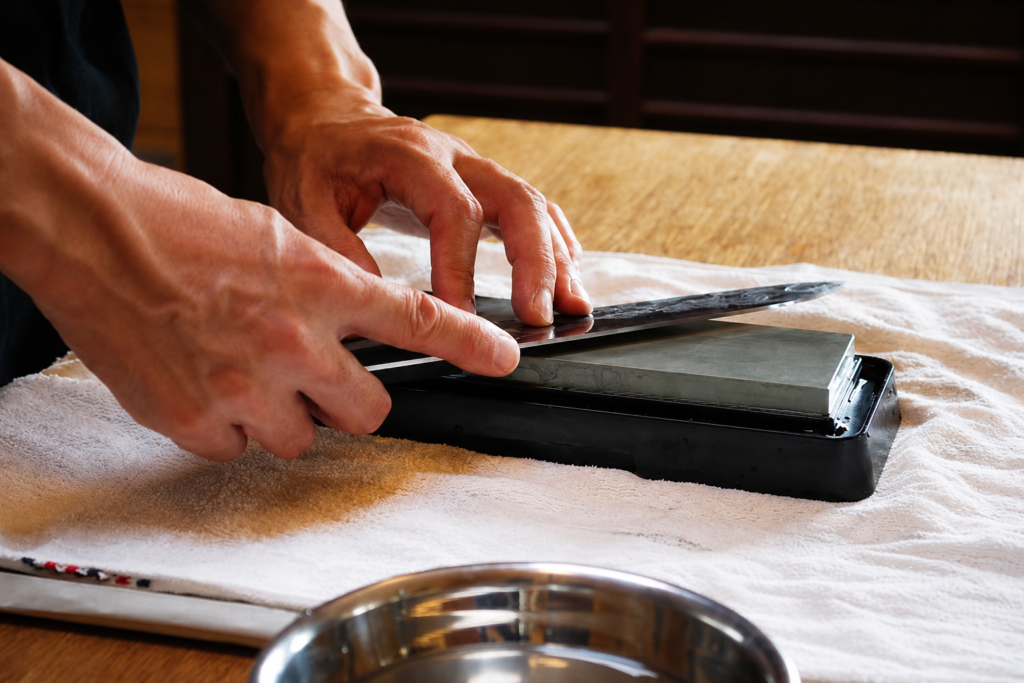
For most of my career, my main purpose when sharpening has been simple: make the knife sharp again.
Especially at work, I want to finish sharpening quickly and get back to cooking.
I also know one of my bad habits.
When I want to create an edge quickly, I sometimes raise the sharpening angle slightly. It reaches the cutting edge faster and gets the job done.
And I will admit another one: sometimes I am lazy about flattening my whetstone.
I know I should do it regularly, but knowing that and actually doing it every time are different things.
👉 INTERNAL LINK: Why Flattening Your Whetstone Matters
What I had not fully understood was that making the cutting edge sharp and maintaining the overall cutting geometry of a knife are two different things.
As a knife is repeatedly sharpened, the cutting edge gradually moves higher into the blade, where the steel is generally thicker.
The edge can still be extremely sharp, but the steel immediately behind that edge can become relatively thick.
That thickness creates resistance once the edge has entered the food.
Why Japanese Knife Thinning Started Making Sense to Me

240mm Sujihiki VG10 Hammered 17 Layer Damascus Mahogany
This helped explain my experience with my colleague’s knife.
What surprised me was not simply the sharpness of his edge. It was how easily the entire blade travelled through the ingredient.
That is where blade geometry becomes important.
👉 INTERNAL LINK: Japanese Knife Shapes: 5 Powerful Lessons From 25 Years in Professional Kitchens
A sharp edge starts the cut, but the geometry behind that edge affects what happens next.
This is also why I started thinking about the difference between some of my stainless knives and the Aogami Super sujihiki I currently use.
Japanese Knife Thinning and My Aogami Super Sujihiki
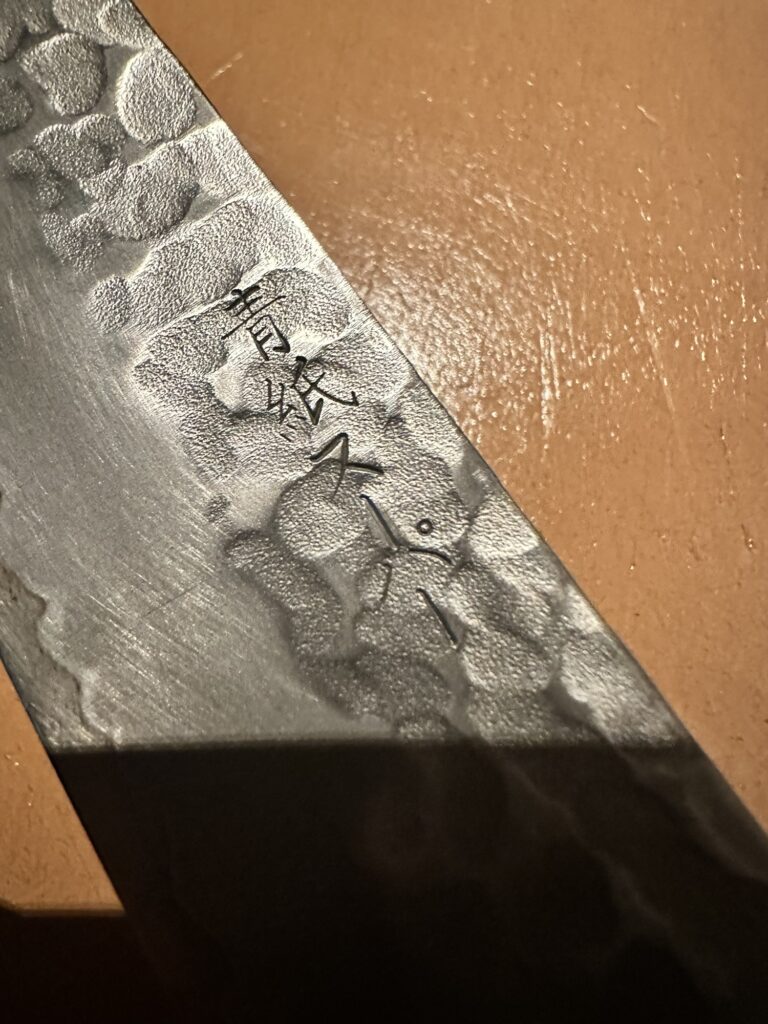
210mm Sujihiki Aogami #2 Kurouchi Magnolia Handle
With some stainless knives I have owned for years, I have clearly experienced that feeling of the knife becoming harder to push through food.
My current Aogami Super sujihiki feels different.
It seems to form an edge quite easily on the stone. I do not need to raise the sharpening angle very much to get the edge I want, so I naturally sharpen it at a relatively low angle.
👉 INTERNAL LINK: Japanese Knife Steel: 5 Powerful Lessons After 25 Years in Professional Kitchens
However, I do not think it would be correct to simply say this happens because Aogami Super is better than stainless steel.
Steel type, hardness, original blade geometry, thickness behind the edge, heat treatment and my own sharpening technique can all influence what I feel.
I have used VG10 extensively throughout my career, for example, and I still consider it an excellent practical knife steel.
👉 INTERNAL LINK: VG10 Japanese Knife article
The difference may partly be the knife itself—and partly the way I sharpen it.
Japanese Knife Thinning — So How Do You Fix the Problem?

This was the part I really wanted to understand.
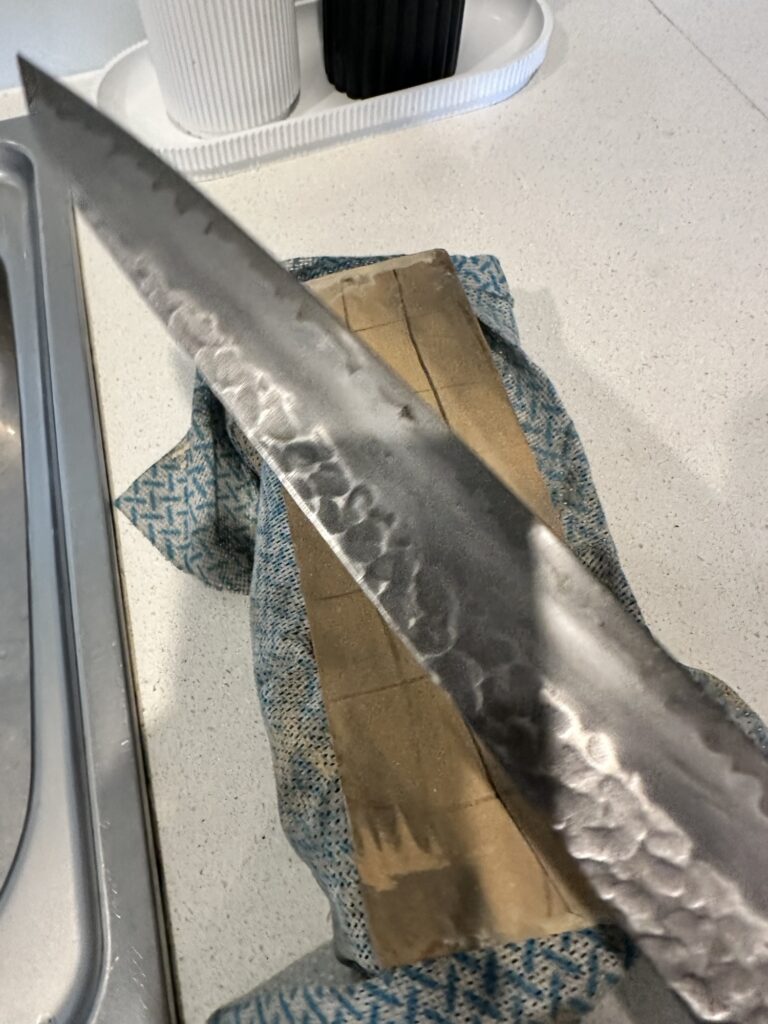
If the edge is sharp but the knife has become too thick behind the edge, simply sharpening the cutting edge again does not remove that thickness.
The basic solution is thinning.
Instead of sharpening only at the normal edge angle, the blade is placed against the whetstone at a much lower angle. Steel is gradually removed from the area immediately behind the cutting edge.
The purpose is not simply to make another sharp edge. It is to reduce unnecessary thickness and restore a thinner cutting geometry.
After thinning, the actual cutting edge can then be sharpened normally again.
👉 INTERNAL LINK: Aogami Super / Carbon Steel article
However, this is also something I would approach carefully.
Removing too much steel can change the geometry of the knife. Thinning can also scratch the blade face and alter its original finish. With an expensive Japanese knife, working slowly—or having an experienced professional sharpener do the work—may be safer than aggressively removing steel.
A Flat Whetstone Matters More Than I Thought
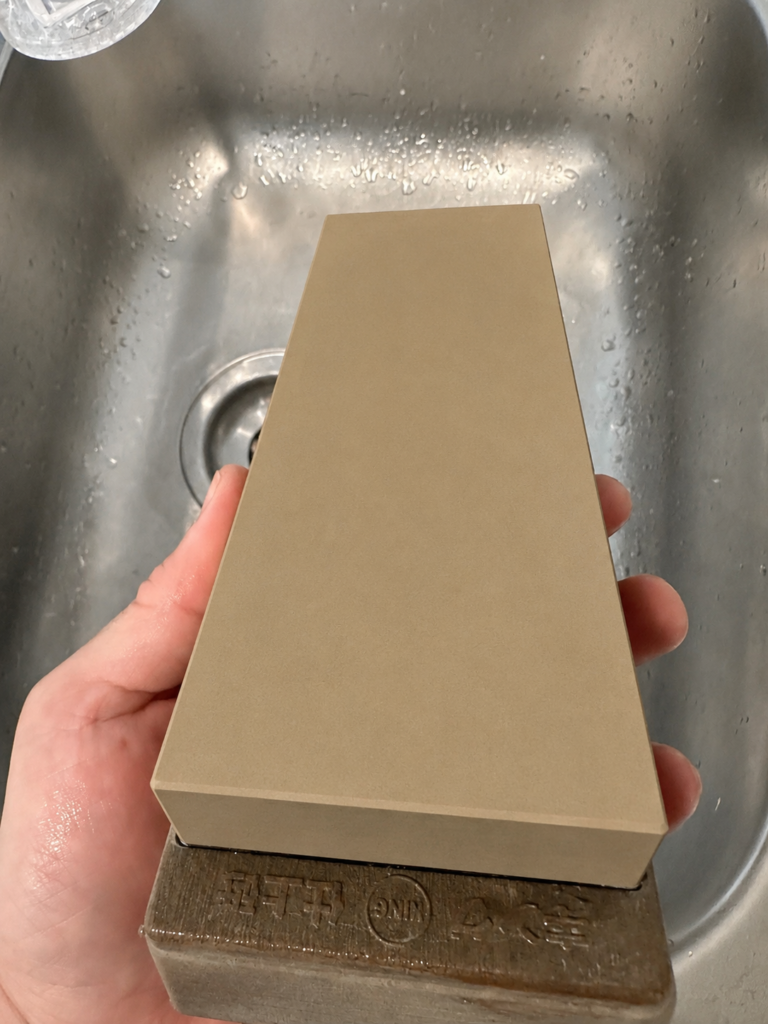
There was another slightly uncomfortable answer waiting for me.
The whetstone should be flat.
When trying to thin a knife at a very low and consistent angle, a dished stone makes controlling the contact between the blade and stone more difficult.
So perhaps my habit of occasionally avoiding stone flattening was part of the answer all along.
Prevention matters too.
Rather than repeatedly increasing the sharpening angle simply because I want to finish quickly, maintaining a lower, consistent angle where appropriate may help preserve the knife’s geometry for longer.
That does not mean every knife should be sharpened at the lowest possible angle. Different knives, steels and uses require different approaches. But continually making a steeper secondary edge without considering the thickness behind it can eventually change how the knife moves through food.
What Japanese Knife Thinning Taught Me About Sharpness
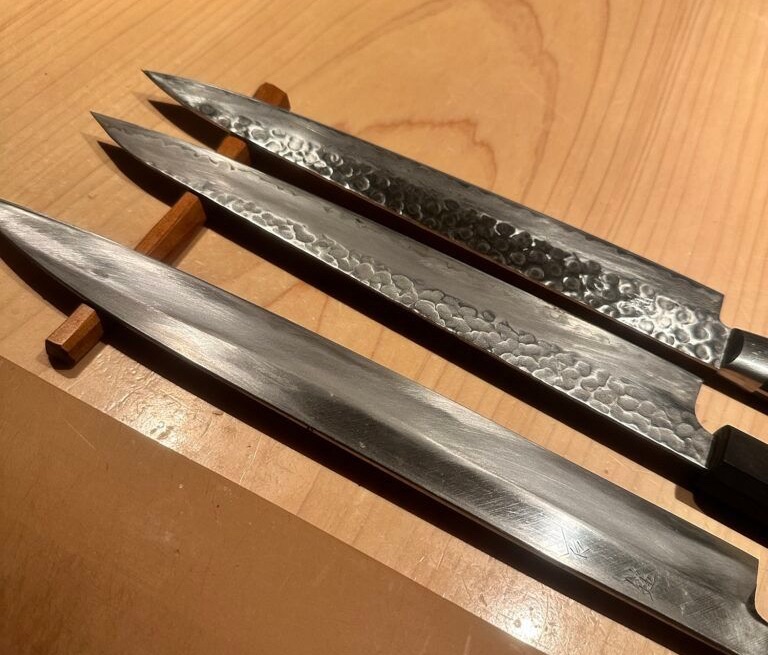
After researching this, I realised something surprisingly simple:
Sharpening restores the edge. Thinning restores the geometry behind the edge.
For years, I knew that some knives felt sharp but somehow did not cut like they used to. I also knew that I sometimes sharpened too quickly and occasionally neglected flattening my stones.
Perhaps I already knew part of the answer. I just did not always want to do it.
Even after more than 25 years in professional kitchens, there are still things about knives that I do not fully understand.
That is exactly why I enjoy researching them.
For anyone looking at Japanese knives in Australia, learning how to maintain the knife over many years can be just as important as choosing the steel, shape or handle when you first buy it.
👉 Explore more:
https://blog.asaoyayaichi.com.au
👉 Visit our online store:
https://asaoyayaichi.com.au
Thank you for reading, and I hope to see you again in the next story.
—————————————————
Where to See and Buy Our Knives
Our Partner Stores
Chanoyu — Nerang, Gold Coast

Visit Chanoyu and See Our Japanese Knives
If you are on the Gold Coast, we would love you to visit Chanoyu, a Japanese café in Nerang where you can see and purchase a selection of Asaoya Yaichi knives in person.
Chanoyu is a lovely place to slow down and enjoy Japanese-inspired food, excellent matcha, coffee and handmade desserts. Its warm, peaceful atmosphere makes it a pleasure to visit, whether you are stopping in for breakfast, lunch or something sweet. We are delighted that our knives have a place there.

Visit Chanoyu: Shop 6A, 54–58 Nerang Street, Nerang QLD 4211
Opening hours: Monday to Saturday, 7:00 am–2:00 pm; closed Sunday
Website: https://www.chanoyucafe.com/
Instagram: https://www.instagram.com/chanoyugc/
The selection of knives on display may change. If you are interested in a particular Asaoya Yaichi knife, please contact us through https://asaoyayaichi.com.au before visiting, and we will help you check whether it is available at Chanoyu.