タグ: Mirror Polish

  • 仕上げ | Japanese Knife Finishes: What I Learned After 25 Years as a Chef

    仕上げ | Japanese Knife Finishes: What I Learned After 25 Years as a Chef


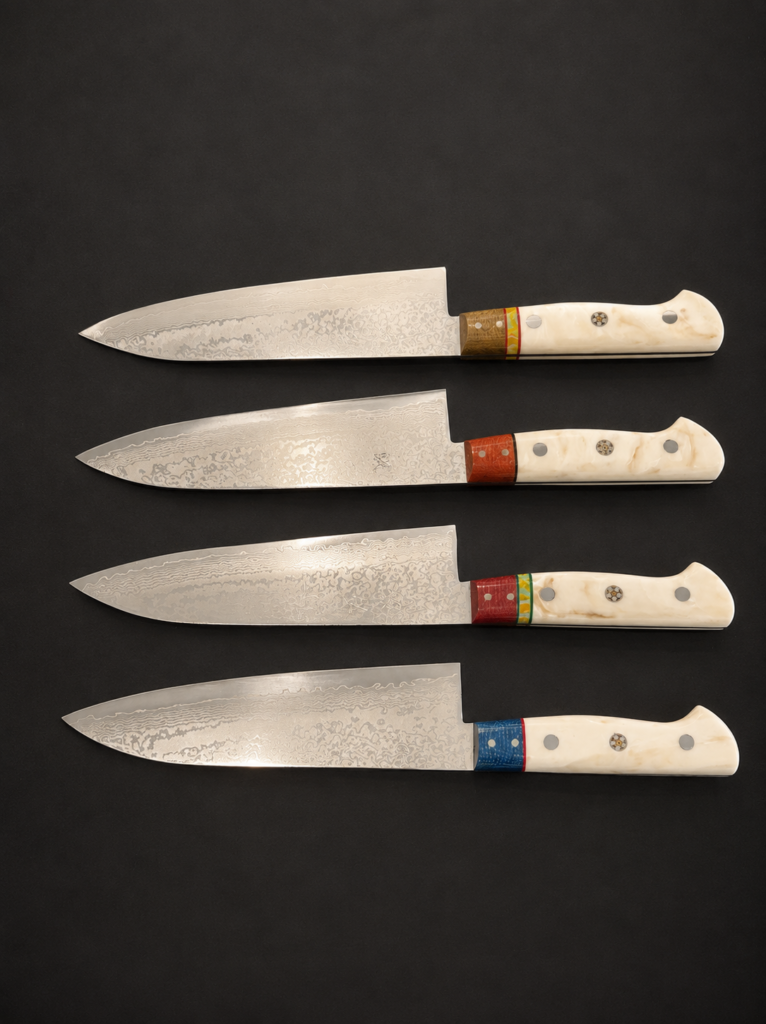
    180mm Santoku VG10N 33 Layer Damascus Green Marble Handle Rainbow Spacer

    After more than 25 years working as a professional chef in Japan and Australia, I have used Japanese knives for most of my working life. But when it comes to Japanese Knife Finishes, I recently realised there was a lot I had never really thought about.

    I have used Kurouchi and Damascus knives, and I have even polished one of my own knives to a near-mirror finish. I have also spent many years using traditional Yanagiba and Deba, including an old Yanagiba passed down to me by my mother.

    Of course, I knew these knives looked different. But I never really stopped to ask why.

    Does a hammered finish actually help food release? Is Kurouchi practical or mainly traditional? Does a mirror-polished blade perform differently?

    Since starting a Japanese knife business, I have begun looking at knives from a different perspective. So once again, I decided to do some research.

    What Are Japanese Knife Finishes?
    Ishizuchi Kanamono Manufactory

    The first thing I learned is that Japanese Knife Finishes are not all created for the same reason.

    Some come directly from the knife-making process, while others involve additional polishing, hammering or decorative work. Some can also influence how food contacts the side of the blade.

    But one thing became clear very quickly: the finish alone does not determine how well a knife cuts or releases food.

    Blade geometry, thickness, grind, sharpening, the ingredient and even cutting technique can all make a significant difference.

    Thinking back over my career, this makes sense. I have always noticed the edge, geometry, weight and balance of a knife far more than its surface finish.

    👉 INTERNAL LINK: 切味 Kireaji article

    Kurouchi — A Finish I Learned to Appreciate
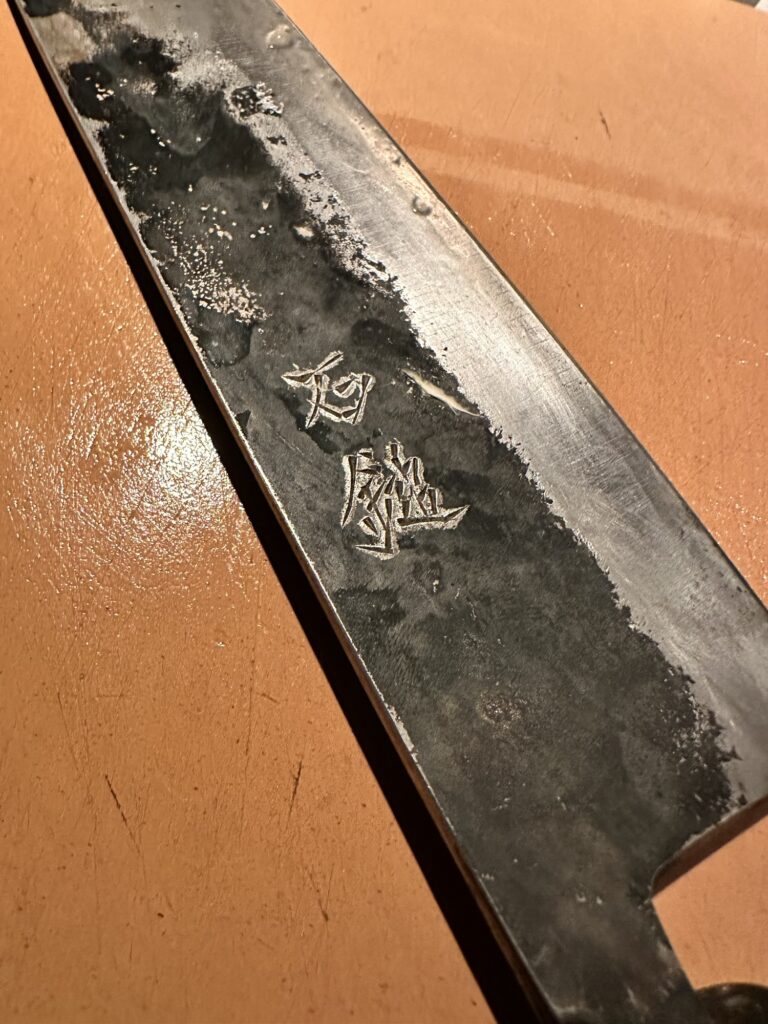

    165mm Kiritsuke Aogami #2 Kurouchi Walnut Octagonal Handle

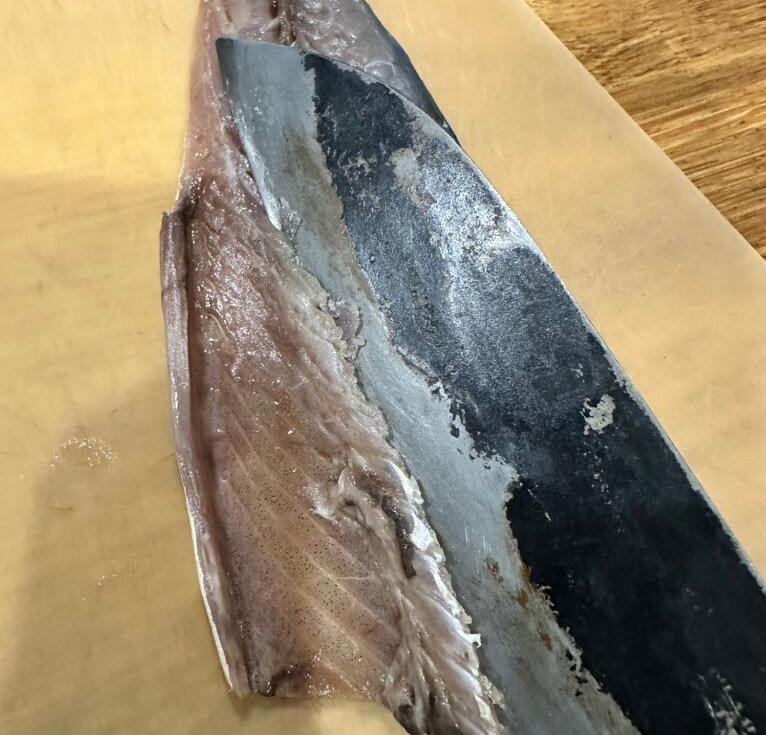
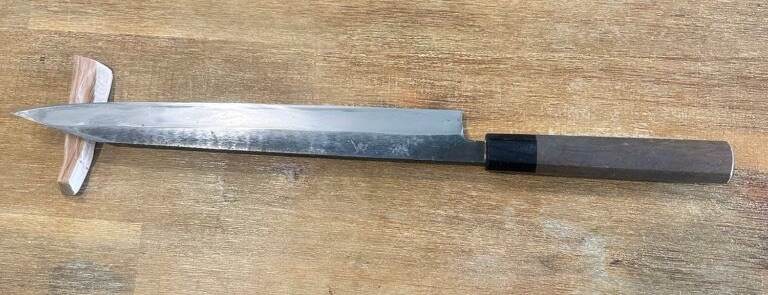
    Kurouchi is one finish I definitely know from experience.

    The dark surface is associated with the forging process and is intentionally left on parts of the blade instead of being completely polished away.

    Years ago, however, I didn’t appreciate it.

    I had a Kurouchi knife and decided I wanted it shiny, so I removed the black surface and polished the blade myself.

    At the time, I thought it looked better.

    Today, I probably wouldn’t do it.

    I now appreciate the rustic appearance and character of Kurouchi much more. The remaining oxide layer can also offer some protection to the covered carbon-steel surface, although exposed carbon steel and the cutting edge still require proper care.

    👉 INTERNAL LINK: Kurouchi Japanese Knives 黒打ち | I Once Removed It All — And Learned From It

    Do Textured Japanese Knife Finishes Help Food Release?
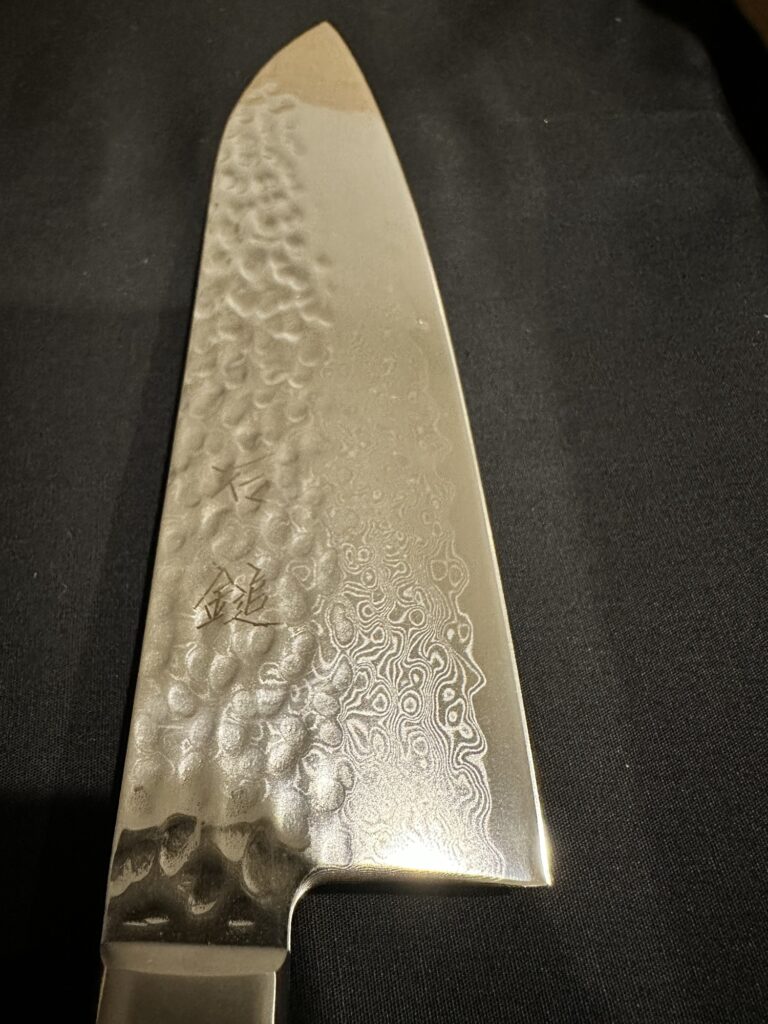

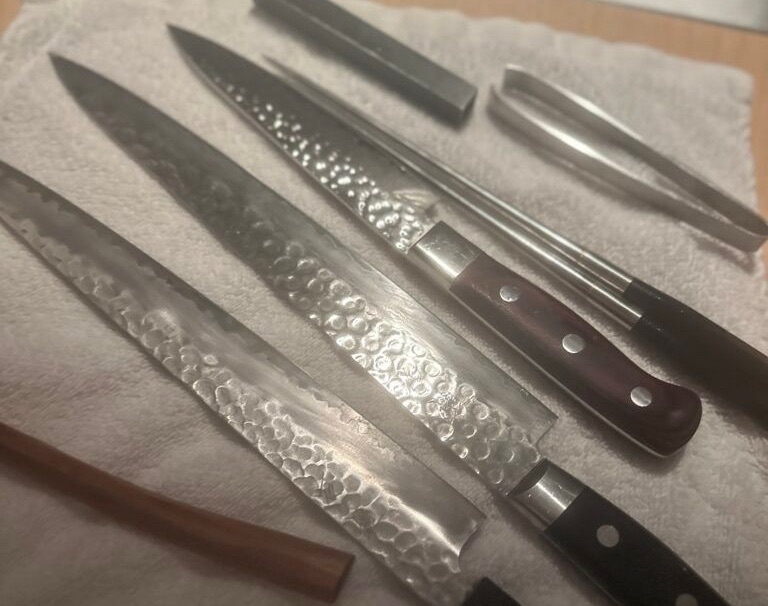
    VG10 Polished Hammered 67 Layer Damascus Green Handle

    This was probably what I was most curious about.

    Tsuchime is the familiar hammered finish, while Nashiji has a subtler textured surface often compared to the skin of a Japanese pear.

    The idea that these textures can help food release makes sense. An uneven surface changes the contact between the food and blade and, in some cases, can reduce the tendency for food to cling tightly to it.

    But I learned that it isn’t as simple as saying:

    “Tsuchime means food doesn’t stick.”

    Blade geometry still matters enormously.

    Two knives with similar finishes can behave very differently depending on their grind, thickness and overall shape.

    This was interesting to me because it showed that Japanese Knife Finishes can have a practical function without necessarily being the main reason a knife performs well.

    Polished, Mirror and Damascus Finishes
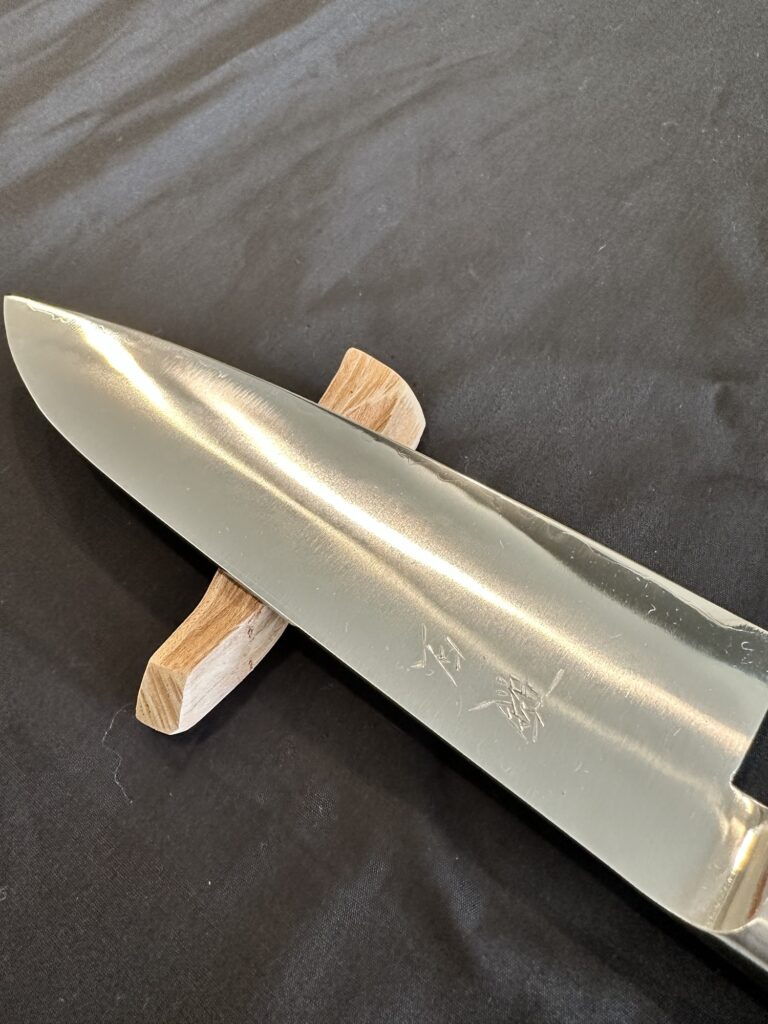

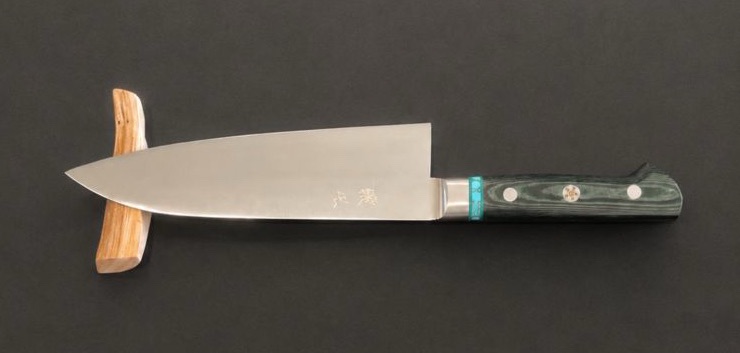
    180mm Santoku Aogami #2 Green Micarta Handle with Turquoise Spacer

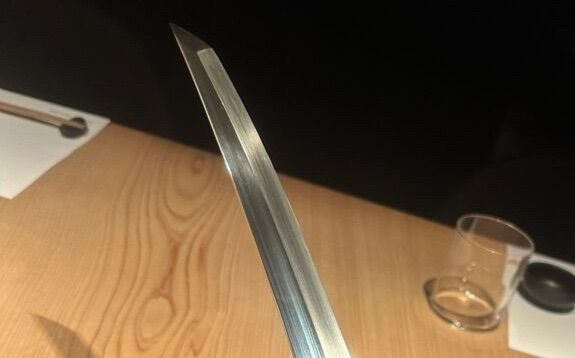
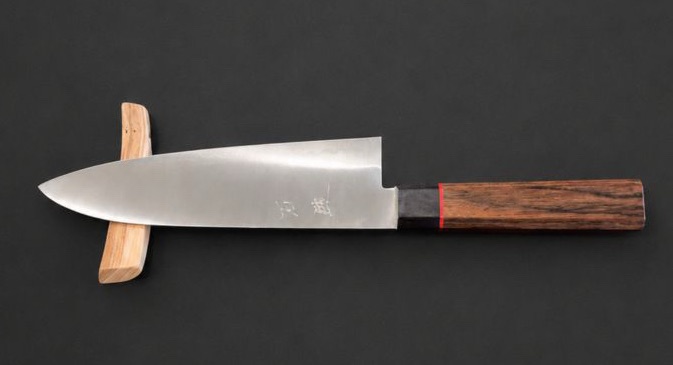
    Migaki refers to a polished finish, although the degree of polishing varies between makers.

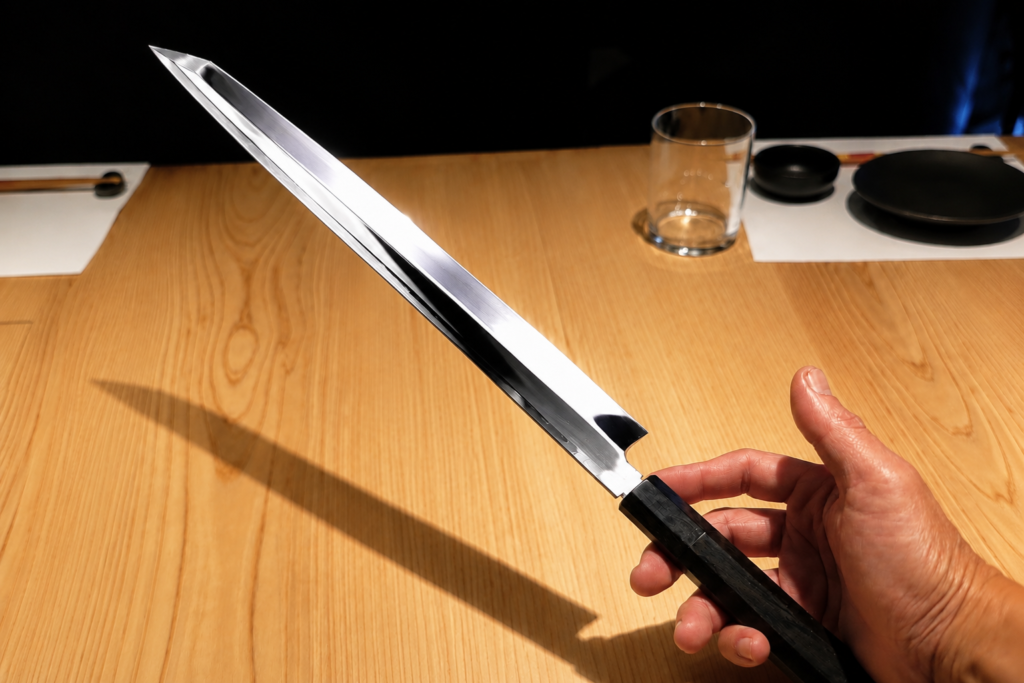
    Mirror polish takes that idea much further.

    I understand the attraction because I used to love shiny knives. I have spent plenty of time polishing a blade myself until it became highly reflective.

    But a smoother surface doesn’t automatically mean better performance. Moist or starchy ingredients can still cling to a smooth blade, and after years in professional kitchens, I have also become much less worried about scratches.

    A working knife is going to look like a working knife.

    Damascus is another finish I have actually used. The layered patterns can be beautiful, but the pattern itself doesn’t automatically make a knife sharper.

    In many modern Japanese knives, Damascus layers form the cladding around a core steel. The core steel, heat treatment, blade geometry and sharpening have a much more direct relationship with cutting performance.

    I still love the appearance of a beautiful Damascus blade. I just wouldn’t say, “It’s Damascus, so it must cut better.”

    👉 INTERNAL LINK: Hardness 硬度 | Japanese Knife HRC article

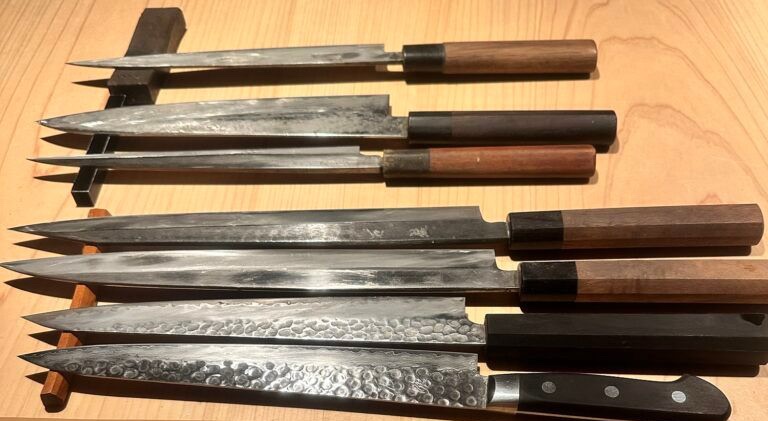
    Traditional Yanagiba, Deba and Kasumi
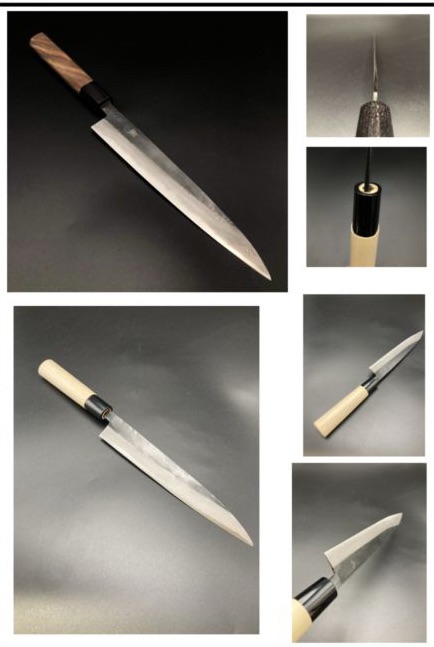
    Traditional Tosa Knives

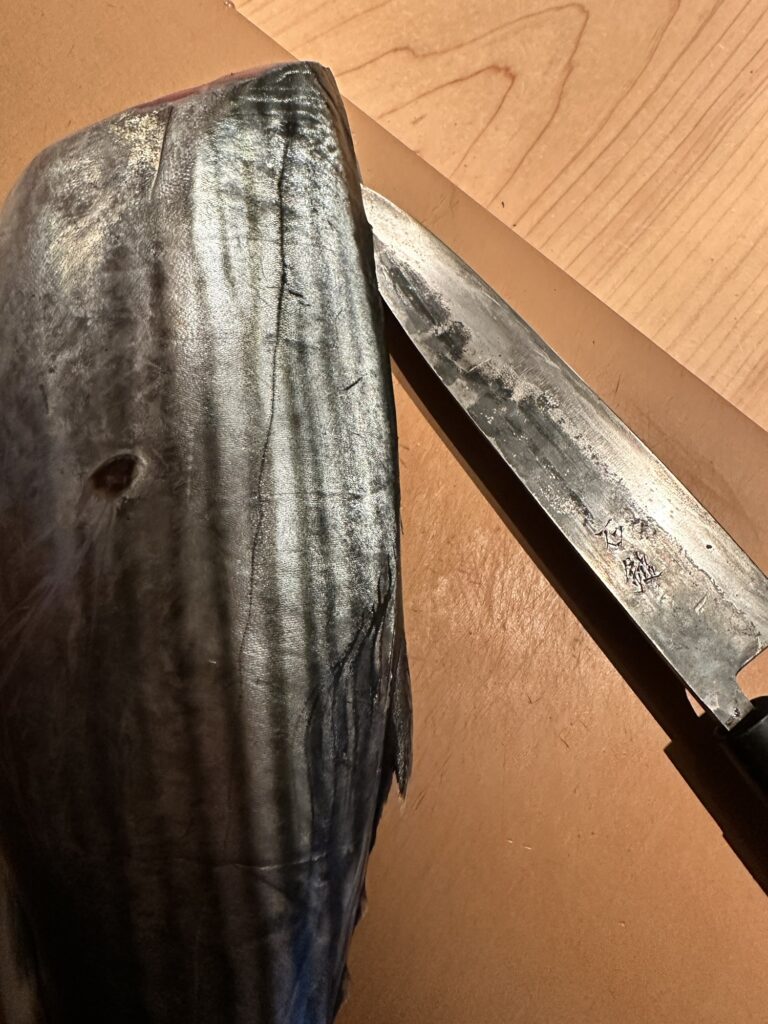
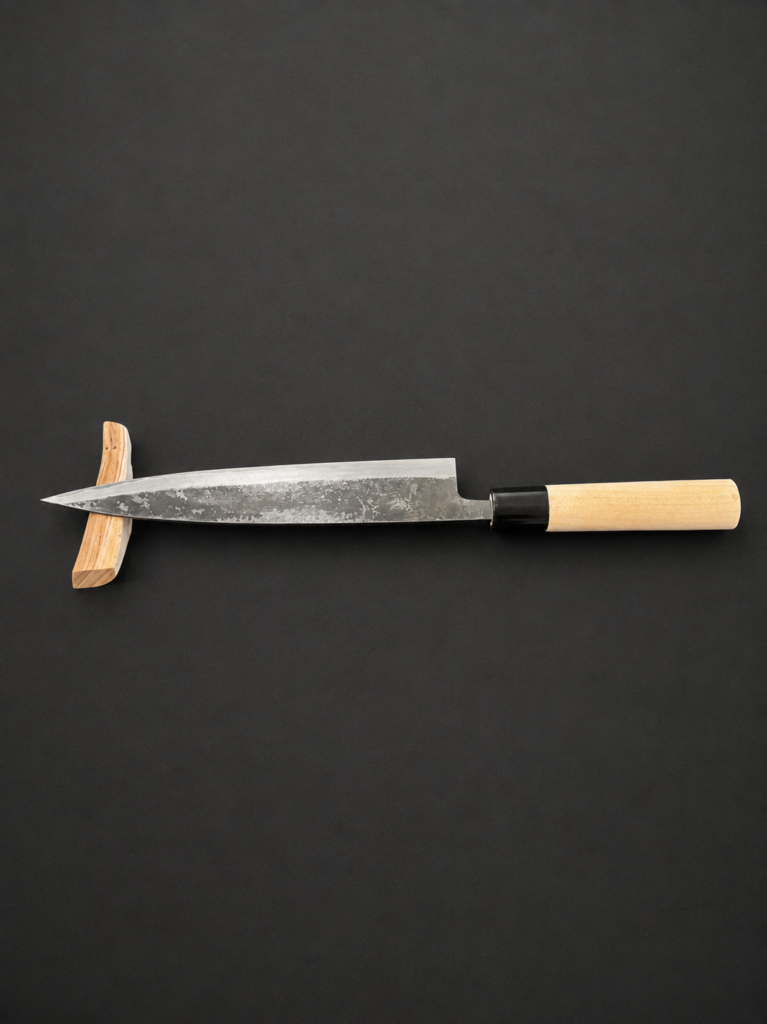
    Researching Kasumi was particularly interesting because I have used traditional Yanagiba and Deba for many years.

    One of my Yanagiba was passed down to me by my mother and has been used for decades.

    But I don’t want to pretend that I spent those years analysing its finish.

    I didn’t.

    To me, it was simply a traditional Japanese working knife. I sharpened it, maintained it and used it.

    Only after becoming involved in selling Japanese knives did I start paying more attention to terms such as Kasumi and the manufacturing and polishing techniques behind traditional blades.

    Sometimes there is a big difference between knowing how to use something and understanding exactly how it was made.

    👉 INTERNAL LINK: Japanese Knife Bevels | Single Bevel vs Double Bevel Explained

    What I Learned About Japanese Knife Finishes
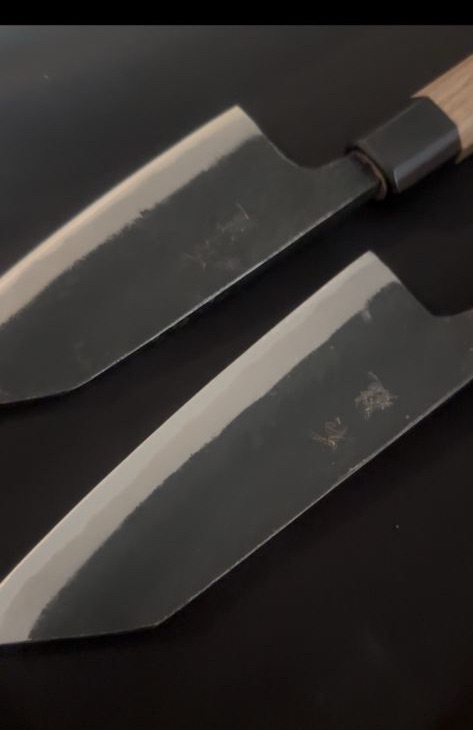

    180mm Kiritsuke Aogami #2 Kurouchi Walnut Octagonal Handle

    After looking more closely at Japanese Knife Finishes, I don’t think there is one “best” finish.

    Some finishes may influence food release or surface protection. Some reflect traditional manufacturing methods. Others involve considerable extra craftsmanship and are valued partly for their beauty.

    But I would never choose a knife based on finish alone.

    After more than 25 years as a chef, I still pay more attention to blade geometry, sharpening, weight, balance and how the knife actually feels in my hand.

    What surprised me most was realising that I had used some of these finishes for decades without really thinking about why they existed.

    Starting Asaoya Yaichi has made me curious about things I once simply accepted.

    And sometimes, researching something I thought I already understood reminds me just how much there still is to learn about Japanese knives.

    👉 INTERNAL LINK: 均衡 Kinkō | Japanese Knife Balance article

    👉 Explore more:
    https://blog.asaoyayaichi.com.au

    👉 Visit our online store:
    https://asaoyayaichi.com.au

    Thank you for reading, and I hope to see you again in the next story.
  • Ancient Patina 古色 | 7 Powerful Truths About Japanese Knife Patina That Even Surprised Me

    Ancient Patina 古色 | 7 Powerful Truths About Japanese Knife Patina That Even Surprised Me

    Ishizuchi Kanamono Manufactory

    If you own or are thinking about buying a carbon steel Japanese knife, you’ve probably heard the term Japanese Knife Patina. Until I started selling handcrafted Japanese knives, I honestly thought any discoloration on a blade was something to avoid.

    What surprised me was discovering that many knife enthusiasts actually appreciate a beautiful patina. For some, it’s not damage at all—it’s a sign that the knife is being used, cared for, and developing its own unique character.

    In this article, I’ll explain what Japanese Knife Patina really is, how it differs from rust, and why so many experienced knife users see it as something worth embracing.


    What Is Japanese Knife Patina?

    Patina

    Japanese Knife Patina is a natural oxide layer that develops on carbon steel after repeated use. It often appears in shades of blue, grey, purple, or dark charcoal depending on the foods you cut and how you care for the knife.

    Unlike red rust, patina is generally stable and can even help slow further oxidation.

    Many professional chefs never try to remove it. Instead, they simply keep the blade clean and dry after use.

    ➡ Read more: Beginner’s Guide to Japanese Kitchen Knives


    Why Japanese Knife Patina Is Different From Rust

    One of the biggest misconceptions is that every color change means corrosion.

    Here’s the difference:

    Japanese Knife Patina

    • Blue, grey, or dark tones
    • Forms naturally during normal use
    • Can act as a protective oxide layer
    • Often appreciated by carbon steel knife users

    Rust

    • Red or orange color
    • Caused by moisture left on the blade
    • Can damage the steel if ignored
    • Should be removed as soon as possible

    Understanding this difference helps you enjoy your knife with more confidence instead of worrying every time the blade changes color.

    Read more: Why Do Japanese Knives Rust So Easily?


    Why Some Knife Enthusiasts Love Japanese Knife Patina

    This was the part that surprised me the most.

    For years I simply used carbon steel knives because they performed exceptionally well. I never thought much about the color changing over time.

    After starting Asaoya Yaichi, I learned that many collectors and professional chefs actually enjoy watching their Japanese Knife Patina develop.

    To them, every knife tells a story.

    The blade reflects years of cooking, countless ingredients, and the owner’s personal journey.

    No two patinas are exactly alike, making every knife even more unique.


    Does Everyone Want a Patina?

    Mirror Polished

    Not at all.

    Some people love the bright mirror finish of a freshly polished knife.

    Others prefer the rich character that develops through daily use.

    Neither preference is right or wrong.

    It’s simply a matter of taste.

    A mirror-polished knife highlights craftsmanship, while a beautiful Japanese Knife Patina reflects years of real-world experience.

    ➡➡ Professional Choice | Why I Still Use Carbon Steel for Sashimi After 25 Years


    How to Care for Japanese Knife Patina

    If you own a carbon steel knife, proper maintenance is still essential.

    Keep the blade clean

    Wash the knife by hand after use using mild detergent.

    Dry immediately

    Never leave water on carbon steel.

    Store properly

    Keep the knife in a dry location with good airflow.

    Don’t panic over color changes

    Blue or grey tones are often completely normal.

    The goal isn’t to prevent every change.

    The goal is to prevent red rust.

    ➡ Read more: 5 Common Mistakes That Damage Japanese Knives


    My Honest Discovery About Japanese Knife Patina

    I spent more than 25 years working as a professional chef.

    Yet one thing I didn’t truly appreciate until I started selling handcrafted Japanese knives was how differently people view Japanese Knife Patina.

    I always focused on performance.

    Many enthusiasts also appreciate the story the blade tells.

    That changed the way I look at carbon steel knives.

    A handcrafted Japanese knife isn’t just a cutting tool.

    It’s something that evolves with its owner over time.

    Perhaps that’s one of the reasons handmade Japanese knives continue to fascinate so many people around the world.

    Read more: Handmade Japanese Knives | 7 Fascinating Reasons No Two Are Ever Exactly the Same


    Final Thoughts

    Whether you prefer a mirror finish or a naturally developed Japanese Knife Patina, both represent different ways of appreciating handcrafted Japanese knives.

    One celebrates perfection.

    The other celebrates experience.

    Whichever you prefer, the most important thing is to enjoy using your knife and taking proper care of it.


    👉 Explore more:
    https://blog.asaoyayaichi.com.au

    👉 Visit our online store:
    https://asaoyayaichi.com.au

    Thank you for reading, and I hope to see you again in the next story.
  • Carbon Steel vs Stainless Steel: Which Japanese Knife Is Right for You?

    Carbon Steel vs Stainless Steel: Which Japanese Knife Is Right for You?

    Introduction

    Carbon Steel vs Stainless Steel is one of the biggest decisions when choosing a Japanese knife.

    If you’ve started looking for a Japanese knife, you’ve probably come across one of the most common questions:

    Should I choose carbon steel or stainless steel?

    It’s a question I get asked regularly, and the truth is simple:

    There isn’t one “best” choice.

    Both carbon steel and stainless steel have their own strengths, and the right knife depends on your cooking style, how much maintenance you’re happy to do, and what you expect from your knife.

    After working as a chef in Japan and Australia for more than 25 years, I’ve used both throughout my career. Rather than believing one is better than the other, I’ve learned that each has its place in the kitchen.


    Carbon Steel Knives

    For generations, carbon steel has been the preferred choice of many professional chefs and traditional Japanese blacksmiths.

    Why?

    Because few materials can match its cutting performance.

    Carbon steel takes an incredibly sharp edge, is easy to sharpen, and provides a cutting feel that many chefs simply love.

    Advantages of Carbon Steel

    • Exceptional sharpness
    • Excellent edge retention
    • Easy to sharpen
    • Traditional choice among professional chefs
    • Ideal for mirror polishing and traditional Japanese finishes

    Things to Consider

    Carbon steel does require care.

    If left wet after use, it can rust. Drying the blade immediately and performing occasional maintenance are simply part of owning a carbon steel knife.

    Many chefs don’t see this as a disadvantage—they see it as part of the relationship between the knife and its owner.


    Stainless Steel Knives

    Modern stainless steels have come a long way.

    Premium steels such as VG10, Ginsan (Silver 3), and SG2 deliver outstanding performance while requiring much less maintenance than carbon steel.

    For many home cooks, stainless steel offers the perfect balance between sharpness, durability, and convenience.

    Advantages of Stainless Steel

    • Highly resistant to rust
    • Easy to maintain
    • Perfect for everyday cooking
    • Ideal for beginners
    • Available in many premium Japanese steels

    Things to Consider

    Although today’s stainless steels perform exceptionally well, many chefs still prefer the sharpening characteristics and cutting feel of traditional carbon steel.


    Mirror Polish – One of Carbon Steel’s Hidden Beauties

    Another reason many knife enthusiasts love carbon steel is how beautifully it can be polished.

    Carbon steel responds extremely well to polishing, making it easier to achieve a deep mirror finish.

    Traditional Japanese finishes, including mirror polish and kasumi finishes, are often created on carbon steel blades because of the way the steel responds during polishing.

    Stainless steel can certainly be polished to a mirror finish too—especially premium steels like VG10 and SG2—but because these steels are harder and more wear resistant, achieving the same finish usually takes more time and effort.

    If you appreciate beautiful handcrafted knives, carbon steel offers something truly special.


    Another Unique Beauty of Carbon Steel – The Traditional Kurouchi Finish

    Another unique beauty of carbon steel knives is the kurouchi finish, a traditional feature commonly found on handcrafted Tosa knives.

    Kurouchi refers to the dark, rustic surface left on the blade during the forging process. Rather than polishing it away, the black oxide layer is intentionally preserved, giving each knife a distinctive handcrafted appearance and a character that reflects traditional Japanese craftsmanship.

    Beyond its unique appearance, the kurouchi finish also offers a practical benefit. The black oxide layer can provide some protection against rust on the upper part of the blade compared with a fully polished carbon steel blade.

    However, it’s important to remember that a kurouchi knife is still a carbon steel knife. The exposed cutting edge and any polished areas can still rust if left wet, so proper care and drying after use are still essential.

    For many knife enthusiasts, this combination is part of the appeal—a blade that offers exceptional cutting performance, traditional beauty, and practical functionality all in one.

    One of the reasons I personally enjoy kurouchi knives is that they develop their own character over time. Every scratch, every sharpening session, and every meal prepared tells part of the knife’s story, making it feel even more personal with years of use.


    My Personal Perspective After More Than 25 Years as a Chef

    People are sometimes surprised by my answer when they ask which steel I prefer.

    To be honest, I’m not particularly good at keeping up with knife maintenance.

    Because of that, I often reach for stainless steel knives during preparation work.

    When I’m busy with prep, practicality matters. Stainless steel is reliable, easy to maintain, and lets me focus on cooking rather than worrying about wiping the blade every few minutes.

    But my choice changes when I’m working in front of guests.

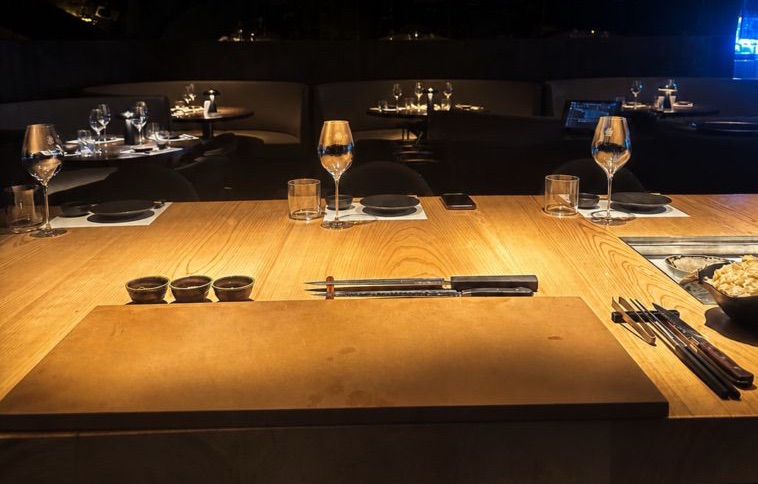
    When I’m behind the counter, preparing food where customers can watch every movement, sharpness becomes even more important—but so does presentation.

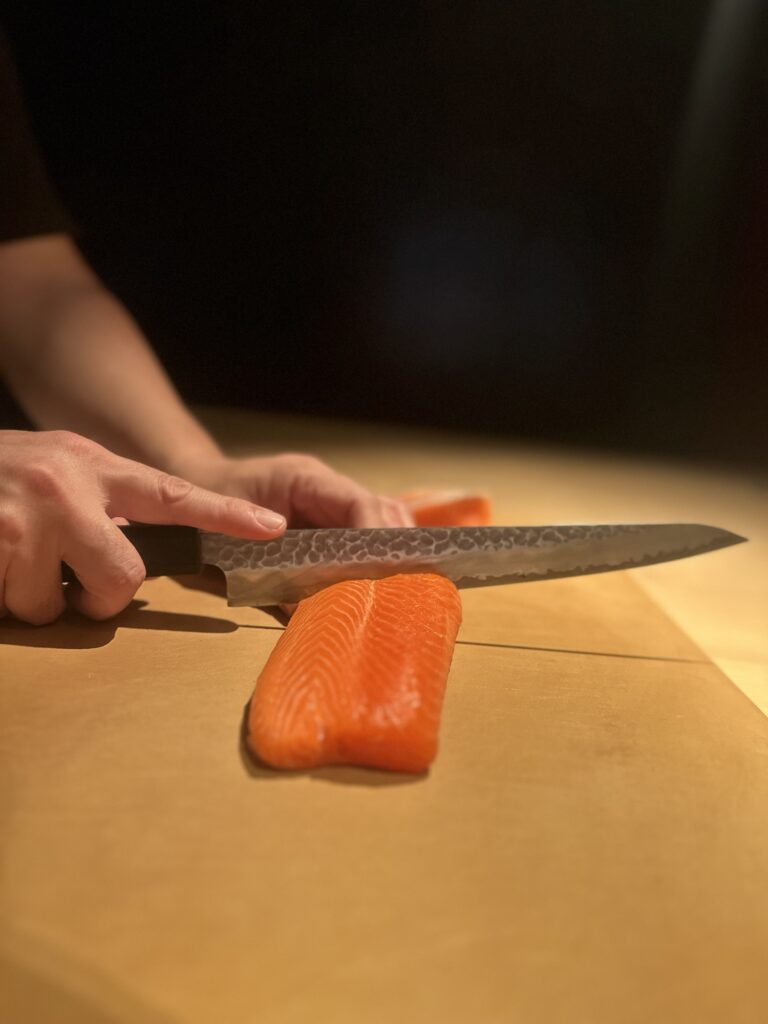
    On those occasions, I often choose a high-quality carbon steel knife that I’ve polished to a mirror finish.

    The incredibly sharp edge, the elegant appearance, and the craftsmanship of a beautifully polished blade all become part of the dining experience.

    To me, using a handcrafted carbon steel knife in front of guests isn’t simply about performance.

    It’s a way of showing respect—for the ingredients, for traditional Japanese craftsmanship, and for the people I’m cooking for.

    That’s why I don’t believe carbon steel is better than stainless steel, or vice versa.

    I simply believe in using the right knife for the right situation.


    Which One Should You Choose?

    Choose Carbon Steel if you:

    • Love exceptional sharpness
    • Enjoy sharpening your own knives
    • Appreciate traditional Japanese craftsmanship
    • Don’t mind spending a little extra time on maintenance
    • Want a blade that develops character over time

    Choose Stainless Steel if you:

    • Prefer low-maintenance cooking
    • Want excellent rust resistance
    • Are buying your first Japanese knife
    • Need a dependable knife for everyday use
    • Want outstanding performance with minimal upkeep

    Final Thoughts

    The best Japanese knife isn’t necessarily the most expensive one or the one made from the hardest steel.

    It’s the knife that suits your cooking style, your experience, and the way you enjoy preparing food.

    At Asaoya Yaichi, we carefully source authentic handcrafted Japanese knives directly from Tosa, Japan, working with skilled blacksmiths and trusted manufacturers who continue generations of traditional craftsmanship.

    Whether you’re looking for a beautifully handcrafted carbon steel knife or a premium stainless steel blade, our goal is simple:

    To help you find a knife you’ll genuinely enjoy using for many years to come.


    Explore Our Collection

    If you’re interested in authentic Japanese knives forged in Tosa, we’d love to help you find the perfect one.

    Browse our collection:

    👉 https://www.asaoyayaichi.com.au

    You may also enjoy these guides:

    Each article is written from my own experience as a chef with more than 25 years of working in professional kitchens across Japan and Australia.

    Thank you for reading, and I hope this guide helps you choose the Japanese knife that’s right for you.

    Bringing Authenticity to You.