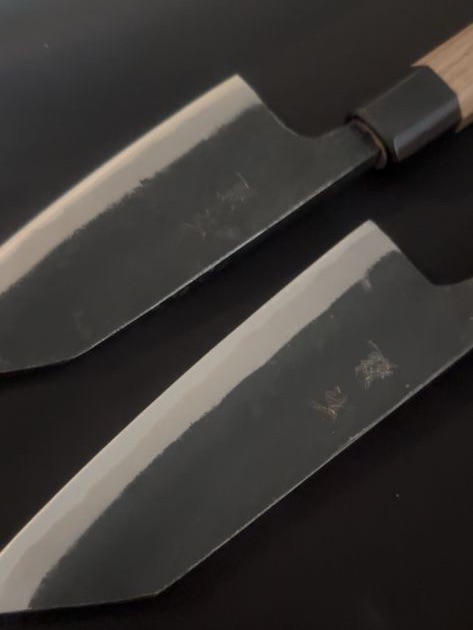
Kiritsuke Aogami #2 Kurouchi Walnut Octagonal Handle
I sell Japanese knives for a living. The problem is, sometimes I don’t want to sell them.
Right now, there is one Japanese knife in the Asaoya Yaichi collection that I keep looking at and thinking, “Maybe I should keep this one for myself.”
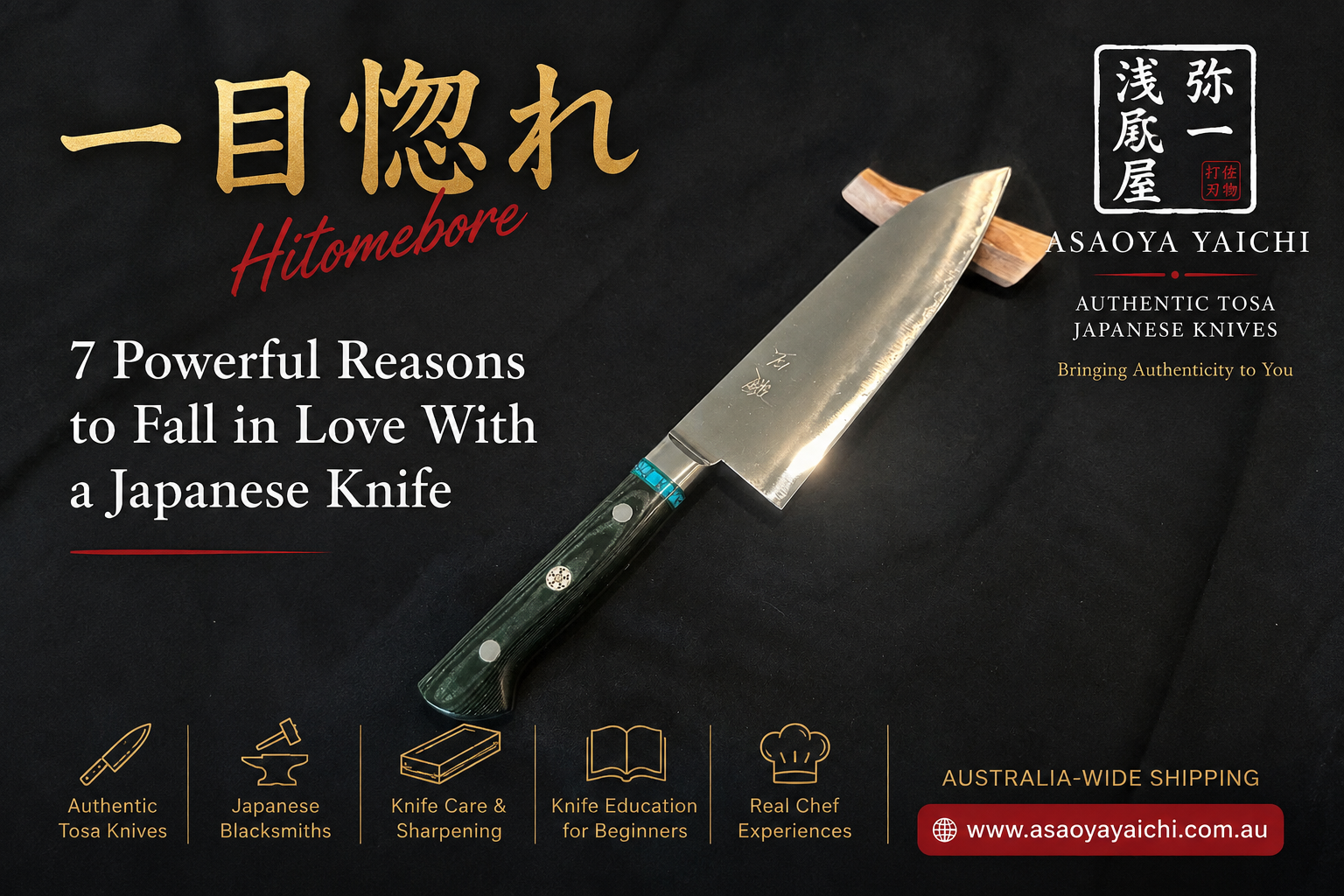
It is an Aogami #2 knife with a polished blade, a green Micarta handle and a beautiful turquoise accent.
I originally selected it to sell.
That was the plan, anyway.
A Japanese Knife Is More Than Its Specifications
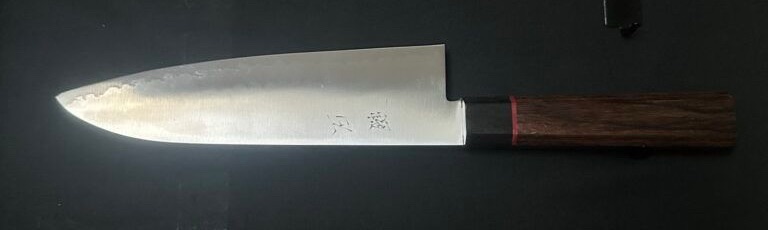
180mm Santoku SG2 Rosewood Octagonal Handle
After more than 25 years working as a professional chef in Japan and Australia, I have used many Japanese knives. But honestly, I have never chosen a knife by specifications alone.
Of course, steel matters. Hardness matters. Blade shape, handle, balance and craftsmanship matter too.
Over the years, I have developed my own preferences. I personally like Aogami steels, for example. From my experience, I find them relatively easy to sharpen and enjoyable to use.
But there is another side to choosing a Japanese knife that is much harder to put into numbers.
Sometimes, you simply see a knife and think:
“That’s the one.”
👉 INTERNAL LINK: Hardness 硬度 | 7 Powerful Truths About Japanese Knife HRC That Surprised Even a Chef
The Japanese Knife That Caught My Eye
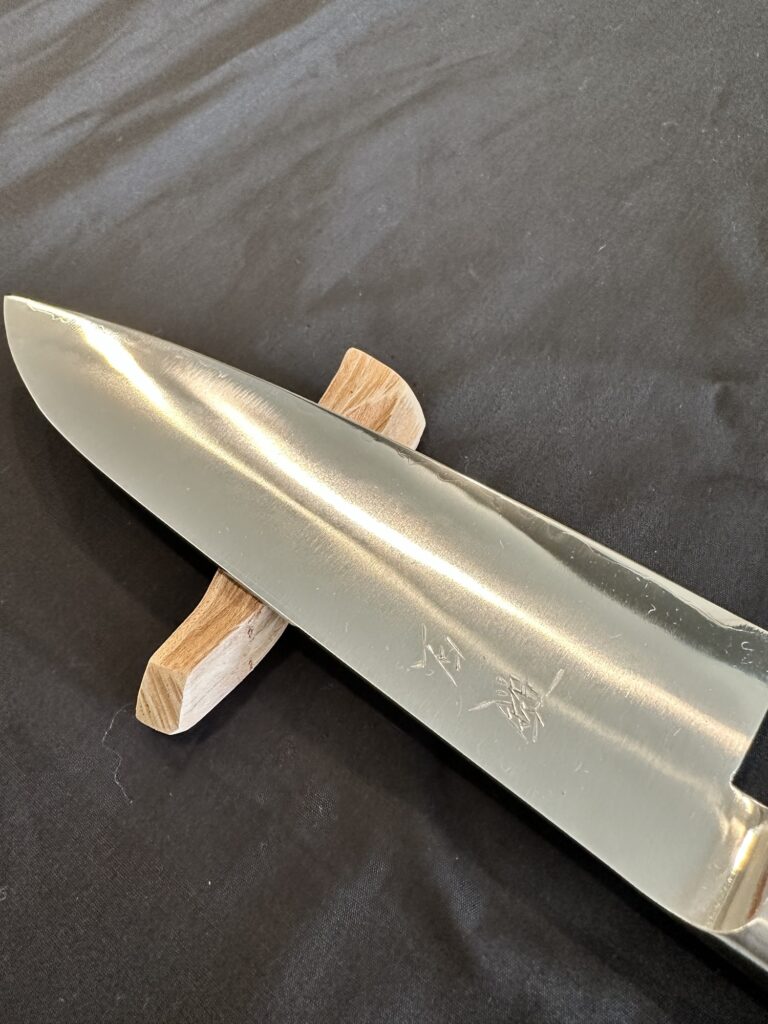
180mm Santoku Aogami #2 Green Micarta Handle with Turquoise Spacer
That is exactly what happened with this Aogami #2 knife.
I like the polished blade because it does not immediately have the rustic appearance many people associate with carbon steel. Underneath that clean finish, however, is Aogami #2 — a steel I already know and like.
Then there is the handle.
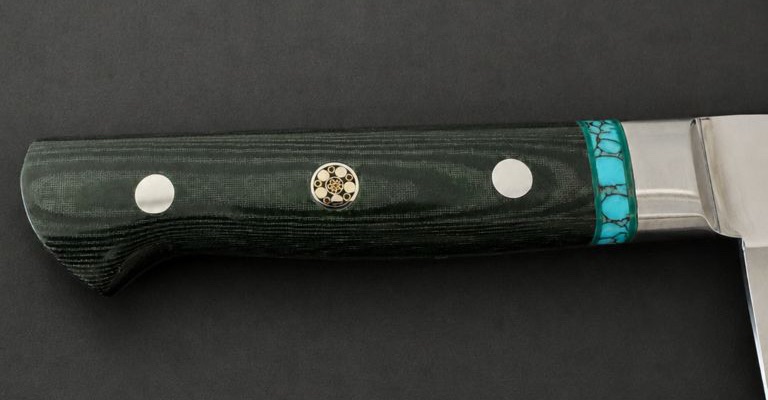
The green Micarta gives it a modern appearance, while the turquoise band adds something completely different.
To my eyes, there is even a little Wabi-Sabi in that turquoise detail. It is unusual without being too flashy, and it gives the knife its own character.
I have plenty of knives around me.
But I keep looking at this one.
That probably says something.
👉 INTERNAL LINK: Japanese Knife Handles | 7 Powerful Reasons the Right Handle Matters
Choosing Japanese Knives for Asaoya Yaichi
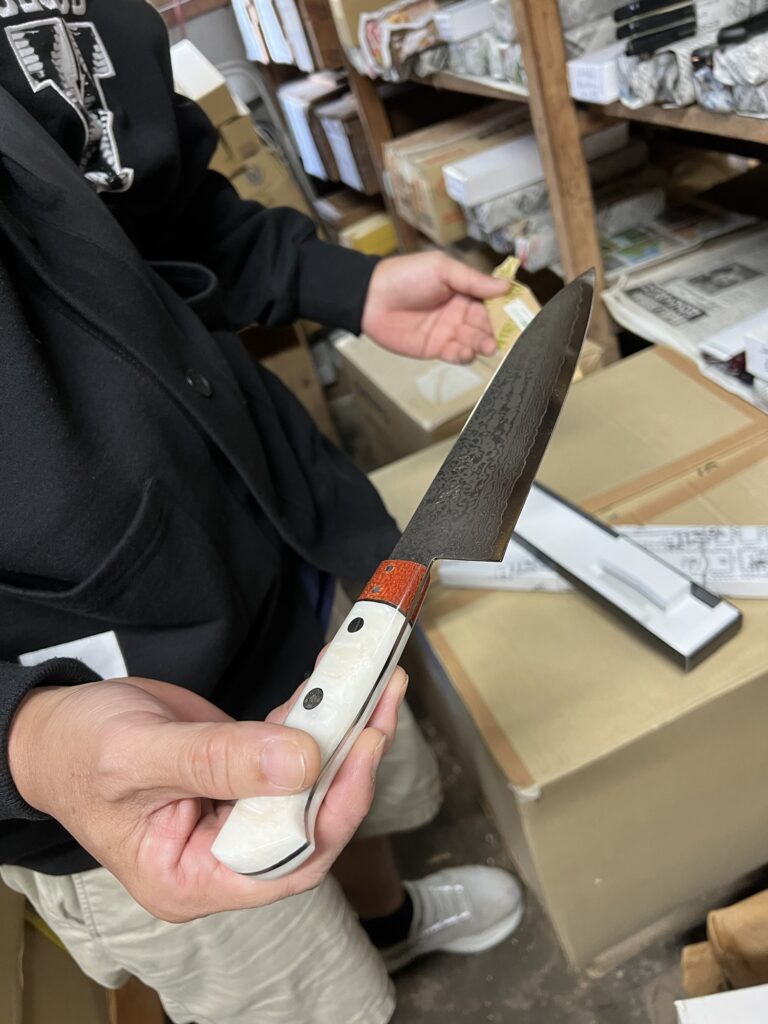
There is also a reason this story matters to me as the person behind Asaoya Yaichi.
When you buy a Japanese knife online, you cannot physically pick up every knife before making your decision.
I understand that.
That is why I believe the selection before a knife appears in the store is important.
I have spent more than 25 years using knives in professional kitchens. When selecting knives for Asaoya Yaichi, I want to actually see them, hold them and look closely at their quality, construction and overall feel.
I do not choose knives simply because a specification sheet looks impressive.
I want to offer knives that I would be happy to own myself.
👉 INTERNAL LINK: 均衡 Kinkō | 7 Powerful Reasons Japanese Knife Balance Matters More Than You Think
Quality Still Matters
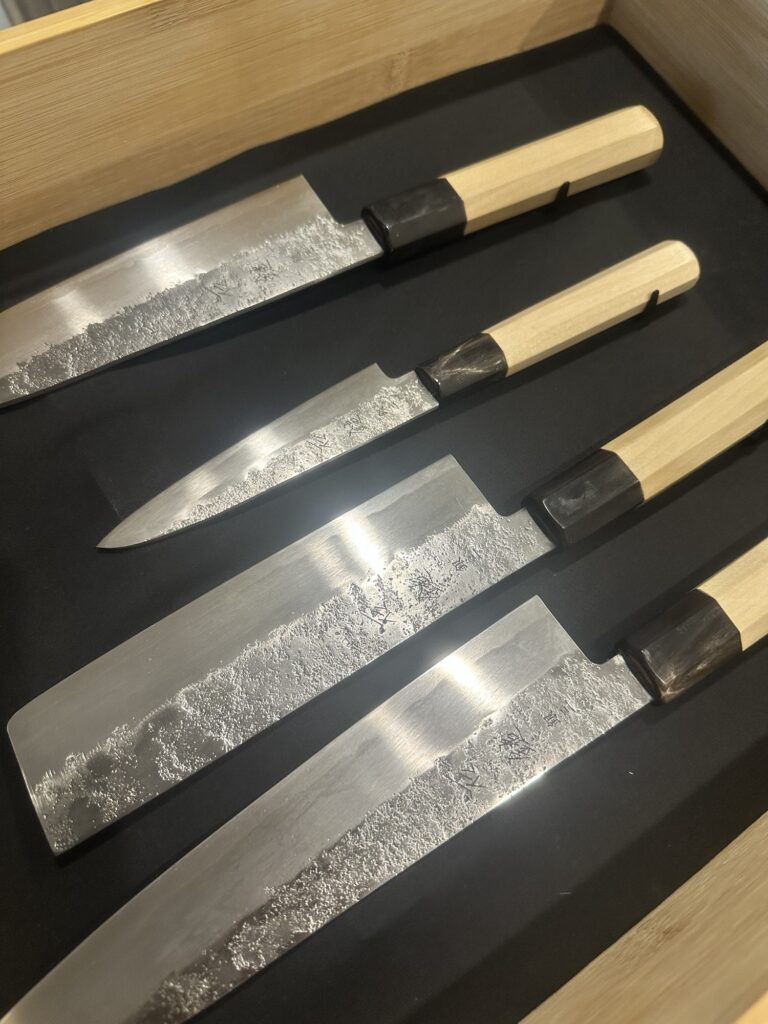
Ginsan Nashiji Forged Magnolia Octagonal Handle Buffalo Horn Ferrule
Love at first sight is not enough by itself.
A Japanese knife is still a working tool.
I do not believe an expensive knife is automatically perfect for everyone, but I do believe good materials, skilled craftsmanship and careful finishing have real value.
Very cheap knives can do a job, but there are usually compromises somewhere.
A quality knife can also change the way you treat it. When you own something you genuinely value, you tend to clean it carefully, sharpen it properly and want to keep it for many years.
👉 INTERNAL LINK: The True Value of Japanese Knives | 7 Reasons
Sometimes a Japanese Knife Just Speaks to You
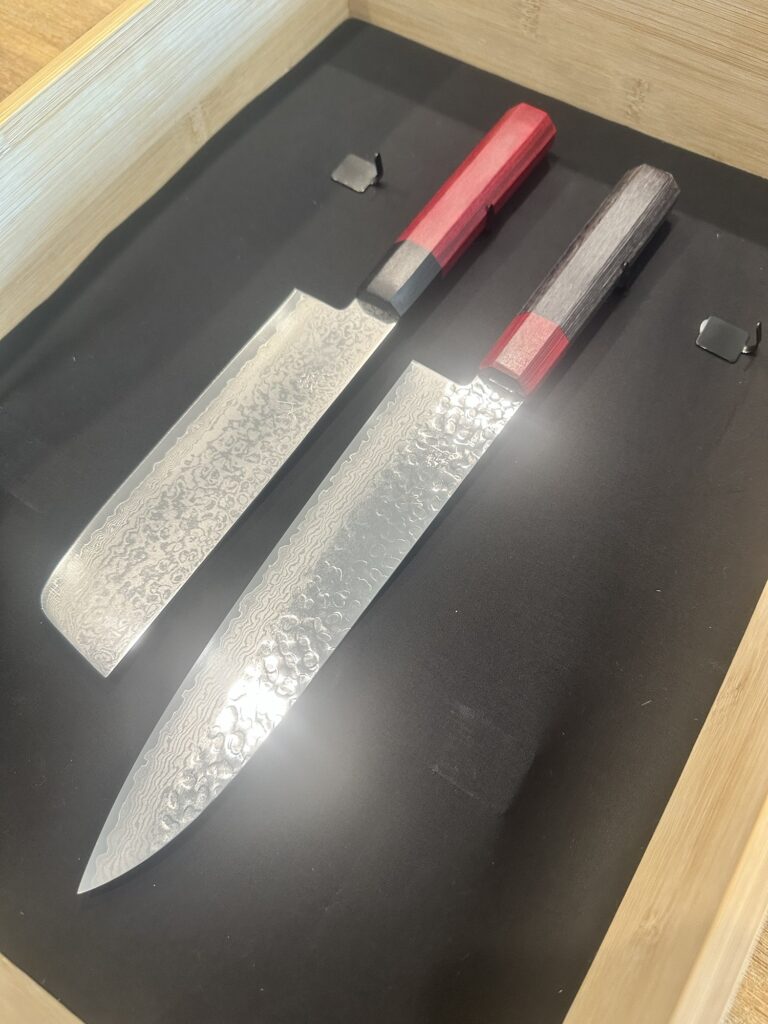
Black & Red Octagonal Handle
We can talk about steel, hardness and blade geometry all day.
Those things are important, and I think anyone buying a Japanese knife should understand the basics.
👉 INTERNAL LINK: 切味 Kireaji | 7 Truths About What Makes a Japanese Knife Feel Sharp
But I also think it is perfectly fine to choose a knife because something about it simply catches your eye.
For me, it is this one.
I like the Aogami #2 steel.
I like the polished blade.
And I love that turquoise detail.
I selected this knife for Asaoya Yaichi because I thought it was something worth offering to our customers.
The only problem is that I may have selected it a little too well.
Now I want it for myself.
Maybe that is Hitomebore — love at first sight.
And sometimes, that is all it takes for a Japanese knife to become special.
👉 Explore more:
https://blog.asaoyayaichi.com.au
👉 Visit our online store:
https://asaoyayaichi.com.au
Thank you for reading, and I hope to see you again in the next story.