タグ: Hand-Forged Japanese Knives

  • Japanese Knives in Australia: 5 Amazing Reasons to Buy

    Japanese Knives in Australia: 5 Amazing Reasons to Buy

    Ishizuchi Kanamono Manufactory

    Are Japanese knives in Australia really worth buying?

    As a professional chef with over 25 years of experience in Japan and Australia, I believe they absolutely are. However, I also believe that exceptional Japanese craftsmanship should not always come with an exceptionally high price.

    At Asaoya Yaichi, our mission is simple. We want more Australians to discover the quality of authentic Japanese knives without paying unnecessarily high prices.

    If you are considering purchasing your first Japanese knife, I invite you to explore our collection at Asaoya Yaichi.

    This Christmas, we are making that opportunity even more accessible.

    1. Japanese Knives in Australia Offer More Than Sharpness


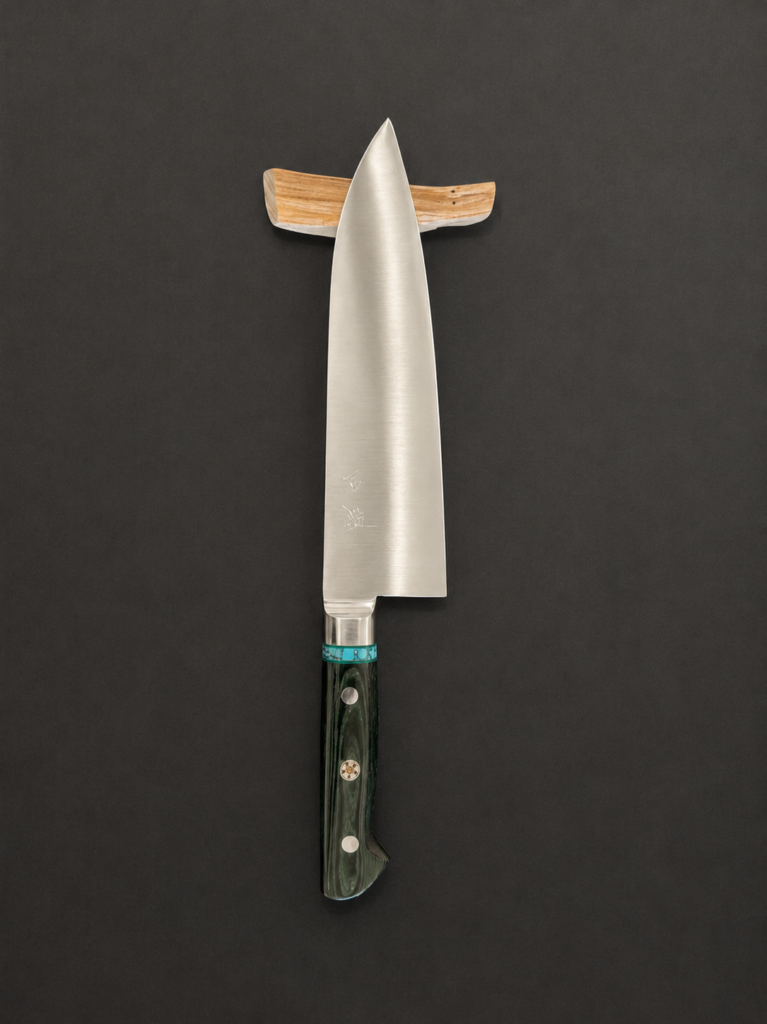
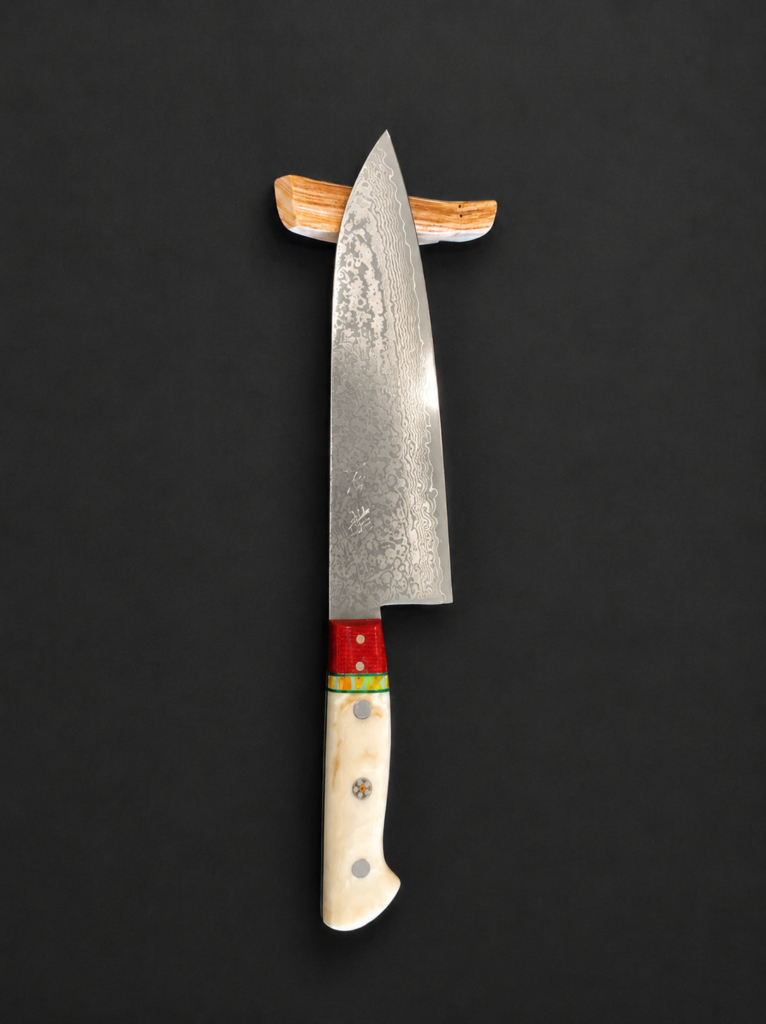
    210mm Gyuto VG10 Polished Hammered 67 Layer Damascus Green Handle

    Japanese knives are internationally recognised for their craftsmanship, cutting performance, and attention to detail.

    However, a beautiful knife is not necessarily the right knife for everyone.

    Throughout my career, I have used traditional carbon steel knives, modern stainless steel knives, and many different blade shapes.

    One thing I have learned is that price alone does not determine quality.

    A well-balanced knife that suits your cooking style can be far more valuable than an expensive knife that feels uncomfortable.

    For everyday cooking, I personally consider the gyuto one of the most versatile Japanese knives available.

    👉 Internal Link 1: Gyuto — Why I Think It Is One of the Most Versatile Japanese Knives

    2. Why Japanese Knives in Australia Can Be Expensive
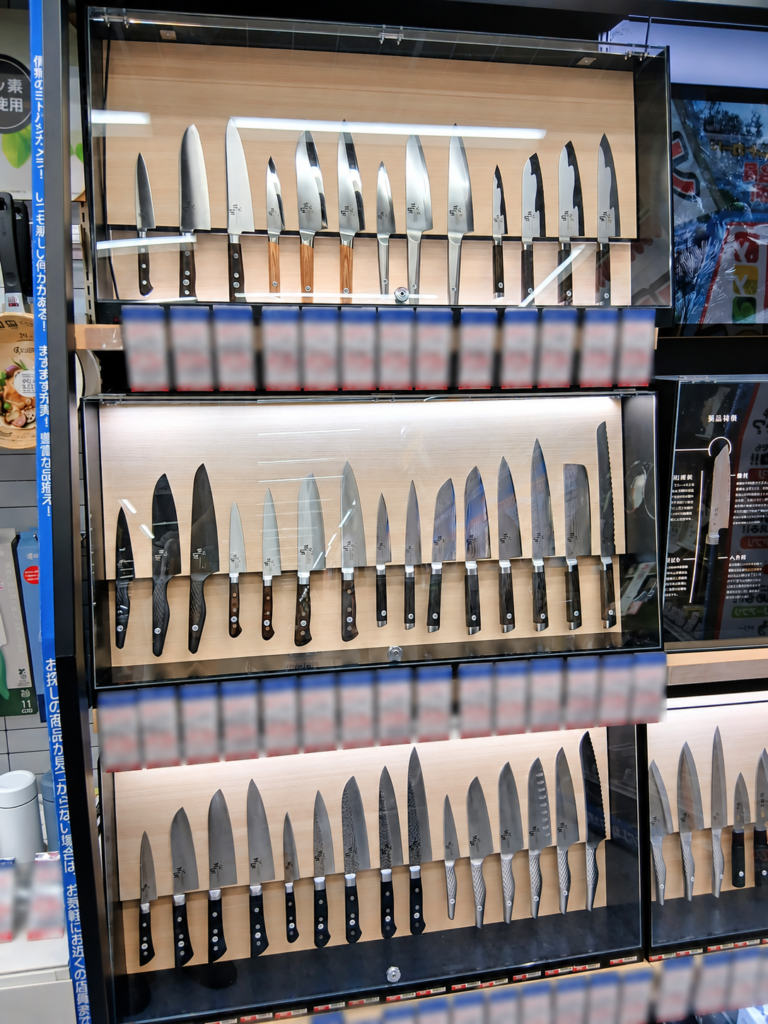
    Importing Japanese knives involves international shipping, currency exchange, taxes, and distribution expenses.

    When products pass through several distributors, additional margins can increase the final retail price.

    At Asaoya Yaichi, we take a different approach.

    We source our knives directly from Ishizuchi Kanamono Seisakusho in Japan.

    This direct relationship allows us to carefully select our products while reducing unnecessary distribution costs.

    Our goal is not simply to offer cheaper knives.

    We want to provide genuine Japanese craftsmanship at prices that represent excellent value.

    I have previously discussed why expensive Japanese knives are not always the best choice.

    👉 Internal Link 2: Is an Expensive Japanese Knife Really Worth It?

    3. Carefully Selected Japanese Knives for Australian Kitchens
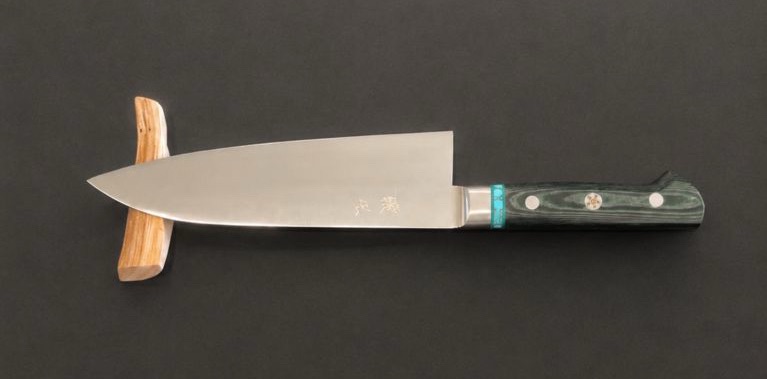

    180mm Santoku Aogami #2 Green Micarta Handle with Turquoise Spacer

    Not every Japanese knife is designed for the same purpose.

    Some people prefer traditional carbon steel, while others appreciate the convenience of stainless steel.

    At Asaoya Yaichi, our collection includes VG10, Ginsan, Aogami No. 2, and other carefully selected steels.

    Each has its own characteristics.

    For example, I appreciate the sharpening characteristics of Aogami No. 2, particularly when preparing fish.

    However, I also regularly use VG10 stainless steel knives in professional kitchens.

    Both can deliver excellent performance when properly maintained.

    Rather than recommending the most expensive option, I believe it is more important to help customers understand which knife suits their needs.

    👉 Internal Link 3: Japanese Knife Steel — Understanding Different Steel Types

    4. An Exceptional Christmas Opportunity

    Asaoya Yaichi

    This year, we have made an important decision.

    Beginning on 14 October 2026, Asaoya Yaichi will offer significant discounts across our Japanese knife collection.

    Why?

    Because we want more people to discover Asaoya Yaichi.

    We want Australians to experience the quality of the knives we have selected and understand why we believe in them.

    Thanks to our direct sourcing relationship with Ishizuchi Kanamono Seisakusho, we can already offer competitive prices.

    For this Christmas sale, we have decided to go even further.

    Some of our promotional prices may even compete with prices for comparable Japanese knives sold in Japan.

    That means Australian customers can enjoy exceptional value without travelling overseas.

    Of course, prices vary depending on the manufacturer, materials, and retailer. We are not claiming that every knife is the cheapest available.

    What we are offering is an opportunity to experience carefully selected Japanese craftsmanship at prices we believe are genuinely attractive.

    For anyone considering a Japanese knife as a Christmas gift, this could be the perfect opportunity.

    👉 Internal Link 4: Japanese Knife Christmas Gift: 5 Beautiful Choices from a Professional Chef

    5. Discover Authentic Japanese Knives in Australia
    When searching for Japanese knives in Australia, customers have many choices.

    But I believe purchasing a Japanese knife should involve more than comparing prices or admiring beautiful finishes.

    A knife should feel comfortable, perform reliably, and become something you enjoy using for years.

    This philosophy is at the heart of Asaoya Yaichi.

    We want customers to understand the craftsmanship behind our knives and appreciate the people involved in producing them.

    We also want to support the future of traditional Japanese knife craftsmanship by introducing these products to new customers.

    👉 Internal Link 5: Hand-Forged vs Machine-Made Japanese Knives

    Our Christmas sale is not simply about selling more knives.

    It is about introducing our brand, sharing our passion, and giving more people the opportunity to discover Japanese craftsmanship.

    If you are looking for authentic Japanese knives in Australia, we invite you to explore our collection.

    Discover our Japanese Knives Australia collection and find a knife that suits your kitchen.

    With limited stock available, some designs may not return immediately once sold out.

    We hope this Christmas will be the beginning of your own experience with Asaoya Yaichi.

    👉 Explore more:
    https://blog.asaoyayaichi.com.au

    👉 Visit our online store:
    https://asaoyayaichi.com.au

    Thank you for reading, and I hope to see you again in the next story.

    —————————————————​

    Where to See and Buy Our Knives

    Our Partner Stores

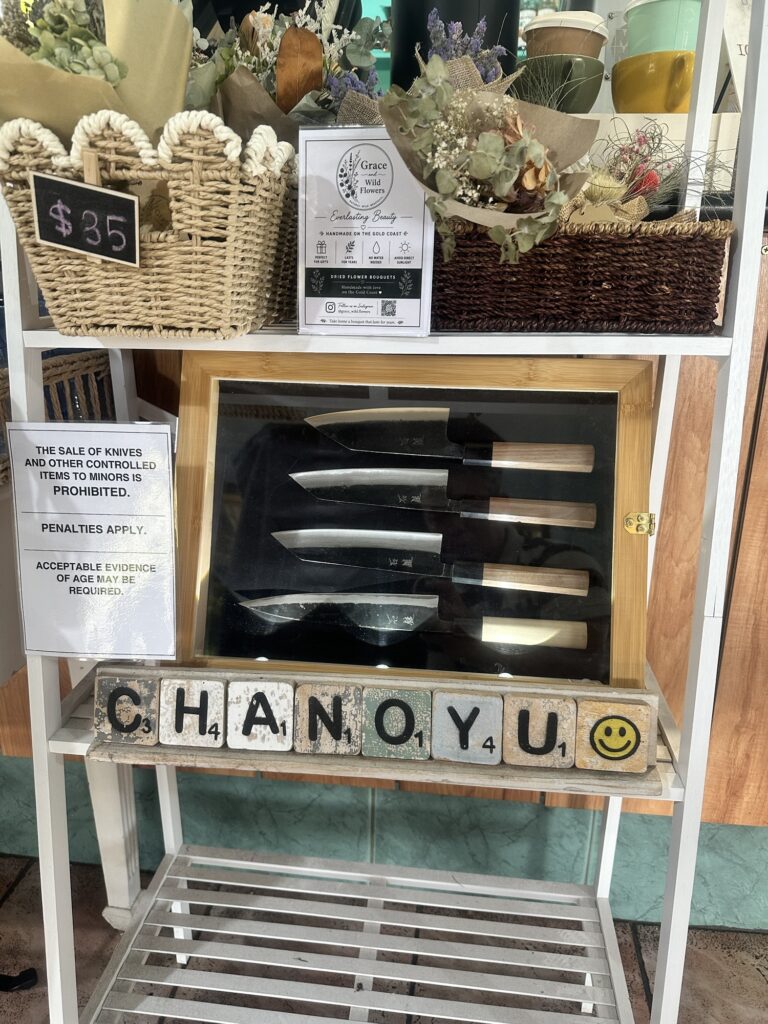
    Chanoyu — Nerang, Gold Coast

    Visit Chanoyu and See Our Japanese Knives

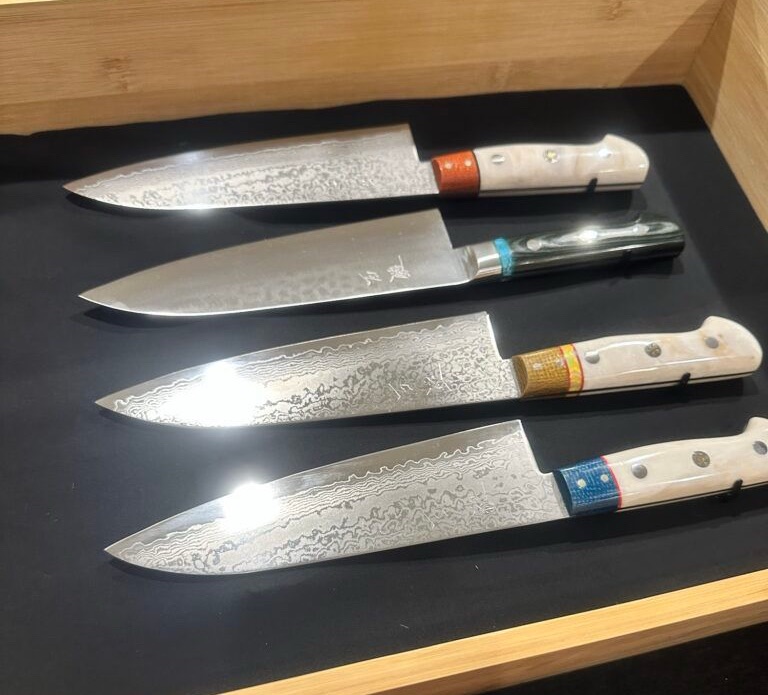
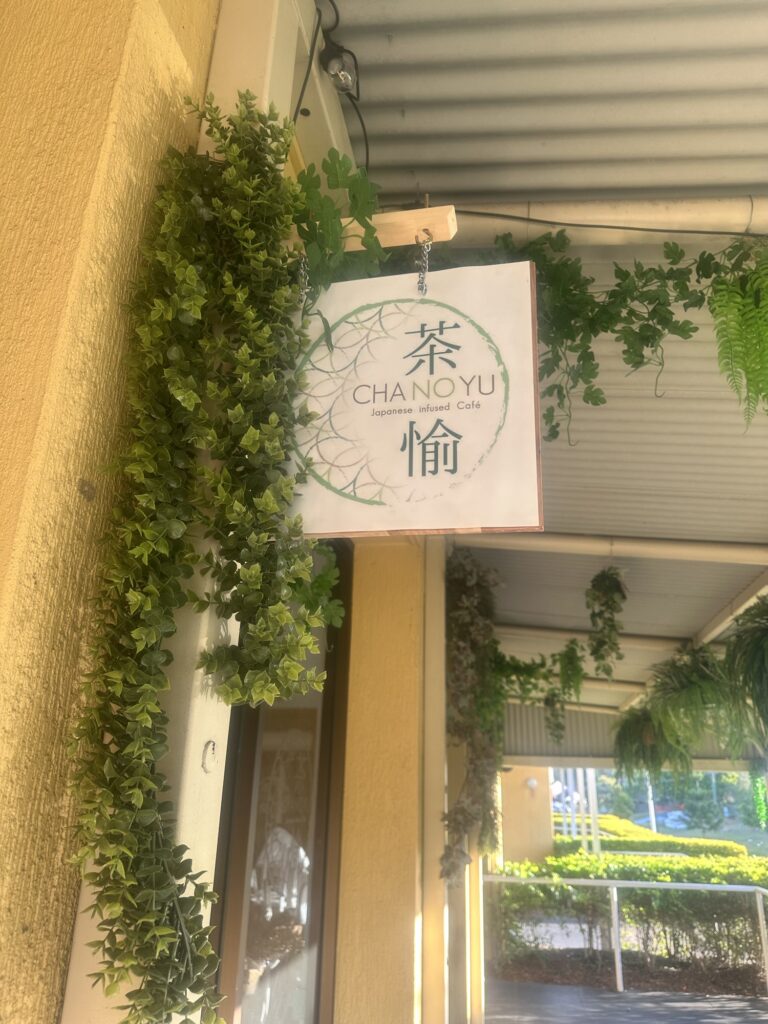
    If you are on the Gold Coast, we would love you to visit Chanoyu, a Japanese café in Nerang where you can see and purchase a selection of Asaoya Yaichi knives in person.

    Chanoyu is a lovely place to slow down and enjoy Japanese-inspired food, excellent matcha, coffee and handmade desserts. Its warm, peaceful atmosphere makes it a pleasure to visit, whether you are stopping in for breakfast, lunch or something sweet. We are delighted that our knives have a place there.

    Visit Chanoyu: Shop 6A, 54–58 Nerang Street, Nerang QLD 4211

    Opening hours: Monday to Saturday, 7:00 am–2:00 pm; closed Sunday

    Website: https://www.chanoyucafe.com/

    Instagram: https://www.instagram.com/chanoyugc/

    The selection of knives on display may change. If you are interested in a particular Asaoya Yaichi knife, please contact us through https://asaoyayaichi.com.au before visiting, and we will help you check whether it is available at Chanoyu.
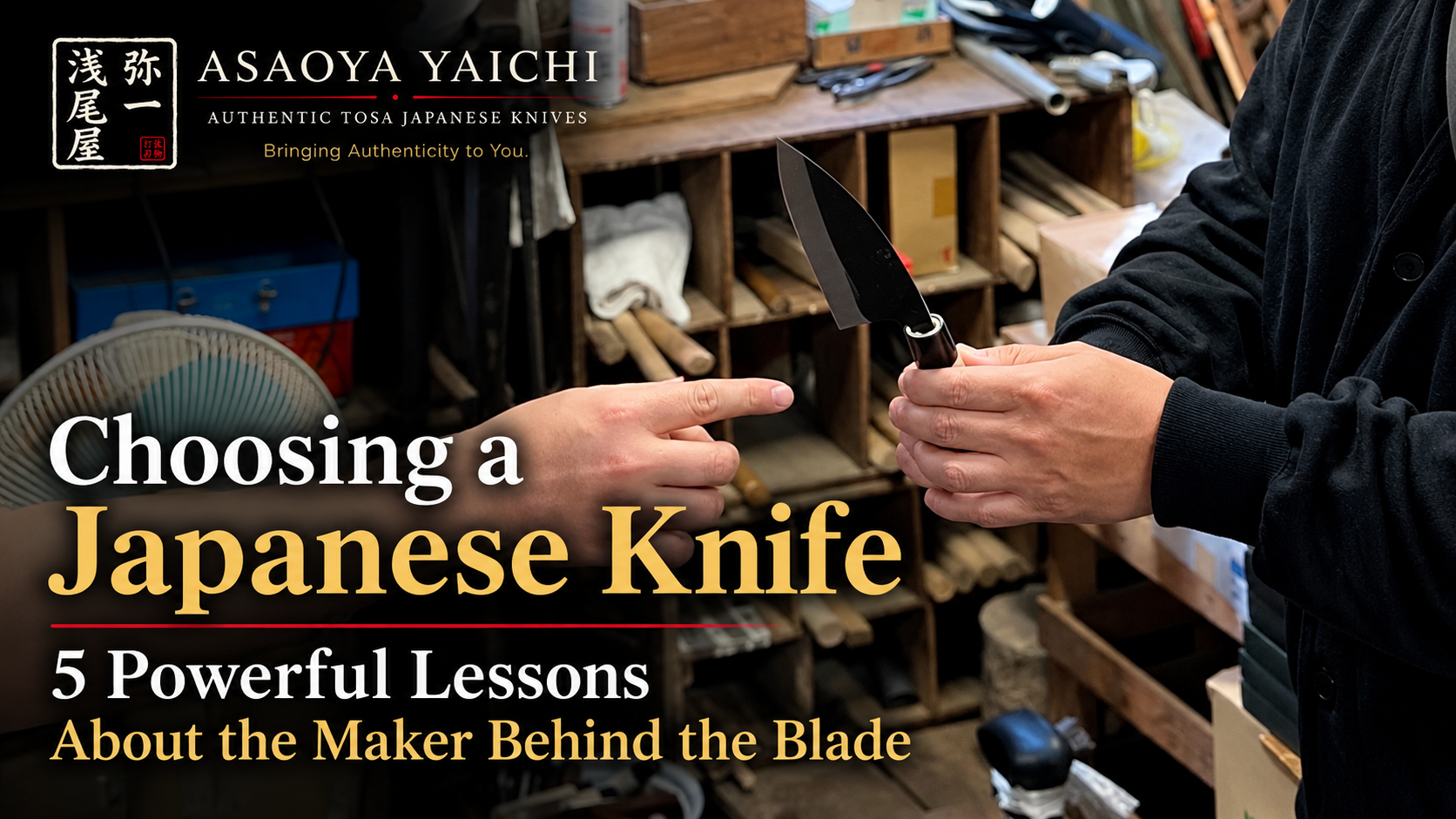
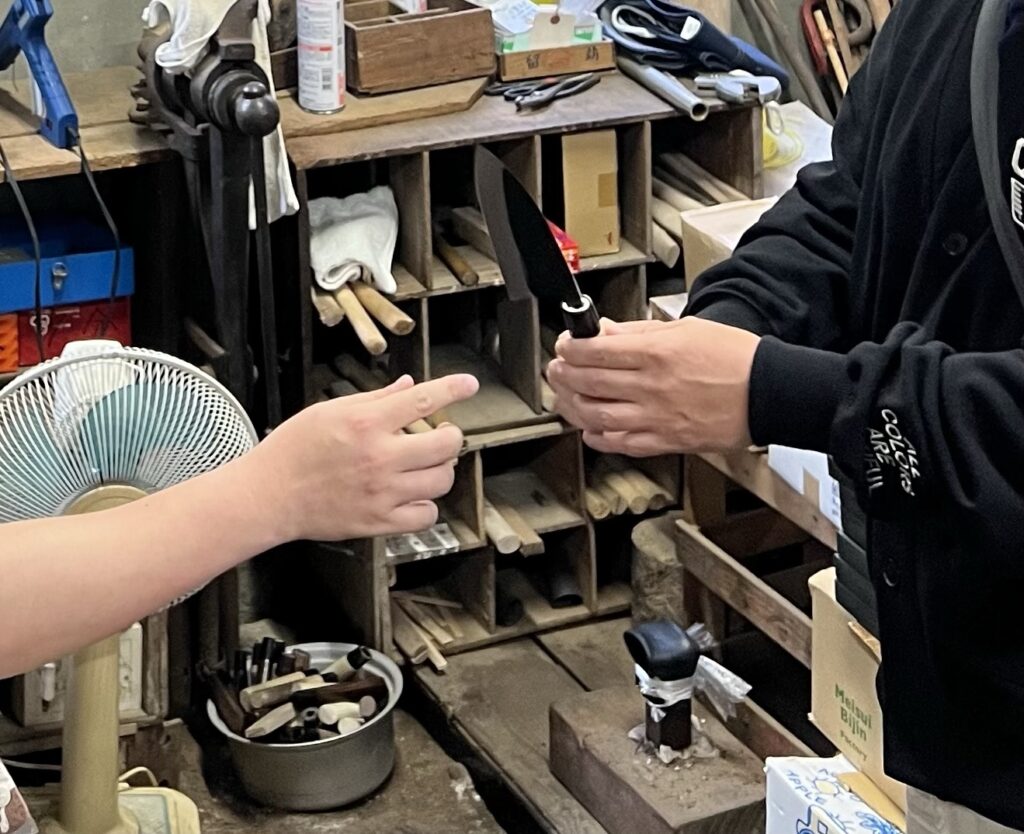
  • Choosing a Japanese Knife: 5 Powerful Lessons About the Maker Behind the Blade

    Choosing a Japanese Knife: 5 Powerful Lessons About the Maker Behind the Blade

    Ishizuchi Kanamono Manufactory

    Choosing a Japanese Knife is about much more than comparing steel, price, blade length or appearance. For people exploring Japanese Knives Australia, there are now more makers, steels and styles to choose from than ever before. After more than 25 years working as a professional chef, I have learned that the person behind the knife matters too.

    Japanese blacksmiths spend years developing skills that cannot simply be replaced by a machine or a famous brand label. Their experience, techniques and knowledge are part of the value of every knife they produce.

    At Asaoya Yaichi, I want more people in Australia to know the names of the Japanese craftsmen behind their knives. Their names should have value because their skills, experience and years of work have value.

    But at the same time, I do not want a blacksmith’s name to become just another luxury label.

    When Choosing a Japanese Knife, I believe we should understand not only who made it, but why their work matters.

    👉 Explore our Japanese knives in Australia:
    https://asaoyayaichi.com.au

    Choosing a Japanese Knife Means Knowing Who Made It

    For many years, Japanese kitchen knives were often sold overseas simply as “Japanese knives.”

    The steel might be listed. The blade length might be listed. The words “hand-forged” might appear in the description.

    But who actually made the knife?

    I believe that question deserves more attention.

    A blacksmith is not simply part of the manufacturing process. The decisions they make about forging, heat treatment, construction and finishing all contribute to the character of the finished blade.

    This is one reason I have become increasingly interested in telling the stories behind Japanese knives rather than simply selling them as products.

    👉 INTERNAL LINK: [Tosa Knife History — From Samurai-Era Craft to the Modern Kitchen]

    Understanding where a knife comes from gives us a much deeper appreciation of what we are holding in our hands.

    The Maker’s Name Should Have Real Value


    180mm Kiritsuke Aogami #2 Kurouchi Walnut Octagonal Handle

    I have written before about something that concerns me: the future of Japanese blacksmiths and the value placed on their work.

    If retailers compete only on price, eventually somebody in the chain has to absorb that pressure. I do not believe constantly making Japanese knives cheaper is necessarily good for the future of the industry.

    Traditional skills take years to develop.

    That should have value.

    When a blacksmith produces excellent knives for decades, I want their name to become better known. If that reputation eventually allows their work to command a higher price, I do not see that as a bad thing.

    In fact, I believe knife retailers can play a role in helping that happen.

    👉 INTERNAL LINK: [Hand-Forged vs Machine-Made Japanese Knives]

    But there is an important distinction.

    I want the maker’s name to represent craftsmanship, experience and quality — not simply status.

    Choosing a Japanese Knife Is Still About the Knife


    180mm Santoku Aogami #2 Green Micarta Handle with Turquoise Spacer

    Knowing the maker is important, but when Choosing a Japanese Knife, the knife still needs to make sense for the person using it.

    I have spent more than 25 years working with knives in professional kitchens. From that experience, I know that a famous name cannot change whether a particular blade shape, steel or size suits the job in front of me.

    A beautiful carbon-steel knife may be wonderful for one cook, while someone else may be much happier with the easier maintenance of VG10, Ginsan or SG2.

    👉 INTERNAL LINK: [Japanese Knife Steel: 5 Powerful Lessons After 25 Years in Professional Kitchens]

    The same applies to knife shape. A Gyuto, Santoku, Nakiri, Sujihiki or Kiritsuke has its own purpose and character.

    The maker gives the knife its craftsmanship.

    The user gives the knife its purpose.

    A Famous Name Should Tell a Story


    180mm Santoku VG10N 33 Layer Damascus Green Marble Handle Rainbow Spacer Red

    This is perhaps the most important point for me.

    I do not want Japanese blacksmiths to become anonymous workers behind expensive knives.

    But I also do not want their names printed on a blade simply because a famous name makes the knife easier to sell.

    If we introduce a craftsman’s name, we should also explain their work.

    Where do they work? What traditions do they come from? What kind of knives do they make? Why is their craftsmanship worth preserving?

    That story is part of the knife.

    This is especially important with traditional knife-making regions such as Tosa.

    👉 INTERNAL LINK: [Kurouchi Japanese Knives: Traditional Black-Forged Blades Explained]

    A Kurouchi finish, for example, is not simply a fashionable black surface. It is connected to a traditional way of producing practical forged blades.

    Understanding that changes how we see the knife.

    Japanese Knives Australia Should Be About More Than Price

    As Japanese knives become increasingly available in Australia, I hope the market continues to grow.

    But I also hope that growth does not become only a competition over who can sell Japanese knives for the lowest price.

    There should be room for different steels, different regions, different craftsmen and different philosophies of knife making.

    That is why I believe Japanese Knives Australia should become a market where customers can learn about the people behind the blades as well as the products themselves.

    👉 INTERNAL LINK: [Japanese Knives Australia: 5 Powerful Choices I Would Make After 25 Years as a Professional Chef]

    For me, Choosing a Japanese Knife should bring these two ideas together.

    We should respect the maker.

    We should understand the craftsmanship.

    And then we should choose a knife that genuinely suits the person who will use it.

    The Name Behind the Knife Deserves to Be Remembered

    Japanese Knives Australia

    At Asaoya Yaichi, I want to continue introducing Japanese knives through my own experience as a professional chef, while also giving greater recognition to the craftsmen who make them.

    I want customers in Australia to remember their names.

    Not because a name automatically makes a knife better.

    But because when excellent craftsmanship exists behind that name, the person responsible for it deserves recognition.

    If Japanese knife retailers can help increase the value of those names while explaining the craftsmanship behind them, I believe we can do more than simply sell knives.

    We can help carry Japanese knife-making traditions into the future.

    And that, for me, is an important part of Choosing a Japanese Knife.

    👉 Explore more:
    https://blog.asaoyayaichi.com.au

    👉 Visit our online store:
    https://asaoyayaichi.com.au

    Thank you for reading, and I hope to see you again in the next story.

    —————————————————​

    Where to See and Buy Our Knives

    Our Partner Stores

    Chanoyu — Nerang, Gold Coast

    Visit Chanoyu and See Our Japanese Knives

    If you are on the Gold Coast, we would love you to visit Chanoyu, a Japanese café in Nerang where you can see and purchase a selection of Asaoya Yaichi knives in person.

    Chanoyu is a lovely place to slow down and enjoy Japanese-inspired food, excellent matcha, coffee and handmade desserts. Its warm, peaceful atmosphere makes it a pleasure to visit, whether you are stopping in for breakfast, lunch or something sweet. We are delighted that our knives have a place there.

    Visit Chanoyu: Shop 6A, 54–58 Nerang Street, Nerang QLD 4211

    Opening hours: Monday to Saturday, 7:00 am–2:00 pm; closed Sunday

    Website: https://www.chanoyucafe.com/

    Instagram: https://www.instagram.com/chanoyugc/

    The selection of knives on display may change. If you are interested in a particular Asaoya Yaichi knife, please contact us through https://asaoyayaichi.com.au before visiting, and we will help you check whether it is available at Chanoyu.

  • 鍛造 | Forged — What Does “Hand-Forged” Really Mean on a Japanese Knife?

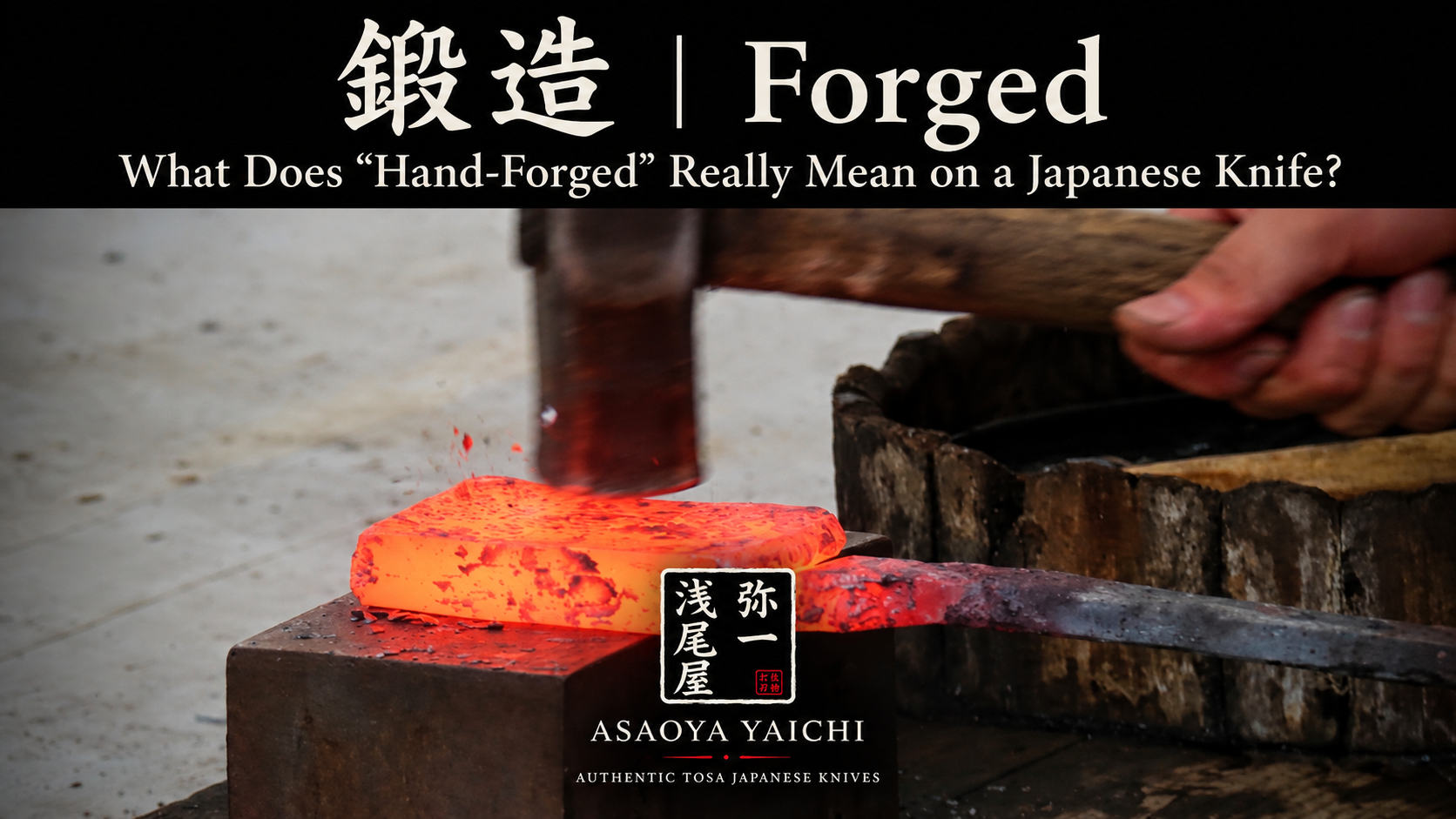
    鍛造 | Forged — What Does “Hand-Forged” Really Mean on a Japanese Knife?

    Ishizuchi Kanamono Manufactory

    I have worked with Japanese knives for more than 25 years, but recently I found myself thinking about a surprisingly simple question.

    What does “hand-forged” actually mean?

    Of course, I knew the word “forged.” I had seen FORGED written on golf clubs many times. But when we talk about hand-forged Japanese knives, I realised that I had never really stopped to think about exactly what the term meant.

    Does hand-forged mean that a craftsman makes the entire knife using only fire, an anvil and a hand-held hammer?

    When I started looking more closely at traditional Japanese knife making, particularly the tradition of Tosa cutlery, I discovered that the answer was more interesting than I expected.

    👉 INTERNAL LINK: Tosa Knife History — From Samurai-Era Craft to the Modern Kitchen

    What Does Forged Mean for Hand-Forged Japanese Knives?

    Asaoya Yaichi

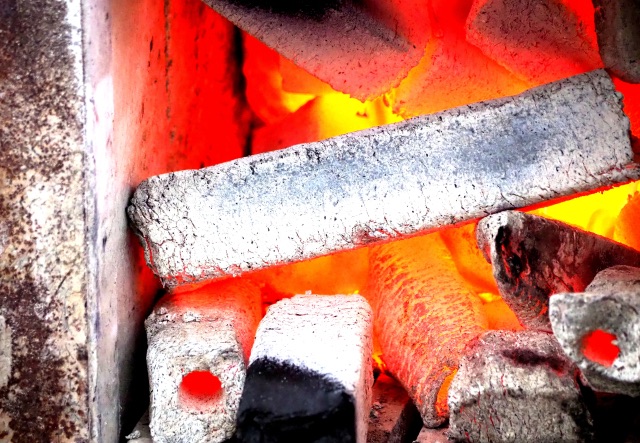
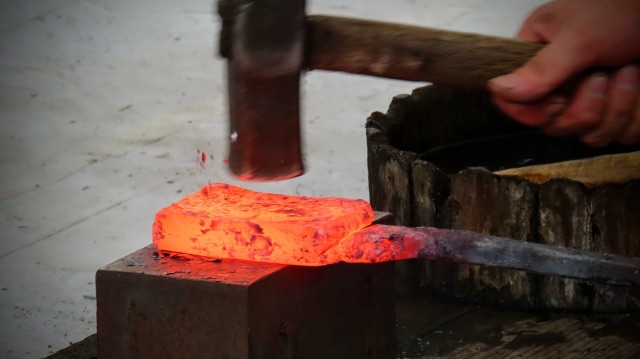
    Forging, or 鍛造 (tanzo) in Japanese, is essentially the process of shaping metal by applying force to it.

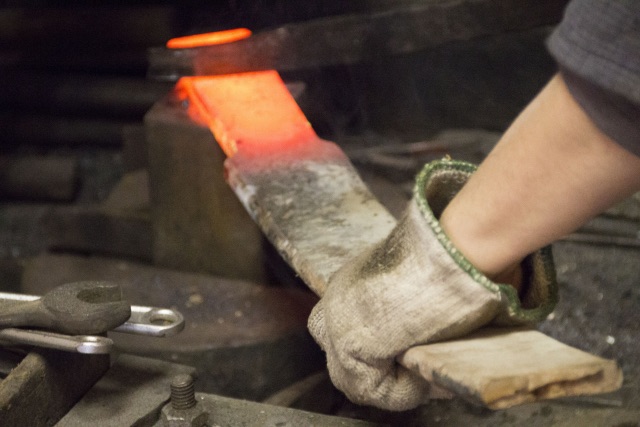
    In traditional Japanese blade making, the material is heated and then hammered and shaped. But there is an important point that I had not fully understood before researching this subject.

    Forged does not necessarily mean made entirely with a hand-held hammer.

    Traditional craftsmen today can use power hammers, presses, grinders and other machinery during the production process.

    At first, that might sound contradictory. If a machine is involved, can we really call the knife hand-forged?

    The important distinction is that the machine can still be a tool controlled by the craftsman. A power hammer provides far more force than a small hand hammer, but the craftsman still decides how the heated steel is positioned, where the force is applied and how the blade develops its shape.

    The machine provides the power. The craftsman provides the judgement.

    Hand-Forged Japanese Knives and Tosa Free Forging

    This becomes particularly interesting when looking at Tosa Uchihamono — Tosa forged blades.

    One of the characteristics associated with traditional Tosa blade making is 自由鍛造 (Jiyu Tanzo), or free forging.

    Rather than relying entirely on a fixed mould to determine the final shape, the craftsman works the heated material into the required form. This flexibility helped Tosa craftsmen produce an enormous variety of edged tools for different purposes.

    Historically, Tosa was not only a region of kitchen knife production. Its blacksmiths also produced agricultural and forestry tools, adapting blade shapes to the needs of the people using them.

    👉 INTERNAL LINK: Tosa Knives and Kurouchi — Why This Traditional Finish Is So Common

    That history helps explain why free forging became such an important characteristic of Tosa craftsmanship.

    And here is something that surprised me.

    Traditional Tosa production does not mean rejecting machinery.

    Mechanical hammers and other equipment can be used during the forging and shaping process. Yet the knowledge required to control the steel — judging its heat, movement, thickness and shape — remains with the craftsman.

    Hand-Forged Japanese Knives Do Not Have to Be Machine-Free

    I think this is where the image many of us have of a “handmade Japanese knife” can become a little misleading.

    We often imagine a blacksmith standing in front of a fire, striking a piece of glowing steel with a small hammer from beginning to end.

    That image certainly represents part of traditional blacksmithing, but modern craftsmanship can also combine traditional knowledge with modern equipment.

    Using a power hammer does not automatically make a knife a mass-produced product.

    The question is not simply whether a machine was used.

    The more interesting question is who is controlling the process.

    👉 INTERNAL LINK: Handmade Japanese Knives — 7 Reasons No Two Are the Same

    A skilled craftsman can use machinery as an extension of his hands. The equipment supplies speed or force, while experience determines what happens to the steel.

    That changed the way I personally understood the words hand-forged Japanese knives.

    Does Hand-Forged Automatically Mean Better?


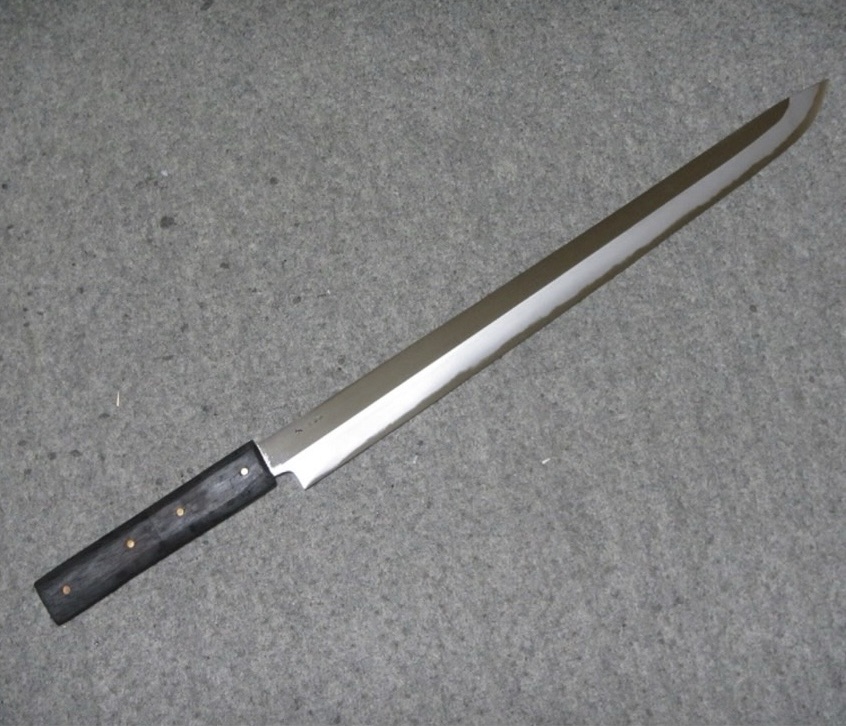
    A one-of-a-kind, hand-forged tuna knife

    There is another important point.

    “Hand-forged” sounds impressive, especially when we are looking at Japanese knives online. But forging is only one stage in the creation of a finished knife.

    Heat treatment matters. Grinding matters. Blade geometry matters. Straightening, sharpening and finishing all matter.

    👉 INTERNAL LINK: Hardness 硬度 — 7 Truths About HRC in Japanese Knives

    The steel itself is only part of the story too.

    Two knives made from the same steel can behave differently depending on how they have been heat-treated, ground and finished. Aogami #2, Ginsan, VG10 and SG2 all have their own characteristics, but the name of the steel alone cannot tell you everything about the finished knife.

    👉 INTERNAL LINK: Aogami vs Shirogami — Understanding Traditional Japanese Carbon Steels

    After more than 25 years working with knives professionally, that part makes complete sense to me.

    As a chef, I ultimately judge a knife when it reaches the cutting board. How does it move through the ingredient? How does the edge feel? How does it balance in my hand? How does it respond when I sharpen it?

    Those things cannot be explained by the word “forged” alone.

    What Hand-Forged Japanese Knives Mean to Me Now

    Before looking into this subject properly, I think I unconsciously imagined “hand-forged” as meaning a knife made almost entirely without machinery.

    Now I see it differently.

    Traditional forging does not necessarily mean rejecting machines. In places such as Tosa, traditional knowledge and modern tools can exist together.

    For me, the fascinating part of hand-forged Japanese knives is no longer whether a machine touched the blade.

    It is the human knowledge behind the process.

    Knowing when the steel is ready. Understanding how it moves under force. Knowing what shape is required for the intended tool. Correcting small variations as the blade develops.

    Perhaps that is a better way to understand Japanese forging.

    Not simply as metal being hit with a hammer, but as generations of knowledge being used to control fire, steel and force.

    After more than 25 years of using Japanese knives, I am still discovering things about them.

    And perhaps that is one of the reasons I still find them so fascinating.

    👉 Explore more:
    https://blog.asaoyayaichi.com.au

    👉 Visit our online store:
    https://asaoyayaichi.com.au

    Thank you for reading, and I hope to see you again in the next story.