180mm Santoku VG10N 33 Layer Damascus Green Marble Handle Rainbow Spacer
After more than 25 years working as a professional chef in Japan and Australia, I have used Japanese knives for most of my working life. But when it comes to Japanese Knife Finishes, I recently realised there was a lot I had never really thought about.
I have used Kurouchi and Damascus knives, and I have even polished one of my own knives to a near-mirror finish. I have also spent many years using traditional Yanagiba and Deba, including an old Yanagiba passed down to me by my mother.
Of course, I knew these knives looked different. But I never really stopped to ask why.
Does a hammered finish actually help food release? Is Kurouchi practical or mainly traditional? Does a mirror-polished blade perform differently?
Since starting a Japanese knife business, I have begun looking at knives from a different perspective. So once again, I decided to do some research.
What Are Japanese Knife Finishes?
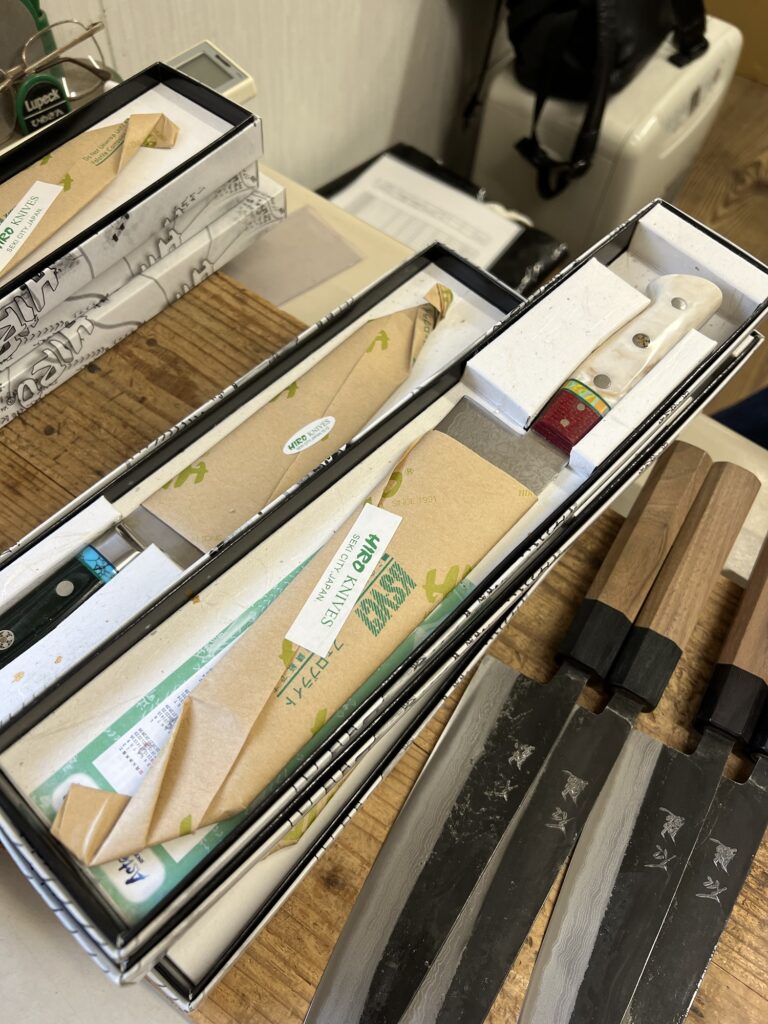
The first thing I learned is that Japanese Knife Finishes are not all created for the same reason.
Some come directly from the knife-making process, while others involve additional polishing, hammering or decorative work. Some can also influence how food contacts the side of the blade.
But one thing became clear very quickly: the finish alone does not determine how well a knife cuts or releases food.
Blade geometry, thickness, grind, sharpening, the ingredient and even cutting technique can all make a significant difference.
Thinking back over my career, this makes sense. I have always noticed the edge, geometry, weight and balance of a knife far more than its surface finish.
👉 INTERNAL LINK: 切味 Kireaji article
Kurouchi — A Finish I Learned to Appreciate
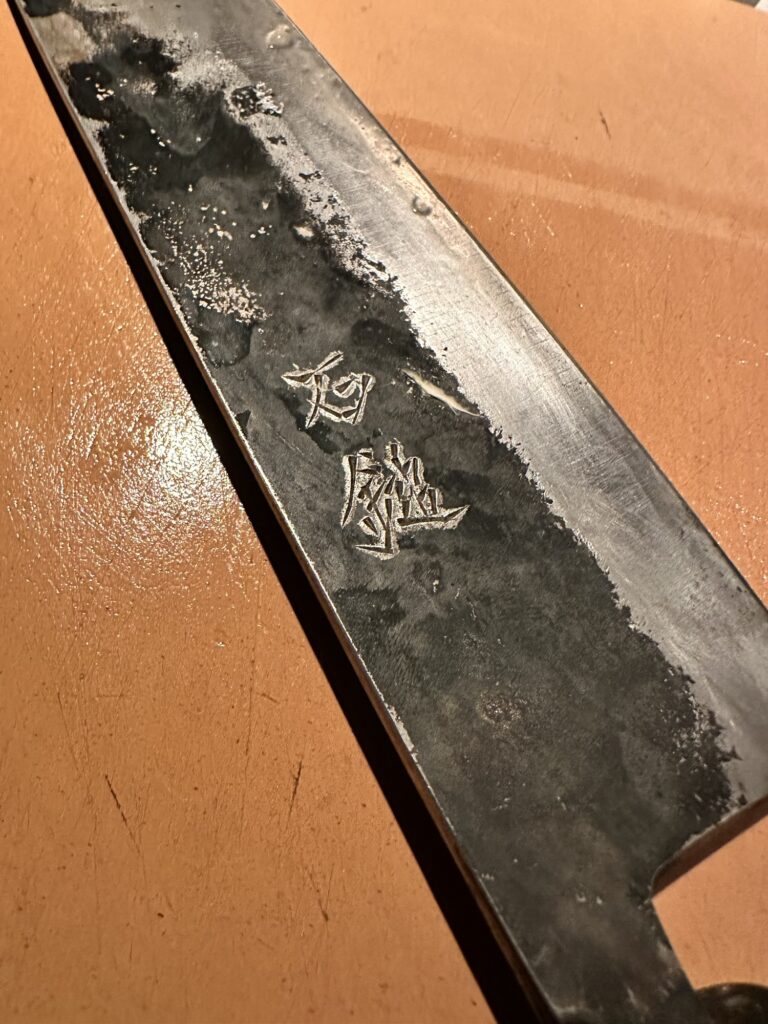
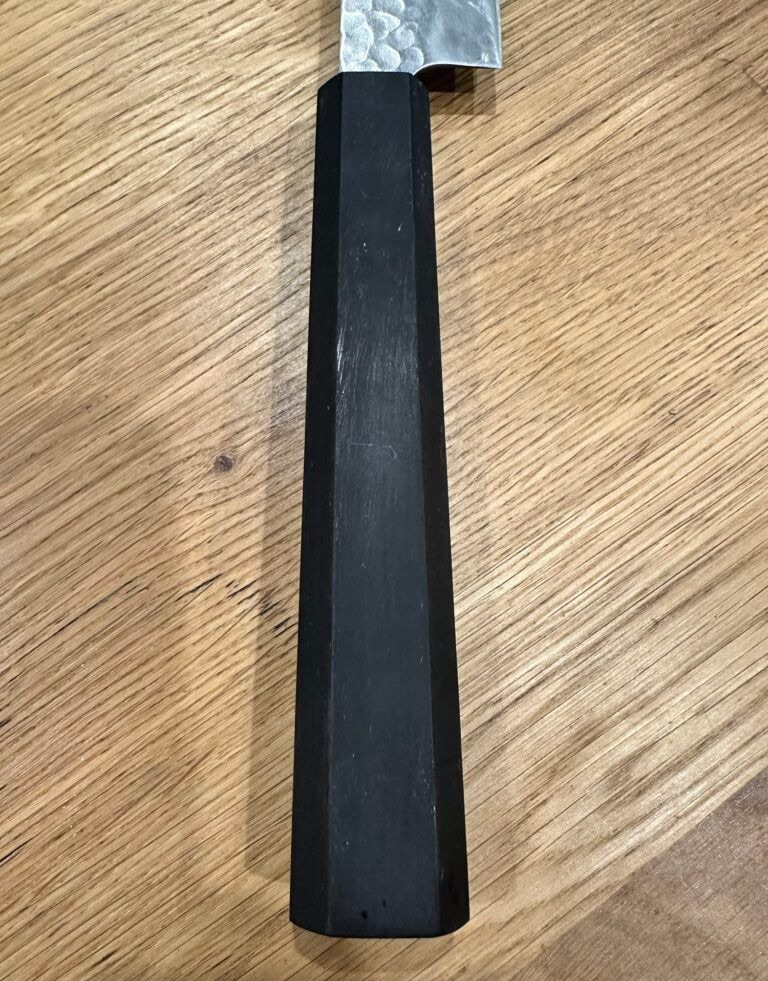
165mm Kiritsuke Aogami #2 Kurouchi Walnut Octagonal Handle
Kurouchi is one finish I definitely know from experience.
The dark surface is associated with the forging process and is intentionally left on parts of the blade instead of being completely polished away.
Years ago, however, I didn’t appreciate it.
I had a Kurouchi knife and decided I wanted it shiny, so I removed the black surface and polished the blade myself.
At the time, I thought it looked better.
Today, I probably wouldn’t do it.
I now appreciate the rustic appearance and character of Kurouchi much more. The remaining oxide layer can also offer some protection to the covered carbon-steel surface, although exposed carbon steel and the cutting edge still require proper care.
👉 INTERNAL LINK: Kurouchi Japanese Knives 黒打ち | I Once Removed It All — And Learned From It
Do Textured Japanese Knife Finishes Help Food Release?
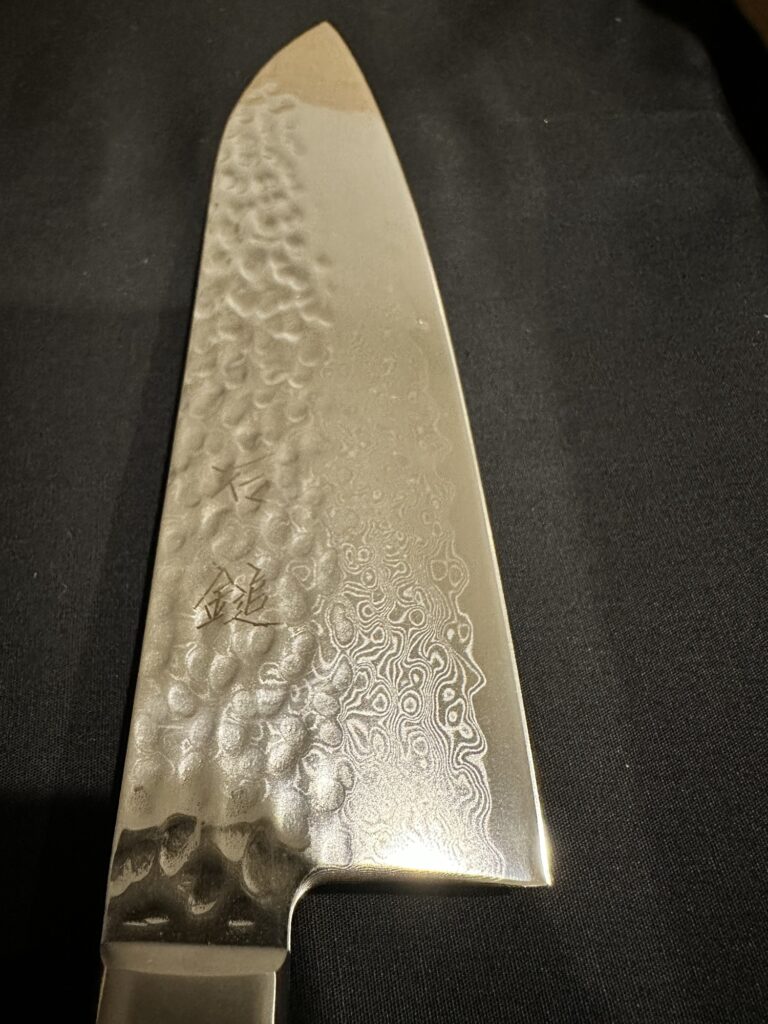
VG10 Polished Hammered 67 Layer Damascus Green Handle
This was probably what I was most curious about.
Tsuchime is the familiar hammered finish, while Nashiji has a subtler textured surface often compared to the skin of a Japanese pear.
The idea that these textures can help food release makes sense. An uneven surface changes the contact between the food and blade and, in some cases, can reduce the tendency for food to cling tightly to it.
But I learned that it isn’t as simple as saying:
“Tsuchime means food doesn’t stick.”
Blade geometry still matters enormously.
Two knives with similar finishes can behave very differently depending on their grind, thickness and overall shape.
This was interesting to me because it showed that Japanese Knife Finishes can have a practical function without necessarily being the main reason a knife performs well.
Polished, Mirror and Damascus Finishes
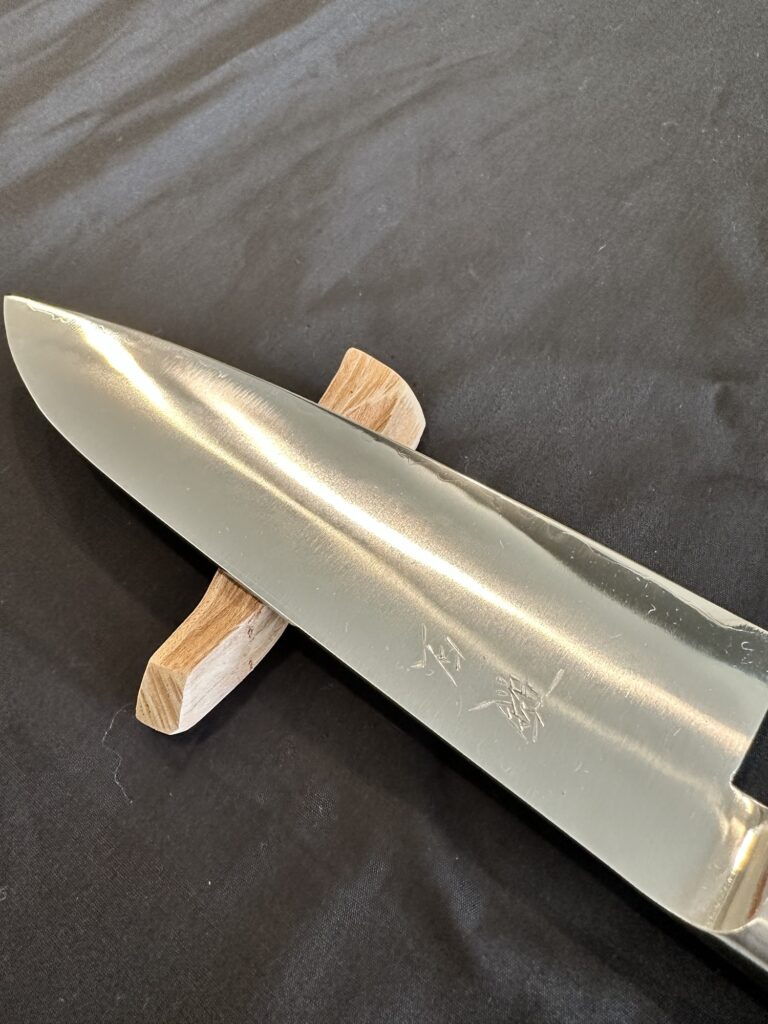
180mm Santoku Aogami #2 Green Micarta Handle with Turquoise Spacer
Migaki refers to a polished finish, although the degree of polishing varies between makers.
Mirror polish takes that idea much further.
I understand the attraction because I used to love shiny knives. I have spent plenty of time polishing a blade myself until it became highly reflective.
But a smoother surface doesn’t automatically mean better performance. Moist or starchy ingredients can still cling to a smooth blade, and after years in professional kitchens, I have also become much less worried about scratches.
A working knife is going to look like a working knife.
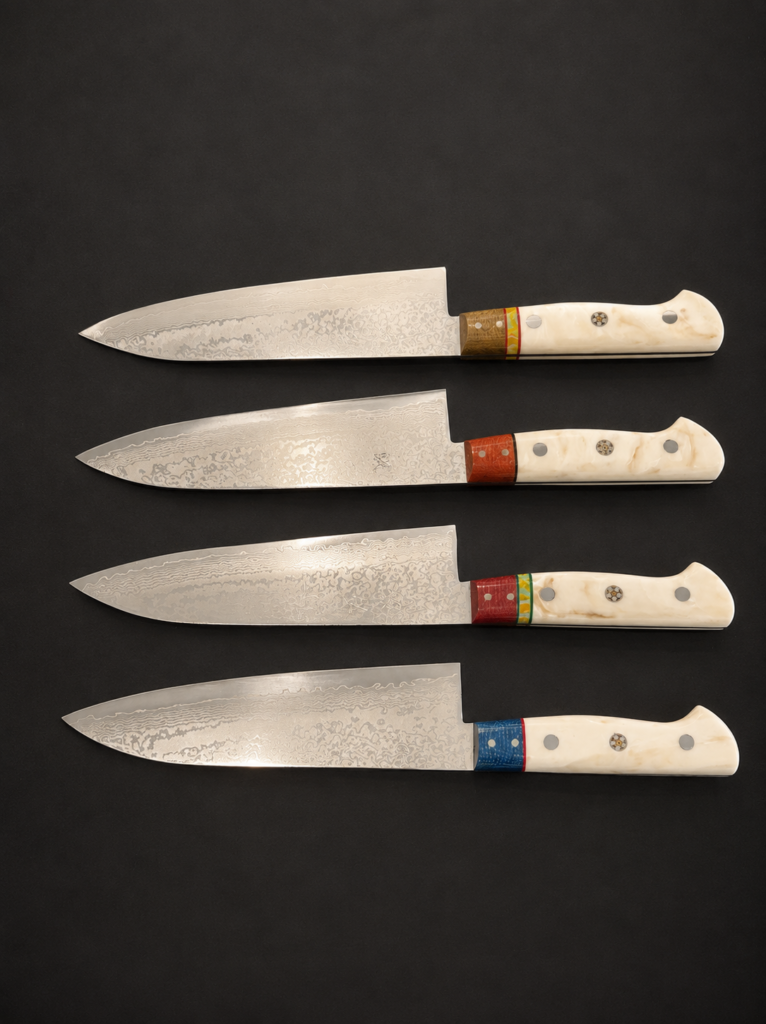
Damascus is another finish I have actually used. The layered patterns can be beautiful, but the pattern itself doesn’t automatically make a knife sharper.
In many modern Japanese knives, Damascus layers form the cladding around a core steel. The core steel, heat treatment, blade geometry and sharpening have a much more direct relationship with cutting performance.
I still love the appearance of a beautiful Damascus blade. I just wouldn’t say, “It’s Damascus, so it must cut better.”
👉 INTERNAL LINK: Hardness 硬度 | Japanese Knife HRC article
Traditional Yanagiba, Deba and Kasumi
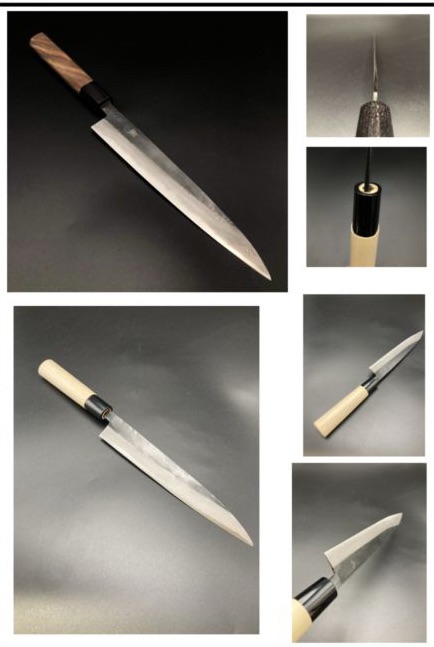
Researching Kasumi was particularly interesting because I have used traditional Yanagiba and Deba for many years.
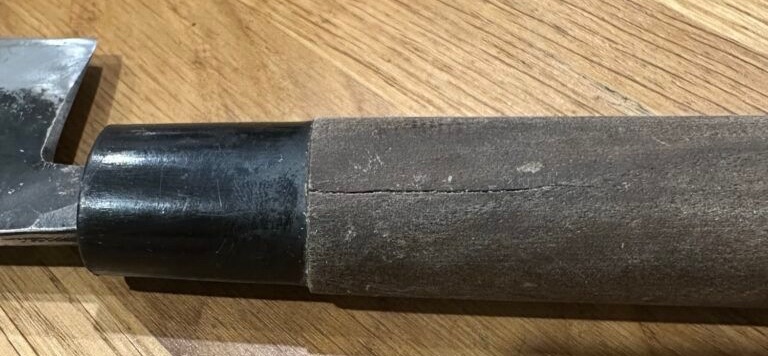
One of my Yanagiba was passed down to me by my mother and has been used for decades.
But I don’t want to pretend that I spent those years analysing its finish.
I didn’t.
To me, it was simply a traditional Japanese working knife. I sharpened it, maintained it and used it.
Only after becoming involved in selling Japanese knives did I start paying more attention to terms such as Kasumi and the manufacturing and polishing techniques behind traditional blades.
Sometimes there is a big difference between knowing how to use something and understanding exactly how it was made.
👉 INTERNAL LINK: Japanese Knife Bevels | Single Bevel vs Double Bevel Explained
What I Learned About Japanese Knife Finishes
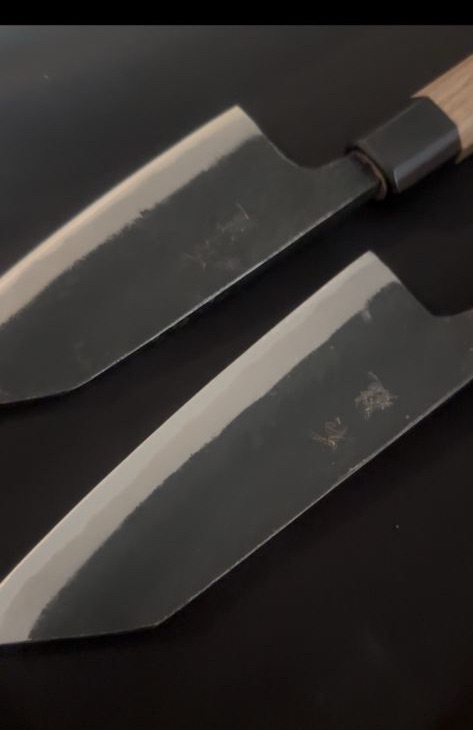
180mm Kiritsuke Aogami #2 Kurouchi Walnut Octagonal Handle
After looking more closely at Japanese Knife Finishes, I don’t think there is one “best” finish.
Some finishes may influence food release or surface protection. Some reflect traditional manufacturing methods. Others involve considerable extra craftsmanship and are valued partly for their beauty.
But I would never choose a knife based on finish alone.
After more than 25 years as a chef, I still pay more attention to blade geometry, sharpening, weight, balance and how the knife actually feels in my hand.
What surprised me most was realising that I had used some of these finishes for decades without really thinking about why they existed.
Starting Asaoya Yaichi has made me curious about things I once simply accepted.
And sometimes, researching something I thought I already understood reminds me just how much there still is to learn about Japanese knives.
👉 INTERNAL LINK: 均衡 Kinkō | Japanese Knife Balance article
👉 Explore more:
https://blog.asaoyayaichi.com.au
👉 Visit our online store:
https://asaoyayaichi.com.au
Thank you for reading, and I hope to see you again in the next story.