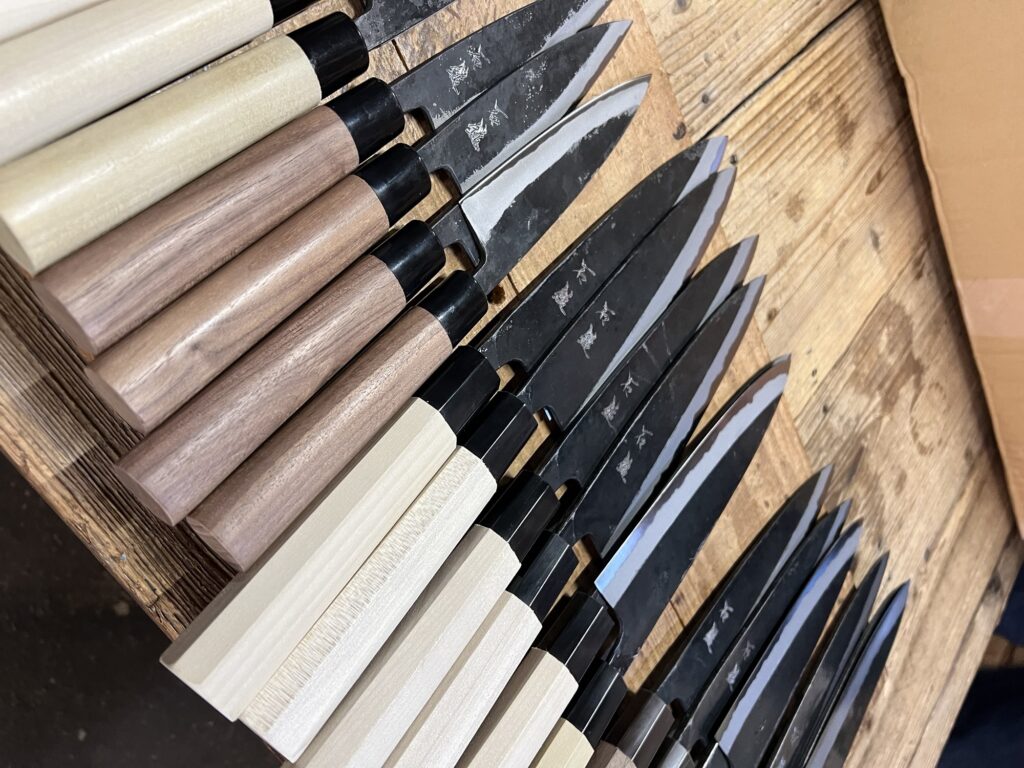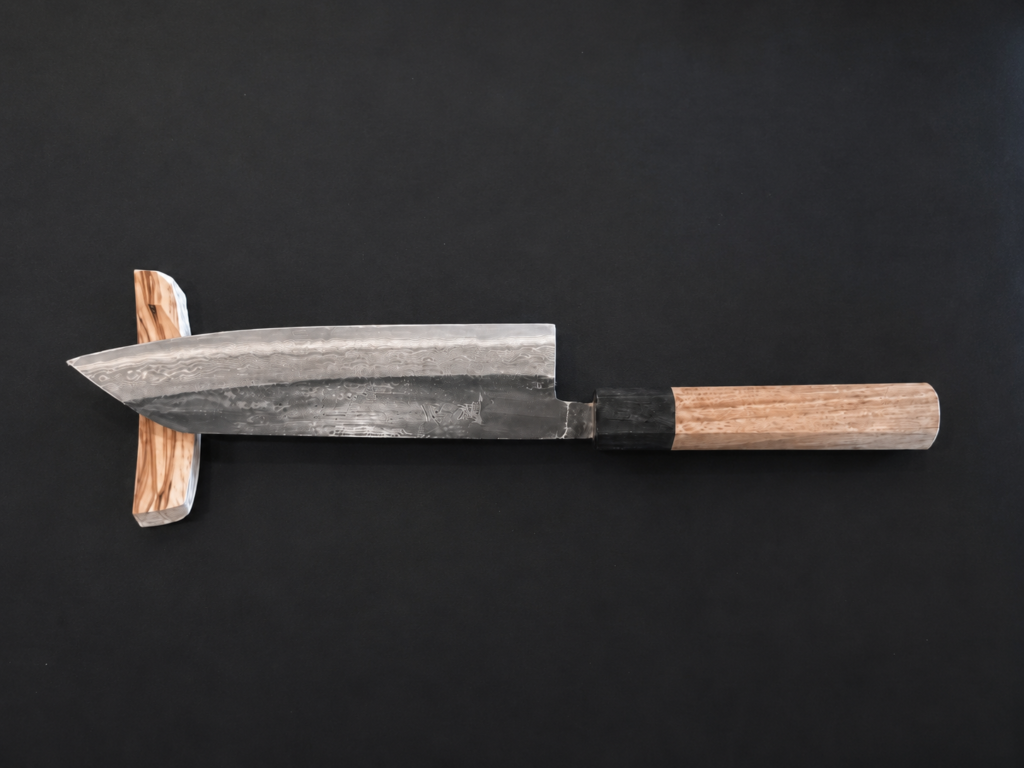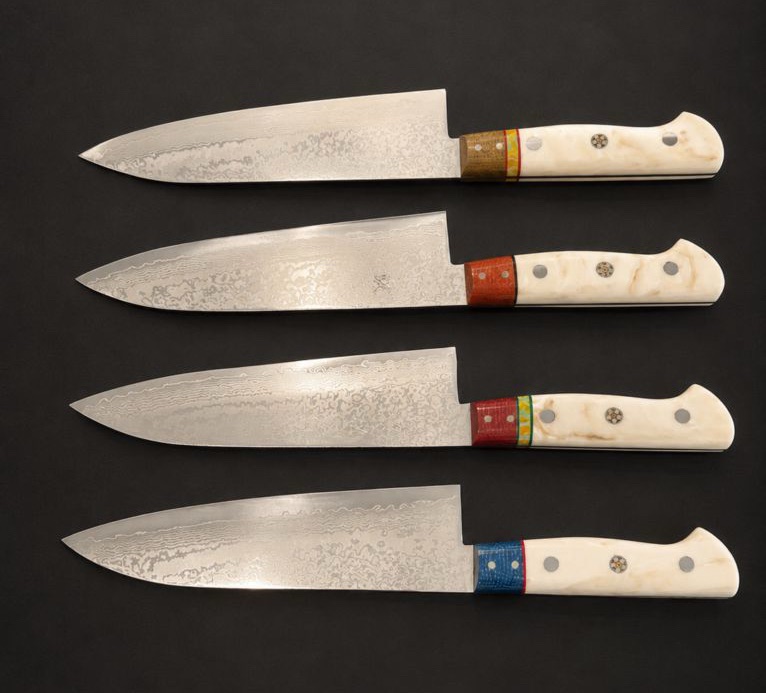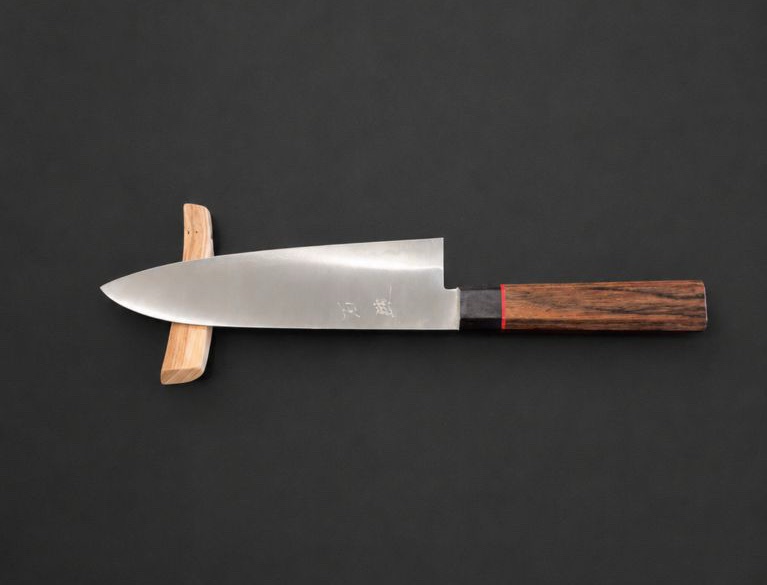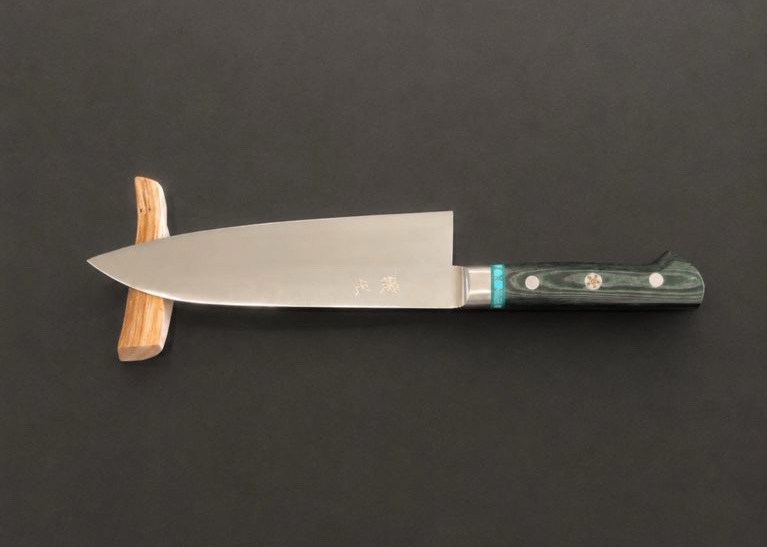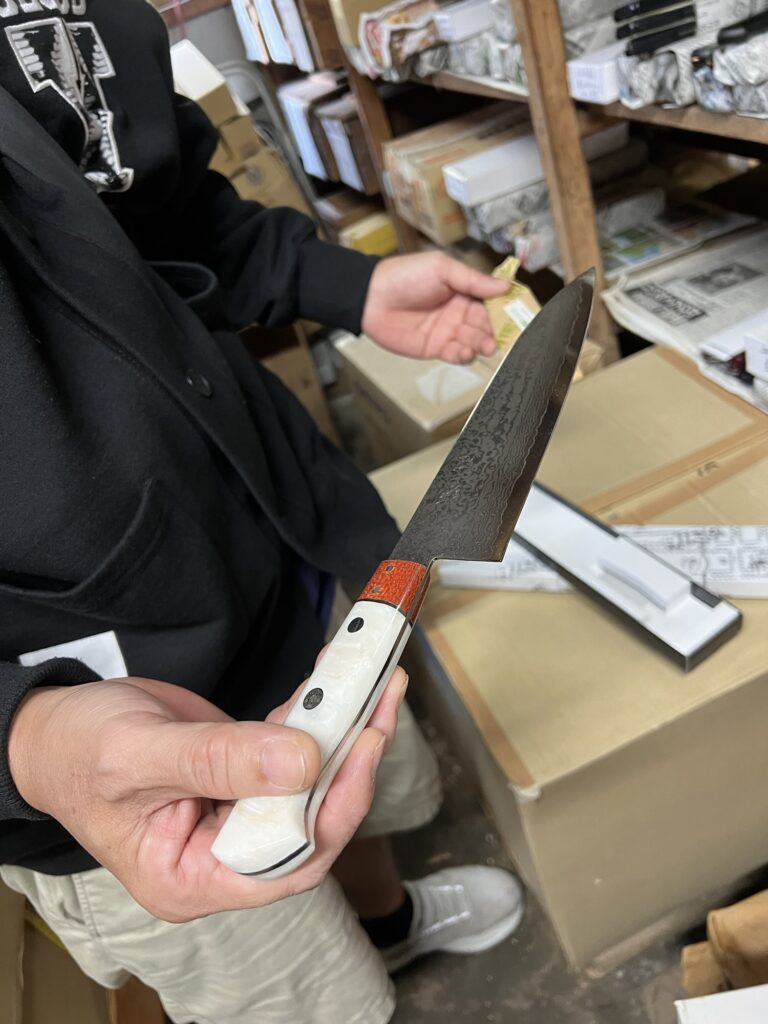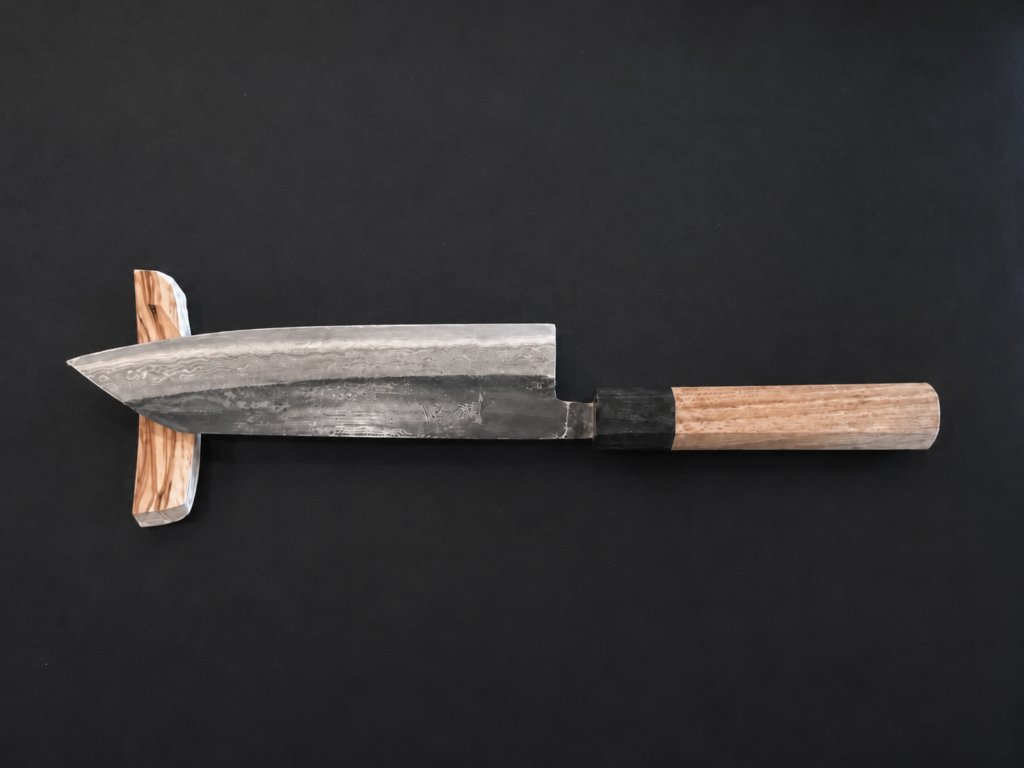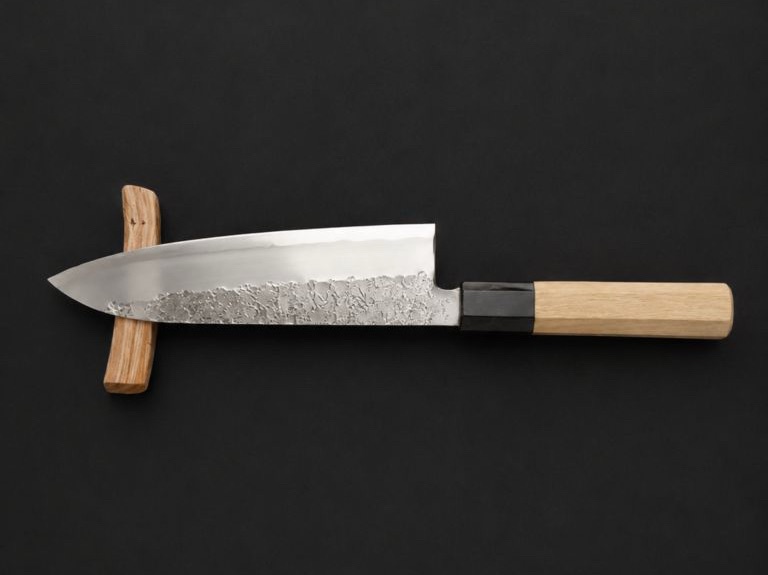
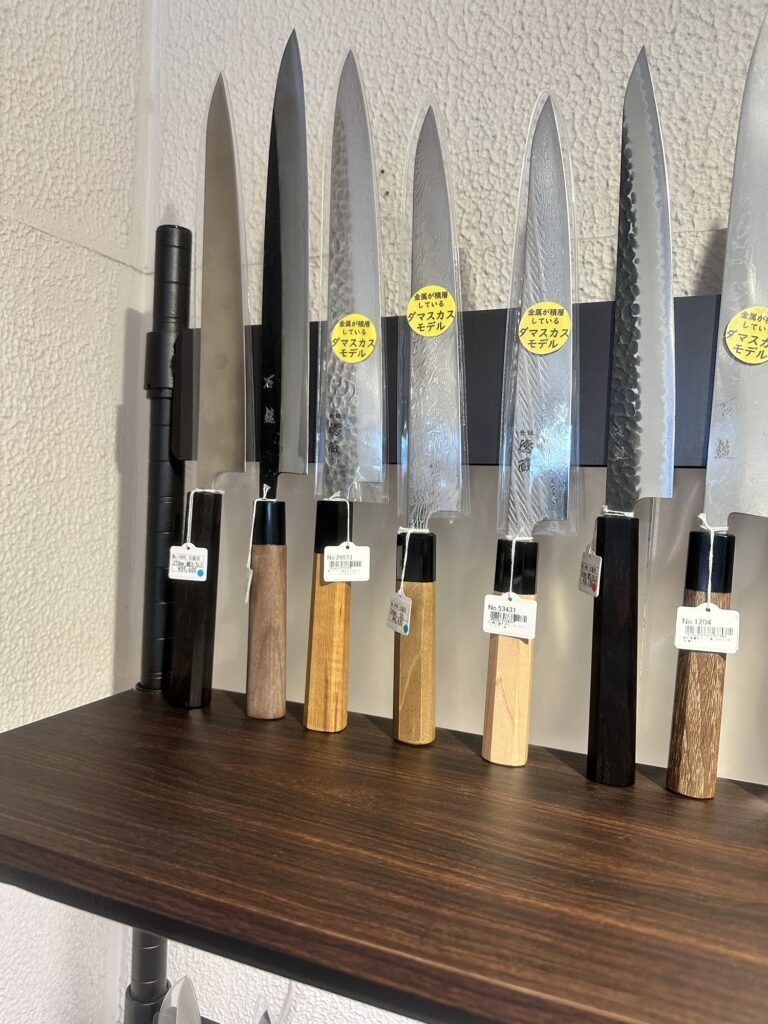
タグ: 180mm Santoku

  • Choosing Your First Japanese Knife: 5 Essential Lessons from a Chef

    Choosing Your First Japanese Knife: 5 Essential Lessons from a Chef

    Ishizuchi Kanamono Manufactory

    Choosing your first Japanese knife can be confusing. There are so many steels, shapes, sizes, brands and price ranges that it is easy to spend hours researching and still not know what to buy.

    So let me make my answer simple.

    If you are buying your first Japanese knife for general home cooking, I would start by looking at a 180mm Santoku or a 210mm Gyuto, preferably in an easy-to-maintain stainless steel such as VG10 or Ginsan.

    That does not mean these are the “best” Japanese knives. It means they are practical places to start.

    Interestingly, more than 25 years ago, my own first Japanese knives were quite similar to what I would still recommend today.

    If you are looking for Japanese knives in Australia, you can also explore our current range here:

    👉 Japanese Knives Australia — Explore our collection

    Choosing Your First Japanese Knife: My Own First Choice
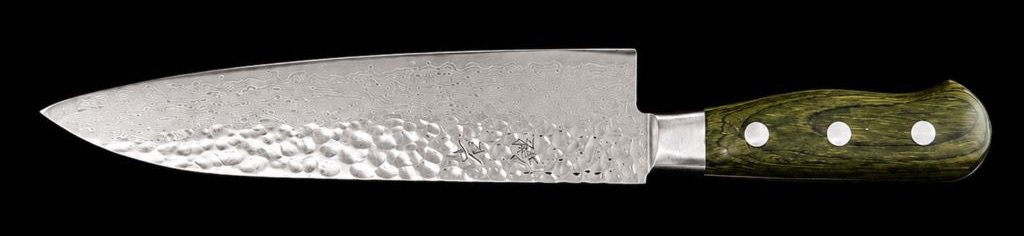

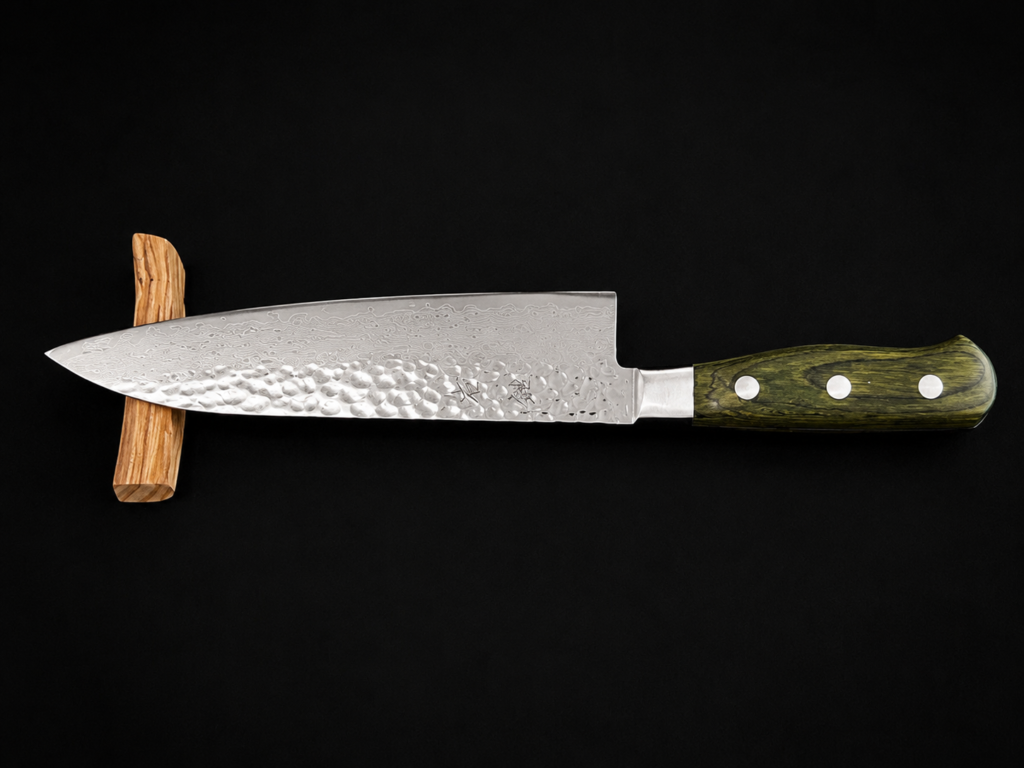
    210mm Gyuto VG10 Polished Hammered 67 Layer Damascus Green Handle

    135mm Petty VG10 Polished Hammered 67 Layer Damascus Green Handle

    The first Japanese knives I bought for myself were a 210mm Damascus Gyuto and a Petty knife from the same series. If I remember correctly, the steel was probably VG10.

    At the time, I certainly did not understand knife steels the way I do now. I was not comparing every specification or thinking deeply about hardness, edge retention or steel composition.

    I simply bought knives that I wanted to use.

    Looking back after more than 25 years in professional kitchens, however, I think the basic combination actually made a lot of sense.

    A 210mm Gyuto can handle meat, fish and vegetables. The Petty takes care of smaller and more detailed jobs. Between those two knives, you can handle a huge amount of everyday kitchen work.

    👉 INTERNAL LINK: 探究 Tankyū | What Does VG10 Actually Mean?

    Should Your First Japanese Knife Be a Gyuto or Santoku?


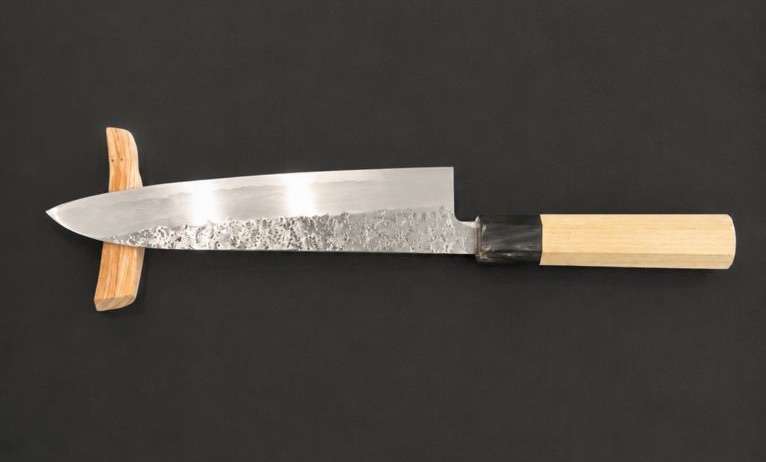
    210mm Gyuto Ginsan Nashiji Forged Magnolia Octagonal Handle Buffalo Horn Ferrule
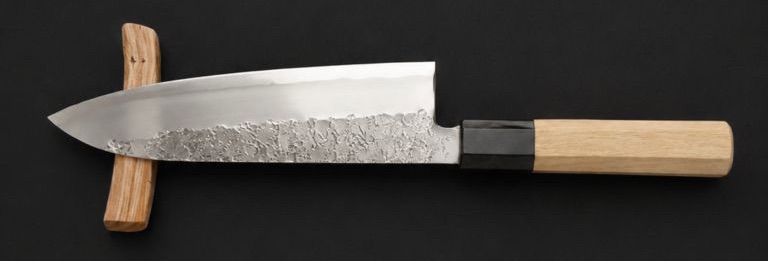
    180mm Santoku Ginsan Nashiji Forged Magnolia Octagonal Handle Buffalo Horn

    For someone choosing their first Japanese knife, this is probably one of the most useful questions to answer.

    If you have enough bench space and are comfortable with a slightly longer blade, I think a 210mm Gyuto is an excellent starting point. The extra blade length becomes especially useful when cutting larger pieces of meat, fish or vegetables, because you can use a longer cutting stroke.

    👉 INTERNAL LINK: [Gyuto vs Santoku — Which Japanese Knife Is Right for You?]

    For a smaller home kitchen, or if 210mm simply feels too large, I would look at a 180mm Santoku.

    A Santoku is compact, comfortable and capable of handling meat, fish and vegetables. For many home cooks, it may be all the knife they really need.

    Neither one is automatically better.

    The question is which one makes more sense in your kitchen.

    Choosing Your First Japanese Knife Steel
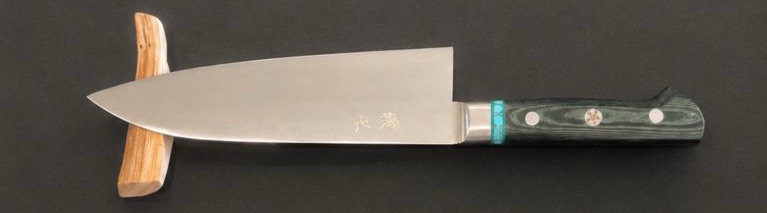

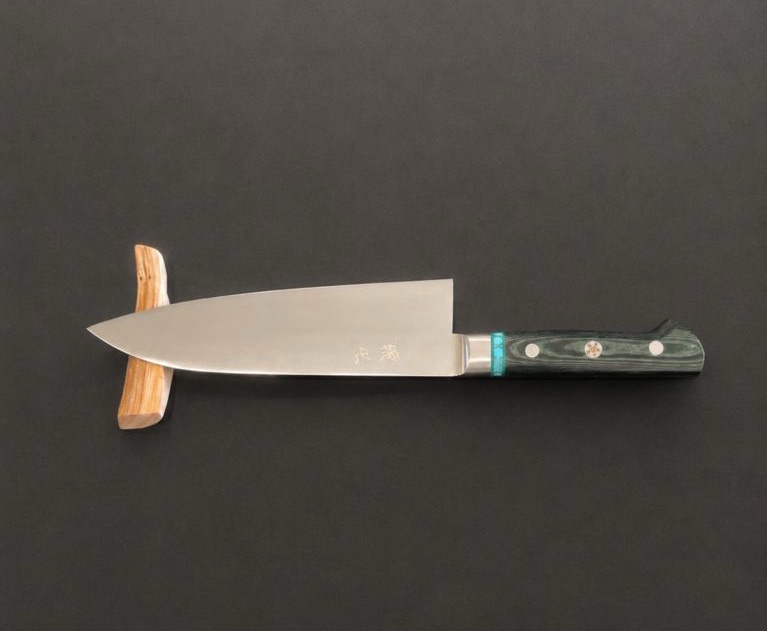
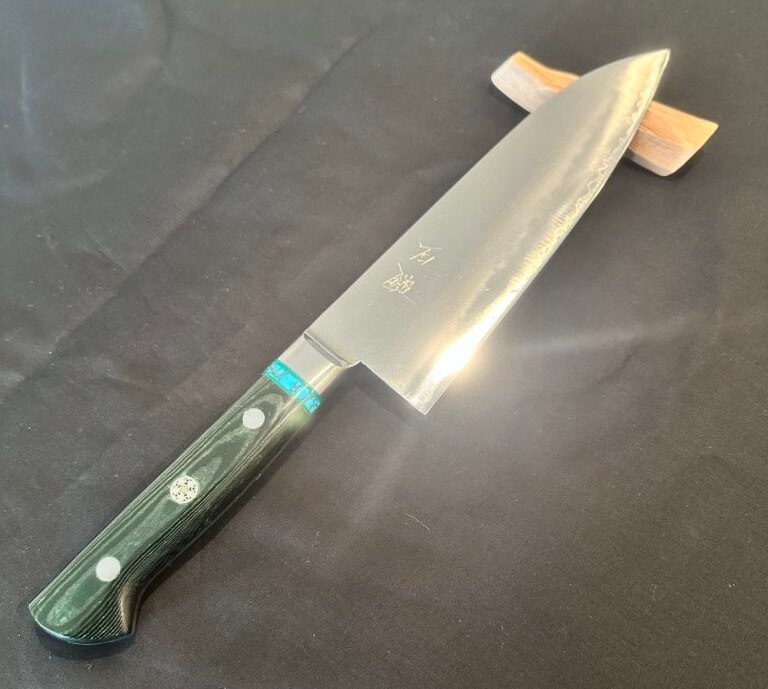
    180mm Santoku Aogami #2 Green Micarta Handle with Turquoise Spacer
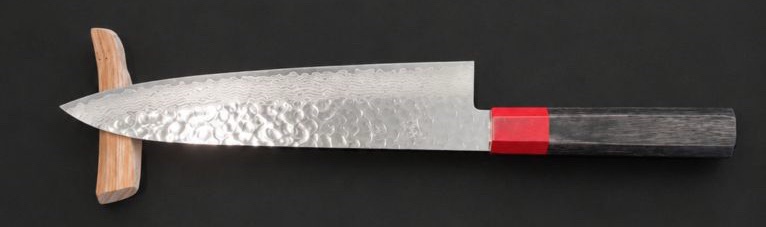
    165mm Santoku A10 Damascus Black & Red Octagonal Handle
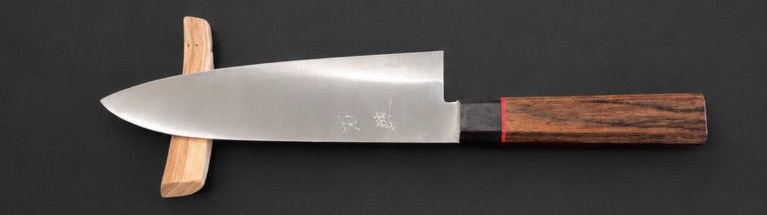
    180mm Santoku SG2 Rosewood Octagonal Handle

    Steel names can make buying a Japanese knife unnecessarily intimidating.

    VG10, Ginsan, Blue #2, Blue Super, SG2 — the list goes on.

    For a beginner, I would not start by asking which steel can become the sharpest.

    I would ask: How much maintenance do you want?

    For many first-time buyers, VG10 or Ginsan makes a lot of sense. Both offer excellent performance while being stainless and relatively easy to live with.

    👉 INTERNAL LINK: [Japanese Knife Steel — Understanding the Different Steels Used in Japanese Knives]

    I personally enjoy carbon steels such as Blue #2, especially for certain cutting jobs. But carbon steel requires more attention to moisture and maintenance.

    That does not make it unsuitable for beginners. It simply means you should understand what you are buying.

    👉 INTERNAL LINK:Aogami and Shirogami | 7 Fascinating Things I Learned About Blue and White Paper Steel

    Choosing Your First Japanese Knife Does Not Mean Buying the Most Expensive One
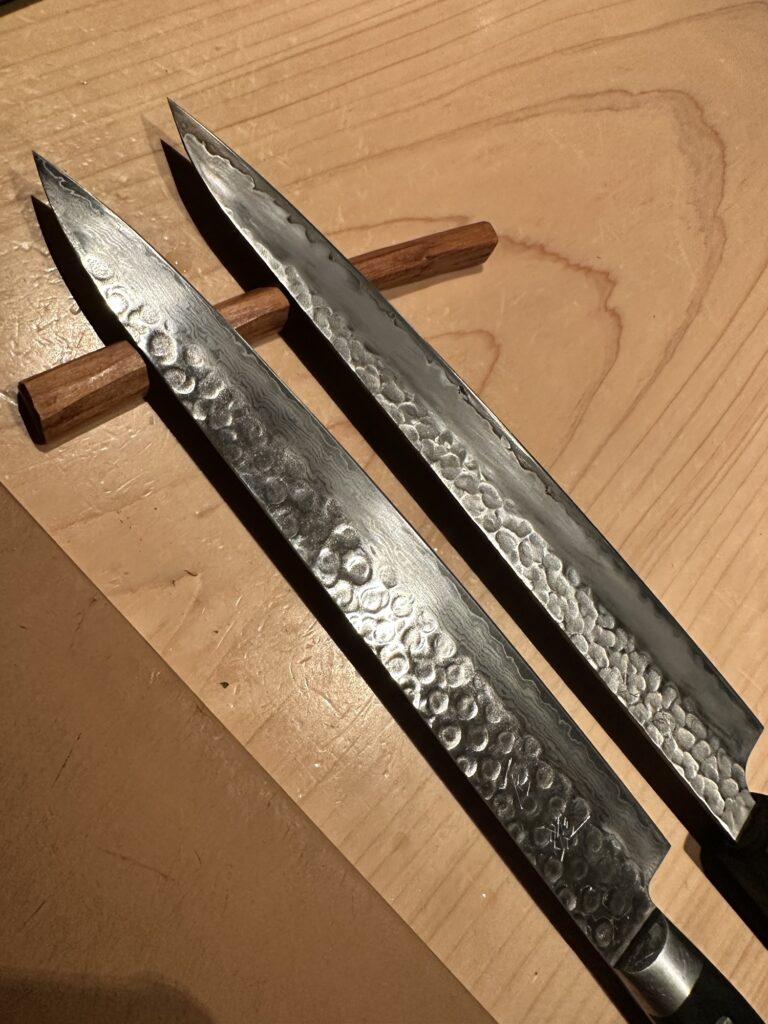

    240mm Sujihiki VG10 Hammered 17 Layer Damascus Mahogany

    There is another reason I do not think beginners should become too obsessed with specifications or prestige.

    Years ago, I took one of my knives back to a knife shop to have it sharpened.

    The person there almost laughed at it.

    I still remember that experience.

    Maybe, from his perspective, it was not a particularly special knife. But I had bought it, used it professionally and relied on it to do my job.

    That experience taught me something I still believe today.

    A knife does not need to impress another knife enthusiast. It needs to work for the person holding it.

    After more than 25 years as a chef, I have used carbon steel, stainless steel, Yanagiba, Gyuto, Sujihiki and many other knives. Today, one of the knives I use most at the sushi counter is a VG10 Sujihiki.

    Not because VG10 is the most prestigious steel.

    It simply works for what I do.

    👉 INTERNAL LINK: 真価 Shinka | 7 Powerful Truths About a New Japanese Knife’s Real Potential

    What About a Petty as Your Second Japanese Knife?


    120mm Petty Ginsan Nashiji Forged Magnolia Octagonal Handle Buffalo Horn Ferrule

    Once you have your main knife, my next choice would probably be a Petty.

    A Petty around 120–135mm is useful for smaller ingredients and detailed preparation where a 180mm or 210mm knife feels unnecessarily large.

    Interestingly, this is also what I did with my first Japanese knives: a Gyuto and a Petty.

    I did not understand it this way at the time, but looking back, they complemented each other extremely well.

    My Advice for Choosing Your First Japanese Knife
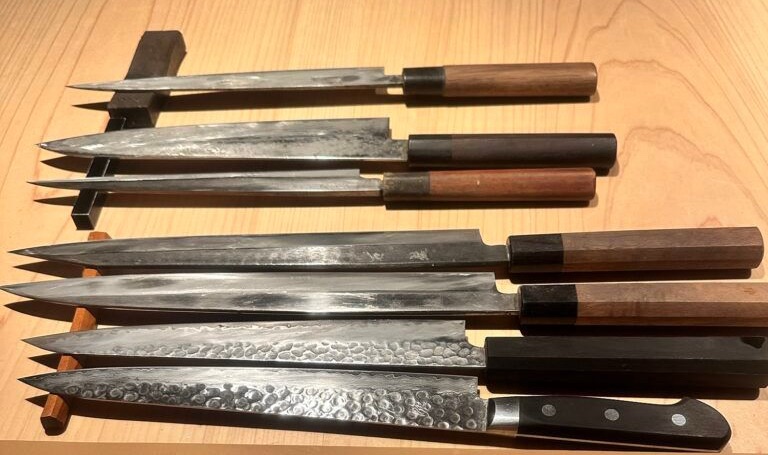
    After more than 25 years in professional kitchens, my advice is actually simpler than it would have been when I was younger.

    For general home cooking, start with a 180mm Santoku or 210mm Gyuto.

    If you want easy maintenance, look seriously at VG10 or Ginsan.

    Then, if you want a second knife, consider a 120–135mm Petty.

    If you mainly prepare vegetables, a Nakiri may make more sense. If you regularly slice fish or meat in long clean strokes, you may eventually want to explore a Sujihiki.

    But you do not need to start there.

    When choosing your first Japanese knife, do not worry too much about owning the knife with the highest hardness, the most expensive steel or the most impressive specifications.

    Start with a knife that fits your kitchen and the food you actually cook.

    More than 25 years after buying my first 210mm Gyuto and Petty, that is still where I would begin.

    👉 Explore more:
    https://blog.asaoyayaichi.com.au

    👉 Visit our online store:
    https://asaoyayaichi.com.au

    Thank you for reading, and I hope to see you again in the next story.

    —————————————————​

    Where to See and Buy Our Knives

    Our Partner Stores

    Chanoyu — Nerang, Gold Coast

    Visit Chanoyu and See Our Japanese Knives

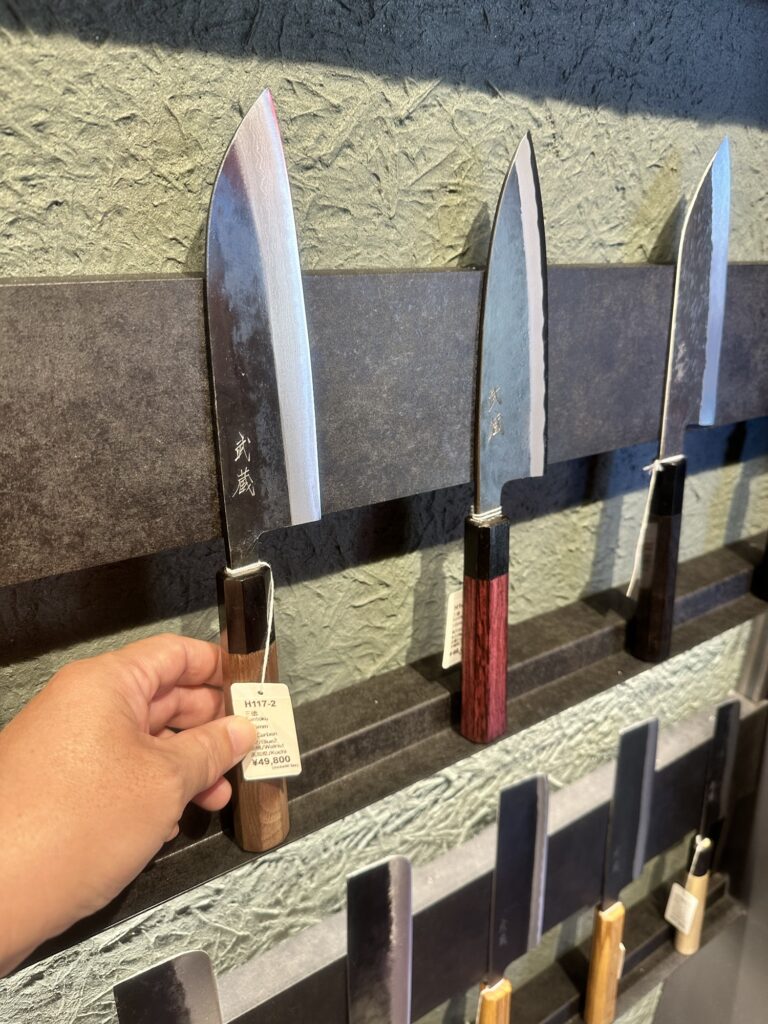
    If you are on the Gold Coast, we would love you to visit Chanoyu, a Japanese café in Nerang where you can see and purchase a selection of Asaoya Yaichi knives in person.

    Chanoyu is a lovely place to slow down and enjoy Japanese-inspired food, excellent matcha, coffee and handmade desserts. Its warm, peaceful atmosphere makes it a pleasure to visit, whether you are stopping in for breakfast, lunch or something sweet. We are delighted that our knives have a place there.
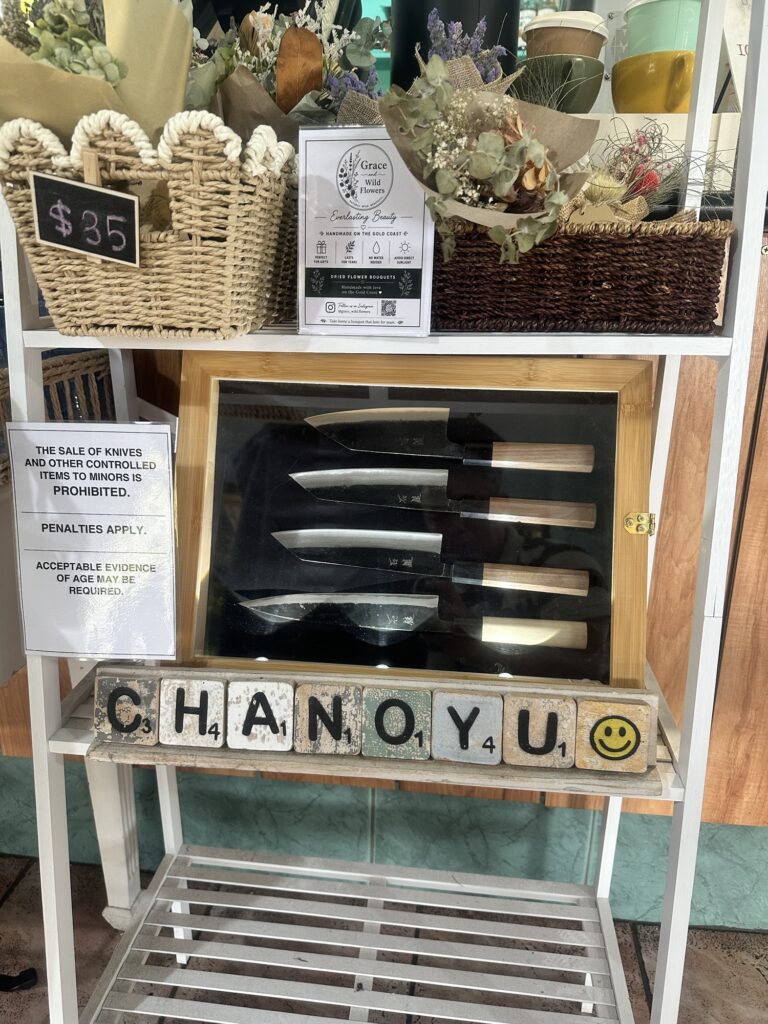
    Visit Chanoyu: Shop 6A, 54–58 Nerang Street, Nerang QLD 4211

    Opening hours: Monday to Saturday, 7:00 am–2:00 pm; closed Sunday

    Website: https://www.chanoyucafe.com/

    Instagram: https://www.instagram.com/chanoyugc/

    The selection of knives on display may change. If you are interested in a particular Asaoya Yaichi knife, please contact us through https://asaoyayaichi.com.au before visiting, and we will help you check whether it is available at Chanoyu.
  • Nakiri vs Santoku: 3 Essential Lessons from My Kitchen

    Nakiri vs Santoku: 3 Essential Lessons from My Kitchen


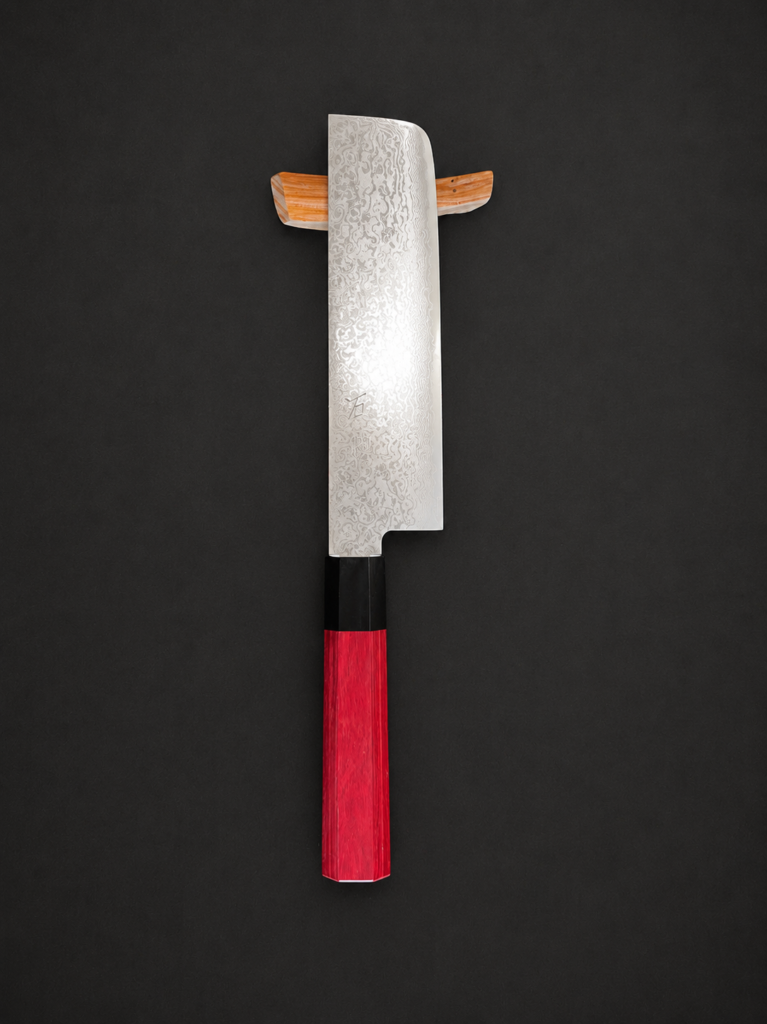
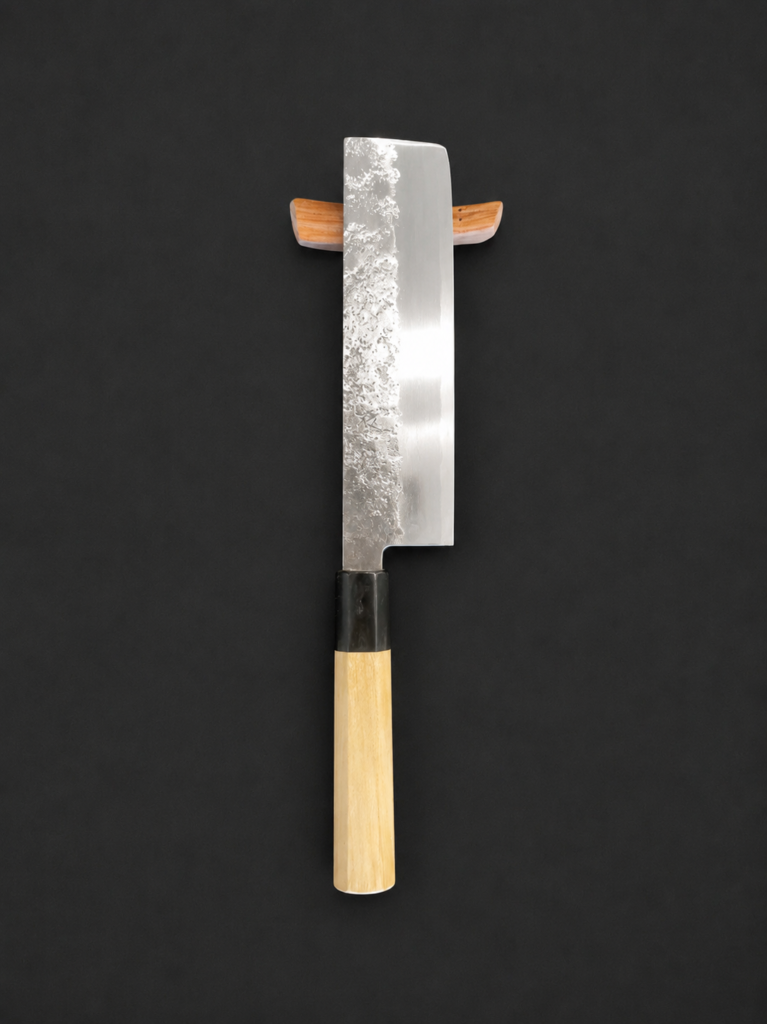
    165mm Nakiri Ginsan Nashiji Forged Magnolia Octagonal Handle Buffalo Horn Ferrule

    Nakiri vs Santoku is a comparison I think about differently after more than 25 years as a professional chef. Both cut vegetables. I notice the difference when I want a straight line or turn a daikon for katsuramuki. Then the edge shape becomes something I can feel. The same vegetable can make two knives feel surprisingly different in my hands when the goal is a precise shape rather than speed.

    If you are looking at Japanese knives in Australia, you can explore the knives I have selected for Asaoya Yaichi here: https://asaoyayaichi.com.au. Before choosing a shape, I would think about the work you actually do on your cutting board.

    Nakiri vs Santoku: Straight Cuts on the Board


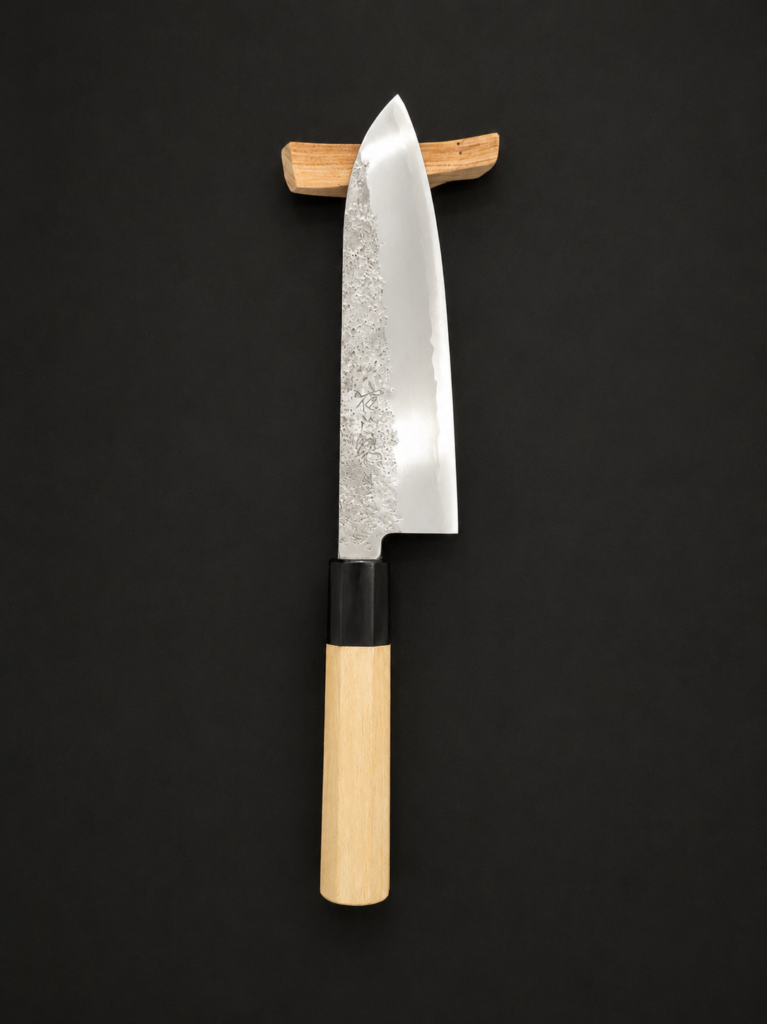
    180mm Santoku Ginsan Nashiji Forged Magnolia Octagonal Handle Buffalo Horn

    When I cut a vegetable into neat rectangular strips, a nakiri’s relatively straight edge gives me a clear line to follow. I can use a controlled push cut and watch where the edge meets the board. With short, rectangular pieces, even a slight change in the direction of a cut is easy to see. I find myself paying attention to the line all the way through the vegetable.

    A santoku can certainly make the same cuts. I have used santoku knives for vegetable preparation throughout my career. But some curve more toward the tip, and I may adjust my motion to keep a series of cuts consistent.

    The knife does not make the strips straight by itself. My preparation, grip, sharpening and cutting technique matter too. Still, that straight edge is why I might choose a nakiri when a tidy result matters.

    👉 Read my beginner’s guide to choosing a Japanese knife.⁠

    Blade thickness also changes how a knife moves through a vegetable. A straight outline alone cannot tell me whether a particular knife will feel good in use.

    👉 See what I learned about Japanese knife thickness.⁠

    Katsuramuki Makes Me Notice the Blade Shape

    Nakiri vs Santoku for Katsuramuki


    165mm Usuba A8 Hammered Damascus Black & Red Octagonal Handle

    Katsuramuki means turning a vegetable, often a daikon, while peeling off a long, thin sheet. I watch the edge, turn the vegetable and try to keep an even thickness. It demands control.

    In my experience, the straighter edge of a nakiri is easier to follow during this work. When I use a more curved section of a santoku, the peel can start to wander or curve away from the line I want. That is the practical difference I feel. Once a long peel starts moving away from my intended line, correcting it without breaking the sheet becomes difficult. A santoku can still do katsuramuki.

    In fact, the straighter section near the heel of some santoku knives can also be used for peeling. The result depends on the individual knife and the way it is handled. For traditional, highly refined vegetable work, a single-bevel usuba is another specialised choice. A nakiri is generally double bevel, so I would not present it as a substitute for every technique an usuba is designed to perform.

    👉 Read my guide to single and double bevel Japanese knives.⁠

    Nakiri vs Santoku When There Is Room for Only One


    180mm Santoku Aogami #2 Green Micarta Handle with Turquoise Spacer

    The straight edge has a real purpose, but a kitchen does not consist of daikon and rectangular vegetable cuts alone. I might prepare onions and greens, then portion boneless meat or fish for the same meal. A santoku makes sense for that changing workload. Its pointed tip helps with some detail work, while the blade moves between ingredients.

    If someone in Australia asked me to recommend just one Japanese knife for everyday home cooking, I would usually start by discussing a santoku or a gyuto. The choice depends on board space, ingredients and cutting style. A nakiri becomes more interesting when vegetable preparation is a regular part of their cooking and they value the way its straight edge behaves.

    👉 Read my Santoku vs Gyuto comparison for another everyday-knife decision.⁠

    I notice the nakiri’s advantage when making straight strips or holding a line during katsuramuki. Someone preparing a wide range of meals may value the santoku’s flexibility more. The name of the knife alone cannot tell me which one belongs in a particular kitchen. I also consider the actual blade, its weight and the person holding it.

    That is how I would choose between them: by the cut in front of me, not by a label on the knife. If you are still weighing up different shapes, I have written more about the knives I would choose for Australian kitchens.

    👉 Read Japanese Knives Australia: 5 Powerful Choices I Would Make After 25 Years as a Professional Chef.⁠

    👉 Explore more:
    https://blog.asaoyayaichi.com.au

    👉 Visit our online store:
    https://asaoyayaichi.com.au

    Thank you for reading, and I hope to see you again in the next story.

    ——————————————-—

    Where to See and Buy Our Knives

    Our Partner Stores

    Chanoyu — Nerang, Gold Coast

    Chanoyu Goldcoast

    Visit Chanoyu and See Our Japanese Knives

    If you are on the Gold Coast, we would love you to visit Chanoyu, a Japanese café in Nerang where you can see and purchase a selection of Asaoya Yaichi knives in person.

    Chanoyu is a lovely place to slow down and enjoy Japanese-inspired food, excellent matcha, coffee and handmade desserts. Its warm, peaceful atmosphere makes it a pleasure to visit, whether you are stopping in for breakfast, lunch or something sweet. We are delighted that our knives have a place there.

    Visit Chanoyu: Shop 6A, 54–58 Nerang Street, Nerang QLD 4211

    Opening hours: Monday to Saturday, 7:00 am–2:00 pm; closed Sunday

    Website: https://www.chanoyucafe.com/

    Instagram: https://www.instagram.com/chanoyugc/

    The selection of knives on display may change. If you are interested in a particular Asaoya Yaichi knife, please contact us through https://asaoyayaichi.com.au before visiting, and we will help you check whether it is available at Chanoyu.
  • Japanese Knives Australia Ranking: 5 Exceptional Knives I Would Choose After 25 Years as a Chef

    Japanese Knives Australia Ranking: 5 Exceptional Knives I Would Choose After 25 Years as a Chef

    Asaoya Yaichi

    Choosing a Japanese knife is highly personal. Steel, balance, blade shape, handle design and even appearance can completely change how a knife feels in your hand. After more than 25 years working in professional kitchens, I have learned that the knife I personally want is not always the most expensive one.

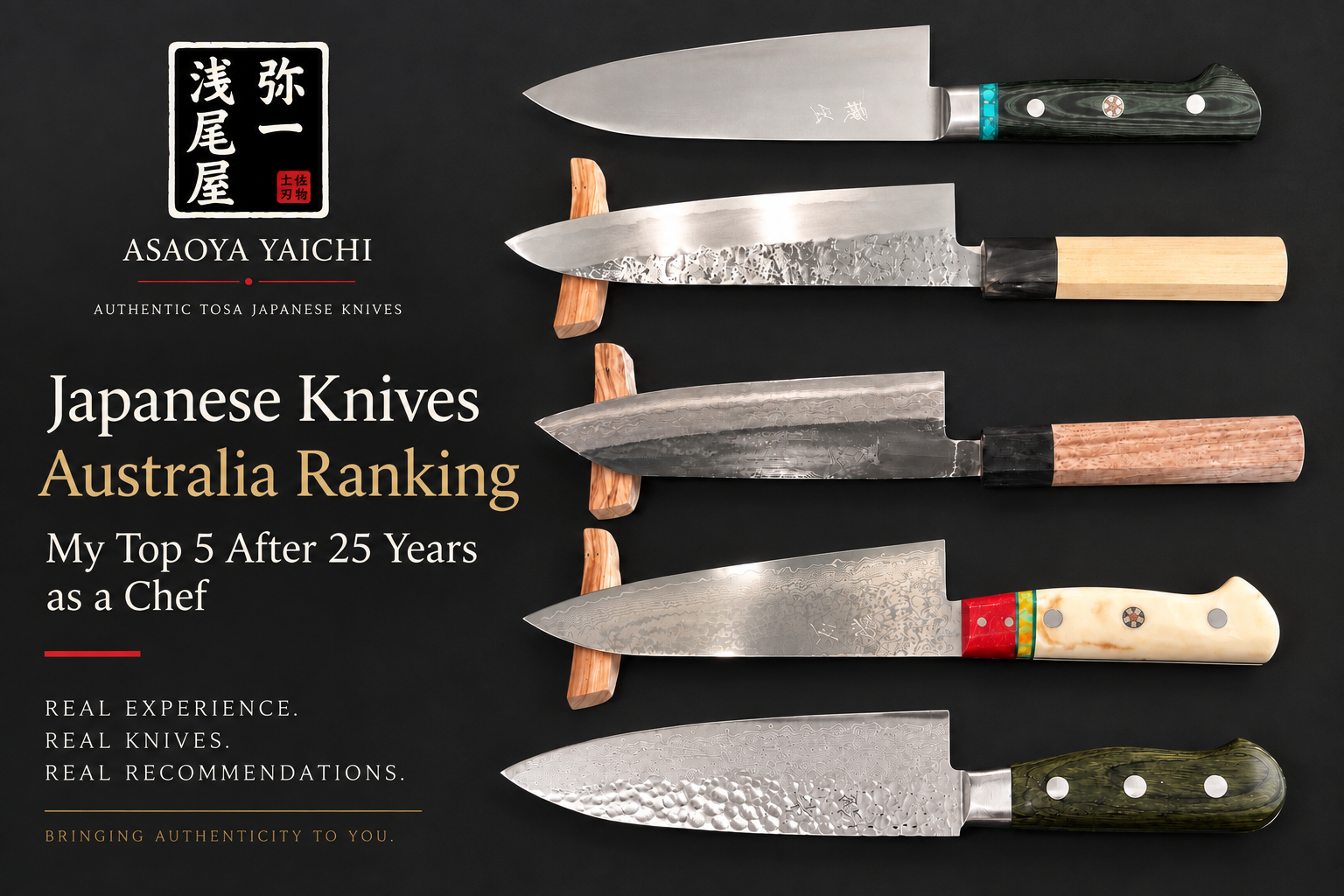
    That is why I wanted to create my own Japanese Knives Australia Ranking. Rather than ranking knives purely by price or specifications, these are five knives from the Asaoya Yaichi collection that stand out to me through a combination of usability, craftsmanship, steel, rarity and character.

    If you are currently looking for Japanese knives in Australia, you can also see our collection here:

    👉 https://asaoyayaichi.com.au

    Japanese Knives Australia Ranking — Why These 5?

    Ishizuchi Kanamono Manufactory

    There are many excellent Japanese knives available today, so this ranking is deliberately personal. I am looking at these knives from the perspective of someone who has spent decades actually using knives in professional kitchens.

    Some knives impress me because of their practicality. Others because of traditional Japanese craftsmanship. And sometimes there is simply a knife that makes you think, “I want that one.”

    👉 INTERNAL LINK: Read “Is an Expensive Japanese Knife Really Worth It?” here.

    No. 5 — 210mm Gyuto VG10 Polished Hammered 67 Layer Damascus Green Handle


    210mm Gyuto VG10 Polished Hammered 67 Layer Damascus Green Handle

    At number five in my Japanese Knives Australia Ranking is a 210mm Gyuto made from VG10 stainless steel with a polished hammered 67-layer Damascus finish.

    This is what I would call a dependable all-rounder. A 210mm Gyuto is extremely versatile in both professional and home kitchens, while VG10 offers a practical combination of edge retention, corrosion resistance and ease of maintenance.

    The Damascus pattern and green handle also make this knife visually impressive without sacrificing everyday usability.

    Personally, I would be very tempted to purchase this Gyuto together with the matching Petty. As a set, they cover an enormous amount of everyday kitchen work while looking fantastic together.

    👉 INTERNAL LINK: Read “Hand-Forged vs Machine-Made Japanese Knives” here.

    No. 4 — 180mm Santoku VG10N 33 Layer Damascus Green Marble Handle Rainbow Spacer


    180mm Santoku VG10N 33 Layer Damascus Green Marble Handle Rainbow Spacer Orange

    Number four is something quite different.

    This 180mm Santoku combines VG10N steel with 33-layer Damascus, a Green Marble handle and a Rainbow Spacer.

    The marble-style handle immediately catches the eye, but what makes this knife particularly interesting to me is its rarity. Japanese knives with this combination of blade and handle design are not something you see everywhere.

    The 180mm Santoku size is also highly practical. It gives you enough blade for serious preparation while remaining comfortable and controllable for everyday cooking.

    For someone wanting a Japanese knife that feels genuinely different from the usual choices, this is a special piece.

    👉 INTERNAL LINK: Read “Most Popular Japanese Knife Souvenirs” here.

    No. 3 — 180mm Kiritsuke Aogami #2 Kurouchi Walnut Octagonal Handle


    180mm Kiritsuke Aogami #2 Kurouchi Walnut Octagonal Handle

    If I ranked these knives purely on usability, this could easily be number one.

    I have written about this knife before because I genuinely think its shape is exceptionally easy to use. The Aogami #2 carbon steel is also a steel I personally enjoy working with.

    But what gives this knife its character is the Kurouchi finish.

    The dark, rustic surface carries the character I associate with traditional Tosa knives. It does not try to look overly polished or perfect. For people who understand Japanese knives, that simplicity is part of the attraction.

    This knife is also currently available to see at Chanoyu cafe on the Gold Coast.

    👉 INTERNAL LINK: Read my article about the 180mm Kiritsuke Aogami #2 here.

    No. 2 — Gyuto Ginsan Nashiji Forged Magnolia Octagonal Handle Buffalo Horn Ferrule


    Gyuto Ginsan Nashiji Forged Magnolia Octagonal Handle Buffalo Horn Ferrule

    Number two in my Japanese Knives Australia Ranking is our Ginsan Nashiji Gyuto.

    This knife represents something very different from the modern Damascus designs above. Quality Ginsan stainless steel, a Nashiji finish, forged construction, Magnolia octagonal handle and Buffalo Horn ferrule come together in a knife that feels unmistakably Japanese.

    Interestingly, when I take our knives to businesses and show them in person, this Ginsan series consistently attracts attention. Many of the people I speak with immediately want to know more about it.

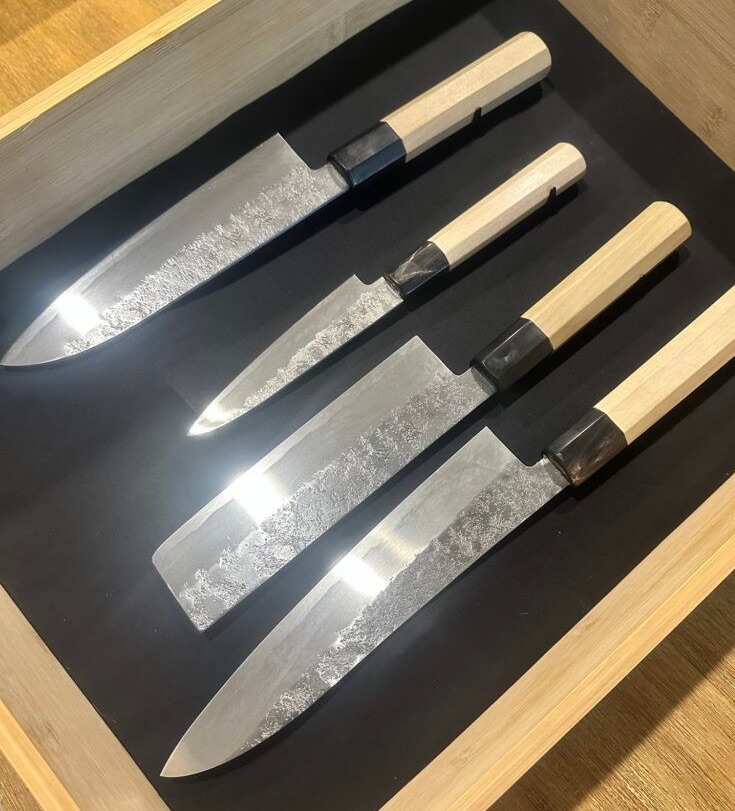
    We also carry this style in Gyuto, Santoku, Petty and Nakiri, making it particularly attractive for someone who wants to build a matching Japanese knife set rather than purchase just one knife.

    👉 INTERNAL LINK: Read our article about Ginsan steel and Nashiji-finished Japanese knives here.

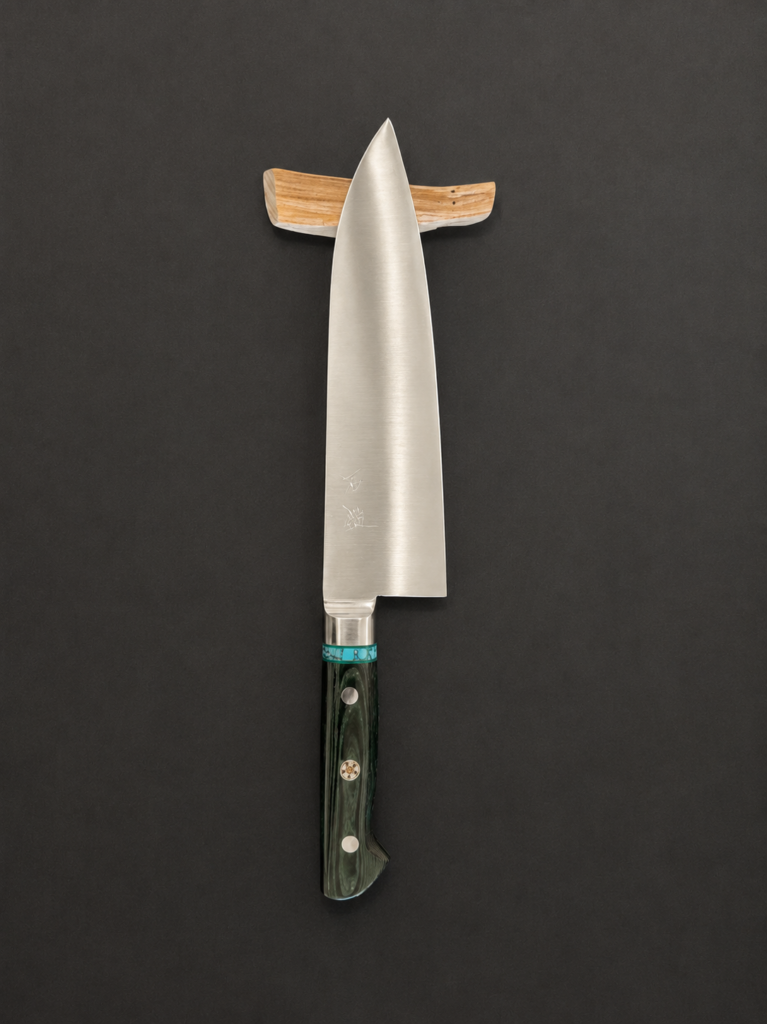
    No. 1 — 180mm Santoku Aogami #2 Green Micarta Handle with Turquoise Spacer


    180mm Santoku Aogami #2 Green Micarta Handle with Turquoise Spacer

    My number one choice is the 180mm Santoku Aogami #2 with Green Micarta Handle and Turquoise Spacer.

    I have featured this knife before, and my opinion has not changed.

    For me, it is simply the coolest knife in the collection.

    The turquoise band running through the handle immediately catches the eye, while Aogami #2 is one of my favourite steels. What I particularly like is the contrast between these elements.

    Aogami #2 represents a very traditional Japanese carbon steel, yet the Green Micarta and turquoise give the knife a modern personality. At the same time, the polished blade still retains a subtle, restrained character that reminds me of Japanese wabi-sabi rather than excessive decoration.

    It is traditional and contemporary at the same time.

    After more than 25 years working with kitchen knives, I have handled plenty of expensive and impressive blades. But if I were choosing one knife from the Asaoya Yaichi collection for myself, this is the one I would want.

    That is why it takes first place in my Japanese Knives Australia Ranking.

    👉 INTERNAL LINK: Read my previous article featuring the Aogami #2 Santoku with Green Micarta and Turquoise Spacer here.

    Final Thoughts on My Japanese Knives Australia Ranking

    This is not a ranking based simply on price. It reflects what I personally value after more than 25 years in professional kitchens: usability, steel, craftsmanship, individuality and the feeling a knife gives you when you pick it up.

    Your number one may be completely different from mine — and that is part of what makes Japanese knives so interesting.

    A knife is a tool, but a good knife can also become something personal. Among these five, there are knives I admire, knives I would recommend for their practicality and knives I simply want to own.

    And sometimes, that final feeling matters most.

    👉 Explore more:
    https://blog.asaoyayaichi.com.au

    👉 Visit our online store:
    https://asaoyayaichi.com.au

    Thank you for reading, and I hope to see you again in the next story.

  • Japanese Knives Australia: 5 Powerful Choices I Would Make After 25 Years as a Professional Chef

    Japanese Knives Australia: 5 Powerful Choices I Would Make After 25 Years as a Professional Chef

    Asaoya Yaichi

    When people search for Japanese Knives Australia, they are often faced with an enormous choice of steels, shapes, finishes and prices. After more than 25 years working in professional kitchens in Japan and Australia, I look at knives a little differently. I am less interested in what sounds impressive on paper and more interested in what I would actually want beside me during a long day in the kitchen.

    If you are looking for Japanese knives in Australia, you can also explore the current Asaoya Yaichi collection here:

    👉 Visit our online store:
    https://asaoyayaichi.com.au

    For me, a good knife collection should not simply look beautiful. Each knife should have a purpose, feel comfortable in the hand and be something I genuinely want to use.

    Japanese Knives Australia: My First Choice Would Be Ginsan Nashiji


    Ginsan Nashiji Forged Magnolia Octagonal Handle Buffalo Horn

    If I were building a professional set from the current Asaoya Yaichi range, I would seriously consider starting with Ginsan steel with a Nashiji finish.

    Ideally, I would like a Gyuto, Petty, Nakiri and Santoku in this combination.

    Ginsan, also known as Silver #3, offers an excellent balance for professional work. I like the idea of having the performance and sharpening characteristics associated with a quality Japanese knife while gaining the practical advantage of stainless steel.

    The Nashiji finish is another reason I like this combination. Its subtle, textured appearance has character without being overly decorative. For me, these are knives that can look beautiful while still feeling like serious working tools.

    👉 INTERNAL LINK: Add a link here to the existing Ginsan steel article.

    The Nashiji finish itself also has an interesting place in Japanese knife making.

    Japanese Knives Australia and the Practical Appeal of VG10


    VG10 Polished Hammered 67 Layer Damascus Green Handle

    Another set I would be very comfortable using is our VG10 series with green handles.

    A Gyuto, Petty and Santoku would already cover a huge amount of everyday kitchen work. VG10 is familiar to many people looking for Japanese knives in Australia, and from my experience, a properly sharpened VG10 knife can perform extremely well.

    I currently use a VG10 Sujihiki myself, and that experience is part of why I do not judge a knife only by the reputation or price of its steel. Sharpening, geometry and how the knife is actually used matter enormously.

    👉 INTERNAL LINK: Add a link here to Monozukuri | Where Japanese Craftsmanship Meets Quiet Beauty

    My Personal Choice: Aogami #2 with Turquoise


    180mm Santoku Aogami #2 Green Micarta Handle with Turquoise Spacer

    Then there is the choice that is harder for me to ignore personally: Aogami #2 with a turquoise handle.

    I have used carbon steel extensively during my career, and I still have a particular appreciation for Aogami #2. It requires more care than stainless steel, but for someone comfortable maintaining carbon steel, it can be extremely rewarding.

    The turquoise detail also gives the knife a personality of its own. If I were choosing purely according to my own taste rather than trying to create the most practical matching set, this would be very difficult for me to leave behind.

    Carbon steel is not automatically the right choice for everyone, which is why understanding maintenance is important.

    👉 INTERNAL LINK: Add a link here to Samurai Century | The Finest Expression of Tosa Knife Craftsmanship, Passed Down Since the Age of the Chōsokabe Clan

    The 180mm Kurouchi Kiritsuke Is Still Hard to Beat


    180mm Kiritsuke Aogami #2 Kurouchi Walnut Octagonal Handle

    Purely from the perspective of usability, I also keep coming back to the 180mm Kurouchi Kiritsuke.

    I have written about this knife before because the size and shape make sense to me as a chef. At 180mm, it is large enough to handle serious preparation while remaining compact and controllable.

    For someone exploring Japanese Knives Australia and wanting one versatile knife rather than immediately building a complete set, this style deserves consideration.

    👉 INTERNAL LINK: Add a link here to “切付 | Japanese Knife for Chefs: 1 Powerful Choice After 25 Years in Professional Kitchens.”

    Japanese Knives Australia: Building a More Complete Professional Range

    Ishizuchi Kanamono Manufactory

    Looking at the Asaoya Yaichi range as a professional chef, I think we already have a very strong foundation. Gyuto, Santoku, Petty and Nakiri give both professional chefs and home cooks plenty of practical choices across Ginsan, VG10 and carbon steels.

    But I do not consider the collection finished.

    One area I particularly want to expand is traditional Japanese slicing knives. Yanagiba and Takohiki are important knives for sashimi and specialised fish work, and these are areas where I would like Asaoya Yaichi to offer more choice in the future.

    My goal is not to build the biggest collection of Japanese knives in Australia simply for the sake of having more products. I would rather develop a carefully selected range of knives that I can look at after more than 25 years in professional kitchens and genuinely say: I would use these myself.

    That principle will continue to guide how Asaoya Yaichi grows.

    👉 Explore more:
    https://blog.asaoyayaichi.com.au

    👉 Visit our online store:
    https://asaoyayaichi.com.au

    Thank you for reading, and I hope to see you again in the next story.

  • Best Japanese Knife to Buy in Japan: 7 Reasons Santoku Wins

    Best Japanese Knife to Buy in Japan: 7 Reasons Santoku Wins

    Kappabashi

    If you are travelling to Japan and love cooking, bringing home a Japanese kitchen knife can be much more meaningful than buying a typical souvenir. But with Gyuto, Santoku, Nakiri, Deba, Yanagiba and many other styles in front of you, which one should you choose?

    When people ask about the best Japanese knife to buy in Japan, I think the Santoku deserves serious consideration.

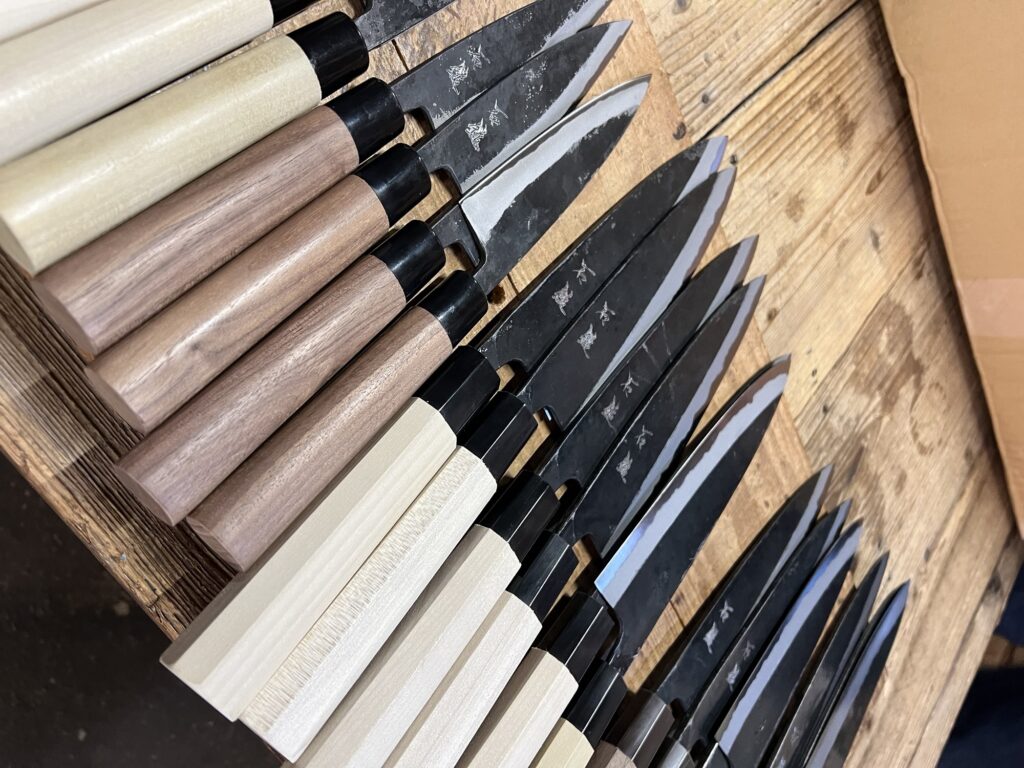
    I have worked as a professional chef for more than 25 years in Japan and Australia, and there is also something interesting I learned through the knife business. A sales representative from Ishizuchi Kanamono Seisakusho, the supplier I work with in Japan, once told me that many customers choose Santoku knives.

    That is also one reason why I stock relatively more Santoku knives at Asaoya Yaichi.

    Looking for an authentic Japanese knife in Australia?
    Explore our collection of Japanese knives selected directly from Japan.

    👉 Visit our online store:
    https://asaoyayaichi.com.au

    But why Santoku?

    The more I think about it as both a chef and a knife seller, the more the answer makes sense.

    Best Japanese Knife to Buy in Japan? Start With Versatility


    180mm Santoku VG10N 33 Layer Damascus Green Marble Handle Rainbow Spacer

    The word “Santoku” is commonly associated with three virtues or three uses: meat, fish and vegetables.

    That already explains much of its appeal.

    A traditional Yanagiba is wonderful for slicing sashimi. A Deba is designed for working with fish. A Nakiri is excellent for vegetables. These knives have strong individual identities, but their specialised nature may not suit someone who simply wants one Japanese knife for everyday cooking.

    A Santoku sits comfortably in the middle.

    You can prepare vegetables, portion meat, slice boneless fish and handle most normal kitchen preparation with the same knife.

    For someone buying only one knife in Japan, that versatility matters.

    👉 INTERNAL LINK: Read “Japanese Knife Names” here.

    The Size Makes Sense in a Home Kitchen


    180mm Santoku SG2 Rosewood Octagonal Handle

    Another important reason is blade length.

    Santoku knives are commonly around 165–180mm. That makes them noticeably more compact than many Gyuto knives and much shorter than traditional Yanagiba.

    For a professional chef working on a large cutting board, a 210mm or 240mm Gyuto may feel completely normal. At home, however, the extra length is not always necessary.

    A Santoku gives you enough blade for most ingredients without dominating a smaller cutting board.

    At Asaoya Yaichi, we stock a selection of 180mm Santoku knives because I believe this size offers a great balance — compact and comfortable enough for everyday home cooking, while still being practical and versatile enough for professional chefs.

    This is one reason I believe the Santoku works particularly well as the best Japanese knife to buy in Japan for someone who plans to actually use their souvenir rather than simply display it.

    Familiar Enough for Beginners


    180mm Santoku Aogami #2 Green Micarta Handle with Turquoise Spacer

    Many traditional Japanese knives are single bevel. They are fascinating tools, but they require a little more knowledge in both use and sharpening.

    Most Santoku knives are double bevel, making the transition much easier for someone accustomed to ordinary Western kitchen knives.

    That matters when buying a first Japanese knife.

    A beautiful knife is not particularly useful if the owner is afraid to use or sharpen it.

    👉 INTERNAL LINK: Read “Single vs Double Bevel Japanese Knives” here.

    Why I Stock More Santoku Knives

    Ishizuchi Kanamono Manufactory

    My decision to stock more Santoku knives at Asaoya Yaichi was not based purely on online trends.

    As mentioned earlier, a sales representative at Ishizuchi Kanamono Seisakusho told me that many people buying knives choose Santoku.

    That stayed in my mind.

    After more than 25 years in professional kitchens, I could understand why. It is simply a very practical shape for everyday cooking.

    So when selecting knives for Australia, I naturally included more Santoku options.

    I am not saying everyone should buy a Santoku. Someone who regularly breaks down fish may prefer a Deba. Someone slicing sashimi may want a Yanagiba. A chef comfortable with longer blades may prefer a Gyuto.

    The right knife always depends on the person using it and what they actually cook.

    👉 INTERNAL LINK: Read “Hand-Forged vs Machine-Made Japanese Knives” here.

    Best Japanese Knife to Buy in Japan Can Still Feel Japanese


    180mm Kiritsuke Aogami #2 Kurouchi Walnut Octagonal Handle

    There is another side to this question: emotion.

    When someone buys a knife while travelling through Japan, they may want more than functionality. They may want something that reminds them of Japan when they return home.

    This is where finishes such as Kurouchi become interesting.

    I recently showed Kurouchi knives to a café owner here in Australia. His reaction was that this was the kind of Japanese-looking knife he wanted to display.

    That reminded me that overseas customers sometimes see Japanese knives differently from Japanese customers.

    A Santoku with a traditional Japanese handle, hand-forged character or Kurouchi finish can combine two things beautifully: everyday practicality and a distinctly Japanese appearance.

    👉 INTERNAL LINK: Read “Tosa Knives and Kurouchi — Why Is This Finish So Common?” here.

    The Story Behind the Knife Matters Too


    165mm Santoku A10 Damascus Black & Red Octagonal Handle

    There are famous knife-producing regions throughout Japan, including Sakai, Seki, Echizen and Tosa. Each developed its own history and relationship with blade making.

    For me, this is part of what makes buying a Japanese knife special.

    You are not simply choosing steel and blade length. You can also discover where it came from, how it was made and why that particular style developed.

    That story can turn a kitchen tool into something you keep and use for decades.

    👉 INTERNAL LINK: Read “Knife Regions of Japan — Do Origins Really Matter?” here.

    My Answer After 25 Years in Kitchens


    180mm Santoku Ginsan Nashiji Forged Magnolia Octagonal Handle Buffalo Horn

    So, what is the best Japanese knife to buy in Japan?

    There is no single knife that is perfect for everyone.

    But if you are looking for one Japanese knife to take home, especially for everyday household cooking, I believe a Santoku is one of the safest and most practical choices.

    It is compact without being too small, versatile without being boring, beginner-friendly while still being used by professionals, and unmistakably connected to Japanese kitchen culture.

    Perhaps that is why so many people choose one.

    Sometimes the best souvenir is not something you put on a shelf.

    It is something you use every day — and every time you pick it up, it reminds you where it came from.

    👉 Explore more:
    https://blog.asaoyayaichi.com.au

    👉 Visit our online store:
    https://asaoyayaichi.com.au

    Thank you for reading, and I hope to see you again in the next story.