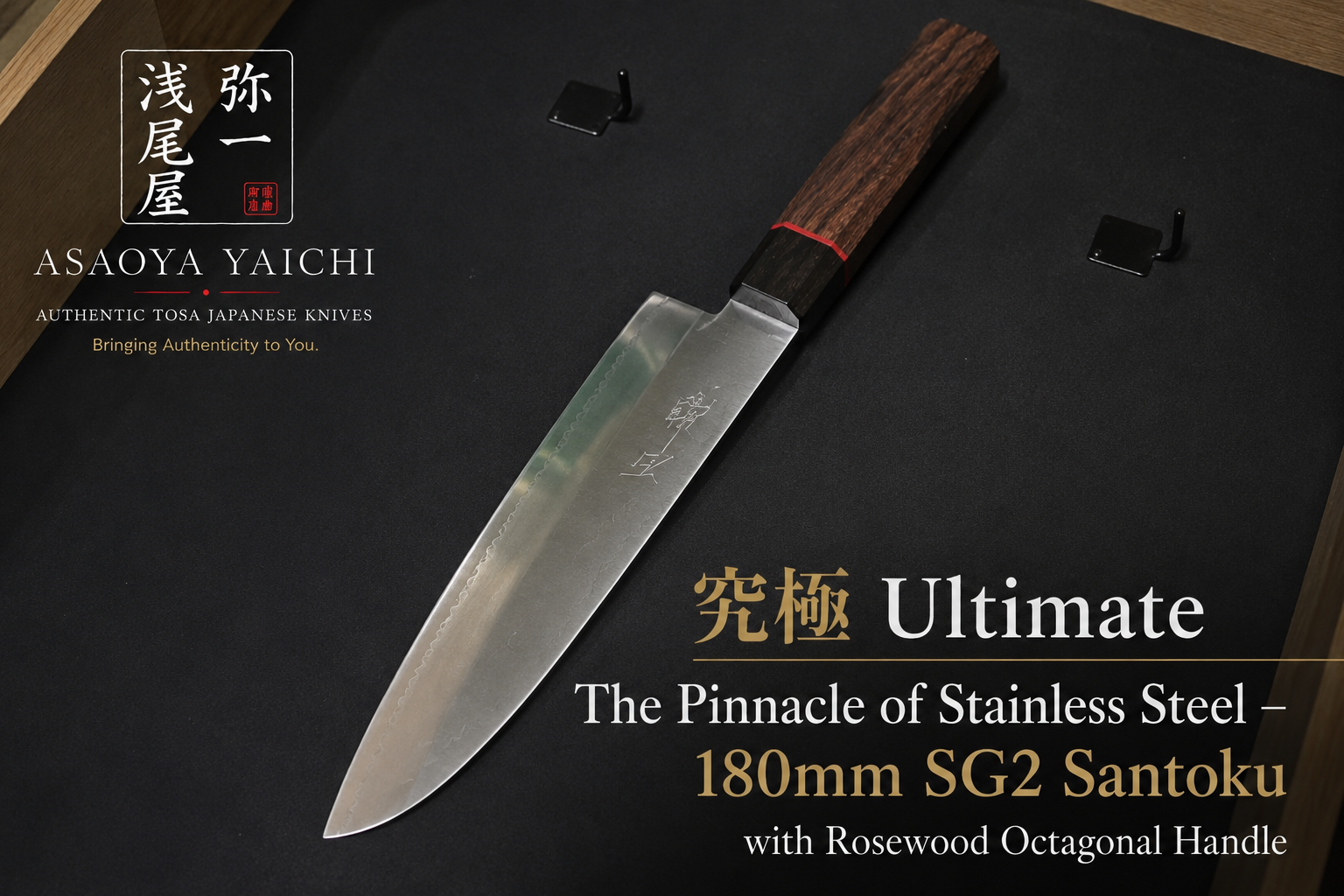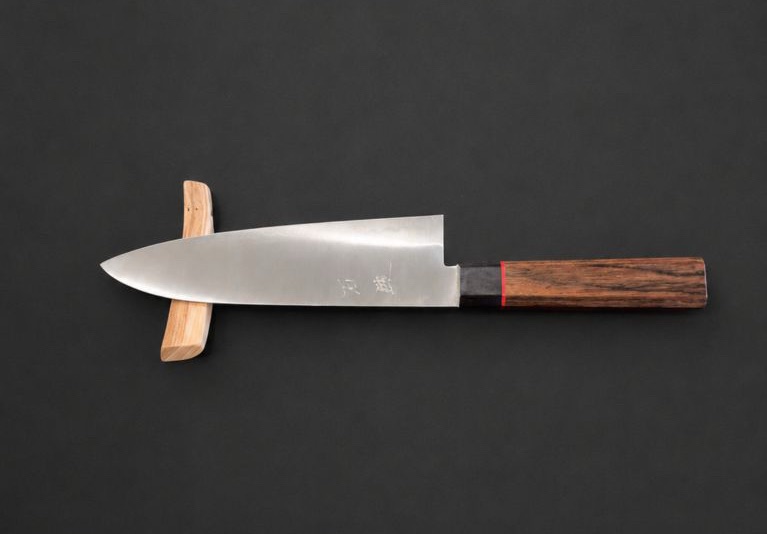
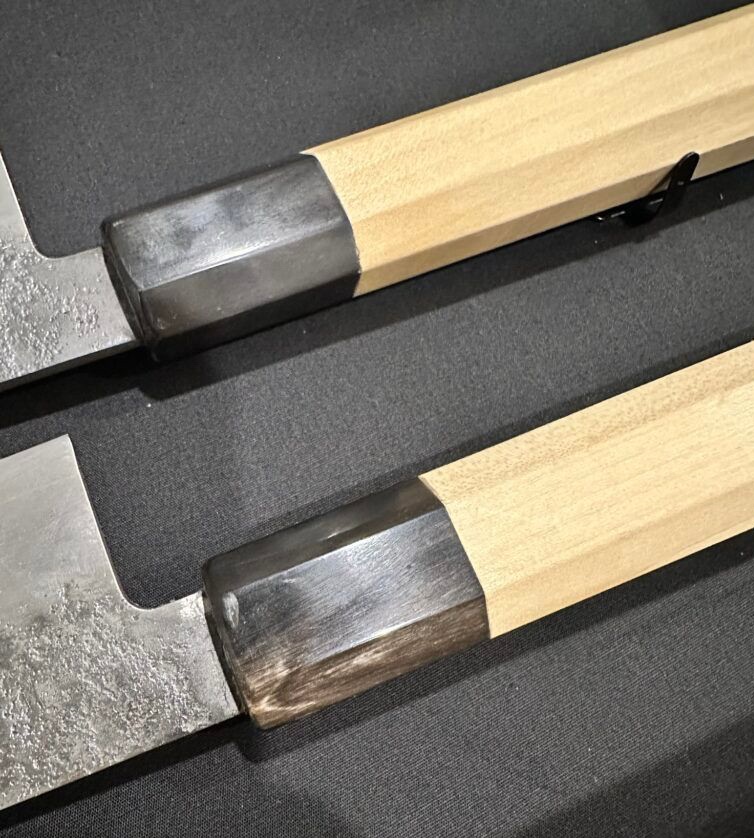
Ginsan Nashiji Forged Magnolia Octagonal Handle Buffalo Horn
When people shop for Japanese Knife Handles, they often focus on appearance. Beautiful wood grain, buffalo horn ferrules, and traditional shapes certainly make a knife stand out. However, after more than 25 years as a professional chef, I’ve learned that the handle is much more than a design feature. It affects comfort, balance, control, and the overall experience of using the knife.
Many people spend hours comparing blade steels like VG10, Aogami #2, Ginsan, or SG2, but the part you actually hold every day is the handle. Understanding Japanese Knife Handles can help you choose a knife that truly suits your style.
Why Japanese Knife Handles Matter
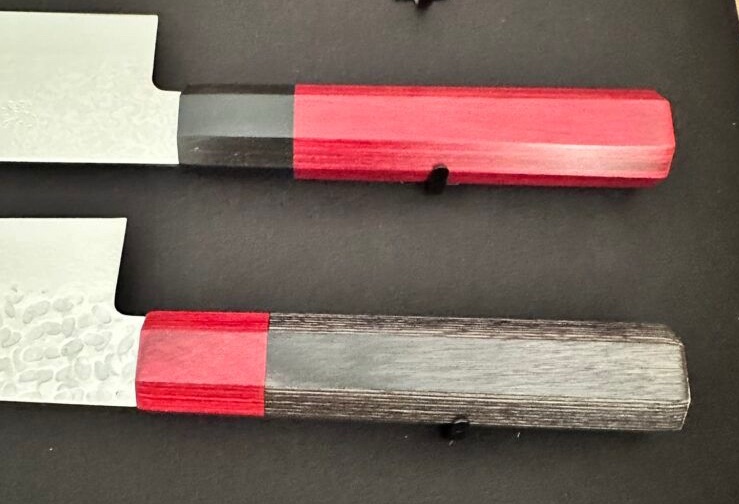
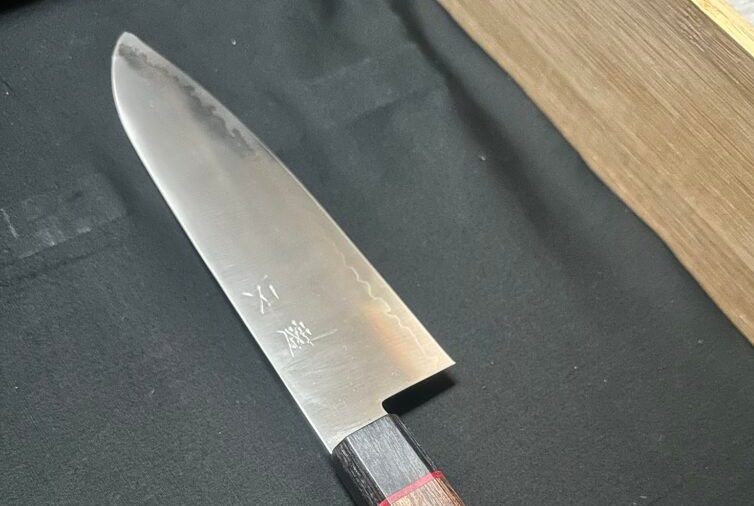
Black & Red Octagonal Handle
The handle influences how a knife feels in your hand. Even if two knives have the same blade steel, they can feel completely different because of their handles.
When I first became a chef, I focused almost entirely on blade steel. As the years passed, I realized that the handle was just as important. A comfortable handle reduces fatigue, improves control, and makes long hours in the kitchen much more enjoyable.
➡ Internal Link: Beginner’s Guide to Japanese Kitchen Knives
Different Types of Japanese Knife Handles
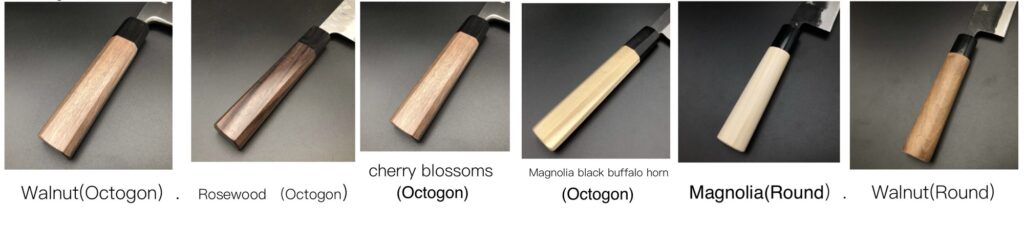
Provided by Ishizuchi Kanamono Manufactory
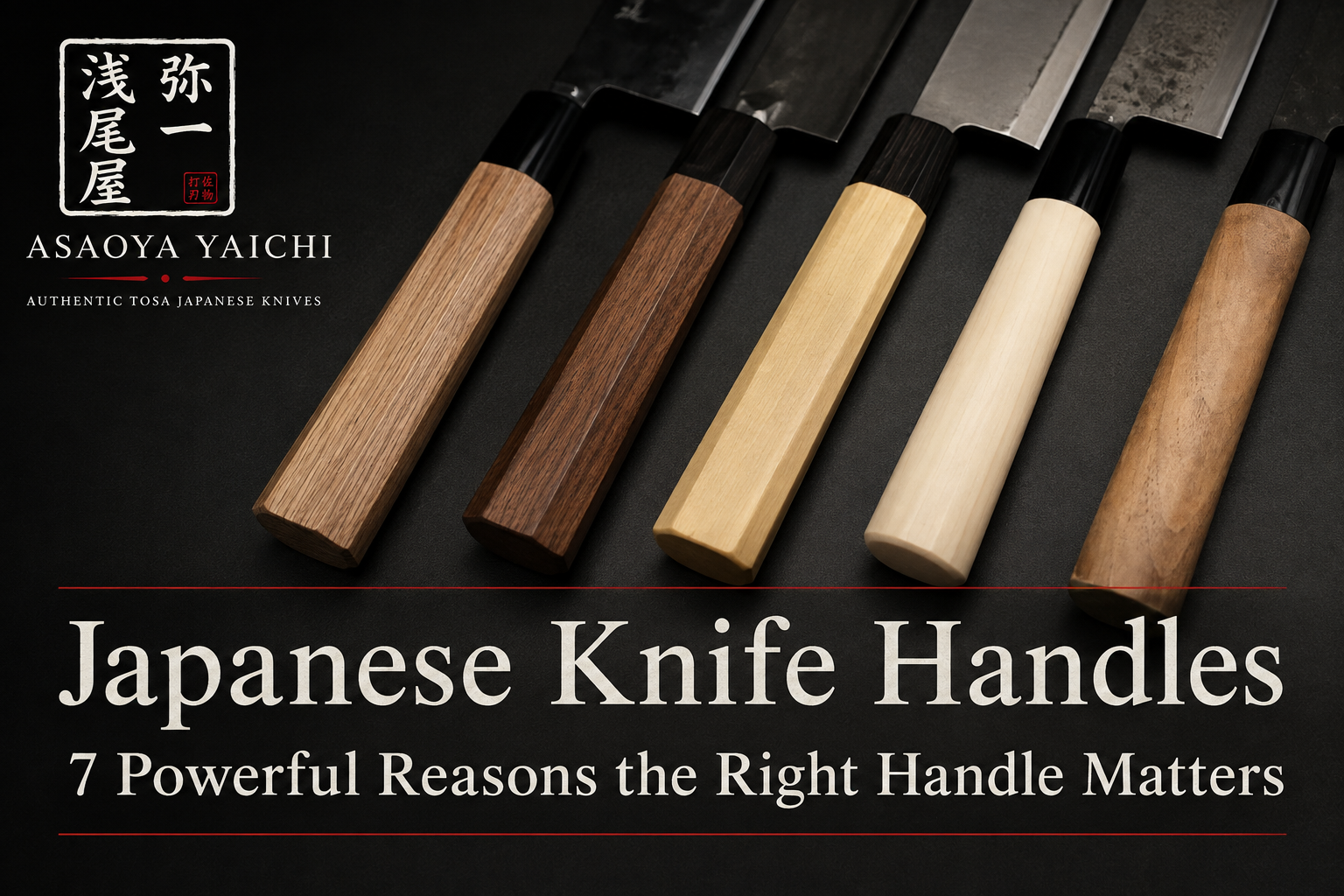
Handmade Japanese knives are available with many different handle materials.
Magnolia wood is lightweight and traditional.
Walnut offers beautiful natural grain and warmth.
Rosewood provides a luxurious appearance with a rich color.
Micarta is highly durable and moisture-resistant, making it a practical modern choice.
There is no single “best” material. Each offers a different balance of weight, feel, and appearance.
My Experience with Japanese Knife Handles
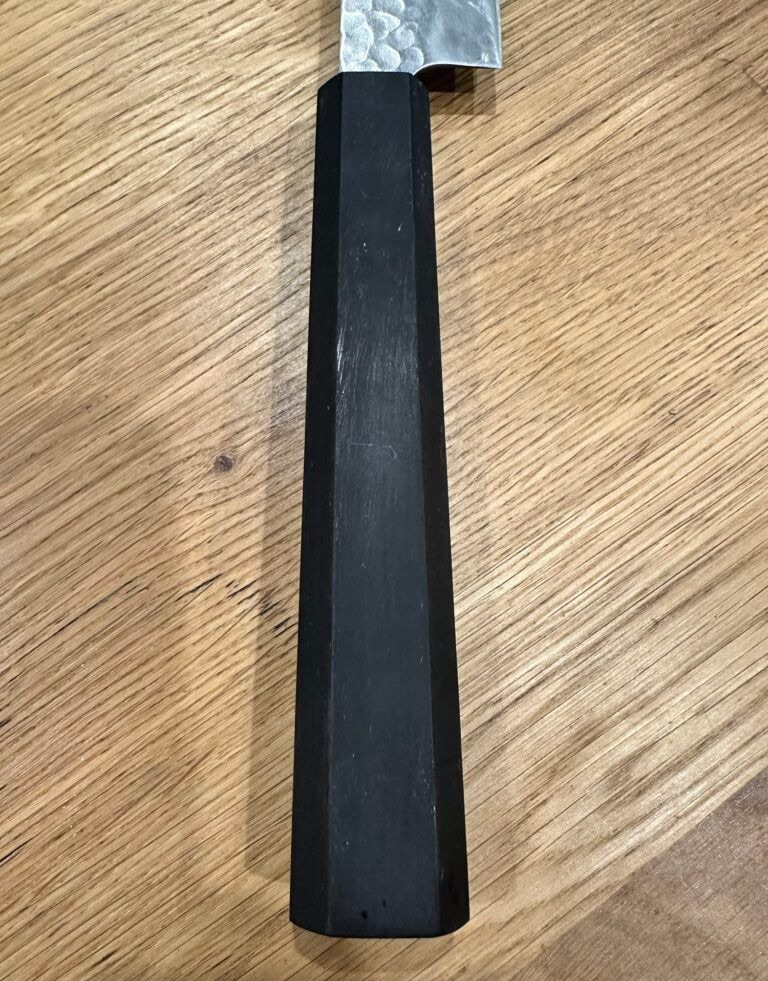
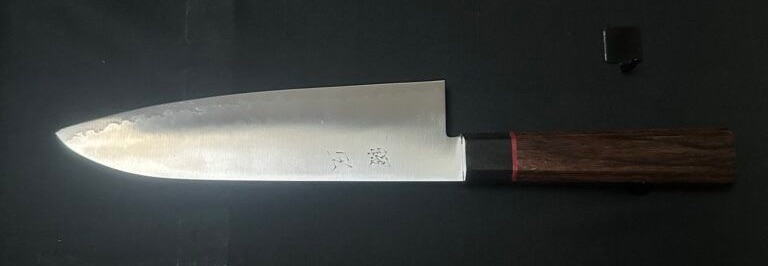
Octagonal Handle
After more than 25 years of professional cooking, I’ve realized that my preference depends on the type of knife.
The Sujihiki I currently use every day has a traditional octagonal wa-handle. I like it because it feels light, comfortable, and easy to control during long slicing sessions. It almost feels like a natural extension of my hand.
On the other hand, when I think back to the Deba knives and Gyuto knives I’ve used throughout my career, most of them had traditional oval handles. That may simply be because those were the knives I owned, but I’ve also found that the classic shape feels natural when applying more force during heavier cutting tasks.
This experience has taught me that there isn’t one perfect handle for every knife. The best handle often depends on the knife, the job, and the person using it.
➡ Internal Link: Carbon Steel vs Stainless Steel
Caring for Wooden Japanese Knife Handles
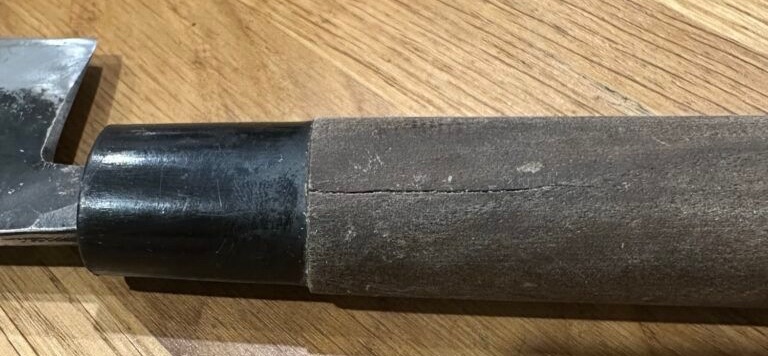
Handle crack
Wood is a natural material, so proper care is important.
Over the years, I’ve seen wooden handles develop cracks. While it’s impossible to know the exact reason in every case, common causes can include exposure to hot water, dishwashers, soaking for long periods, excessive dryness, or rough handling.
I always recommend washing your knife by hand with mild detergent, drying it immediately, and avoiding hot water or dishwashers. A little care goes a long way in protecting a beautiful wooden handle.
➡ Internal Link: 5 Common Mistakes That Can Damage Your Japanese Knife
Choosing the Right Japanese Knife Handles
The best Japanese Knife Handles aren’t necessarily the most expensive or the most beautiful.
Instead, choose the one that feels comfortable and natural in your hand. The handle should suit the type of knife you use and the way you cook.
For me, an octagonal handle is perfect for my Sujihiki, while a traditional oval handle still feels right on heavier knives. That’s one of the things I enjoy most about handmade Japanese knives—there’s no single correct answer.
➡ Internal Link: The True Value of Japanese Knives | 7 Reasons They Are Worth the Investment
➡ Internal Link: Handmade Japanese Knives | 7 Fascinating Reasons No Two Are Ever Exactly the Same
Final Thoughts
Beautiful Japanese Knife Handles are more than just a finishing touch. They influence comfort, balance, confidence, and control every time you cook.
After more than 25 years as a professional chef, I’ve learned that choosing the right handle is just as important as choosing the right blade steel. The best handle isn’t the same for everyone—it depends on the knife, the task, and your personal preference.
Finding the right combination is part of what makes owning a handmade Japanese knife so rewarding.
➡ Internal Link: Monozukuri | Where Japanese Craftsmanship Meets Quiet Beauty
👉 Explore more:
https://blog.asaoyayaichi.com.au
👉 Visit our online store:
https://asaoyayaichi.com.au
Thank you for reading, and I hope to see you again in the next story.