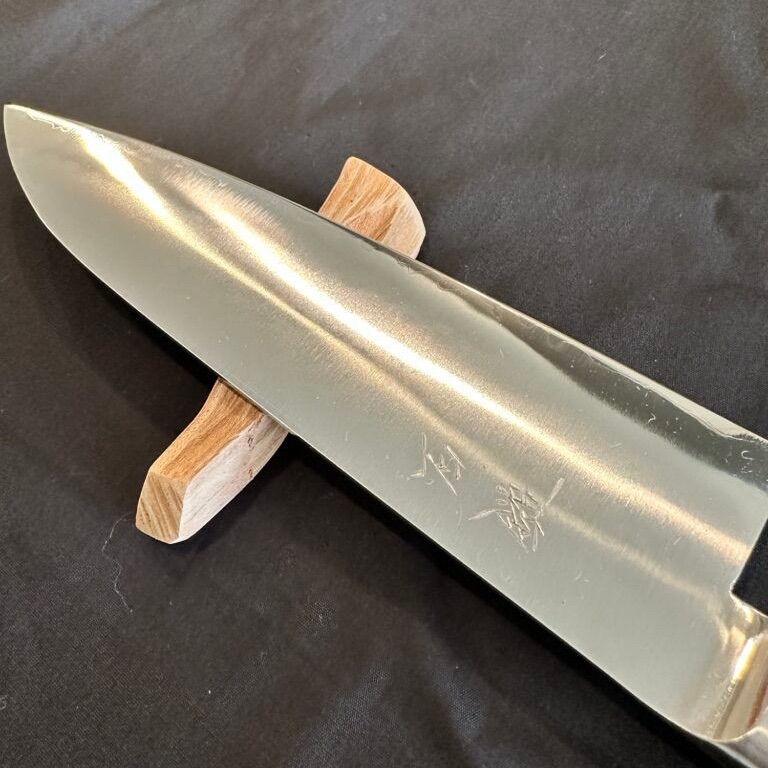
180mm Santoku Aogami #2 Green Micarta Handle with Turquoise Spacer
Japanese knife sharpness is often described as though it were something simple. A knife is either sharp or it is not. It cuts paper cleanly, shaves hair, or slices through a tomato, and we decide that it is sharp.
But after working as a professional chef for more than 25 years, I have come to feel that sharpness is not quite that simple.
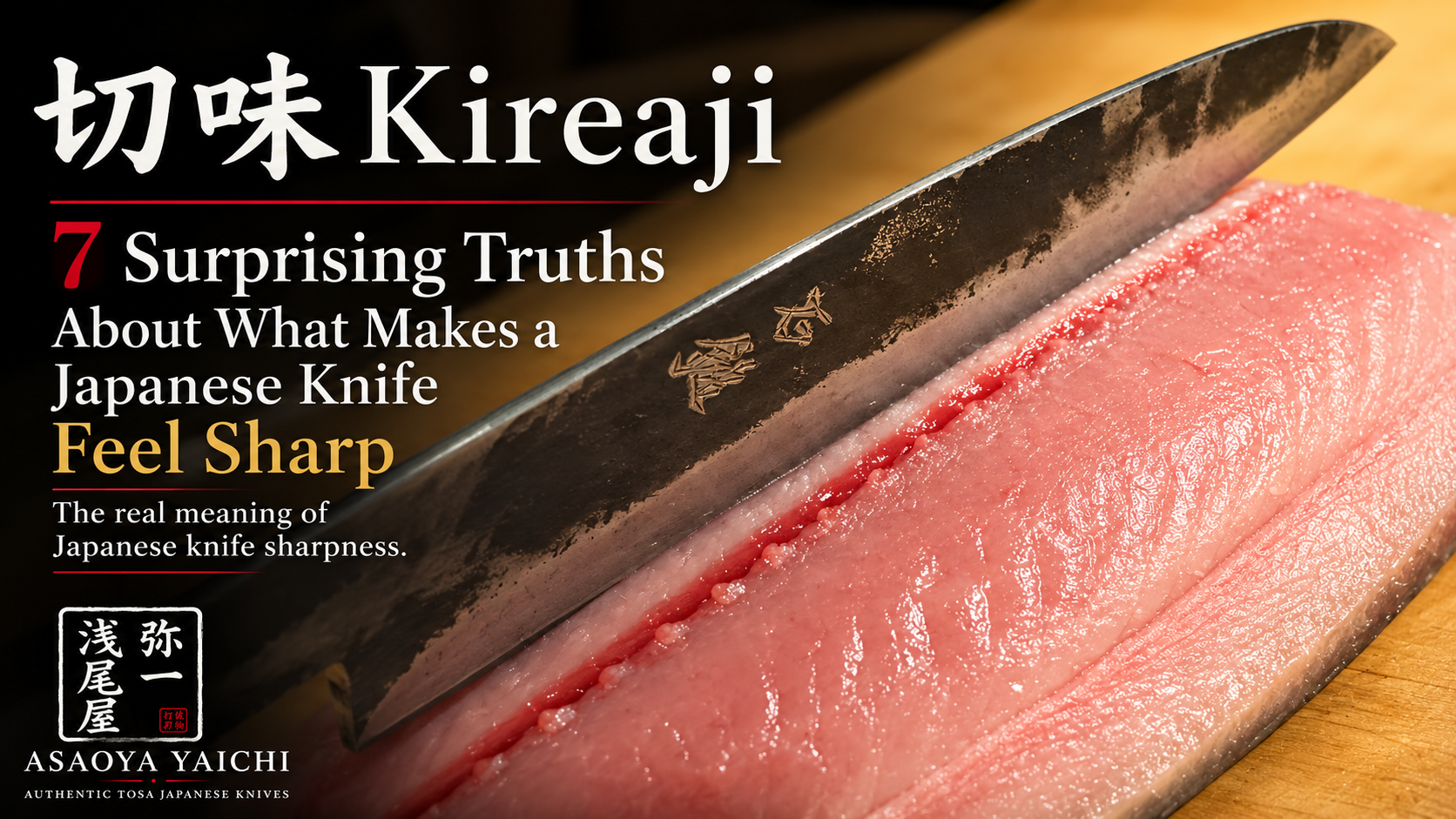
In Japanese, there is a word that expresses something slightly different: 切味 — Kireaji.
Kireaji literally relates to the “cutting feel” of a blade. For me, that is a better way to describe what happens when a knife actually meets food.
Sometimes I sharpen a knife and it seems almost perfect. The blade enters the ingredient effortlessly, as though there is almost no resistance.
Other times, I sharpen what feels like exactly the same way, using the same stones and technique, yet the knife somehow feels heavier through the cut.
It is still sharp.
But it does not feel the same.
And occasionally, I can even feel a slight roughness through the edge.
After all these years of using knives professionally, this still fascinates me.
1. Japanese Knife Sharpness Is More Than “Sharp or Dull”
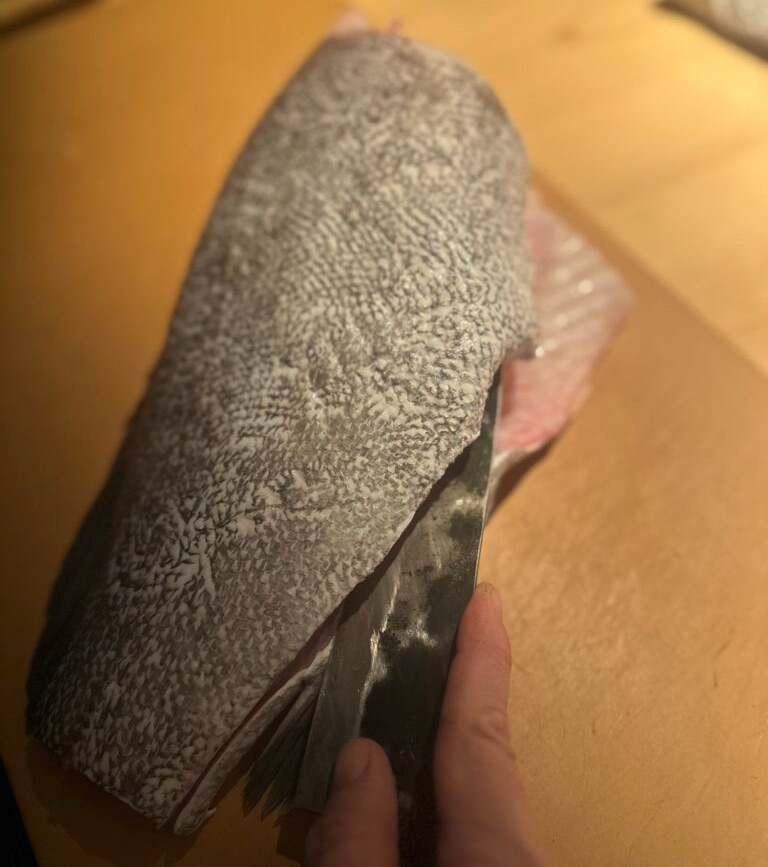
Ishizuchi Kanamono Manufactory
One of the biggest things I have learned is that Japanese knife sharpness cannot always be explained by a simple sharp-versus-dull measurement.
A knife may easily cut paper and still feel slightly heavy when slicing food.
Another knife may not seem dramatically different in a basic sharpness test, yet when it touches fish, meat or vegetables, the blade seems to glide straight through.
That sensation is difficult to describe until you have experienced it.
For me, this is where the idea of Kireaji becomes useful.
It is not simply whether the edge can cut. It is the resistance you feel as the blade enters the ingredient, the way the knife continues through it, and even the feedback transmitted through the handle into your hand.
👉 INTERNAL LINK: Japanese Knife Bevels | Single Bevel vs Double Bevel Explained
Understanding the bevel and edge geometry is an important part of understanding why two sharp knives can feel completely different.
2. Why Japanese Knife Sharpness Can Feel Different After Sharpening
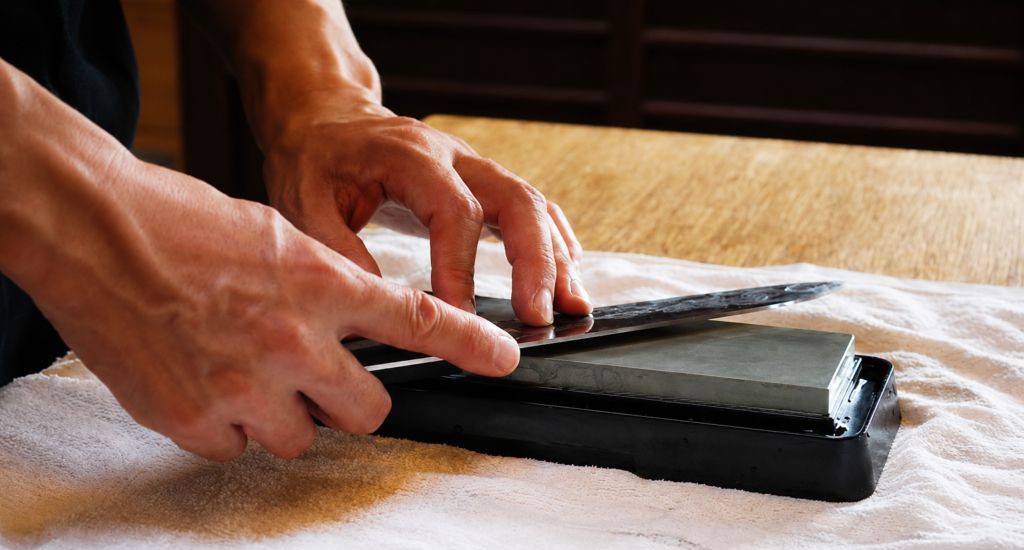
This is something that still surprises me.
I can sharpen the same knife on the same stones using what I believe is the same technique, but the final Kireaji is not always identical.
Sometimes the result is exceptional.
The knife feels incredibly smooth. There is almost no hesitation when the blade touches the ingredient.
Then another day, the knife is definitely sharp, but I feel slightly more resistance.
Why?
There are many possible explanations. The exact sharpening angle may have changed slightly. The burr may have formed differently. The burr removal may not have been identical. Pressure on the stone may have changed without me consciously noticing it.
Even the final refinement of the edge can influence the sensation.
Sharpening by hand contains countless tiny variables.
That is one reason I think sharpening Japanese knives remains interesting even after many years.
You can always learn something.
👉 INTERNAL LINK: Why Flattening Your Whetstone Matters More Than You Think | The Foundation of a Sharp Edge
3. Japanese Knife Sharpness Can Sometimes Feel Rough
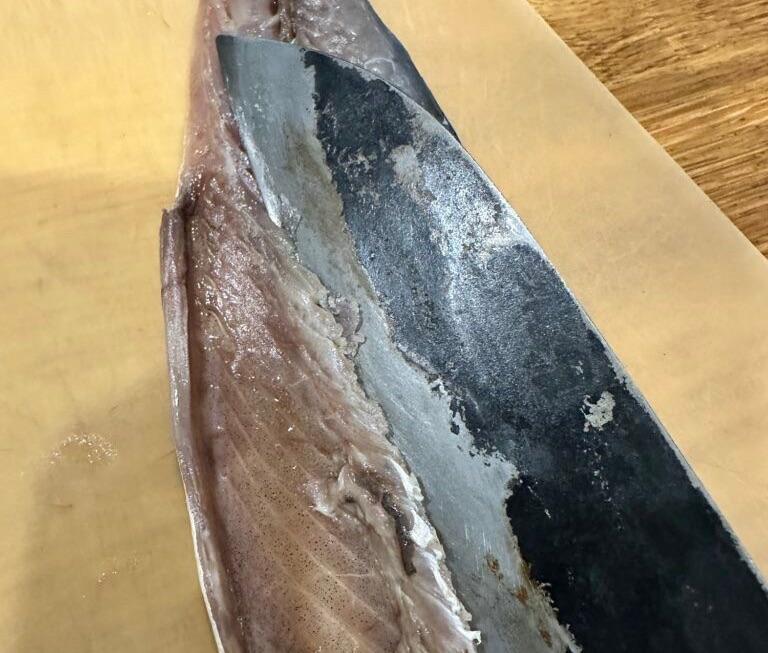
There is another sensation I occasionally notice after sharpening: a slight roughness.
The knife cuts.
It may even cut very well.
But the edge does not feel completely smooth.
This is particularly interesting because it demonstrates the difference between simply achieving an edge and achieving an edge that feels right.
A microscopic burr or differences in edge refinement may contribute to this sensation. The finish produced by the sharpening stone can also influence how the edge interacts with food.
A highly polished edge and an edge with more microscopic “bite” can both be sharp, but they may not feel identical.
And depending on what you are cutting, one may actually feel better than the other.
This is why I do not believe sharpness should always be judged by a single test.
A kitchen knife exists to cut food.
Ultimately, food is where I judge it.
👉 INTERNAL LINK: The True Value of Japanese Knives | 7 Reasons They Are Worth the Investment
4. A Brand-New Japanese Knife Is Not Always Perfect
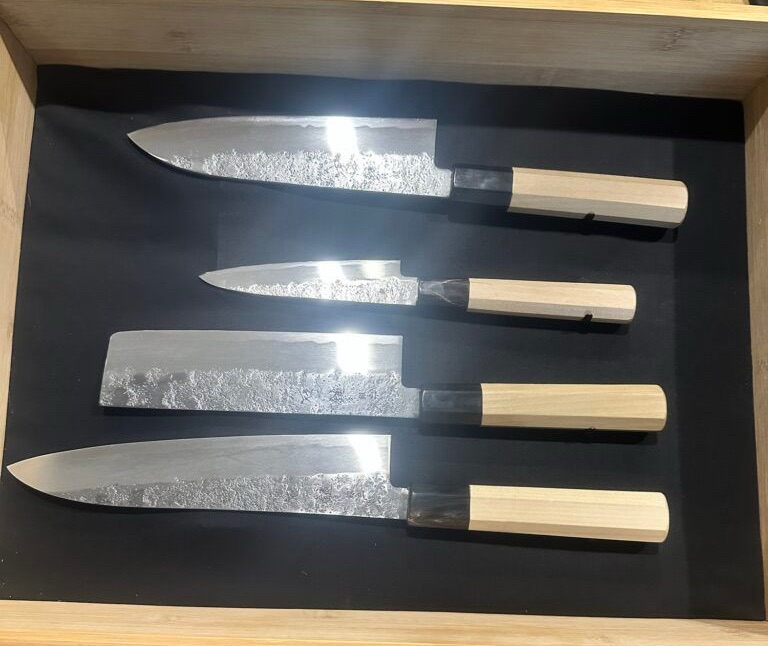
Ginsan Nashiji Forged Magnolia Octagonal Handle Buffalo Horn Series
This may surprise people buying their first high-quality Japanese knife.
Brand-new does not necessarily mean the edge will feel perfect to you.
I have used new knives that felt fantastic immediately.
I have also taken brand-new knives out of the box and thought:
“This can be better.”
That does not necessarily mean there is something wrong with the knife.
The factory or craftsman has applied an edge, but that edge may not be exactly the edge that suits the person using it.
Sometimes after sharpening a new knife myself, the character of the knife seems to change.
Suddenly it feels like my knife.
The resistance changes. The edge responds differently. The Kireaji becomes closer to what I personally expect from a professional kitchen knife.
This is another reason I would never judge the full potential of a Japanese knife only by its first few cuts straight out of the box.
5. Steel Changes Japanese Knife Sharpness and Kireaji
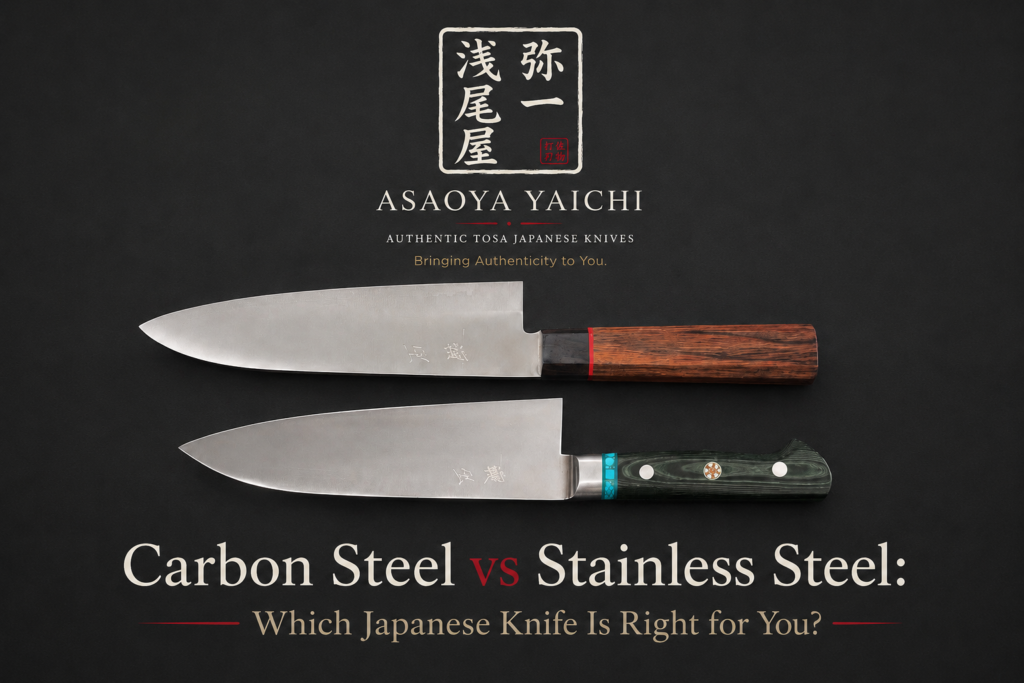
Steel absolutely plays a role.
Over the years I have used both carbon and stainless steels, and I do not think every steel produces exactly the same cutting sensation.
Aogami, Ginsan, VG10, SG2 and other steels have different characteristics. Hardness, carbide structure, heat treatment, edge stability and sharpening response can all influence how an edge behaves.
But there is an important point here.
Harder does not automatically mean better Kireaji.
A high HRC number can contribute to edge retention and allow certain steels to support fine edges, but hardness alone cannot describe what the knife will feel like when it passes through a piece of fish.
That is why I think choosing a knife purely by its steel specification can sometimes be misleading.
Specifications are important.
But your hand does not read specifications.
It feels the knife.
👉 INTERNAL LINK: Hardness 硬度 | 7 Powerful Truths About Japanese Knife HRC That Surprised Even a Chef
6. Blade Geometry May Matter More Than We Realise
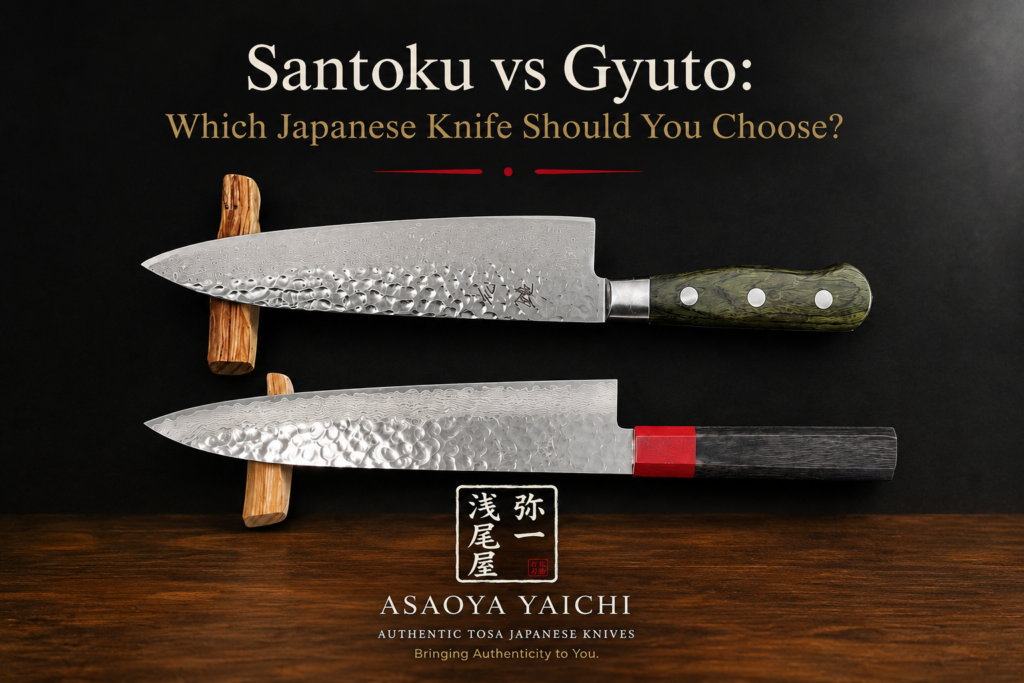
Two knives made from the same steel can still feel completely different.
Why?
Because we are not cutting food with steel specifications.
We are cutting with a three-dimensional object.
Blade thickness, edge angle, grind, taper, blade height and the geometry behind the edge all influence how easily a knife passes through food.
A very sharp edge can enter an ingredient easily, but if the blade geometry creates resistance behind that edge, the entire cutting motion may still feel heavy.
This is one reason a Gyuto, Santoku and Sujihiki can produce very different sensations even when all three are extremely sharp.
A Sujihiki moving through sashimi has a different purpose from a Santoku working through vegetables.
The shape of the knife is part of its Kireaji.
👉 INTERNAL LINK: 均衡 Kinkō | 7 Powerful Reasons Japanese Knife Balance Matters More Than You Think
Balance does not create sharpness by itself, but it can strongly influence how that sharpness feels in your hand.
7. The Best Japanese Knife Sharpness Cannot Be Explained by Numbers Alone
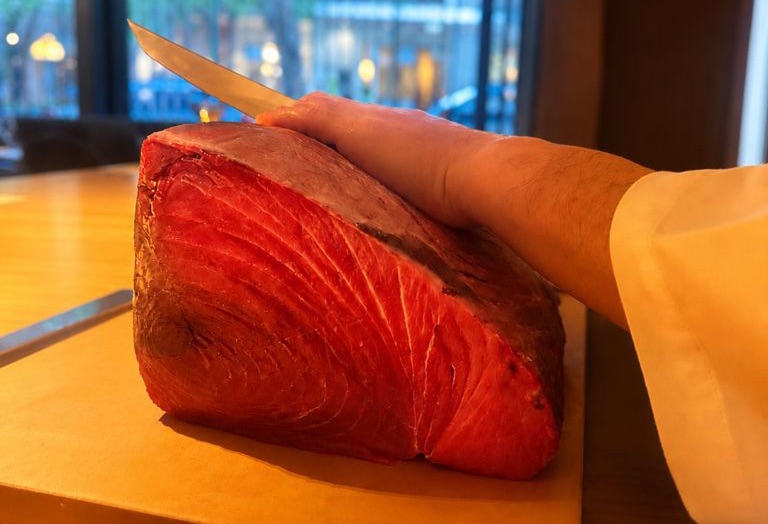
After more than 25 years working with kitchen knives, perhaps the most interesting thing I have learned is how difficult it is to describe the perfect edge.
HRC cannot explain everything.
Steel cannot explain everything.
Sharpening angle cannot explain everything.
Even a paper-cutting test cannot explain everything.
There is a moment when a properly sharpened knife touches an ingredient and simply goes through.
No hesitation.
No unnecessary pressure.
No feeling that you need to force the blade.
You feel it immediately.
That sensation is what I think about when I hear the word Kireaji.
And perhaps this is also why Japanese knives remain so interesting to me after decades in professional kitchens.
I still do not produce exactly the same edge every single time I sharpen.
Sometimes I finish sharpening and the knife feels good.
Sometimes it feels very good.
And occasionally, everything seems to come together perfectly and the blade simply glides.
Those moments remind me that sharpening is not just maintenance.
It is a skill that continues to teach you.
Japanese Knife Sharpness Is Something You Feel
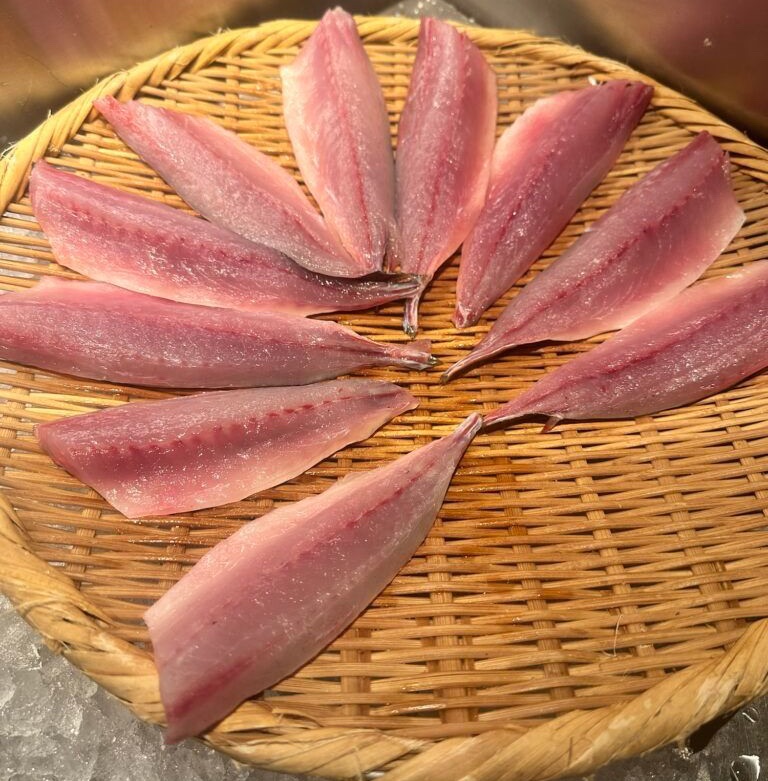
We often try to understand Japanese knives through numbers.
HRC.
Blade length.
Sharpening angle.
Steel type.
These measurements are useful, but they cannot completely describe the experience of using a knife.
Japanese knife sharpness is ultimately something you feel through your hand and through the food you are cutting.
The steel matters.
The heat treatment matters.
The sharpening matters.
The geometry matters.
The person holding the knife matters too.
Perhaps that is the real meaning of Kireaji.
Not simply whether a knife is sharp, but how the knife feels when it cuts.
And even after more than 25 years of using knives professionally, that small difference still makes me want to pick up a knife, sharpen it again, and see if I can make the next edge just a little better.
👉 Explore more:
https://blog.asaoyayaichi.com.au
👉 Visit our online store:
https://asaoyayaichi.com.au
Thank you for reading, and I hope to see you again in the next story.