タグ: Usuba Knife

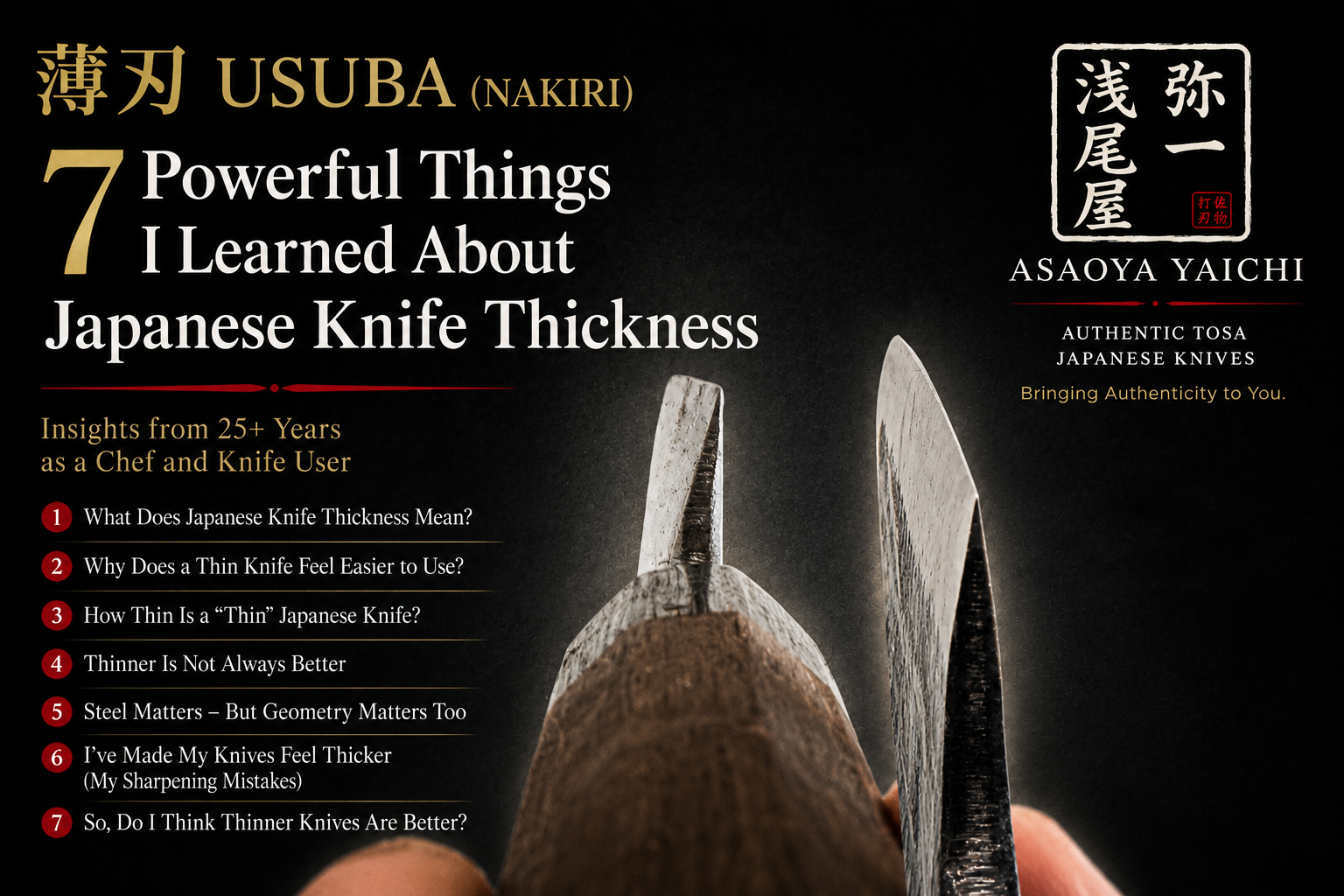
  • 薄刃 Usuba | 7 Powerful Things I Learned About Japanese Knife Thickness

    薄刃 Usuba | 7 Powerful Things I Learned About Japanese Knife Thickness

    After more than 25 years working as a chef in Japan and Australia, I had never really thought seriously about Japanese knife thickness.
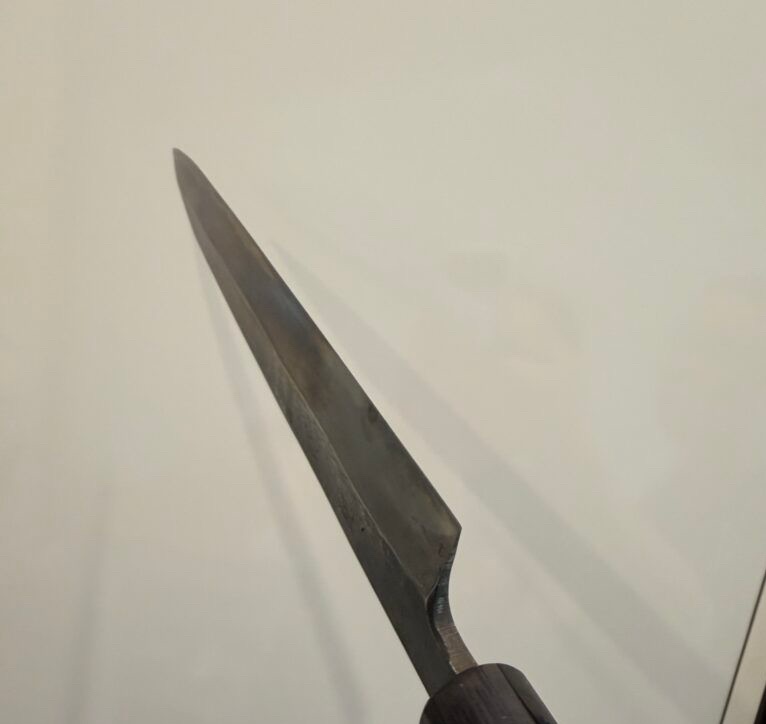
    Of course, I have used both thin and thick knives. From experience, I have always felt that thinner knives are generally easier to use. They enter ingredients smoothly, require less effort, and simply feel good when cutting.

    But I had never really asked myself why.

    Since I started selling Japanese knives, I have found myself questioning things I used for years without thinking about them.

    This time, the question was simple:

    When we say a Japanese knife is “thin,” what part of the knife are we actually talking about?

    And does thinner really mean better?

    What Does Japanese Knife Thickness Actually Mean?
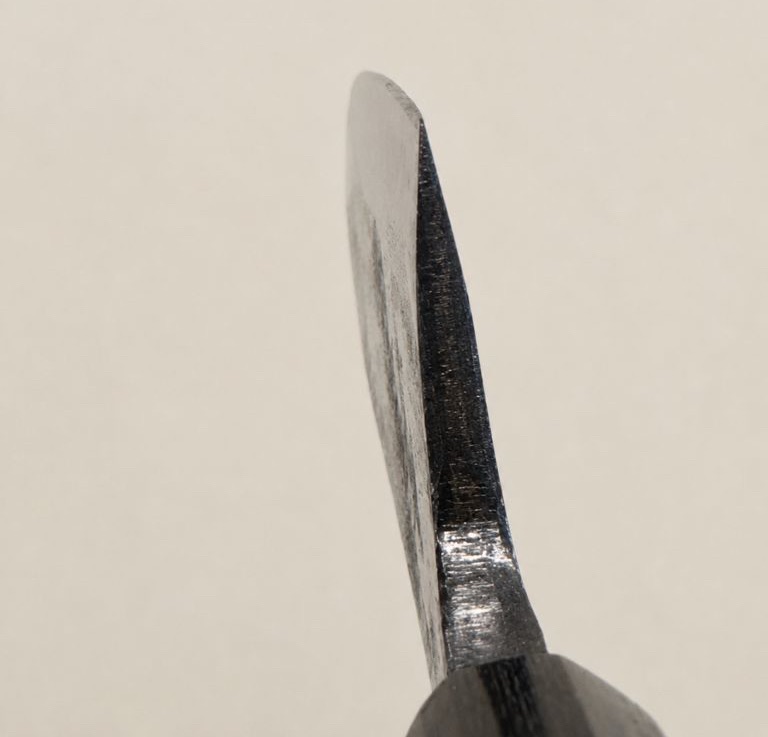
    At first, I assumed knife thickness simply meant the thickness of the spine.

    That is certainly one measurement, but it does not tell us everything about how a knife will cut.

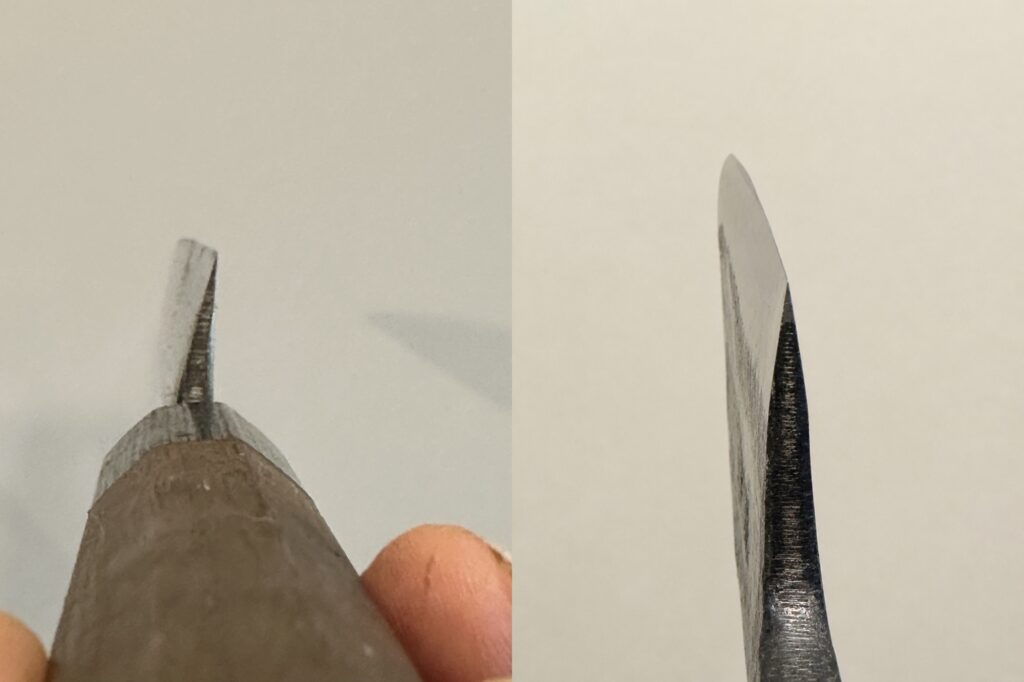
    A blade changes thickness from the spine down towards the cutting edge. The area immediately behind the edge can have a major influence on how easily the knife passes through food.

    When I learned this, it immediately made sense from my experience as a chef.

    I have used knives that felt extremely sharp at the edge but somehow required more effort when cutting. I have also used knives that seemed to slip through ingredients almost effortlessly.

    The sharpness of the edge was not necessarily the only difference.

    👉 INTERNAL LINK: Link to “切味 Kireaji” — the article about how we actually experience sharpness.

    Why Does a Thin Japanese Knife Feel Easier to Use?
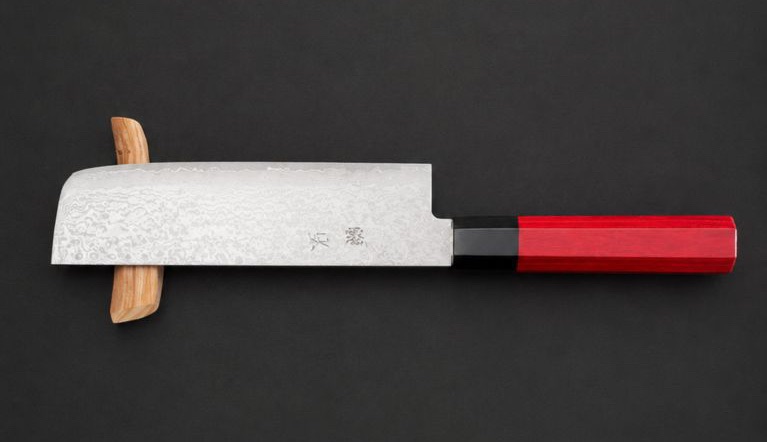

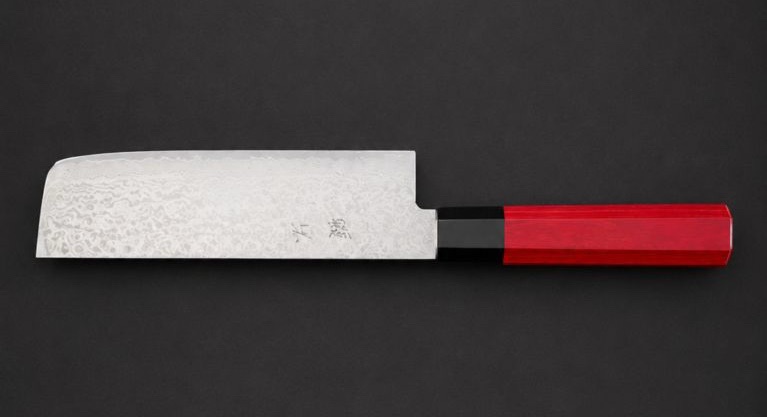
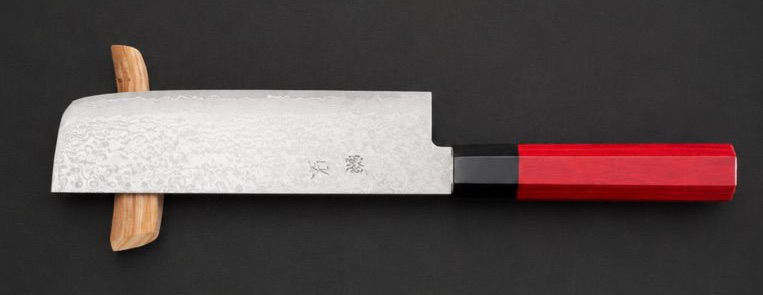
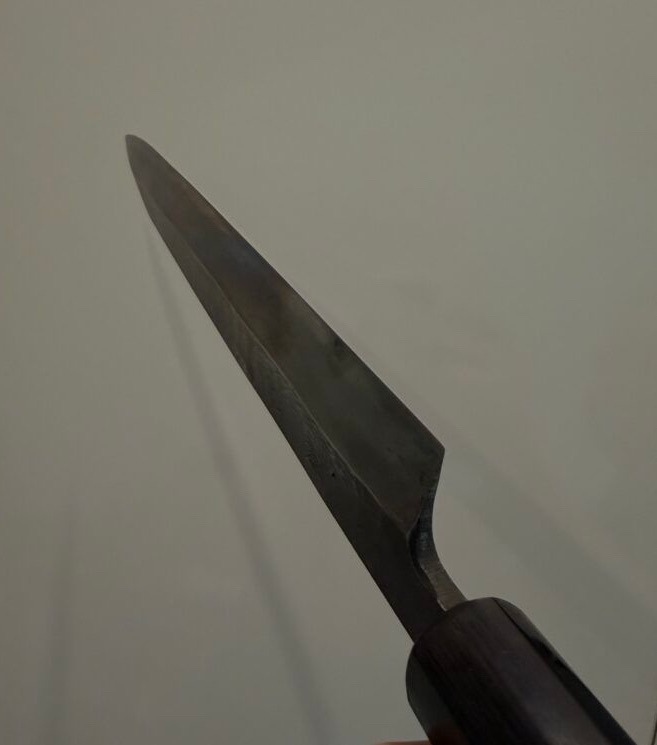
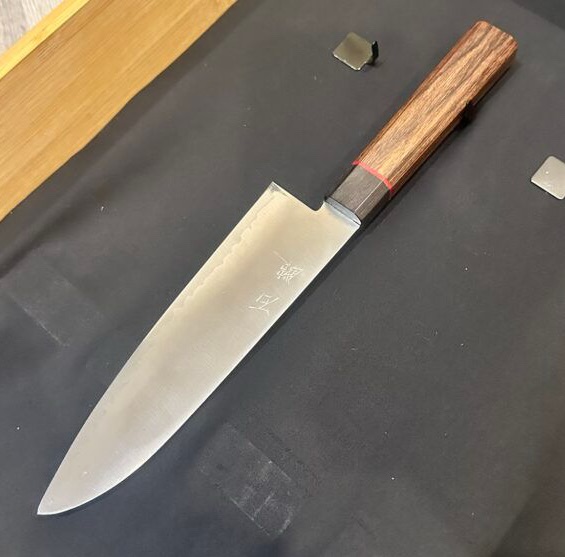
    165mm Usuba A8 Hammered Damascus Black & Red Octagonal Handle

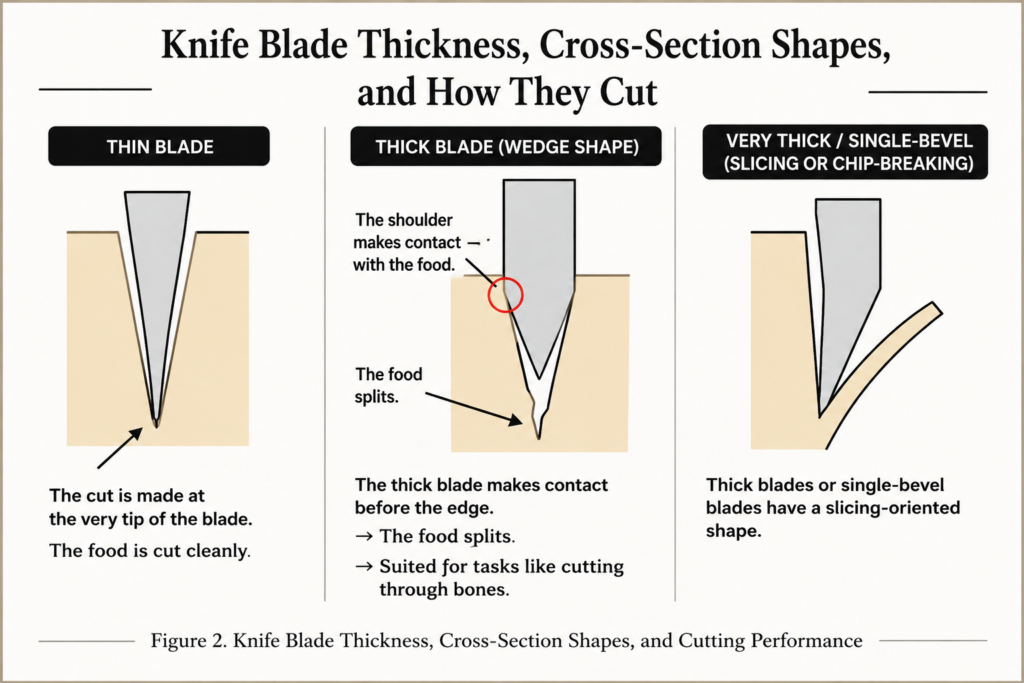
    A simple cross-section diagram helped me understand this surprisingly well.

    Imagine two sharp blades entering the same ingredient. One remains relatively thin behind the cutting edge, while the other becomes thick very quickly.

    The thinner blade can continue through the food with less resistance. With the thicker blade, the sides of the blade begin pushing against the ingredient and forcing it apart.

    Both edges may be equally sharp, but they can feel completely different in actual use.

    This is why Japanese knife thickness is not simply about one measurement at the spine. The thickness behind the edge, the shoulders and the taper of the blade all contribute to how it moves through food.

    For someone like me who spent years judging knives mainly by how they felt in my hand, it was interesting to finally understand part of the reason behind that feeling.

    How Thin Is a “Thin” Japanese Knife?
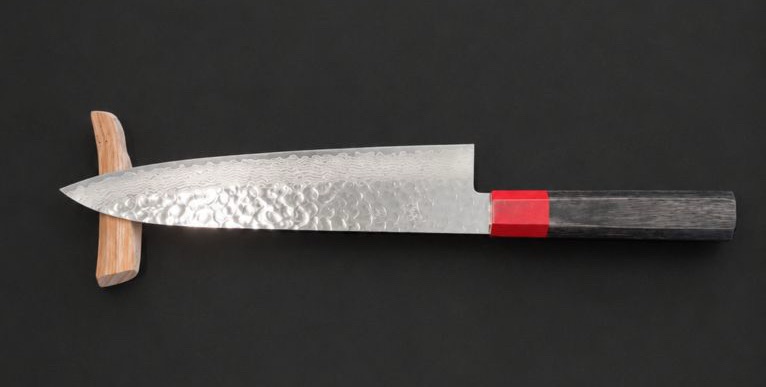

    165mm Santoku A10 Damascus Black & Red Octagonal Handle

    I also wondered whether there was a particular measurement where a Japanese knife officially becomes thin.

    There really isn’t one simple number.

    A measurement such as 2 mm at the spine can be useful, but where that measurement is taken matters. A blade may also become progressively thinner towards the tip.

    Two knives with similar spine thickness can therefore feel very different if their geometry behind the edge is different.

    The purpose of the knife matters too.

    A gyuto and a deba should not have the same geometry simply because thinner sounds better. Japanese knives developed into different shapes because they were designed for different jobs.

    👉 INTERNAL LINK: Link to “Japanese Knife Names” — the article about the origins of different Japanese knife types.

    Japanese Knife Thickness: Thinner Is Not Always Better
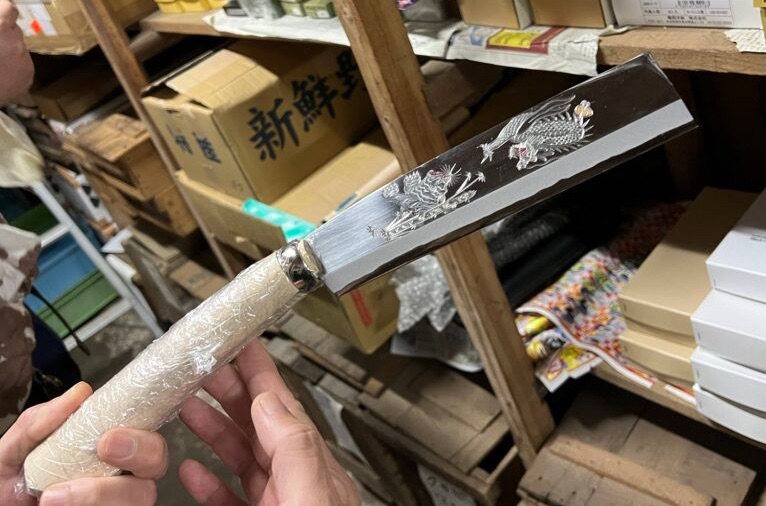

    Ishizuchi Kanamono Manufactory 

    This was probably the most important thing I learned.

    A thin blade can reduce resistance through food, but that does not mean every knife should be made as thin as possible.

    Thickness also provides strength and stiffness.

    A deba, for example, needs enough strength for working around fish bones and joints. Making it extremely thin would defeat part of the purpose of the knife.

    So instead of asking only:

    “How thin is this knife?”

    I think the better question is:

    “Is this knife thin enough for its purpose while still having the strength it needs?”

    👉 INTERNAL LINK: Link to “Kinkō 均衡” — the article about Japanese knife balance and how a knife feels in use.

    Steel Is Important — But Geometry Matters Too
    Asaoya Yaichi

    Recently, I have been researching steels such as Ginsan, VG10 and SG2.

    Steel is obviously important, but looking into Japanese knife thickness reminded me that the steel name alone cannot tell us how a knife will actually feel when cutting.

    Steel matters. Heat treatment matters. Sharpening matters. Blade geometry matters.

    They all work together.

    This is why two knives made from the same steel can still feel surprisingly different.

    For me as a chef, the final test has always been much simpler than the specifications:

    How does it actually feel when I cut food?

    👉 INTERNAL LINK: Link to the SG2 article — explaining SG2 steel and its characteristics.

    I Have Actually Made My Own Knives Feel Thicker
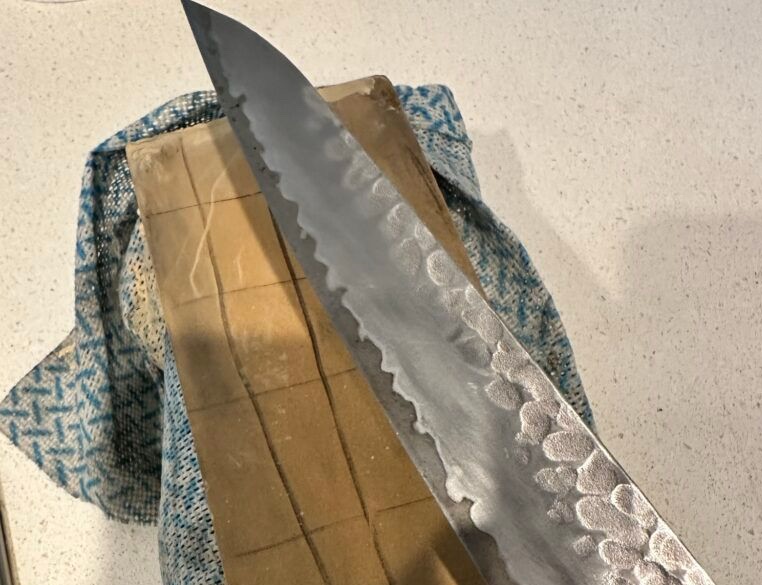
    Why Flattening Your Whetstone Matters More Than You Think

    This part is not something I only learned while researching this article.

    I have actually experienced it myself — partly because I can be a little lazy with sharpening.

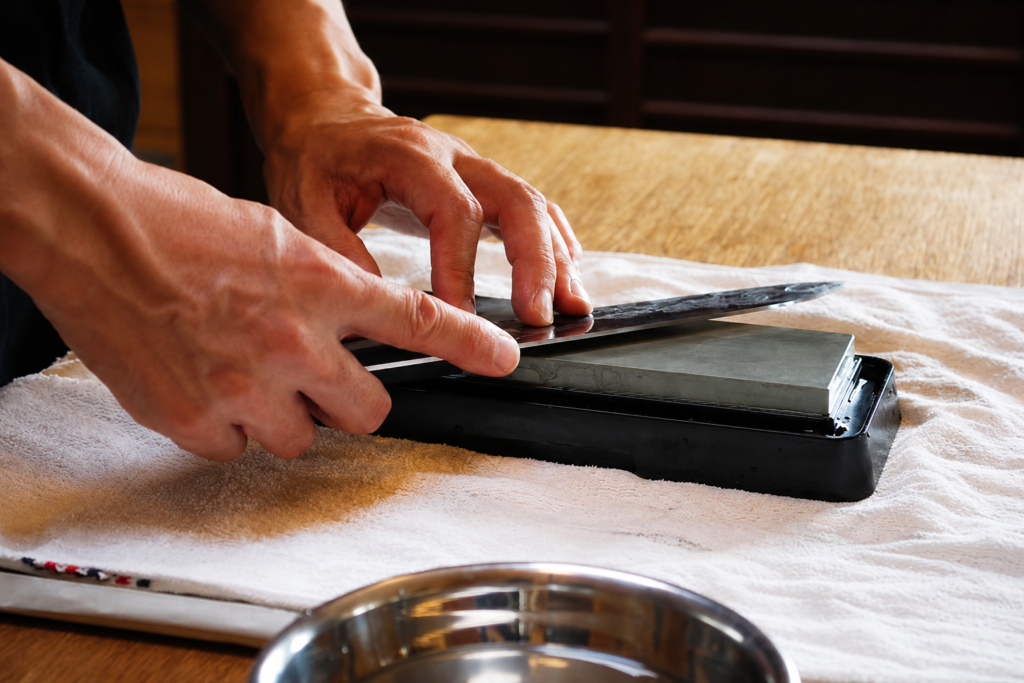
    If I keep sharpening a knife at too steep an angle, I can still create a sharp edge. But over time, the geometry around the edge can become thicker.

    The knife may feel sharp when I test the edge, yet it does not pass through food as easily as it once did.

    I have also made a similar mistake by continuing to use a whetstone after it had become dished instead of flattening it properly.

    I knew I should flatten it.

    Sometimes I just didn’t.

    That uneven stone affected the way I was sharpening, and eventually the knife did not feel the same.

    So when I read about thickness behind the edge and blade geometry, I thought:

    I’ve done this to my own knives.

    That experience taught me something important. Sharpening is not only about making the very edge sharp. Maintaining the geometry behind the edge matters too.

    These days, I pay much more attention to keeping my stones flat and to the angle I am sharpening at.

    Sometimes the best lessons come from doing it wrong yourself.

    👉 INTERNAL LINK: Link to “真価” — the article about sharpening and bringing out the true potential of a Japanese knife.

    So, Do I Think Thinner Japanese Knives Are Better?
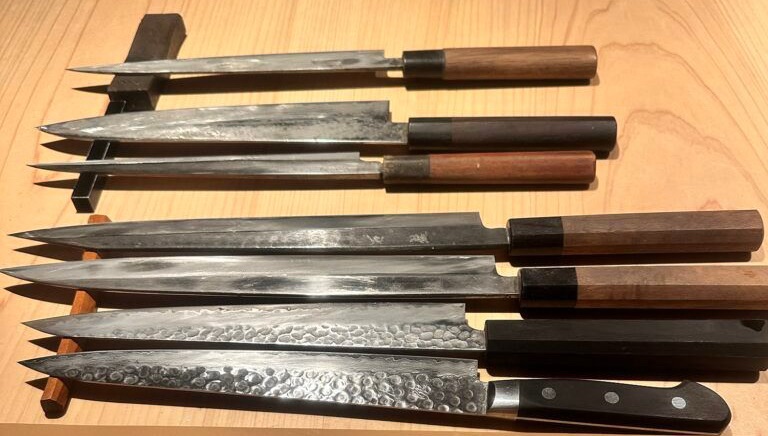
    After looking into all of this, I wanted to give myself a clear answer.

    Is a thinner knife a better knife?

    My answer is:

    Not always. But for most of the everyday kitchen knives I use, I still prefer a thinner blade.

    Before I understood the geometry, I already knew from experience that thinner knives often felt easier to use. They entered ingredients more smoothly and required less effort.

    Now I understand more about why.

    Of course, I would not want a deba to be as thin as a light vegetable knife. Different knives need different levels of strength, weight and stiffness.

    But if I am choosing a gyuto, santoku or sujihiki for everyday work, I personally prefer a blade that feels thin and moves through food with as little resistance as possible.

    So after more than 25 years using knives professionally, this is my conclusion:

    Thin does not automatically mean better. But if a knife can keep the strength required for its job, I prefer it thin.

    Maybe my hands already knew that long before I understood the reason.

    I just never stopped to ask why.

    👉 Explore more:
    https://blog.asaoyayaichi.com.au

    👉 Visit our online store:
    https://asaoyayaichi.com.au

    Thank you for reading, and I hope to see you again in the next story.
  • Japanese Knife Names | 7 Fascinating Origins I Was Curious Enough to Look Up

    Japanese Knife Names | 7 Fascinating Origins I Was Curious Enough to Look Up

    Name

    After more than 25 years working as a chef in Japan and Australia, there are certain words I have used thousands of times without really thinking about them.

    Santoku. Gyuto. Deba. Yanagiba. Nakiri. Usuba. Sujihiki.

    They are simply Japanese knife names that become part of everyday language when you work in a kitchen.

    But recently, a very simple question crossed my mind:

    Why are these knives actually called that?

    I knew what they were designed to do. I knew how they felt in my hand and when I would choose one over another. But when I started thinking about the actual Japanese knife names, I realised there were some origins I had never really investigated.

    So, purely because I was curious, I decided to look them up.

    And some of the answers were more interesting than I expected.

    Japanese Knife Names Often Tell You Something About the Knife

    Ishizuchi Kanamono Manufactory

    One thing becomes obvious when looking closely at Japanese knife names: many of them are surprisingly practical.

    The name may describe the ingredient, the shape of the blade, or the type of work the knife was intended to perform.

    That makes sense.

    Traditional Japanese knives were not originally created because someone needed another product for a catalogue. They developed as working tools for particular jobs.

    And their names often preserve that history.

    👉 RELATED: Read our Beginner’s Guide to Japanese Knives to learn more about the basic types and how they are used.

    1. Santoku 三徳 — The “Three Virtues”


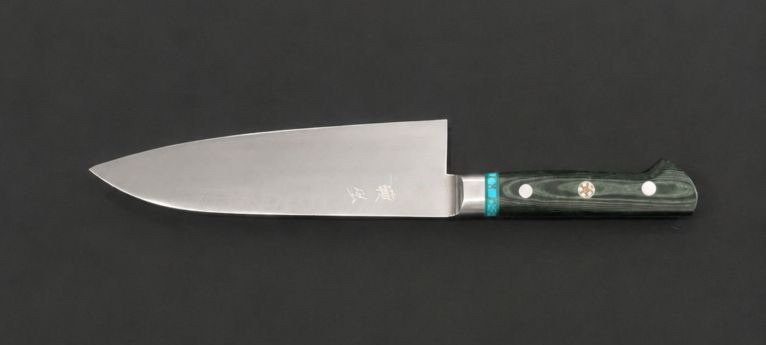
    180mm Santoku Aogami #2 Green Micarta Handle with Turquoise Spacer

    Santoku is probably one of the best-known Japanese knife names outside Japan.

    The kanji are:

    三 — three
    徳 — virtue or merit

    So 三徳 literally means something close to “three virtues.”

    Today, the Santoku is regarded as an all-purpose Japanese kitchen knife. One common explanation connects those “three virtues” with its ability to handle several major categories of food, often described as meat, fish and vegetables.

    The Santoku itself is relatively modern compared with traditional Japanese specialist knives. It developed as Japanese eating habits and home kitchens changed, combining characteristics suited to a broader range of everyday ingredients.

    That is probably why the name feels so appropriate.

    It is not a knife devoted to one narrow task.

    Its strength is versatility.

    After years in professional kitchens, I can understand why the Santoku became so popular. For someone who wants one practical Japanese knife for everyday cooking, its name describes its character remarkably well.

    👉 RELATED: Explore our article on Japanese Knife Balance and why a knife’s feel can matter as much as its specifications.

    2. Gyuto 牛刀 — Literally, “Cow Sword”


    210mm Gyuto VG10 Polished Hammered 67 Layer Damascus Green Handle

    This is one of my favourites simply because the literal translation sounds much more dramatic in English.

    牛 means cow or cattle.

    刀 means blade or sword.

    So Gyuto 牛刀 literally means something like “cow blade” or “cow sword.”

    The Gyuto developed from Western-style chef’s knives introduced into Japan as meat consumption became more common.

    Originally, its association with cutting meat explains the use of the character 牛.

    Today, of course, nobody buys a Gyuto only to cut beef.

    It has become one of the most versatile Japanese kitchen knives and is used for meat, fish, vegetables and countless other jobs.

    Interestingly, the name remembers an earlier purpose even though the knife itself has moved far beyond it.

    That is something I find fascinating about Japanese knife names.

    Sometimes the history stays in the name long after the way we use the tool has changed.

    3. Deba 出刃 — A Familiar Name With a Less Certain Story


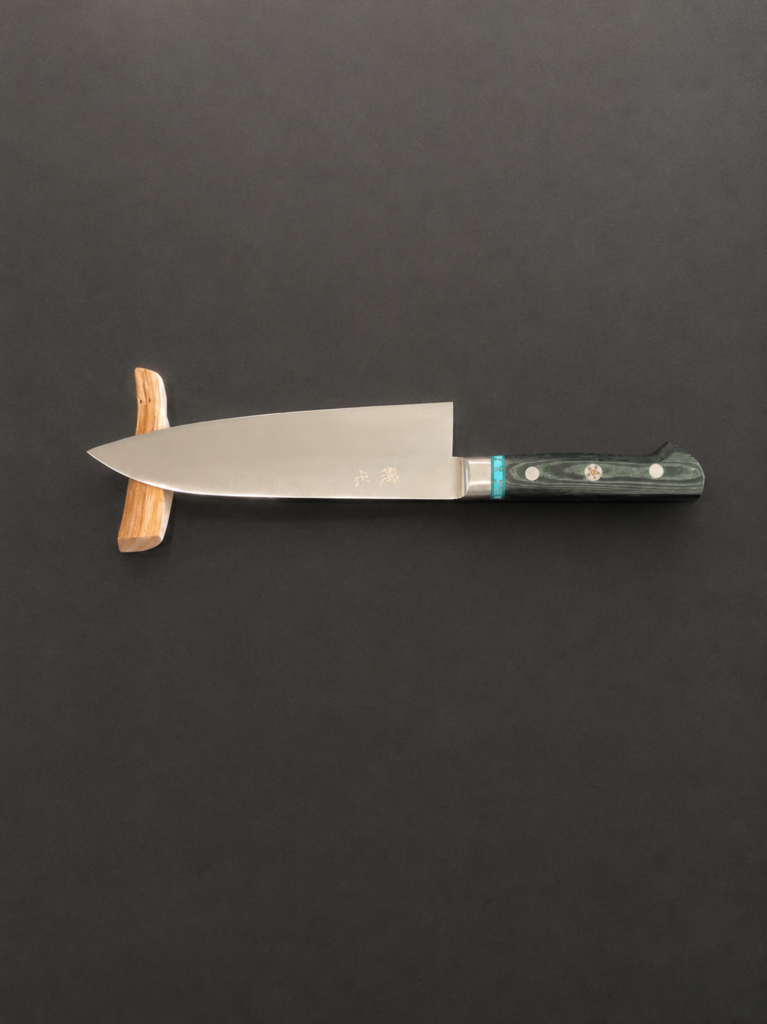
    240mm Thick Deba Aogami #2 Kurouchi Walnut Handle

    Then we come to Deba.

    This is where researching Japanese knife names gets more interesting because not every origin is perfectly clear.

    出 means something like to come out, protrude or emerge.

    刃 means blade or edge.

    There are different explanations surrounding how the name Deba came into use, including an old story connecting the name with a craftsman whose protruding teeth supposedly inspired the term.

    It is an entertaining story, but the precise historical origin of the name is not something I would present as absolute fact.

    What we do know is what the Deba became: one of the classic Japanese knives for processing fish.

    Its thick spine, substantial weight and strong heel make it very different from a delicate slicing knife.

    For me, that uncertainty actually makes the name more interesting.

    We use the word “Deba” so casually today that it is easy to forget the name itself has travelled through generations of Japanese cooking history.

    👉 RELATED: Read Japanese Knife Bevels — Single Bevel vs Double Bevel Explained for more about traditional Japanese blade geometry.

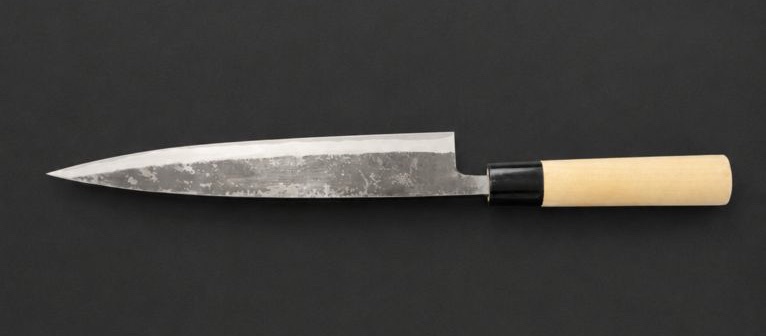
    4. Yanagiba 柳刃 — The Willow Blade

    Yanagiba is much easier to visualise.

    柳 means willow.

    刃 means blade.

    The long, narrow shape of the knife resembles a willow leaf, giving us the name 柳刃 — “willow blade.”

    This is one of those Japanese knife names that makes immediate sense once you see the kanji and the knife together.

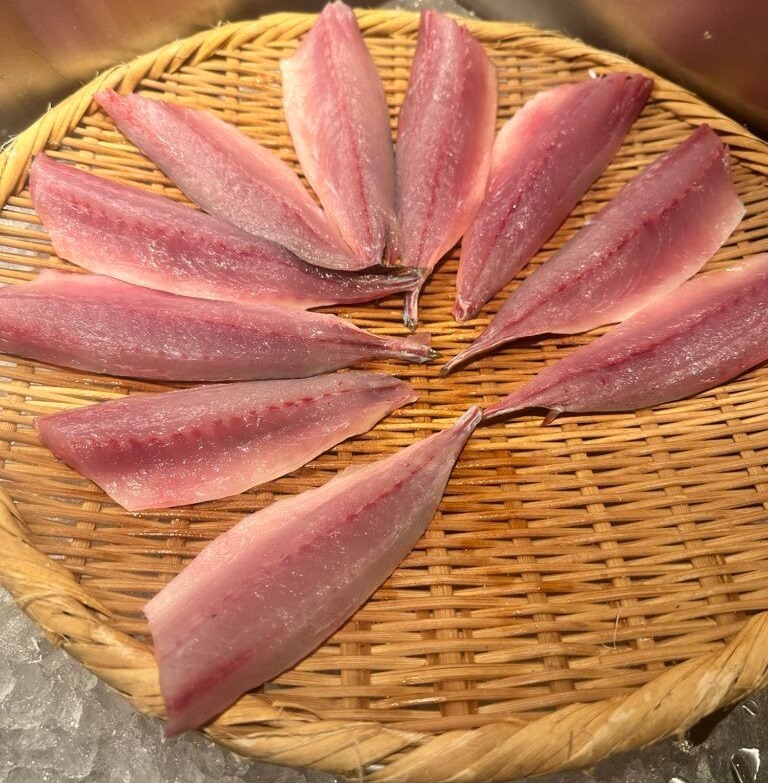
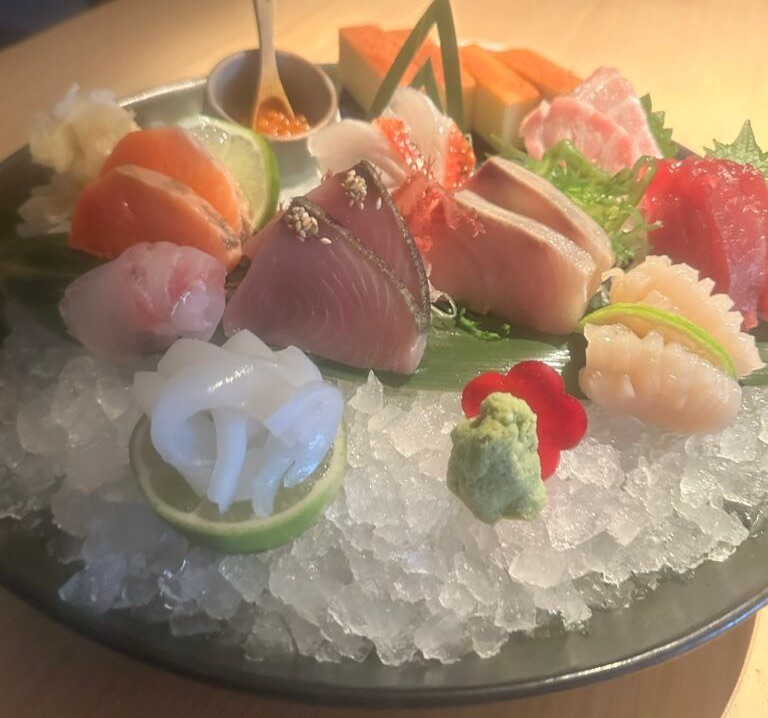
    The long blade is closely associated with slicing sashimi and other delicate proteins. Rather than using repeated short sawing movements, its length allows a cook to make a long, controlled slicing motion.

    As someone who has spent many years working with fish and sashimi, this is where the poetry of the name and the practicality of the tool come together beautifully.

    It looks like a willow leaf.

    But that elegant shape also has a job to do.

    5. Nakiri 菜切 — A Name That Says Exactly What It Does


    165mm Nakiri Ginsan Nashiji Forged Magnolia Octagonal Handle Buffalo Horn Ferrule

    Some Japanese knife names are much less mysterious.

    Nakiri is one of them.

    菜 means vegetable or greens.

    切 comes from cutting.

    Put them together and 菜切 essentially means “vegetable cutter.”

    Simple.

    The rectangular blade and relatively straight cutting edge make the Nakiri particularly suited to vegetable preparation.

    There is something I like about the honesty of this name.

    No complicated marketing.

    No dramatic terminology.

    It cuts vegetables, so it is called a vegetable cutter.

    The name also reminds us how important vegetables have always been in Japanese home cooking.

    👉 RELATED: Read about Japanese Knife Handles and why handle shape can change the way different knives feel in the hand.

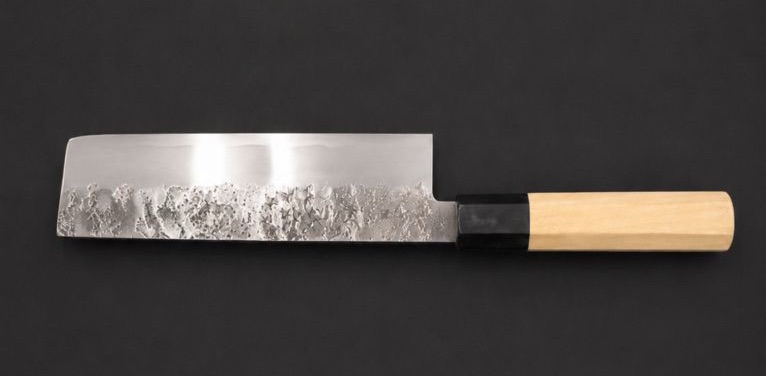
    6. Usuba 薄刃 — The “Thin Blade”


    165mm Usuba A8 Hammered Damascus Black & Red Octagonal Handle

    Usuba is another beautifully direct name.

    薄 means thin.

    刃 means blade.

    So 薄刃 means simply “thin blade.”

    The Usuba is a traditional Japanese vegetable knife, particularly associated with precise vegetable work.

    Although its rectangular profile can look similar to a Nakiri at first glance, traditional Usuba knives are generally more specialised and are strongly associated with professional Japanese cuisine.

    The thin cutting geometry makes sense when you consider the precision required for traditional vegetable techniques.

    Again, the name does not try to make the knife sound exotic.

    It describes one of its defining characteristics.

    7. Sujihiki 筋引 — “Pulling the Sinew”


    210mm Sujihiki Aogami #2 Kurouchi Magnolia Handle

    Finally, there is Sujihiki.

    筋 can mean sinew, muscle fibre, tendon or line depending on context.

    引 means to pull or draw.

    The name reflects the knife’s relationship with trimming and slicing meat, particularly working along or removing sinew and connective tissue.

    Today, the Sujihiki is widely used as a Japanese slicing knife.

    For me personally, this is an especially familiar knife. I have used Sujihiki extensively in professional kitchens, including for fish and slicing work.

    And this is another example of how Japanese knife names can outlive their narrow original interpretation.

    A modern Sujihiki can do far more than its literal name might suggest.

    👉 RELATED: Read 切味 Kireaji to explore why the feeling of sharpness is about more than simply whether a knife can cut.

    Japanese Knife Names Are Small Pieces of Culinary History

    I started researching this simply because I was curious.

    After more than 25 years as a chef, I thought it was funny that I had said these names countless times without stopping to think about where they came from.

    And that may be what I enjoyed most about looking into Japanese knife names.

    Gyuto remembers the arrival and growth of meat cookery.

    Nakiri tells you exactly what generations of cooks used it for.

    Yanagiba describes the beauty of its shape.

    Usuba describes its thin blade.

    Sujihiki remembers the work it was designed to perform.

    Santoku reflects versatility.

    And Deba reminds us that sometimes the history behind an everyday word is not quite as simple as we assume.

    A Japanese knife is a tool.

    But its name can also carry a small piece of Japanese food culture, language and history.

    I have worked with Japanese knives for most of my professional life, and I am still finding things about them that make me curious.

    That is probably why I never get tired of them.

    This article started with one very simple thought:

    “Why is a Deba called a Deba?”

    Sometimes that is enough reason to start looking.

    And I think I might have found another series worth continuing.

    👉 Explore more:
    https://blog.asaoyayaichi.com.au

    👉 Visit our online store:
    https://asaoyayaichi.com.au

    Thank you for reading, and I hope to see you again in the next story.
  • 刃 Japanese Knife Bevels | Single Bevel vs Double Bevel Explained

    刃 Japanese Knife Bevels | Single Bevel vs Double Bevel Explained

    Single bevel Double bevel

    Choosing a Japanese knife can feel overwhelming, especially when you first encounter the debate between Single Bevel vs Double Bevel. Understanding Single Bevel vs Double Bevel is one of the most important steps when selecting a knife that matches your cooking style.

    After working as a professional chef for more than 25 years, I’ve learned that the best knife isn’t simply determined by whether it is single bevel or double bevel. Steel, balance, craftsmanship, and comfort all matter. However, understanding Single Bevel vs Double Bevel will help you make a much more informed decision before investing in a quality Japanese knife.


    What Is Single Bevel vs Double Bevel?

    Single Bevel

    The phrase Single Bevel vs Double Bevel simply refers to how the cutting edge of a knife is ground.

    A single bevel knife has an edge ground on only one side of the blade. The opposite side is mostly flat and usually contains a slight concave surface called an ura. This traditional design is common on knives made specifically for Japanese cuisine.

    double bevel

    A double bevel knife has cutting edges on both sides of the blade. Even if one side is sharpened slightly more than the other, it is still classified as a double bevel knife.

    Understanding this basic difference makes it much easier to choose the right knife for your kitchen.


    Why Single Bevel vs Double Bevel Matters


    165mm Usuba A8 Hammered Damascus Black & Red Octagonal Handle

    Many first-time buyers believe that every Japanese knife is single bevel.

    In reality, that’s not true.

    Traditional knives such as Yanagiba, Deba, and Usuba are commonly made as single bevel knives, while modern Japanese kitchen knives such as Gyuto, Santoku, and most Sujihiki are generally double bevel.

    Each style has been developed for different purposes rather than one being “better” than the other.


    Single Bevel vs Double Bevel for Traditional Japanese Knives

    Yanagiba

    Single bevel knives are designed for precision.

    Typical examples include:

    • Yanagiba
    • Deba
    • Usuba

    These knives allow incredibly clean cuts when preparing sashimi, sushi, and traditional Japanese vegetable techniques.

    Because the edge is designed specifically for either right-handed or left-handed users, choosing the correct version is important.

    For chefs specialising in Japanese cuisine, single bevel knives remain an essential tool.


    Single Bevel vs Double Bevel for Everyday Cooking

    Double bevel knives are much more versatile.

    Popular examples include:

    • Gyuto
    • Santoku
    • Petty
    • Most Sujihiki
    • Most Nakiri

    These knives are suitable for meat, fish, vegetables, and everyday food preparation.

    Whether you’re a professional chef or a home cook, double bevel knives are generally easier to use and maintain.


    Single Bevel vs Double Bevel Comparison

    When comparing Single Bevel vs Double Bevel, there is no universal winner. Both designs have their own strengths, and the right choice depends on how you plan to use your knife.

    A single bevel knife is designed for maximum precision. It excels at traditional Japanese techniques such as slicing sashimi and creating clean, accurate cuts. However, it requires more skill to master and is usually made specifically for either right-handed or left-handed users.

    A double bevel knife offers outstanding versatility. It is easier for most people to use, works well for a wide variety of ingredients, and is generally the best choice for everyday cooking. This is why knives such as the Gyuto and Santoku have become so popular among both professional chefs and home cooks.

    Rather than asking which is better, it’s more useful to ask which knife best suits your cooking style. A well-made Japanese knife, whether single bevel or double bevel, can provide exceptional performance when matched to the right task.


    My Experience with Single Bevel vs Double Bevel


    Kiritsuke Thick Deba Aogami #2 Kurouchi Double Bevel Walnut Octagonal Handle

    After more than 25 years as a chef, I honestly never spent much time thinking about whether the knife in my hand was single bevel or double bevel.

    What mattered most was how confidently it performed during service.

    I still remember buying my first Gyuto in Tokyo’s famous Kappabashi kitchen district. The knife shop recommended a double bevel Gyuto without hesitation, and it became a knife I trusted for years.

    One thing I do understand is how important handedness becomes with traditional single bevel knives. If I imagine using a left-handed single bevel knife in my right hand, it would feel awkward and unnatural.

    Interestingly, we also offer a double bevel thick Deba at Asaoya Yaichi. While many people associate Deba knives exclusively with single bevel construction, double bevel versions offer excellent versatility while retaining the strength needed for fish preparation.

    This is a great reminder that Japanese knife making continues to evolve while respecting centuries of craftsmanship.


    Which Is Better: Single Bevel vs Double Bevel?

    Choose a single bevel knife if you:

    • Frequently prepare sashimi or sushi.
    • Want maximum precision.
    • Enjoy traditional Japanese sharpening techniques.
    • Prefer authentic Japanese culinary methods

    Choose a double bevel knife if you:

    • Are buying your first Japanese knife.
    • Cook a wide variety of ingredients.
    • Want easier sharpening and maintenance.
    • Share your knives with family members.

    For most people, a quality Gyuto or Santoku is the perfect introduction to Japanese knives.


    Final Thoughts on Single Bevel vs Double Bevel

    The discussion around Single Bevel vs Double Bevel is not about deciding which knife is superior.

    Instead, it’s about understanding which design best suits your cooking.

    Traditional single bevel knives continue to represent the highest level of Japanese craftsmanship for specialised techniques, while double bevel knives provide exceptional versatility for daily use.

    From my experience after more than 25 years as a chef, I’ve learned that bevel design is only one part of choosing the right knife. Steel quality, heat treatment, balance, handle comfort, and craftsmanship are equally important.

    A well-made Japanese knife should feel like a natural extension of your hand, regardless of whether it is single bevel or double bevel.


    ➡️ Internal Link: Beginner’s Guide to Japanese Kitchen Knives

    ➡️ Internal Link: Japanese Knife Handles | 7 Powerful Reasons the Right Handle Matters

    ➡️ Internal Link: Professional Choice | Why I Still Use Carbon Steel for Sashimi After 25 Years

    ➡️ Internal Link: Handmade Japanese Knives | 7 Fascinating Reasons No Two Are Ever Exactly the Same

    ➡️ Internal Link: The True Value of Japanese Knives | 7 Reasons They Are Worth the Investment


    👉 Explore more:
    https://blog.asaoyayaichi.com.au

    👉 Visit our online store:
    https://asaoyayaichi.com.au

    Thank you for reading, and I hope to see you again in the next story.
  • Professional Choice | Why I Still Use Carbon Steel for Sashimi After 25 Years

    Professional Choice | Why I Still Use Carbon Steel for Sashimi After 25 Years

    Ishizuchi Kanamono Manufactory

    If you asked me what knife I still reach for after more than 25 years as a professional chef, my answer might surprise you.

    Despite owning and using modern stainless steel knives such as VG10, Ginsan, and SG2, I still find myself reaching for a carbon steel sashimi knife whenever I’m preparing sashimi.

    Does that mean carbon steel is always better?

    Not at all.

    After using both carbon steel and stainless steel knives in busy professional kitchens, I’ve learned that every knife has its place. Choosing the right knife isn’t about following trends—it’s about understanding what works best for the job.


    Why I Still Choose a Carbon Steel Sashimi Knife


    210mm Sujihiki Aogami #2 Kurouchi Magnolia Handle

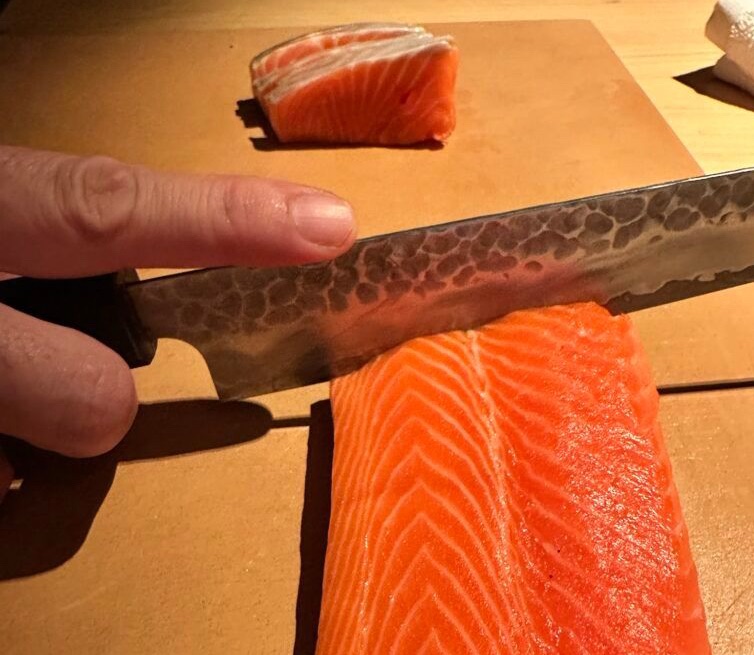
    When slicing sashimi, I enjoy using my Aogami carbon steel knife.

    The first thing I notice is how effortlessly it moves through the fish. The edge feels incredibly refined, allowing long, smooth slices with very little resistance.

    Some chefs believe carbon steel produces cleaner cuts and may even reduce unwanted fish aroma, particularly when slicing tuna or bonito. Whether that’s caused by the steel itself or simply by its exceptional edge is still open to debate.

    Personally, I don’t choose carbon steel because I believe it performs miracles.

    I choose it because I enjoy the feeling every time I use it.

    Internal Link: 👉 Beginner’s Guide to Japanese Kitchen Knives


    Stainless Steel Is Better Than Many People Think


    180mm Santoku SG2 Rosewood Octagonal Handl

    Modern stainless steels have improved dramatically.

    A properly sharpened VG10 sujihiki can produce beautiful sashimi with excellent edge retention and outstanding corrosion resistance.

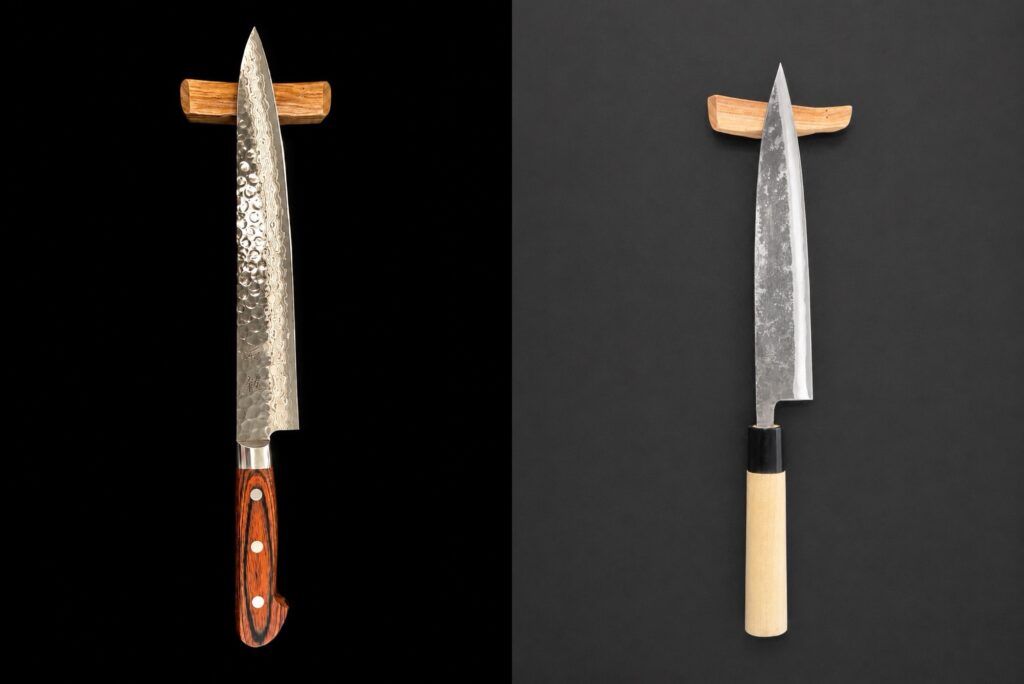
    If my VG10 sujihiki and my carbon steel knife are both sharpened to the same level, I honestly don’t think most customers would notice any difference once the sashimi reaches the plate.

    This is why I always tell people not to become obsessed with steel names.

    The sharpness of the edge is far more important.

    Internal Link: 👉 Ultimate | The Pinnacle of Stainless Steel – 180mm SG2 Santoku with Rosewood Octagonal Handle


    Why I Use Stainless Steel for Onions and Tomatoes

    Kitchen knife

    My knife choice changes completely when preparing vegetables.

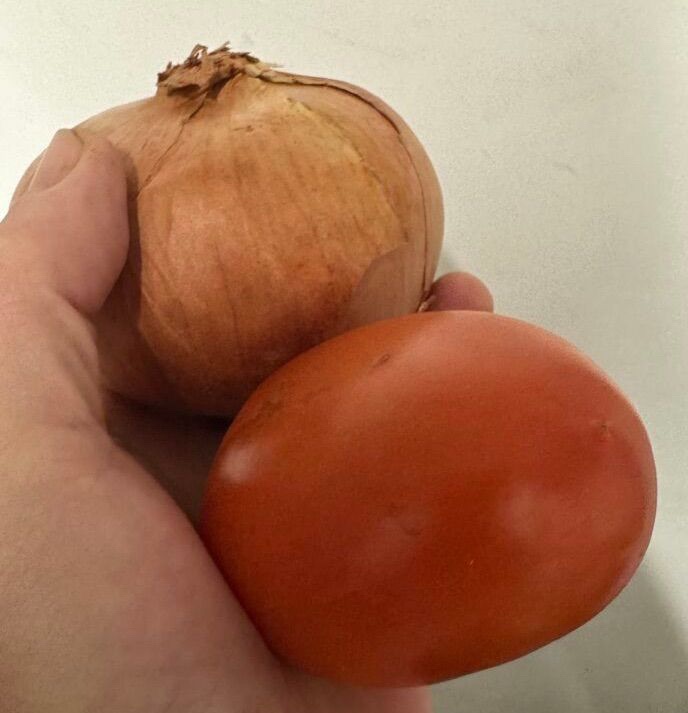
    For onions, tomatoes, citrus fruits, and many everyday ingredients, I usually grab my stainless steel gyuto.

    It’s not because carbon steel cannot cut them.

    It’s because stainless steel lets me work without constantly thinking about maintenance.

    Acidic ingredients can react with carbon steel, so I know I’ll need to clean and dry the knife quickly. During a busy shift, stainless steel simply makes life easier.

    Convenience matters in a professional kitchen.

    Internal Link: 👉 Why Do Japanese Knives Rust So Easily?


    Sharpness Is More Important Than Steel


    240mm Sujihiki VG10 Hammered 17 Layer Damascus Mahogany

    After more than two decades in professional kitchens, I’ve learned one simple truth.

    A perfectly sharpened VG10 knife is far better than a dull carbon steel knife.

    Many people focus entirely on steel—Aogami, Shirogami, VG10, SG2, or Ginsan.

    But steel only gives a knife its potential.

    Sharpening determines how much of that potential you actually experience.

    Learning how to sharpen properly will improve your cooking far more than changing from one steel to another.

    Internal Link: 👉 Why Flattening Your Whetstone Matters


    My Advice After 25 Years

    VG10 & Aogami #2

    People often ask me which knife they should buy.

    My answer is always the same.

    If you enjoy traditional Japanese craftsmanship and don’t mind a little extra care, a carbon steel knife is incredibly satisfying to own.

    If you want outstanding performance with less maintenance, high-quality stainless steel is an excellent choice.

    Neither is wrong.

    In my own kitchen, I still use both.

    Carbon steel for sashimi.

    Stainless steel for much of my everyday preparation.

    Not because one is superior, but because each knife suits a different purpose.

    That, in my opinion, is what professional cooking is all about.

    Internal Link: 👉 The True Value of Japanese Knives | 7 Reasons They Are Worth the Investment


    Final Thoughts

    After more than 25 years as a chef, I’ve stopped asking which steel is “better.”

    Instead, I ask which knife is better for today’s job.

    For me, that often means reaching for a carbon steel knife when preparing sashimi and a stainless steel knife for everyday kitchen work.

    If there’s one lesson I’ve learned throughout my career, it’s this:

    The best knife isn’t determined by its steel alone. It’s determined by how well it’s sharpened, maintained, and matched to the task at hand.

    Whether you choose carbon steel or stainless steel, investing in a quality Japanese knife and learning how to care for it will reward you for years to come.


    👉 Explore more:
    https://blog.asaoyayaichi.com.au

    👉 Visit our online store:
    https://asaoyayaichi.com.au

    Thank you for reading, and I hope to see you again in the next story.
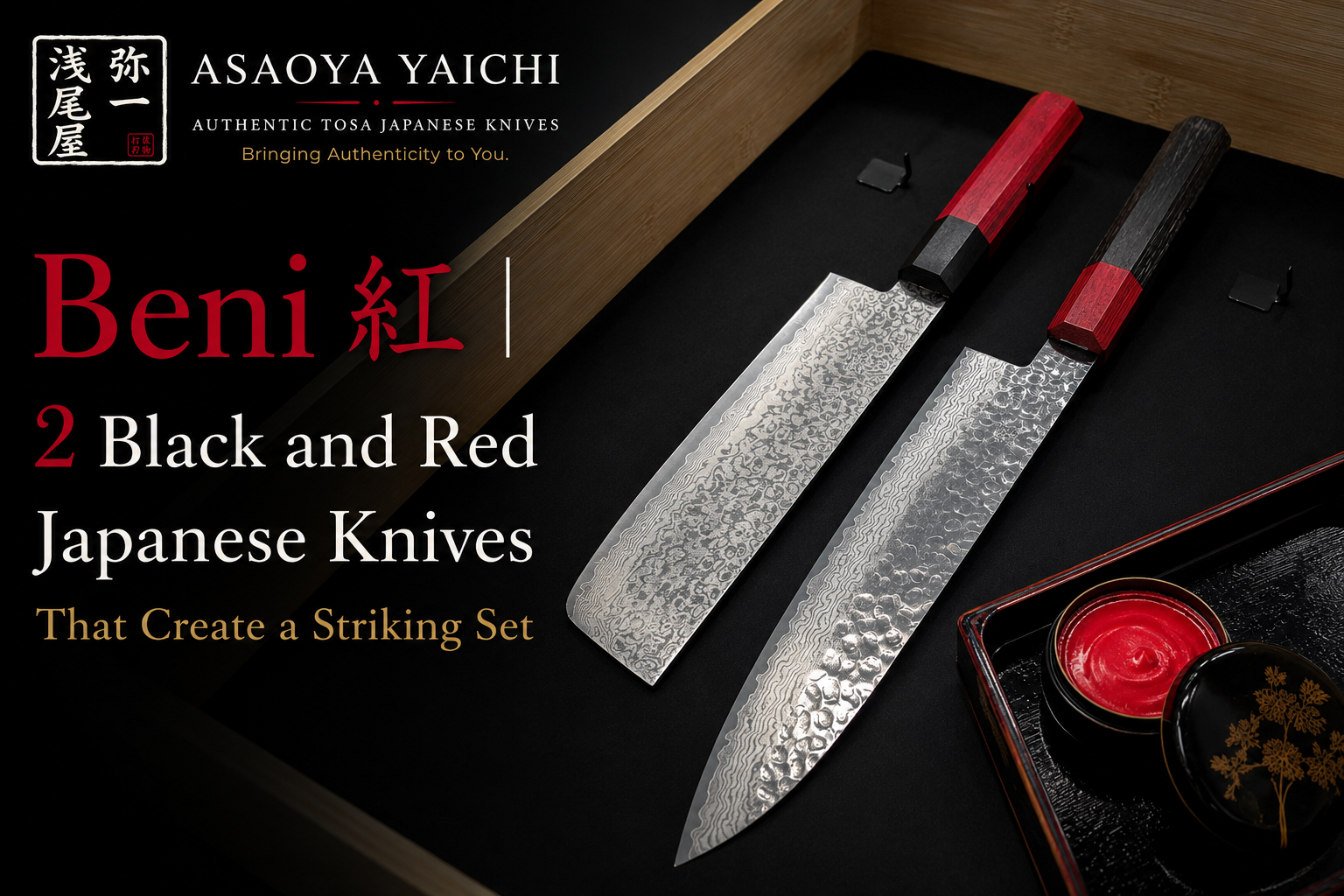
  • Beni 紅 | 2 Black and Red Japanese Knives That Create a Striking Set

    Beni 紅 | 2 Black and Red Japanese Knives That Create a Striking Set


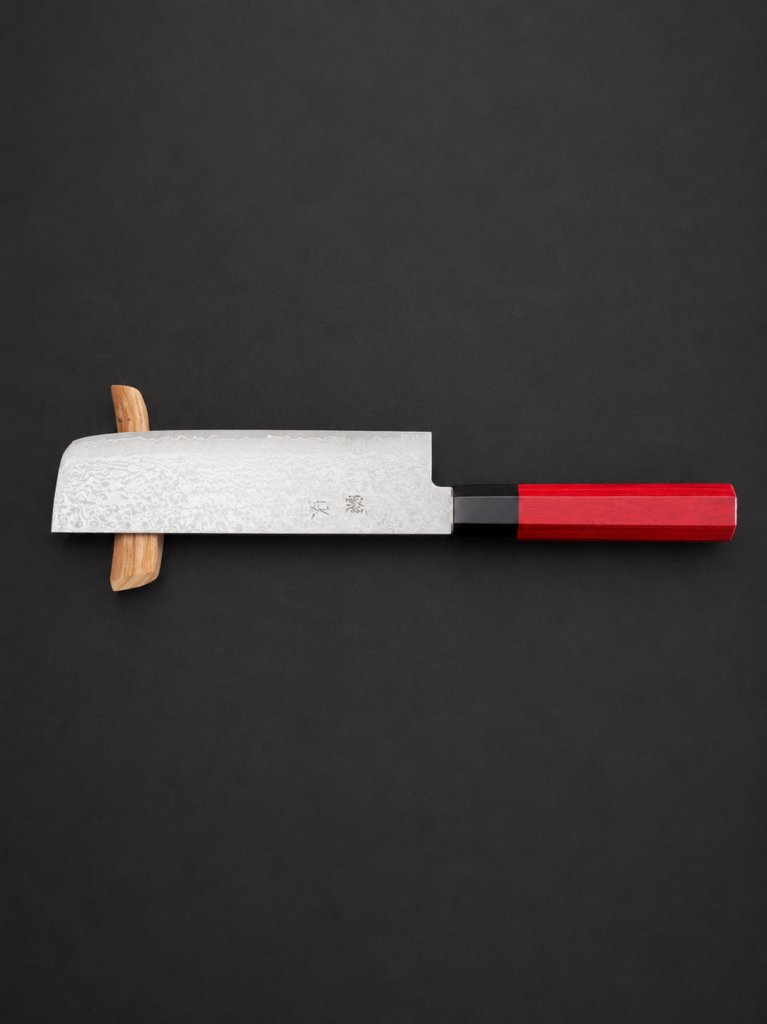
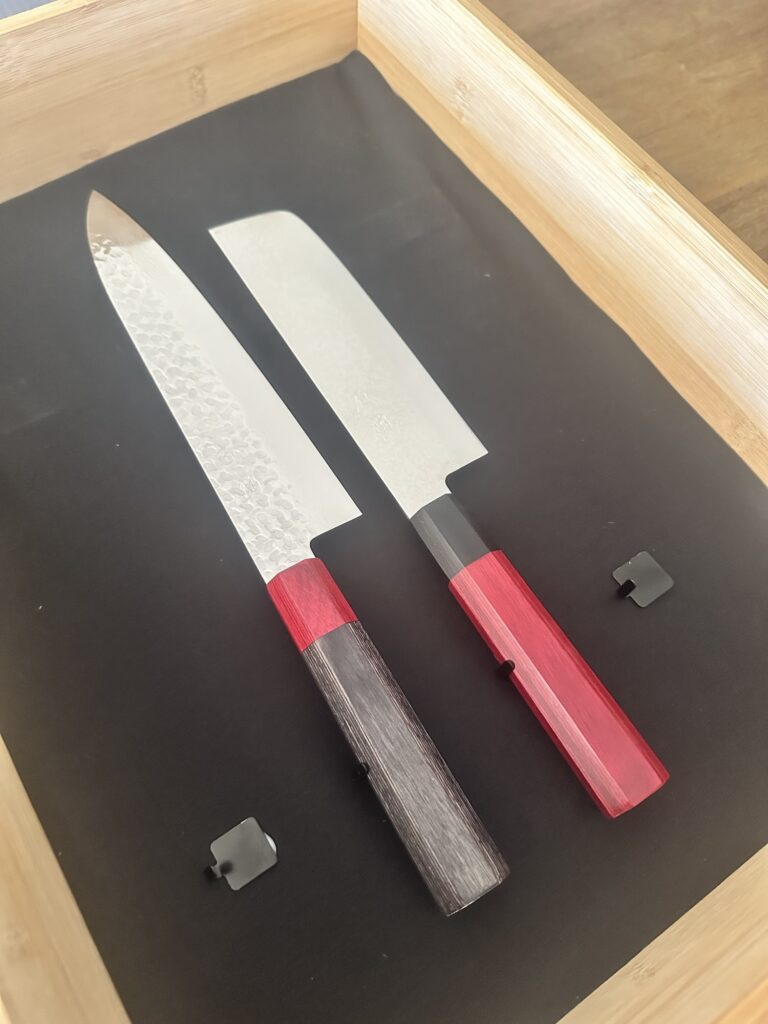
    165mm Usuba A8 Hammered Damascus Black & Red Octagonal Handle
    A$430.00

    When people think of beautiful Japanese knives, they often picture polished Damascus blades or traditional wooden handles. While those features certainly have their charm, sometimes it is the combination of colours that leaves the strongest impression.

    That is exactly what makes these Black and Red Japanese Knives so memorable.

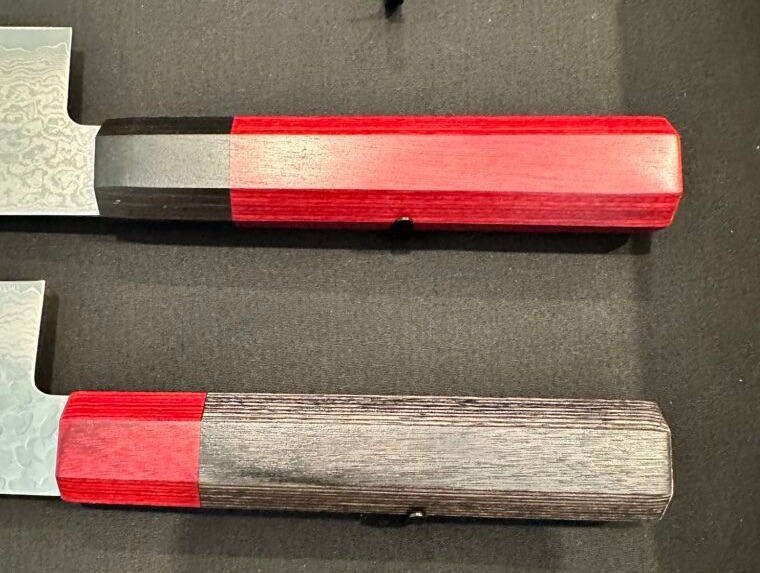
    The deep black and vibrant red octagonal handles create a striking contrast that reflects both elegance and strength. Inspired by traditional Japanese aesthetics, these handcrafted knives are designed not only to perform exceptionally in the kitchen but also to become pieces you are proud to display.

    Whether you’re a professional chef or a passionate home cook, these knives offer something special every time you pick them up.

    If you’re looking for authentic handcrafted Japanese knives in Australia, you’ll find our carefully selected collection at Asaoya Yaichi


    Why Black and Red Japanese Knives Stand Out

    Wabi-Sabi

    Japanese craftsmanship has always balanced beauty with practicality.

    Black has long represented sophistication, stability and quiet confidence, while red symbolises passion, celebration and energy. Together they create a timeless contrast that immediately attracts attention without appearing overly flashy.

    These Black and Red Japanese Knives perfectly capture that balance.

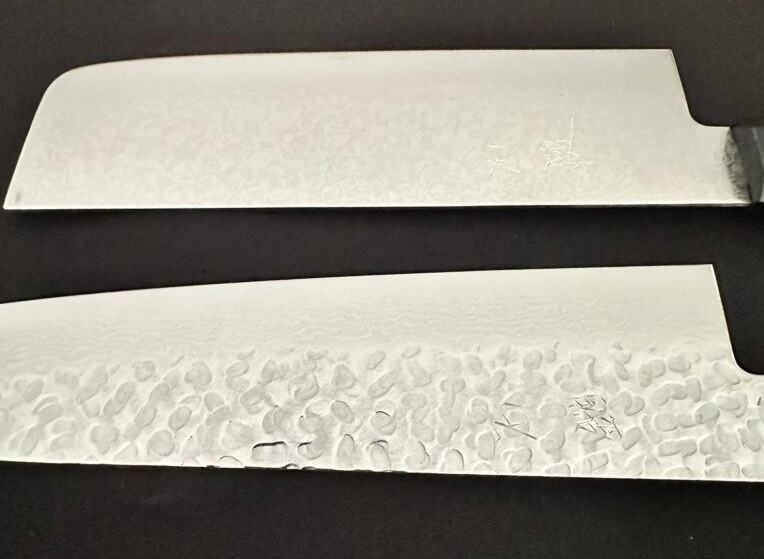
    Each knife features a beautiful Damascus blade paired with a carefully finished octagonal handle combining rich black and vibrant red. The result is a knife that looks equally at home in a professional sushi bar, an open restaurant kitchen or a modern family home.

    Unlike mass-produced knives, handcrafted Japanese knives develop a personal connection with their owner. Every scratch tells a story, and every meal prepared becomes part of that journey.

    Read our Beginner’s Guide to Japanese Knives


    Two Black and Red Japanese Knives with Different Personalities

    Ishizuchi Kanamono Manufactory

    Although these knives share the same elegant design language, each serves a different purpose in the kitchen.

    165mm Usuba A8 Hammered Damascus

    The 165mm Usuba is designed primarily for vegetables.

    Made from A8 stainless steel, it offers excellent corrosion resistance, toughness and easy maintenance. The hammered Damascus finish not only adds visual depth but also helps reduce food sticking to the blade.

    Whether you’re preparing fine julienne vegetables, decorative garnishes or paper-thin slices, the Usuba provides impressive precision while remaining forgiving for everyday use.

    Its lightweight balance also makes long preparation sessions far more comfortable.


    165mm Santoku A10 Damascus

    The matching 165mm Santoku features A10 stainless steel.

    With its higher carbon content, A10 achieves greater hardness and longer edge retention than A8 while still offering excellent corrosion resistance.

    As an all-purpose Japanese kitchen knife, the Santoku handles vegetables, meat and fish with remarkable ease.

    For many home cooks, this will quickly become the knife they reach for every day.

    Learn more about Carbon Steel vs Stainless Steel


    Why They Create the Perfect Japanese Knife Set

    Damascus blade

    Each knife is beautiful individually.

    Together, however, they become something truly special.

    The matching black and red handles create a visual harmony rarely found when purchasing knives separately.

    Displayed side by side on a magnetic knife rack, they immediately become a focal point in the kitchen.

    Many customers have recently chosen to purchase both knives together rather than individually.

    It’s easy to understand why.

    The combination creates a complete Japanese knife set that feels intentional, elegant and perfectly balanced.

    The Usuba handles vegetables with incredible precision.

    The Santoku takes care of almost everything else.

    Together they cover most daily kitchen tasks while maintaining a consistent appearance that reflects traditional Japanese craftsmanship.

    Rather than mixing different handle colours and styles, this matching pair creates a professional, coordinated look that many chefs appreciate.

    Discover Our Knife Care Guid


    Japanese Craftsmanship You Can Enjoy Every Day

    Fucha ryori Bon

    Beautiful knives should never be reserved only for special occasions.

    These Black and Red Japanese Knives were made to be used.

    Every blade is handcrafted using techniques that have been refined over generations while incorporating modern stainless steel for practical everyday performance.

    The octagonal handles provide a comfortable grip for both left- and right-handed users, while the Damascus pattern ensures every knife has its own unique appearance.

    They’re not simply decorative pieces.

    They’re tools designed to prepare countless family meals, dinner parties and special celebrations for many years.

    Explore the Story Behind Tosa Knife Craftsmanship


    More Than Just a Beautiful Knife

    Black and Red Japanese Knives Handle

    As someone who has worked as a professional chef for over 25 years, I’ve learned that the best knife is the one you genuinely enjoy using.

    Performance is essential.

    Comfort matters.

    But so does the feeling you get every time you reach for it.

    That’s one reason I appreciate matching knife collections.

    When your knives share the same design language, your kitchen feels organised, professional and enjoyable to work in.

    These Black and Red Japanese Knives deliver exactly that experience.


    Final Thoughts on Black and Red Japanese Knives

    Authentic Japanese knives are an investment that can be enjoyed for many years.

    These two handcrafted knives combine traditional Japanese beauty with practical everyday performance.

    Purchased individually, each knife offers outstanding quality.

    Purchased together, they create a striking Japanese knife set whose black and red contrast makes an unforgettable impression.

    Whether you’re upgrading your own kitchen or searching for a meaningful gift, this matching pair offers beauty, craftsmanship and functionality in equal measure.

    If you’d like to explore these knives in more detail or discover more handcrafted Japanese knives from Tosa, visit https://asaoyayaichi.com.au.

    Every knife in our collection has been carefully selected because we believe exceptional craftsmanship deserves to be used, appreciated and passed on.

    Read Why Handcrafted Japanese Knives Are Different

    Explore Our Complete Japanese Knife Collection at https://asaoyayaichi.com.au